
What to Wear in 10 Degree Weather: Layers That Stay Warm
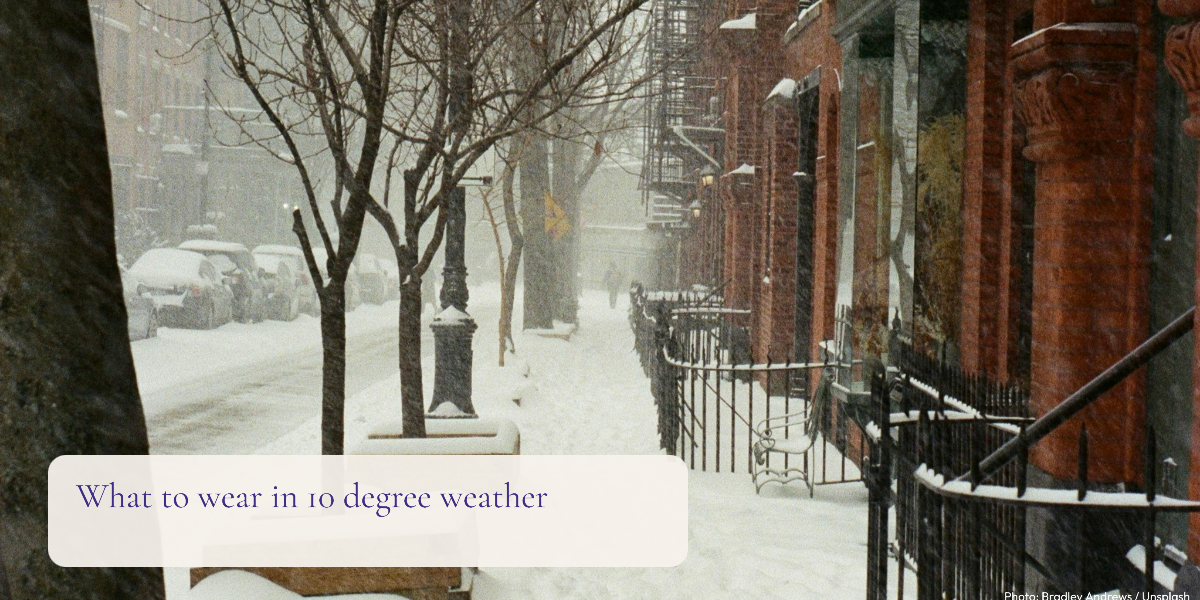
At 10°F, wear a merino base, a fleece or down mid-layer and a windproof coat, plus hat, face cover, mittens and boots. A 15 mph wind makes it feel like -7°F.
 Mehul AgarwalFounder & CEO
Last updated: October 2026
Quick answer: At 10°F (about -12°C), wear three layers: a snug base layer of merino or synthetic (not cotton), an insulating mid-layer such as fleece, wool or a light down jacket, and a windproof, water-resistant outer coat that covers your hips. Add a hat, a scarf or face cover, mittens, warm socks and insulated waterproof boots. With a 15 mph wind, 10°F feels like -7°F, according to the National Weather Service wind chill chart, so covering skin matters as much as the coat.
Ten degrees is the point where a normal winter coat stops being enough on its own. You can still go to work, run errands or walk the dog in comfort, but only if every layer does a job and nothing gets wet. This guide explains what each layer is for, what the wind does to 10°F, and how to dress for a commute, a long walk, the office and a night out.
What 10 degree weather feels like: wind chill explained
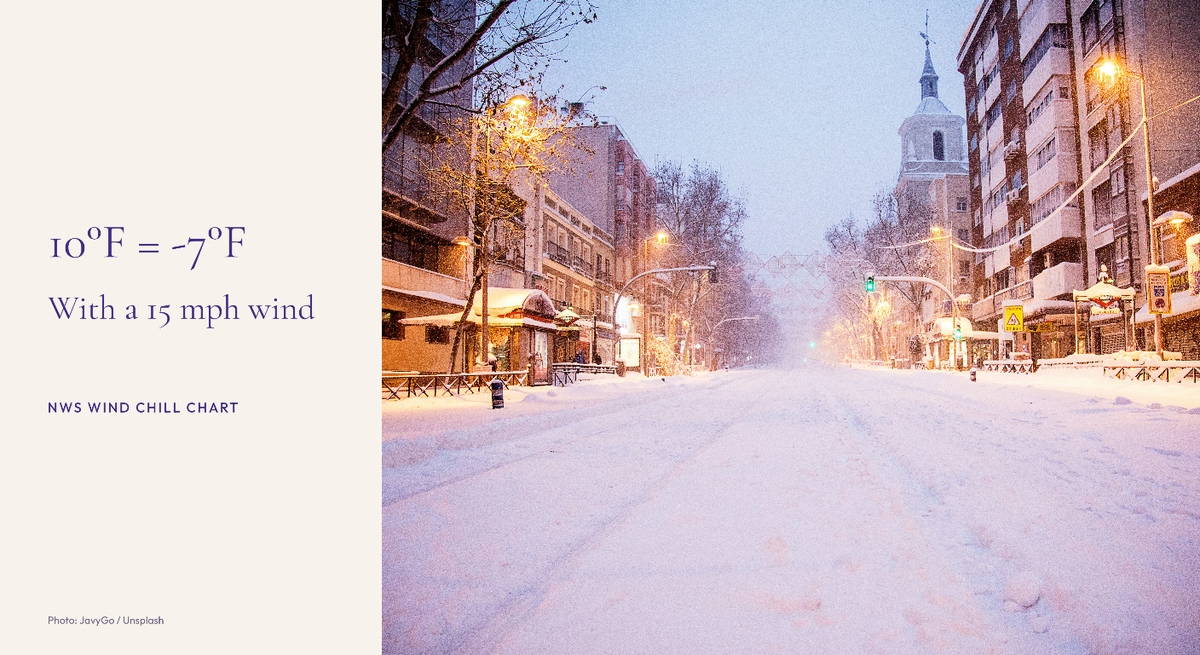
The number on the forecast is only half the story; wind decides how cold 10°F actually feels on your skin. Using the National Weather Service wind chill formula, 10°F feels like:
- 1°F with a 5 mph breeze
- -4°F with a 10 mph wind
- -7°F with a 15 mph wind
- -9°F with a 20 mph wind
- -12°F with a 30 mph wind
The NWS chart notes that at a wind chill of -19°F, exposed skin can freeze in 30 minutes. A windy 10°F day does not reach that line, but it is close enough that bare cheeks, ears and fingers get uncomfortable fast. That is why the outer layer must block wind and why a face cover and mittens are part of the outfit, not extras.
The 10 degree layering formula
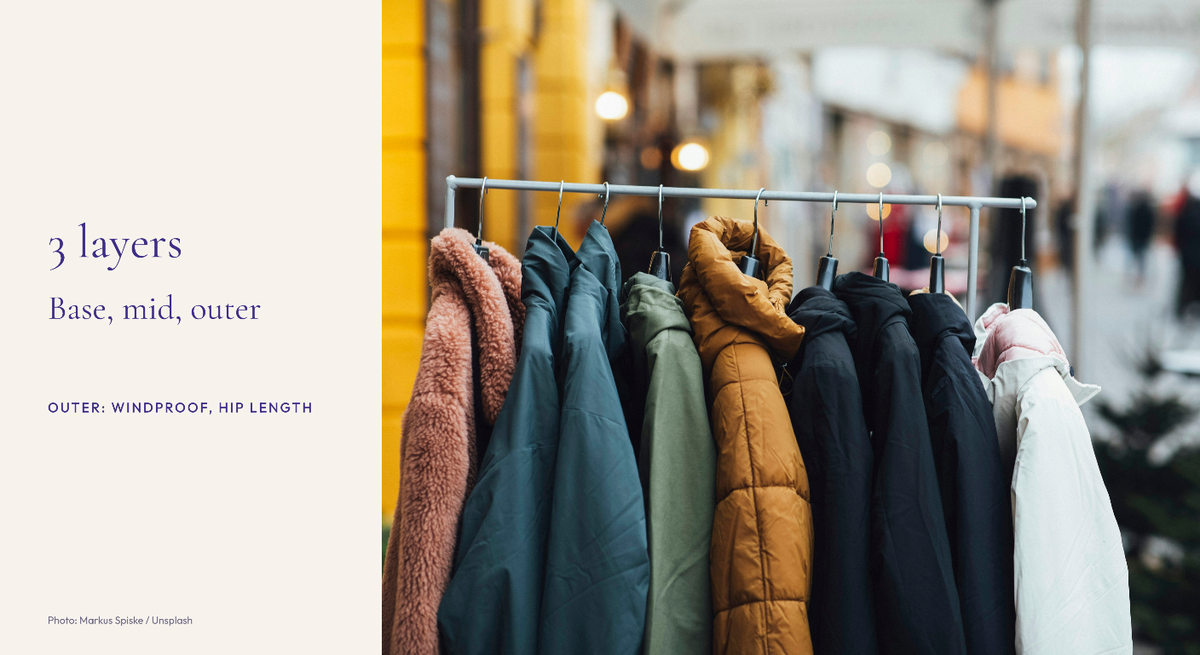
Three layers, each with one job, beat one very thick coat. The CDC recommends several layers of loose-fitting clothing, a water-resistant coat and boots, and sleeves that are snug at the wrist.
1. Base layer: move sweat away from skin
A long-sleeve top and leggings in merino wool or a synthetic such as polyester. The National Weather Service advises avoiding cotton for active outdoor time, because once wet it takes a long time to dry and saps heat. Choose midweight for most days and heavyweight if you will be standing still outside. Our thermal base layers guide compares merino, synthetic and silk.
2. Mid layer: trap warm air
A fleece, a wool or cashmere sweater, or a thin down or synthetic puffer vest. This is the layer that actually keeps you warm by holding still air. If you get hot indoors, it is also the one you take off.
3. Outer layer: block wind and wet
A windproof, water-resistant coat that covers at least your hips, ideally with a hood and a high collar. A down or synthetic-fill parka is the easiest choice at 10°F. A wool coat works for short city trips if you add a warmer mid-layer underneath. For what fill power and fill weight mean when you shop, see our winter coat buying guide.
Hats, mittens, scarves and boots: where you actually lose comfort
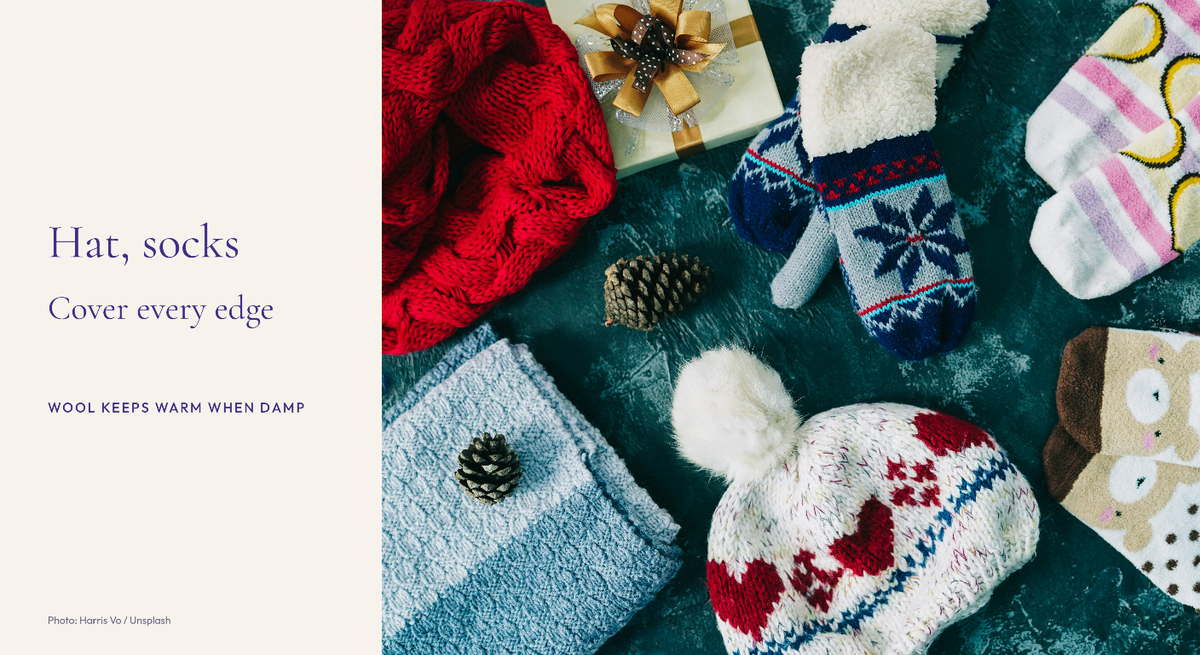
Your hands, feet, ears and face get cold first, so they need dedicated protection. The CDC's winter guidance lists a hat, a scarf or knit mask to cover the face and mouth, mittens (which it says are warmer than gloves), and a water-resistant coat and boots.
- Hat: a wool or fleece-lined beanie that covers your ears fully.

Want this styled from your own closet?
Elara builds the look from what you own, then lets you try it on.
- Face: a scarf wrapped twice, a neck gaiter or a balaclava. Breathing through a layer of fabric also makes very cold air more comfortable. Our guide on how to tie a scarf for winter shows the warmest knots.
- Hands: mittens keep fingers together and warmer. If you need dexterity, wear thin liner gloves under mittens and slip the mittens off for your phone.
- Feet: wool or wool-blend socks (one good pair, not two tight pairs, which can cut circulation) and insulated, waterproof boots with a grippy sole. Our winter boots buying guide explains insulation grams and lug depth.
- Stay dry: the CDC warns that wet clothing chills the body quickly. Change damp socks or gloves as soon as you can.
What to wear in 10 degree weather, by situation
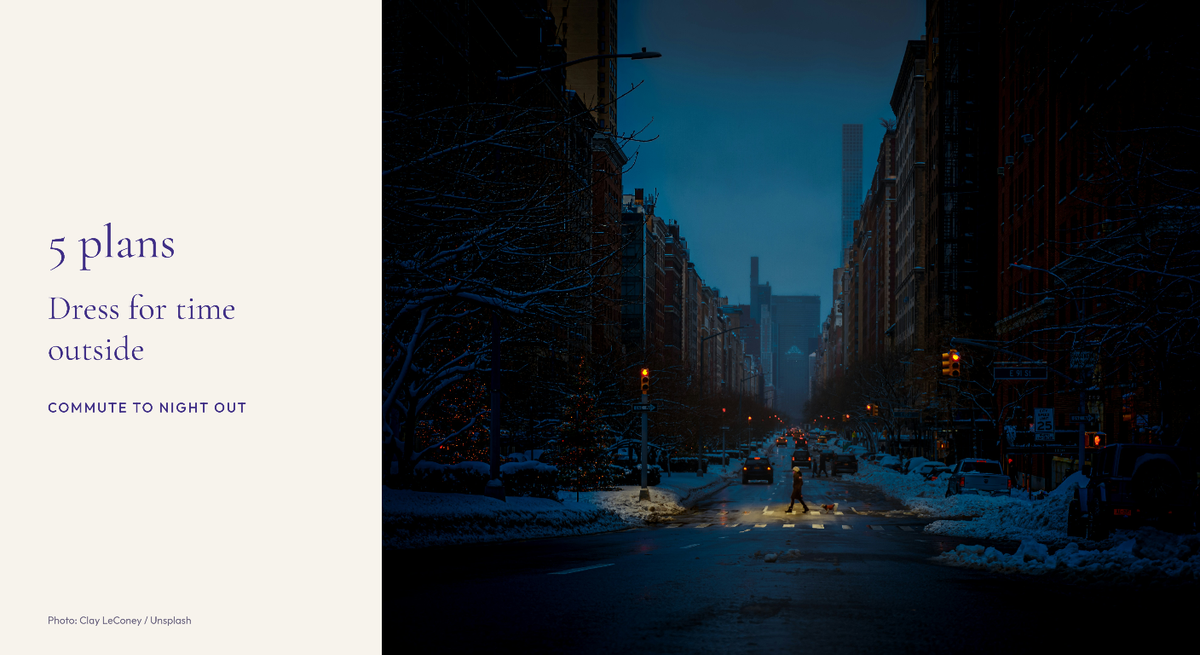
Use the same three layers and adjust the weight for how long you are outside and how much you move.
- Short commute or errands (under 20 minutes outside): midweight base, sweater, insulated parka or wool coat with a down vest, hat, scarf, mittens, insulated boots. Unzip as soon as you step inside a heated store or train.
- Long walk or dog walk (30 to 60 minutes): midweight merino base top and leggings under jeans or lined trousers, fleece, hooded parka, balaclava or gaiter, mittens over liners, wool socks and waterproof boots. Move steadily: you will warm up, so choose layers you can vent with zips rather than removing.
- Standing outside (game, parade, market, waiting for a bus): heavyweight base top and bottoms, thick sweater plus a puffer vest, your warmest knee-length parka, insulated boots one size roomy enough for thick socks, and hand warmers. Standing still is when cold wins.
- Office or indoor event: a fine merino base under a shirt or knit, tailored wool trousers or a dress with fleece-lined tights, and your parka over the top for the journey. Keep a pair of indoor shoes at your desk so your feet are not stuck in hot boots all day.
- Night out: a knit dress or trousers with a cashmere sweater, thermal leggings or a base layer underneath if you will walk, a long wool or down coat, a big scarf and gloves. If the dress code calls for lighter shoes, wear boots on the way and change.
Warning signs to take seriously
Know when cold has gone past uncomfortable. The National Weather Service describes frostbite as a loss of feeling and a white or pale appearance in fingers, toes, ear lobes or the tip of the nose, and hypothermia as a body temperature below 95°F with warning signs such as uncontrollable shivering, memory loss, disorientation, slurred speech and drowsiness. If you notice these, get indoors and seek medical help.
Slightly warmer forecast? Our guides to what to wear in 20 degree weather and 30 degree weather scale the same system up.
FAQ
What should I wear in 10 degree weather?
Three layers: a merino or synthetic base layer, a fleece, wool or down mid-layer, and a windproof, water-resistant coat that covers your hips, plus a hat, face cover, mittens, wool socks and insulated waterproof boots.
Is 10 degrees Fahrenheit dangerous?
It can be with wind or long exposure. With a 15 mph wind, 10°F feels like -7°F on the NWS wind chill chart. Covered skin and dry clothing keep a normal day outside comfortable; watch for numb, pale skin, which can signal frostbite.
How many layers should I wear at 10 degrees?
Usually three on your top half (base, mid, outer) and two on your legs (thermal leggings under trousers or jeans). Add a puffer vest if you will stand still outside for a long time.
Are mittens or gloves warmer?
Mittens. The CDC's winter guidance says mittens are warmer than gloves. Wear thin liner gloves underneath if you need to use your phone.
Can I wear jeans in 10 degree weather?
Yes for short trips, but denim alone is cold and slow to dry if it gets wet. Wear thermal leggings underneath, or switch to lined or wool trousers for long walks.
What is 10 degrees Fahrenheit in Celsius?
About -12°C.
Make your cold-weather wardrobe work harder
You probably own more cold-weather layers than you think; the trick is putting the right ones together. In Elara, add your coats, knits and base layers to your digital closet, and Daily Outfits suggests combinations from what you already have. Ask the AI stylist for a 10 degree outfit for work or a weekend walk and it builds the look from your own wardrobe. Try Elara free.
Your stylist, in your pocket
Stop reading about outfits. Start wearing them.
Elara knows your closet, shops every store and gets you dressed for any occasion.