
What to Wear in 20 Degree Weather: 4 Outfits That Stay Warm
At 20°F wear a wicking base, a warm mid layer and a windproof insulated coat, plus hat, mittens and boots. Wind chill, 4 outfits and mistakes to skip.
 Mehul AgarwalFounder & CEO
Last updated: October 2026
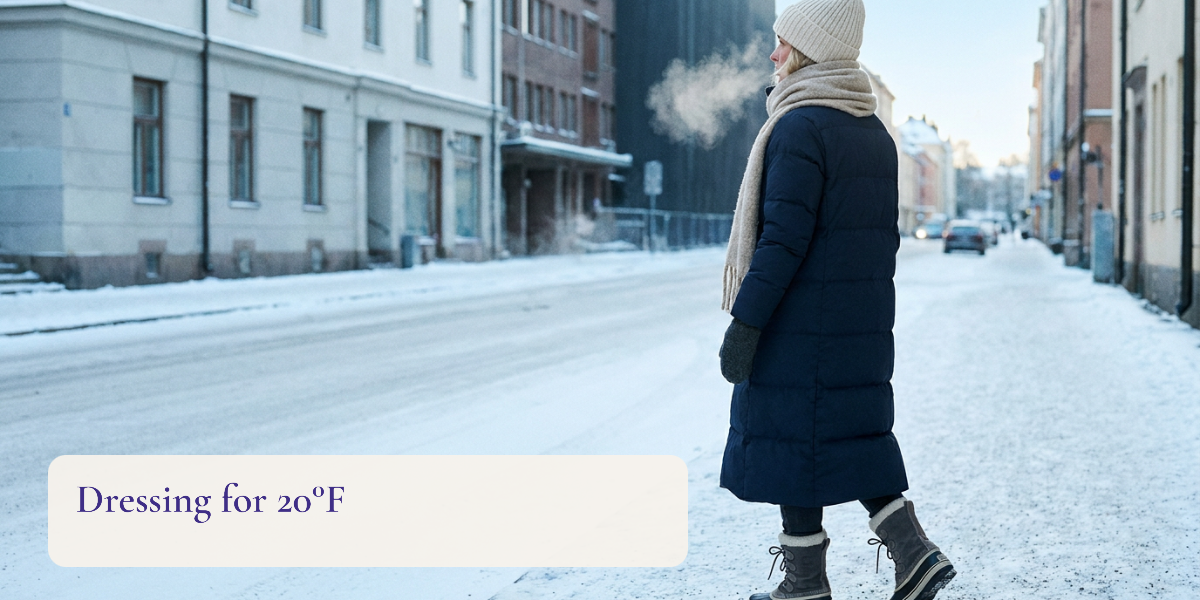
Quick answer: At 20°F, dress in three layers: a wicking base layer (merino or synthetic, never cotton), an insulating middle layer (fleece, wool or a light down vest) and a windproof insulated coat that covers your hips. Then cover every edge: a hat over the ears, a scarf or neck gaiter, mittens or insulated gloves, wool socks and waterproof insulated boots. Check the wind before you leave: by the National Weather Service's wind chill formula, 20°F with a 15 mph wind feels like about 6°F.
Twenty degrees is the point where a good wool coat and leather gloves stop being enough. It is about 12 degrees below freezing, sidewalks stay icy all day, and any wind makes exposed skin sting within minutes. The good news is that you do not need expedition gear for a commute or a weekend walk, just the right layers in the right order. This guide explains how cold 20°F really feels, the layering formula health and weather agencies recommend, four outfits for real days, and the small details that decide whether you are comfortable.
How cold does 20 degrees feel?
Air temperature is only half of it. Wind strips away the warm layer of air next to your skin, which is why the National Weather Service publishes a wind chill index. Using the NWS wind chill formula, a 20°F day feels like:
- About 13°F with a 5 mph breeze
- About 9°F with a 10 mph wind
- About 6°F with a 15 mph wind
- About 4°F with a 20 mph wind
- About 1°F with a 30 mph wind
So the same thermometer reading can call for very different outfits. On a still, sunny 20°F morning your coat and hat may be enough; on a windy one, your face and fingers are what get cold first, and a windproof outer layer matters more than an extra sweater.
The NWS wind chill chart shades three frostbite danger zones, where frostbite can develop in 30, 10 or 5 minutes; a typical 20°F day sits outside those zones, which begin at much colder combinations. Its brochure lists the warning signs anyway: loss of feeling and a white or pale look on fingers, toes, earlobes or the tip of the nose. If you see them, get indoors and warm the area slowly.
The 20-degree layering formula
MedlinePlus, the US National Library of Medicine's health site, recommends three layers for cold weather, each with a job:
- Base layer: move sweat away from skin. Lightweight wool, polyester or polypropylene. MedlinePlus is blunt about cotton: "Never wear cotton in cold weather, including your underwear," because it holds moisture against your skin.
- Middle layer: insulate. Fleece, wool, microfiber or down. A merino or lambswool sweater, a fleece zip or a thin down vest all work.
- Outer layer: block wind, snow and rain while letting sweat escape. MedlinePlus notes that "If your outer layer is not also breathable, sweat can build up and make you cold." At 20°F, an insulated down or synthetic coat that covers your hips is the easiest choice.
The National Weather Service's own cold-weather advice adds two rules worth remembering: "Mittens are better than gloves," and "Cover exposed skin to reduce your risk of frostbite or hypothermia."
For help choosing the coat itself, our winter coat buying guide explains fill power, wool content and waterproof ratings, and our merino vs synthetic base layer guide helps you pick the layer underneath.
4 outfits for 20-degree weather
1. The commute
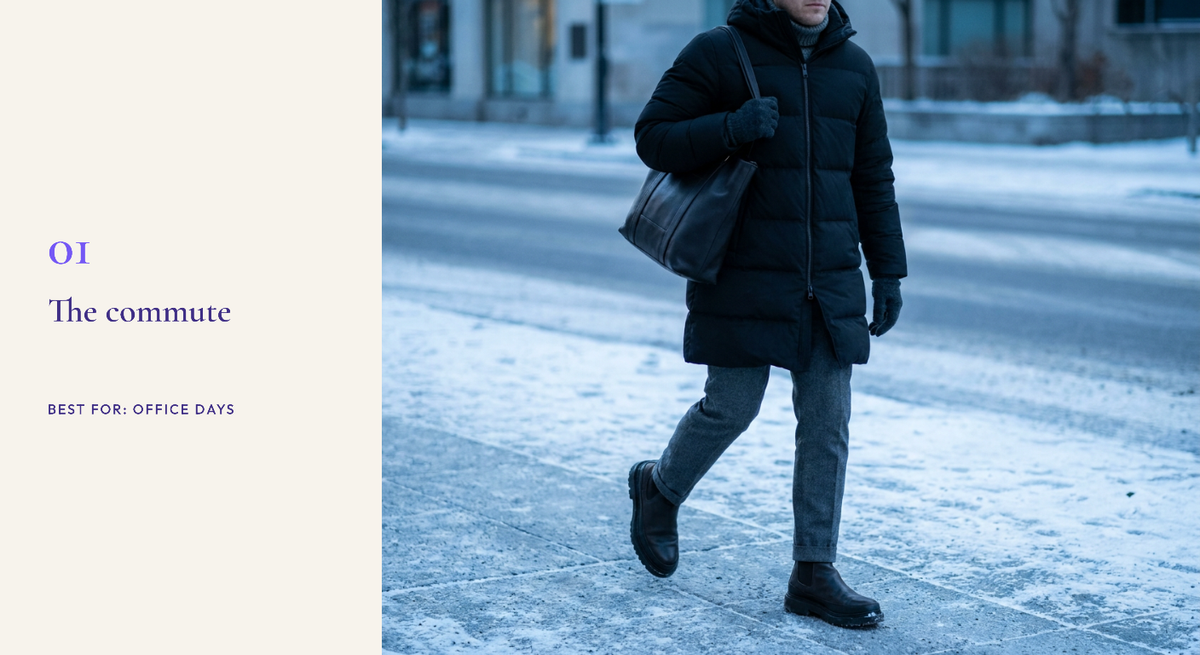
A knee-length down or synthetic-fill coat over wool trousers and a thin merino roll neck, with a long-sleeve base layer underneath. Add a wool beanie that covers your ears, lined leather gloves and waterproof insulated boots with a deep-lugged sole for icy sidewalks; carry office shoes in your bag. The long coat is the key piece: it keeps your thighs warm while you wait on a platform, and it lets you wear normal office clothes underneath.

Want this styled from your own closet?
Elara builds the look from what you own, then lets you try it on.
2. Weekend walk or errands
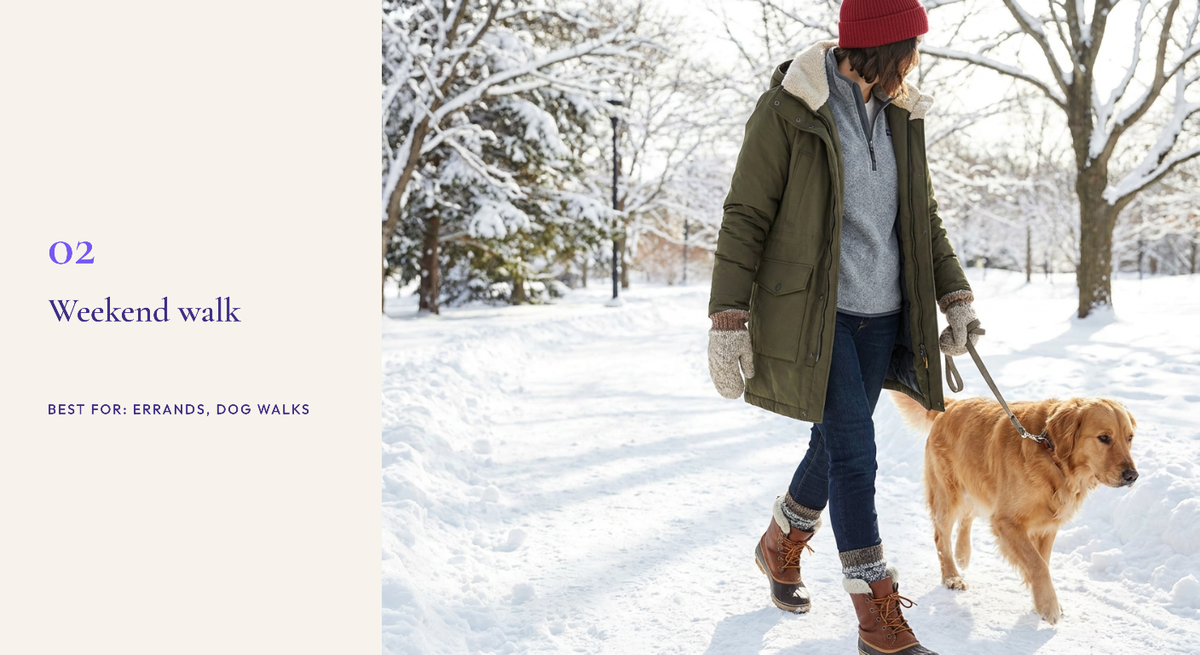
A hip-length insulated parka over a fleece pullover, with jeans and a thin thermal legging underneath. Denim is cotton and offers little warmth on its own, so the legging does the real work. Thick wool socks, snow boots, a chunky beanie and knit mittens finish it. Unzip the parka when you go into shops, so you do not start sweating and then chill when you step back out.
3. Dressed up, still warm
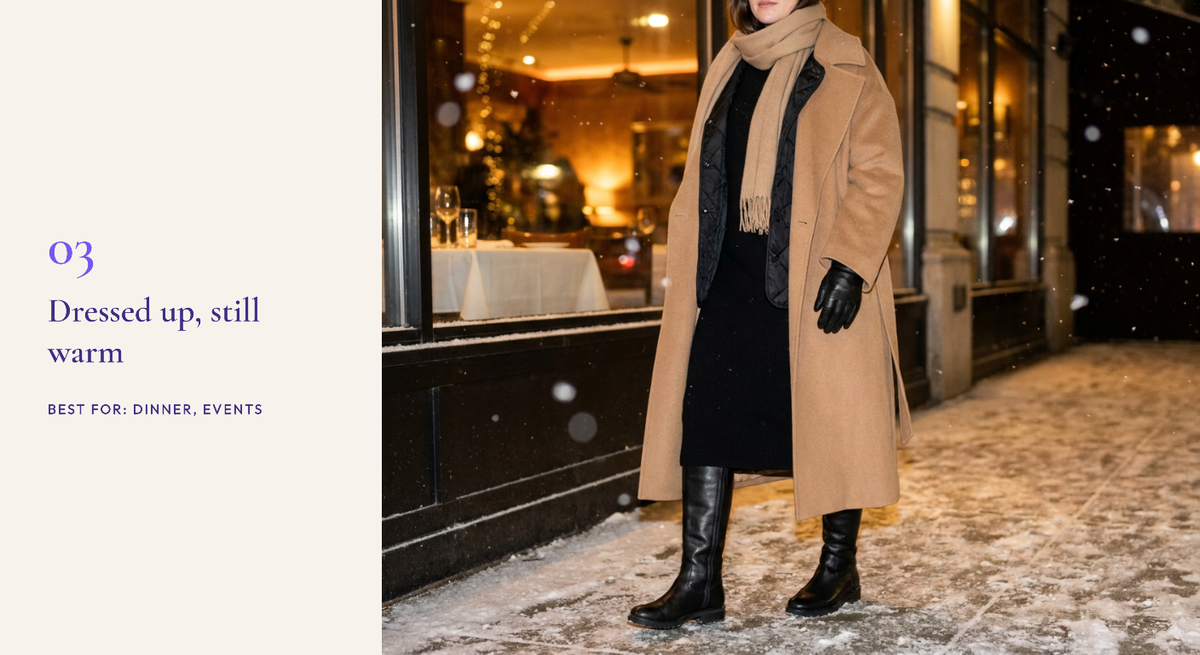
For dinner or an event, a long wool coat is elegant but not quite warm enough on its own at 20°F. Add a thin quilted liner jacket or vest under it, wear a knit dress or wool trousers, and choose fleece-lined tights rather than sheer ones. Knee-high boots with a rubber sole protect your legs from wind and keep you steady on ice. A cashmere scarf wrapped high and leather gloves complete the look.
4. Standing outside for hours
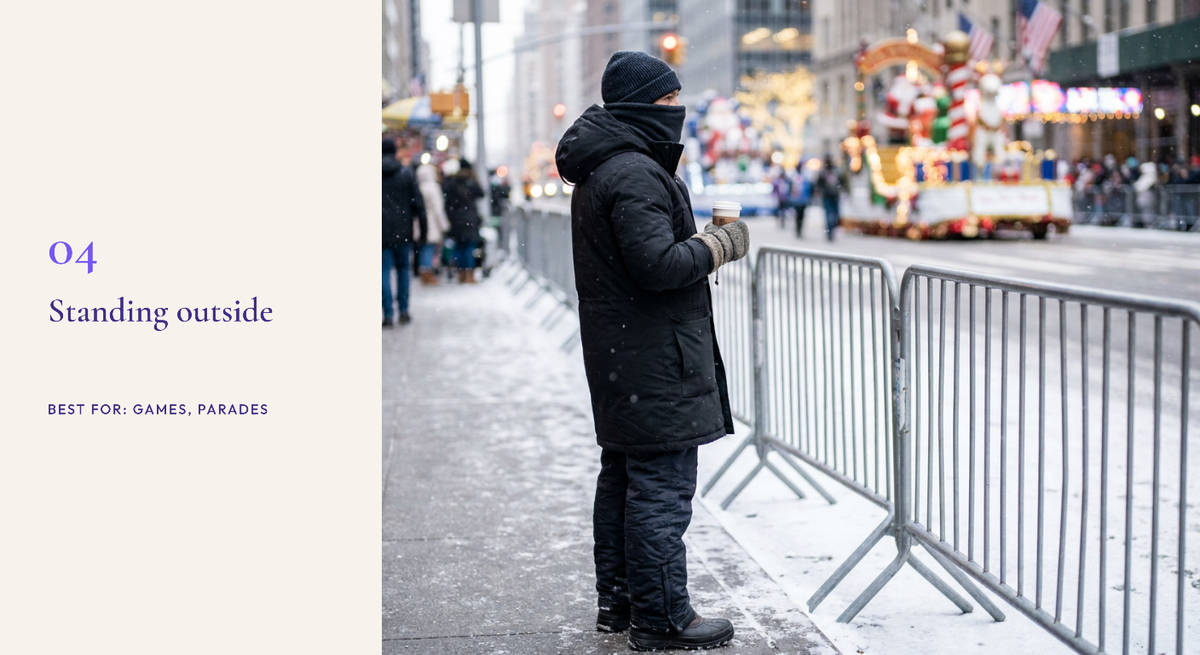
Football games, holiday parades and outdoor markets are colder than walking, because you are not generating heat. Go up a level on every layer: a mid-thigh insulated parka with a hood, insulated snow pants or fleece-lined trousers over a base layer, a neck gaiter you can pull over your nose, mittens over thin liner gloves, and your warmest boots with wool socks. Standing on cardboard or a foam pad keeps your feet off frozen concrete. Bring a spare pair of socks if there is any chance of wet feet.
For more on standing outside in the cold, our what to wear in 30 degree weather guide covers the slightly milder end of winter.
Head, hands, feet and face: cover every edge
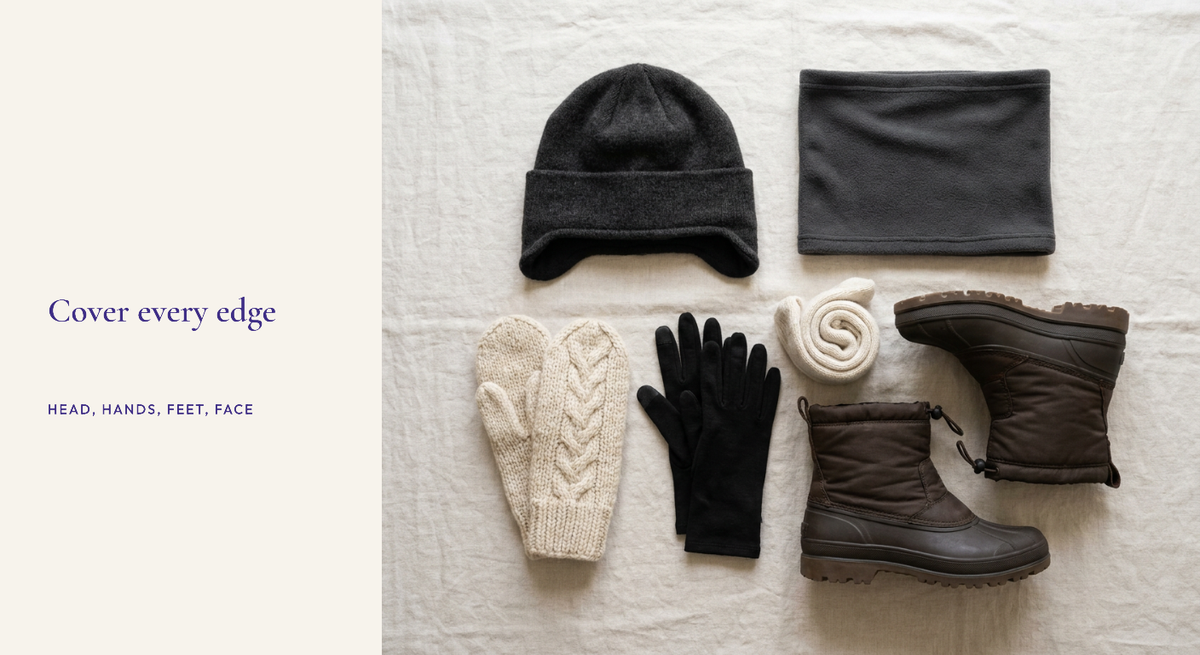
- Head and ears. NWS advice is to wear a warm hat in winter. Choose one that pulls fully over your ears; the NWS lists earlobes among the areas frostbite most often affects.
- Face and neck. A scarf or fleece neck gaiter closes the gap at your collar, where a lot of warm air escapes. On windy days, pull it over your nose and cheeks.
- Hands. Both the NWS and MedlinePlus say mittens are warmer than gloves; inside a mitten, your fingers share warmth. If you need your phone, wear thin touchscreen liners under mittens.
- Feet. MedlinePlus recommends wool or polypropylene socks and warm, waterproof boots. Make sure boots are not tight with thick socks; a squeezed foot loses circulation and gets cold faster.
Common mistakes at 20 degrees
- Cotton next to skin. A cotton T-shirt or cotton socks hold sweat and feel cold for the rest of the day.
- One huge sweater instead of layers. Layers trap air and let you adjust; MedlinePlus advises removing layers as you warm up, since heavy sweating can make you colder.
- A short jacket with thin trousers. Your legs and hips lose heat too. A longer coat or a thermal legging makes a big difference.
- Fashion boots with smooth soles. Ice is the bigger risk than cold at this temperature. Look for deep rubber lugs.
- Ignoring wet clothes. The NWS says to change into dry clothing immediately if you get wet. Snow on cuffs and socks counts.
FAQ
Is 20 degrees cold enough for a winter coat?
Yes. At 20°F you want an insulated, windproof coat that covers your hips, plus a hat, gloves or mittens and a scarf. A wool coat works only with a warm layer underneath.
Do I need a base layer at 20 degrees?
If you will be outside for more than a short walk, yes. A thin merino or synthetic base layer under your clothes adds warmth without bulk and moves sweat away from your skin.
Can I wear jeans in 20 degree weather?
For short trips, yes, but add a thermal legging underneath. Jeans are cotton, which holds moisture and offers little insulation in wind.
How long can you stay outside at 20 degrees?
Properly dressed, most people are comfortable for a normal walk or commute. The NWS frostbite zones start at much colder wind chills, but watch for numb or pale skin on your fingers, toes, ears and nose and go inside if you notice it.
Are mittens or gloves better at 20 degrees?
Mittens. The National Weather Service says mittens are better than gloves; inside a mitten your fingers keep each other warm. Wear thin liners underneath if you need to use your phone.
Build your 20-degree outfits from what you own
Elara, your AI personal stylist, checks the weather and suggests a daily outfit from your own wardrobe, so on a 20°F morning you get the right base layer, sweater, coat and boots without digging through your closet. Try Elara free.
Your stylist, in your pocket
Stop reading about outfits. Start wearing them.
Elara knows your closet, shops every store and gets you dressed for any occasion.