
How to Drape a Shawl Over a Saree or Lehenga: 6 Ways
Six ways to drape a shawl over a saree or lehenga, matched to each wedding function, plus how to pin it safely, check a pashmina label and store it.
 Mehul AgarwalFounder & CEO
Last updated: October 2026
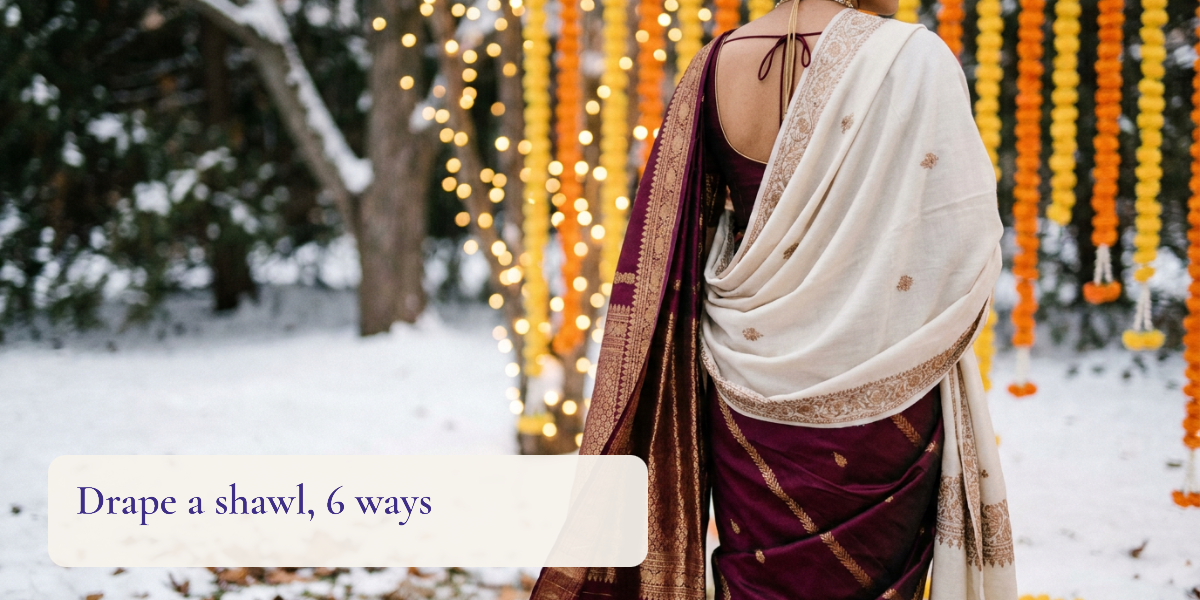
Quick answer: To drape a shawl over a saree or lehenga, match the drape to the event: over both shoulders for cold outdoor ceremonies, over the pallu shoulder and pinned for sarees, hooked in the elbows for lehenga photos, lightly over the head for rituals, belted over gowns, and wrapped around the neck when moving between venues. Pin heavy shawls at the shoulder seam, keep sharp jewellery away from fine wool, and fold the shawl (never hang it) when you store it.
Winter wedding season in India runs from November into February, and many of the best functions happen outdoors after sunset. A shawl is the most elegant way to stay warm without hiding the outfit you planned for months. The trick is that a shawl drapes differently from a dupatta: it is wider, heavier and slides off silk more easily. This guide walks through six drapes step by step, which one suits which function, how to pin without damaging the weave, and how to choose and store a pashmina so it lasts for many seasons.
Before you drape: pick the right shawl for the outfit
Three choices decide whether a drape looks deliberate or bulky.
- Weight. A fine pashmina or wool-silk stole folds into neat pleats and suits every drape below. A thick, heavily embroidered shawl looks best in the simplest drapes (both shoulders, one shoulder) because its embroidery is the point.
- Colour. Either match the shawl to one colour already in your outfit, or pick a neutral (ivory, camel, charcoal) that you can rewear across several functions. N.Peal, the cashmere maker, suggests a neutral pashmina for exactly this reason: it works again and again with different outfits.
- Embroidery placement. Most embroidered shawls are worked heaviest along the borders and corners. Decide which border should show before you drape, because it is hard to rotate a pinned shawl later.
If you are also wearing a dupatta, choose one or the other for the cold part of the evening. Two heavy layers on one shoulder tend to slide. For dupatta drapes, see our step-by-step dupatta draping guide.
6 ways to drape a shawl over a saree or lehenga
1. Both shoulders (the classic)
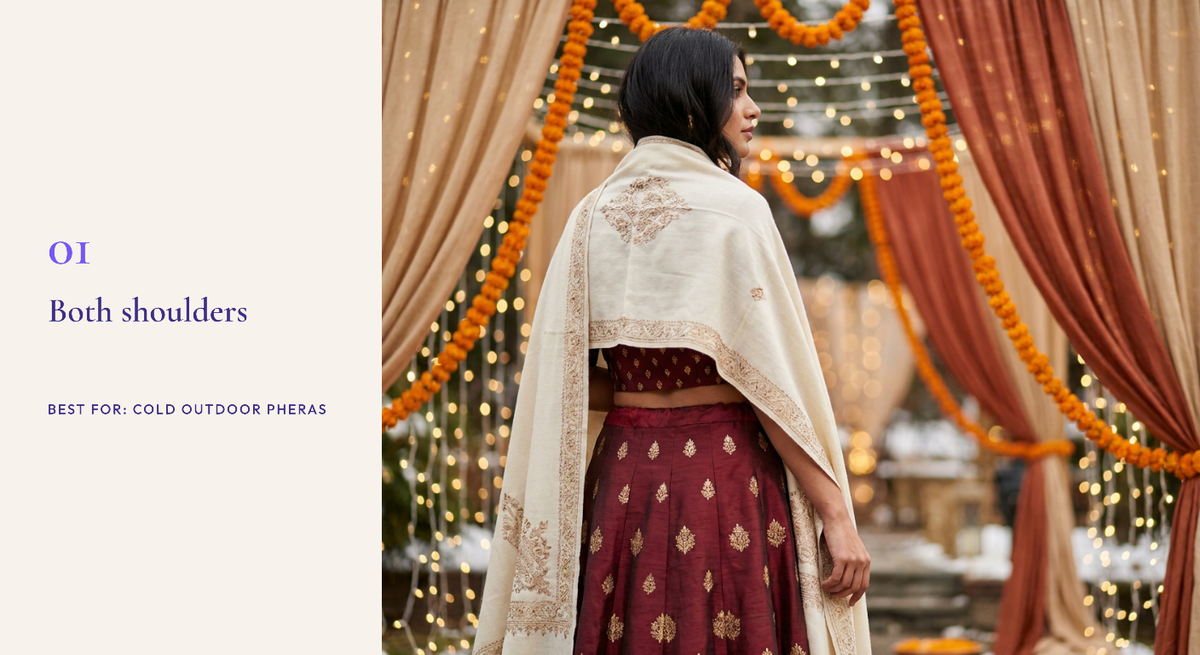
Hold the shawl lengthwise behind you, lift it over both shoulders and let the two ends fall evenly to the front, roughly to the elbows. Pull the back edge down so it sits below the blouse line rather than bunching at the neck. Shahkaar, a Kashmir shawl house, calls this the drape for outdoor and late-night functions because it shows the embroidery without hiding the outfit.
Best for: pheras and outdoor ceremonies on cold nights, when you need full warmth across your back. Mistake to avoid: letting the ends hang unevenly; check in a mirror that both borders sit at the same height.
2. One shoulder, pinned
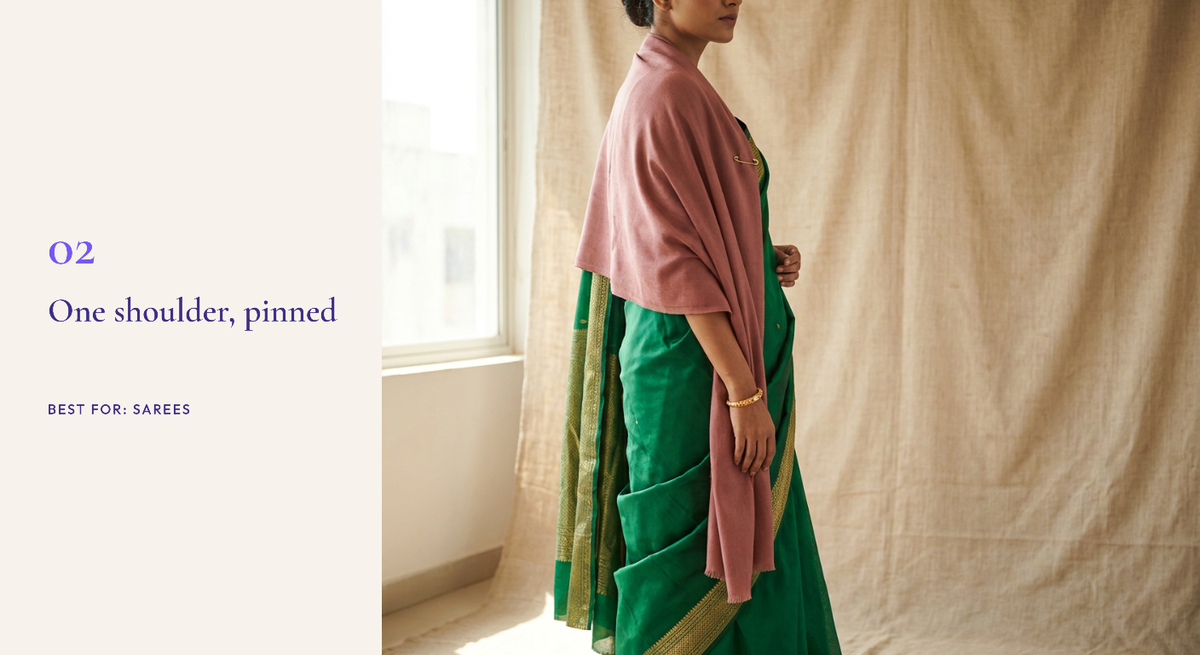
This is the most natural drape over a saree. Fold the shawl lengthwise into a strip about a third of its width. Lay it over the same shoulder as your pallu (usually the left), on top of the pallu, and let the long end fall down your back. Secure it with a small safety pin through the shawl and the blouse shoulder seam, on the inside where it will not show.
Why it works: your right arm stays free for eating, greeting and holding a plate, and the shawl follows the line the pallu already makes. Pinning tip: pin through the seam, not through the open weave, and use a fine brass or steel pin rather than a thick brooch, so you do not leave a hole in fine wool.
3. Elbow drape
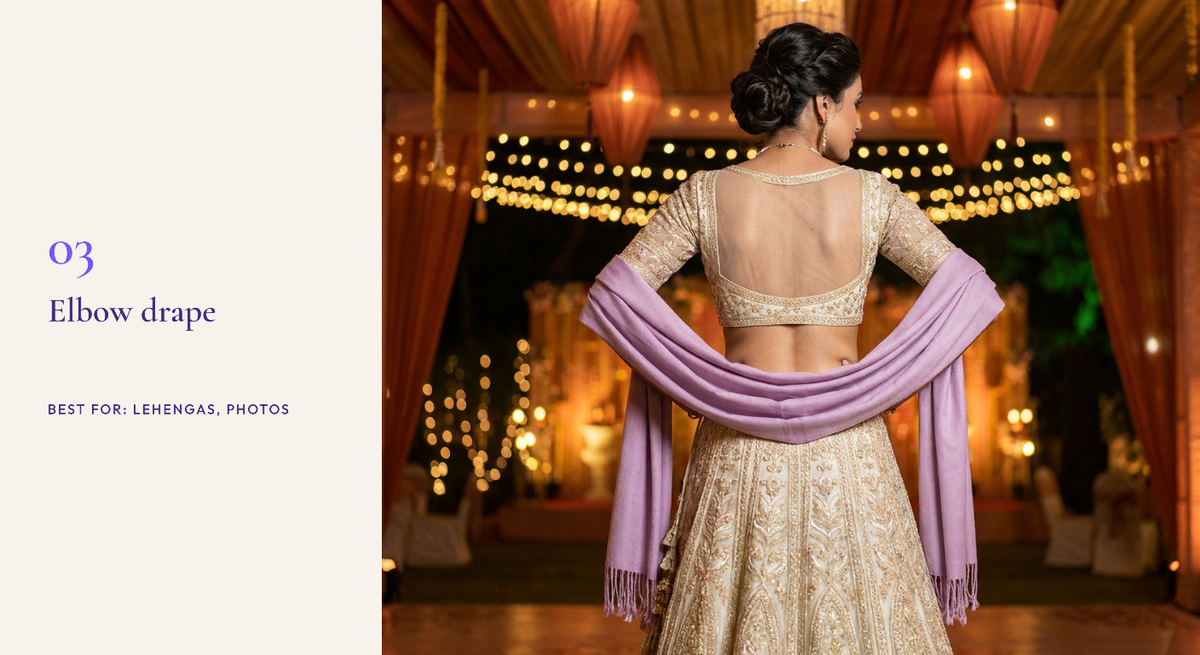
Hold the shawl open behind you, lower it until it rests across your mid-back, then hook it loosely in the crook of both elbows so the ends fall at your sides. Your blouse back and shoulders stay visible, which is why this drape photographs so well with lehengas.
Best for: sangeet, reception photos and any moment you want the blouse to show. It is not the warmest drape, so it works best with a light stole indoors or under heaters. Tip: keep your elbows slightly bent; a straight arm lets the shawl slide to the floor.
4. Over the head
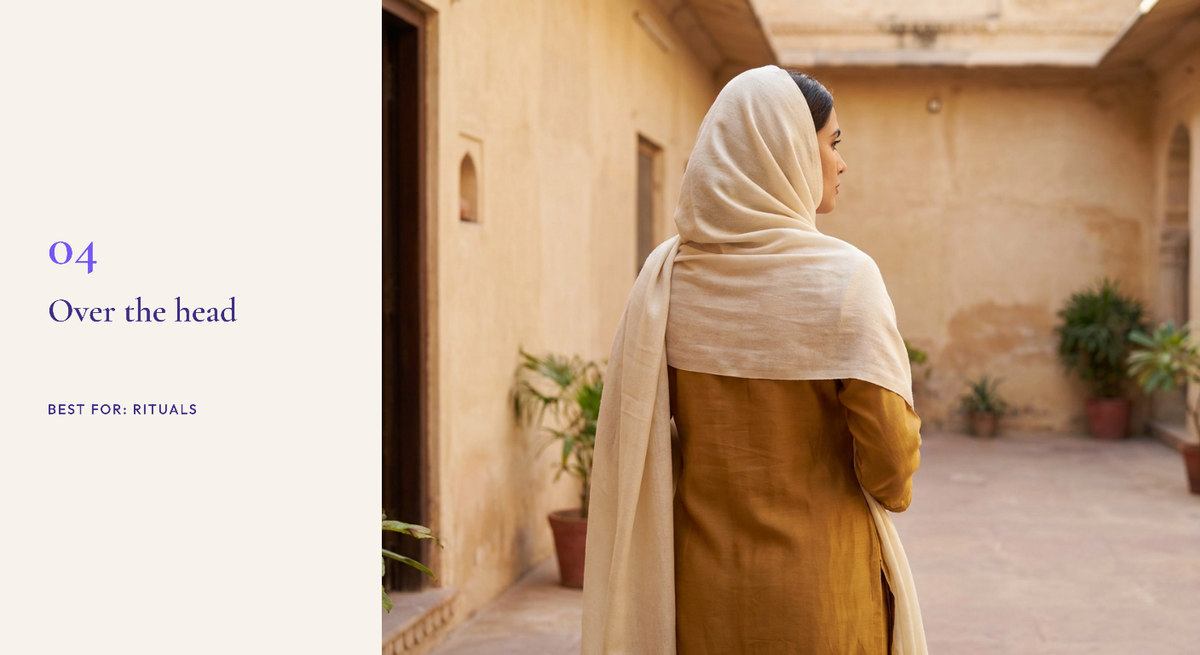
Place the centre of a light shawl on the back of your head, let it fall over both shoulders, then toss one end gently over the opposite shoulder so it stays in place. Shahkaar suggests this drape for ceremonies and rituals, where covering the head can be a sign of respect. Customs differ by family, community and place of worship, so follow your hosts' lead.
Best for: ceremonies, gurdwara visits during wedding functions, and rituals with elders. Tip: a fine, light shawl is easier here; a heavy one pulls backwards off the head.
5. Belted
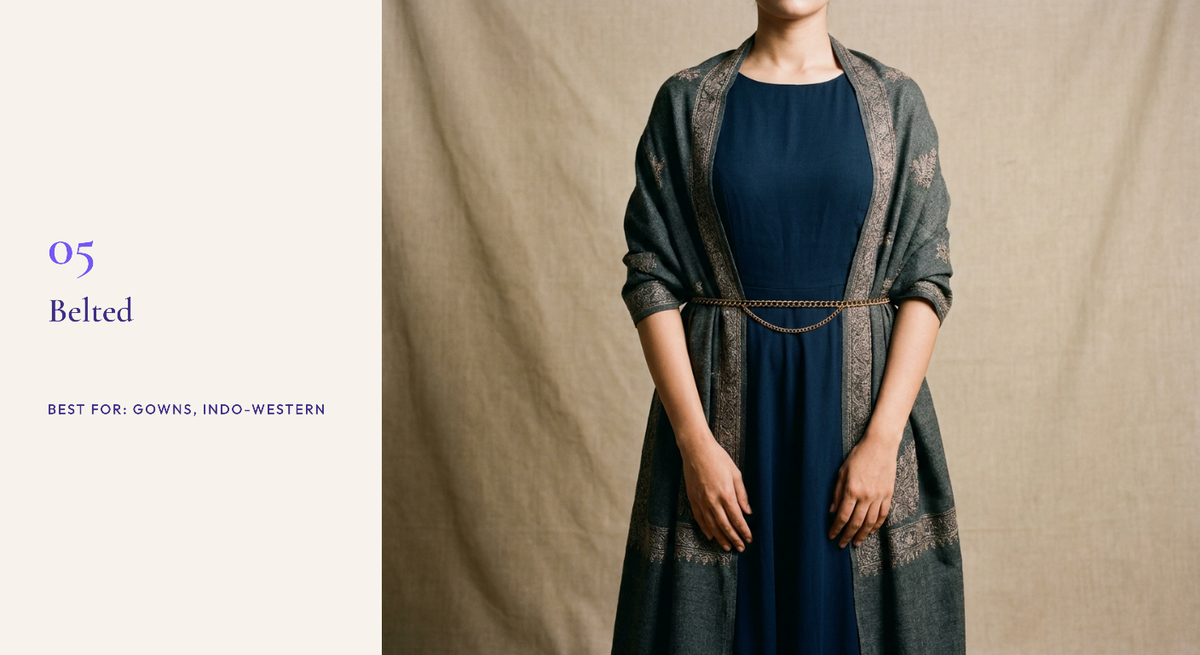
Drape the shawl over both shoulders with the ends falling straight down the front, then add a slim belt at your natural waist, over both the outfit and the shawl. Shahkaar recommends this for gowns and long dresses because it defines the waist and keeps the shawl in place for hours.
Best for: Indo-western gowns, cocktail nights and anyone who wants their hands completely free. Tip: a slim chain or fabric belt works better than a wide leather one, which can crush embroidery. Skip it with a lehenga that already has a heavy waistband.
6. Neck wrap
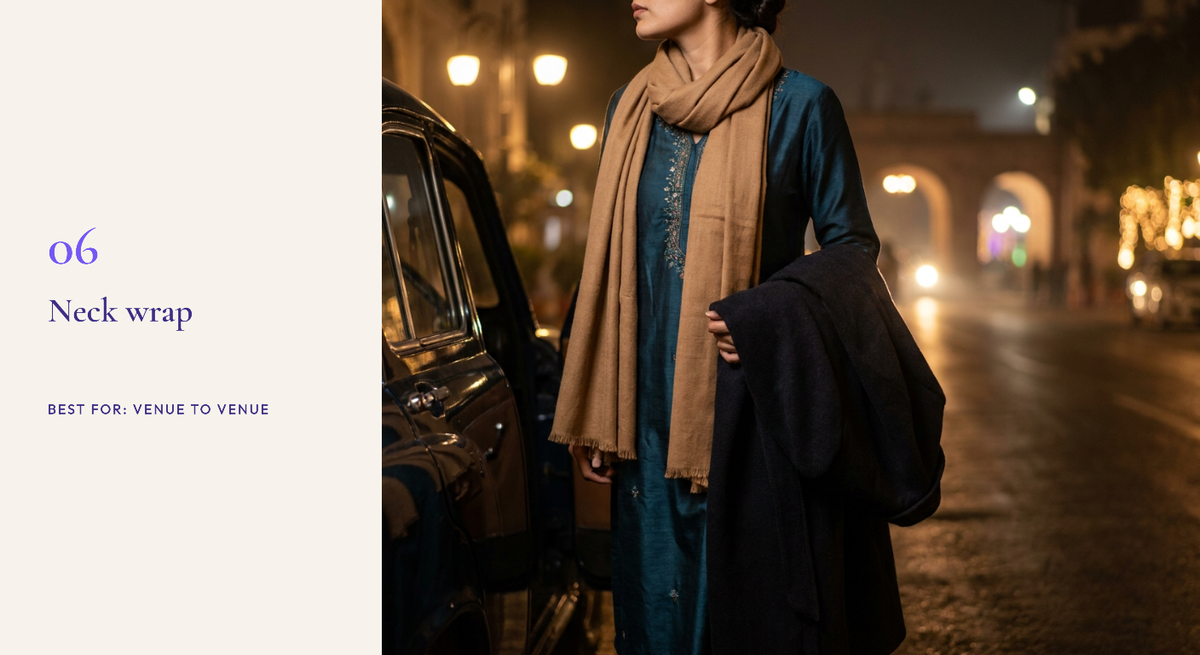
Wrap the shawl once, loosely, around your neck and let both ends hang down the front. It is the quickest drape and the warmest around the throat, which matters most in the car, between venues, or while waiting outside for a baraat.
Best for: travel between functions, late-night drives home, and simpler kurta sets. Tip: swap to drape 1 or 2 when you arrive, so the neck wrap does not flatten your jewellery or blouse neckline in photos.

Want this styled from your own closet?
Elara builds the look from what you own, then lets you try it on.
Which drape for which function
- Haldi and mehendi (daytime): usually no shawl, or a light stole in the elbow drape for cooler mornings.
- Sangeet: elbow drape or one shoulder pinned, so you can dance. Shahkaar also suggests a small front knot for dancing.
- Pheras or outdoor night ceremony: both shoulders, with the shawl pinned at one shoulder for security.
- Reception: one shoulder pinned, or belted over a gown.
- Rituals with elders: over the head, if that is the custom.
For more ways to stay warm without layering over everything, see our guide to staying warm at a winter wedding in a saree, lehenga or sherwani.
If you are buying a pashmina this season
Genuine Kashmir pashmina is protected as a geographical indication (GI). A report by SciDev.Net, republished by Eco-Business, describes how shawls that pass testing at the Pashmina Testing and Quality Certification Centre in Srinagar receive a non-detachable label with a unique number and the artisan's name. The same report notes that pashmina fibre is typically 12 to 16 microns and that many fakes add nylon to make machine spinning possible.
What this means when you shop:
- Ask for the GI label and its number, and buy from a seller who can explain it. Kepra, a pashmina seller, says buyers can verify the label's serial number and should expect GI-certified pieces to carry it stitched on.
- Be wary of very low prices for "pure pashmina". Hand spinning and hand weaving take time, so a very cheap shawl is more likely a blend.
- Feel the weight. A genuine pashmina is light for its size and warm on the skin; heavy and slippery often means added synthetic fibre.
How to store a shawl between weddings
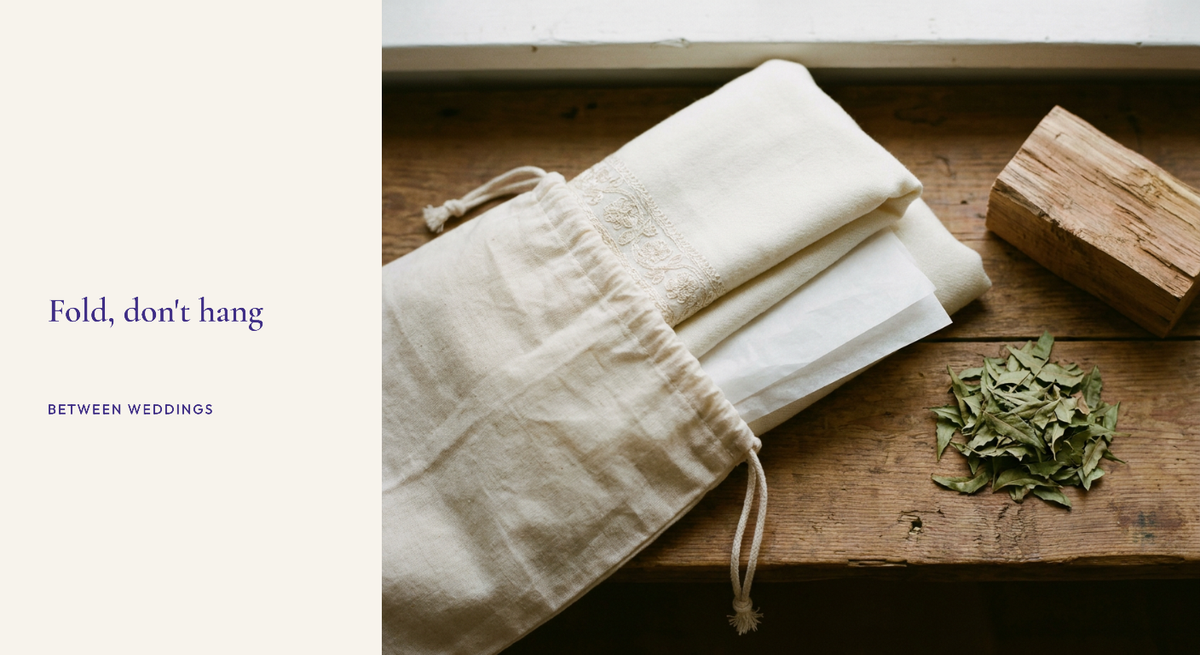
- Fold, do not hang. Hanging stretches fine wool along the hanger line. Fold loosely with acid-free tissue between the layers so creases do not set.
- Use a breathable cotton cover. Shahkaar advises storing shawls in a cotton cover away from harsh light, and using professional dry cleaning rather than washing an embroidered piece at home.
- Guard against moths. Clean the shawl before storing, since food and body oils attract moths, and add cedar or dried neem leaves to the box. Air it out every few weeks during the season.
- Watch your jewellery. Shahkaar also warns that sharp jewellery can snag the weave; take off spiky rings and bangles before wrapping or unwrapping a fine shawl.
FAQ
Can I wear a shawl and a dupatta together?
You can, but it is usually too much fabric on one shoulder. Wear the dupatta for the ceremony and photos, and swap to a shawl in the both-shoulders or neck-wrap drape when you go outside.
Which shoulder should the shawl go on with a saree?
The same shoulder as the pallu, usually the left in a Nivi drape. Laying the shawl over the pallu keeps one clean line and leaves your right arm free.
How do I stop a shawl slipping off a silk saree?
Fold it into a narrower strip so less fabric is pulling, and pin it through the blouse shoulder seam on the inside with a small, fine safety pin. A belt also works over gowns.
What colour shawl goes with a red bridal lehenga?
Ivory, gold and deep jewel tones are the safest. Shahkaar suggests deep reds, golds and jewel tones with traditional bridal outfits; ivory gives the most contrast in photos.
How can I tell if a pashmina shawl is real?
Look for the stitched Kashmir Pashmina GI label with a unique number, buy from a seller who can explain the certification, and be cautious of very cheap "pure pashmina" that feels heavy or slippery.
Plan every function's look in one place
Wedding season means several outfits, several venues and very different temperatures in one week. Elara, your AI personal stylist, can plan each function's look from the clothes you already own, suggest which shawl or layer works with each outfit, and save the looks to your calendar so you are not deciding at midnight. Try Elara free.
Your stylist, in your pocket
Stop reading about outfits. Start wearing them.
Elara knows your closet, shops every store and gets you dressed for any occasion.