

Thermal Base Layers Explained for Winter 2026: Merino vs Synthetic vs Silk, Which Weight to Buy and How to Wear Them
Thermal base layers explained: merino vs synthetic vs silk, what 150, 200 and 250 gsm mean, how to wear thermals under everyday clothes, and how to wash them.
 Mehul AgarwalFounder & CEO

Last updated: October 2026
Quick answer: A thermal base layer works by moving sweat off your skin, not by being thick, so fit and fabric matter more than bulk. For everyday winter wear (commutes, offices, holiday markets, Thanksgiving travel), a lightweight or midweight merino or merino blend in a snug fit suits most people; choose synthetic if you need fast drying, low cost and easy washing; choose silk only for low-effort, low-sweat days. Avoid cotton as a base layer in cold, wet weather. Midweight (roughly 200 to 300 gsm) is the most versatile winter weight.
The first properly cold weeks of the season tend to send people shopping for "thermals", often during Black Friday sales, and the choice looks simple until you meet the labels: 150, 200 or 250 gsm, merino or polyester, "lightweight" or "expedition". Buy the wrong one and you either sweat through a heated office or still feel cold at the bus stop.
This guide explains how base layers actually work, how to read the weight numbers, which fabric suits which day, and how to wear them under normal clothes without anyone noticing. It draws on outdoor-gear guidance from REI and Switchback Travel, cold-weather advice from the City of Calgary, fibre information from the Woolmark Company and care instructions from merino maker Icebreaker. For the layer on top, see our winter coat buying guide.
How a base layer keeps you warm (it is not the insulation)
REI's guide to base layers makes a useful point: a base layer's main job is moisture management, and most of your warmth comes from the insulating middle layer, not the base. Sweat sitting on your skin cools you as it evaporates. A base layer pulls that moisture away from the skin and spreads it out so it can evaporate from the fabric instead.
That only works if the fabric touches you. REI advises a "comfortably snug fit everywhere", because wicking depends on direct contact with the skin; a loose base layer may feel cooler but does its job less efficiently.
It is also why the classic advice about cotton holds. The City of Calgary's guide to dressing for the weather says to avoid cotton clothing and socks on colder days because cotton "absorbs moisture and stays wet and heavy", and Switchback Travel warns that wet cotton loses its insulation. A cotton T-shirt under a jumper is fine for a dry office day, but it is the wrong choice under a coat on a long, cold walk where you might sweat.
The full system, as the Calgary guide lays it out: a snug base layer of wool or polyester, an insulating mid layer of wool or fleece, and a waterproof outer layer with room for the layers underneath.
Reading the weight: what 150, 200 and 250 gsm mean
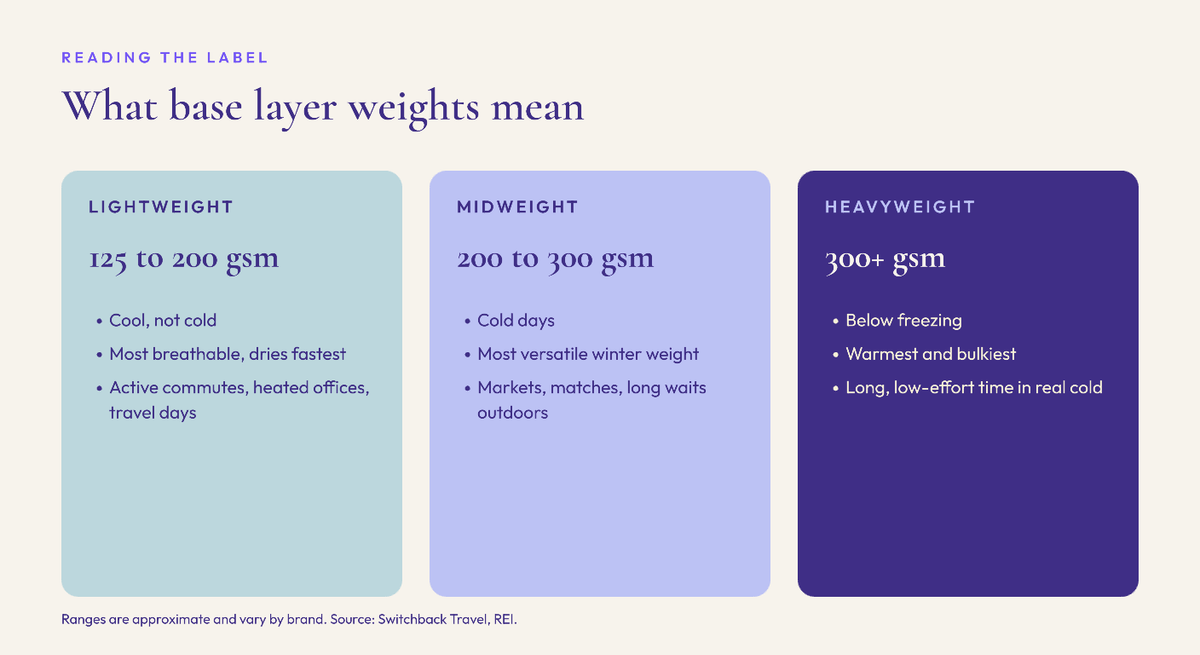
Base layer weight is usually given in grams per square metre (gsm or g/m²), sometimes alongside words like lightweight or midweight. Switchback Travel groups them roughly like this, while noting that weight specs are not standardised across brands:
- Lightweight, about 125 to 200 gsm. The most breathable and quickest drying, and the least warm. REI matches lightweight to moderate to cool temperatures. Good for active commutes, heated offices and travel days when you move between cold platforms and warm trains.
- Midweight, about 200 to 300 gsm. Switchback calls this the most versatile winter choice, and REI matches it to cold temperatures. Good for long periods outdoors at low effort: holiday markets, outdoor sports matches, waiting at bus stops, winter walks. Can feel muggy in mild weather or a heated room.
- Heavyweight, above about 300 gsm. The warmest and bulkiest, for below-freezing conditions according to REI. Switchback notes it can get "swampy" and is often worn over a lighter layer. For most city wardrobes it is more than you need.
A useful rule from those definitions: the less you move, the heavier the base layer can be. If you will be walking briskly with a heavy coat, go lighter and let the coat do the insulating.
Merino, synthetic or silk: which fabric for which day

Merino wool. Fine, soft and warm for its weight. REI says merino resists odour well but feels less dry than synthetics and takes longer to dry. According to the Woolmark Company, the industry body that promotes wool, wool can absorb up to 35 per cent of its own weight in water vapour, which it says helps keep the skin surface drier and discourages odour. The trade-offs, as Switchback lists them: it costs more, is less durable, is slow to dry and usually needs line drying. Best for: long days, travel when you will rewear the same layer, and anyone who runs warm and cold through the day.
Synthetic (mostly polyester, sometimes nylon or polypropylene, often with a little spandex). REI says synthetics give the driest feel and are the most durable. Switchback adds that they are affordable, quick to dry and easy to care for, but hold odour more than merino. Best for: exercise, sweaty commutes, budget buys and anyone who wants to wash and wear the next day.
Merino blends. Merino mixed with nylon or polyester, or synthetic bodies with merino panels. REI notes that blends improve durability. Best for: an everyday layer you want to last more than a couple of seasons.
Silk. Soft, light and comfortable under fitted clothes. REI suggests it for low-intensity activities, rates its wicking as moderate and notes that it is not naturally odour resistant, so it should be washed after every wear. Switchback adds that it is fragile and needs hand-washing. Best for: wearing under tailoring or a dress at a seated event, and people who find wool itchy.
Cotton. Skip it as a cold-weather base layer for the reasons above.
How to wear thermals under everyday clothes
A base layer you can see, or one that makes your clothes fit badly, rarely gets worn. A few practical choices fix that:
- Match the neckline to your top layer. A scoop or crew neck disappears under a crew-neck jumper or a buttoned shirt with one button open; a high crew or half-zip suits a roll neck. A V-neck base layer works under a V-neck sweater.
- Pick colour by what sits on top. Under a white or pale shirt, a skin-tone or light grey layer shows less than white. Black disappears under dark knits.
Want this styled from your own closet?
Elara builds the look from what you own, then lets you try it on.
- Watch the sleeves. Three-quarter sleeves avoid a thermal cuff peeking out of a blazer. If you wear full sleeves, push them up slightly before putting on the outer layer.
- Use thermal leggings or long johns under trousers, not jeans that are already tight. Size up in trousers or choose a straight leg if you plan to layer regularly, since a snug base layer plus skinny jeans restricts movement.
- For dresses and skirts, thermal tights or a thin merino legging under knee-high boots keeps the look and the warmth.
A quick decision guide
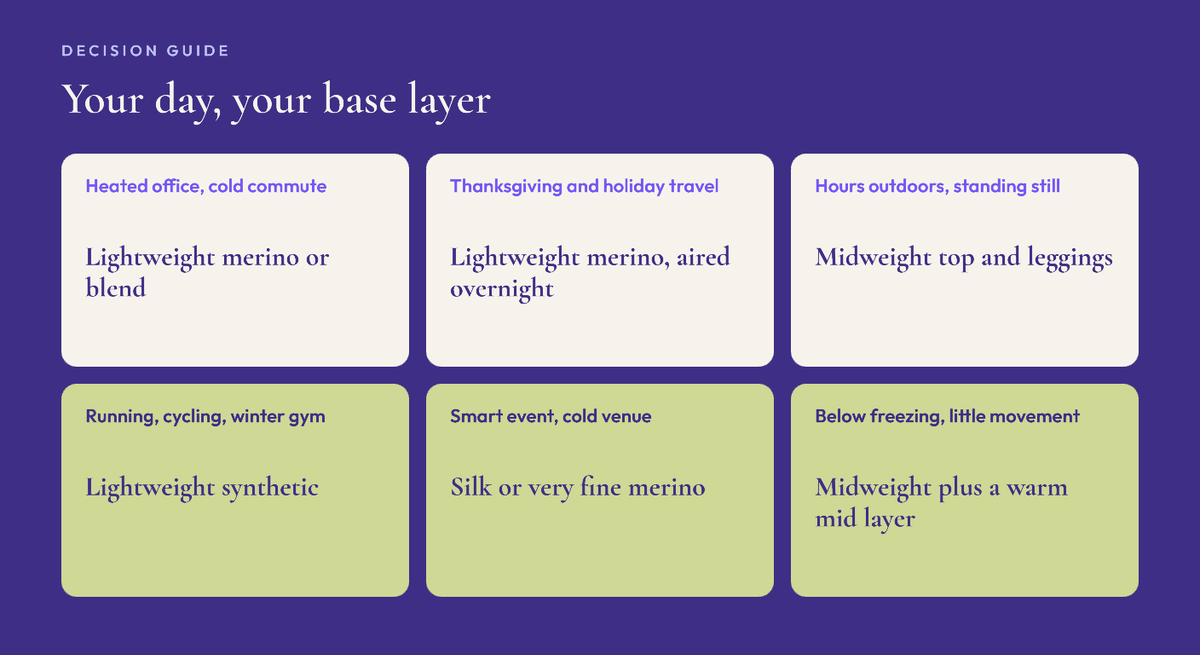
- Heated office plus a cold commute: lightweight merino or merino blend, snug fit, three-quarter or long sleeves, so you do not overheat indoors.
- Thanksgiving or holiday travel: lightweight merino you can wear for two days and air overnight, since merino resists odour.
- Hours outdoors standing still (markets, matches, parades): midweight merino or synthetic top and leggings, plus an insulating mid layer.
- Running, cycling or the gym in winter: lightweight synthetic, which dries fastest.
- Smart event in a cold venue: silk or very fine merino under a shirt or dress.
- Below-freezing days with little movement: midweight base plus a warm mid layer first; consider heavyweight only if that is not enough.
Caring for base layers so they last
How you wash a base layer decides how long it keeps working. Icebreaker's care instructions for merino are a good model:
- Wash less. Air merino between wears; wash it only when it needs it.
- Wash gently. Turn it inside out, close any zips, and use a gentle 30°C cycle with a low spin and a mild or wool detergent.
- Skip fabric softener and bleach. Icebreaker says they can coat the fibres and affect breathability. The same caution is worth applying to synthetic base layers, whose job also depends on wicking.
- Dry flat or in the shade, not in the dryer. Remove it as soon as the cycle ends and air dry away from direct sun.
- Store folded and moth-proofed. Fold rather than hang, keep it in a breathable cotton bag rather than vacuum storage, and make sure it is clean and completely dry before storing, with cedar as a natural moth deterrent.
Expect some pilling on merino over time; Switchback notes pilling and small holes as normal wear, and wearing it under an outer layer protects it. Our guide to caring for wool and cashmere sweaters explains how to de-pill safely.
FAQ
Is merino or synthetic better for a base layer?
Neither is better overall. Merino resists odour and stays comfortable over a long day, which suits travel and everyday wear. Synthetics dry faster, cost less and last longer, which suits exercise and frequent washing. Blends sit in between.
What gsm base layer should I buy for winter?
For most city winters, midweight (about 200 to 300 gsm) is the most versatile. Choose lightweight (about 125 to 200 gsm) if you are active or spend most of the day indoors, and heavyweight only for long, low-effort time below freezing.
Should thermals be tight or loose?
Snug. REI advises a comfortably snug fit everywhere because a base layer can only wick sweat when it touches your skin. It should not restrict movement or dig in at the cuffs or waistband.
Can I wear a cotton T-shirt as a base layer?
On a dry day with little sweating it will do, but it is a poor choice for cold, wet or active days. Cotton absorbs moisture and stays wet, which the City of Calgary and Switchback Travel both flag as a reason to avoid it in the cold.
How often should I wash merino thermals?
Less often than cotton. Merino resists odour, so airing it between wears is often enough. Wash when it needs it, on a gentle 30°C cycle with wool detergent, and dry it flat.
Make one good base layer work with the whole wardrobe
A single well-chosen base layer works under far more outfits than you might expect. Elara, an AI personal stylist app, can show you which shirts, knits and dresses in your digital closet work over it, and plan layered looks for the days on your calendar, so the thermals you buy this Black Friday actually get worn. Try Elara free before the cold sets in.
Your stylist, in your pocket
Stop reading about outfits. Start wearing them.
Elara knows your closet, shops every store and gets you dressed for any occasion.


