
What to Wear in 30 Degree Weather: 4 Outfits and a Layering Formula
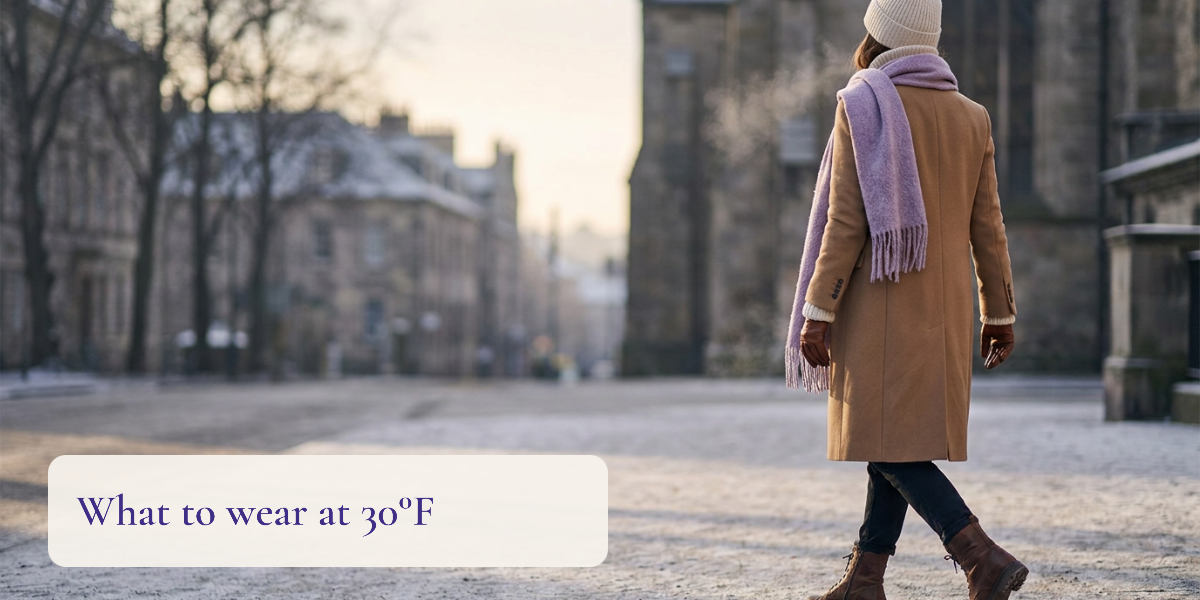
30°F is below freezing: a wicking base, a warm knit and a windproof insulated coat, plus hat, gloves and grippy boots. Four outfits and mistakes to skip.
 Mehul AgarwalFounder & CEO
Last updated: October 2026
Quick answer: 30°F (about minus 1°C) is below freezing, so dress in three layers and cover your extremities. Wear a snug base layer that is not cotton, a warm knit or fleece over it, and an insulated coat that blocks wind, plus a hat, gloves and boots with grip. If it is windy, the US National Weather Service chart puts a 30°F day with a 20 mph wind at about 17°F, so treat it like a colder day and add a scarf and a thicker mid layer.
Thirty degrees is the first temperature of the season where a fall jacket stops being enough. It is cold enough for frozen puddles and black ice in the morning, and it often comes with wind or wet snow. The good news is that you do not need expedition gear. You need the right three layers, the right fabric next to your skin, and a plan for your hands, head and feet. This guide covers how cold 30°F really feels, the layering formula, four complete outfits, and the mistakes that make people miserable.
Is 30 degrees cold?
Yes. 30°F is just under the freezing point of water (32°F or 0°C), which is why it feels like a different kind of cold from 40°F. Three things decide how it feels on the day:
- Wind. The National Weather Service wind chill chart shows how fast exposed skin loses heat. At an air temperature of 30°F, a 10 mph wind feels like about 21°F, 20 mph feels like about 17°F and 30 mph feels like about 15°F. On the same chart, the shaded frostbite zones do not start until wind chills far below zero, so at 30°F the risk is discomfort, not frostbite, but a windproof outer layer makes a big difference.
- Damp. Wet snow, sleet and slush are common around freezing. A cold-weather safety sheet in the CDC's Stacks library notes that cotton "loses its insulation value when it becomes wet", while wool, silk and most synthetics keep insulating. Damp clothes, not the number on the forecast, are what usually make people cold.
- Activity. Standing still at a bus stop or a football game feels far colder than walking briskly. If you will be standing for long, go one step warmer on every layer.
If you want a comparison point, our 40-degree weather guide uses a similar formula but with a lighter coat and optional accessories. At 30°F, the hat and gloves stop being optional.
The 30-degree layering formula
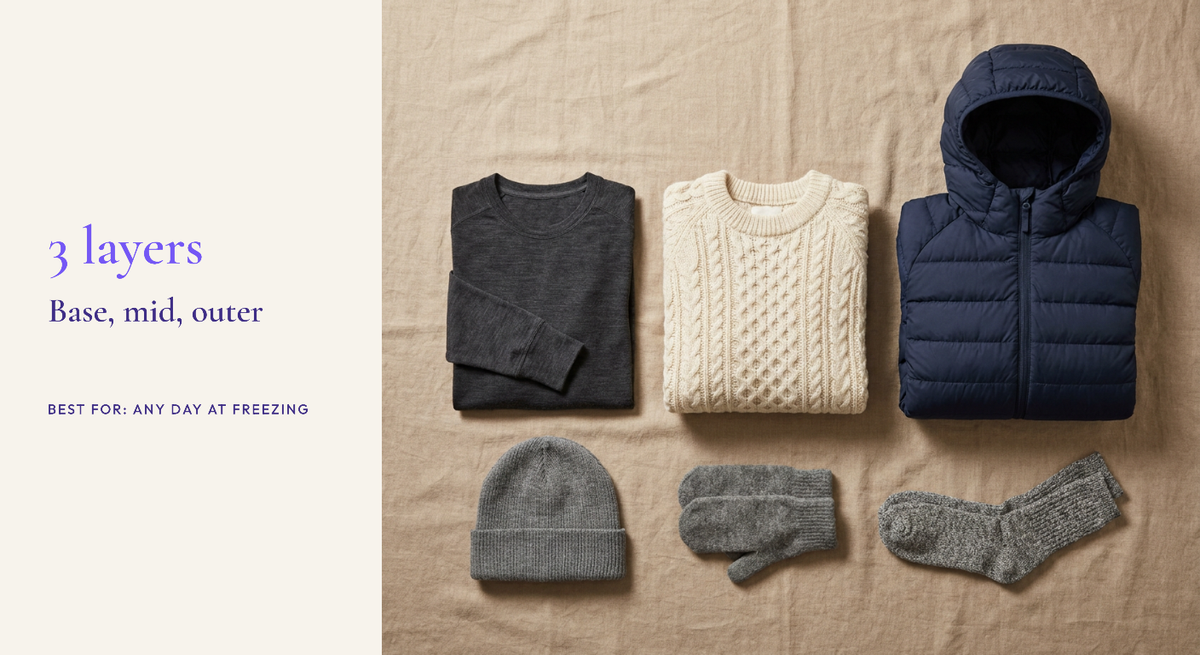
The three-layer system used by outdoor retailers and workplace cold-safety guidance works just as well for a city commute. Each layer has a job.
1. Base layer: move sweat away from your skin. REI describes the base layer as the snug piece closest to the skin whose job is to wick sweat so your core does not cool. Merino wool, silk and synthetic thermals all do this. A fitted long-sleeve merino tee or thermal top works under work clothes too. Our guide to merino vs synthetic base layers explains which to pick.
2. Mid layer: trap warm air. This is your insulation. A wool or cashmere sweater, a fleece, or a thin quilted vest all work. REI notes that merino's natural crimp traps air in tiny pockets, and that fleece is breathable, dries fast and slides easily between layers. At 30°F, choose a mid-weight knit rather than a fine-gauge one.
3. Outer layer: block wind and wet. You want an insulated coat that stops wind: a wool coat with a lining, a down or synthetic puffer, or a parka. The National Weather Service advises outer layers that are tightly woven, water-repellent and hooded. Down gives the best warmth for its weight when dry, but REI points out it loses loft when wet, so on a sleety day a synthetic-fill jacket or a puffer with a water-resistant shell is the safer pick.
The reason three thinner layers beat one heavy one is control. When you step onto a warm train or into a shop, you can open the coat or take off the mid layer instead of overheating and then getting chilled by your own sweat when you go back outside.
4 outfits for 30-degree weather
Each outfit follows the formula above. Swap pieces between them freely; the structure is what keeps you warm.
1. The office commute
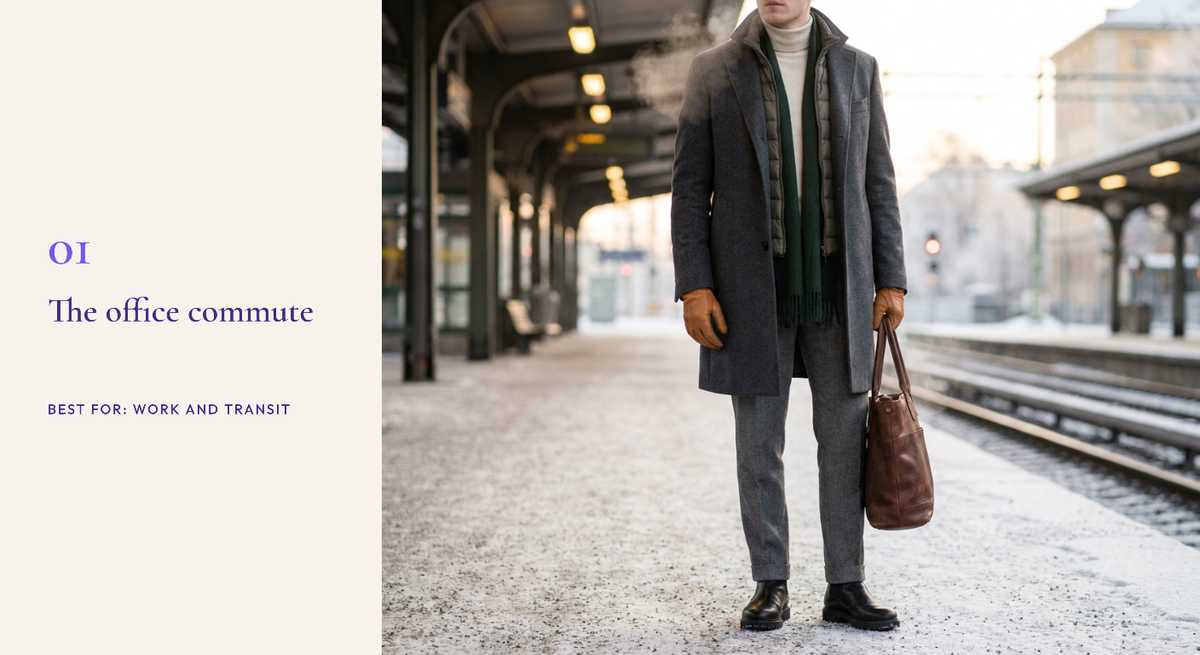
A merino or thermal long-sleeve under a fine-knit roll neck or a shirt and crew-neck sweater, wool trousers, and a knee-length wool coat with a quilted lining. Add leather gloves with a cashmere or fleece lining and a wool scarf, and waterproof leather boots with a rubber sole for icy pavements. Tights or thin thermal leggings under trousers or a skirt make a noticeable difference and are invisible at your desk.
Best for: smart workplaces, meetings, public transport.
2. Weekend errands and coffee
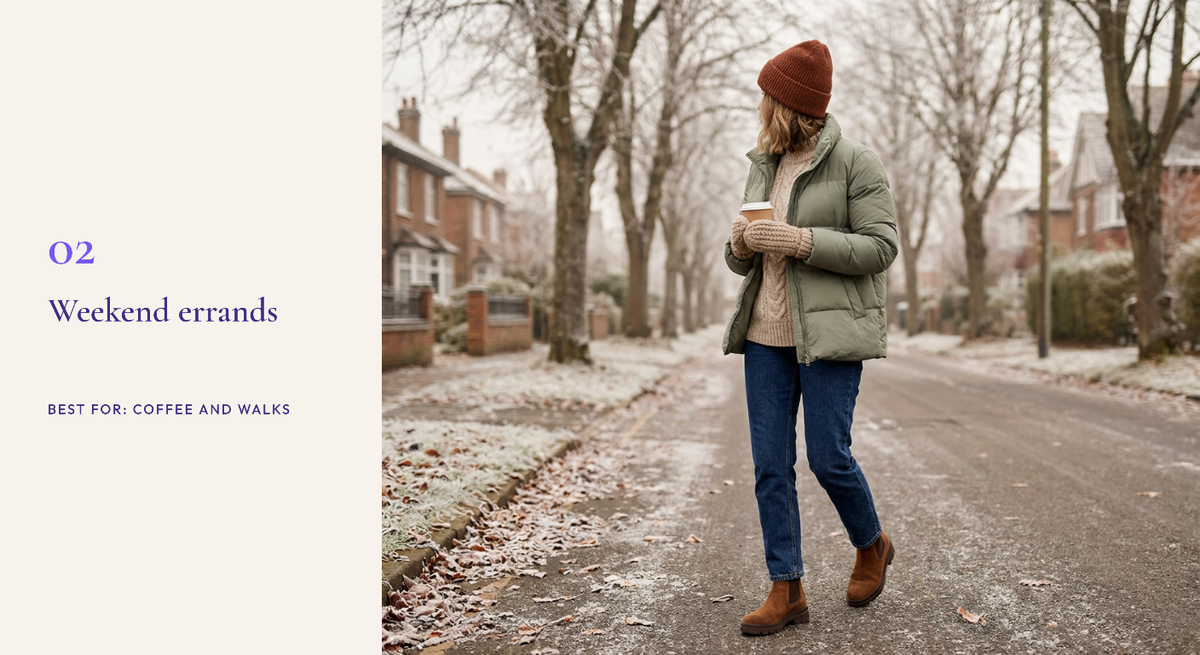
A thermal top, a chunky cable-knit sweater or half-zip fleece, straight-leg jeans with thermal leggings underneath, and a hip-length puffer. Finish with a beanie, knit gloves or mittens, wool-blend socks and insulated sneakers or Chelsea boots with a lug sole. Jeans are fine at 30°F as long as they stay dry; if it is snowing, swap them for lined trousers.
Best for: errands, brunch, a walk in the park.
3. Dinner or an evening out
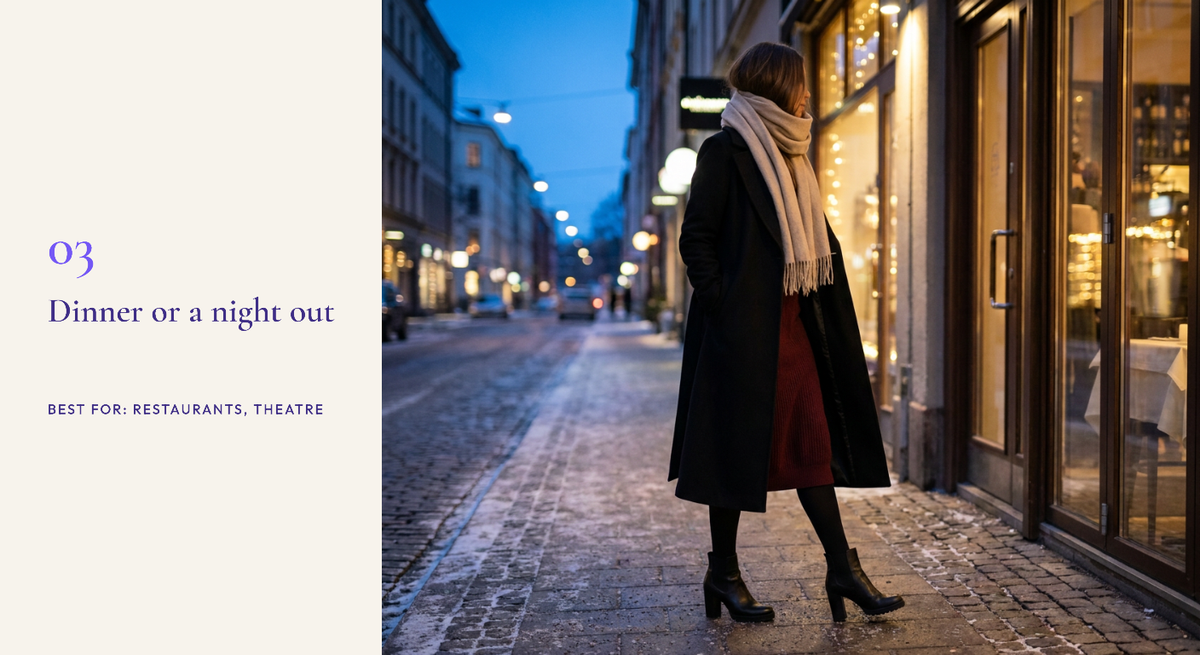
Evenings at 30°F are usually colder than the daytime high, so plan for the walk to and from the venue. Try a silk or merino camisole or tee under a fine wool knit dress or a cashmere sweater with tailored trousers, opaque fleece-lined tights, and a long wool coat. Heeled ankle boots with a rubber sole and a large wool or cashmere scarf that doubles as a wrap indoors keep the look polished. Our guide to six scarf knots shows which knots seal the neck best.

Want this styled from your own closet?
Elara builds the look from what you own, then lets you try it on.
Best for: restaurants, theatre, holiday drinks.
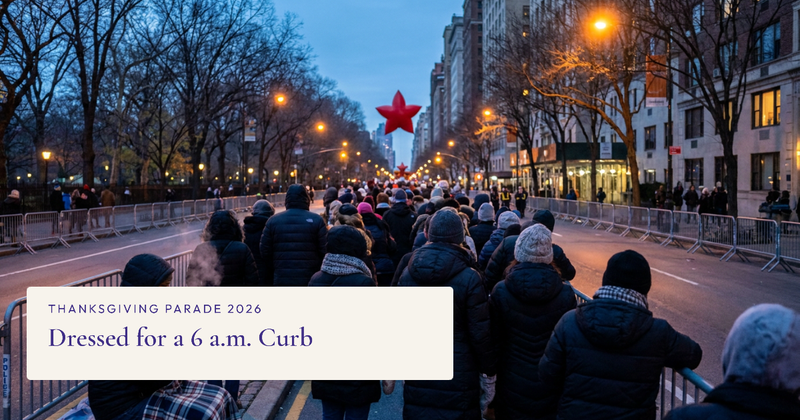
4. Standing outside: games, markets, parades

Standing still is where 30°F really bites, so go one level warmer everywhere: a thermal base on top and bottom, a fleece plus a down vest as mid layers, a hooded parka or long puffer, a fleece-lined hat that covers your ears, mittens, and insulated waterproof boots with wool socks. Bring hand warmers if you will be outside for more than an hour. For more on boots, see our winter boots guide.
Best for: football games, Christmas markets, parades, outdoor queues.
Head, hands and feet: where you get cold first
Even with a warm coat, people at 30°F usually give up because of cold hands, ears or toes. A few specifics help:
- Mittens beat gloves for warmth. The National Weather Service recommends mittens that fit snugly at the wrist, because fingers kept together share heat. Use touchscreen gloves only if you need your phone constantly.
- Cover your ears. A beanie or headband that covers the ears does more for comfort at 30°F than an extra sweater.
- Wool socks, not cotton. Feet sweat inside boots. Cotton socks hold that moisture against your skin, while wool keeps insulating when damp.
- Grip matters as much as warmth. Around freezing, pavements can ice over without looking wet. Choose boots with a deep rubber tread rather than smooth leather soles.
Common mistakes at 30 degrees
- A cotton hoodie as your mid layer. It is comfortable until you sweat on the walk to the station, then it stays damp all day.
- One huge coat over a T-shirt. You will overheat indoors and freeze when you unzip it outside. Three layers give you control.
- Ignoring the wind chill. Check the "feels like" number, not just the air temperature. A breezy 30°F day dresses like a still 15°F day.
- Fashion boots with slick soles. Black ice is the bigger risk at this temperature than cold toes.
- Overdressing for a long walk. If you will be walking fast for 20 minutes or more, start slightly cool. Sweating is what chills you later.
FAQ
Is 30 degrees cold enough for a winter coat?
Yes. At 30°F you want an insulated, windproof coat such as a lined wool coat, a puffer or a parka, plus a hat and gloves. A light fall jacket is only enough if you are moving briskly for a short time.
Can I wear jeans in 30 degree weather?
Yes, if they stay dry. Add thin thermal leggings underneath for longer outdoor time, and switch to lined trousers on snowy or slushy days, because wet denim gets cold quickly.
What should I wear at 30 degrees with wind?
Treat it like a colder day. The National Weather Service chart puts 30°F with a 20 mph wind at about 17°F, so choose a windproof outer layer with a hood, cover your neck with a scarf and wear mittens.
What is 30 degrees Fahrenheit in Celsius?
30°F is about minus 1°C, just below the freezing point of water. Expect frost, ice on pavements and the chance of wet snow.
Should my base layer be wool or synthetic at 30 degrees?
Either works. Merino keeps you warm with a soft, natural feel, which suits all-day wear. Synthetic thermals dry fast and usually cost less, which suits active days. Avoid cotton next to the skin.
Not sure which of your sweaters and coats work together for a freezing morning? Try Elara, the AI stylist that learns your wardrobe and your style, and builds a warm outfit from clothes you already own.
Your stylist, in your pocket
Stop reading about outfits. Start wearing them.
Elara knows your closet, shops every store and gets you dressed for any occasion.