

What to Wear in 0 Degree Weather: A Layer-by-Layer Guide
What to wear in 0 degree weather: a wool base layer, fleece, a windproof hooded parka, face cover, mittens and insulated boots, layer by layer and why.
 Mehul AgarwalFounder & CEO
Last updated: November 2026
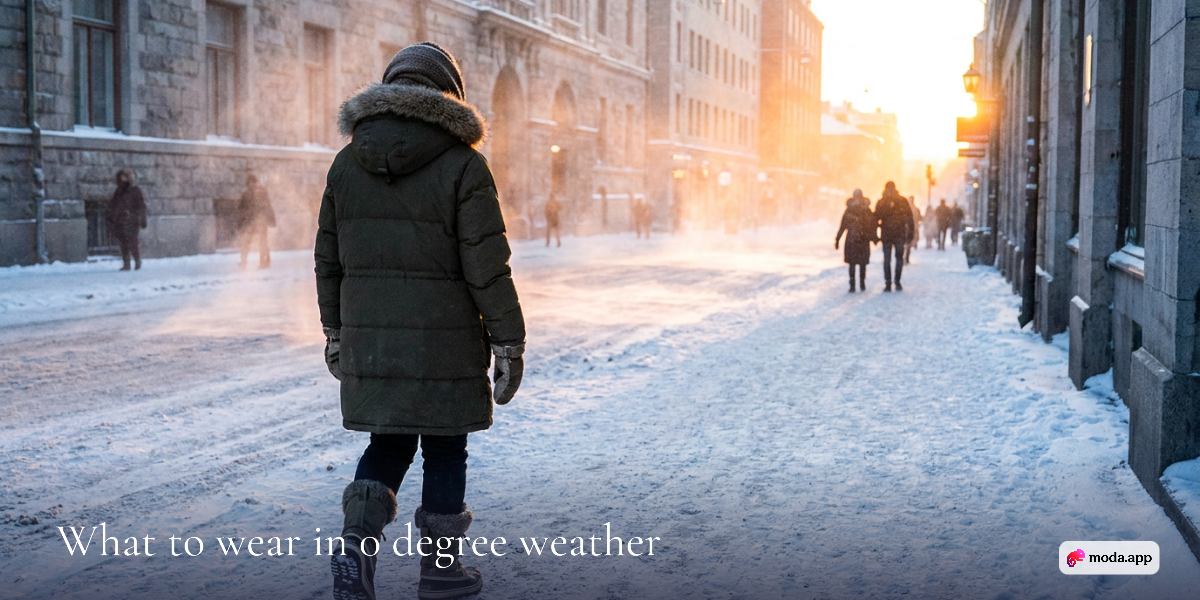
Quick answer: At 0°F (about -18°C), wear three layers plus full coverage: a wool or synthetic base layer (no cotton), a fleece or wool insulating layer, and a windproof, hooded parka that covers your hips, with a hat, a scarf or mask over your face, mittens rather than gloves, and insulated waterproof boots. Wind matters as much as the number: the National Weather Service notes that 0°F with a 20 mph wind feels like -22°F, cold enough for exposed skin to freeze in about 30 minutes.
Zero degrees is where normal winter clothes stop working. A wool coat and leather gloves that are fine at 30°F leave you numb within minutes, and a single thick puffer over a cotton T-shirt traps sweat that chills you the moment you stop moving. This guide builds an outfit layer by layer, using the U.S. Centers for Disease Control and Prevention's cold-weather advice as the backbone, and explains what each layer is doing so you can adapt it to your commute, a game, or a walk with the dog. For milder days, see our guides to 10 degree weather and 20 degree weather.
Why 0 degrees needs a different approach
At 0°F the risk is not just discomfort. The National Weather Service uses 0°F with a 20 mph wind as its example: the wind chill is -22°F and exposed skin can freeze in 30 minutes. Stronger winds shorten that time. The CDC lists the warning signs of frostbite as a white or grayish-yellow skin area, skin that feels unusually firm or waxy, and numbness, and says to get medical help if someone shows signs of hypothermia, such as shivering, confusion, slurred speech or drowsiness.
That changes three rules of dressing:
- Cover everything. Cheeks, nose, ears and fingers are the first to freeze, so the outfit is not finished until your face and hands are covered.
- Block the wind. Insulation only works if wind cannot blow the warm air out of it. Your outer layer has to be windproof.
- Stay dry. The CDC warns that wet clothing chills the body quickly, which includes your own sweat. Layers you can open or remove matter as much as layers you add.
The layering system for 0 degree weather
The CDC recommends several loose layers rather than one thick garment: an inner layer of wool, silk or polypropylene (which hold more body heat than cotton), an insulating layer of wool, goose down or fleece, and an outer layer that is tightly woven and preferably water and wind resistant. Here is what that looks like in practice, from the skin out.
1. Base layer: merino or synthetic, never cotton
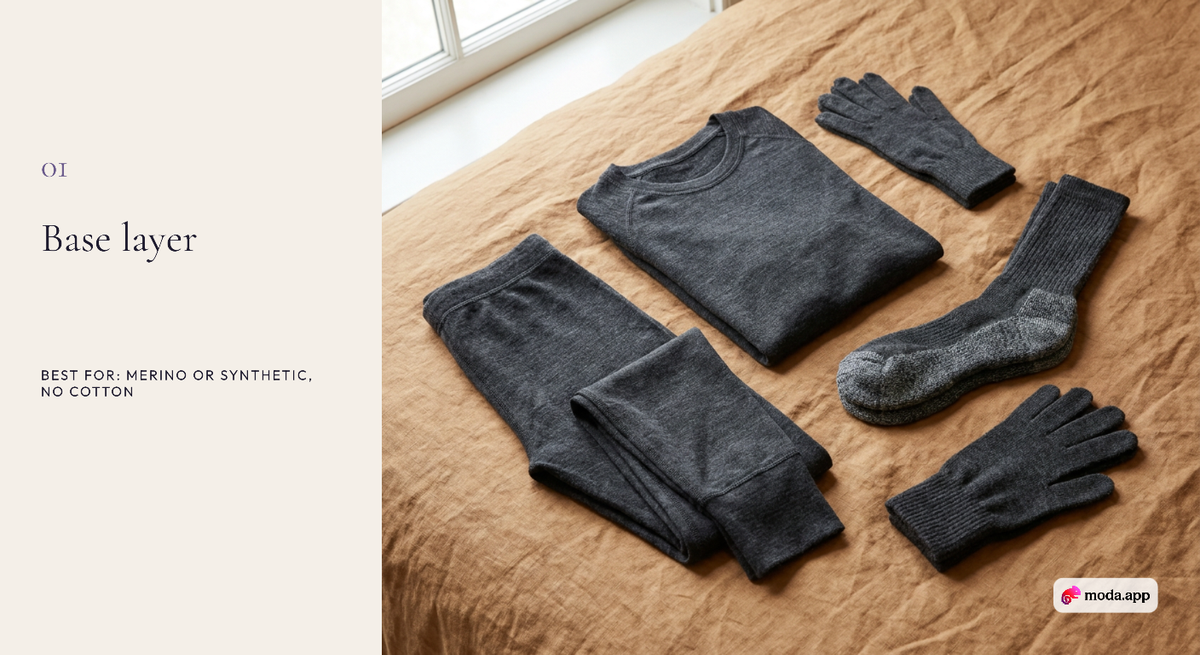
Wear a long-sleeve top and leggings in merino wool or a synthetic like polypropylene or polyester. These move sweat away from your skin; cotton holds it, which is why a cotton T-shirt under a big coat feels clammy and then cold. At 0°F a midweight base layer is a good default. Our guide to thermal base layers compares merino, synthetic and silk and explains the weights. Add wool socks, and a thin liner glove if you will need your fingers for a phone or keys.
2. Insulating layer: fleece, wool or down
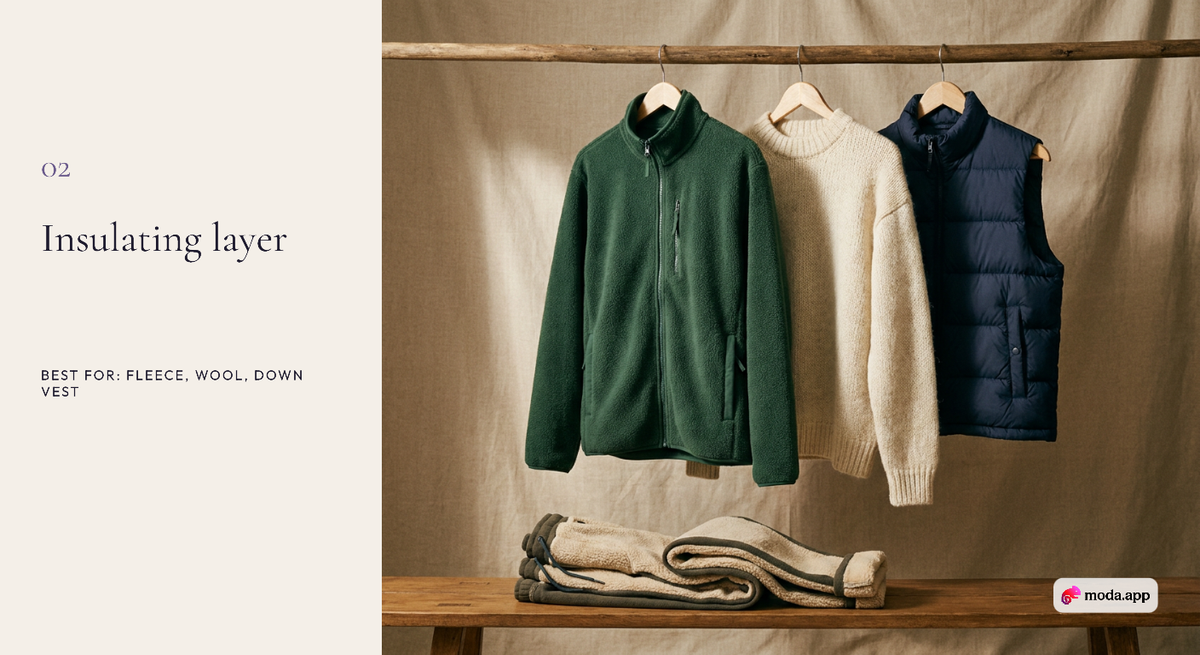
The middle layer traps warm air. A fleece jacket, a thick wool sweater or a light down vest all work; on very cold or windy days you can wear a fleece and a vest together. For your legs, fleece-lined trousers or a base layer under jeans or wool trousers makes a big difference, because legs are often the forgotten part of a cold-weather outfit. Choose zips over pullovers if you will go in and out of heated buildings, so you can vent before you start sweating.
3. Outer layer: a windproof, hooded parka
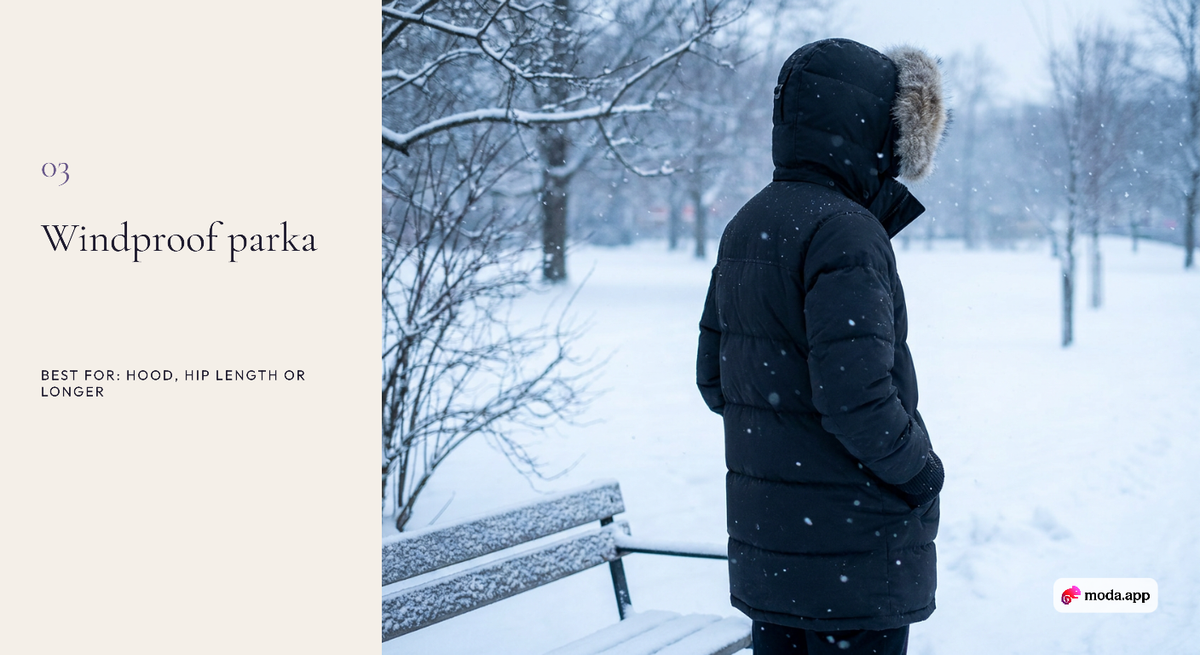
This is the piece to spend on. Look for a parka that is windproof and water resistant, covers at least your hips (thigh length is warmer for standing still), has an insulated hood that fits over a hat, a high collar, and snug cuffs: the CDC specifically recommends sleeves that are snug at the wrist. A down or synthetic-fill parka is warmer for its weight than a wool coat. If you are shopping, our winter coat buying guide explains fill power, fill weight and waterproof ratings so you can compare coats on more than price.
4. Head, face, hands and feet
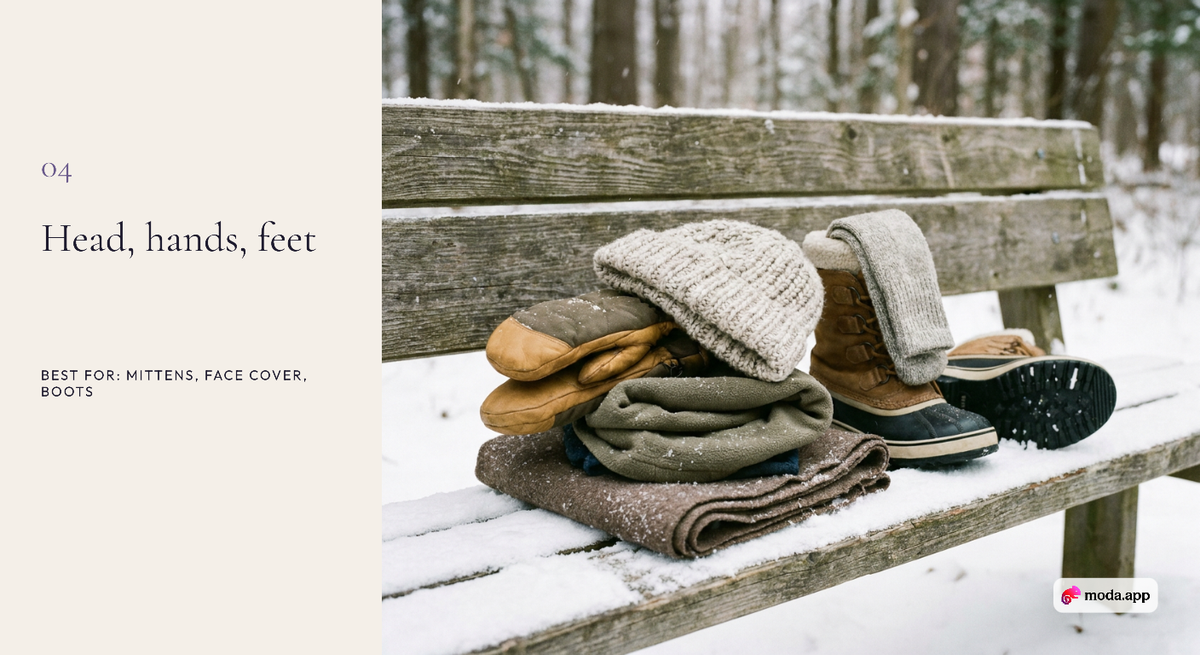
- Head: a wool or fleece hat that covers your ears, worn under the parka hood.

Want this styled from your own closet?
Elara builds the look from what you own, then lets you try it on.
- Face: the CDC recommends a scarf or knit mask to cover your face and mouth. A fleece neck gaiter is easy to pull up over your nose when the wind picks up.
- Hands: mittens, which the CDC notes are warmer than gloves. Wear a thin liner glove inside if you need dexterity.
- Feet: insulated, waterproof boots with deep lugs for ice, sized to fit a thick wool sock without squeezing, since tight boots can restrict circulation. Our winter boots buying guide explains insulation grams and waterproof membranes.
How to adjust the outfit for what you are doing
- Short commute or errands: base layer, sweater, parka, hat, gaiter and mittens. You can skip the extra mid layer if you will only be outside briefly, but never skip face and hand cover.
- Standing still (a game, a bus stop, a parade): add everything: base layers top and bottom, fleece plus vest, thigh-length parka, and boot warmers or an extra sock layer. You lose heat fastest when you are not moving.
- Active (shovelling, a brisk walk, running errands on foot): wear a lighter mid layer and open the parka zip as you warm up. Sweating and then stopping is how people get cold, so vent early.
- Going in and out of heated buildings: choose zip-front layers and a parka you can open easily, and keep the hat and mittens in a pocket rather than a bag so you put them straight back on.
FAQ
What should I wear in 0 degree weather?
A wool or synthetic base layer, a fleece or wool insulating layer, and a windproof hooded parka that covers your hips, plus a hat, a scarf or mask over your face, mittens and insulated waterproof boots. Avoid cotton next to your skin.
How many layers should I wear in 0 degree weather?
Usually three on top (base, insulating and outer) and two on the bottom (a base layer under trousers), plus accessories. Add a second insulating layer if it is windy or you will be standing still.
How long can you stay outside at 0 degrees?
It depends on the wind and how well you are covered. The National Weather Service gives the example that at 0°F with a 20 mph wind, exposed skin can freeze in about 30 minutes. Cover all skin and go inside if you notice numbness or skin turning white or grayish-yellow.
Are mittens warmer than gloves?
Yes. The CDC recommends mittens over gloves for cold weather because they are warmer. Wear thin liner gloves inside them if you need to use your fingers.
Is a wool coat warm enough for 0 degree weather?
Usually not on its own. Most wool coats are not windproof and stop at the hip or above. For 0°F, a windproof down or synthetic parka with a hood is warmer; save the wool coat for milder days or wear it over a thick insulating layer for short trips.
Know what you already own
Most people already have half of a 0 degree outfit spread across drawers. Add your base layers, knits, coats and boots to Elara, and on a cold morning ask the styling chat to put together the warmest outfit from your own closet. Try Elara free.
Your stylist, in your pocket
Stop reading about outfits. Start wearing them.
Elara knows your closet, shops every store and gets you dressed for any occasion.