

Sherwani vs Bandhgala vs Jodhpuri: What Men Should Wear to a Wedding
A sherwani is a knee-length ceremony coat, a bandhgala a hip-length closed-collar jacket, and a Jodhpuri suit adds matching trousers. Here is when to wear each.
 Mehul AgarwalFounder & CEO
Last updated: November 2026
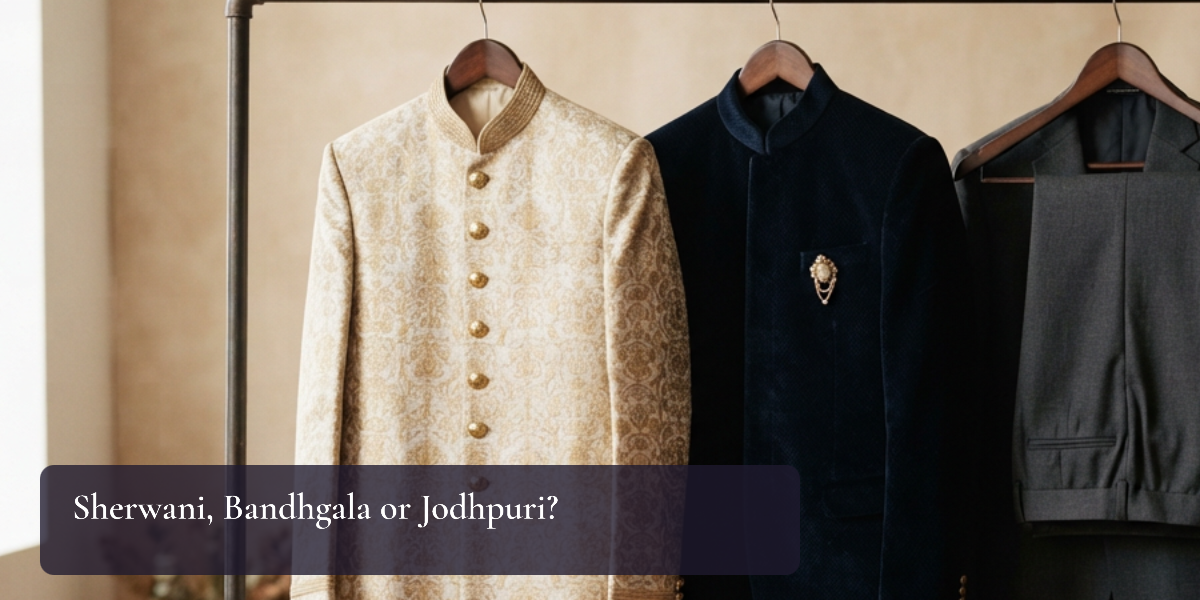
Quick answer: A sherwani is a long, knee-length coat in silk, brocade or velvet, worn over a churidar for the wedding ceremony itself. A bandhgala is a hip-length, closed-collar jacket, and a Jodhpuri suit is that bandhgala jacket sold as a set with matching trousers; Manyavar uses the two names for the same garment. Grooms usually wear the sherwani for the pheras and switch to a bandhgala for the reception, while guests are safest in a bandhgala or a lighter sherwani that does not compete with the groom's.
Wedding season in India runs from November through February, and most men face the same question at least once: sherwani, bandhgala or Jodhpuri? The names get used loosely by shops and relatives alike, which is why the choice feels harder than it is. This guide sorts out what each garment actually is, which function each one suits, what guests should wear versus the groom, which fabrics work for a winter wedding, and the fit checks to do before your final trial. If you are still deciding what you can order or stitch in time, our wedding season outfit countdown covers lead times.
Sherwani vs bandhgala vs Jodhpuri suit: the real differences
The difference comes down to length, fabric and what you wear underneath. A sherwani is a long coat that falls below the knee; a bandhgala is a short, structured jacket that ends around the hips; a Jodhpuri suit is a bandhgala with matching trousers.
Sherwani: the long ceremonial coat
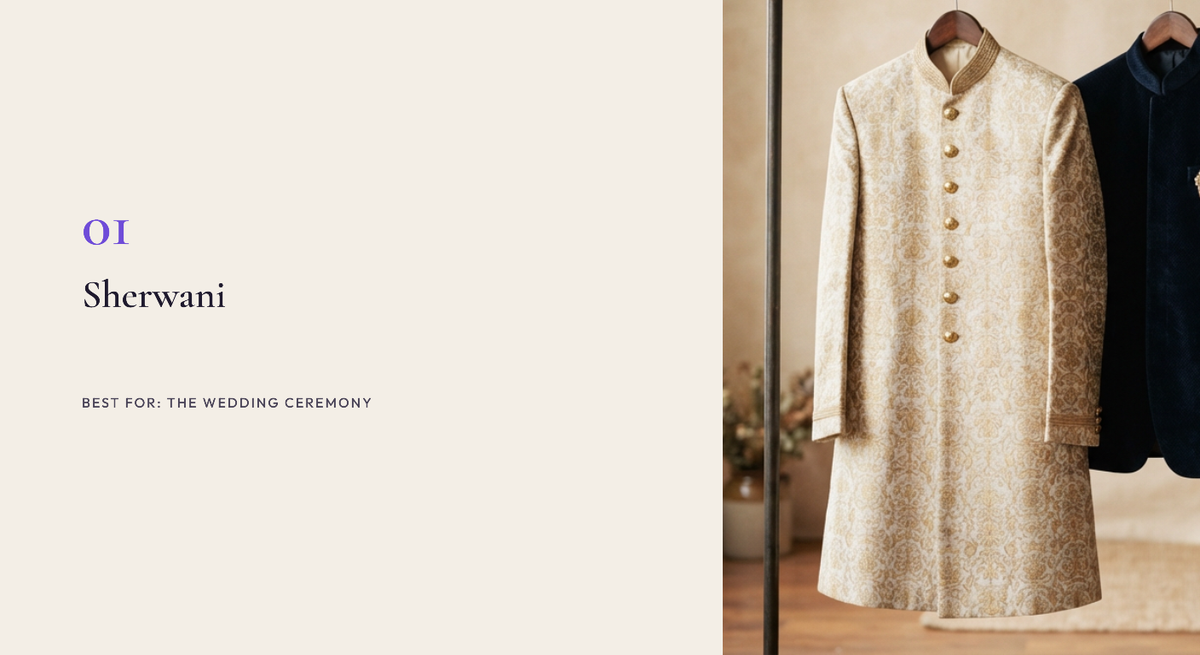
Aza Fashions describes the sherwani as "a long, structured coat that is buttoned down the front" with a stand-up collar, a length that "typically extends to just below the knees", and fabrics such as raw silk, brocade and velvet, often with heavy embroidery. It is worn over a kurta with a churidar or dhoti, and traditionally finished with a safa (turban), a stole draped over one shoulder and mojaris. Aza traces it back to the achkan, a shorter coat from the Mughal era.
Best for: the groom at the wedding ceremony, and close family who want a formal traditional look. Watch out for: weight and warmth. A fully embroidered brocade sherwani is heavy, so sit down in it at the trial and check you can bend at the waist for rituals on the floor.
Bandhgala: the closed-neck jacket
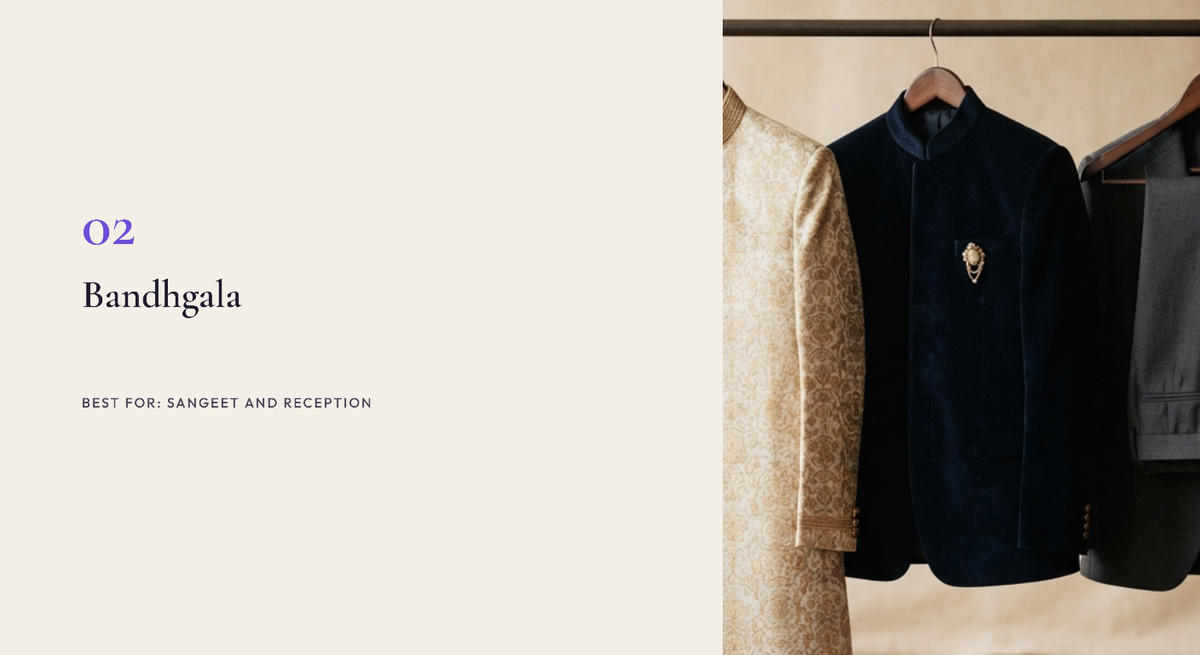
The bandhgala is named for its "closed neck". Manyavar calls it a crossover between the achkan and the angarkha, traces it to the royal courts of Jodhpur in the 19th century, and notes it is designed to be worn with the collar buttoned up. It is shorter and more fitted than a sherwani, closer in spirit to a structured blazer, and it can be worn over a kurta and churidar for a traditional look or over a shirt or turtleneck with trousers for a modern one.
Best for: sangeet, cocktail and reception evenings, and guests at almost any function. Watch out for: a collar that is too tight. Because it is buttoned to the neck, a quarter inch makes the difference between sharp and uncomfortable for five hours.
Jodhpuri suit: the bandhgala as a full set
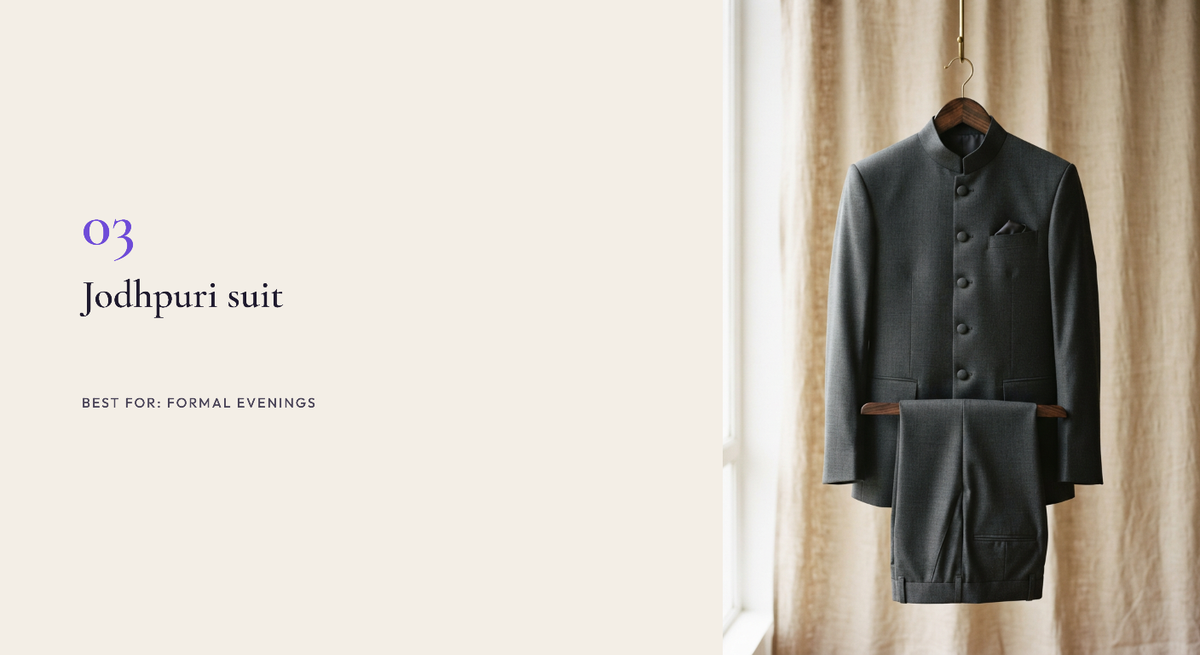
A Jodhpuri suit is the bandhgala jacket paired with matching trousers, sometimes with a waistcoat, as Deepees Jodhpur explains. Many shops, including Manyavar, use "bandhgala" and "Jodhpuri" interchangeably. Aza Fashions, citing Vogue India, credits the look to Maharaja Pratap Singh of Jodhpur, who in 1887 had his angarkha tailored into a shorter jacket on a trip to England. The practical point: if a listing says Jodhpuri, expect a matched two or three-piece set; if it says bandhgala, check whether trousers are included.
Best for: receptions, engagements and formal family dinners, and men who want one outfit they can wear again to a black-tie event. Watch out for: buying a suiting-fabric Jodhpuri for a daytime haldi or mehendi; it will look too formal and feel too warm in the sun.
Which one to wear to each wedding function
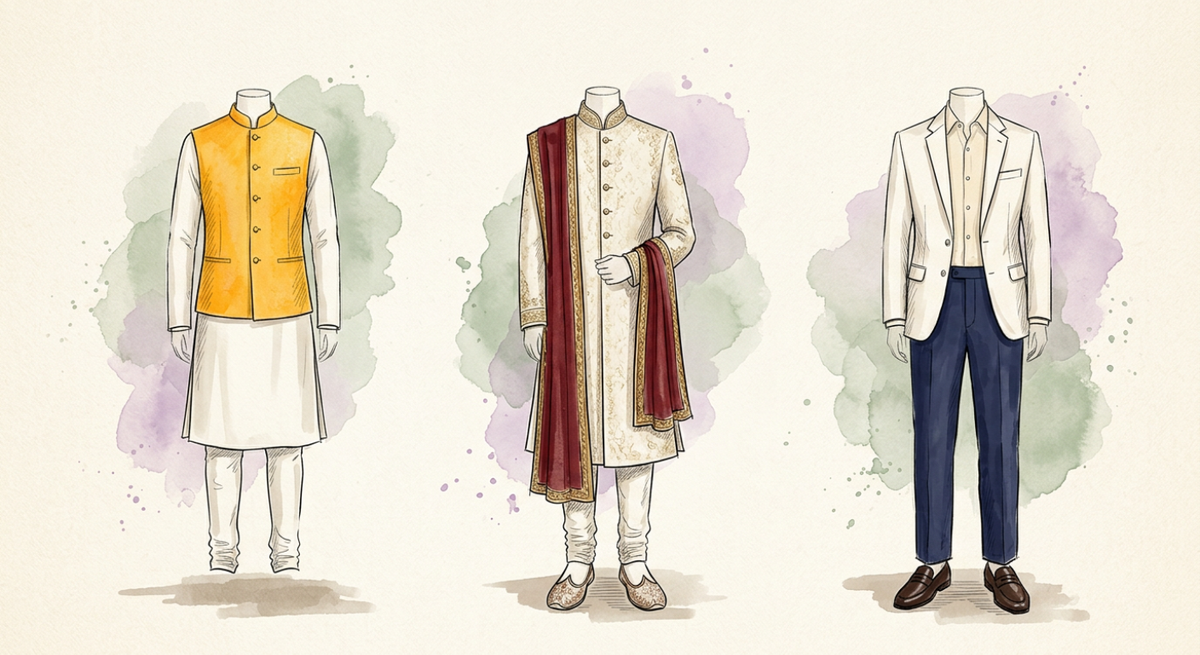
Match formality to the function: lighter kurtas by day, a bandhgala in the evening, and the sherwani for the ceremony. Aza Fashions' function-by-function guide lays it out like this:
- Haldi: a cotton or linen kurta with churidar or relaxed trousers, in yellow or pastels. Expect turmeric stains, so skip anything you cannot wash.
- Mehendi: a printed Nehru jacket over a solid kurta, or a relaxed Indo-Western set, in colours such as emerald, teal or mustard.
- Sangeet: a well-fitted bandhgala, often in velvet, in navy, emerald, plum or black. You will dance, so check arm movement at the trial.
- Wedding ceremony: the sherwani in silk, brocade or velvet; ivory, gold and deep red are classic, with powder blue or blush for daytime weddings.
- Reception: a bandhgala or Jodhpuri suit, or a contemporary suit, in midnight blue, charcoal or black.
If you are only buying one piece this season, make it a dark bandhgala. It works at the sangeet, the reception and most guest invitations, and you can change the look by switching between a kurta-churidar underneath and a shirt with trousers.
Groom or guest: how much to dress up
The groom wears the most formal sherwani; guests should stay a step below. Aza Fashions puts it plainly: "Guests should choose slightly lighter sherwanis or heavy kurta sets to avoid outshining the groom."

Want this styled from your own closet?
Elara builds the look from what you own, then lets you try it on.
In practice that means a few simple rules for guests. Avoid the groom's colour if you know it, and avoid full gold brocade with a safa, which reads as groom's attire. A bandhgala in a solid colour, with embroidery limited to the collar or cuffs, is the safest guest choice for an evening function. Close family (brothers, fathers, best friends in the baraat) can go closer to the groom in formality, and many families coordinate a colour for them, so ask before you buy.
Fabrics for a winter wedding
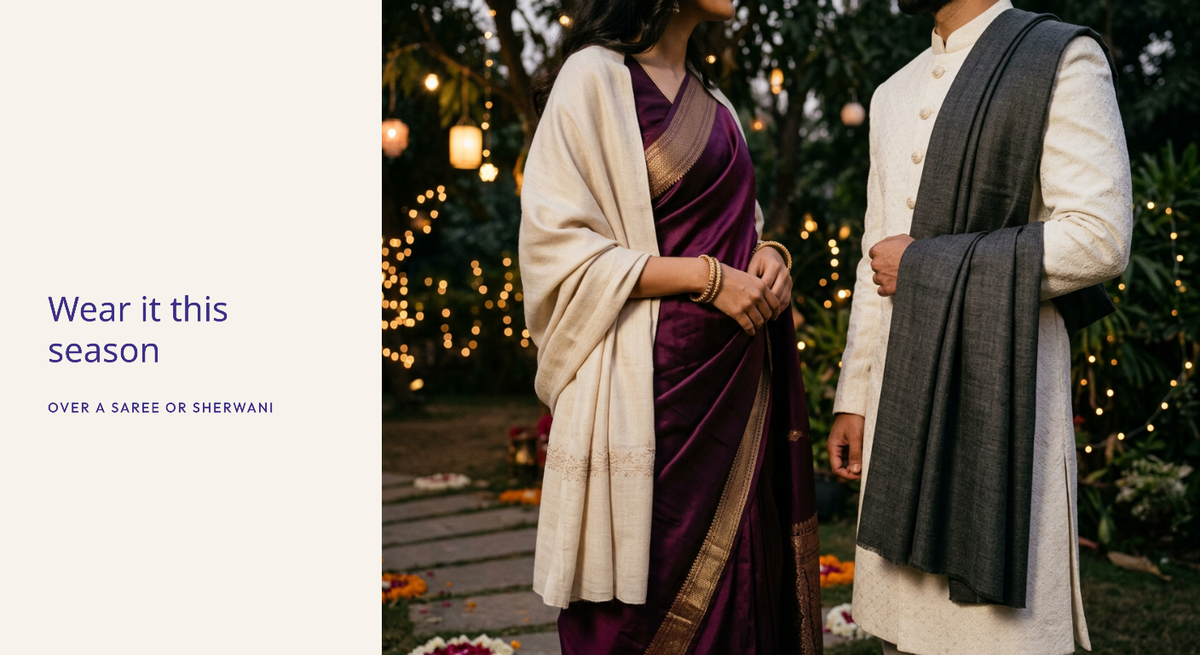
For November to February weddings, choose fabric by time of day and region, not just by look. Raymond's Ethnix guide lists brocade, silk, velvet and jacquard for sherwanis, and suede, silk blends and fine wool for Jodhpuri suits; Manyavar recommends lighter cotton or linen blends for warm weather.
- North Indian evening weddings (Delhi, Jaipur, Lucknow): velvet or wool-blend bandhgalas hold warmth after sunset. Add a shawl over a sherwani rather than a puffer jacket; our guide to staying warm in a saree, lehenga or sherwani covers thermal layers that stay hidden.
- Daytime and southern or coastal weddings (Goa, Chennai, Mumbai): raw silk or a silk-cotton blend breathes better than velvet; keep velvet for air-conditioned evening venues.
- Long days with multiple functions: a lining makes heavy fabrics far more comfortable against the skin, so ask whether it is lined before you buy.
Fit checks before your final trial
Most fit problems are fixable if you find them early. Deepees Jodhpur recommends starting planning 30 to 45 days ahead and booking two to three trials, trying the full outfit with stole, accessories and shoes each time. At each trial, check:
- Collar: buttoned up, you should be able to turn your head and swallow without pressure. This matters most on a bandhgala.
- Shoulders: the seam should sit at the edge of your shoulder, with no ridge or dip below it.
- Sleeves: raise your arms as if dancing and as if doing namaste; the sleeve should not ride up more than an inch or pull across the back.
- Length: a sherwani should fall just below the knee; a bandhgala should cover the trouser waistband when you sit.
- Churidar or trousers: sit cross-legged on the floor for a minute. Ceremonies often involve sitting on the floor, and that is where tight bottoms fail.
Accessories that finish each look
Accessories signal formality as much as the garment does. For a sherwani, the traditional finish is a safa, a stole over one shoulder and embroidered mojaris, per Aza Fashions and Raymond's Ethnix. For a bandhgala or Jodhpuri suit, both sources suggest a brooch or pocket square with polished leather shoes. Guests can borrow one traditional element, such as a brooch on a bandhgala, without wearing the full groom's set. For more on dressing for each ceremony, see our Indian wedding guest outfit guide by ceremony.
FAQ
What is the difference between a sherwani and a Jodhpuri suit?
Length and formality. A sherwani is a long coat that falls below the knee, usually in silk, brocade or velvet, worn over a churidar for the ceremony. A Jodhpuri suit is a hip-length bandhgala jacket with matching trousers, more often worn to receptions and formal evenings.
Is a bandhgala the same as a Jodhpuri suit?
Mostly. Manyavar says the bandhgala is "also known as a Jodhpuri suit". Some sellers use "bandhgala" for the jacket alone and "Jodhpuri suit" for the jacket with matching trousers, so check what a listing includes.
Can a wedding guest wear a sherwani?
Yes, but keep it lighter than the groom's. Aza Fashions advises guests to choose "slightly lighter sherwanis or heavy kurta sets to avoid outshining the groom." Avoid full gold brocade with a safa unless the family has asked for it.
What should men wear to a sangeet?
A well-fitted bandhgala, often in velvet, in navy, emerald, plum or black, or an Indo-Western jacket with trousers. Check that you can raise your arms comfortably, since you will be dancing.
What should a groom wear to the reception?
Many grooms switch from the ceremony sherwani to a bandhgala or Jodhpuri suit, or a contemporary suit, in midnight blue, charcoal or black.
How early should I order a sherwani or bandhgala?
Deepees Jodhpur recommends starting 30 to 45 days before the wedding and allowing two to three trials, so tailoring problems can be fixed in time.
Plan every function's outfit in one place
A wedding season can mean five or six functions across a few weekends. Elara keeps your closet in one place, so you can plan which bandhgala, kurta and stole go to which function, see the outfits together with virtual try-on before you buy anything new, and ask the AI stylist what to pair with the pieces you already own. Try Elara free and plan the season before the first invite lands.
Your stylist, in your pocket
Stop reading about outfits. Start wearing them.
Elara knows your closet, shops every store and gets you dressed for any occasion.