
What to Wear to See the Northern Lights: A Layer-by-Layer Guide
Wear a wool base layer, a fleece and a roomy windproof coat, plus wool socks, mittens and a hat. Aurora nights in Tromsø can hit -25°C, so layer for stillness.
 Mehul AgarwalFounder & CEO
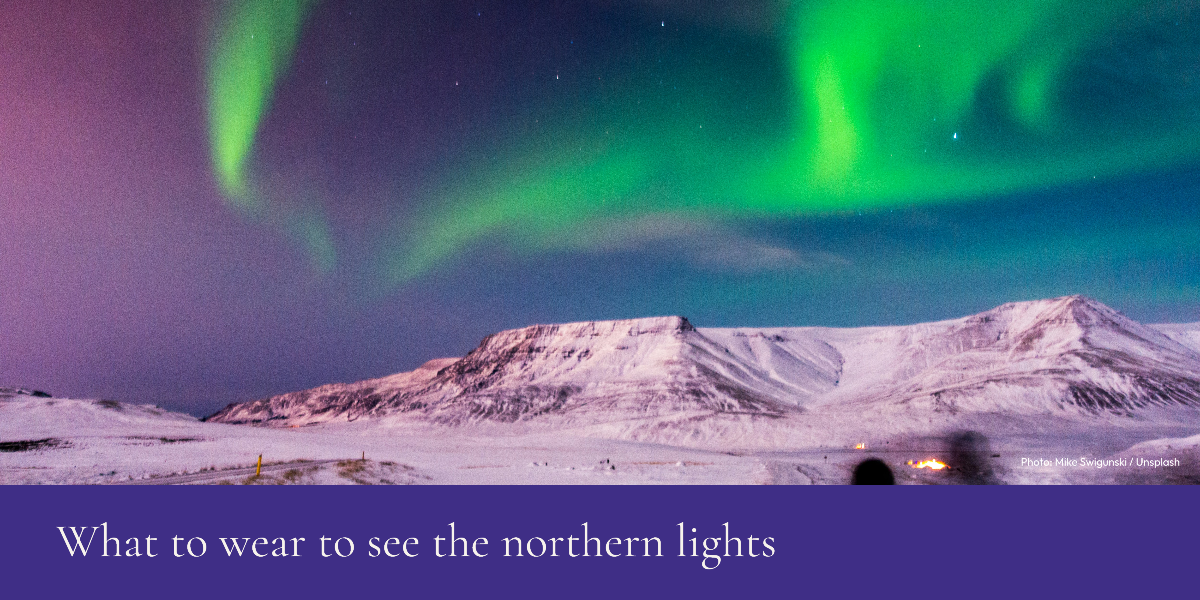
Last updated: November 2026
Quick answer: To see the northern lights, wear three layers: a wool base layer, a warm sweater or fleece, and a roomy windproof coat, plus insulated trousers, wool socks in boots with space to spare, a hat, a face-covering scarf and mittens. Plan for real cold: Visit Tromsø says to expect roughly -25°C to 5°C on aurora trips, and Finnair notes Lapland can reach -30°C. You will be standing still, often around midnight, which is why people get colder than the forecast suggests.
Aurora season is underway. Visit Finland says the lights are most visible in Lapland from the end of August to April, with peaks in September to October and February to March, and Visit Reykjanes gives a similar late-August to mid-April window for Iceland. If you are booking a December or new-year trip and have never dressed for a night outdoors at -15°C, this guide explains how cold it really gets in the main aurora destinations, what each layer does and what it should be made of, how to keep feet, hands and face warm, what tour companies provide, and a packing list.
How cold is it on a northern lights night?
Expect anything from around freezing on the Icelandic coast to well below -20°C inland in Arctic Norway and Finland.
Visit Tromsø puts the city's winter average at -4°C, but says aurora viewing and Arctic activities can mean about -25°C to 5°C, and that mountains are often much colder than the city centre. In south-west Iceland, Visit Reykjanes says winter nights often hover around freezing, citing a Keflavik swing from 8°C to -12°C in January 2024, with wind chill making the coast feel much colder. Finnair describes Lapland's air as dry and cold, reaching -30°C.
Three things make aurora nights harder than the number suggests. Clear skies let heat escape fast after sunset, the lights often appear around midnight when it is coldest (Visit Reykjanes), and you spend most of the night standing still, looking up or waiting by a tripod. Dress for the coldest hour and the least movement, not for the walk from the bus.
Layer 1: the base layer
Your base layer sits against your skin and should be wool or a technical fabric that moves sweat away, never cotton.
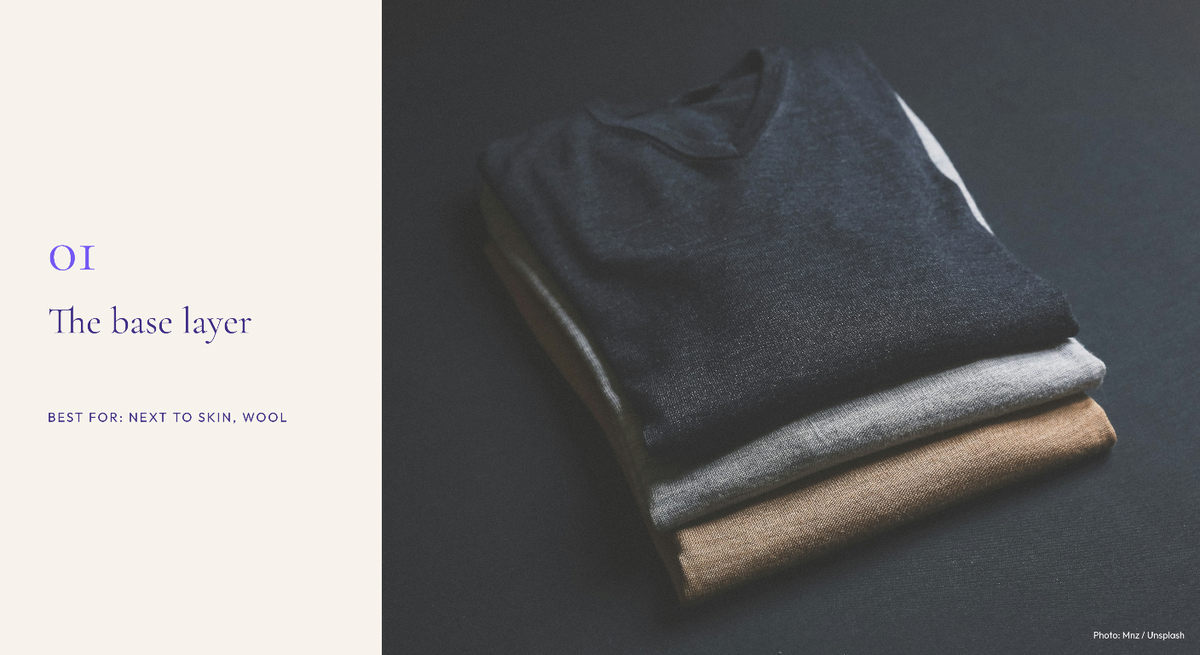
Finnair recommends soft wool or a moisture-moving synthetic and notes that merino stays warm even when damp; Visit Tromsø recommends woollen base layers in winter. The reason is that sweat from the walk or the bus ride has to go somewhere. Cotton holds it against your skin, and once you stop moving, that damp layer pulls heat out of you. Finnair puts it simply: insulation works best when clothing stays dry.
- Top: a long-sleeved merino or merino-blend top, close-fitting but not tight.
- Legs: thermal long johns. Visit Reykjanes suggests a pair long enough not to ride up, ideally tucked into your socks.
- Weight: a midweight top suits most aurora nights; add a lightweight one underneath for the coldest inland trips.
Our merino vs synthetic base layer guide explains fabric weights and when synthetics make more sense.
Layer 2 and 3: warmth and wind
Over the base, add an insulating layer, then a coat that blocks wind and is big enough to fit over everything.
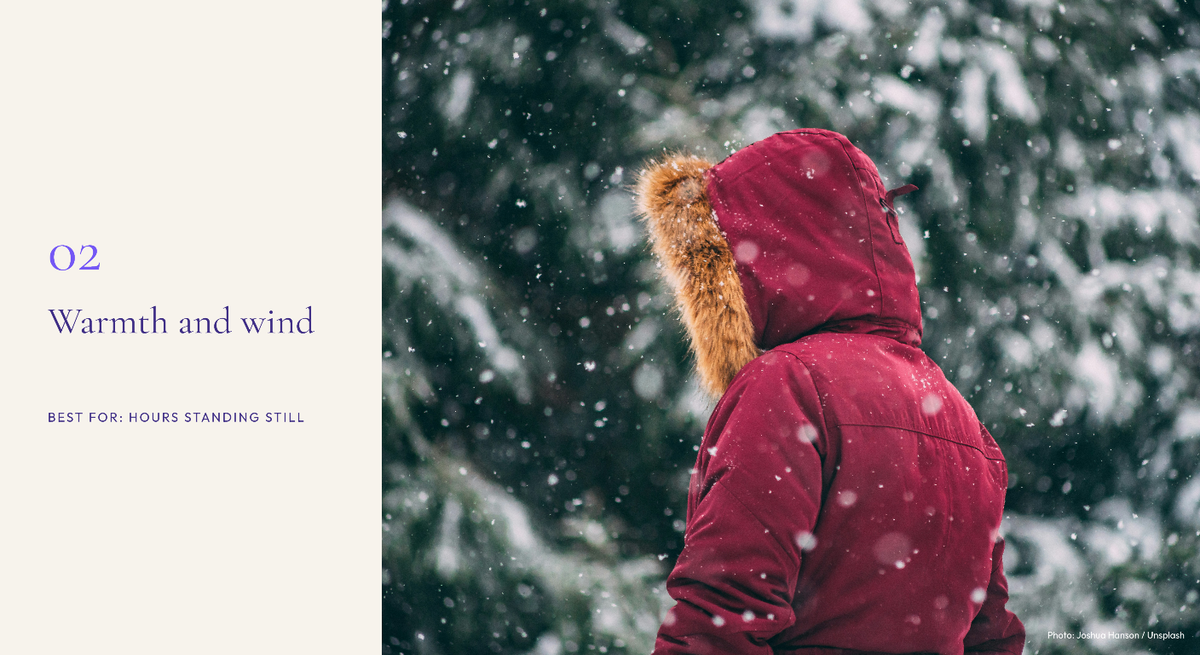
The middle layer traps warm air: a wool sweater, a thick fleece or a light down jacket. Visit Reykjanes suggests wool sweaters or high-performance fleece. The outer layer stops wind and snow from stealing that warmth. Both Finnair and Visit Reykjanes recommend a windproof, ideally waterproof, coat, and Visit Reykjanes adds that it should be roomy enough to fit over your layers, because a tight coat squashes the insulation and makes it less warm.
- Coat: a long insulated parka that covers your hips, with a hood. If the hood has a fur or faux-fur trim, check it does not block your side vision when you look up.
- Legs: insulated or waterproof snow trousers over your long johns; jeans alone get cold fast and soak through in snow.
- Ventilation: unzip on the drive or walk out and zip up the moment you stop, so you do not arrive sweaty. Visit Tromsø's advice is to take a layer off when active and add it back when you stop.
Boots and socks
Wear insulated, waterproof boots a size roomy enough for thick wool socks, and add ice grips if you will walk on icy paths.
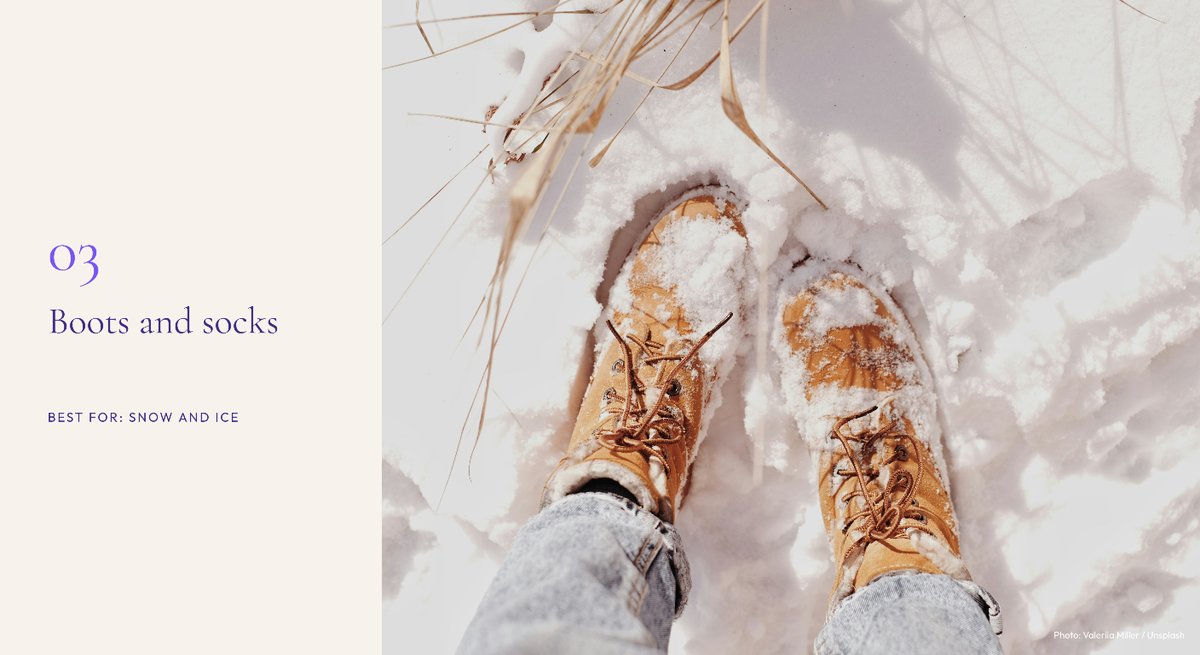
Visit Tromsø says your shoes should be large enough to fit an extra pair of woollen socks, and that ice grips or spikes are a useful safety measure on slippery streets; they sell them in shoe and sports shops and at Tourist Information. Tight boots cut circulation and make cold feet worse, which is why the roomy fit matters as much as the insulation.
- Socks: thick wool or wool-blend; bring a dry spare pair in your bag.
- Boots: insulated, waterproof, with a thick, grippy sole. Visit Reykjanes recommends thick-soled boots, since your feet are on frozen ground for hours.
- Extras: foot warmers slipped into boots help on the longest nights.
For what insulation ratings and waterproof labels mean, see our winter boots buying guide.

Want this styled from your own closet?
Elara builds the look from what you own, then lets you try it on.
Hands, head and face
Feet, hands, neck and head usually feel the cold first, according to Visit Tromsø, so these small pieces matter more than an extra sweater.
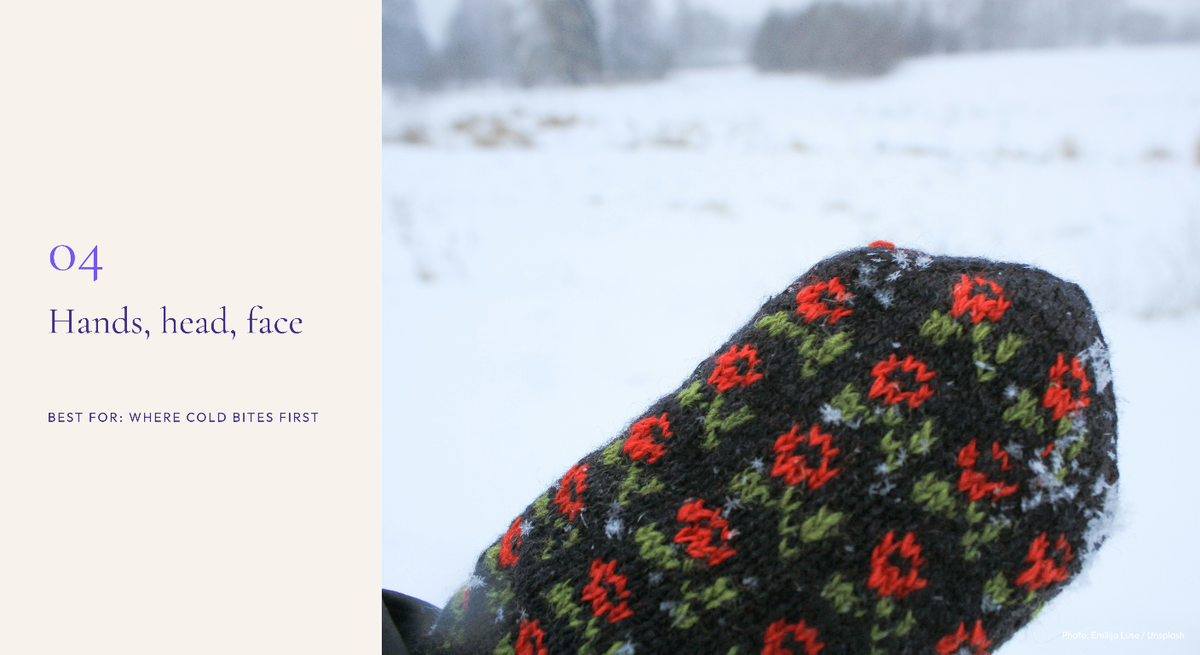
- Hands: mittens keep fingers warmer than gloves because the fingers share heat. If you are taking photos, wear thin liner gloves under mittens, or gloves with fold-back fingertips or touchscreen tips, as Visit Reykjanes suggests, and keep hand warmers in your pockets.
- Head: a wool or fleece-lined hat that covers your ears and stays on in wind.
- Face and neck: a snood, neck gaiter or long scarf you can pull over your cheeks and nose. Visit Reykjanes recommends tucking a scarf into your jacket in wind so it does not flap loose.
What tour companies provide
Many Arctic tours lend thermal suits, boots and mittens, but not all do, so check before you pack.
Visit Tromsø says many activity providers supply clothing for excursions, such as thermal suits, boots, hats and mittens. Some bus-based chase tours do not: the Norwegian Travel Company's help centre states that participants bring their own clothing and suitable footwear for its northern lights bus chase. Even with a lent suit, you still need your own base layers, socks and a hat, because those go underneath.
Northern lights packing list
For a three- to five-night trip, this covers aurora nights and daytime exploring.
- 2 merino or synthetic base-layer tops and 2 pairs of long johns
- 1 wool sweater or thick fleece, plus a light down jacket
- 1 long, roomy, windproof insulated coat with a hood
- Insulated snow trousers
- 4 to 5 pairs of thick wool socks
- Insulated waterproof boots with room for those socks, and ice grips
- Mittens plus thin liner gloves
- Wool hat and a snood or long scarf
- Hand and foot warmers
- A day outfit you can layer under the coat, such as jeans and a knit, for towns and cafes
FAQ
What should I wear to see the northern lights?
A wool or synthetic base layer, a sweater or fleece, a roomy windproof insulated coat and snow trousers, plus wool socks in insulated boots, a hat, a face-covering scarf and mittens. Avoid cotton next to your skin.
How cold is it when you see the northern lights?
It depends where you go. Visit Tromsø says to expect about -25°C to 5°C on aurora trips there; south-west Iceland is milder, with nights around freezing; Finnish Lapland can reach -30°C, according to Finnair.
Can I wear jeans to see the northern lights?
Only with thermal long johns underneath and snow trousers over them for a full night outside. Denim is cotton, so it holds moisture and loses warmth once it gets damp or wet with snow.
When is the best time to see the northern lights?
Visit Finland says Lapland's season runs from the end of August to April, with peaks in September to October and February to March. Visit Reykjanes says sightings in Iceland are more likely around the March and September equinoxes.
Do northern lights tours provide clothing?
Many do. Visit Tromsø says many providers lend thermal suits, boots, hats and mittens, but some bus tours, such as the Norwegian Travel Company's chase, ask you to bring your own. Check your booking.
Plan your aurora wardrobe before you go
A cold-weather trip is easier when you know exactly which layers you own and which you still need. In Elara, add your winter clothes to your digital closet, put your trip in the Calendar, and let Daily Outfits suggest a warm day look and a night-out layering plan, with Style DNA keeping them true to your taste. Try Elara free and pack for the cold without overpacking.
Your stylist, in your pocket
Stop reading about outfits. Start wearing them.
Elara knows your closet, shops every store and gets you dressed for any occasion.