

How to Use a Store's AI Stylist This Holiday Season
More fashion stores now have an AI stylist on their site. Here is how to get useful holiday outfit advice from one, and where its limits are.
 Mehul AgarwalFounder & CEO
Last updated: October 2026
Quick answer: More fashion stores now have an AI stylist built into their site or app, so you can describe the occasion, your budget and what you already own, and get complete looks from that store's stock. To get good answers, give it real context, ask it to style around pieces you already have, and treat it as a knowledgeable shop assistant who only sells one store's clothes. For decisions that span every store and your whole closet, a personal AI stylist that knows your wardrobe is the better tool.
Holiday shopping is about to get busy. Black Friday falls on November 27 this year, and the gift and party season runs straight through December. This year there is also a new kind of help waiting on many fashion sites: a chat box that behaves less like a search bar and more like a stylist.
Here is what these store AI stylists are, how to get useful advice from one, and where their limits are.
What a store's AI stylist actually is
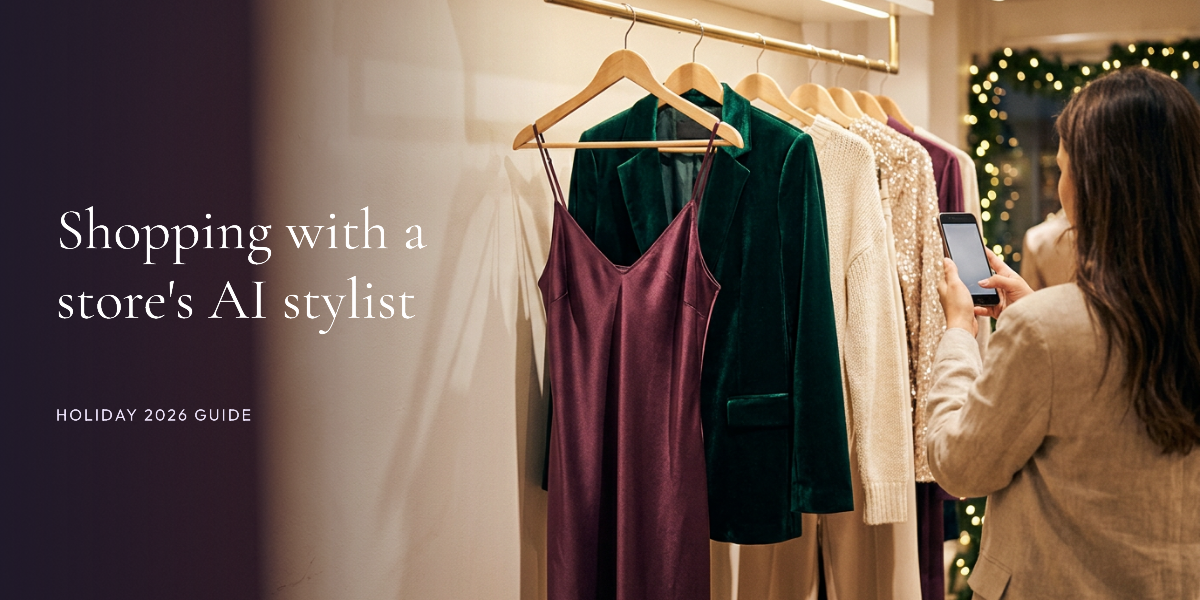
A store AI stylist is a conversational assistant that sits on a brand's website or app and answers styling questions using that brand's catalog. Instead of filtering by size and colour, you type something like "I need an outfit for a work holiday party, smart but not formal, under $150" and get complete looks back, often with reasons.
Big names have been moving this way. Ralph Lauren launched Ask Ralph in its app in September 2025, built with Microsoft on Azure OpenAI and described as bringing "the experience of speaking with an in-store stylist online" (Retail Dive). Mango introduced Mango Stylist for its Woman line across nine markets including the US and UK (FashionNetwork). In May 2026, ASOS took its AI Stylist into ChatGPT for shoppers in the UK and US (TheIndustry.fashion).
Shoppers are using AI more during the holidays too. Adobe forecasts that AI traffic to US retail sites, measured by shoppers clicking a link from an AI service, will rise 130% year over year between November 1 and December 31, 2026 (Adobe).
How it differs from search and filters
Search works when you already know the item: "black wool coat, size M". A stylist helps when you know the situation but not the item. The useful difference is that it can reason about:
- The occasion. A daytime family lunch and an evening office party ask for different fabrics, lengths and shoes.
- The whole look. Not just a dress, but the layer, shoe and bag that make it work for December weather.
- Your constraints. Budget, fit preferences, what you refuse to wear, and what you already own.
If you want the longer explanation of the technology underneath, our guide to how an AI personal stylist works covers it in plain language.
How to get genuinely useful advice from one

The quality of the answer depends heavily on what you tell it. A few habits help.
Start with the occasion, not the item
"Show me sequin tops" gets you a product list. "I'm going to a friend's New Year's Eve dinner at a nice restaurant, then probably a bar, and it will be around 35°F" gets you a look built for the night, including something warm to wear over it.
Tell it what you already own
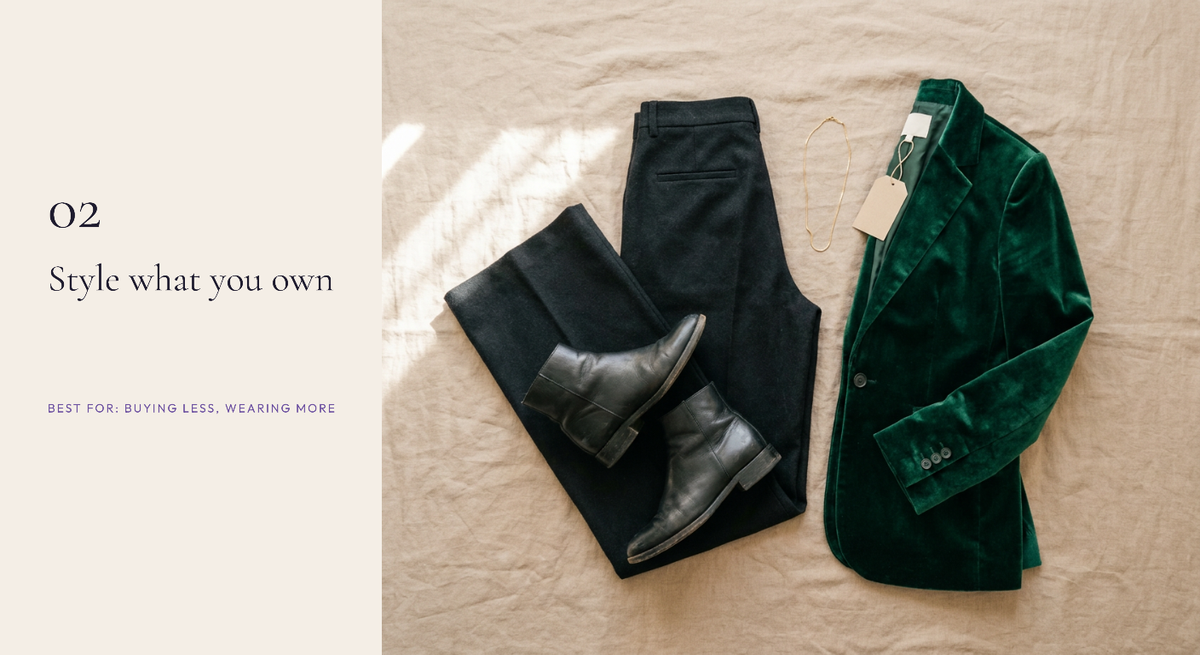
This is the step most people skip. Say "I have black wide-leg trousers and ankle boots I want to wear" and ask it to build around them. You spend less, and you are more likely to wear the new piece because it already works with your closet.
Want this styled from your own closet?
Elara builds the look from what you own, then lets you try it on.
Give a real budget and fit notes
Be specific: "under $120 total", "I prefer high-rise", "nothing cropped", "I run between sizes in tops". A good stylist will use those notes in every suggestion rather than making you repeat them.
Ask it to explain the choice
"Why this coat over the other one?" is a fair question. A good answer mentions length, fabric weight, colour or how it pairs with what you described. If it can't explain, treat the suggestion with caution.
Use try-on where it exists
Some stores pair the stylist with virtual try-on, so you can see a look on a model closer to your build or on your own photo before buying. It won't replace knowing your measurements, but it helps rule out silhouettes you would return. Our guide on reducing clothing returns has more on this.
The limits worth knowing
A store AI stylist is useful, but it is still the store's assistant. Keep three things in mind.
It only knows one catalog. It can't tell you that a better version of the coat exists at another shop. For comparisons across stores, you still need to look around.
It doesn't see your whole wardrobe. Unless you describe what you own, it's guessing. It can't know that you already have three cream knits.
It is there to help you buy. That isn't sinister, but it does mean "you don't need anything new" is rarely its first answer. Pausing before checkout is still your job. Our smart online shopping tips can help with that.
Where a personal AI stylist fits in

A personal AI stylist works from the other side. Instead of living on one store's site, it lives with you and knows your actual closet, your style history and your calendar. That makes it better at questions like "Do I need anything new for this party at all?" or "Which of my outfits works for three different December events?"
The two can work well together. Use your personal stylist to decide what you need and what it should go with, then use a store's stylist to find the best version of that piece in its catalog.
For fashion brands reading this
If you run a fashion store and want to offer shoppers this kind of help, that is what we build with Elara for Commerce: an AI stylist from the team behind the Elara app that syncs with your catalog and sits on your Shopify store. Our brand-side site, joinelara.shop, covers it in detail, including how to choose an AI stylist for a Shopify store and what a human personal stylist does and whether AI can replace one.
FAQ
What is an AI stylist on a shopping website?
It is a conversational assistant built into a fashion store's site or app. You describe the occasion, budget and preferences, and it suggests complete looks from that store's products, usually with reasons for each choice.
Are store AI stylists free to use?
The ones built into retailer sites and apps are generally free for shoppers, since they help you shop that store. Check each store's terms for how your chat data is used.
Can a store's AI stylist see my wardrobe?
Not unless you tell it what you own. Describe the pieces you want to style around. A personal AI stylist app that stores your digital closet can use your full wardrobe automatically.
Is an AI stylist better than a human stylist?
They do different jobs. An AI stylist is instant and always available, which suits quick decisions. A human stylist brings judgement, in-person fitting and relationship. You can use both: AI for everyday choices and a person for big moments.
How do I avoid overbuying with an AI stylist during Black Friday?
Decide what you need before the sales start, ask the stylist to build around what you own, set a firm total budget in your first message, and wait a day before checking out anything over that budget.
Plan your holiday looks with Elara
Elara is your personal AI stylist. It learns your wardrobe, plans outfits for each event on your calendar and shows you what's actually missing before you shop. Try Elara free and walk into the season knowing what you'll wear.
Your stylist, in your pocket
Stop reading about outfits. Start wearing them.
Elara knows your closet, shops every store and gets you dressed for any occasion.