How to Reduce Clothing Returns When Shopping Online
Reduce clothing returns when shopping online for your family by 30%+ with wardrobe intelligence and AI styling. Learn why 77% of returns happen and how to prevent them.


How AI Styling Can Help Reduce Fashion Returns
Table of Contents
- Introduction: The Hidden Cost of Guessing
- Why Online Clothing Returns Are So High: The Data Behind the Problem
- The Family Shopping Problem: Why Returns Multiply
- Why Generic Advice Falls Short: Size Charts and Reviews Aren't Enough
- The Wardrobe Intelligence Advantage: Knowing What You Own Changes Everything
- How AI Styling Tools Work as a Return-Prevention Layer
- Practical Strategies to Reduce Returns When Shopping for Your Family
- The Real ROI of Preventing Returns: Time, Money, and Mental Load
- FAQ: Reducing Clothing Returns for Your Family
- Conclusion: Shop Smarter, Return Less
Key Takeaways
- Online clothing return rates run 20–40%, versus just 8–9% for in-store purchases—a gap driven almost entirely by poor fit decisions (Frontier Group)
- 77% of shoppers return clothes because of fit issues; 48% say accurate sizing information would have prevented the return (GWI)
- Wardrobe digitization and AI styling context are the most effective pre-purchase prevention tools available
- The risk compounds for families: every additional person you're shopping for multiplies the sizing, fit, and style uncertainty
Introduction: The Hidden Cost of Guessing
Reducing clothing returns when shopping online for your family starts before checkout—specifically, by adding outfit context, fit data, and wardrobe compatibility checks at the moment of decision, not after the package arrives.
The scale of the problem makes this urgent. Online clothing return rates run between 20% and 40%, compared to just 8–9% for in-store purchases (Frontier Group). That's not a shipping problem or a product quality problem. It's a decision-making problem—one created by the absence of the context shoppers naturally have in a physical store: the ability to touch, try, and see how something works with what they already own.
That gap widens when you're shopping for a whole family. Every size estimate, style preference, and fit assumption you make for a partner, teenager, or child is another variable that can go wrong. Generic advice—check the size chart, read the reviews—doesn't close that gap. A more rigorous, behavioral approach does.
Why Online Clothing Returns Are So High: The Data Behind the Problem
The single biggest driver of online clothing returns is fit. According to GWI, 77% of shoppers cite poor fit as the reason they returned an item—not damaged goods, not changed minds, not buyer's remorse. Fit. That one finding reframes the entire problem: returns are overwhelmingly a sizing and information failure, not a preference failure.
The Frontier Group data explains why fit fails so consistently online. In-store, only 8–9% of purchases are returned. Online, that figure climbs to 20–40%. The reason is straightforward: at the moment of purchase, online shoppers lack the tactile feedback, consistent sizing references, and outfit context that a physical fitting room provides. Brands use different block patterns, different stretch grades, and different size conventions—so a medium from one label fits nothing like a medium from another. Shoppers have no reliable way to reconcile those differences from a product page.
The encouraging finding is that this problem is largely solvable. GWI data shows that 48% of shoppers say they would not have returned an item if they'd had access to accurate sizing descriptions. Nearly half of all returns are preventable with better information at the point of decision—not better logistics after the fact.
For families, the math compounds quickly. Shopping for multiple body types, fit preferences, and style sensibilities means every one of those information gaps multiplies. "Bracketing"—ordering two or three sizes to return the rest—becomes a default coping strategy, artificially inflating return volume and consuming time that never gets refunded.
The Family Shopping Problem: Why Returns Multiply
That compounding effect becomes most visible when you picture a single shopping session. One parent, one evening, buying a hoodie for a teenager who runs large in the shoulders, a dress shirt for a spouse whose fit history lives in a different brand's size system, and a pair of jeans for themselves. Three different body types. Three different fit histories. Three separate guesses. According to GWI, 77% of shoppers return items because of poor fit—and in a family shopping scenario, that 77% applies independently to each purchase.
The coping mechanism most families arrive at is bracketing: ordering two or three sizes of the same item with the intention of keeping one and returning the rest. It feels rational in the moment, and it is—given the information available. But bracketing doesn't solve the return problem, it systemizes it. Every bracketed order guarantees at least one return before it's even shipped. The logistics burden falls on the family (repackaging, drop-offs, waiting on refunds) and on the retailer absorbing reverse shipping costs.
There's a second, quieter failure mode that bracketing doesn't address: the wardrobe context gap. Without knowing what each family member already owns, a parent buying for three people is equally likely to buy a duplicate of something already in the closet, or something that fits perfectly but matches nothing. Both scenarios end in a return—not because the size was wrong, but because the purchase had no wardrobe context behind it.
Why Generic Advice Falls Short: Size Charts and Reviews Aren't Enough
The standard advice for reducing online returns—check the size chart, read the reviews, use free returns as a safety net—addresses the symptom while leaving the cause intact. Size charts fail because sizing is not standardized. A medium from one brand fits like a large from another; a "relaxed fit" in one fabric behaves like a slim cut in a heavier one. Charts tell you a number, not how a garment will actually sit on your body or whether the cut matches your preference. According to GWI, 48% of shoppers say accurate sizing descriptions would have prevented their return—which means even the information that is available isn't doing the job.
Reviews add noise rather than signal. They're written by shoppers with different body proportions, different styling needs, and different definitions of "runs small." A review from someone five inches shorter with a different shoulder width tells you almost nothing actionable about your own fit. Aggregated star ratings flatten individual variation into a number that applies to no one precisely.
Ready to upgrade your wardrobe?
Get the Elara app for AI-powered styling and virtual try-ons.
Free returns are the most insidious fix of all. Rather than preventing the wrong purchase, they normalize it—building the return loop into the shopping experience as an expected step. This carries real environmental and financial costs: reverse logistics generate significant carbon emissions, and returned items are frequently not resold at full price. Free returns are a customer retention tool, not a return-reduction strategy.
What none of these tools provide is pre-purchase context: the ability to answer "will this actually work for me—with my body, my wardrobe, and my life?" before the order is placed. That missing layer is where the real return problem lives.
The Wardrobe Intelligence Advantage: Knowing What You Own Changes Everything
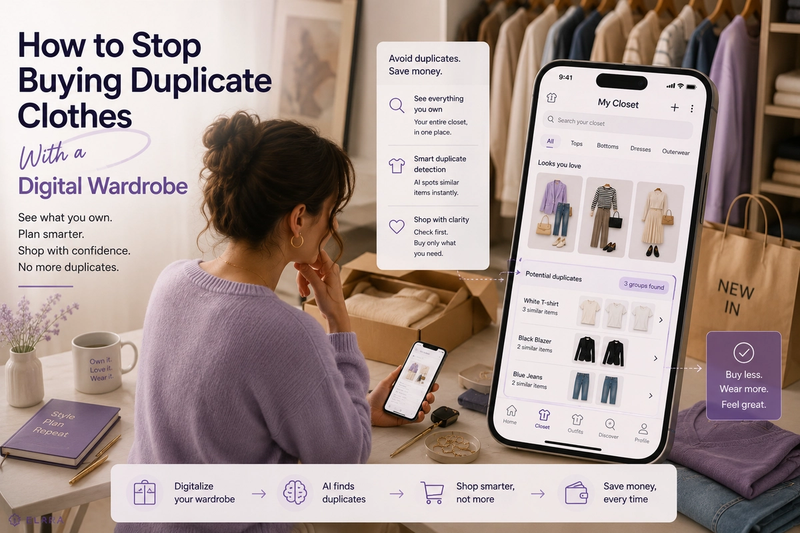
Wardrobe digitization—cataloging what each person in a household already owns—prevents two of the most common return triggers before a shopper ever reaches checkout. The first is the duplicate purchase: buying something that already exists in the closet in a nearly identical form. The second is the "nothing to match it" return, where an item fits correctly but never gets worn because it doesn't integrate with anything already owned. Both failures are invisible at the point of purchase without a wardrobe reference layer.
The practical difference is significant. An AI stylist with access to your wardrobe data won't recommend a fourth navy blazer, even if it's discounted and technically your size—because it already knows three exist. That's not a filter a size chart or a review section can apply. It requires knowing what you own.
For families, this scales meaningfully. A per-person digital wardrobe creates a shared reference layer for household purchasing decisions. A parent buying jeans for a teenager and a work shirt for a spouse is no longer operating on memory and guesswork—they're cross-referencing against a known inventory of what each person has, what fits, and what's already covered.
According to Fit Analytics, size recommender tools alone reduce returns by up to 30%. Wardrobe context extends that reduction further by adding outfit compatibility checks on top of sizing accuracy—answering not just "will this fit?" but "will this work with what I already own?" Those are two different questions, and answering both before checkout is where the real return prevention happens.
How AI Styling Tools Work as a Return-Prevention Layer
That two-question framework—"will this fit?" and "will this work with what I own?"—is exactly what AI styling tools are built to answer simultaneously. Where basic size recommenders stop at measurements, wardrobe-integrated AI adds a compatibility and preference layer that makes the recommendation genuinely useful before checkout.
The mechanism works like this: a shopper asks something like "would this linen blazer work with what I already have?"—and instead of returning a generic style tip, the AI cross-references their wardrobe inventory, past fit preferences, and purchase history to give a context-aware answer. The key capabilities driving return reduction are wardrobe integration checks (does this item pair with pieces already owned?), personalized fit filtering (based on brand-specific sizing history, not generic charts), context-aware shopping (surfacing items that solve a genuine gap rather than creating a duplicate), and versatility scoring (how many outfits does this actually unlock?).
According to Fit Analytics, size recommender tools alone reduce returns by up to 30%. Wardrobe-integrated AI extends that benefit further—because sizing accuracy and outfit compatibility together answer the full decision, not just half of it.
Elara is one example of this category: an AI styling tool that brings wardrobe intelligence into the shopping process, helping shoppers make confident decisions before anything lands on the doorstep. If you want to see how it works in practice, check out joinelara.com.
Practical Strategies to Reduce Returns When Shopping for Your Family
Reducing clothing returns when shopping online for your family comes down to one principle: get more information before checkout, not after delivery. These five strategies apply whether or not you're using an AI tool—though several work significantly better with one.
1. Build a shared family wardrobe reference before you shop. A photo album per person, or a dedicated wardrobe app, gives you a real inventory to shop against. Without it, you're guessing what each family member already owns—and duplicate purchases and "nothing to match it" returns are the predictable result.
2. Apply the rule of three. Only buy an item if it works with at least three things the family member already owns. This single filter eliminates most impulse purchases and closet orphans—the items that fit fine but never get worn. According to GWI, 48% of shoppers say better information before purchase would have prevented their return; the rule of three is a manual version of that information check.
3. Prioritize retailers that offer size recommender tools. Fit Analytics data shows these tools reduce returns by up to 30%. When two retailers carry the same item, choose the one that helps you size it accurately. That 30% reduction compounds across a family of four shopping regularly.
4. Treat bracketing as a stop signal, not a solution. The urge to order two sizes "just in case" is a sign you don't have enough information—not a reason to buy more. Pause, seek better sizing data or a fit recommendation, and make one confident choice.
5. Get a wardrobe-aware second opinion before checkout. AI styling tools can cross-reference a potential purchase against each family member's existing wardrobe and flag compatibility issues before you commit. That's the check that turns a maybe into a confident yes or a decisive no.
The Real ROI of Preventing Returns: Time, Money, and Mental Load
A single clothing return feels minor in isolation. In practice, it costs more than the refund suggests. Repackaging the item, finding the original materials, driving to a drop-off point, waiting 7–14 days for the refund to clear, and then re-shopping the original need—that's easily 45–90 minutes of real time, plus any shipping fees the retailer doesn't cover.
Multiply that across a family of four shopping online regularly, and the cumulative drain becomes significant. Online clothing return rates run 20–40%, compared to just 8–9% for in-store purchases (Frontier Group). That gap represents a recoverable volume of wasted effort—time and money that prevention, not better logistics, can reclaim.
According to GWI, 48% of all clothing returns could be prevented with more accurate sizing and product information at the point of purchase.
That statistic reframes returns from an inevitable cost of online shopping into a largely avoidable one. Nearly half of every return a family processes represents a decision that better pre-purchase information would have changed. Wardrobe intelligence—knowing what each person owns, what fits, and what actually gets worn—is the mechanism that converts that potential into actual prevention. Every purchase made with full context is a return that never happens, a refund wait that never starts, and a re-shopping session that never eats into the weekend.
FAQ: Reducing Clothing Returns for Your Family
Q: How can I reduce clothing returns when shopping online for my family? A: Start before checkout, not after delivery. Build a shared wardrobe reference for each family member, apply the rule of three (only buy items that pair with at least three existing pieces), and use size recommender tools when available. AI styling tools that integrate wardrobe data are the most effective approach—they answer both "will this fit?" and "will this work with what I already own?" at the same time.
Q: What's the difference between size recommender tools and AI styling tools? A: Size recommender tools reduce returns by up to 30% by improving fit accuracy alone. AI styling tools go further by adding wardrobe compatibility checks, outfit context, and personalized preference filtering. They prevent not just wrong sizes, but wrong purchases—items that fit but don't match anything the person owns.
Q: Is bracketing (ordering multiple sizes) ever a good strategy? A: No. Bracketing treats the symptom (uncertainty about fit) while guaranteeing the problem (at least one return per order). When you feel the urge to bracket, it's a signal you need better sizing information or fit recommendations before checkout—not permission to buy more. Make one confident choice based on better data instead.
Q: How much time does preventing a return actually save? A: A single return costs 45–90 minutes of real time: repackaging, drop-off, waiting for the refund to clear, and re-shopping the original need. For a family of four shopping regularly, that compounds quickly. Wardrobe intelligence prevents those returns before they happen.
Q: Can wardrobe digitization really prevent duplicate purchases? A: Yes. An AI stylist with access to your wardrobe inventory won't recommend a fourth navy blazer—because it already knows three exist. Without that reference layer, duplicate purchases happen because they're invisible at the point of decision. That's one of the two most common return triggers, and wardrobe context eliminates it entirely.
Conclusion: Shop Smarter, Return Less
Reducing clothing returns isn't a logistics problem waiting for a better return label—it's a decision-making problem waiting for better information. The research makes this concrete: when 77% of returns trace back to fit issues and 48% are preventable with accurate sizing context, the fix lives before checkout, not after the box arrives back at the warehouse.
That calculus intensifies for families. Every additional person you're shopping for adds another body type, another fit preference, another wardrobe to mentally cross-reference. Wardrobe intelligence—knowing what each family member owns, what actually fits, and what genuinely gets worn—converts that compounding uncertainty into confident, purposeful purchases.
The shift happening now is from reactive to proactive: from processing returns to preventing them at the moment of decision. Tools that bring outfit compatibility, visual confidence, and gap analysis directly into the purchase moment are making that shift practical, not just aspirational.
Ready to shop with that kind of clarity? Explore Elara as your AI personal stylist at joinelara.com—or, if you're a brand, see how an AI styling layer on your Shopify storefront can recover the margin that size charts alone can't protect.
Dress better. Shop smarter. Feel confident.

Your AI Stylist is Here.
live on the App Store & Google Play
Available on iOS and Android for seamless access anytime, anywhere.