Reduce Online Returns: Stop Buying to Return
Reduce online returns by addressing root causes before checkout. Learn why 70% of apparel returns happen and how AI-powered tools prevent unnecessary purchases.

The real cost of online returns (and how to stop buying things you’ll send back)
Table of Contents
- Key Takeaways
- Introduction: The Hidden Price Tag on Every Return
- Why Online Return Rates Are So High (And Rising)
- The Bracketing Habit: Why You're Buying to Return
- The Sizing Problem: 70% of Apparel Returns Have One Root Cause
- The Loyalty Paradox: Why Making Returns Harder Isn't the Answer
- How to Stop Buying Things You'll Return: A Practical Guide
- Frequently Asked Questions
- Conclusion: The Smarter Way to Shop
Key Takeaways
- E-commerce return rates run at 18–20% of all online orders—two to three times higher than the 8–9% seen in physical stores (National Retail Federation, Salesforce).
- Apparel returns reach 20–40%, with roughly 70% of those caused by fit and sizing uncertainty.
- Over 60% of online shoppers deliberately over-buy to return the rest—a behavior known as bracketing.
- The fix is prevention before checkout, not stricter return policies—and AI-powered tools like Elara are built to stop returns before they start.
Introduction: The Hidden Price Tag on Every Return
Online returns are projected to cost U.S. retailers more than $247 billion in 2026—a 12% increase from 2024—while globally, e-commerce returns already exceed $640 billion annually. That's not a rounding error in someone's logistics budget. It's a structural failure baked into how we shop online.
The gap between digital and physical retail tells the story plainly. According to the National Retail Federation and Salesforce, e-commerce return rates run between 18% and 20% of all orders. Walk into a store, and that figure drops to 8–9%. The difference isn't that online shoppers are less careful—it's that they're shopping without a fitting room, without a stylist, and without the ability to hold a fabric up to the light.
You've been there. The dress that looked effortlessly tailored on the model arrived looking nothing like it did on screen. The boots described as "true to size" ran a full size small. The jacket was the right color in the photo but clashed with everything in your wardrobe when it arrived. These aren't failures of judgment—they're predictable outcomes of an information gap.
This article isn't about return policies, restocking fees, or how to print a prepaid label. It's about why returns happen in the first place, and what smarter pre-purchase decisions look like. Three root causes drive the vast majority of unnecessary returns: sizing uncertainty, the deliberate over-buying behavior known as bracketing, and impulse purchases that look great in isolation but have no place in your actual wardrobe. Understanding each one is the first step to shopping in a way that stops returns before they happen.
Why Online Return Rates Are So High (And Rising)
The core problem is structural. Physical retail gives shoppers tactile feedback that online channels simply cannot replicate—the weight of a fabric, the way a waistband sits, the actual depth of a shoe's toe box. Without a fitting room or a floor associate who knows the brand's sizing quirks, online shoppers are making educated guesses on every purchase.
Those guesses go wrong at very different rates depending on the category. Apparel carries the highest return rate at 20–40%, according to industry research, followed by footwear at 17–30%. Electronics run lower at 8–15%, and beauty products lower still at 4–12%. The pattern is clear: the more a purchase depends on personal fit and physical sensation, the higher the return rate climbs. A USB cable either works or it doesn't. A blazer has to work on you.
The six weeks following Christmas represent the sharpest stress test in retail. Return rates peak at 19.8% during that period, accounting for $38.4 billion in returned U.S. merchandise—a volume that strains reverse logistics networks and erodes margins at exactly the moment retailers most need to protect them.
The holiday surge isn't just a seasonal anomaly. It's a concentrated version of the same problem that runs at a lower temperature year-round: shoppers buying things they haven't had the chance to evaluate properly, under time pressure, often for someone else.
The free returns dynamic adds another layer of complexity. Research shows that 79% of consumers now expect free returns as a baseline—not a perk. Yet as of 2026, only 54% of retailers actually offer them, a gap that has widened by six points since 2024. That mismatch between expectation and reality shapes shopper behavior in ways retailers often underestimate. When a return feels low-risk, the threshold for buying something uncertain drops. The structural absence of tactile shopping, combined with the normalization of free returns, has effectively turned the return process into an extension of the fitting room—which means the problem isn't going away through policy alone.
The Bracketing Habit: Why You're Buying to Return
That behavioral pattern—treating the return process as an extension of the fitting room—has a name: bracketing. It means deliberately ordering multiple sizes, colors, or styles with the intention of keeping one and returning the rest. According to industry research, over 60% of online shoppers engaged in bracketing in 2022, and among adults under 30, 20% say they always do it.
Ready to upgrade your wardrobe?
Get the Elara app for AI-powered styling and virtual try-ons.
The logic is completely rational. When a brand's size 8 fits like a 10, when product photos show a linen shirt on a six-foot model under studio lighting, when there's no way to know whether a color reads ivory or cream in natural light—ordering two options isn't reckless, it's sensible. Shoppers aren't the problem. Inadequate product information is.
The downstream cost, however, is severe. Reverse logistics—the labor, fuel, and packaging required to process a returned item—often costs retailers more than the item's margin. Many returned garments never make it back to shelves; they're liquidated or landfilled. The environmental footprint of a single returned jacket, accounting for two shipping journeys and potential disposal, is far larger than most shoppers realize.
Most retail industry commentary treats bracketing as a logistics challenge: how do you process returns faster and cheaper? That framing misses the real opportunity. Bracketing is a behavioral response to a data deficit. When a shopper has no reliable signal about how a specific item will fit their specific body, they hedge. The solution happens before checkout—and that's exactly where AI personalization, trained on a shopper's wardrobe, past purchases, and return history, can stop unnecessary returns before they start.
The Sizing Problem: 70% of Apparel Returns Have One Root Cause
Approximately 70% of apparel returns are driven by fit and sizing issues—making it, by a wide margin, the single most preventable cause of returns. Every other factor—wrong color, changed mind, lower price found elsewhere—is noise compared to this one structural failure.
Size charts don't fix it. A brand's chart might tell you that a size medium has a 38-inch chest, but it won't tell you whether that medium runs stiff through the shoulders, whether the fabric stretches, or how it drapes on someone who carries weight differently than the sample model. Customer reviews help at the margins—"runs small, size up"—but they aggregate across body types that may bear no resemblance to yours. Star ratings tell you nothing about fit at all.
AI-powered sizing tools represent the first genuinely new solution to this problem in decades. Virtual fitting rooms, body measurement apps, and recommendation engines trained on return data can translate a shopper's actual measurements and fit history into a probability: this item, in this size, is likely to fit you. Some tools go further, flagging when a garment's construction—a high armhole, a tapered leg—tends to cause problems for specific body proportions.
Apparel already carries return rates between 20% and 40%, the highest of any retail category. The prevention opportunity at the sizing layer is enormous. An AI that knows your wardrobe—what you've kept, what you've returned, and why—can surface that risk before you add an item to your cart. That's not a returns-desk fix. It's a pre-purchase intelligence layer that addresses the root cause where it actually lives: in the decision, not the shipment. This approach directly helps reduce online returns shopping by catching fit problems before purchase.
The Loyalty Paradox: Why Making Returns Harder Isn't the Answer
The instinct to crack down on returns is understandable. Return rates are rising, reverse logistics costs are climbing, and bracketing is structurally expensive. The blunt policy response—charging return fees, shortening return windows, excluding sale items—does reduce return volume in the short term. It also destroys the customer relationship.
The loyalty data here is unambiguous. According to industry research, 92% of consumers will buy again from a retailer if the return process is easy. More striking: 94.5% of shoppers who experienced a frictionless return made at least two additional purchases within 90 days, with an average repeat order value 23% higher than their original purchase. Friction in the returns process doesn't just reduce returns—it reduces the entire customer relationship.
"94.5% of shoppers who experienced a frictionless return made at least two additional purchases within 90 days, at an average order value 23% higher than the original."
The smarter approach is using return data to update customer profiles and sharpen future recommendations. If a customer returns a size 10 blazer because it ran small, that signal should automatically inform the next recommendation. The return becomes a data point, not a transaction failure.
Nearly 80% of U.S. retailers have already incorporated or planned to incorporate returns processing technology, according to recent industry data. The problem is that most of that investment targets the back end: faster processing, automated refunds, more efficient reverse logistics. Very few are applying return data to the prevention layer—using what shoppers send back to improve what they're shown next time.
The goal isn't fewer returns at any cost. It's fewer unnecessary returns, achieved through better pre-purchase intelligence. That distinction matters enormously: one approach punishes customers for a system's failures; the other fixes the system. By stopping returns before they happen, you also reduce online returns shopping costs across the entire customer journey.
How to Stop Buying Things You'll Return: A Practical Guide
Better pre-purchase intelligence is the missing layer in most shoppers' habits. The tactics below don't require willpower or a spreadsheet—they require a small shift in how you evaluate an item before you buy it.
1. Apply the three-piece rule before checkout. Before adding anything to your cart, ask whether it works with at least three items you already own. If you can't name them, the purchase is a wardrobe orphan waiting to happen.
2. Read fit-specific reviews, not aggregate star ratings. A 4.2-star average tells you nothing about how a blazer fits someone with your proportions. Filter reviews by height, weight, or body type where platforms allow it—these are the reviewers whose experience will actually predict yours. About 70% of apparel returns trace back to fit and sizing issues, which means a five-star rating from someone eight inches taller than you is nearly useless data.
3. Commit to one size before ordering. Over 60% of online shoppers bracketed in 2022—ordering multiples to return the rest. Use brand-specific size guides and third-party fit tools to make a single confident choice instead of outsourcing the decision to your hallway.
4. Wait 24 hours on impulse purchases. Revisit the item the next day. If you still can't name the three pieces it works with, the gap it fills is emotional, not sartorial.
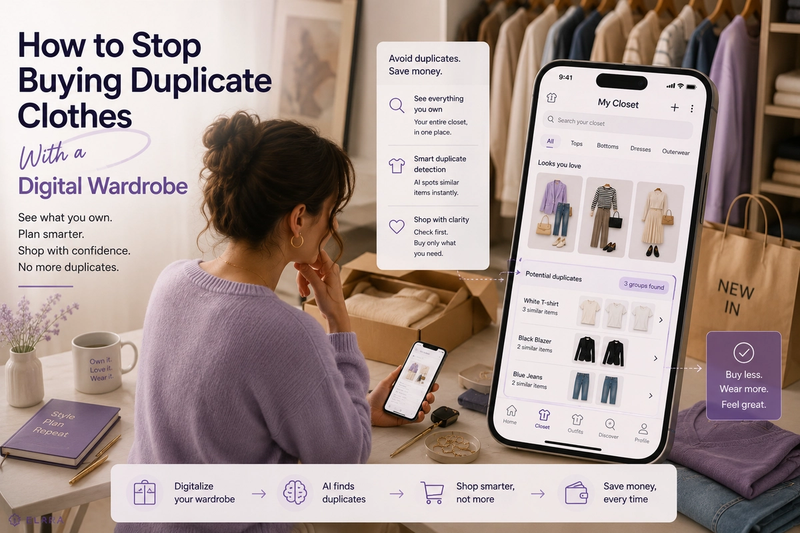
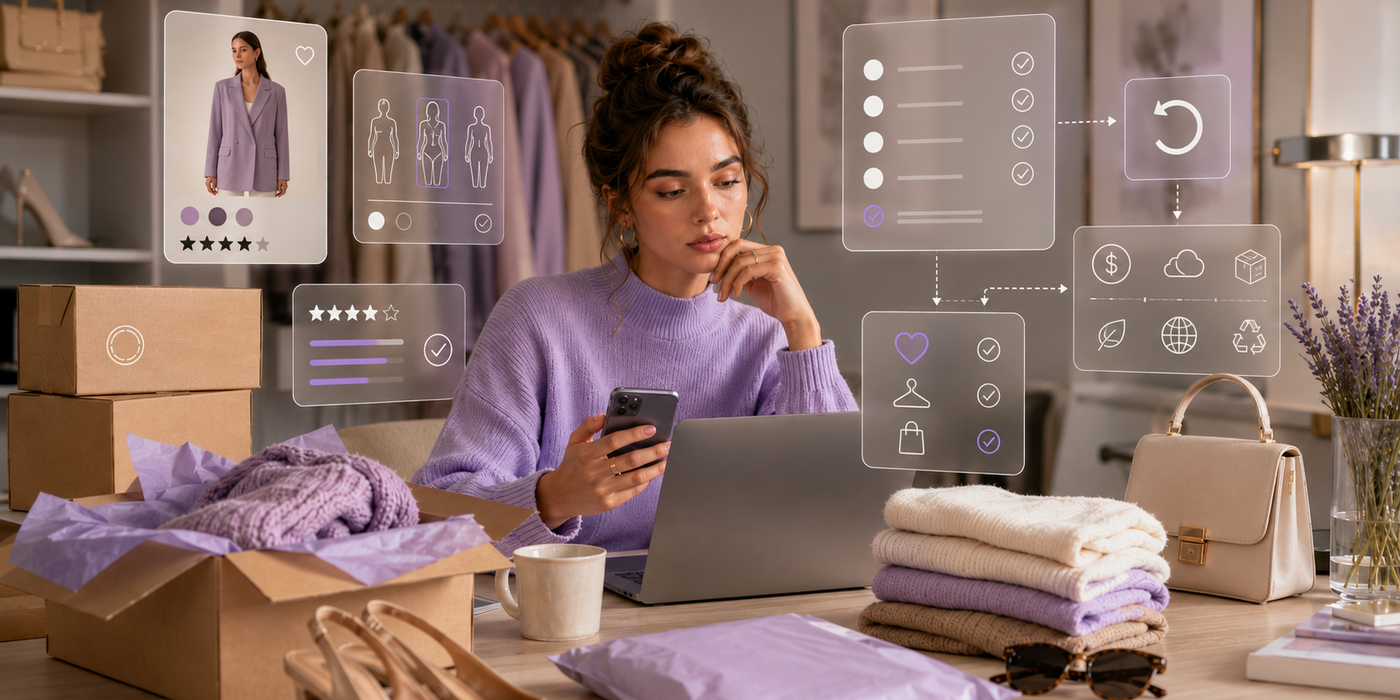
5. Validate purchases with an AI stylist before checkout. This is where conversational AI changes the equation entirely. Rather than discovering a mismatch after the package arrives, you can talk through how a potential purchase integrates with your existing wardrobe—flagging sizing risks and style conflicts before you click buy. It's prevention built into the decision, not damage control after the fact. Elara does exactly this, showing you how new pieces work with what you already own, directly helping you reduce online returns shopping.
Frequently Asked Questions
Q: How much can better pre-purchase decisions actually reduce my returns? A: The potential is significant. Since approximately 70% of apparel returns stem from fit and sizing issues, and over 60% of shoppers bracket specifically because they lack sizing confidence, addressing these two factors alone could prevent the majority of unnecessary returns. Even a 20–30% reduction in return volume translates to meaningful savings on shipping, processing, and environmental impact.
Q: Isn't bracketing just a rational response to poor sizing information? A: Exactly. Bracketing isn't a character flaw—it's a smart workaround for a broken system. When you have no reliable way to know whether a size will fit, ordering multiples is the sensible choice. The real fix isn't blaming shoppers; it's providing the information they need to make a confident single purchase before checkout.
Q: What's the difference between a regular size chart and AI-powered sizing recommendations? A: A size chart gives you static measurements. AI-powered recommendations take your actual body measurements, fit history, and past returns, then cross-reference that against how thousands of other shoppers with similar proportions have fared with specific items. It's personalized prediction rather than generic guidance, which means it catches fit problems before you buy instead of after you've already paid for shipping both ways.
Conclusion: The Smarter Way to Shop
Returns are a decision problem, not a shipping problem. The box going back to the warehouse is just the symptom—the cause was a purchase made without enough information about fit, context, or wardrobe compatibility. Sizing uncertainty, bracketing, and impulse buying disconnected from what you actually own: these three patterns drive the vast majority of unnecessary returns, and all three are solvable before checkout.
The best return is the one that never happens. Explore how Elara helps you shop with your full wardrobe in mind at joinelara.com.
Dress better. Shop smarter. Return less.

Your AI Stylist is Here.
live on the App Store & Google Play
Available on iOS and Android for seamless access anytime, anywhere.