Summer Sale Shopping Tips 2026: Buy Smart, Not More
Summer sale shopping tips for 2026: Shop by category first, not discounts. Learn the peak sale windows, wardrobe integration test, and tactics to stack savings without impulse buying.


Summer sale shopping: how to buy things you’ll actually keep
Table of Contents
- Introduction: The Summer Sale Trap (and How to Avoid It)
- The 2026 Summer Sale Calendar: When to Buy What
- Category-First Shopping: The Rule That Changes Everything
- The Wardrobe Integration Test: Is It Really a Deal?
- How to Stack Savings Without Losing Strategy
- FAQ: Summer Sale Shopping Tips 2026
- Conclusion: Buy Less, Keep More
Key Takeaways
- Shop category-first, not sale-first — decide what you need before any discount banner influences you (NBC News)
- 2026's biggest windows by category: Memorial Day for mattresses and furniture, July 4 for appliances, August for swimwear and outdoor goods, Labor Day for furniture again
- A discounted item is only a deal if it gets worn — wardrobe integration is the real test
- Elara's AI stylist supports this approach by validating purchases against your existing wardrobe
Introduction: The Summer Sale Trap (and How to Avoid It)
Most shoppers approach summer sales backwards. They open a retailer's homepage, see "40% off everything," and start browsing — then work backwards to justify what they've already half-decided to buy. The result is predictable: a closet full of discounted items that still have tags on them in October, and a vague sense that the sale somehow cost money rather than saved it.
NBC News put the corrective principle plainly: the best approach is category first, not sale first. That single inversion — deciding what you need before you engage with any sale — separates intentional shoppers from impulse buyers, regardless of how disciplined they think they are.
This guide builds a 2026-specific framework around that principle. It maps the summer sale calendar to the product categories where each window actually delivers the deepest discounts, introduces a wardrobe integration test for apparel purchases, and covers the tactical savings tools — price trackers, cashback stacking, price-matching — that amplify a good decision without substituting for one.
Throughout, the framework draws on how tools like Elara, an AI stylist that tracks your existing wardrobe, can validate a potential purchase before you commit — not as a shopping assistant, but as a reality check on whether a sale item fills a real gap or just adds to the clutter.
The 2026 Summer Sale Calendar: When to Buy What
The summer sale season isn't a single event — it's a sequence of distinct windows, each with its own strongest product categories. Treating them interchangeably is how shoppers end up buying furniture on Prime Day and electronics on Memorial Day, missing the deeper discounts available when timing and category align.
According to U.S. News & World Report, the four biggest discount windows in the 2026 U.S. shopping calendar are Memorial Day, July 4, Prime Day, and Labor Day. Each has a different category profile:
- Memorial Day (late May): The year's first major window for mattresses, furniture, and grills, according to ShopBack. Retailers treat it as a flagship event for big-ticket home goods, and the discounts reflect that.
- July 4: ShopBack identifies this as the prime window for appliances — refrigerators, dishwashers, and laundry units move heavily here, and manufacturers coordinate promotional pricing with retailers.
- Prime Day (mid-July): Electronics and seasonal big-ticket items dominate. Discount windows during this period close quickly, so preparation before the event opens matters more than ever.
- August: NerdWallet flags August as especially strong for swimsuits, backyard and outdoor products, and back-to-school items — categories where retailers are actively clearing warm-weather inventory.
- Labor Day (early September): A second major window for mattresses, furniture, and grills, mirroring Memorial Day's category strength.
Understanding the difference between mid-season clearance and end-of-season inventory clearance is equally important. According to Cadillac Fairview, spring clearance starts around May–June, when retailers discount to make room for new arrivals — selection is still broad but discounts are moderate. Summer discounts deepen in August–September as stores aggressively clear inventory before the season closes — selection narrows, but the price reductions are steeper.
These are fundamentally different types of opportunities. Mid-season clearance rewards shoppers who want the widest selection at a fair discount. End-of-season clearance rewards shoppers who already know exactly what they need and can act quickly on a specific item.
Use this calendar as a planning tool, not a browsing trigger. The right sequence is: identify the category you need, locate it on the calendar, and wait for the corresponding window. Browsing Memorial Day sales to see "what's good" without a prior needs list is how the trap springs.
Ready to upgrade your wardrobe?
Get the Elara app for AI-powered styling and virtual try-ons.
Category-First Shopping: The Rule That Changes Everything
That calendar only works if you arrive at each sale window with a clear target. Without one, even the most accurate timing advice becomes a browsing invitation — and browsing sales without a prior needs list is precisely how regret purchases happen.
NBC News puts the principle plainly: "the best approach is category first, not sale first." In practice, this means completing two steps before any sale event opens. First, write a needs list — specific items or categories you've already decided you require, independent of any discount. Second, only engage with a sale if it covers something on that list. If it doesn't, the sale is not relevant to you, regardless of the discount percentage.
The category-to-window matching matters here. According to ShopBack, July 4 is a strong window for appliances, while Memorial Day and Labor Day are the peak moments for mattresses, furniture, and grills. So if you need a new blender, your planning target is July 4 — not a random 30%-off email that arrives in June. If you need outdoor furniture, you wait for Memorial Day or return to Labor Day if Memorial Day selection doesn't meet your standard. The discount calendar and the needs list work together; neither is useful alone.
The same logic applies to apparel, where the impulse-buy temptation runs highest. The category-first discipline here means identifying the specific wardrobe gap before opening any sale tab. Not "I might want something summery" — but "I need a versatile white linen shirt that works for both casual dinners and beach days." That specificity is what separates a purposeful purchase from a hanger-filler. Find the gap, then find the sale that fills it.
The Wardrobe Integration Test: Is It Really a Deal?
Identifying a wardrobe gap gets you to the right sale. But once you're there, a second filter determines whether the specific item in front of you is genuinely worth buying. The Wardrobe Consultant frames the stakes directly: "do not buy it just because it's on sale — an item is not a deal if it never gets worn."
That's not a warning about overspending. It's a warning about a specific failure mode: the purchase that felt rational at the register but never leaves the closet. To avoid it, run every clothing purchase through a three-question integration test before buying:
- Does it coordinate with at least three pieces you already own? Not pieces you plan to buy — pieces currently in your wardrobe.
- Does it fill a genuine gap, not duplicate something you already have? A third navy blue top at 60% off is not a deal; it's a redundancy.
- Will you realistically wear it at least ten times this season? If the honest answer is "maybe once or twice," the discount doesn't change the math.
The timing of end-of-season clearance makes this test especially critical. According to Cadillac Fairview, summer discounts typically deepen in August and September as retailers clear inventory — and those are precisely the months when swimwear, linen pieces, and outdoor occasion clothing hit their steepest markdowns. The discounts are real, but the integration risk is highest: an item bought in late August for next summer needs to fit a wardrobe plan that's twelve months away. Without a clear picture of what you already own and what you'll actually need, those clearance buys accumulate into the exact clutter that makes "nothing to wear" a recurring problem despite a full closet.
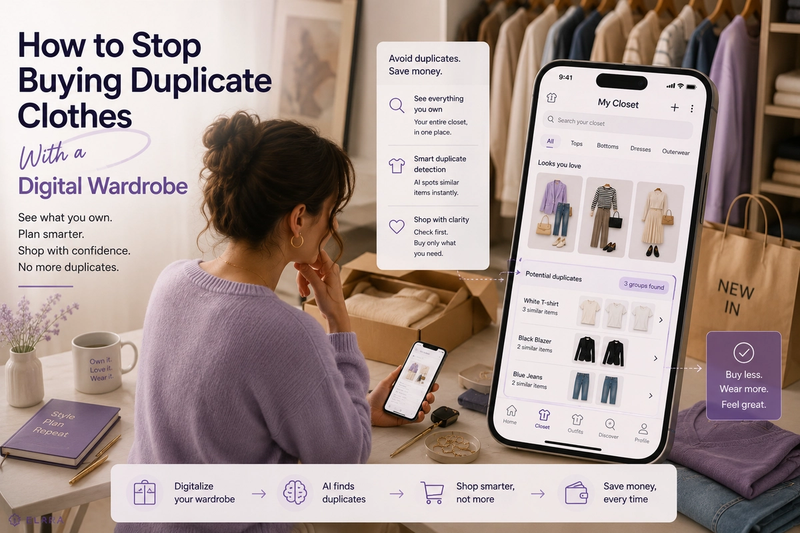
This is where Elara's AI stylist changes the calculation. Because it's built on a digitized record of your existing wardrobe, it can run the integration test before you buy — showing whether a sale item coordinates with what you already own, fills a real gap, or simply adds noise. The test becomes automatic rather than aspirational.
How to Stack Savings Without Losing Strategy
Once you've identified the right category, timed it to the right window, and confirmed the specific item passes the integration test, tactical savings tools become genuinely powerful. Used in that order, they amplify a good decision. Used as a starting point, they just make bad decisions cheaper.
NBC News outlines five tactics worth applying to every significant summer purchase:
- Compare prices across multiple retailers before committing. The first sale you see is rarely the best available price on a given item.
- Use price trackers — tools like CamelCamelCamel for Amazon or browser extensions like Honey — to verify that the "sale" price represents a genuine discount from a stable baseline, not a temporarily inflated original price marked back down.
- Check price-matching policies before buying anywhere. Many major retailers will match a competitor's lower price, effectively combining your preferred retailer's convenience with the market's best rate.
- Stack savings layers: sale price, plus cashback app (Rakuten, TopCashback), plus loyalty points, plus any applicable coupons. Each layer is incremental, but combined they can shift a good deal into an exceptional one.
- Review return policies before purchasing, not after. For apparel specifically, a non-returnable item at 50% off carries meaningfully higher risk than a fully returnable item at 30% off — because if the fit is wrong or the integration test fails post-purchase, you have no exit.
One structural reality of 2026 retail reinforces why preparation matters: discount windows during major sale events close quickly. The core window for a July 4 appliance deal or a Prime Day electronics offer shuts down within days. Shoppers who arrive at those windows with price tracker data already loaded, cashback accounts already activated, and a clear item target act decisively. Shoppers who start the research process when the sale opens are working against the clock — and usually lose.
FAQ: Summer Sale Shopping Tips 2026
Q: How far in advance should I plan for summer sale shopping tips 2026? A: Start your needs list at least two weeks before the sale window opens. This gives you time to research specific items, load price trackers, and activate cashback accounts without rushing. For major events like Prime Day or Memorial Day, planning a month ahead ensures you're not caught off-guard when discounts appear.
Q: What's the difference between a real discount and a fake one when applying summer sale shopping tips 2026? A: Use price trackers to check an item's price history over the past 90 days. If the "original" price was inflated just before the sale, the discount is artificial. Real discounts show a genuine reduction from a stable baseline price. This matters especially during August clearance, where retailers sometimes inflate prices before marking them down.
Q: Can I return items bought during summer sale shopping tips 2026 events? A: Check the return policy before buying, not after. Some retailers shorten return windows during major sales events, or mark certain sale items as final sale. For apparel, a 30-day return window on a 30%-off item is often smarter than a non-returnable 60%-off item, because fit and integration risk are highest with clothing.
Conclusion: Buy Less, Keep More
The framework in this article exists for one reason: when a sale opens, there's no time to start from scratch. The shoppers who come out ahead are the ones who already know their category, already know their gap, and already know what "a good price" actually looks like for that item.
The single rule worth carrying out of this guide: buy by category and timing, not by whatever banner headline a retailer has decided to plaster across its homepage. As NBC News puts it, "the best approach is category first, not sale first." And as The Wardrobe Consultant reminds us, "an item is not a deal if it never gets worn." Those two principles, held together, are a complete decision filter.
None of this dismisses the genuine pull of a 40%-off tag. Discounts are psychologically compelling for good reason — they signal scarcity and savings simultaneously. The framework doesn't ask you to ignore that feeling. It asks you to redirect it toward purchases you've already decided you need.
That's precisely where Elara's AI stylist earns its place in this process. Because it already knows what's in your wardrobe, it can run the integration test automatically — telling you whether a sale item fills a real gap or simply adds to the pile. No spreadsheet required.
If you're building toward a smarter wardrobe this summer, explore Elara at joinelara.com or read our related guide on constructing a capsule wardrobe that actually works across seasons.

Your AI Stylist is Here.
live on the App Store & Google Play
Available on iOS and Android for seamless access anytime, anywhere.