
How to Tell If a Pashmina Is Real: GI Label, Tests and Price Checks
Real pashmina is 12 to 16 micron goat fibre, hand-spun and hand-woven. Check the GI label, read the fibre tag, use the light and burn tests, skip the ring test.
 Mehul AgarwalFounder & CEO
Last updated: October 2026
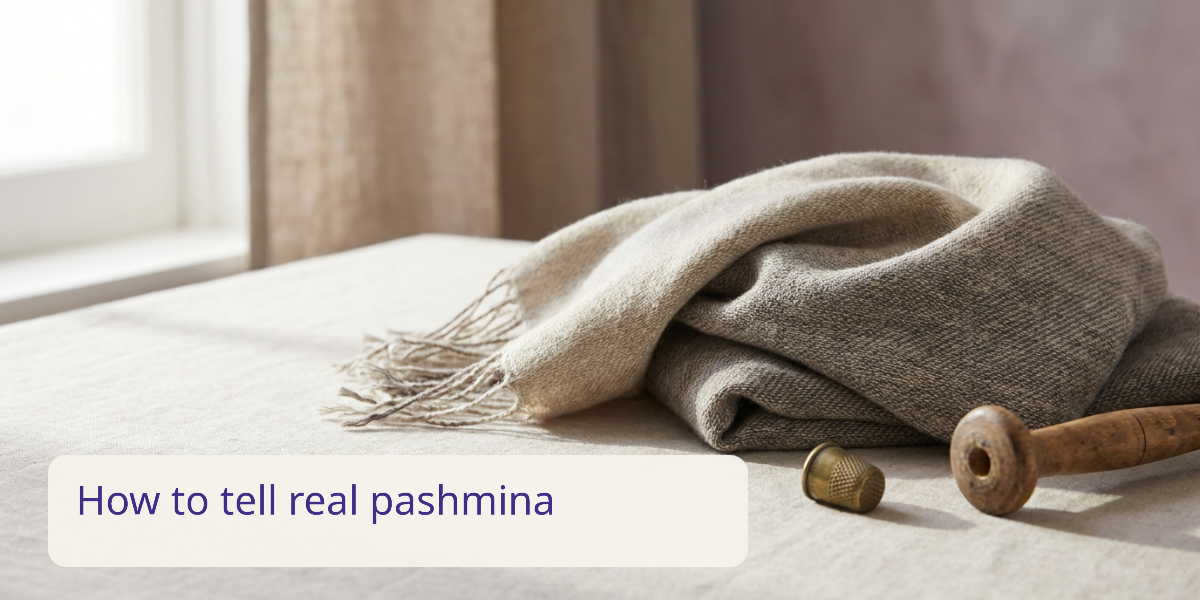
Quick answer: A real Kashmir pashmina is spun from goat undercoat fibres 12 to 16 microns thick, then hand-spun and hand-woven, according to its Geographical Indication (GI) filing. The surest check is a GI label from the Pashmina Testing and Quality Certification Centre (PTQCC) in Srinagar, which is only fused on after lab testing. Without one, read the fibre tag, hold the shawl to the light, burn one fringe thread, and ignore the ring test.
Shawl season and wedding season arrive together in India, and so does the most common gifting question: is this pashmina real? The word is used loosely on everything from hand-woven Kashmiri shawls to viscose wraps that cost less than lunch. This guide explains what the label legally means in India and abroad, the five checks that actually tell you something, and what to ask a seller before you pay.
If you are buying a silk saree to go with it, our guide to checking a real silk saree with the Silk Mark uses the same logic: trust a lab-backed mark over a shop trick.
What pashmina actually is
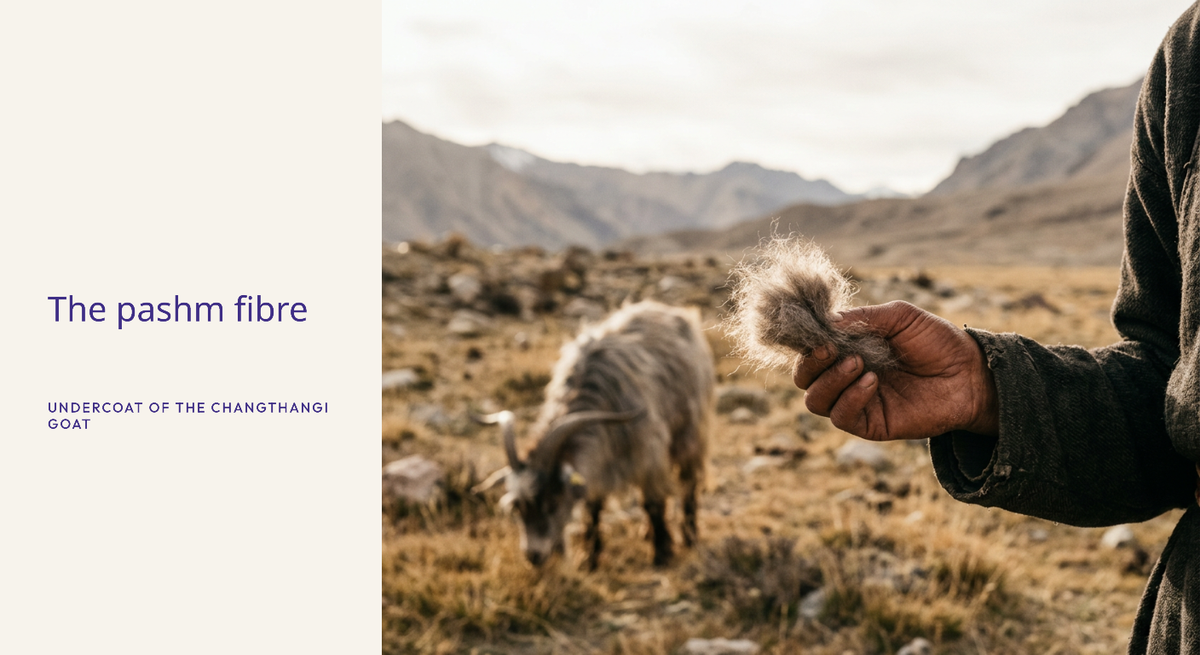
Pashmina is a fabric woven from pashm, the fine winter undercoat of the Changthangi goat (Capra hircus) raised on the high Changthang plateau of Ladakh. The GI filing for Kashmir Pashmina describes fibres of 12 to 16 microns, never above 18, combed from goats grazing above 4,500 metres, then cleaned, spun on a traditional charkha and woven on hand looms in Jammu and Kashmir. For comparison, the same filing puts fine Merino wool at about 23 microns.
The Bureau of Indian Standards (BIS) adds useful context: in a 2019 explainer, a BIS textiles scientist put Changthang pashmina at 12.5 to 14 microns, against 15 to 19 microns for cashmere generally. In other words, pashmina is a very fine grade of cashmere-type fibre, not a separate animal fibre. That is why the label rules differ by country:
- India: BIS standard IS 17269:2019, Identification, Labeling and Marking of Pashmina Products, sets out how pure pashmina and blends (with wool, silk, cellulosic fibres such as viscose, or synthetics such as nylon, polyester and acrylic) should be identified and labelled.
- United States: the Federal Trade Commission says "pashmina" is not a fibre name recognised under the Wool Products Labeling Act, so a label cannot say "100% Pashmina". A pure piece must be labelled "100% Cashmere", and cashmere must average 19 microns or less.
So a shawl sold abroad as "100% cashmere, pashmina weight" may be honest, while a tag reading "100% pashmina" on a cheap wrap in a US store is already a warning sign.
5 checks that tell you if a pashmina is real
Do them in this order. The first two are paperwork, the next two are hands-on, and the last one is the myth to drop.
1. Look for the GI label and its number
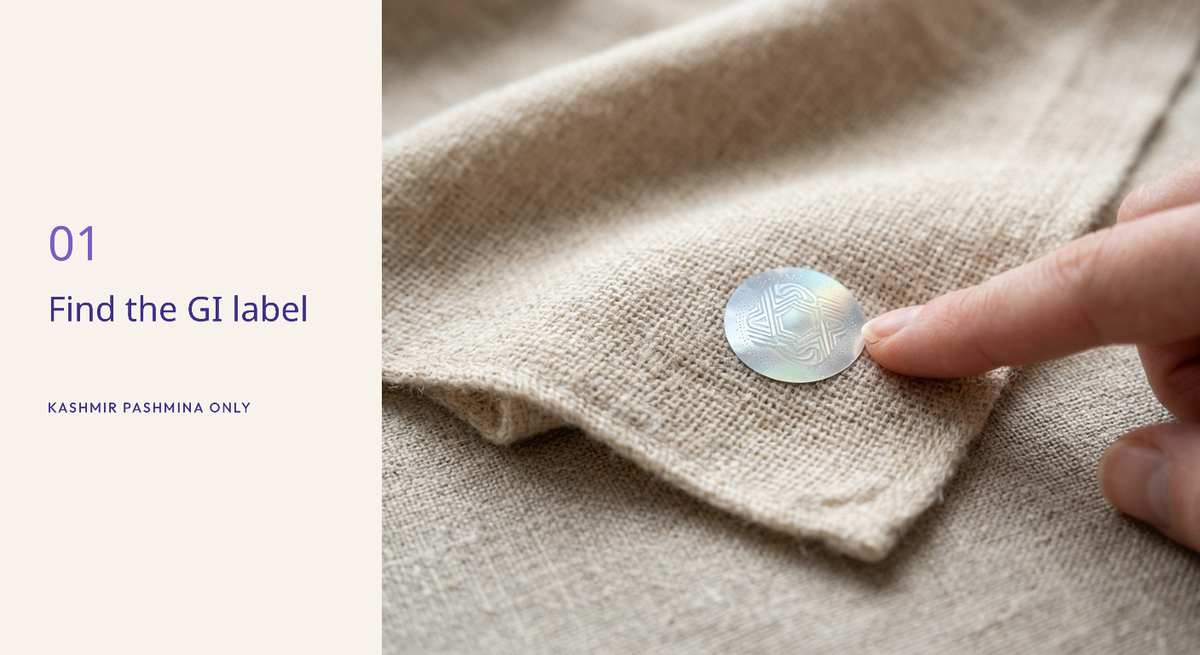
Since June 2015, the Pashmina Testing and Quality Certification Centre at the Craft Development Institute in Srinagar has tested shawls before they can carry the Kashmir Pashmina GI mark, according to reporting by FactorDaily. Each passing shawl gets a round label about 2.5 cm across, heat-fused so it cannot be peeled off and moved to another shawl. The label carries a unique number and records that the fibre is under 16 microns and that the piece is hand-spun and hand-woven. In 2025 the Tribune reported the centre added a new high-resolution digital microscope system for this testing.
What to do: find the label (usually near a corner or hem), note the number, and ask the seller how to verify it. A sticker, a sewn-on woven tag or a separate paper certificate is not the same thing as the fused GI label.
2. Read the fibre content tag, word by word
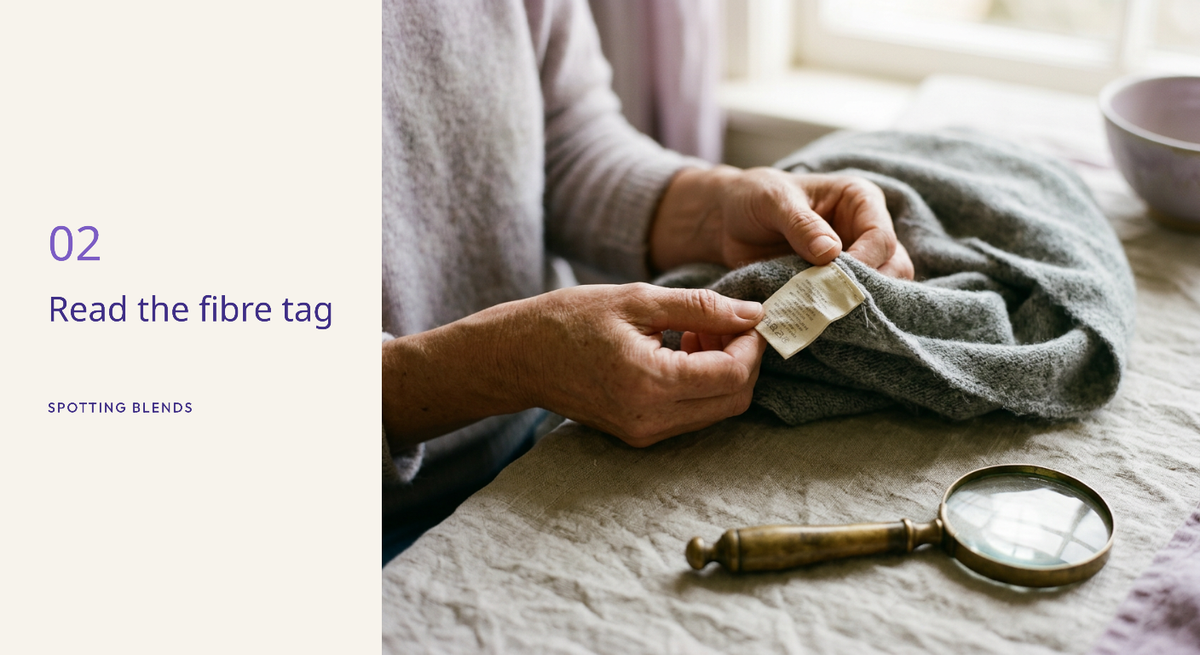
Under IS 17269, blends are meant to be declared, so read past the big word on the front. "Pashmina silk" (often 70:30 or 50:50) is a legitimate, lighter fabric with a sheen, but it is not pure pashmina. "Pashmina blend", "pashmina style" or "pashmina feel" usually means the pashm content is small or absent. If the tag lists viscose, modal, acrylic or polyester, you are paying for a soft wrap, which is fine, as long as the price reflects it.
3. Hold it up to the light
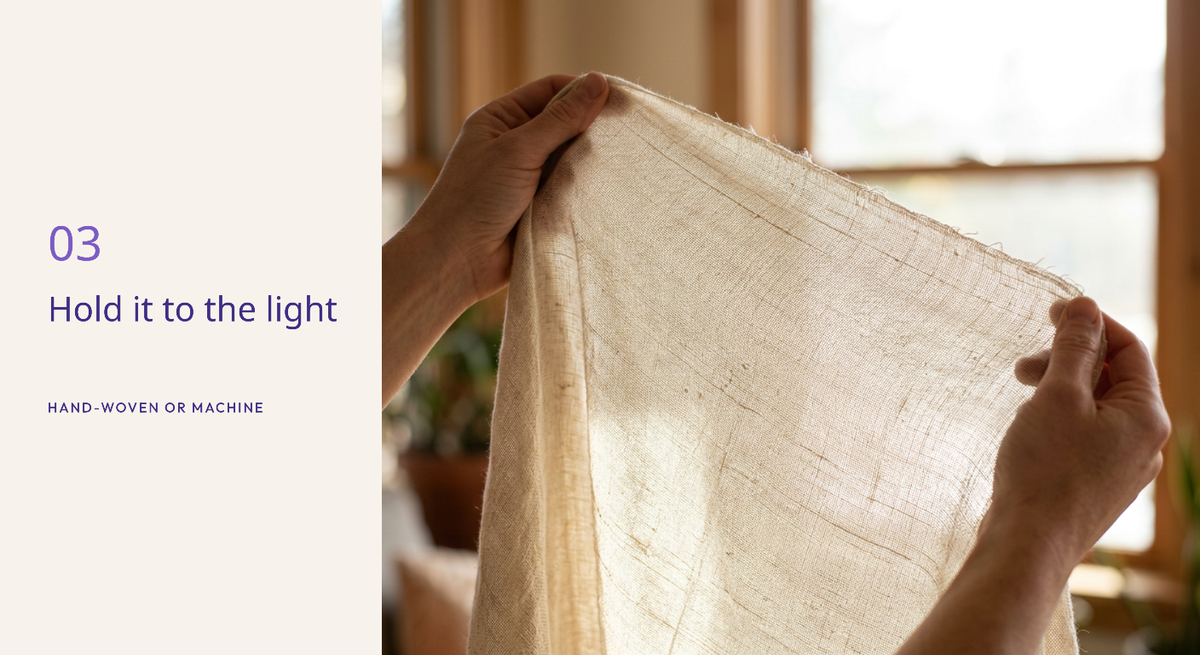
Stretch a single layer in front of a window. Hand-spun yarn varies slightly in thickness, so a hand-woven pashmina shows tiny, irregular variations in density across the weave. The Srinagar lab tests for exactly this difference, hand-spun versus machine-spun yarn and hand-woven versus machine-made cloth. A perfectly even, almost printed-looking grid points to machine spinning and weaving. This is a strong hint, not proof: machine-made cashmere can be excellent quality, it just is not GI pashmina.
4. Burn one fringe thread (only with permission)
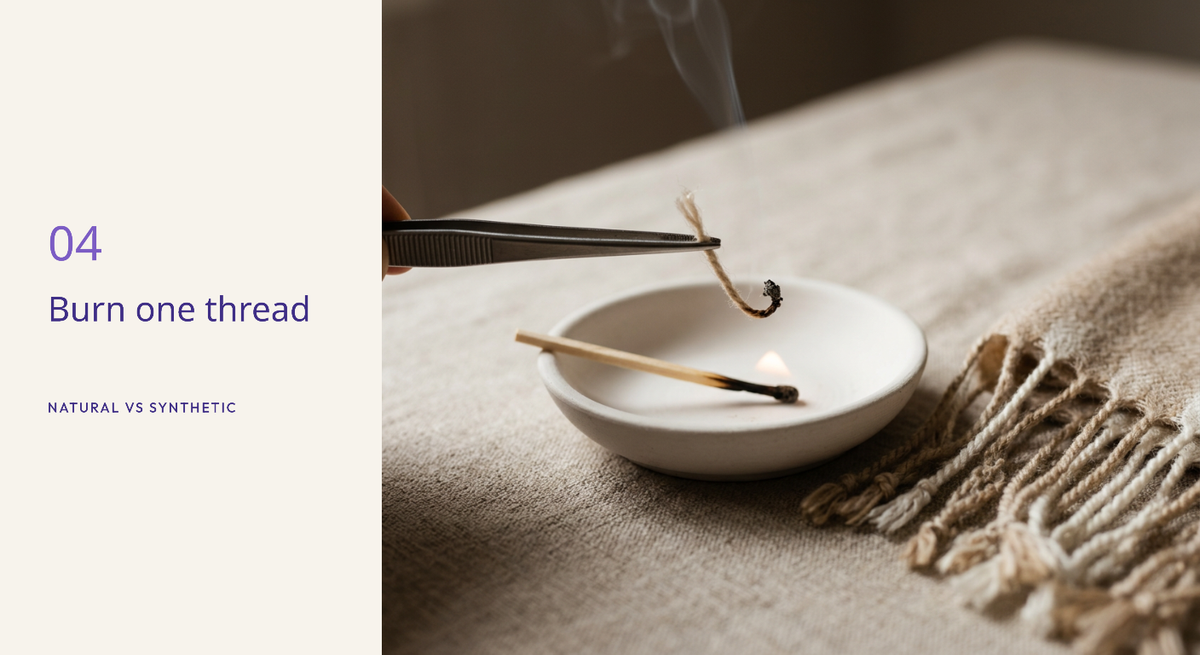
If the seller agrees, or you are checking a piece you already own, snip one thread from the fringe and hold it to a match over a ceramic dish. Protein fibres such as pashmina, wool and silk smell like burnt hair, stop burning when you take the flame away and leave a soft ash you can crush between your fingers. Acrylic, nylon and polyester melt, drip and form a hard bead. Viscose burns quickly like paper, with almost no ash.
The limit, as the Kashmir shawl maker Pure Kashmir points out in its own testing guide, is that a burn test tells you whether a thread is natural animal fibre, not whether it is pashmina rather than ordinary wool. Use it to rule out synthetics, then rely on the label for the rest.
5. Skip the ring test
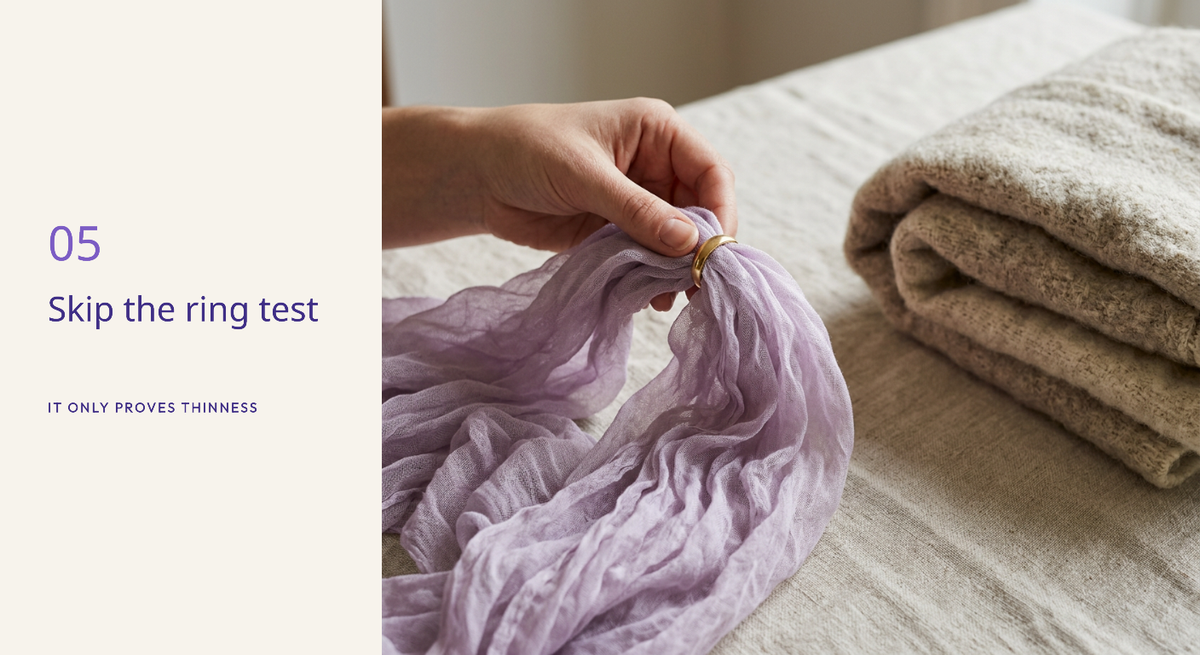
The famous trick of pulling a shawl through a finger ring only proves the fabric is thin. A fine viscose or silk-blend wrap slides through easily, while a genuine but heavier hand-woven pashmina, or a large one, may not. Pure Kashmir's guide calls the test misleading for this reason. Thinness is a style choice, not a fibre test.
Questions to ask before you pay
A good seller will answer these without hesitation:
- Is there a GI label, and how do I verify the number? If not, why not? Many honest pieces are unlabelled, but the seller should say so plainly.
Want this styled from your own closet?
Elara builds the look from what you own, then lets you try it on.
- What is the exact fibre content? Ask for it in writing on the bill, for example "100% pashmina" or "70% pashmina, 30% silk".
- Was it hand-spun and hand-woven? Machine-made cashmere is a different, usually cheaper product.
- What is the return policy if a lab says otherwise? Some specialist sellers offer lab certificates or money-back guarantees. A shop that refuses any recourse is telling you something.
- Does the price make sense? Hand-spinning and hand-weaving take days of skilled work, so genuine pieces are expensive. Pure Kashmir, a seller, treats any "pure pashmina" price under $80 as a strong sign of misrepresentation. Use that as a rough floor, not a guarantee.
How to wear a pashmina this wedding season
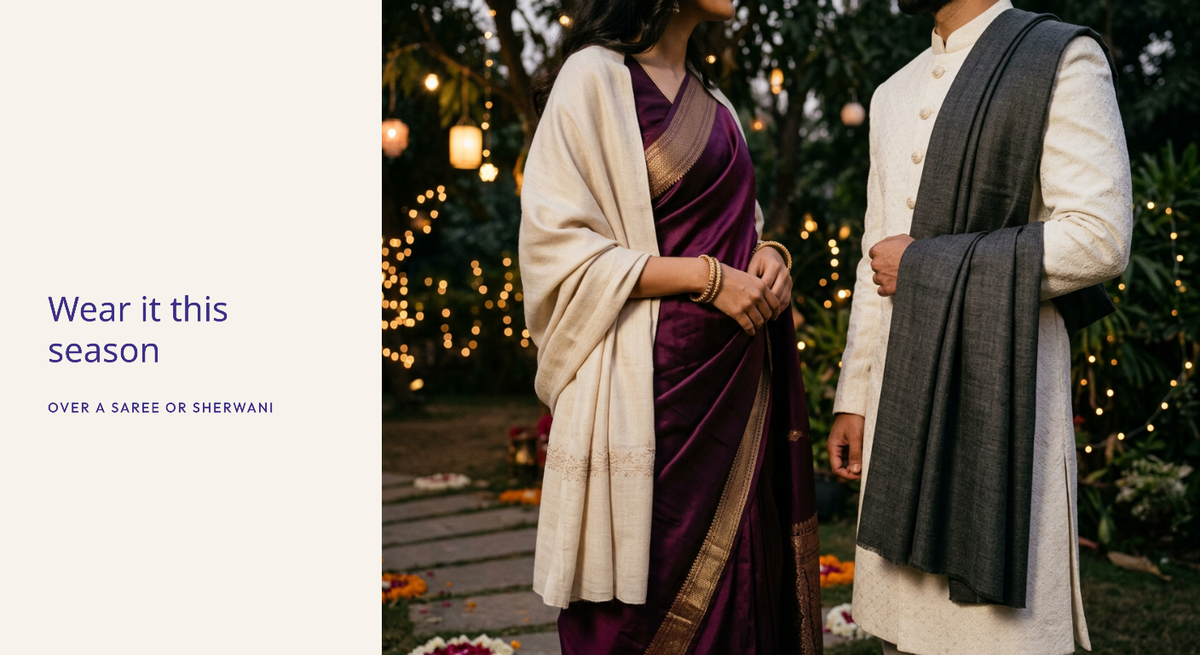
Once you have the real thing, wear it where it shows. Over a silk saree, pin a solid pashmina on one shoulder and let it fall down the back, or wrap it loosely around both arms for photos. With a sherwani or bandhgala, a folded pashmina over one shoulder adds warmth without bulk. Our guide to draping a shawl over a saree or lehenga walks through six ways step by step.
Pashmina is delicate: store it folded (never on a hanger), in a breathable cotton bag, and follow the care label. Our wool and cashmere care guide covers moth prevention and de-pilling for fine animal fibres.
FAQ
Is pashmina the same as cashmere?
Pashmina is a very fine grade of cashmere-type goat fibre. The Kashmir Pashmina GI filing describes fibres of 12 to 16 microns, while the US definition of cashmere allows up to 19 microns. In the US, a pure pashmina must legally be labelled "100% Cashmere".
Does the ring test prove a pashmina is real?
No. Pulling a shawl through a ring only shows the fabric is thin. Thin viscose and silk blends pass easily, and some genuine, heavier pashminas do not.
What does a GI-certified pashmina label look like?
It is a small round label, about 2.5 cm across, heat-fused onto the shawl after lab testing at the Pashmina Testing and Quality Certification Centre in Srinagar. It carries a unique number and cannot be peeled off and reused.
How can I tell if a pashmina is real without a label?
Read the fibre tag for blends, hold the shawl to the light for slight hand-woven irregularities, and, with permission, burn one fringe thread: it should smell like burnt hair and leave soft ash. These rule out obvious fakes but cannot fully prove pure pashmina.
Is pashmina silk real pashmina?
It is a genuine blend of pashmina and silk, often lighter and shinier than pure pashmina. It is not 100% pashmina, and under IS 17269 the blend should be declared on the label.
Why do real pashmina shawls cost so much?
The fibre comes from a small number of high-altitude goats, and GI pashmina is hand-spun and hand-woven, which takes days of skilled work per shawl.
Plan the outfit around it with Elara
A good pashmina deserves outfits that show it off. Elara, the AI personal stylist app, can digitise your wardrobe, suggest which sarees, lehengas or sherwanis pair best with your shawl's colour, and plan looks for every function on your calendar. Try Elara free for 14 days.
Sources
- Kashmir Pashmina GI journal extract, via origin-gi.com
- Bureau of Indian Standards, Pashmina: telling the real from the fake (August 2019)
- Federal Trade Commission, Wool Act guidance on cashmere and pashmina
- FactorDaily, How a nanotechnology based microchip can help you identify real Pashmina (2017)
- The Tribune, Pashmina lab gets new tools for testing GI products (March 2025)
- Pure Kashmir, How to spot a fake pashmina shawl
Your stylist, in your pocket
Stop reading about outfits. Start wearing them.
Elara knows your closet, shops every store and gets you dressed for any occasion.