
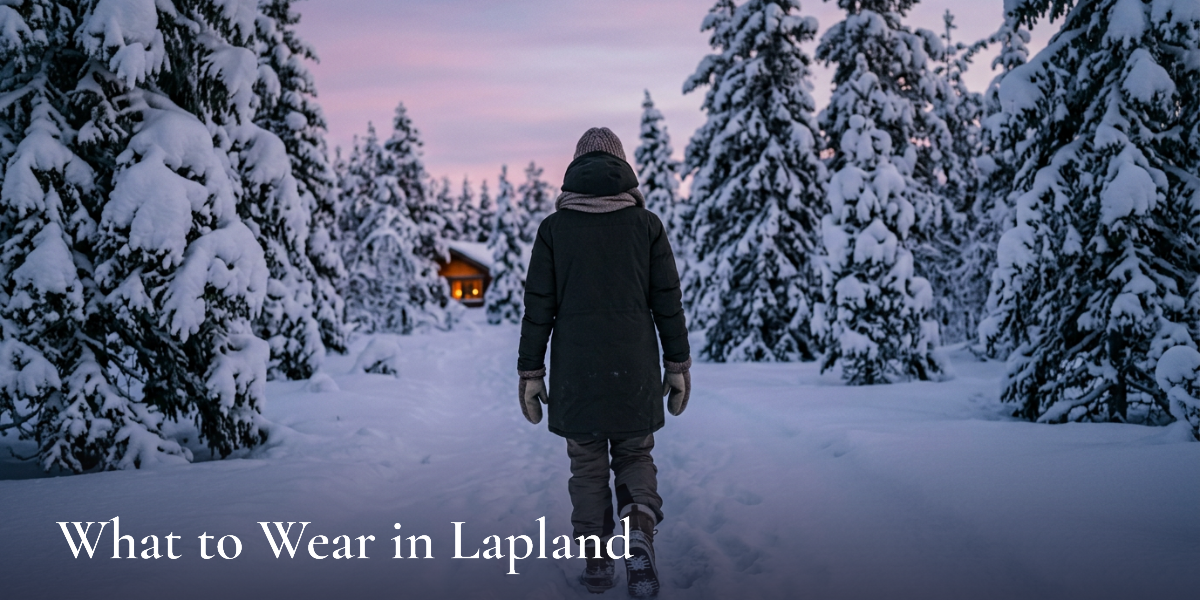
What to Wear in Lapland in December: Layers, Boots and Mittens
Four layers, mittens over gloves and boots a size up. What safari companies lend you, Rovaniemi temperatures, polar night and a full packing list.
 Mehul AgarwalFounder & CEO
Last updated: November 2026
Quick answer: For Lapland in December, dress in four layers: a merino or synthetic base layer, a fleece or wool mid layer, a windproof outer layer, and an extra warm layer for standing still. Wear mittens rather than gloves, two pairs of socks (a thin liner plus thick wool, never cotton) and insulated boots at least one size up. Expect cold: Rovaniemi's average December high is about -5°C and lows average about -11°C, based on Finnish Meteorological Institute normals, and Visit Finland notes occasional dips to -30°C.
The good news is that you do not need to buy an expedition wardrobe. Most safari companies in Finnish Lapland lend the heaviest gear, so your job is the layers underneath and the small things that keep hands, feet and face warm. This guide explains how the layering system works, what tour operators actually provide, what to wear for each activity, and what people most often forget to pack.
How cold Lapland is in December
December in Finnish Lapland is properly cold, dark and almost always snowy. For Rovaniemi, the main gateway town, the 1991 to 2020 climate normals from the Finnish Meteorological Institute (FMI), as summarised on Wikipedia's Rovaniemi page, give a December average high of -4.9°C, a daily mean of -7.7°C and an average low of -10.6°C. The coldest December temperature on record there is -32.9°C.
It gets colder further north. In December 2025, FMI reported that northern Lapland averaged -11°C, and the month's lowest reading was -35.3°C at Kilpisjärvi. Safari company Lapland Safaris says temperatures of about -15 to -25°C are common in winter, while below -40°C is rare. Snow is near certain: FMI says a white Christmas is almost guaranteed in Lapland.
Light is the other factor. Around Christmas, the Arctic Circle, where Rovaniemi sits, gets only about three hours of daylight, and towns further north such as Utsjoki get none, according to House of Lapland. Finavia describes the polar night (kaamos) in Utsjoki and Nuorgam as lasting about 52 days from late November, with twilight around noon. Dark days mean colder air and lots of time outside after sunset, so plan your warmest layers for the afternoon and evening, not just the morning.
The four-layer system that works
The official advice from Visit Rovaniemi is four layers, each with a job. Dressing in layers works because air trapped between them insulates you, and because you can add or remove one as you move between snowmobile, sauna and restaurant.
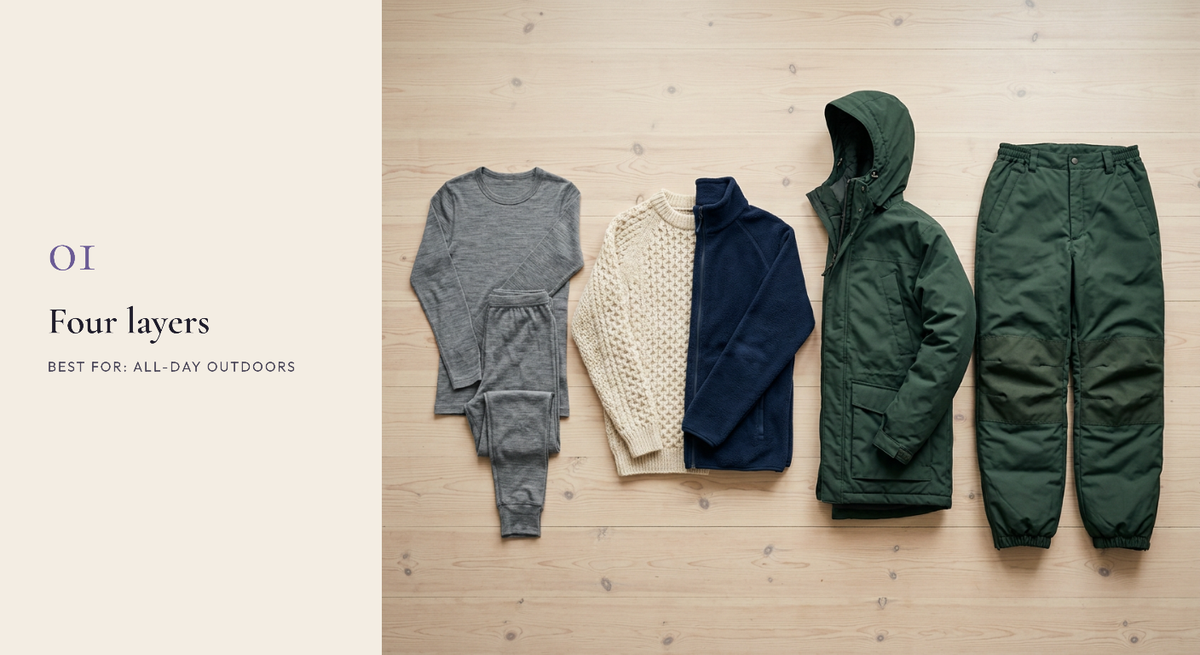
- Base layer: keep skin dry. Long-sleeved top and long johns in merino wool, a synthetic wicking fabric or silk. Visit Rovaniemi says wool keeps you drier than cotton. Lapland Safaris adds a useful nuance: synthetics wick sweat faster when you are very active, while merino is warm but dries more slowly. For long safaris either works; for skiing or walking uphill, synthetic is the better pick.
- Mid layer: trap warmth. A fleece or a wool jumper. Two thin layers trap more air than one thick one, and Visit Finland notes that layers that are too snug are less warm because there is less insulating air.
- Outer layer: block wind and snow. A windproof, water-resistant jacket with a hood, and insulated snow trousers. On many tours this is the thermal overall the company provides.
- Extra layer: for standing still. A thick down jacket, a second pair of mittens or a big scarf, added when you stop moving to watch reindeer or wait for the northern lights and removed again when you start moving.
The single biggest mistake is sweating. As Finnair's winter dressing guide puts it, insulation works best when your clothing stays dry. If you get hot walking to the bus, open your jacket or take off the mid layer before you start to sweat, because damp clothing chills you fast when you stop. For more on base layers, see our merino vs synthetic thermal guide.
What tour companies lend you (and what they do not)
On most safaris, the heaviest outer gear is included in the price. Check your own booking, because it varies:
- Lapland Safaris lists wool socks, compressed-wool boots, a snowmobile overall, a balaclava, mittens, a helmet, a scarf and a hat for guests, in sizes from small children to XXXL.
- Ylläs Husky Ranch's half-day husky safari includes a parka, trousers, boots and mittens.
- Some smaller trips lend less. One Rovaniemi husky trip listed by Visit Rovaniemi provides only overalls and asks guests to bring thermal underwear, wool socks, a hat and gloves.
- You can rent a full set. Visit Rovaniemi lists a rental set of jacket, trousers, mittens and boots from €35.
What no one lends you is a good base layer and mid layer. Pack those properly and you can rely on borrowed outerwear for the safaris and an ordinary warm winter coat for the town. Lapland Safaris says a normal winter coat is fine for walking around Rovaniemi if what is underneath is right.
Hands, feet and face: where the cold gets in
Your core usually stays warm in a good overall. Fingers, toes and cheeks are where people get cold first.
- Mittens, not gloves. Lapland Safaris and Lapland North both say mittens are warmer, because your fingers share warmth. Wear thin liner gloves inside (silk or wool) so you can pull the mittens off to use your phone or camera without bare skin touching metal or snow. Wild Sweden recommends oversized insulated mittens over five-finger wool liners.
- Two pairs of socks, no cotton. A thin liner sock under a thick wool or synthetic sock. Pack spares: damp socks are cold socks.
- Boots a size up. Both Lapland Safaris and Santa's Lapland advise boots at least one size larger than usual. Room for two pairs of socks and for your toes to move keeps blood flowing, while tight boots cut circulation and feel colder.
- Grip for ice. Pavements in town can be icy. Visit Rovaniemi suggests ice cleats that slip over your boots. Take them off indoors, because they damage floors.
- Cover your face. A balaclava or a buff (neck gaiter) you can pull over your nose makes a big difference on a snowmobile or sledge. Always wear a hat.
- Keep your phone warm. Apple says iPhones are designed for 0 to 35°C and cold can temporarily shorten battery life or shut the phone down. Keep it in an inside pocket close to your body and bring a power bank.

Want this styled from your own closet?
Elara builds the look from what you own, then lets you try it on.
What to wear for each Lapland activity
The same base and mid layers work all week. What changes is how much you add on top and how long you will be standing still.
Husky safari and snowmobiling
Wear your full base and mid layers under the overall the company provides, plus the balaclava, helmet and mittens they hand out. Lapland Safaris suggests long thermals, loose trousers, a high-collared top and a wool or fleece jumper underneath. You will be sitting or standing in wind created by your own speed, so cover your face fully.
Reindeer sleigh rides
A sleigh ride is slow and calm, which means you are sitting still in the cold. Treat it like aurora watching: add your extra layer, wear your warmest mittens and tuck a blanket over your knees if one is offered.
Northern lights hunting
This is the coldest activity of the trip, because you stand still in the dark for long periods, often late at night. Lapland North recommends an extra insulating layer and hand and foot warmers. Bring a head torch, keep spare camera batteries in an inside pocket and wear the warmest boots you have. Our northern lights outfit guide covers this in more detail.
Santa Claus Village, town and restaurants
For walking around Rovaniemi and Santa Claus Village, a warm winter coat, hat, scarf, mittens and insulated boots with grip are enough over your base layer. Indoors, restaurants, shops and cabins are heated, so wear a mid layer you are happy to be seen in and can take off. Santa's Lapland suggests packing something for dinners, such as a Christmas jumper, and notes that cotton and denim are fine indoors. Pack swimwear: sauna is a big part of Finnish life.
Dressing children for Lapland
Children get cold faster and are less likely to say so early. Santa's Lapland notes that thermal suits for children under two are not always available from operators, so bring your own for babies and toddlers, and recommends a balaclava or buff for children. It also suggests a brightly patterned hat so you can spot your child among a group in identical suits. Lapland Safaris has a practical tip for families: dress the children last and wait outside, because a child sweating in a heated hallway gets cold as soon as they step out.
Lapland packing list
Based on the official and operator guidance above, this is what to bring:
- 2 sets of merino or synthetic base layers (top and long johns)
- 1 to 2 fleece or wool mid layers
- Warm winter coat and insulated trousers (or plan to use the operator's overall)
- Insulated winter boots one size up, plus ice cleats
- Thin liner gloves and big insulated mittens, plus a spare pair
- Liner socks and thick wool socks, several pairs
- Wool hat, balaclava or buff, scarf
- Hand and foot warmers, head torch and power bank
- Swimwear for the sauna and something smart-casual for dinners
- A reflector, which Visit Finland recommends for walking in the dark
What to leave behind: cotton base layers and jeans for outdoor activities. Lapland North notes that cotton retains moisture, and Santa's Lapland advises against cotton and denim outside. Skip buying expensive new outerwear you will only wear once if your tours include it.
Plan the week with Elara
Lapland trips need more planning than most holidays, because you are packing for -20°C safaris and heated restaurants in the same bag. Elara's AI stylist can plan each day's outfit from the clothes in your digital closet, show you what you are missing for the cold, and build a packing list for the trip so the thermals, mittens and dinner outfit all make it into the suitcase.
FAQ
How cold is Lapland in December?
In Rovaniemi, the average December high is about -5°C and the average low is about -11°C, based on FMI normals for 1991 to 2020. Further north it is colder, and cold snaps can reach -30°C or below.
Can I wear jeans in Lapland?
Not for outdoor activities. Cotton and denim hold moisture and lose warmth when damp. Jeans are fine indoors and for short walks between heated buildings, ideally with long johns underneath.
Do I need snow boots in Lapland, or do tours provide them?
Many safari companies lend insulated boots for their tours, but you still need your own warm, grippy winter boots for walking around town. Buy or bring them one size up so two pairs of socks fit.
Mittens or gloves for Lapland?
Mittens. They keep fingers warmer because your fingers share heat. Wear thin liner gloves inside so you can use your phone or camera without exposing bare skin.
What do I wear to see the northern lights in Lapland?
Your warmest layers, because you will be standing still for a long time at night: base layer, mid layer, a thick insulated jacket and trousers, an extra layer on top, warm boots, mittens, a hat and a balaclava, plus hand and foot warmers.
Is it dark all day in Rovaniemi in December?
Not completely. Around Christmas Rovaniemi gets about three hours of daylight. North of Rovaniemi, places such as Utsjoki have polar night, with no sunrise for several weeks, though there is twilight around midday.
Your stylist, in your pocket
Stop reading about outfits. Start wearing them.
Elara knows your closet, shops every store and gets you dressed for any occasion.