
How to Waterproof Leather Boots: 6 Steps Before Winter
Clean boots, use wax or cream on smooth leather and a spray on suede, seal the seams and dry without heat. The 6-step routine, how often, and mistakes.
 Mehul AgarwalFounder & CEO
Last updated: November 2026
Quick answer: To waterproof leather boots, clean them, then apply a treatment made for your leather type: a wax or cream for smooth full-grain leather, and a spray for suede and nubuck, which wax stains, according to Timberland's care guide. Work it into the seams, then let the boots dry at room temperature with no heater or hair dryer. Re-treat when water stops beading on the surface, as REI advises, or every few weeks in wet weather, as Red Wing recommends for its protector spray.
Leather is naturally water-resistant, not waterproof. Its finish wears off with every walk through slush, and once water starts soaking in, the leather darkens, stiffens as it dries and eventually cracks at the flex points. A twenty-minute treatment before the first snow, repeated when needed, keeps feet dry and makes a good pair of boots last for years. Here is the routine, step by step, with the reason behind each step and the mistakes that undo the work.
How to waterproof leather boots in 6 steps
Each step below has one job. Skipping the cleaning or the slow drying is where most home treatments fail.
1. Do the water bead test
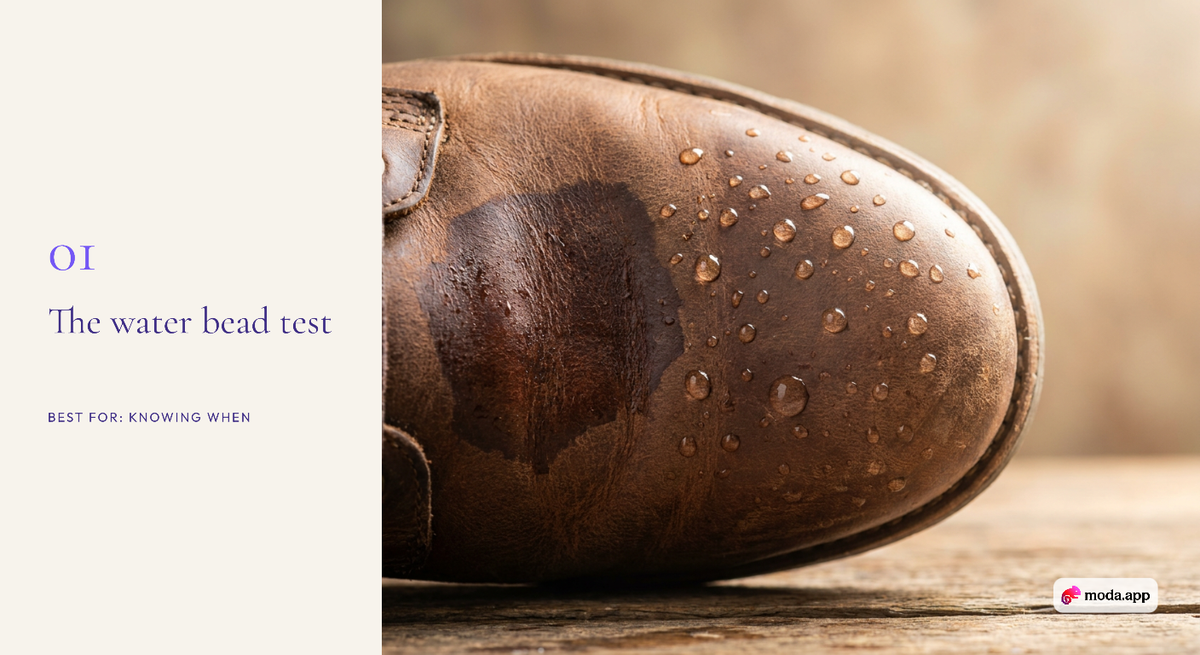
Flick a few drops of water on the toe and sides. If they bead up and roll off, the boots are still protected. If the water spreads, sinks in or leaves a dark patch, it is time to treat them. REI uses the same test: retreat when water "no longer beads up and rolls off" the surface, per its boot waterproofing guide. REI also notes that new boots are usually treated at the factory, so a brand-new pair rarely needs it straight out of the box.
2. Know your leather (and your membrane)
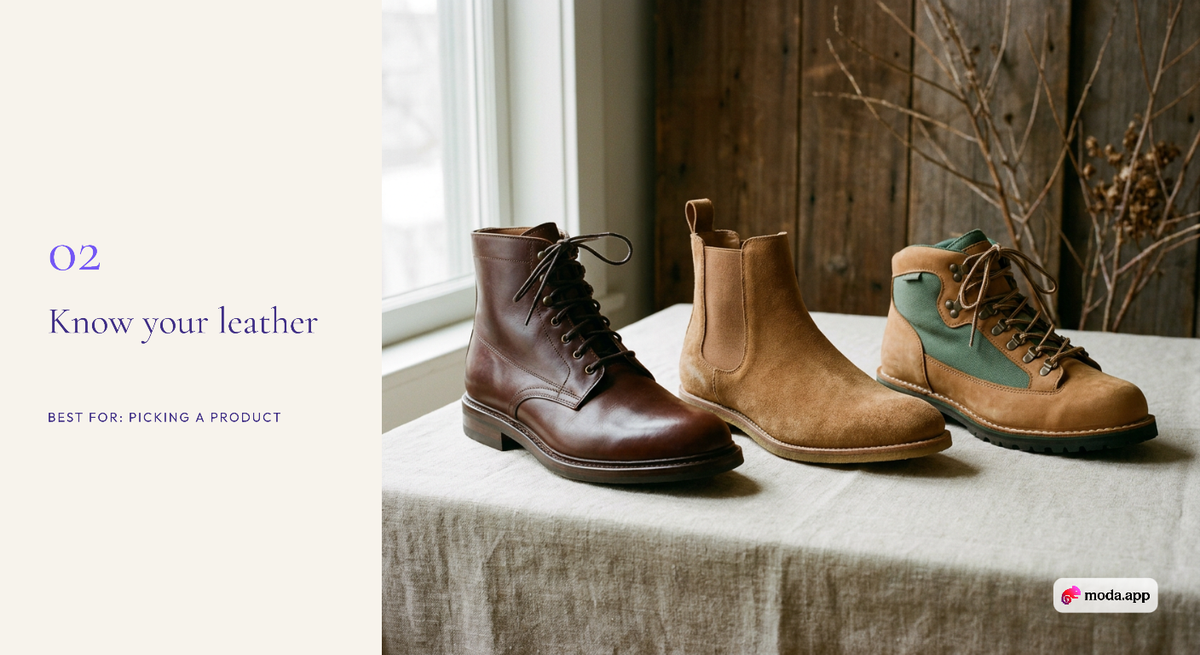
The product has to match the surface, because the wrong one can damage it.
- Smooth full-grain, oiled or waxed leather: a wax or cream treatment. Timberland recommends a beeswax-based product that restores water resistance while conditioning dry leather, per its waterproofing guide.
- Suede and nubuck: a spray made for rough leathers. Timberland warns that wax damages and stains these materials.
- Fabric panels and waterproof membranes: if your boots have a Gore-Tex or similar membrane, REI says no treatment is needed on those fabric areas; clean them instead.
One more check before you buy: REI advises avoiding wax-based products on boots you may want resoled later, because wax residue "impairs the ability of a new adhesive to bond".
3. Clean the boots first
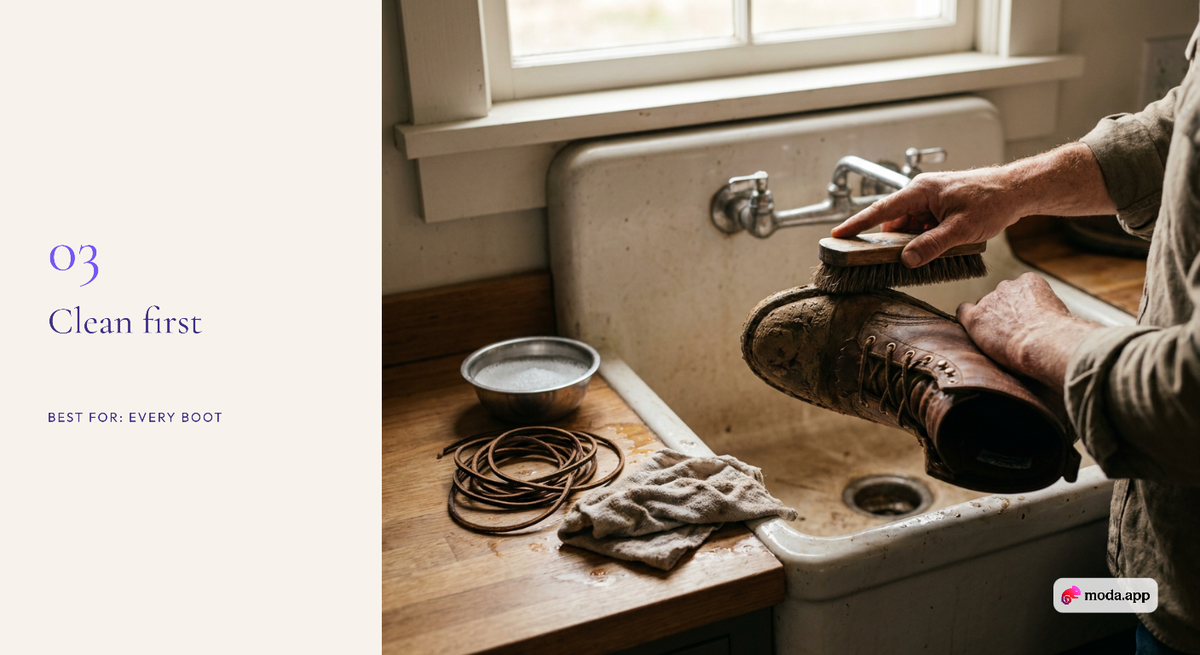
Take the laces out, brush off dried mud and dust with a stiff brush, then wipe with a damp cloth. For grime, Red Wing suggests a leather cleaner or mild soap with a damp cloth, per its boot care guide. Treatment sealed over dirt does not bond to the leather and traps grit in the creases, where it acts like sandpaper.
Some water-based treatments, like the ones REI describes, are designed to go on wet leather, so check your product: if it says apply to damp boots, treat them straight after cleaning. Wax and cream go on clean, dry leather.
For suede boots, use a suede brush and eraser instead of water; our guide to cleaning suede shoes and boots covers salt stains too.
4. Work in the treatment
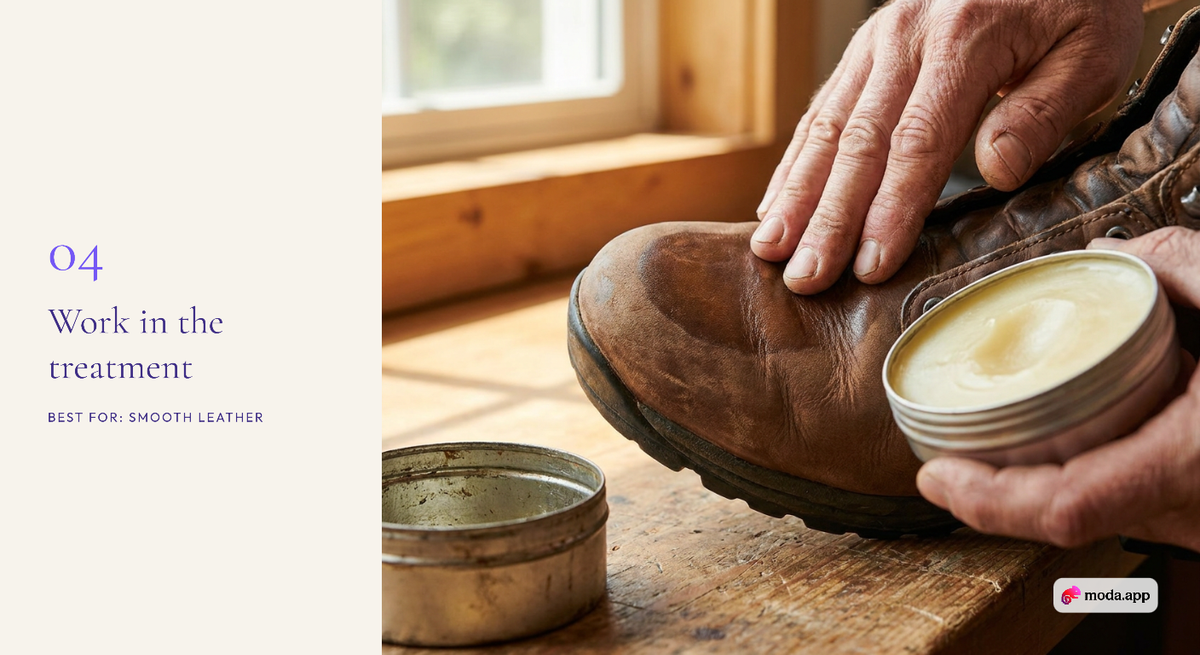
For wax or cream, use your fingers or a soft cloth and work a thin layer in small circles over the whole upper. Body heat from your fingers softens wax so it sinks into the leather instead of sitting on top. Red Wing's method for its oils and creams is to rub in a small amount, let it soak in overnight, then wipe off the excess.
Two thin coats beat one thick one. Expect smooth leather to darken slightly; it usually lightens again over a few days. For suede and nubuck, hold the spray at the distance on the can and cover the whole boot evenly, then let it dry naturally, as Timberland describes for its suede spray.

Want this styled from your own closet?
Elara builds the look from what you own, then lets you try it on.
5. Seal the seams and the welt
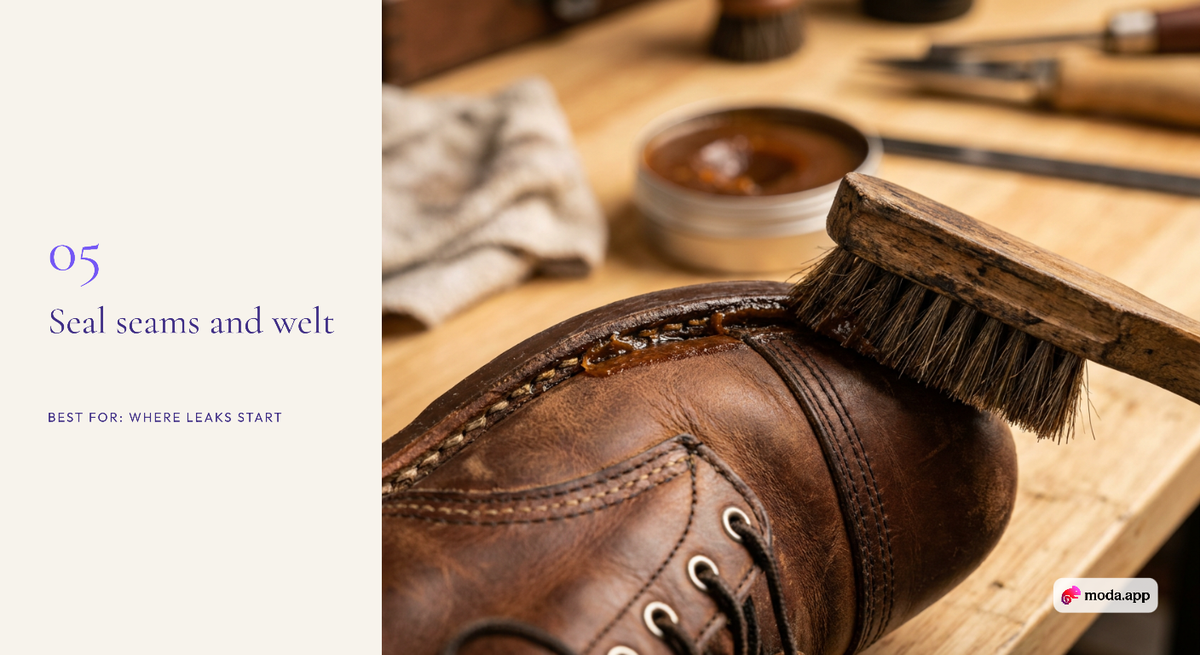
Leaks usually start where the leather is stitched, not through the leather itself: the welt (the strip where upper meets sole), the tongue gussets and the stitching around the toe cap. Use a small dauber brush or an old toothbrush to push wax or cream into the stitch lines and along the welt. Do the inside edge of the tongue too, since that is where slush gets in when you kneel or step in a deep puddle.
6. Dry them slowly, with no heat
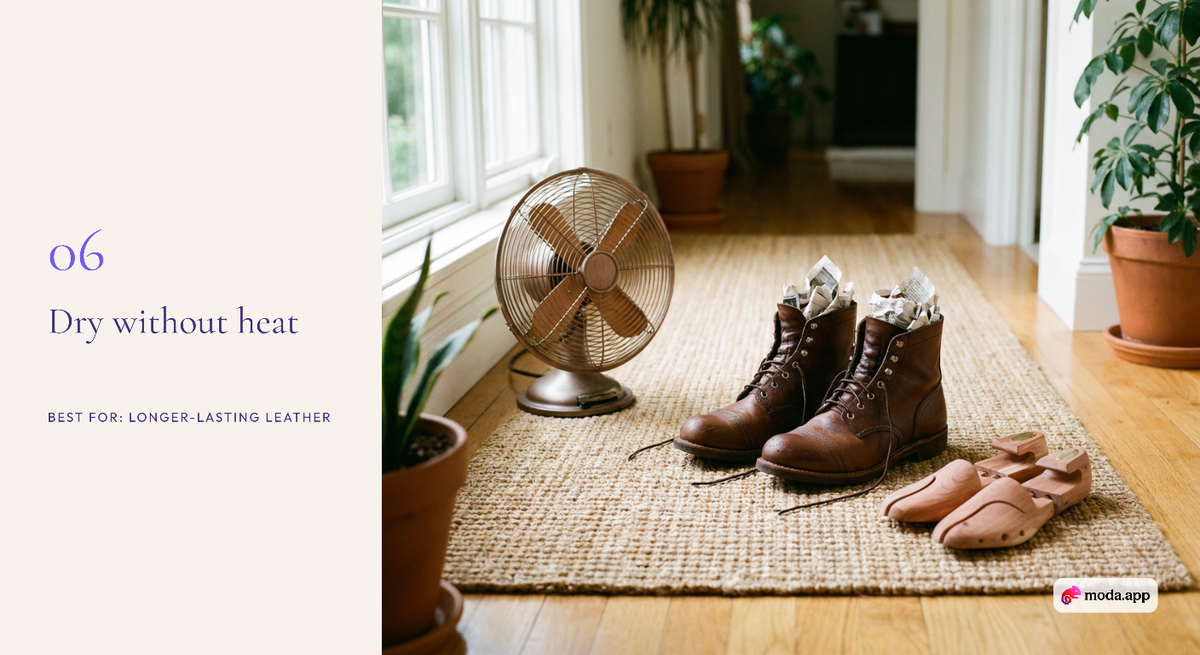
Let the boots dry at room temperature in a low-humidity spot. REI advises against any heat source and suggests a fan to speed drying and newspaper stuffed inside, replaced whenever it gets damp. Timberland warns that hair dryers and radiators can make the uppers "blister and crack". Once dry, cedar boot trees help the boots keep their shape, as Red Wing recommends.
How often should you waterproof leather boots?
There is no fixed calendar; it depends on how wet your winters are. Red Wing says to reapply its protector "every few weeks or after exposure to heavy rain or mud". REI's rule is simpler: re-treat whenever water stops beading. In practice, do the bead test at the start of the season and again after any day spent in slush or rain.
Mistakes that undo waterproofing
- Drying on a radiator or with a hair dryer. Heat pulls the oils out of the leather and can crack it, per Timberland and Red Wing.
- Wax on suede or nubuck. It mats the nap and leaves dark stains, according to Timberland.
- Treating dirty boots. The product seals in grit instead of bonding to the leather.
- Storing in plastic. Red Wing advises a cloth bag or open shelf in a cool, dry, ventilated place so the leather can breathe.
- Expecting a treatment to fix a leaking sole. If water comes in through a cracked sole or split welt, a cobbler is the fix, not more wax.
If you are still choosing a pair for winter, our winter boots buying guide explains the difference between water-resistant and waterproof construction.
FAQ
How do you waterproof leather boots at home?
Clean them, let them dry (unless your product is applied wet), work in a wax or cream made for smooth leather, push it into the seams and welt, then dry at room temperature with no heat.
What is the best way to waterproof leather boots?
Match the product to the leather: wax or cream for smooth full-grain leather, a spray for suede and nubuck. Timberland notes that wax stains suede and nubuck.
How often should I waterproof my leather boots?
When water stops beading on the surface, per REI, or every few weeks in wet weather, as Red Wing recommends for its protector spray.
Can you make suede boots waterproof?
You can make them water-resistant with a spray designed for suede and nubuck. Do not use wax, which damages and stains the nap.
Do waterproof boots with Gore-Tex need treatment?
The fabric membrane areas do not, according to REI; clean them instead. The leather parts of the boot still benefit from a treatment matched to the leather.
Can I dry wet leather boots on a radiator?
No. Heat can make the uppers blister and crack. Stuff them with newspaper and dry them at room temperature, with a fan if you want it faster.
Dry boots are half of a good winter outfit. Elara is an AI personal stylist that builds outfits from the clothes you already own, so you can see which coats, knits and trousers work with the boots you just waterproofed, and get a fresh outfit idea each morning with Daily Outfits.
Your stylist, in your pocket
Stop reading about outfits. Start wearing them.
Elara knows your closet, shops every store and gets you dressed for any occasion.