

How to Clean Suede Shoes and Boots: 6 Steps, Salt and Water Stains
Brush, erase, spot-treat, air-dry and protect. How to clean suede shoes and boots, plus fixes for water spots, road salt, oil and mud, and what to avoid.
 Mehul AgarwalFounder & CEO

Last updated: October 2026
Quick answer: To clean suede shoes or boots, let them dry completely, brush the nap with a suede or horsehair brush, rub scuffs out with a suede eraser, then spot-treat the stain itself: a light, even dampening for water marks, a gentle blot from the outside in for road salt, and cornstarch left overnight for oil. Air-dry with shoe trees or paper inside, away from heat, brush the nap back up and finish with two or three light coats of suede protector. Never soak suede, put it in a washing machine or dry it on a radiator.
Suede is leather that has been buffed on the flesh side to raise a soft nap, which is why it marks so easily and why ordinary leather polish ruins it. The good news is that many marks on suede sit in the fibres rather than soaking in, so they come out with the right tool and a light hand. This guide walks through the six-step clean that shoe-care makers and retailers recommend, then covers water, salt, oil and mud one by one, and where the experts disagree.
What you need
- A suede brush. Charles & Keith's care guide recommends stiff horsehair bristles to lift dirt; many suede brushes also have a rubber or brass side for flattened areas.
- A suede eraser. A crumbly rubber block for scuffs and light marks. Charles & Keith notes that a clean pencil eraser works in a pinch.
- Cornstarch or baking soda for oil and grease.
- A microfiber cloth or paper towel for blotting.
- Shoe trees or acid-free paper to hold the shape while drying.
- A suede protector spray, used only once the shoe is clean and fully dry.
- Optional: a dedicated suede cleaner for stubborn stains, used after a patch test.
How to clean suede shoes in 6 steps
Step 1: Let them dry and prep the shoe
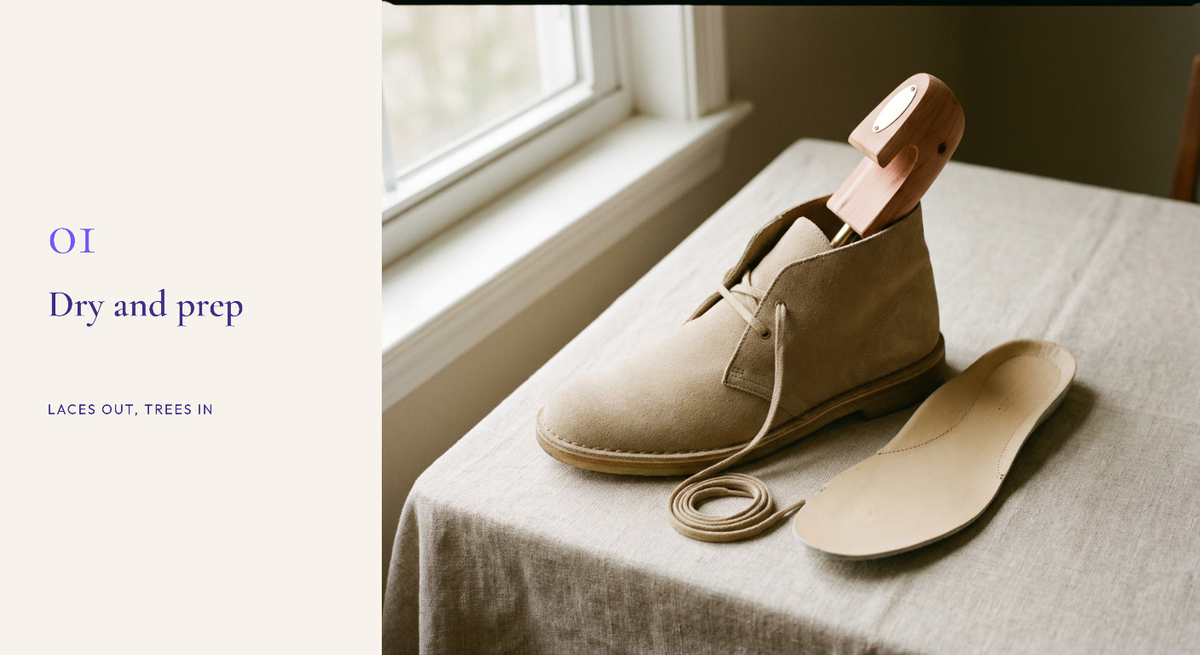
Never brush wet suede. Angelus, which makes shoe-care products, says to let wet suede dry at room temperature before you start, and warns that brushing it wet can ruin the nap. Remove the laces and insoles, and slip in shoe trees or stuff the shoe with paper so you have a firm surface to work against.
Step 2: Dry-brush the whole shoe
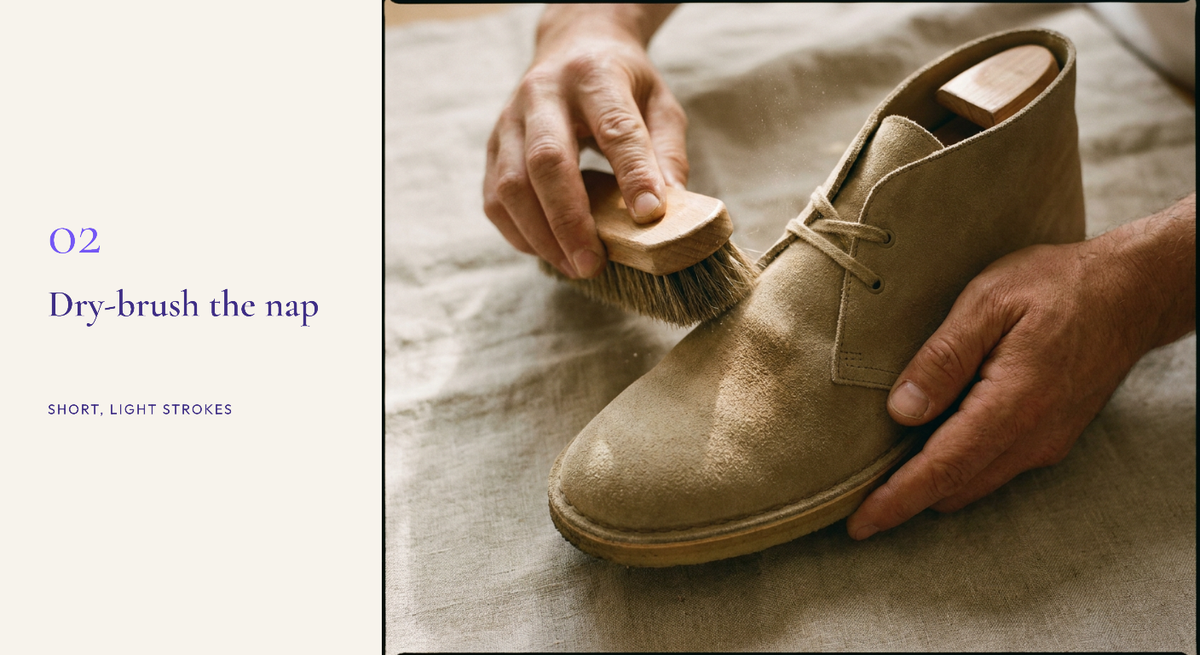
Brush with short, light strokes in one direction to lift loose dirt, then brush back against the grain to raise flattened fibres, as Angelus describes. Charles & Keith advises gentle strokes and warns that over-brushing or scrubbing can damage the fibres, so let the brush do the work. Brush the whole shoe, not just the dirty patch, so the nap looks even.
Step 3: Erase scuffs and light marks
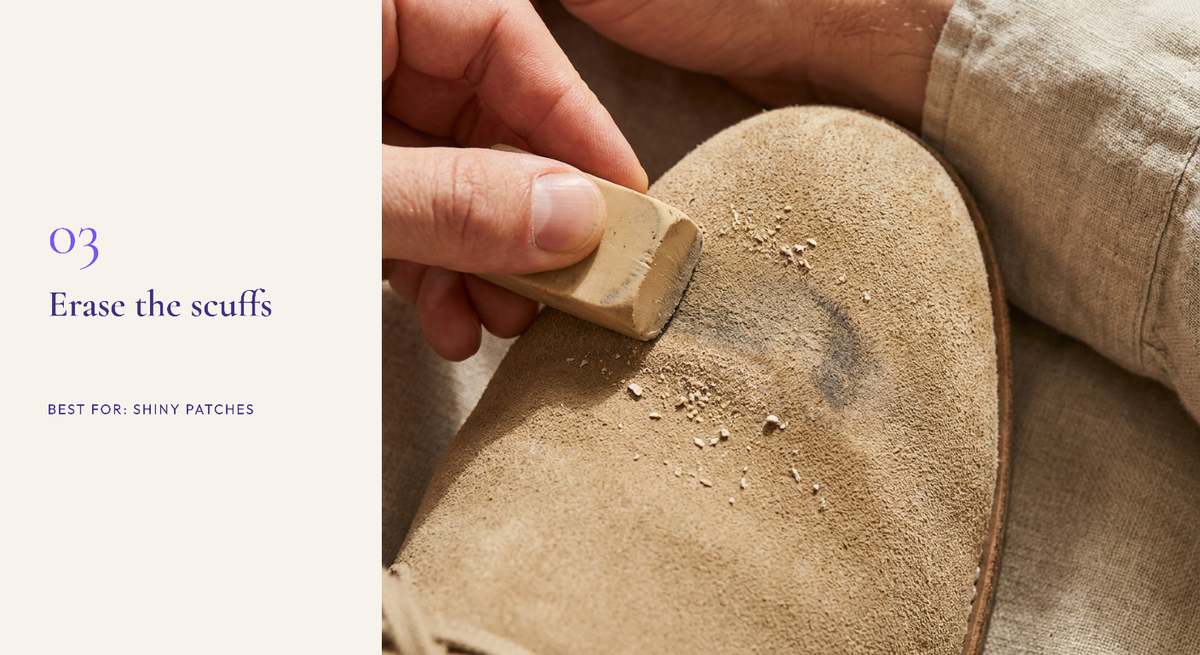
Rub the suede eraser over scuffs, shiny patches and light marks with gentle strokes, then brush away the crumbs. Zappos suggests slow circles, working outward from the mark. Charles & Keith points out that an eraser is better than a brush for some stains, because brushing can push them deeper into the nap.
Step 4: Spot-treat what is left
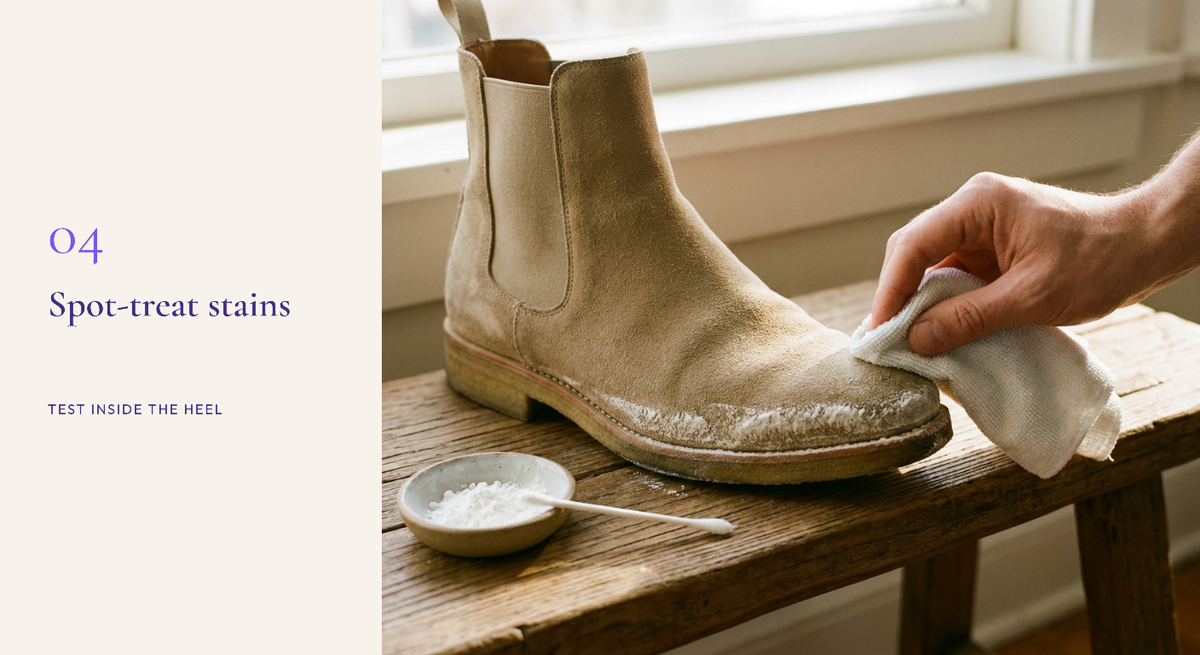
Whatever the eraser did not lift needs a targeted fix, covered stain by stain below. The rule for every method is to test it first on a hidden spot such as the inside of the heel, as both Angelus and Charles & Keith advise, and to use as little liquid as possible: Charles & Keith says suede "should never be dunked in water", though a few drops are fine.
Step 5: Air-dry slowly, with no heat
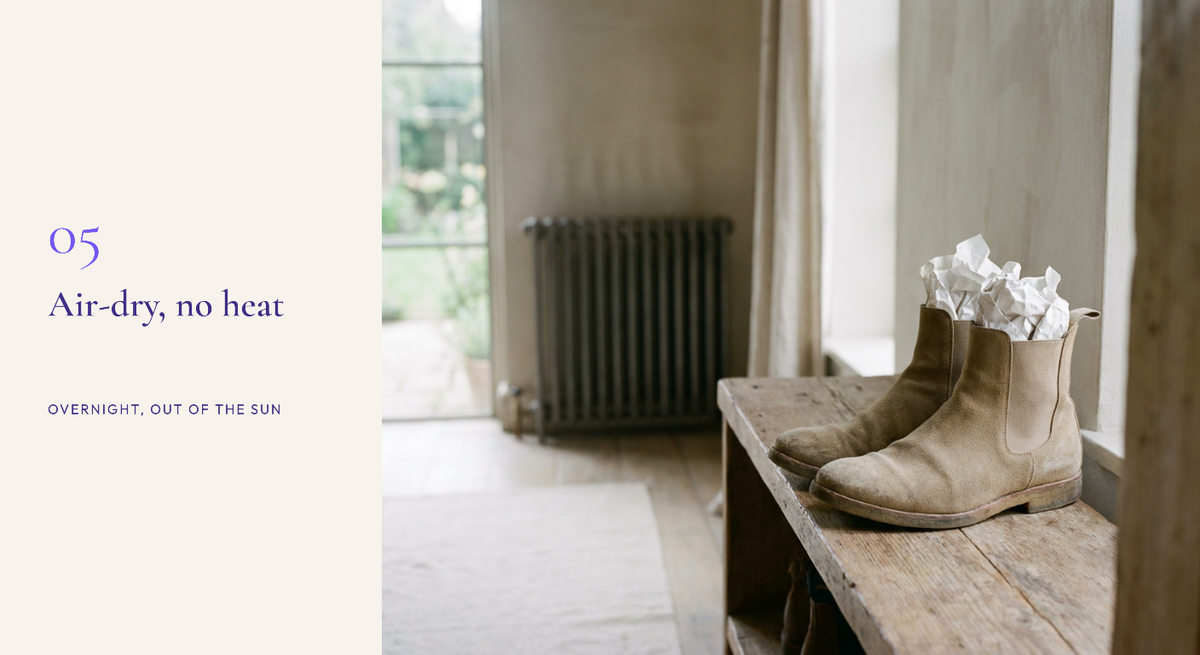
Every source agrees here. Dry suede at room temperature, in a cool, ventilated spot away from direct sun, with shoe trees or paper inside. Zappos and Charles & Keith both warn against hair dryers, tumble dryers and heaters; Charles & Keith notes heat can distort the shape. Expect this to take several hours or overnight.
Step 6: Re-brush and protect
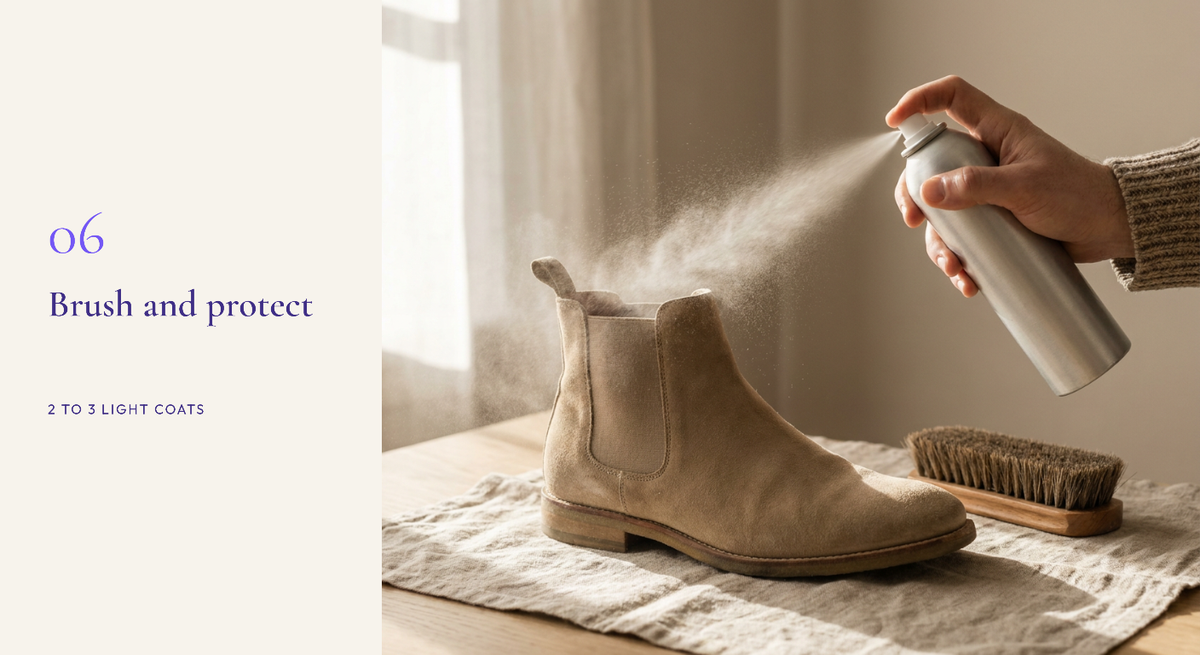
Once fully dry, brush the nap in several directions to lift it back up. Then apply a suede protector spray. Angelus recommends two to three light coats about 30 minutes apart and waiting 12 hours before wearing. Several light coats go on more evenly than one heavy, wet one.
Stain by stain: water, salt, oil and mud
Water spots and rain marks
Water marks on suede are usually a ring where one area dried at a different rate from the rest. Angelus's fix is to dampen the whole panel evenly so it dries at one rate, then brush once dry. Charles & Keith suggests a light spritz, a gentle brush and a blot with a microfiber cloth, then air-drying fully. Either way, mist rather than wet.
Road salt (the white tide line)
This is the winter one. Let the boots dry fully first, then brush off the crust of surface salt. Zappos warns not to rub salt stains, since that spreads the residue; blot instead. For what remains, sources differ:
- Zappos suggests blotting with cold water and a little dish soap.

Want this styled from your own closet?
Elara builds the look from what you own, then lets you try it on.
- Charles & Keith suggests a cloth dampened with suede cleaner or white vinegar.
- Angelus advises against both vinegar and dish soap on suede, saying they can stiffen the nap, leave rings and pull out dye, and recommends a dedicated suede cleaner, worked from the outside of the mark inward.
The safest route is to start with the gentlest option, a dedicated suede cleaner or plain cold water, test it inside the heel, and only move to vinegar if your test patch looks fine once dry. Work from the outside of the tide line inward so you do not push a new ring outward.
Oil, grease and food
Act fast and do not add water. Charles & Keith recommends covering the stain with cornstarch or baking soda, leaving it overnight, brushing it off and repeating until no more oil comes out. Zappos gives the same cornstarch method. For a dried mark that remains, Charles & Keith suggests a cloth with a little suede cleaner, and Zappos a blot of water and dish soap left for 10 minutes; test either first.
Mud
Leave it to dry completely, then brush off the crust and erase the shadow, as Angelus describes. Wiping wet mud tends to push it deeper into the nap.
Ink, wine and anything big
Ink, red wine and large stains can be hard to fix at home without changing the colour. If the shoes are expensive or the stain is large, a cobbler or a specialist suede cleaner is the better call.
How to keep suede looking new
- Protect before the first wear. A fresh coat of protector is easier than removing a first stain.
- Brush after wearing. Charles & Keith recommends brushing and checking suede after each wear, so dust never settles in.
- Store them dry and breathing. Keep suede in cotton bags or shoe boxes away from sunlight, fully dry, with shoe trees or acid-free paper inside, and a silica gel packet if your closet is damp.
- Rotate them. Giving suede shoes a day off between wears lets any moisture from your feet dry out.
- Check the forecast. On slushy, salted days, a pair of rubber-soled leather or waterproof boots saves your suede. Our winter boots buying guide explains what makes a boot truly waterproof.
For the rest of your winter wardrobe, the wool and cashmere care guide covers knitwear.
FAQ
Can you wash suede shoes in the washing machine?
No. Angelus and Charles & Keith both warn against soaking or machine washing suede; Angelus says it shrinks and stiffens the leather and breaks down the glue.
Does vinegar damage suede?
Sources disagree. Zappos and Charles & Keith suggest white vinegar for tough stains and salt, while Angelus advises against it, saying it can stiffen the nap and pull dye. Test it inside the heel first, or use a dedicated suede cleaner.
How do you get water stains out of suede?
Dampen the whole panel evenly with a light mist so it dries at one rate, blot, let it air-dry fully, then brush the nap back up.
How do you remove salt stains from suede boots?
Let the boots dry, brush off the surface salt, then blot (do not rub) the tide line with a suede cleaner or cold water, working from the outside in. Air-dry and brush.
Can I use a regular eraser on suede?
A clean pencil eraser works in a pinch, according to Charles & Keith, but a suede eraser is designed to crumble and lift marks from the nap.
How often should I spray suede protector?
Before the first wear, after every deep clean, and whenever water stops beading on the surface. Follow the product's directions; Angelus suggests two to three light coats.
Know what you own before you buy more
If you have suede shoes you rarely wear because you are not sure what goes with them, Elara can help. Add them to your digital closet and ask the AI stylist for outfits that use them, so the pair you just cleaned actually gets worn. Try Elara free for 14 days.
Your stylist, in your pocket
Stop reading about outfits. Start wearing them.
Elara knows your closet, shops every store and gets you dressed for any occasion.