Why Is Wool Itchy? How to Stop a Wool Sweater From Itching
Wool itches because fibres over about 30 microns prickle skin, not an allergy. How to read micron and Super labels, pick soft wool and fix a sweater you own.
 Mehul AgarwalFounder & CEO
Last updated: November 2026
Quick answer: Wool itches because of coarse fibres, not an allergy. The ends of fibres thicker than about 30 to 32 microns press against your skin and trigger prickle, according to The Woolmark Company and a 2017 review in Acta Dermato-Venereologica that found "wool-fibre is not a cutaneous allergen". To stop the itch, buy finer fibres (superfine merino is 17.5 microns or finer), wear a smooth cotton or silk layer underneath, and try a gentle cold soak for ones you own. No wash can make a coarse fibre thinner.
If a sweater makes you scratch within ten minutes, you are not imagining it and you are probably not allergic. The sensation has a physical cause you can measure, and once you know it, you can choose knits that will not bother you and rescue some of the ones that do. This guide explains what actually causes wool prickle, how to read labels such as "superfine merino" and "Super 100s", which fibres are kindest to skin, and what helps (and what does not) with a sweater you already own.
What makes wool itchy?
The prickle comes from stiff fibre ends poking your skin, and stiffness rises with fibre thickness.
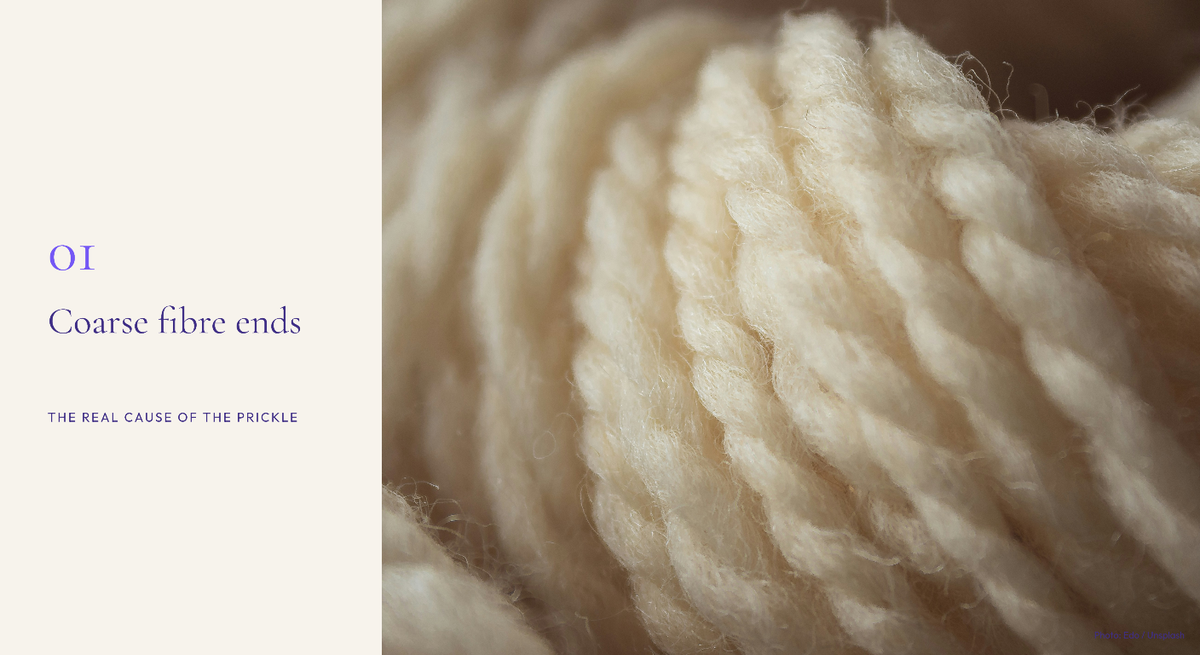
Every knit has thousands of fibre ends standing slightly proud of the yarn. Fine fibres bend when they touch skin; coarse ones are stiff enough to press in and set off the nerve endings that register itch. Woolmark puts the line at fibres "greater than 30-32 microns", and the Acta Dermato-Venereologica review (Zallmann and colleagues, 2017) concluded that "cutaneous irritation from wool relates to high fibre diameters", while superfine and ultrafine merino "do not activate sufficient c-fibres to cause itch".
That review also looked at the usual suspects. It found no evidence that wool fibre itself is a skin allergen, and said contact allergy from lanolin, chromium and formaldehyde is "highly unlikely with modern wool garments". In practice, that means the fix is usually choosing a different fibre or fabric, not avoiding wool altogether. If you get a rash, hives or swelling rather than a prickle, see a doctor or dermatologist, because that is a different problem.
How to read a wool label
Look for the fibre type and, where given, a micron number or "Super" count: lower microns and higher Super numbers mean finer, softer fibres.
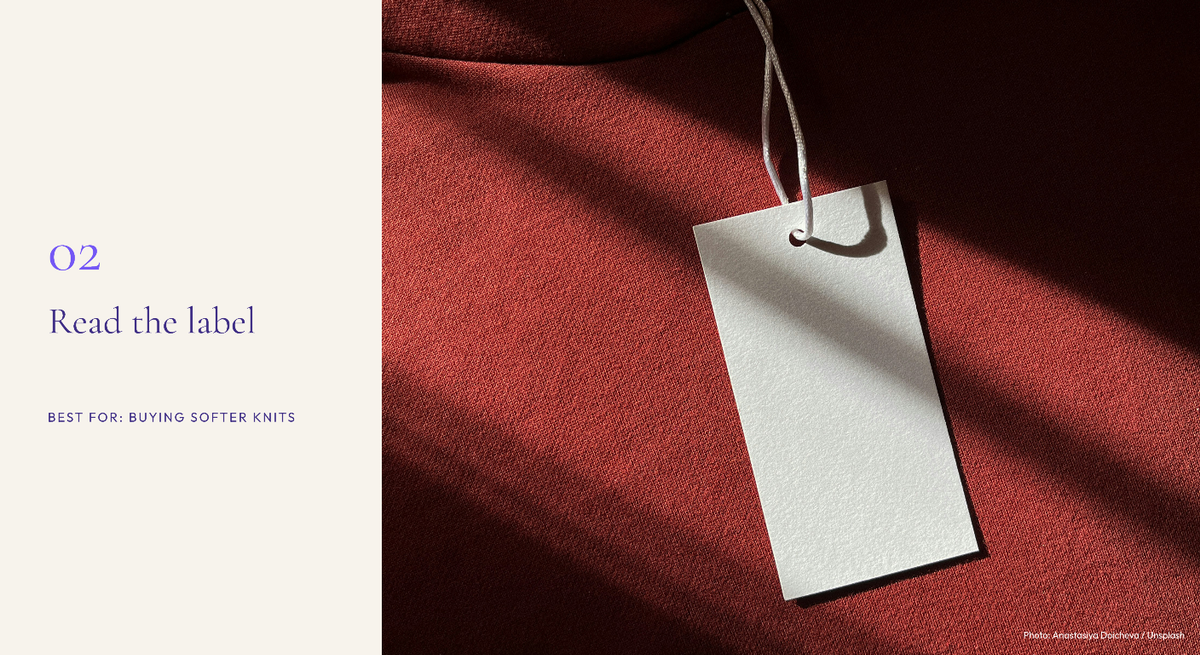
A micron is a thousandth of a millimetre, and it is the single most useful number on a wool label. Woolmark defines superfine merino as 17.5 microns or finer and ultrafine as around 16 microns or finer. In the United States, the Wool Suit Fabric Labeling Fairness and International Standards Conforming Act of 2006 also fixes what some common terms must mean, according to the law's text on govinfo.gov:
- Cashmere: average fibre diameter of 19 microns or less, with no more than 3% coarse fibres over 30 microns.
- Super 100s: average of 18.75 microns or finer; each step up (Super 110s, 120s and so on) is 0.5 microns finer, so Super 120s is 17.75 microns or finer.
- Super 80s: 19.75 microns or finer, the coarsest of the "Super" grades.
Many sweaters list only "100% wool" with no fibre type, which tells you nothing about softness. Lambswool, Shetland and "traditional" or rustic wools vary widely; if a label says merino and gives a micron count under about 19, it is very likely to feel smooth on bare skin.
Which wool is least itchy?
For skin that reacts easily, choose superfine or extra-fine merino, cashmere, or a wool blended with silk or cotton.
- Superfine merino (17.5 microns or finer): Woolmark cites a 2017 British Journal of Dermatology study in which merino under 18.5 microns was well tolerated by children with mild to moderate eczema.
- Cashmere: fine by legal definition in the US (19 microns or less on average), which is why it rarely prickles.
Want this styled from your own closet?
Elara builds the look from what you own, then lets you try it on.
- Blends: wool mixed with silk, cotton or a fine synthetic puts fewer coarse ends against your skin; check the wool percentage and type.
- Chunky, hand-knit and rustic wools: often coarser and loftier, so wear them over a layer rather than on bare skin.
Our guide to caring for wool and cashmere sweaters covers how to keep fine knits soft once you own them.
How to stop a sweater you own from itching
Put a barrier between the sweater and your skin first; then try a gentle soak, which can soften the feel slightly but cannot change fibre thickness.
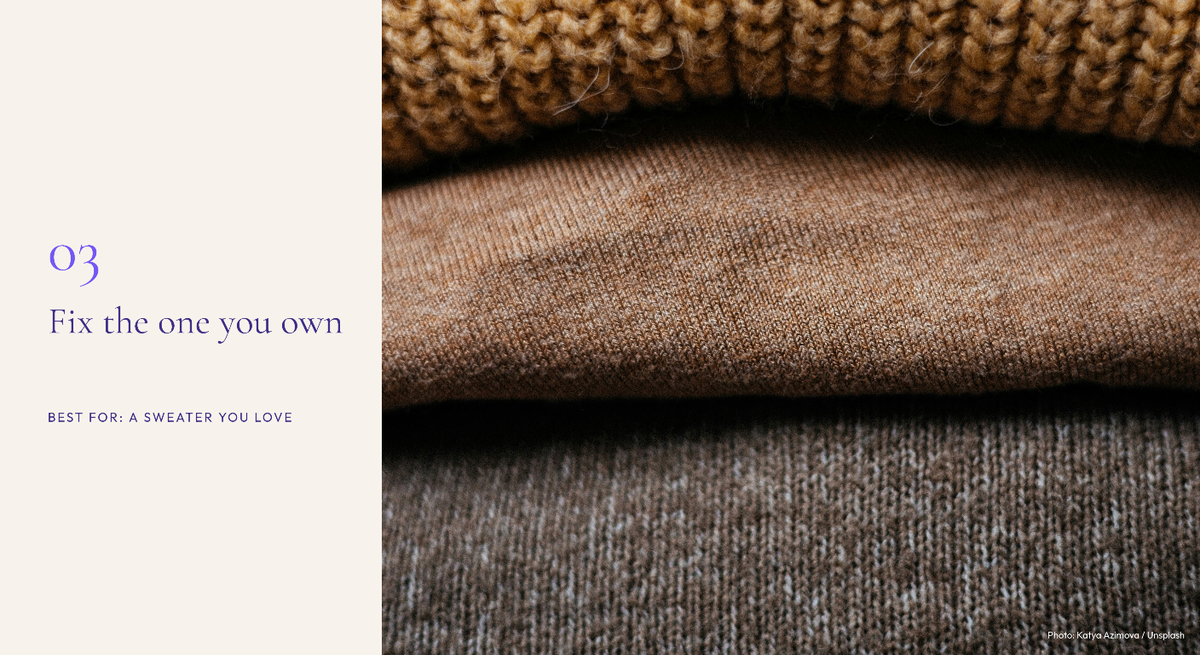
- Layer underneath: a fine cotton T-shirt, a silk camisole or a merino base layer stops the coarse ends reaching your skin. A crew neck or turtleneck base also protects the neck, where itch is usually worst.
- Choose the right neckline: with an itchy crew or roll neck, a collared shirt underneath covers the most sensitive area.
- Try a cold conditioner soak: Homes & Gardens editor Chiana Dickson tested soaking a sweater in cold water with four tablespoons of white vinegar for 15 to 20 minutes, then working in a silicone-free hair conditioner for about half an hour, rinsing and drying flat. She found the inside noticeably softer after one round, with the outside needing a second (Homes & Gardens). Treat it as a modest improvement, not a cure, and keep the water cold to avoid shrinking.
- Wash it properly: hand wash or use a wool cycle with a wool detergent, press out water rather than wringing, and dry flat. Felting and shrinking make a knit denser and can make it feel harsher.
- Know when to stop: if a sweater is coarse wool all the way through, it will always prickle on bare skin. Keep it as an outer layer over a shirt.
FAQ
Why is wool itchy?
Coarse fibres. Fibre ends thicker than about 30 to 32 microns press on your skin and trigger prickle, according to Woolmark. A 2017 dermatology review found wool fibre itself is not an allergen.
Is merino wool itchy?
Fine merino usually is not. Woolmark defines superfine merino as 17.5 microns or finer, and a study it cites found merino under 18.5 microns was well tolerated by children with eczema. Coarser merino can still prickle.
Am I allergic to wool?
Probably not. The Acta Dermato-Venereologica review found no evidence that wool fibre is a skin allergen and said lanolin allergy is highly unlikely with modern garments. A rash or swelling is a reason to see a doctor.
How do I make a wool sweater less itchy?
Wear a smooth cotton, silk or merino layer underneath, wash it gently in cold water with a wool detergent, and try a cold conditioner soak. These help with feel but cannot make coarse fibres finer.
What does Super 100s mean on wool?
Under US law, Super 100s means an average fibre diameter of 18.75 microns or finer. Each higher grade is 0.5 microns finer, so Super 120s is 17.75 microns or finer.
Know which knits you can wear on bare skin
Once you know which sweaters prickle, it is easier to plan outfits around them. In Elara, add your knits to your digital closet, and ask the AI styling chat what to layer under a scratchy sweater or which of your soft pieces works for a long day. Daily Outfits and Style DNA keep the suggestions to clothes you actually like wearing. Try Elara free.
Your stylist, in your pocket
Stop reading about outfits. Start wearing them.
Elara knows your closet, shops every store and gets you dressed for any occasion.