
How to Get Rid of Static in Clothes: Quick Fixes and Laundry Habits
Run a metal hanger over the fabric, stop over-drying your laundry and add humidity. Why clothes cling in winter, quick fixes and the habits that prevent it.
 Mehul AgarwalFounder & CEO
Last updated: October 2026
Quick answer: To get rid of static in clothes right now, run a metal hanger over the fabric, rub a dryer sheet over the clingy spot, or lightly mist it with water, then moisturise your skin. To stop it coming back, stop over-drying your laundry (take clothes out slightly damp), use wool dryer balls or a damp washcloth in the dryer, dry synthetics separately, and keep indoor humidity in the 30 to 50% range the US EPA recommends.
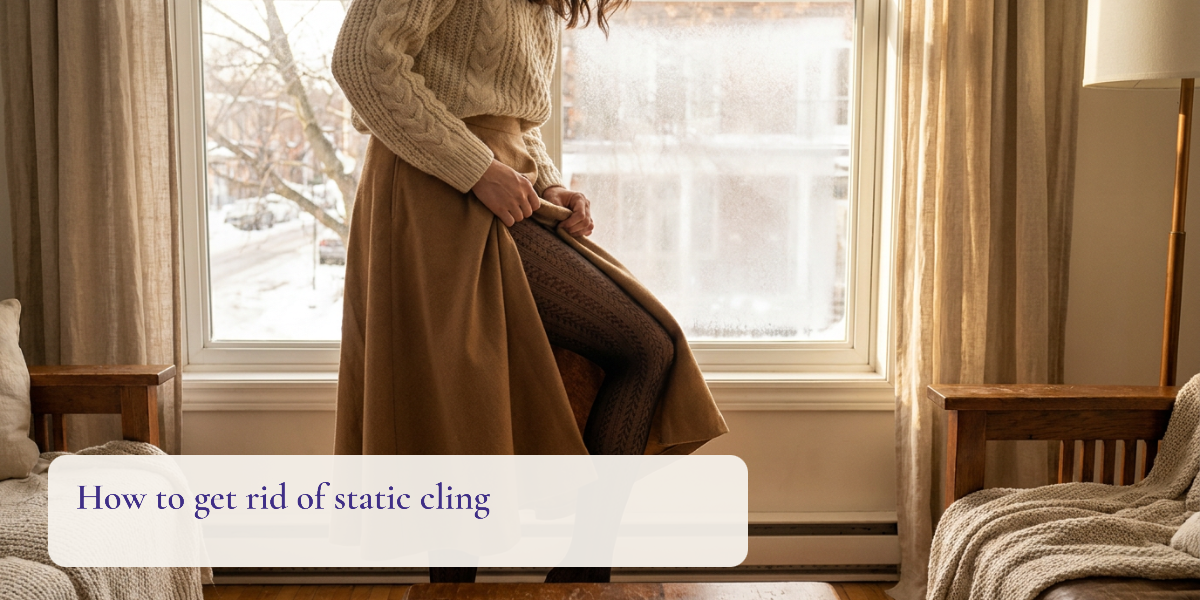
Static cling is a winter problem for a reason. A skirt that rides up your tights, a sweater that crackles over your head, a slip that sticks to your legs: all of it gets worse when the heating comes on and the air dries out. The fix is not one magic product but a few habits, and once you understand why charge builds up, it is easy to pick the right one.
Why clothes get static in winter
When two materials rub together, electrons move from one to the other, leaving one slightly negative and the other slightly positive. Physicists at the University of Maryland, Baltimore County explain that moisture in the air normally lets those electrons move back, so the charge evens out. In dry winter air they get stuck, and the charge builds until it can jump, which is the zap you feel on a doorknob, or until two oppositely charged surfaces stick together, which is cling.
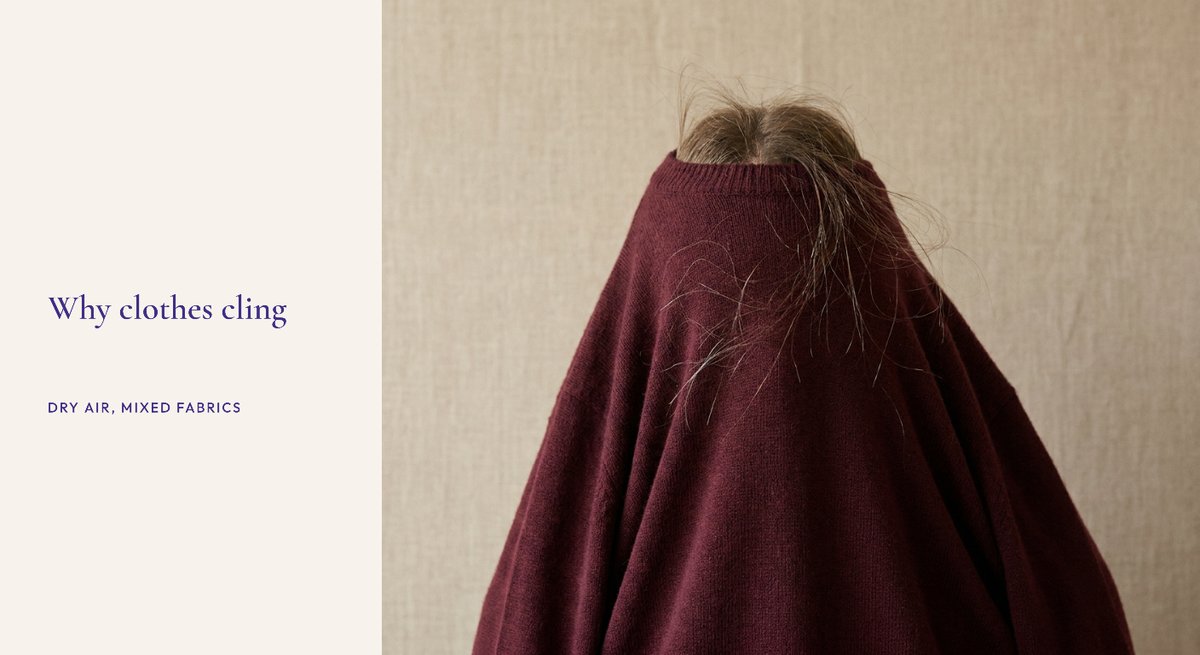
"There aren't as many water molecules to redistribute the charges, so they build up," Northeastern University physicist Ivana Dimitrova told Northeastern Global News. That is why the same outfit that behaves in July clings in January.
Three things make it worse:
- Synthetic fabrics. Northeastern's guidance notes that natural fibres such as cotton, wool, silk and linen generate less static than nylon and polyester.
- Mixing materials. A polyester lining against nylon tights, or a wool sweater over a synthetic top, is a classic cling pairing because the two materials trade charge as you move.
- Hot, long dryer cycles. Tumbling bone-dry clothes rubs them against each other in very dry, warm air, which is close to a perfect static generator.
Quick fixes when your outfit is already clinging
These work on the go, in the order most people have the tools to hand.
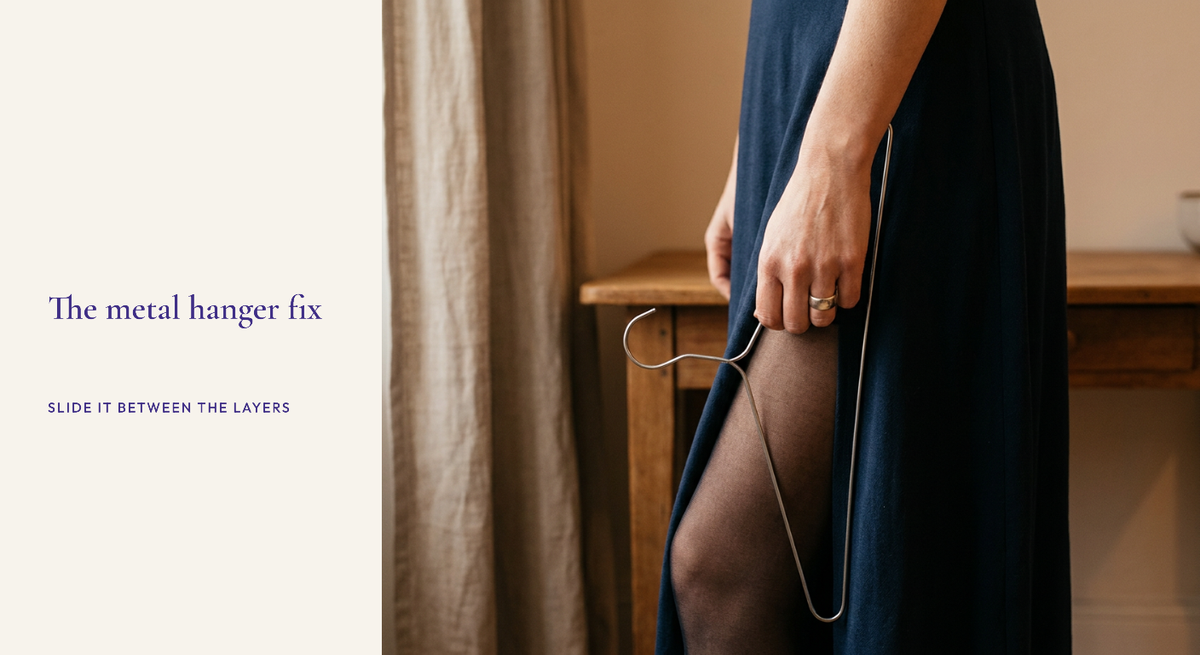
- Run a metal hanger over the fabric. Slide the long wire edge between your skirt and your tights, or over the outside of the garment. Both Whirlpool and Northeastern recommend it: the metal gives the charge somewhere to go.
- Rub a dryer sheet over the clingy area. Do the inside of the skirt or dress, or the outside of your tights. Keep one folded in your bag through winter.
- Mist with water. A light spray of water, or a pass with a damp hand or towel, adds just enough moisture to let the charge dissipate. Do not soak silk or rayon, which can water-spot.
- Moisturise your skin. Whirlpool suggests applying lotion to your legs and arms. Dry skin holds charge; moisturised skin lets clothing slide rather than stick.
- Use anti-static spray. Spray from about arm's length onto the inside of the garment and let it dry before you put it on. Test on a hidden seam first.
- Ground yourself before you touch metal. Northeastern suggests touching metal with a key or coin, which spreads the discharge over a larger area, or with your knuckles, which have fewer nerve endings than your fingertips.
Laundry habits that stop static before it starts
A lot of static builds up in the dryer, so this is where the lasting fix lives. Whirlpool's laundry guidance covers most of these steps.

- Stop over-drying. Take clothes out while they are still very slightly damp, or use a moisture-sensing cycle if your dryer has one. Bone-dry clothes tumbling in hot air are the ones that come out crackling.
Want this styled from your own closet?
Elara builds the look from what you own, then lets you try it on.
- Dry synthetics separately, or air-dry them. Activewear, fleece, nylon and polyester dry quickly and tend to build the most charge. Pull them out early or hang them.
- Add wool dryer balls. They absorb some moisture and keep clothes separated so they rub less. Aluminium foil balls are another option Whirlpool lists for discharging static.
- Toss in a damp washcloth for the last 10 to 20 minutes. It raises the humidity inside the drum at the point when static is building.
- Use fabric softener or dryer sheets selectively. They coat fibres to reduce friction, but Arm & Hammer's own guidance warns that softener reduces towel absorbency, weakens the wicking of activewear, harms microfibre and reduces the effectiveness of flame-resistant finishes on items like children's sleepwear. Skip it on those.
- Do not overload the machine. Crowded loads rub harder. Shake each item out and hang or fold it straight away.
- Vinegar: only as a separate soak. Whirlpool advises not adding vinegar to the washing machine itself; if you prefer it to softener, soak clothes in diluted vinegar separately and rinse well, after checking the care label.
Choose fabrics and pairings that cling less
Fixing static at the wardrobe level means fewer emergency hanger moments.
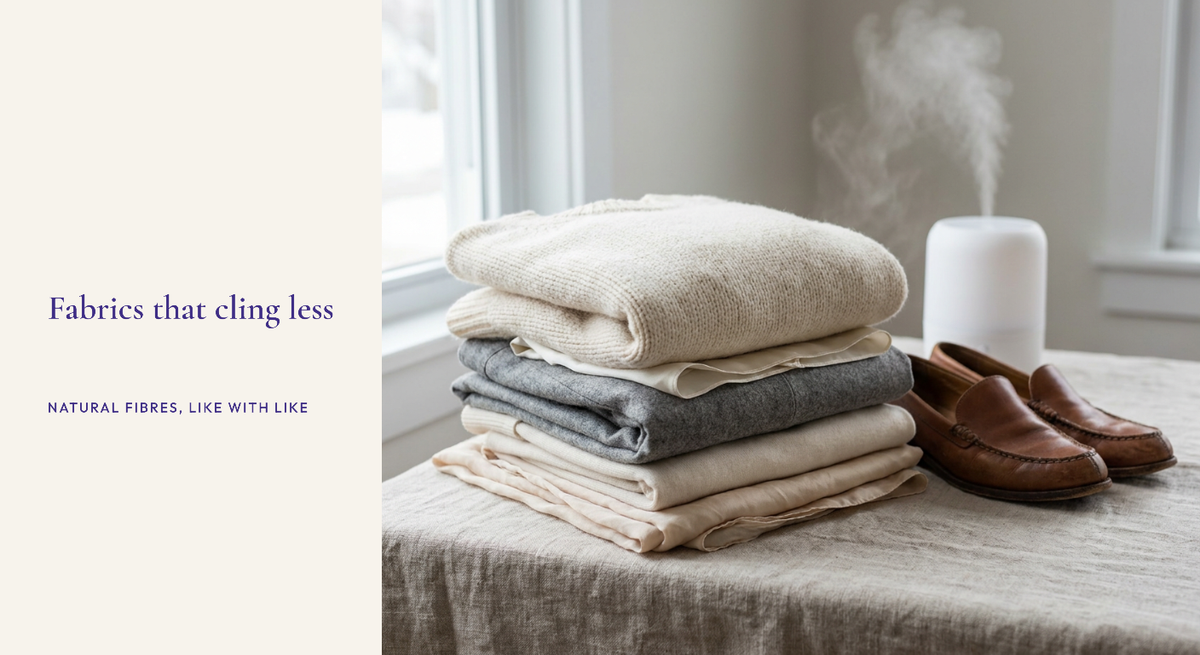
- Line skirts and dresses with natural fibres. A cotton or silk slip under a skirt tends to cling less over tights than a polyester one. Look for viscose or cupro linings, which are made from plant cellulose.
- Pair like with like. Wool trousers over cotton tights or a merino base layer are calmer than wool over nylon.
- Wear natural-fibre hats and scarves. Northeastern's advice includes headgear in natural fibres, which cuts down on hair flyaways when you take your hat off.
- Leather-soled shoes over rubber soles. Rubber insulates you from the floor, so charge you build up while walking has nowhere to go until you touch something. Leather soles tend to let some of it dissipate. Northeastern lists heel straps and grounding mats for the same reason in workplaces where static is a hazard.
Fix the air in your home
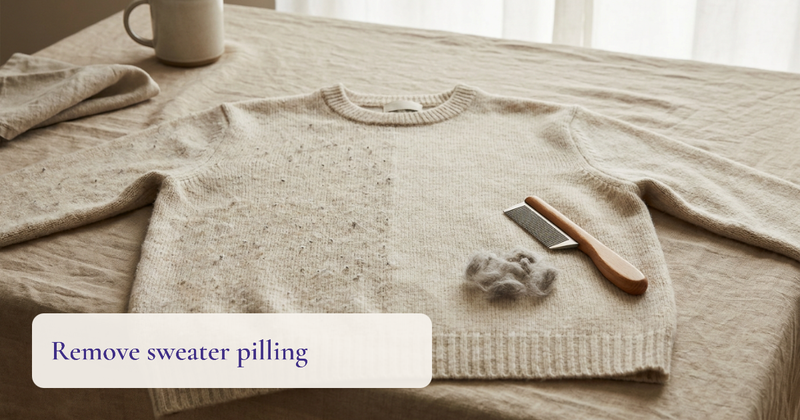
The root cause is dry indoor air, so the most effective long-term step is a humidifier. The US EPA recommends keeping indoor relative humidity below 60%, ideally between 30 and 50%. A cheap hygrometer tells you where you are. Keep the humidifier clean and do not push humidity above 50%, because damp air invites mould. For more on keeping winter knits in good condition, see our guides to caring for wool and cashmere sweaters and removing pilling.
FAQ
How do you get rid of static in clothes fast?
Run a metal hanger over the fabric, rub a dryer sheet on the clingy area, or lightly mist it with water. Moisturising your legs before putting on a skirt or dress also helps it slide instead of stick.
Why are my clothes so staticky in winter?
Dry air. Moisture normally lets electric charge even out between surfaces, but in dry heated air the charge builds up, so fabrics cling and you get shocks. Synthetic fabrics and over-dried laundry make it worse.
Does a safety pin stop static cling?
It is a popular tip, but none of the sources we checked recommend it. A metal hanger, a dryer sheet or a light mist of water are the tried methods; a pin is unlikely to do much compared with those.
Do wool dryer balls reduce static?
Yes. They separate clothes so they rub together less and absorb some moisture. Pair them with taking clothes out before they are bone dry for the best result.
Which fabrics cause the most static?
Synthetics such as polyester and nylon generate more static than natural fibres like cotton, wool, silk and linen, according to Northeastern University's guidance. Mixing two different materials, such as a polyester lining against nylon tights, makes it worse.
Is fabric softener the best way to stop static?
It helps, but it is not right for everything. It can reduce towel absorbency, weaken activewear's wicking and reduce flame-resistant finishes, so use dryer balls and shorter drying on those instead.
Static aside, winter is when it is hardest to know what goes with what. Add your clothes to Elara and it will build complete outfits from your wardrobe for the weather and your plans, including which layers to pair so you are warm without the cling. Try Elara free.
Your stylist, in your pocket
Stop reading about outfits. Start wearing them.
Elara knows your closet, shops every store and gets you dressed for any occasion.