How to Remove Pilling From Sweaters: 4 Methods That Work
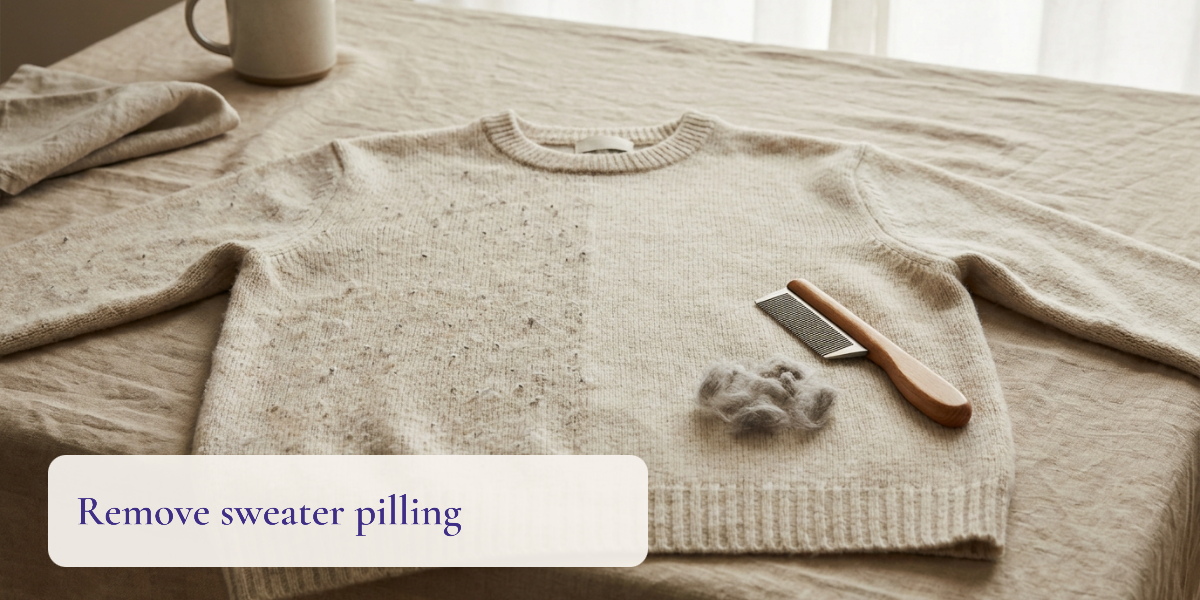
Lay the sweater flat, then remove pills by hand, with a sweater comb or a fabric shaver. Why knits pill, which tool suits which fabric, and how to prevent it.
 Mehul AgarwalFounder & CEO
Last updated: October 2026
Quick answer: To remove pilling from a sweater, lay it flat and take the pills off in the gentlest way that works: pick off a few by hand, use a sweater comb for wool and cashmere, or use a battery fabric shaver for heavier pilling, always with light pressure and the garment held taut. Then prevent new pills by washing knits inside out, skipping fabric softener and reducing rubbing. The Woolmark Company recommends all three of these removal methods and notes that pilling is caused by rubbing during wear.
Pilling, those small fuzzy balls that appear on elbows, underarms and sides, is the fastest way for a good sweater to look old. It is also one of the most fixable clothing problems there is. This guide explains why sweaters pill, which removal method suits which fabric, the step-by-step technique for each, and how to choose and care for knits so they pill less in the first place.
Why sweaters pill
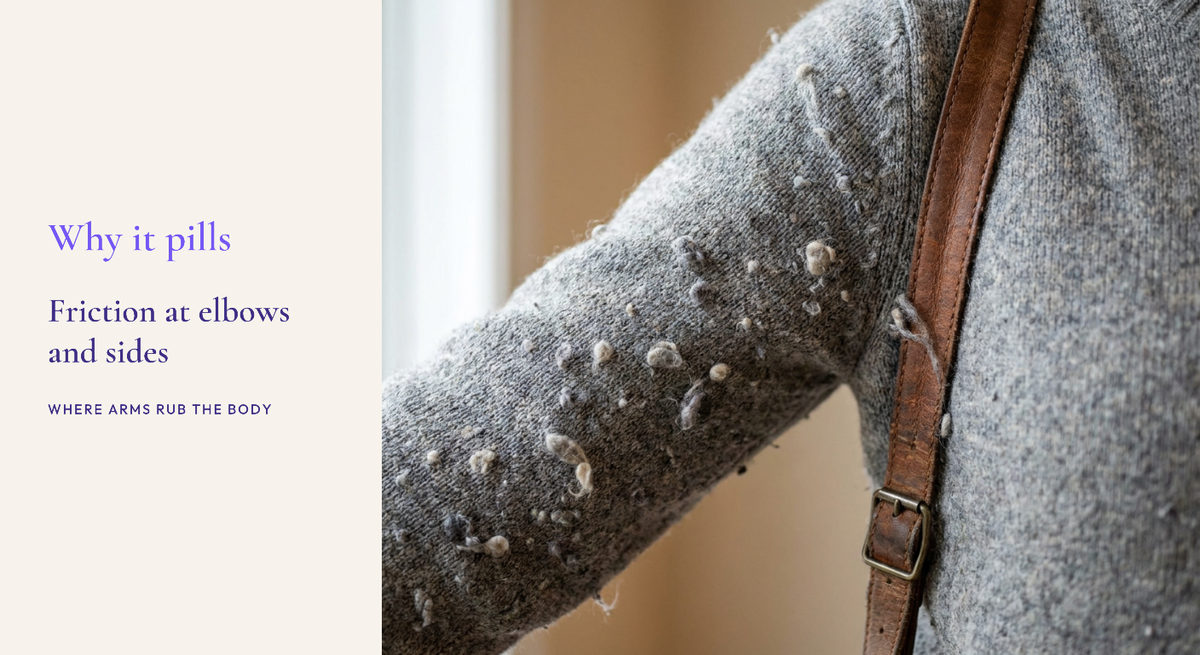
A pill forms when loose fibre ends on the surface of a fabric get rubbed, tangle together and roll into a tiny ball that stays attached to the knit. The Woolmark Company describes pilling simply as "the formation of fuzzy balls on the surface of wool clothing" and says it is "caused by rubbing during wear". That is why it shows up where your arms rub your body, at cuffs, and where a bag strap or a desk edge presses.
Three things make some sweaters pill more than others:
- Short fibres. Shorter fibres work loose more easily. Woolmark's guidance to manufacturers is to use longer fibres, a high yarn twist and denser fabrics to reduce pilling, and cashmere maker Gobi Cashmere notes that "shorter fibers loosen more easily and form pills."
- Synthetic blends. Polyester, nylon and acrylic fibres are strong, so when pills form they tend to stay put. As one textile labelling guide puts it, in a blend "the natural fibers may break, while the synthetic fibers hold the pills in place." That is why a cheap acrylic-blend jumper can look worn after a few wears.
- Friction and washing. Long hours at a desk, rough machine cycles and fabric softener all increase it. Woolmark specifically advises against fabric softener on wool.
One reassurance: pilling is not automatically a sign of poor quality. Gobi Cashmere points out that even good cashmere "can pill a little, especially when new", as the loosest surface fibres work their way out. On a well-made knit, pilling often slows down once those loose fibres are gone.
4 ways to remove pilling, from gentlest to strongest
Before you start, lay the sweater flat on a table or ironing board, smooth it out and work in good light. Do one area at a time and stop as soon as the surface looks clean. Every method removes a little fibre, so the goal is to take off the pills, not to shave the knit.
1. By hand, for a few pills
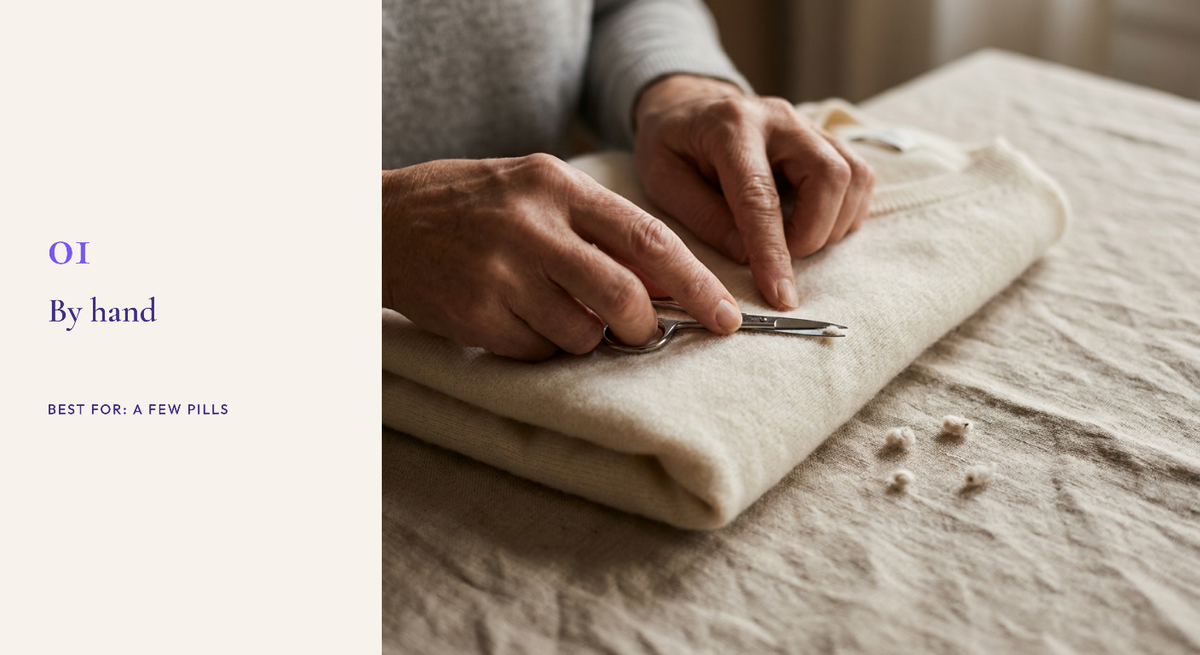
Woolmark suggests removing a small number of pills by hand, and recommends doing it routinely after drying or just before ironing. Pinch each pill and gently pull or snip it off with small, sharp scissors held flat against the fabric. Do not tug hard, because that can pull a loop of yarn out of the knit.
Best for: fine merino, cashmere and delicate knits with light pilling.
2. A sweater comb, for wool and cashmere
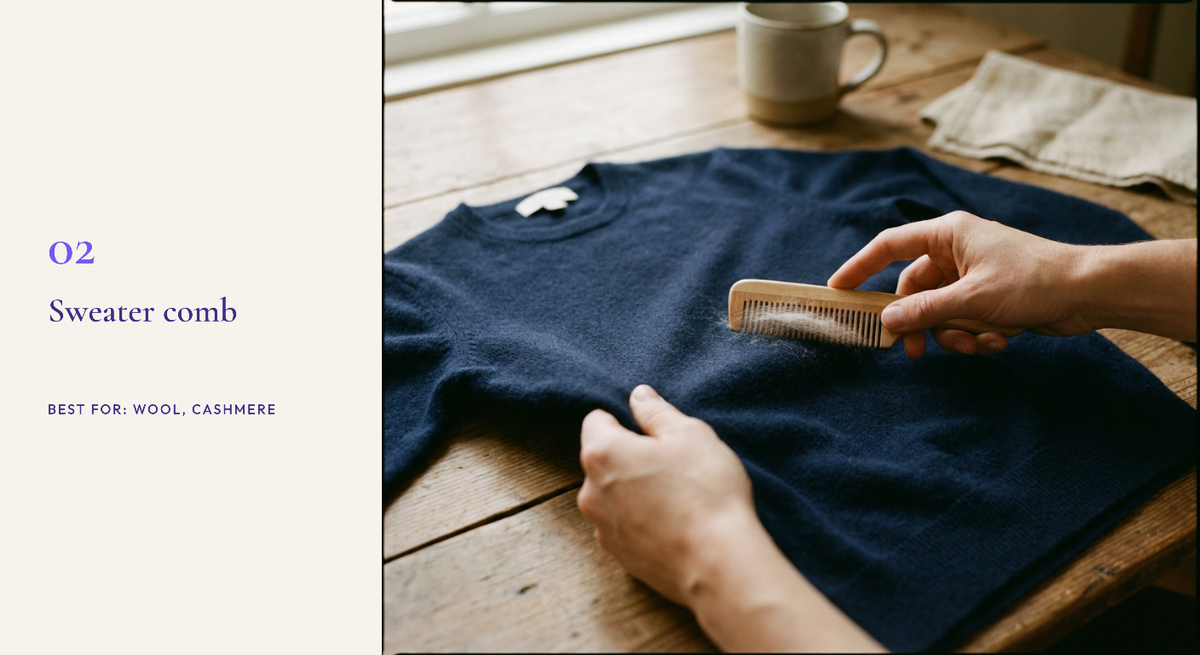
A sweater or cashmere comb has fine, closely set teeth that catch pills and loose fuzz. Gobi Cashmere calls it "the safest tool" for cashmere and advises laying the garment flat and brushing the surface gently in one direction. Woolmark agrees a comb works but stresses that it "should be done very gently and carefully". Hold the fabric taut with one hand, use short strokes, and clean the comb as fuzz builds up.
Best for: cashmere, lambswool and other natural-fibre knits.
3. A battery fabric shaver, for heavy pilling
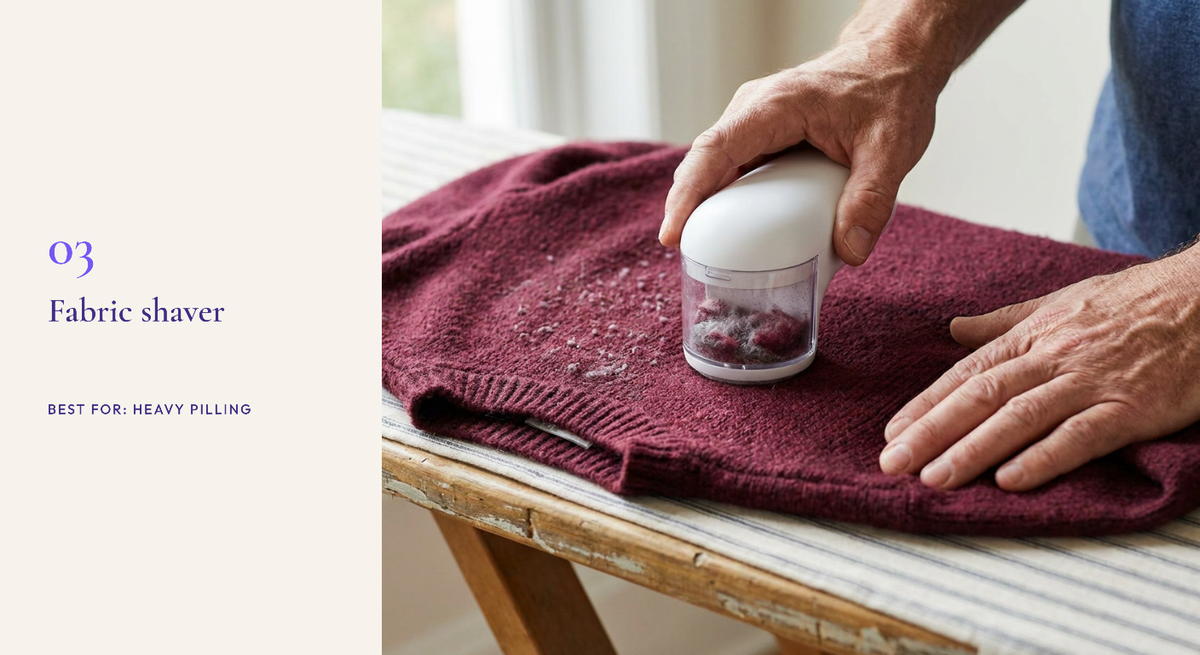
Woolmark describes small battery-operated de-pillers, or fabric shavers, as "low cost and very effective" at restoring a like-new look. Use the guard if your shaver has one, keep the head flat, and move in small circles with almost no pressure. Never use it on loose or open knits, raised cables or embroidery, where the blades can catch a loop. Empty the lint chamber often so the blades keep cutting cleanly.
Best for: acrylic and synthetic blends, chunky knits, heavily pilled areas.
4. Tape or a lint roller, for light fuzz
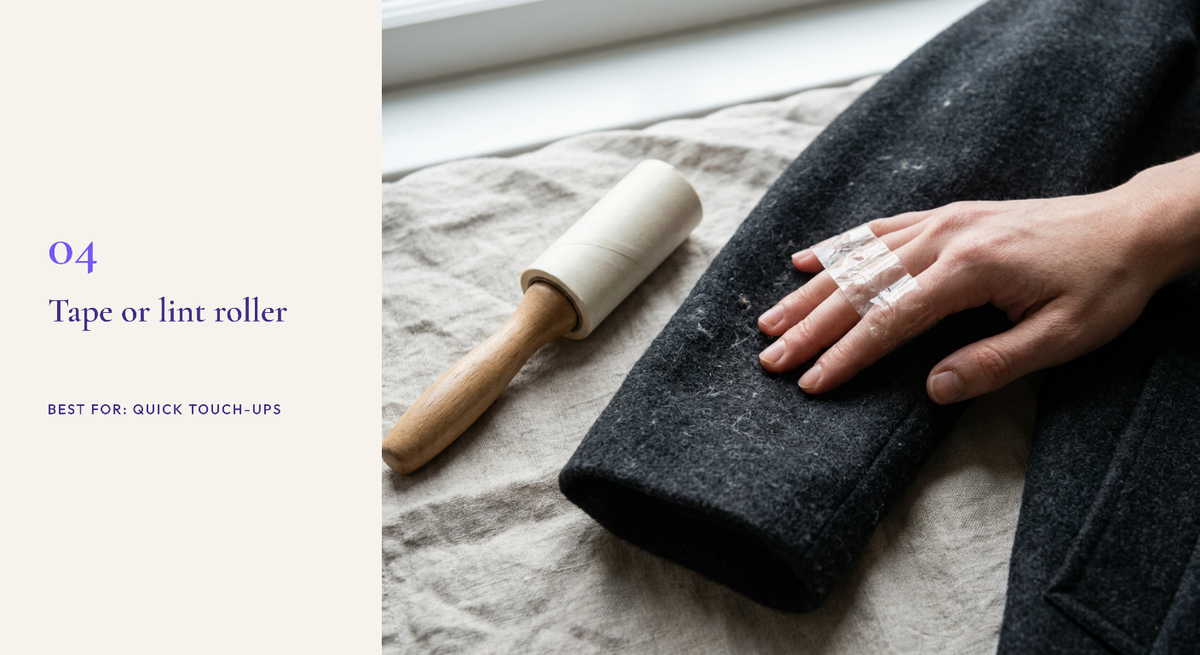
For a quick fix before you head out, wrap packing tape or a lint roller sheet around your hand, sticky side out, and press and lift it over the surface. This lifts loose fuzz and loose pills but will not remove pills that are firmly anchored. Gobi Cashmere suggests sticky tape as an emergency option.
Best for: quick touch-ups, coats and knits with surface fuzz rather than tight pills.
Want this styled from your own closet?
Elara builds the look from what you own, then lets you try it on.
Some people use a pumice-style sweater stone. It can be effective on chunky wool, but it is abrasive, so test it on a hidden seam first and keep it away from fine cashmere and merino.
How to stop sweaters pilling
- Wash inside out. Woolmark's first prevention tip is to turn wool clothes inside out before washing, so the outer face rubs less.
- Skip fabric softener on wool. Woolmark advises against it.
- Wash less, air more. Gobi Cashmere recommends airing cashmere after each wear instead of washing it frequently, and hand washing in cold water with a mild detergent when you do.
- Fold, do not hang. Hanging stretches knits; Gobi Cashmere advises always folding them.
- Reduce friction. Woolmark suggests minimising abrasion while wearing wool. Watch out for rough bag straps, seatbelts and velcro, and rest a sweater for a day between wears.
For more on washing and storing knits, see our full guide to caring for wool and cashmere sweaters.
How to buy sweaters that pill less
If you are shopping the winter sales, a few checks help you avoid knits that bobble after two wears:
- Read the fibre content. A high share of acrylic or polyester means pills are more likely to stay put. Pure wool, cashmere or a high-wool blend is easier to keep looking good.
- Look for tightly knitted, smooth yarns. Woolmark's design advice points to longer fibres, higher twist and denser fabrics. In person, a knit that feels dense, springs back when stretched and has a smooth rather than very fluffy surface is a good sign.
- Check for a pilling grade. Some retailers and makers quote a pilling grade from lab tests such as the Martindale method (ISO 12945-2), rated on a 1 to 5 scale where 5 means no pilling. It is not always listed, but when it is, higher is better.
Our guide to judging clothing quality online covers more checks before you buy.
FAQ
What is the best way to remove pilling from a sweater?
For wool and cashmere, a sweater comb used gently is the safest choice. For heavy pilling or synthetic blends, a battery fabric shaver works fastest. A few pills can be removed by hand. The Woolmark Company recommends all three.
Can you use a razor to remove pilling?
It is possible but risky, because a disposable razor can easily cut the yarn. A fabric shaver has a guard designed for knits, so it is the safer option.
Does pilling mean my sweater is low quality?
Not necessarily. Pilling is caused by friction and can happen to good knits, especially in the first few wears. Sweaters with short fibres or a lot of synthetic content tend to pill more and keep the pills.
Why does my sweater pill under the arms?
That is where your arms rub against your body, and Woolmark lists underarms, elbows, sleeves and sides as the most common areas because pilling is caused by rubbing during wear.
How do I stop cashmere from pilling?
Wash it inside out and by hand in cold water, air it out between wears instead of washing often, fold it rather than hanging, and avoid rough bags and straps. A little pilling when new is normal.
Bringing your favourite knits back to life? Try Elara to keep track of the sweaters you own and get fresh outfit ideas built around them.
Your stylist, in your pocket
Stop reading about outfits. Start wearing them.
Elara knows your closet, shops every store and gets you dressed for any occasion.