
How to Clean a Wool Coat at Home: 4 Steps, Plus Steaming and Drying
Clean a wool coat at home without a washing machine: read the label, brush, air and spot clean it, then steam and dry it safely. Plus when to dry clean.
 Mehul AgarwalFounder & CEO
Last updated: October 2026
Quick answer: Most wool coats should not go in the washing machine: clean one at home by brushing it after each wear, airing it, spot cleaning marks, steaming out creases and drying it slowly at room temperature, then have it professionally dry cleaned when it is genuinely dirty or before you store it. Read the care label first. Under the US FTC's Care Labeling Rule, a label that says "Dry clean only" is a warning that the maker has evidence washing will damage the coat, while plain "Dry clean" only means dry cleaning is one safe method.
A wool coat is one of the most expensive things in a winter wardrobe, and the easiest ways to damage one happen at home: a hot wash that felts the cloth, a radiator that warps the shoulders, a plastic bag that traps damp over summer. The good news is that wool needs less cleaning than most fabrics. The routine below is what The Woolmark Company's care guide and garment makers recommend, put in the order you will use it.
Why you should not machine wash most wool coats
A tailored coat is not just wool cloth. It is wool plus lining, interlining, shoulder structure and sometimes fused interfacing, and each layer reacts differently to water and heat. That is one reason coats are so often labelled dry clean only: Uniqlo's wool coat care guide, for example, says plainly "Do not wash, dry clean only!"
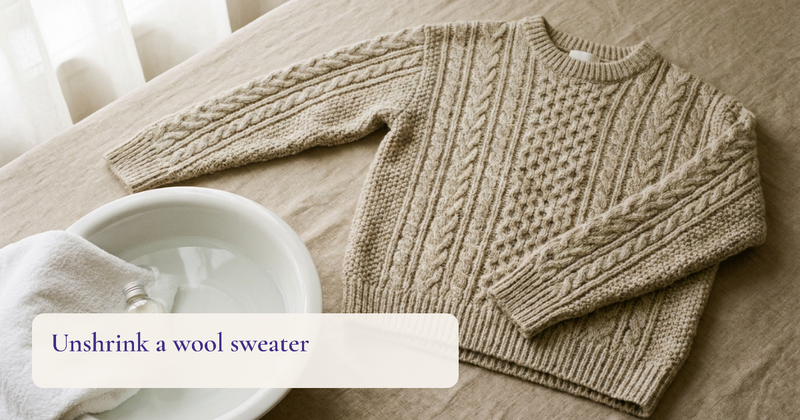
The wool itself is the other risk. Warm water plus agitation makes wool fibres lock together and shrink, which is the same felting process our guide to unshrinking a wool sweater explains. On a sweater you can sometimes coax it back. On a structured coat, the lining and shell shrink by different amounts, and the shape rarely recovers.
The routine below keeps a coat clean between professional cleans, so you need far fewer of them.
How to clean a wool coat at home in 4 steps
Do steps 2 and 3 after every few wears, and step 4 only when something spills. Creases and rain get their own section below.
Step 1: Read the care label properly
Find the label (often in the lining side seam or inside a pocket; Uniqlo puts its coat labels inside the left pocket) and read the exact words, not just the symbols.

According to the FTC's guide to the Care Labeling Rule, a care label must give at least one safe washing or drycleaning method, and a maker can list just one even if another would also work. So "Dry clean" means dry cleaning is safe, not that washing is forbidden. "Dry clean only" is different: the FTC says it warns that the garment cannot be washed and may be used only when the maker has evidence washing will damage it. If your coat says "Dry clean only", skip any idea of hand washing and stick to the steps below.
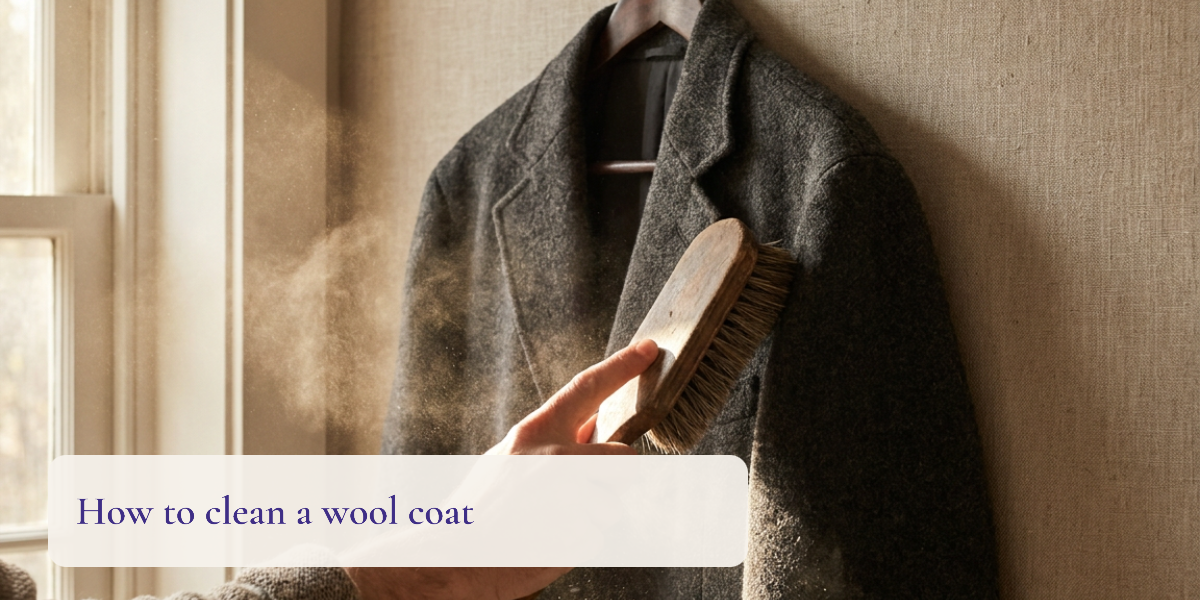
Step 2: Brush it after wearing
Brushing is the single most useful habit. It lifts dust and grit before they work into the weave and turn into dull patches or stains.
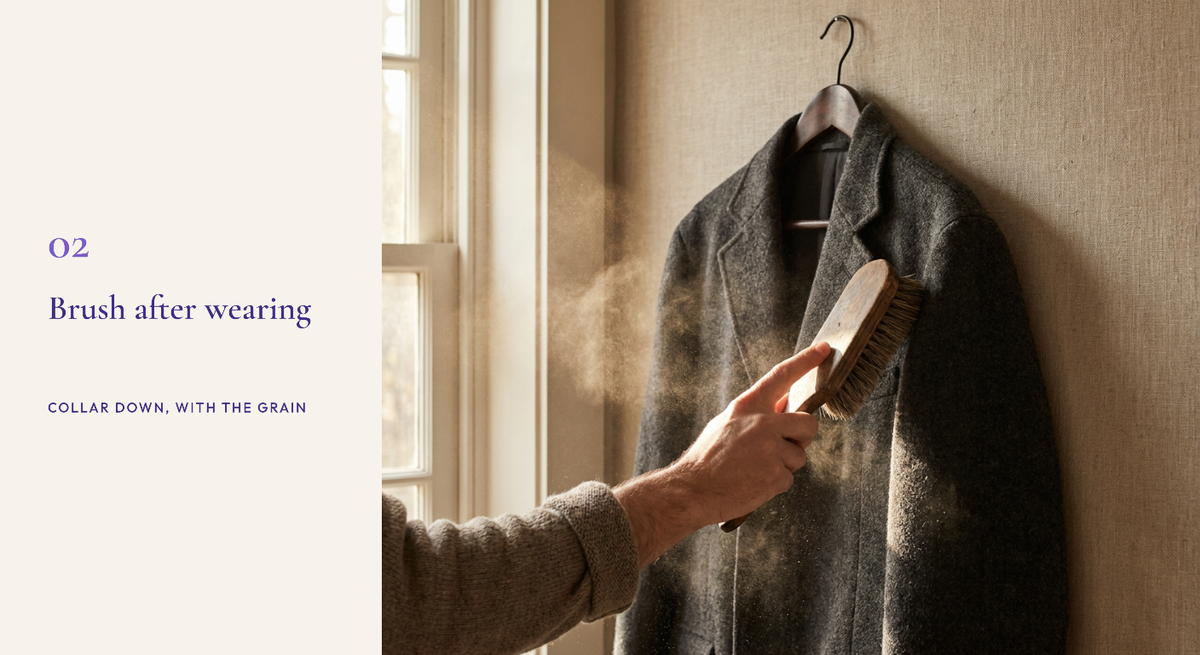
Use a soft natural-bristle clothes brush. Woolmark's guide says to brush woven garments lengthwise after wearing, and Uniqlo's guide says to work from the top down, from the collar to the shoulders and arms, brushing lightly because heavy brushing can damage the surface. Hang the coat first so you can brush in long strokes with the grain of the cloth.
Step 3: Air it out to remove odours
Wool releases smells well if it gets air. Before reaching for a spray, hang the coat somewhere ventilated.
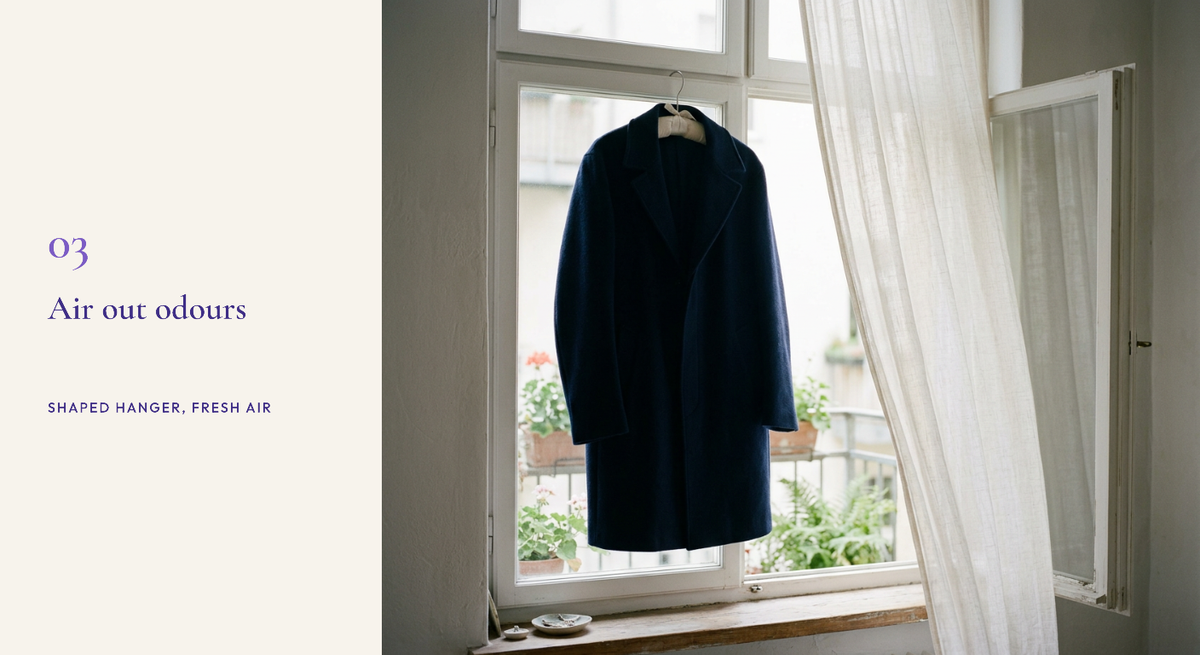
Woolmark advises hanging woven wool garments in fresh air on a suitable hanger to remove odours, and resting wool for 24 hours between wears so the fibre recovers its shape. Choose shade over strong direct sun, which can fade dark colours. A shaped or padded hanger keeps the shoulders from denting while it airs.
Step 4: Spot clean marks, gently
Treat a spill straight away, from the outside of the mark inwards, and never rub, which pushes the stain deeper and roughens the surface.
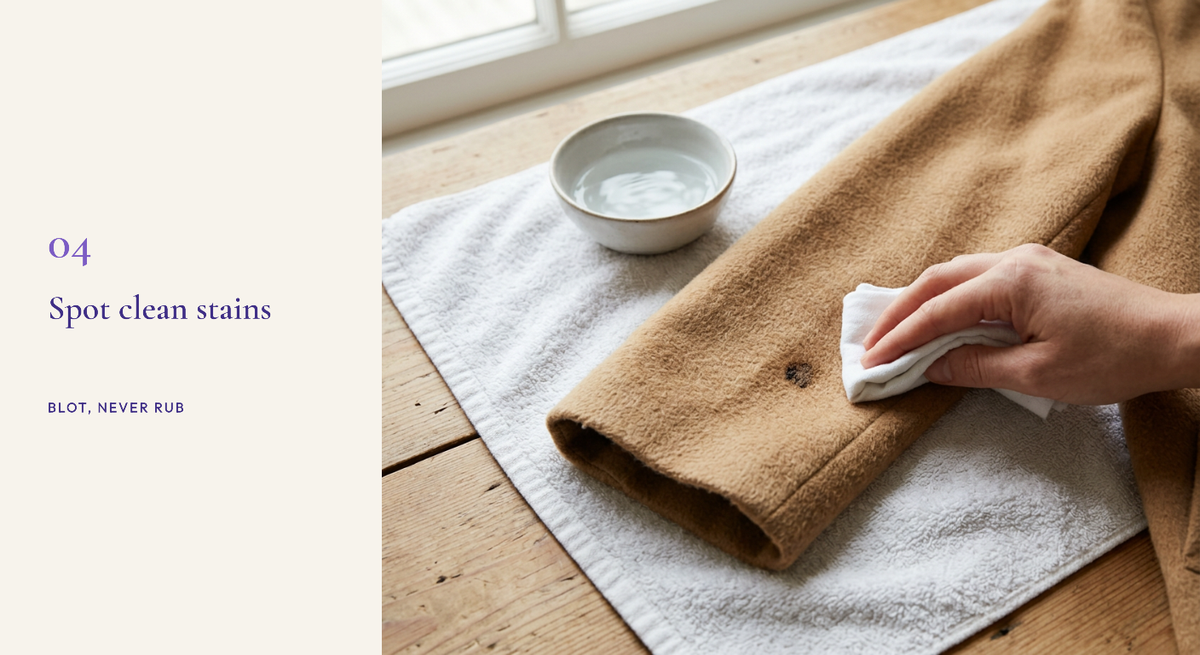
Cleanipedia (from Unilever's laundry brands) recommends blotting spills immediately with a paper towel or absorbent cloth. Woolmark's guide gives two specific fixes: for greasy marks, scrape off the excess first, then dab with a grease remover using a lint-free cloth; for blood, remove what you can with a damp sponge, then use cold water (Woolmark also suggests undiluted white vinegar). Test anything on an inside seam first. Woolmark is also clear that a stain must be fully removed before you press the coat, because heat can set it. If the mark is large, oily or on a light camel or cream coat, take it to a cleaner rather than experimenting.
Creases and rain: steaming and drying a wool coat
Two situations need a little more than a brush: a coat that has creased, and a coat that has been soaked. Both come down to the same rule: moisture and gentle handling, never direct heat.
Steam out creases instead of ironing
Steam relaxes wool fibres, so most creases from car seats and bag straps drop out without a hot iron touching the cloth.
Cleanipedia suggests holding a handheld steamer about 15 cm from the fabric and moving slowly across the coat. No steamer? Woolmark's tip is to hang the coat in a steamy bathroom. If you must press a lapel or hem, Woolmark says always use steam when pressing wool, and avoid ironing when the fabric is completely dry; use a pressing cloth so the iron does not leave a shine.
Dry a wet coat slowly
A rain-soaked coat is heavy, and that weight plus heat is what distorts shoulders and shrinks cloth.
Woolmark's instruction is to dry wool at room temperature, away from direct sunlight or heat, so not on a radiator or in front of a heater. Shake off surface water, hang the coat on a wide shaped hanger with the buttons done up, and give it space so air reaches all sides. If the coat is soaked through (or if you have hand washed one whose label allows it), Cleanipedia recommends rolling it in a thick towel to remove excess water, then laying it flat on a dry towel for two to three days rather than hanging it, because the weight of wet fibres can pull it out of shape.
When to take it to a dry cleaner
Home care handles dust, smells, small spills and creases. Go to a professional when:
- The label says "Dry clean only" and the coat is visibly dirty, greasy at the collar and cuffs, or smells even after airing.

Want this styled from your own closet?
Elara builds the look from what you own, then lets you try it on.
- A stain is large, oily, or on a pale coat.
- You are about to store the coat for summer. Woolmark notes that food stains and body oils attract moths, so the coat should be clean before it goes away.
- The coat is cashmere, has a fur or leather trim, or has delicate embellishment.
Tell the cleaner what the stain is and when it happened; it helps them choose the right treatment.
How to store a wool coat for summer
Store it clean, buttoned and breathing: clean because stains attract moths, and breathing because sealed plastic can trap moisture.
- Hanger: Woolmark says woven wool garments should hang on shaped or padded coat hangers. Thin wire hangers leave dents in the shoulders.
- Cover: Cleanipedia recommends a breathable garment bag to shield from dust and insects, and warns against plastic bags and airtight containers that can trap moisture.
- Moths: use a moth repellent, but Woolmark says not to place it directly on the garment. Cleanipedia suggests cedar blocks or balls as an alternative to mothballs.
- Place: a cool, dry, ventilated closet away from direct sun, checked every few weeks for signs of moths.
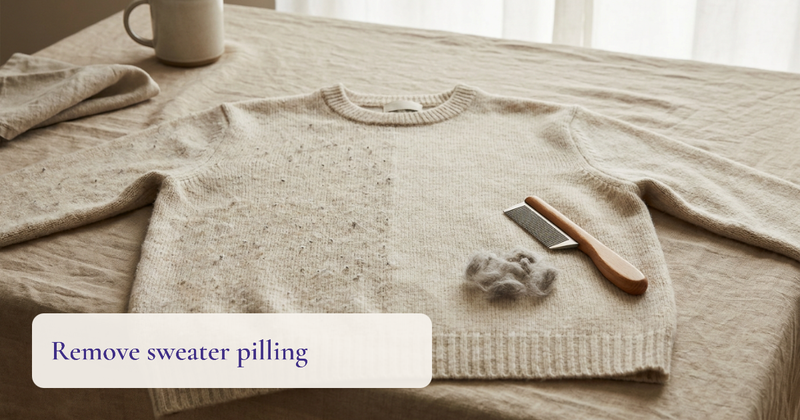
Our guide to caring for wool and cashmere sweaters covers moth prevention in more depth, and how to remove pilling works for bobbles under the arms of a coat too.
Mistakes that ruin wool coats
- Machine washing a coat labelled dry clean only, or washing any wool coat warm.
- Drying on a radiator, heated rail or in a tumble dryer.
- Ironing directly on the cloth without steam or a pressing cloth, which can leave a shine.
- Pressing over a stain, which can set it.
- Storing in a plastic dry-cleaning bag or a sealed box.
- Hanging a heavy coat on a thin wire hanger for months.
FAQ
Can you wash a wool coat in the washing machine?
Only if the care label gives a washing instruction. Under the FTC's Care Labeling Rule, "Dry clean only" means the maker has evidence washing will damage the coat, so do not machine wash it. Even when a label allows washing, use cold water and the gentlest wool cycle the label permits.
How do you clean a wool coat without dry cleaning?
Brush it after wear, air it to remove odours, blot and spot clean marks, steam out creases and dry it at room temperature. Those steps handle everyday dirt, so you only need a professional clean when the coat is truly dirty or before storing it.
How often should you dry clean a wool coat?
There is no fixed rule. With regular brushing and airing, you may only need a professional clean when a stain or odour will not shift, and before storing the coat at the end of winter, since Woolmark notes that stains and body oils attract moths.
How do you get the smell out of a wool coat?
Hang it on a shaped hanger somewhere airy, out of strong sun, for a day. Woolmark recommends fresh air for woven wool. Steam can also help freshen it. If a smell persists, it is time for a professional clean.
How do you dry a wool coat that got soaked in the rain?
Shake off the water, hang it on a wide shaped hanger with the buttons done up and let it dry at room temperature, away from radiators and direct sun, as Woolmark advises. If it is soaked through, roll it in a towel and dry it flat.
A good coat earns its keep when you wear it often. Elara, your AI personal stylist, works from a digital closet of the clothes you own, so you can see every outfit your camel or charcoal coat goes with and plan the week's outfits ahead. Try Elara free for 14 days.
Your stylist, in your pocket
Stop reading about outfits. Start wearing them.
Elara knows your closet, shops every store and gets you dressed for any occasion.