
How to Get Sweat Stains Out of Shirts: Yellow Pits and White Marks
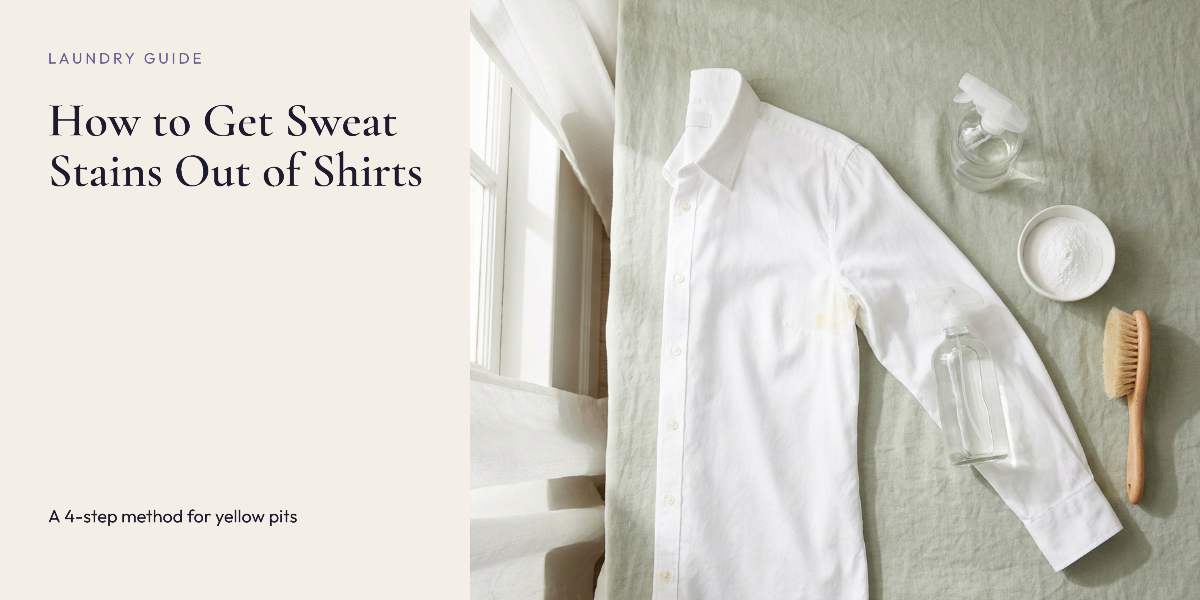
Get yellow sweat stains out with vinegar, enzyme detergent and an oxygen bleach soak. A 4-step method, deodorant marks on darks and mistakes that set stains.
 Mehul AgarwalFounder & CEO
Last updated: November 2026
Quick answer: To get yellow sweat stains out of a shirt, spray or sponge the underarms with diluted white vinegar, rub in an enzyme detergent, soak for 30 minutes to overnight in warm water with oxygen bleach, then wash in the warmest water the care label allows and air dry. Tide, Nike's laundry guide and Whirlpool all describe versions of this sequence. Skip chlorine bleach, which can darken yellowing, and keep the shirt out of the dryer until the stain is gone, because heat can set it for good.
Pit stains are one of the most common reasons good white shirts and tees end up retired early. The good news is that most of them are not permanent: they are a buildup of sweat, skin oils and antiperspirant that can be broken down if you use the right chemistry in the right order. This guide explains why the yellow appears, gives a four-step method that works on most washable cottons and blends, covers white deodorant marks on dark clothes, and lists the mistakes that lock stains in.
Why sweat stains turn yellow
Yellow underarm stains are mostly a reaction between the aluminum compounds in antiperspirant and the proteins and oils in sweat, not sweat alone. That is why they build up slowly and why a normal wash rarely removes them.
Tide's laundry guide describes sweat as "a combination of water, fats, proteins, and salt" that mixes with skin oils and hard-water minerals, while aluminum compounds in antiperspirants bind to those components and cause buildup and yellowing. Nike's stain guide, written with laundry expert Patric Richardson, points to the same "chemical reaction that can occur between many antiperspirant products and the proteins in your sweat." Arm & Hammer draws a useful distinction: chalky white marks on dark fabric come from antiperspirant residue, while yellow marks are better classified as sweat stains.
Knowing this tells you what to use. Proteins break down with enzymes (protease, found in many biological or "bio" detergents). Oily, mineral-heavy buildup lifts with acid (white vinegar) and oxygen bleach. Chlorine bleach, by contrast, can make the yellow worse, as Whirlpool and Tide both warn.
How to get sweat stains out of shirts in 4 steps
This method suits washable cotton, linen, polyester and blends. Check the care label first: the University of Georgia Extension advises sending dry-clean-only items to a professional and pretesting every product on a hidden seam for colourfastness.
Step 1: Loosen the buildup with white vinegar
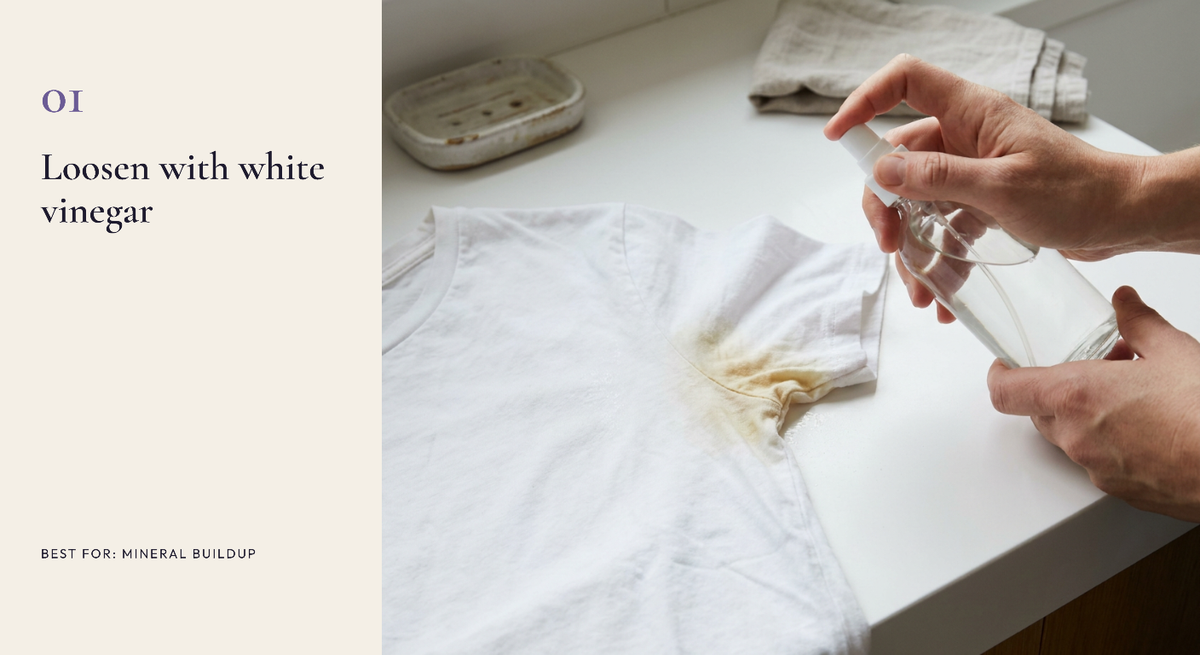
Mix white vinegar with water and spray or sponge it onto both sides of the underarm area, or soak the underarms in it. Vinegar's mild acid helps dissolve the mineral and antiperspirant residue that holds the yellow in the fibres.
- Nike's guide uses a 1:1 vinegar and water spray just before washing.
- Whirlpool's method soaks the stain for 30 minutes in 2 cups of water and 1 cup of white vinegar, then squeezes (not wrings) the shirt out.
- UGA suggests diluting vinegar two parts water to one part vinegar for cotton and linen.
Start with the gentler 2:1 dilution on delicate or coloured fabrics.
Step 2: Work in an enzyme detergent or paste
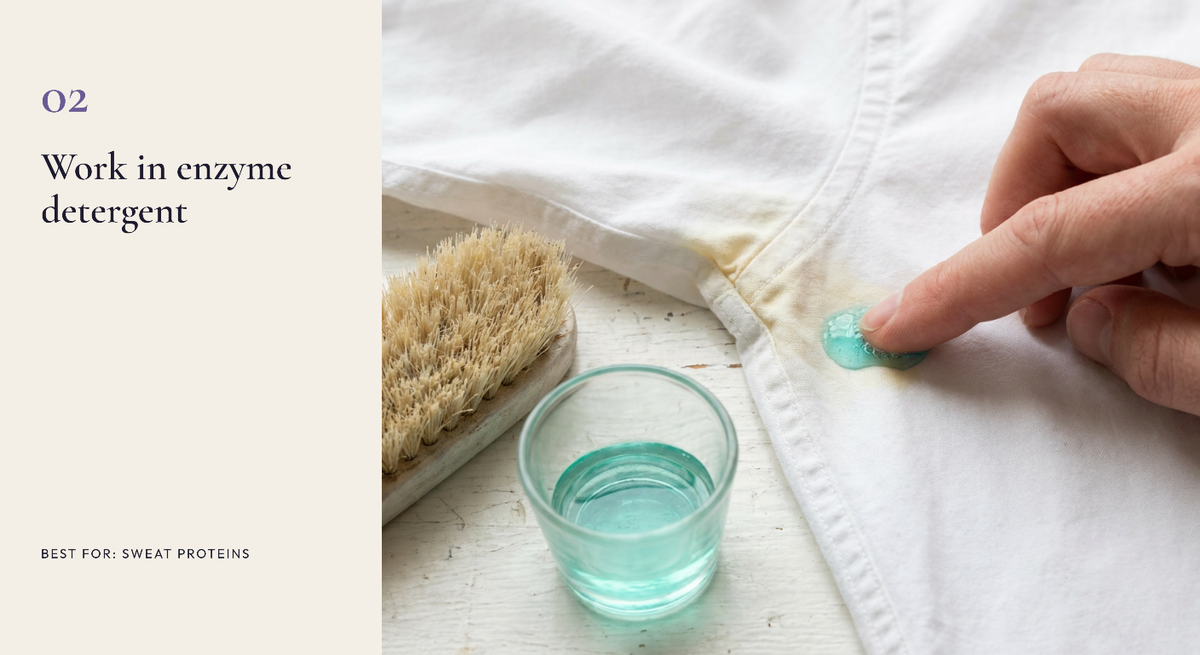
Rub a small amount of liquid enzyme detergent straight into the stain with your fingers or a soft brush, and leave it for at least 15 to 20 minutes. For older stains, use a paste instead.
Enzyme detergents contain protease, which breaks down the sweat proteins locked into the yellow. Nike recommends an enzyme detergent and, for stubborn stains, rubbing liquid hand soap into the spot and sprinkling dry oxygen bleach over it to form a paste, then scrubbing gently with a soft brush. Whirlpool's paste is half a cup of baking soda, a tablespoon of salt and a tablespoon of hydrogen peroxide, left on for at least 20 minutes. Use either paste on whites and colourfast fabrics only, and test first.
Step 3: Soak in oxygen bleach
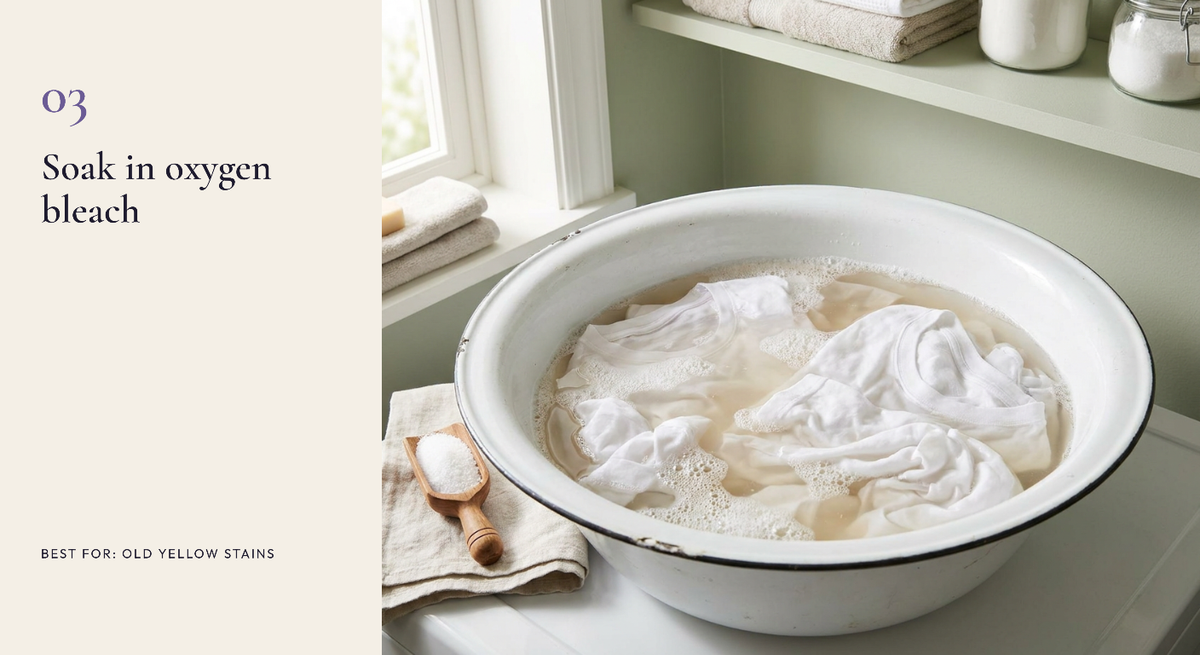
Soak the shirt in warm water with an oxygen bleach (sodium percarbonate, sold as "oxi" boosters) for 30 minutes, or overnight for old stains.
Tide's method is a warm soak of about half a cup of oxygen-bleach powder per 2 gallons of water, for 30 minutes to overnight, and it notes that oxygen bleach does not cause the yellowing chlorine bleach can. Oxygen bleach is generally colour-safe, but Nike's guide warns against using it on wool or silk, and UGA notes that ammonia, sometimes suggested online, damages both fibres.
Step 4: Wash warm, then air dry and check
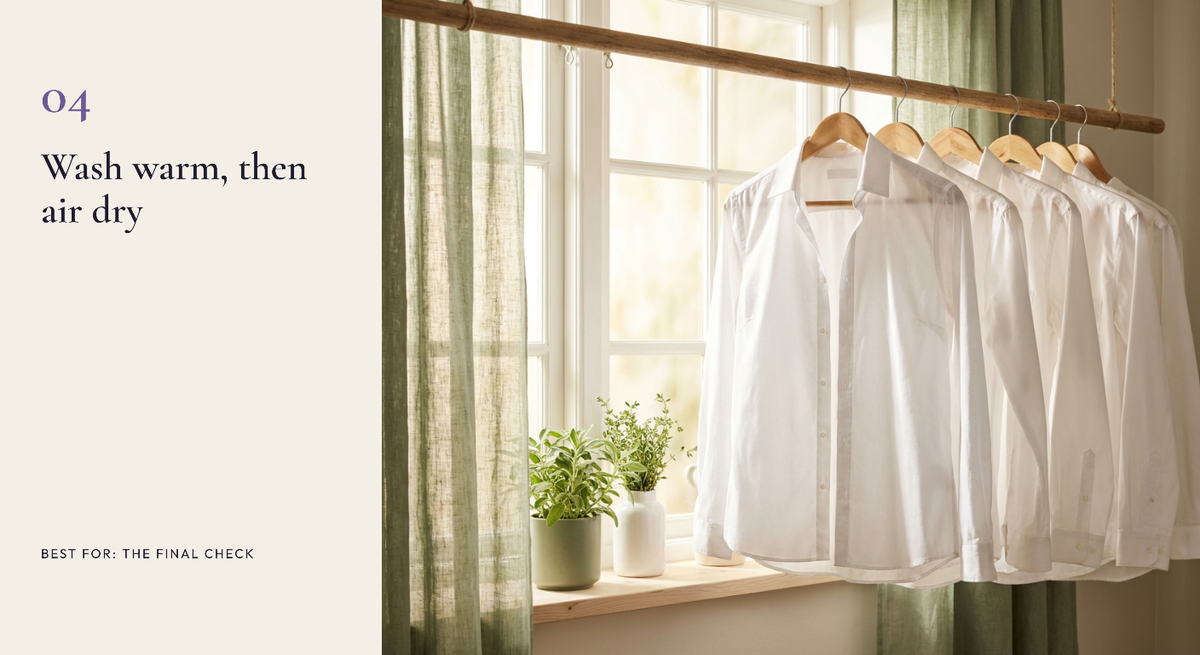
Wash in the warmest water the care label allows with your usual enzyme detergent, then air dry and check the underarms in daylight before the shirt goes anywhere near a dryer.
Whirlpool and the Good Housekeeping Institute's Carolyn Forte, quoted by Prevention, both recommend the hottest water that is safe for the fabric. For darks, Tide rinses in cold water instead to protect the dye. If any yellow remains, repeat steps 2 and 3. Every source agrees on the final rule: dryer heat can set the residue, so air dry until the stain is fully gone.
White deodorant marks on dark clothes
The chalky white streaks on black tees and dresses are fresh antiperspirant residue, not a sweat stain, and they usually come off without soaking.
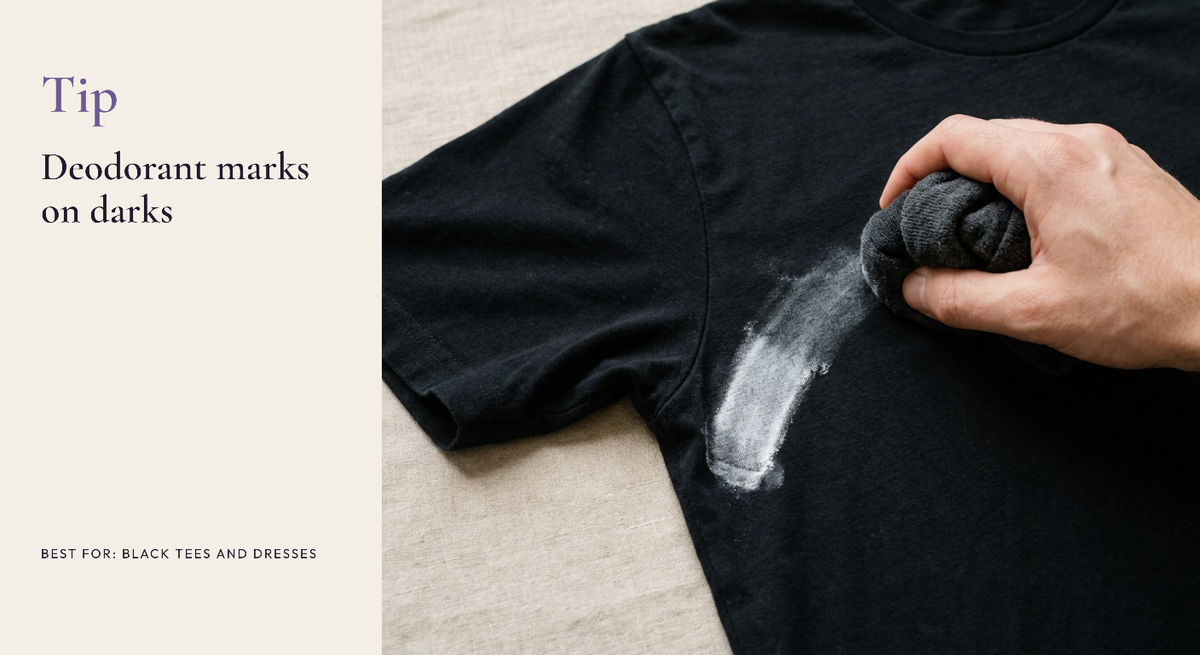
- Fresh marks: rub the fabric against itself, or use a dry nylon sock or a slightly damp microfibre cloth, to lift the powder.

Want this styled from your own closet?
Elara builds the look from what you own, then lets you try it on.
- Built-up residue: sponge the area with diluted white vinegar (two parts water to one part vinegar), then wash inside out in cold water with a liquid detergent.
- Colour change: UGA notes that aluminum chloride antiperspirants "are acidic and may change the color of some dyes." On a fresh mark, a few drops of ammonia can restore colour, and on an old one, white vinegar can help, but test first and never use ammonia on silk or wool.
Mistakes that make sweat stains permanent
Most permanent pit stains come from heat, chlorine bleach or waiting too long, not from the sweat itself.
- Using chlorine bleach on yellow stains. Whirlpool says it "can actually darken" sweat stains, and Nike says it breaks down fabric and dulls colour.
- Ironing or tumble drying before the stain is gone. UGA's advice is blunt: never iron or apply heat to a material with a deodorant stain.
- Letting shirts sit for weeks. Each wear adds another layer. Treat stains as soon as you notice them, as Whirlpool advises.
- Overdoing fabric softener. Arm & Hammer notes that softener can trap residue in the fibres.
- Wringing or scrubbing hard. It roughens cotton and stretches knits. Squeeze, blot and brush gently instead.
How to prevent sweat stains
Use less antiperspirant, let it dry fully before you dress, and wash worn shirts promptly.
- Arm & Hammer suggests two to three swipes per underarm and letting the product dry. Some people apply antiperspirant at night so it has time to absorb.
- Switching to an aluminum-free deodorant can reduce yellowing, though Arm & Hammer and Whirlpool both say it is not foolproof.
- A thin cotton undershirt takes the buildup instead of your good shirt, and loose, breathable natural fibres stain less than tight synthetics, according to Whirlpool and Tide.
- Wash white shirts after every wear, and read the care label before choosing water temperature. Our guide to clothing care labels decodes every symbol.
Dealing with a different mark? Our makeup stain guide covers foundation, lipstick and mascara, and our holiday stain guide handles gravy, wine and candle wax.
FAQ
How do you get yellow sweat stains out of white shirts?
Pretreat the underarms with diluted white vinegar, rub in an enzyme detergent, soak for 30 minutes to overnight in warm water with oxygen bleach, then wash in the warmest water the label allows and air dry. Repeat if needed. Avoid chlorine bleach, which can darken the yellow.
Does vinegar remove sweat stains?
Vinegar helps loosen the mineral and antiperspirant buildup, so it works best as a pretreatment before an enzyme detergent and an oxygen bleach soak. On its own it often lightens rather than removes old stains. Mixing it with baking soda at the same time mostly neutralises both, as Tide points out.
Can old sweat stains be removed?
Often, yes, but they may need two or three rounds of pretreating and overnight oxygen-bleach soaks. If a stain has been set by repeated drying or ironing, it may only lighten.
Why does bleach make sweat stains worse?
Whirlpool warns that chlorine bleach can darken sweat stains, and Nike's guide says it breaks down fabric and dulls colour. Tide recommends oxygen bleach instead because it does not cause that yellowing, so oxygen bleach is the safer choice for sweat stains.
How do you get deodorant marks off black clothes?
Rub fresh marks with a dry sock or the fabric itself. For built-up residue, sponge with diluted white vinegar and wash inside out in cold water.
Does aluminum-free deodorant stop yellow stains?
It can reduce them, because the aluminum compounds in antiperspirants contribute to yellowing, but sweat proteins and oils can still discolour fabric over time, so prompt washing still matters.
Keeping your favourite white shirts in rotation is easier when you know what you own. Elara, an AI personal stylist app, digitises your wardrobe and builds daily outfits from it, so the shirts you rescue get worn instead of forgotten. Try Elara free.
Your stylist, in your pocket
Stop reading about outfits. Start wearing them.
Elara knows your closet, shops every store and gets you dressed for any occasion.