

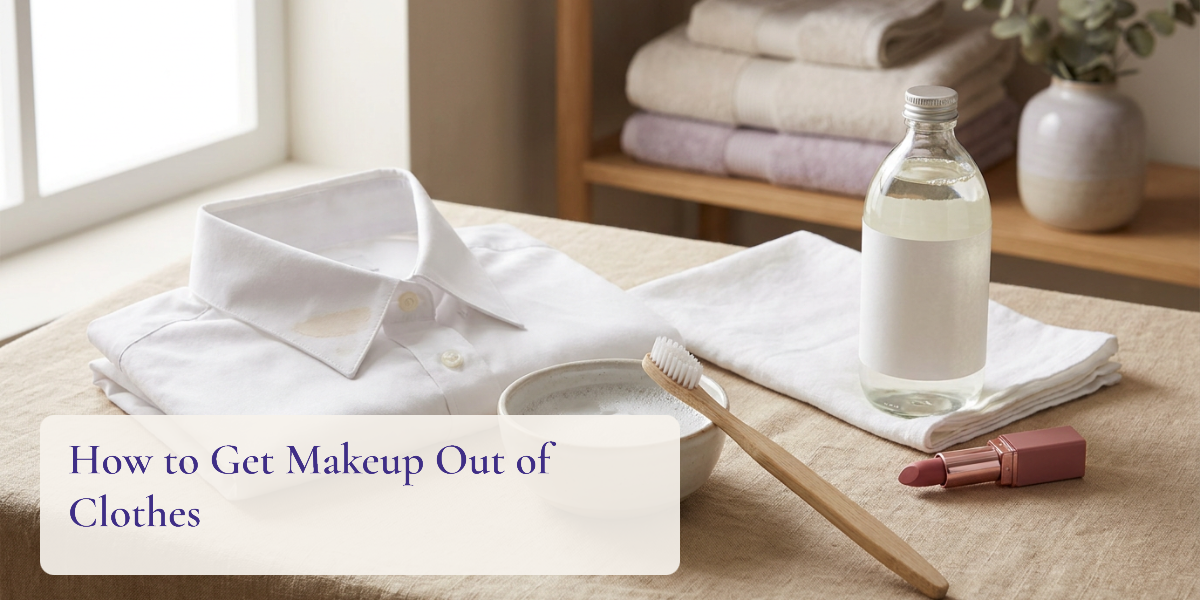
How to Get Makeup Out of Clothes: Foundation, Lipstick, Mascara
Get makeup out of clothes: lift, blot, then pre-treat with detergent. Step-by-step fixes for foundation, lipstick, mascara and blush, and when to dry clean.
 Mehul AgarwalFounder & CEO
Last updated: November 2026
Quick answer: To get makeup out of clothes, lift off the excess first, then pre-treat with liquid laundry detergent before washing, because most makeup is oil plus pigment and detergent breaks down the oil. Lipstick and eye makeup are combination stains, so the University of Illinois Extension and Iowa State University Extension advise treating the oily part with a stain stick or dry-cleaning solvent before the detergent. Blot, never rub, and keep the garment out of the dryer until the stain is completely gone, since heat sets it.
Makeup marks are the classic party-season stain: a foundation ring inside a collar, a lipstick kiss on a sweater, a mascara smear on a pillowcase, blush dust down a black dress. The good news is that most of them come out at home if you treat them in the right order. The method changes with the formula, so this guide goes stain by stain, explains why each step works, and tells you when to stop and take the piece to a dry cleaner instead.
First aid: blot, never rub
Whatever the makeup, the first five minutes decide most of the outcome: lift the excess, blot rather than rub, and avoid hot water and heat until you have treated it properly.
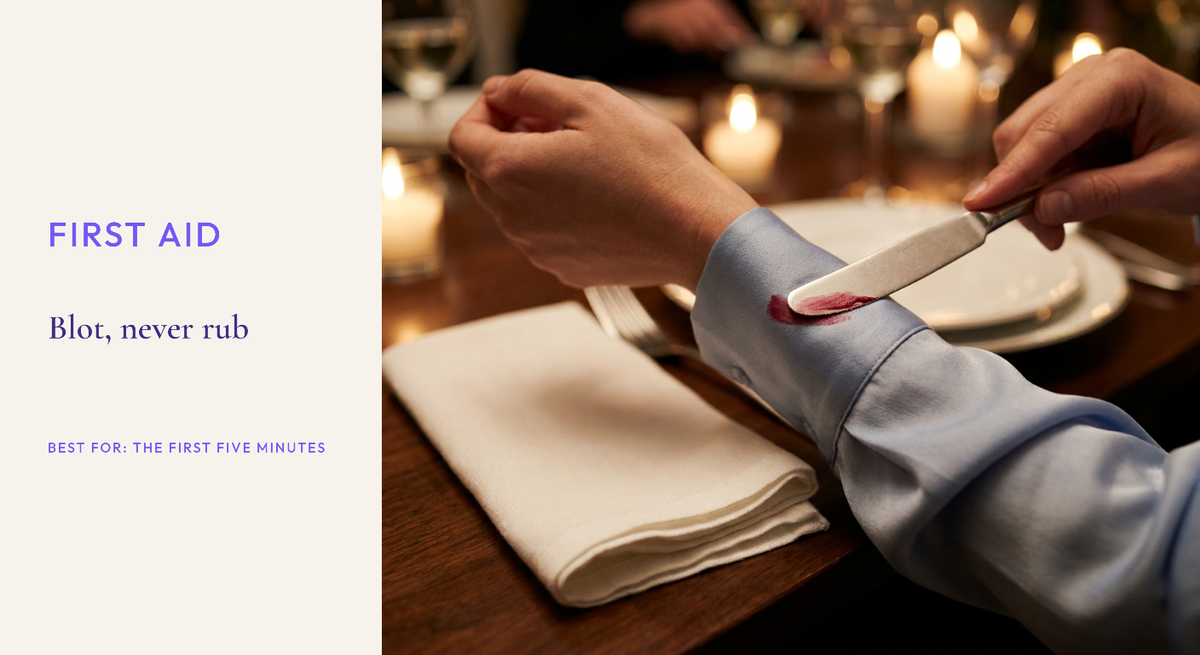
- Lift, don't wipe. Scrape off thick product with a dull knife, spoon or the edge of a card, as OxiClean and Tide recommend. Wiping pushes pigment deeper into the weave.
- Blot, never rub. The Drycleaning and Laundry Institute (DLI) warns that rubbing spreads the stain and can damage fibres.
- No heat until it's gone. The American Cleaning Institute, Iowa State and Texas A&M extension services all warn against drying or ironing a stained garment, because heat can set the stain permanently.
- Skip bar soap on a fresh stain. Iowa State's stain guide notes that bar soap can set many stains.
- Test first. Try any remover on an inside seam or hidden spot before using it on the stain.
- Out at a party? Persil suggests blotting with a makeup-remover wipe, after testing it on a hidden area. If you cannot treat it properly the same day, the American Cleaning Institute says a stain stick or stain-removal wipe can hold a stain for up to a week until you wash it.
Why makeup stains behave differently
Most makeup is a mix of oils or waxes and colour pigments, so you usually need two things: a detergent to break down the oil and, if colour remains, a colour-safe oxygen bleach to lift the pigment, as Persil explains.
That is why plain water rarely works. A dry cleaner interviewed by L'Oreal's makeup.com notes that many foundations are oil-based, so water alone will not shift them. Lipstick and eye makeup add waxes and dense pigments, which is why extension services treat them as combination stains: solvent or stain stick for the oily part first, then detergent for the rest.
On water temperature, sources disagree. The American Cleaning Institute, Tide and Iowa State suggest washing in the warmest water the care label allows, while a professional cleaner quoted by makeup.com says to start cold and only go warmer if the stain remains, and the DLI advises no hot water on anything headed to a dry cleaner. The safe route: pre-treat and do a first wash cool, check the stain, then use the warmest water the label allows if needed.
How to remove each type of makeup
Use the method that matches the formula: detergent for foundation and powders, solvent or stain stick then detergent for lipstick and eye makeup.
Foundation and concealer
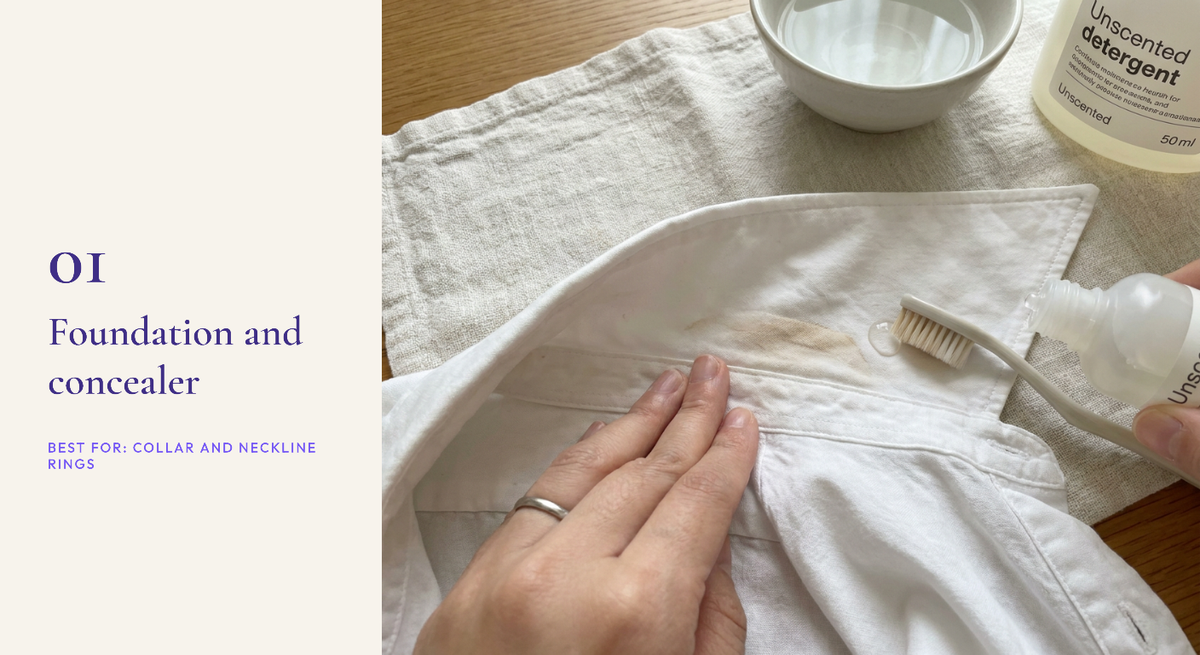
Foundation is the usual culprit behind collar and neckline rings. Iowa State lists foundation, powder and rouge in the group of stains to treat by rubbing heavy-duty liquid detergent into the stain before washing.
- Step 1: Scrape off any thick product.
- Step 2: Work a few drops of liquid laundry detergent into the stain. Clorox suggests working from the outside of the stain toward the centre so you do not spread it; Tide suggests a soft brush.
- Step 3: Leave it for 5 to 10 minutes, then blot and rinse.
- Step 4: Wash as the label allows. For a stubborn or large stain, Clorox suggests presoaking for up to an hour in a colour-safe oxygen bleach before washing.
- Step 5: Check before drying. Repeat if any tint remains.
Concealer, especially creamy or long-wear formulas, follows the same steps. OxiClean groups it with other cream makeup.
Lipstick and lip balm
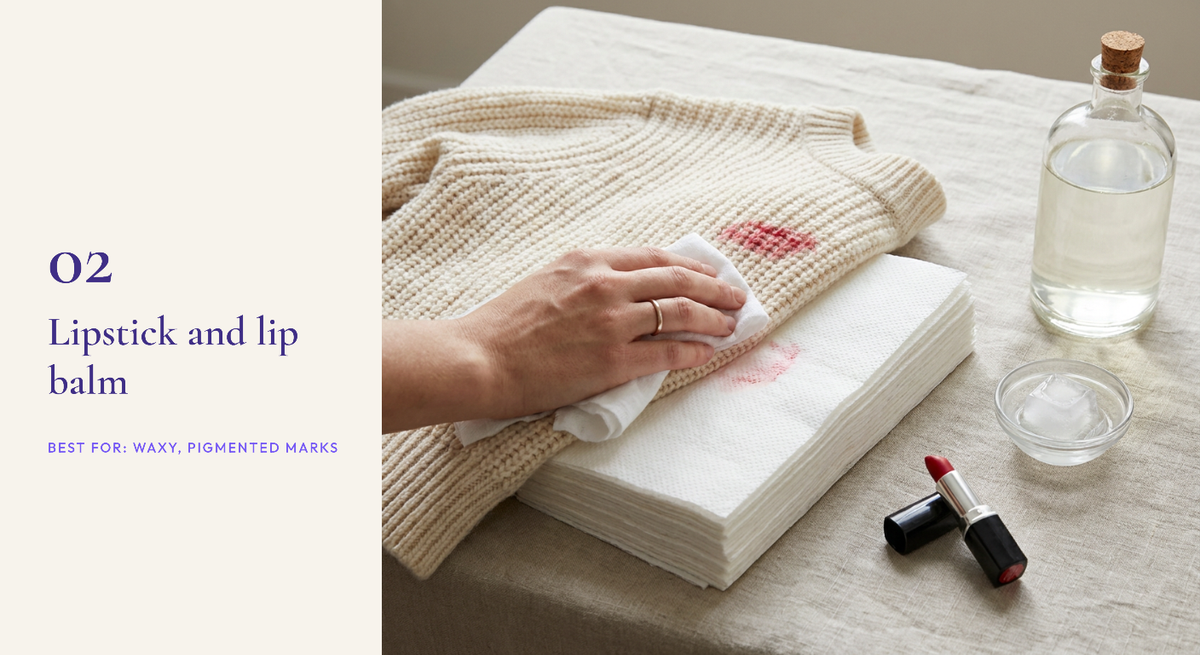
Lipstick is often the hardest: the American Cleaning Institute calls it possibly "the most stubborn" makeup stain and notes it may need a second round. Its wax and oil need a solvent step before detergent.
- Step 1: If the lipstick is thick, harden it first. Reader's Digest, quoting a Tide scientist, suggests 20 minutes in the freezer, then scraping it off.
- Step 2: Lay the garment face down on paper towels. Mississippi State University Extension advises sponging the back of the stain with dry-cleaning solvent so the colour transfers into the towels rather than spreading.
- Step 3: If you do not have solvent, use a pre-wash stain stick, which the University of Illinois Extension lists as an alternative.
- Step 4: Rub in liquid detergent, then rinse.
- Step 5: If a tint of colour remains, Illinois Extension suggests an all-fabric (oxygen) bleach, and chlorine bleach only on fabrics that can safely take it.
- Step 6: Wash, check, and repeat before drying if needed.
Tinted lip balms are mostly wax and oil, so the same order applies.
Mascara and eyeliner
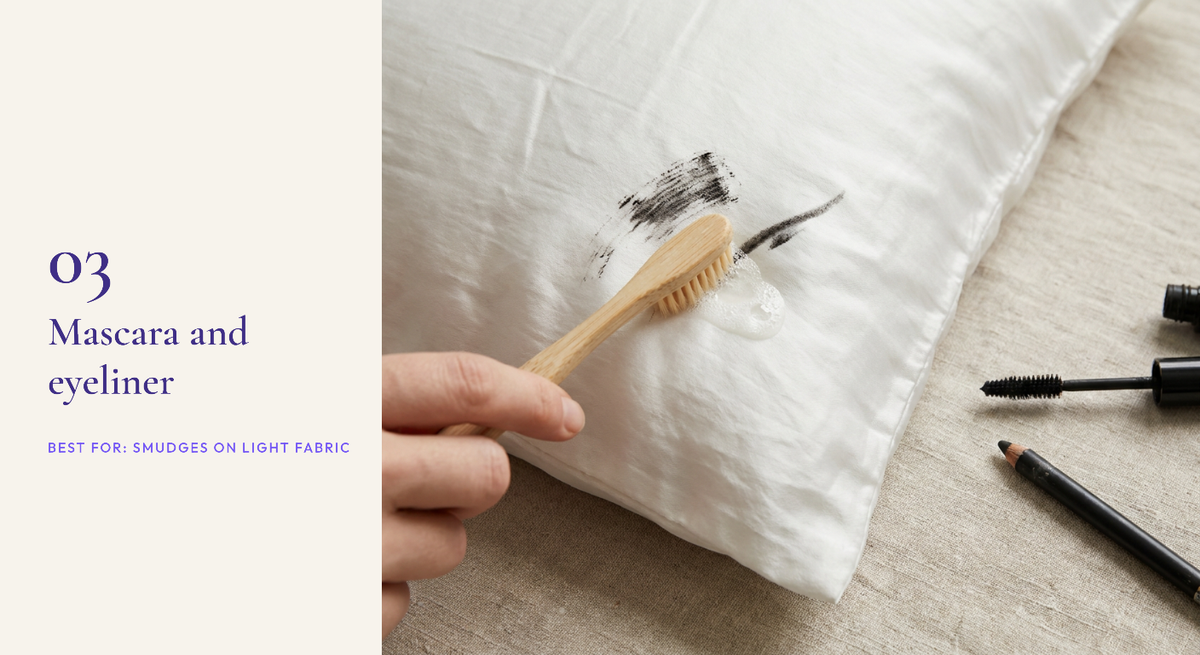
Iowa State puts eye makeup (mascara, pencil, liner and shadow) in the same group as lipstick: treat with a solvent or stain stick first, then detergent.

Want this styled from your own closet?
Elara builds the look from what you own, then lets you try it on.
- Step 1: Let wet mascara dry for a moment and gently flick off any clumps, so you do not smear wet pigment.
- Step 2: Apply a stain remover or liquid detergent and leave it for about 15 minutes; Tide suggests a soft toothbrush to work it in gently.
- Step 3: For waterproof mascara, an oil-free makeup remover can act as the pre-treater, according to the Tide scientist quoted by Reader's Digest. Test it on a hidden spot first.
- Step 4: Rinse, wash cool, and warm the water only if the mark remains.
Pillowcases are the most common victim. Treat them the morning after rather than letting them go through a hot wash with the stain still in.
Powder, blush and bronzer
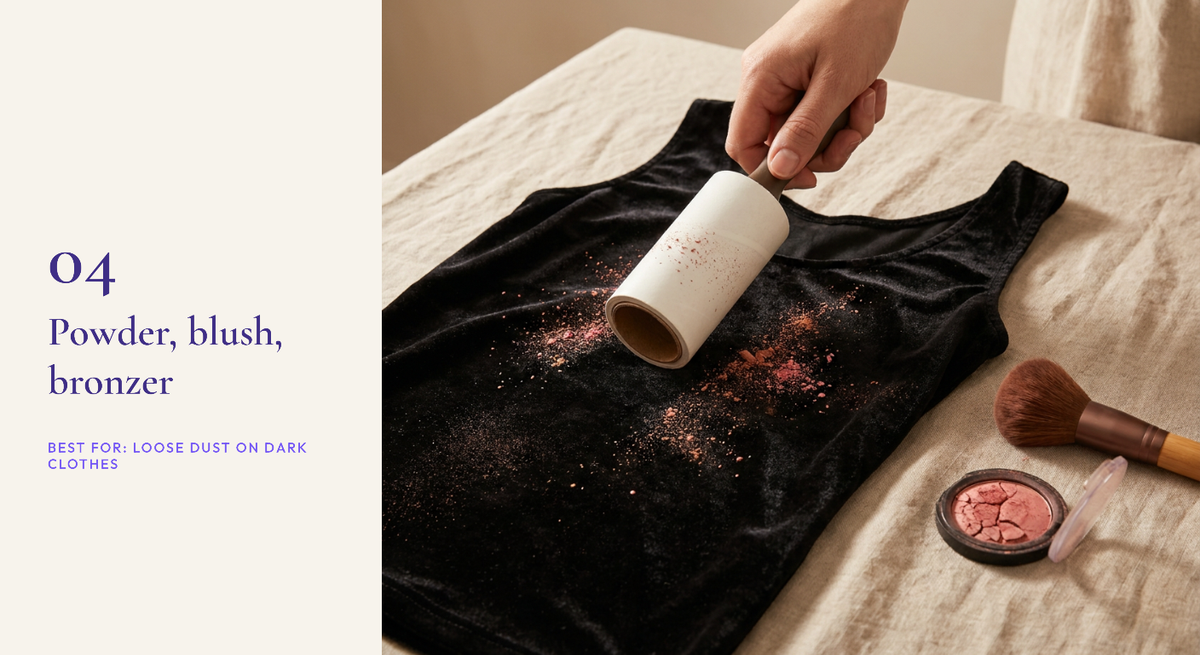
Loose powders are the easiest stains, as long as you remove them dry first.
- Step 1: Shake or blow off loose powder outdoors. Persil and OxiClean both warn against brushing it with your hand, which grinds it into the fabric.
- Step 2: Lift what remains with a sticky lint roller, as Tide recommends for blush.
- Step 3: Dab liquid detergent on any remaining mark with a cotton ball, rinse in cool water, then wash.
- Step 4: For leftover colour, Illinois Extension suggests an oxygen bleach; for a heavy stain, it suggests applying solvent from the back of the fabric over paper towels.
Delicate fabrics and when to see a dry cleaner
If the label says dry clean only, or the garment is silk, structured wool or anything you would hate to lose, blot it and take it to a professional within a day or two rather than experimenting at home.
- Dry clean only: Iowa State, Mississippi State and Illinois extension services all say home methods do not apply. Blot, then take it in within 24 to 48 hours.
- Tell your cleaner what it is. The DLI asks you to say what was spilled, even if you cannot see it any more, and to skip home remedies and stain sticks first, which can make the cleaner's job harder.
- Silk and wool: do not use chlorine bleach on wool, silk or spandex, Iowa State and Illinois warn. For wool you choose to treat yourself, Woolmark suggests dabbing from the edge inward with white spirit or a spot-cleaning spray, letting it evaporate before any water to avoid a ring, then washing with a wool detergent.
- Acetate and triacetate: never use acetone or nail polish remover on them, because it dissolves the fibres, Iowa State, Texas A&M and Mississippi State warn.
Unsure what your garment is made of? Our guide to reading clothing care labels explains every symbol.
How to prevent makeup marks on clothes
Most makeup marks happen while dressing, so change the order: get dressed first or protect your clothes, and let products set before anything touches your collar.
- Step into dresses and tops rather than pulling them over your head, a tip a fashion-show dresser shared with Marie Claire.
- Drape a thin scarf over your face if a top must go over your head.
- Set cream makeup with powder or setting spray before dressing.
- Let lotions and body products dry completely, as the DLI advises, since body oils and products can change fabric colour over time.
- Clean collars regularly before a faint ring builds up.
Heading to a party in velvet, sequins or satin? See our holiday party clothes care guide, and for food and wine spills, our stain removal guide for gravy, wine, cranberry and wax.
FAQ
How do you get foundation out of clothes?
Scrape off the excess, work liquid laundry detergent into the stain from the outside in, leave it for 5 to 10 minutes, rinse and wash. For a stubborn stain, presoak in a colour-safe oxygen bleach. Do not dry the garment until the stain is gone.
How do you get lipstick out of clothes?
Treat the oily part first with a stain stick or dry-cleaning solvent, working from the back of the fabric over paper towels, then rub in liquid detergent and wash. Lipstick often needs a second round, and an oxygen bleach can lift leftover colour on suitable fabrics.
Does makeup come out in the wash?
Often not on its own. Most makeup contains oils and pigments, so it needs a pre-treatment with detergent (and a solvent or stain stick for lipstick and eye makeup) before washing. Washing and drying without pre-treating can set the stain.
How do you get mascara out of clothes?
Let it dry, flick off clumps, apply a stain remover or liquid detergent for about 15 minutes, scrub gently with a soft toothbrush and wash. For waterproof mascara, an oil-free makeup remover can work as the pre-treater, after a patch test.
Can you use makeup remover wipes on clothes?
As a quick fix at a party, yes: blot with a makeup-remover wipe after testing it on a hidden spot, then treat and wash the garment properly later.
Should I take a makeup stain to the dry cleaner?
Yes if the label says dry clean only, or the item is silk, tailored wool or very valuable. Blot it, avoid home remedies and take it in within a day or two, telling the cleaner exactly what the stain is.
Keep your favourite pieces in rotation with Elara
A great outfit should not retire after one lipstick mark. Elara keeps your whole wardrobe in a digital closet and styles complete outfits from what you already own, so when a piece is at the cleaner's, it can suggest another look for the party from the rest of your closet.
Your stylist, in your pocket
Stop reading about outfits. Start wearing them.
Elara knows your closet, shops every store and gets you dressed for any occasion.