

Diwali Stain Removal Guide 2026: Wax, Ghee, Haldi and Rangoli Colour on Festive Clothes
How to remove diya wax, ghee, haldi and rangoli colour from festive clothes this Diwali, step by step, plus which fabrics to send straight to a cleaner.
 Mehul AgarwalFounder & CEO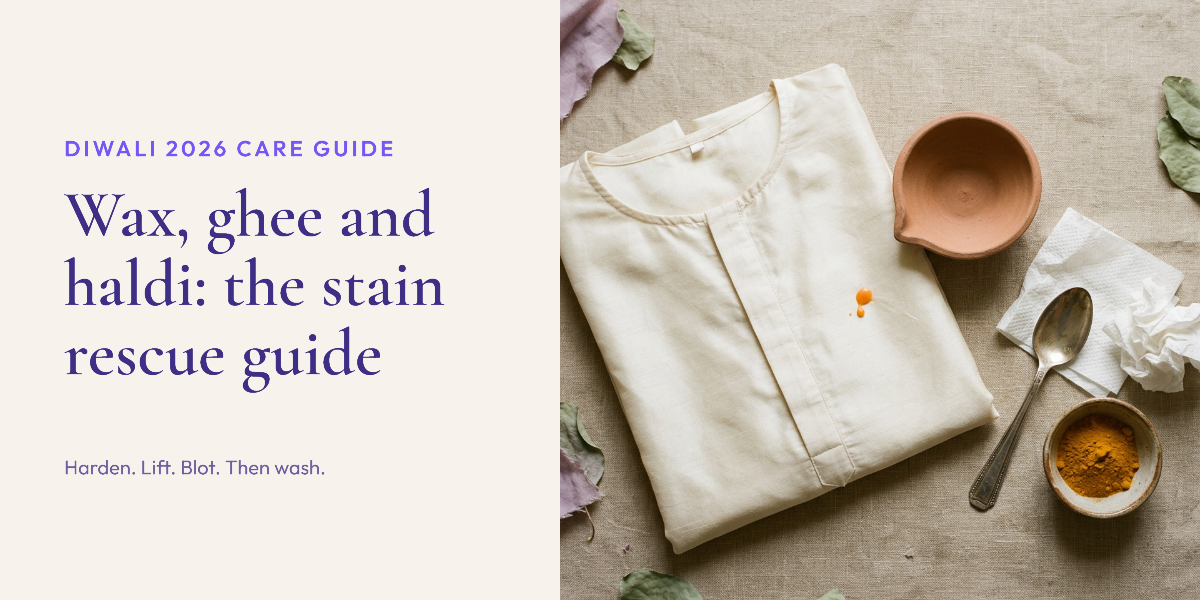
Last updated: October 2026
Quick answer: Treat Diwali stains in the right order: lift off anything solid or powdery while it is dry, blot (never rub), test your treatment on a hidden seam, and do not tumble dry or iron the spot until the stain is fully gone, because heat sets it. Diya wax comes out by hardening it, scraping it off and melting the rest into paper towels with a low, steam-free iron. Ghee and oil need dish soap worked in for about 10 minutes before a wash. Haldi responds to detergent and sunlight. Silk, zari, velvet and anything marked dry clean only should go to a cleaner, with a note of exactly what the stain is.
Diwali falls on Sunday, 8 November 2026, with Dhanteras on 6 November and Bhai Dooj on 11 November in most calendars (some panchangs place Bhai Dooj a day earlier, so check your local one). Five days of diyas, mithai, puja thalis, rangoli and card parties are hard on festive clothes, and the outfits that take the hit are often the ones you can least afford to ruin: a silk kurta, a georgette saree, a velvet bandhgala.
Most stain damage happens in the first few minutes, not in the wash. Scrubbing a ghee mark spreads it into the weave. Running a wax-spotted kurta through the dryer bakes in the oily residue. This guide gives you a stain-by-stain routine built on published laundry guidance from Iowa State University Extension, Cornell University's home stain-removal guide, and the stain guides published by Tide and Persil. If you are still planning outfits, read our Diwali outfit safety guide first, then keep this one for the morning after.
The first ten minutes: rules that apply to every stain
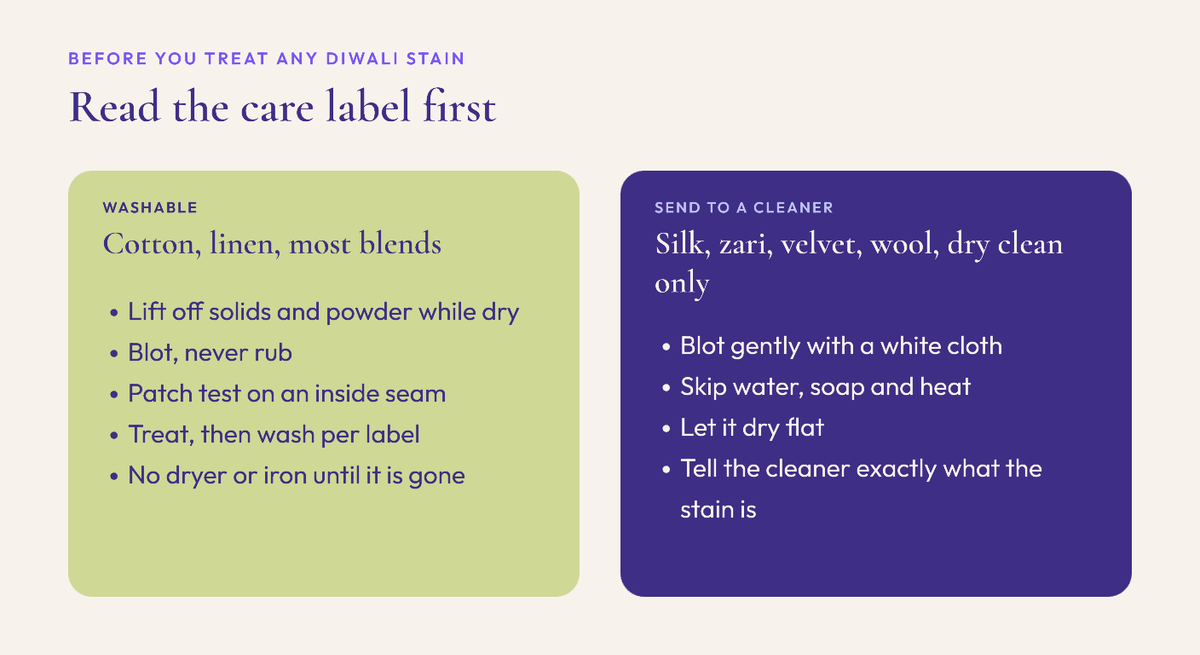
Before you reach for any product, four rules decide whether a stain comes out cleanly.
- Take off the excess first, while it is dry. Cornell's guide starts most stains the same way: brush or scrape off the excess before any liquid touches it. Wetting a powder or a blob of mithai pushes it deeper.
- Blot, do not rub. Cornell is direct: "Do not rub or brush" a stain into the fabric, and "blot frequently." Rubbing breaks fibres and spreads colour, which is especially visible on silk.
- Test on a hidden spot. Iowa State Extension advises you to "test stain treatment in an inconspicuous spot to ensure it won't remove the color." An inside hem or seam allowance is ideal. Many festive dyes, especially on hand-dyed or block-printed fabric, are not colourfast.
- Keep heat away until the stain is gone. Tide warns not to put a garment in the dryer until the stain has gone, because "drying will set the stain." The same logic applies to pressing the spot with a hot iron.
Then read the care label. If it says dry clean only, or the garment is silk with zari, heavy embroidery, sequins or velvet, your job is damage control, not treatment. Blot, let it dry flat, and get it to a professional within a few days.
Diya and candle wax: harden, lift, melt out
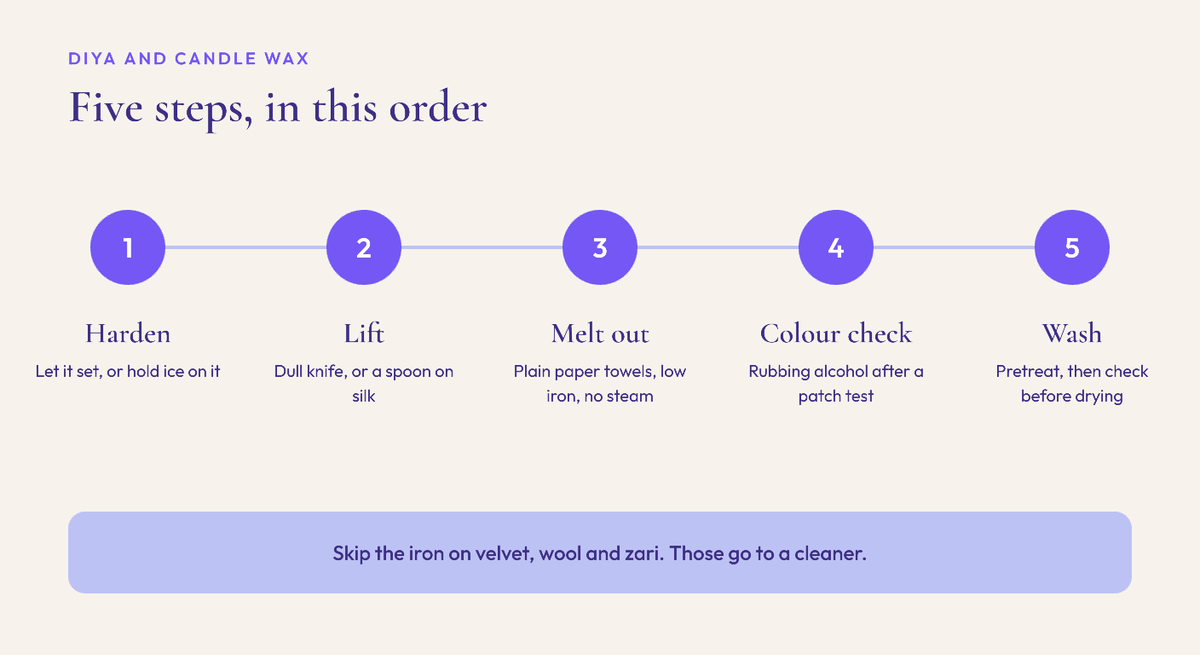
Wax is the most common Diwali stain and, handled correctly, one of the easiest to remove completely. It is really two stains: the solid wax, and the oily (and sometimes coloured) residue it leaves behind. The method from Iowa State Extension, Tide and Persil is consistent across all three:
- Harden it. Let the wax cool and set. Persil suggests holding a few ice cubes on it to speed this up; Iowa State suggests freezing the garment if the wax will not come away. Once frozen, the wax "will pop off easily," in Iowa State's words.
- Lift it off. Scrape away the hardened wax with a dull knife. On delicate fabrics like silk, Persil recommends using a spoon and gently skimming across the surface "rather than digging in."
- Melt the residue into paper. Sandwich the spot between white, unpatterned paper towels (top and bottom) and press with a warm iron. Tide specifies a low, non-steam setting and warns against holding the iron in one place too long. Swap in clean towels as the wax transfers, and keep going until nothing more comes up.
- Deal with colour. If the wax was coloured and the fabric is pale, Iowa State suggests finishing by blotting the area with rubbing alcohol. Test it first on a hidden seam.
- Pretreat and wash. Apply a stain remover or liquid detergent to the remaining mark, then wash at the warmest temperature the care label allows, and check the spot before drying.
Two warnings. Persil cautions against paper towels on "fluffy fabrics like fleece, wool, or velvet," because bits of tissue get trapped in the pile, so for a velvet jacket or a wool shawl, skip the iron step and take it to a cleaner. And never iron directly onto zari or sequins; metallic thread and plastic sequins can tarnish or melt.
Ghee, oil and mithai: treat the grease first
Ghee from a diya, oil from pakoras, and the buttery residue of sweets are all oil-based stains. Iowa State Extension says these "need prompt attention."
Their routine for washable fabrics: remove any solid bits, rub liquid dish soap into the stain, let it sit for about 10 minutes, then launder in the warmest water the fabric tolerates with an oxygen bleach or enzyme pre-wash product. Dish soap works because it is designed to break up grease, which plain water cannot do.
Many Diwali sweets are combination stains: fat plus sugar plus, sometimes, a colour like saffron or food dye. Cornell's guide says to treat the greasy component first, then the rest. In practice, that means dish soap first, rinse, then deal with any coloured mark that remains.
A note on silk: do not put dish soap or water on a silk saree or a silk kurta that is marked dry clean only. Water can leave a ring on silk that is harder to remove than the original spot. Blot off what you can with a dry cloth and take it to a cleaner. Our guide to storing silk sarees after Diwali covers what to tell them and how to store the piece afterwards.
Haldi and curry: detergent, then the sun
Turmeric is used in puja and in festive cooking, and its bright yellow pigment is notoriously stubborn. Cornell's guide lists "some yellow dyes" among stains that are unlikely to come out completely, so set realistic expectations, especially on white cotton.
The routine from Cleanipedia (the laundry advice site run by Unilever, which owns Persil and Surf Excel) is:
- Scrape off any paste with a spoon so it does not spread.
- Rinse the area with clean water.
- Rub a little laundry detergent into the stain, then wash as normal. Hot water works faster, but only if the care label allows it.
- Dry the garment in the sun.

Want this styled from your own closet?
Elara builds the look from what you own, then lets you try it on.
That last step is a long-standing household method for haldi stains, and it is the one most people skip. Use it with care: strong sun can fade coloured fabrics, so sun-dry whites and light colours, and turn coloured garments inside out.
Rangoli colour, kumkum and gulal: keep it dry first
Rangoli powders and kumkum are fine, highly pigmented powders. The instinct is to dab them with a wet cloth, which turns loose powder into a dye stain.
Instead, follow the same first rule Cornell gives for most solid stains, and remove the excess before any liquid. Hold the garment outside, shake it, then lift the remaining powder with a soft brush or the sticky side of tape, working from the edge of the mark inwards. Only once the loose pigment is gone should you test a little detergent on a hidden seam, then treat the shadow that remains with a pre-wash stain remover and wash cold.
If the colour has already set into silk, georgette or chiffon, stop and hand it to a cleaner. Repeated wet treatment on these fabrics can strip the dye around the mark, leaving a pale patch that is more visible than the original stain.
When not to try it at home
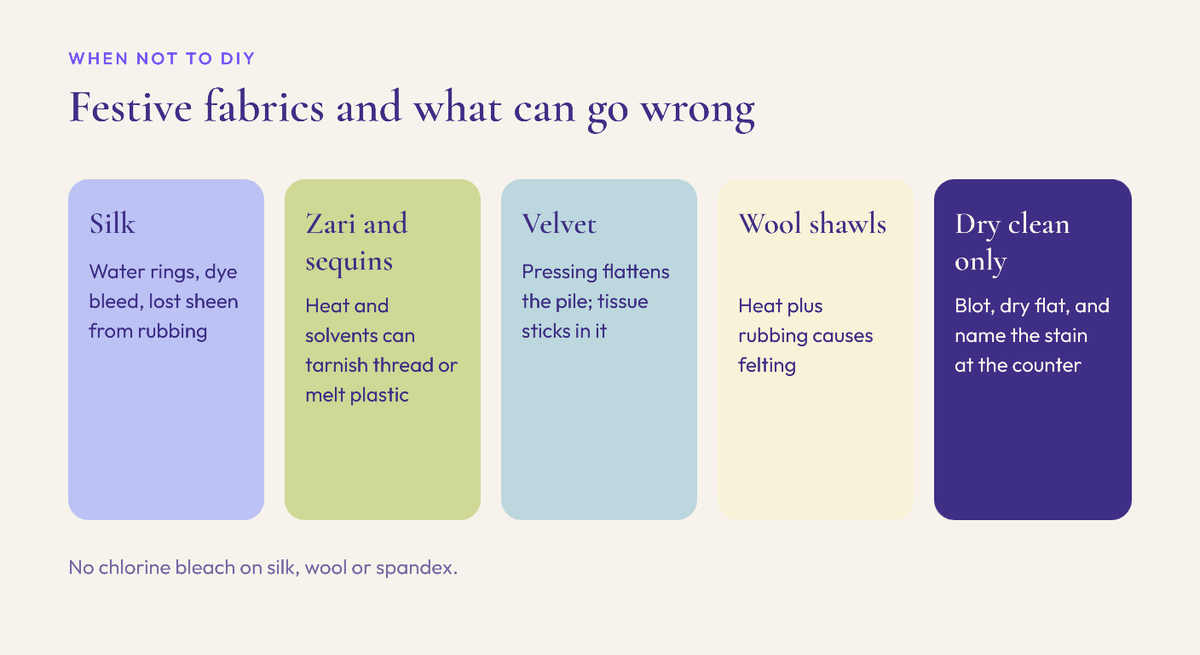
Home stain removal is a good idea for cotton, linen and most washable blends. It is a risk for these festive staples:
- Silk and silk blends, including Banarasi, Kanjivaram and Chanderi silk: water spots, dye bleed, and loss of sheen from rubbing.
- Zari, gota, sequins and mirror work: heat and solvents can tarnish metallic thread and melt plastic.
- Velvet: pressing flattens the pile permanently.
- Wool shawls: heat and agitation cause felting; Persil also warns against paper towels on wool.
- Anything marked dry clean only.
Cornell's guide also notes that chlorine bleach must not be used on wool, silk or spandex, so do not reach for household bleach on any of these, even for a white garment.
When you hand a garment to a cleaner, tell them exactly what the stain is (ghee, wax, haldi, kumkum) and what you have already tried. Different stains need different solvents, and a cleaner who knows the history can pick the right one first time.
A Diwali stain kit worth keeping by the door
Put these together before Dhanteras and keep them where the diyas are lit:
- A blunt butter knife and a spoon, for lifting wax and paste without cutting fibres.
- White, unpatterned paper towels, because printed ones can transfer ink when ironed.
- Liquid dish soap, for ghee and oil.
- A pre-wash stain remover or liquid detergent, for the residue after the first step.
- Rubbing alcohol and cotton buds, for coloured wax on pale fabric, after a patch test.
- A soft clothes brush and a roll of tape, for rangoli powder and kumkum.
- A clean white cloth, for blotting delicate fabrics you will not treat yourself.
The single most useful habit is speed. Cornell notes that old stains are harder to remove than fresh ones, so deal with each mark the same night, even if it is just blotting and setting the garment aside for the cleaner.
FAQ
How do I get diya wax out of a silk saree?
Let the wax harden, then gently skim off the surface wax with a spoon rather than scraping. Do not iron silk with zari. Take the saree to a dry cleaner and tell them it is candle wax, so they can remove the oily residue with a solvent.
Will ghee stains come out after washing?
Usually, if you treat them first. Rub liquid dish soap into the stain, leave it for around 10 minutes, then wash in the warmest water the label allows. If the stain is still visible, repeat before drying, because heat from a dryer can set the remaining oil.
Can I use bleach on a white kurta with a haldi stain?
Check the label first. Cornell's guide says chlorine bleach must not be used on wool, silk or spandex. For a white cotton kurta, try detergent and sun-drying first, which Cleanipedia recommends for turmeric, and only move to bleach if the label permits it.
How do I remove rangoli colour from clothes?
Keep it dry. Shake the garment outside and lift the remaining powder with a soft brush or tape before using any water. Then test a stain remover on a hidden seam and wash cold. On silk or georgette, take it to a cleaner instead.
Should I wash a stained festive outfit right away?
Treat it right away, but only wash it right away if the care label allows machine or hand washing. For dry clean only pieces, blot, let the garment dry flat, and get it to a cleaner within a few days with a note of what the stain is.
Elara can help with the part that comes before the stain kit. Add your festive pieces to your digital closet, plan which outfit goes with which Diwali evening in the Calendar, and ask the AI stylist which of your pieces are safer for diya-lighting and which to save for the card party. Try Elara and plan the whole week before Dhanteras.
Your stylist, in your pocket
Stop reading about outfits. Start wearing them.
Elara knows your closet, shops every store and gets you dressed for any occasion.