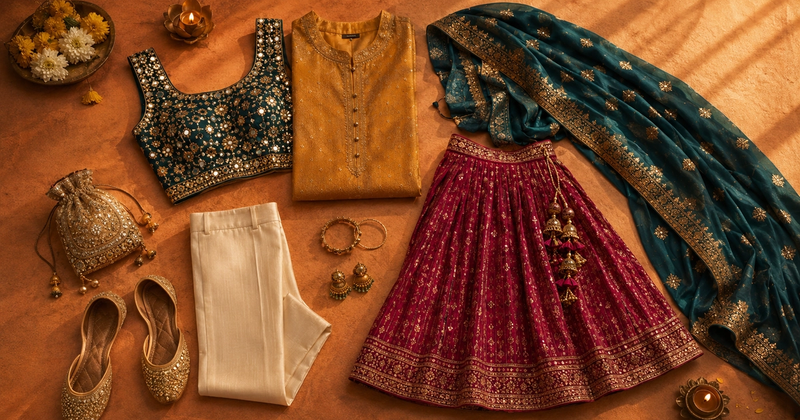


After Diwali: How to Clean, Store and Protect Silk Sarees and Zari for Wedding Season
How to care for silk sarees after Diwali: what to do in the first 24 hours, festive stain first aid, the three kinds of zari, and how to fold and store silk.
 Mehul AgarwalFounder & CEO
Last updated: October 2026
Quick answer: After wearing a silk saree for Diwali, air it on a padded hanger in the shade for a few hours before folding, never fold it warm or damp, and take any food, oil or sweet stain to a dry cleaner quickly without rubbing or ironing it. Store silk wrapped in muslin or soft cotton, never plastic, with zari borders folded inward and no naphthalene near it. Refold along new lines every three to four months so the silk does not crack along old creases. Iron only on the reverse, on low heat, with a cloth in between.
Diwali falls on Sunday, November 8 this year, and for many families the wedding season starts soon after. That means the same Kanjivaram, Banarasi or Paithani you wear for Lakshmi Puja may need to look perfect again at a sangeet or reception a few weeks later. What you do in the day or two after Diwali decides whether it does.
Silk is a protein fibre, much like hair, and zari is metal thread. Both react to heat, moisture, light and chemicals. The good news is that the rules are simple once you know why they exist. This guide pulls together advice from silk weavers and retailers, plus stain guidance from the US Drycleaning and Laundry Institute (DLI), into one routine you can actually follow. If you are planning to rewear festive pieces through the wedding season, pair it with our guide to rewearing one lehenga, saree or sherwani at every function.
The first 24 hours after you take it off
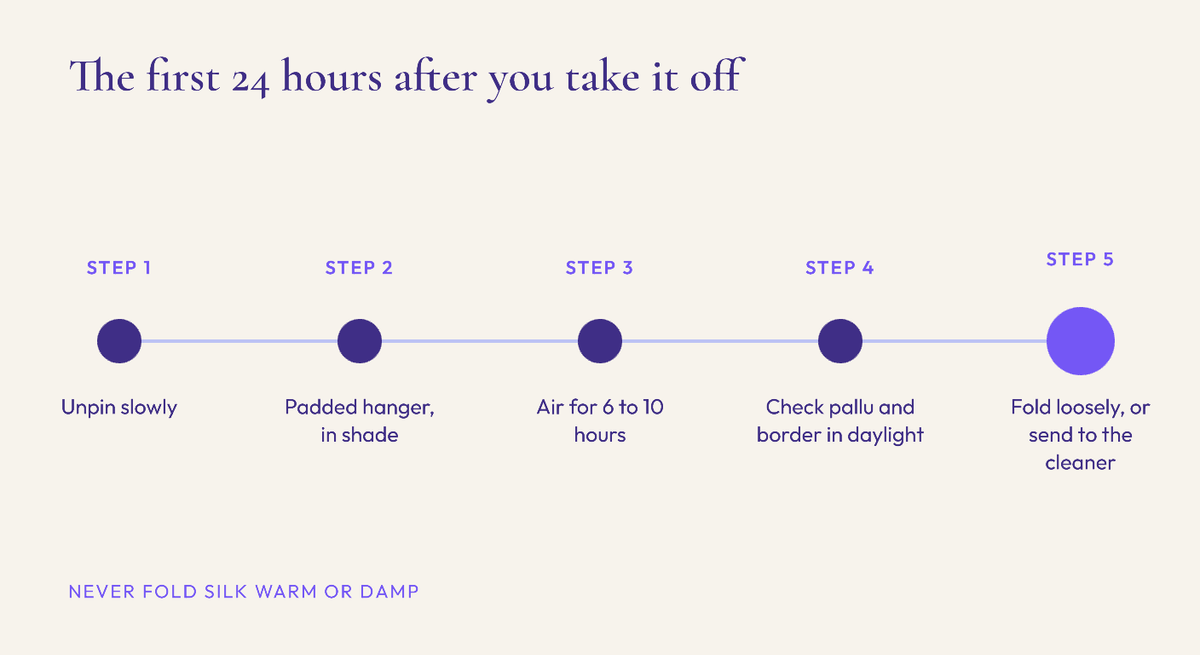
The most common mistake is folding a saree straight back into the cupboard at midnight. After a long evening it holds body heat, moisture and the smell of food and diya smoke.
- Air it first. Silk weavers such as Aura Benaras recommend hanging the saree on a smooth or padded hanger, not a bare metal one, in a cool indoor spot for six to ten hours before folding.
- Keep it out of the sun. Air it in shade. Direct sunlight fades dyes and weakens silk, and many retailers warn against sun-drying silk at all.
- Remove pins carefully. Heavy metal safety pins can leave holes and snags. Take them out slowly, and next time use a small piece of paper or a pin guard between the pin and the fabric.
- Check for marks in daylight. Look along the pallu and the lower border, where food, oil and diya soot usually land.
- Brush off dust, then fold loosely and store, or set it aside for the dry cleaner.
Festive stains: what to do, and what not to do
Diwali brings ghee, oil, sweets, sindoor, haldi and candle wax into close contact with your best silk. The DLI's consumer advice is short and worth memorising:
- Act quickly. The sooner a stained garment reaches a cleaner, the better the chance of removing the stain completely.
- Blot, do not rub. Dab gently with a clean cloth. Rubbing spreads the stain and can damage the fibres, and on silk it can also leave a dull, rubbed patch.
- Keep heat away. Do not iron over a mark or use hot water. Heat can set stains.
- Tell your cleaner what it was, even if you can no longer see it. Sugary spills and oils can dry invisibly and turn yellow or brown later, especially when heat is applied.
- Skip home remedies on pure silk and zari. Stain sticks and household cleaners can strip colour or tarnish metal thread.
For candle or diya wax, let it harden, gently lift off any flakes that come away on their own, and leave the rest to a professional. Do not iron it out between paper, which is a common tip for cotton but risky on silk and zari.
How often should you dry clean? Aura Benaras suggests every two to three wears, or sooner if there is a visible stain, because over-cleaning also wears silk down. Ask your cleaner for a silk-specific process and mention any zari or hand embroidery.
Know your zari before you store it
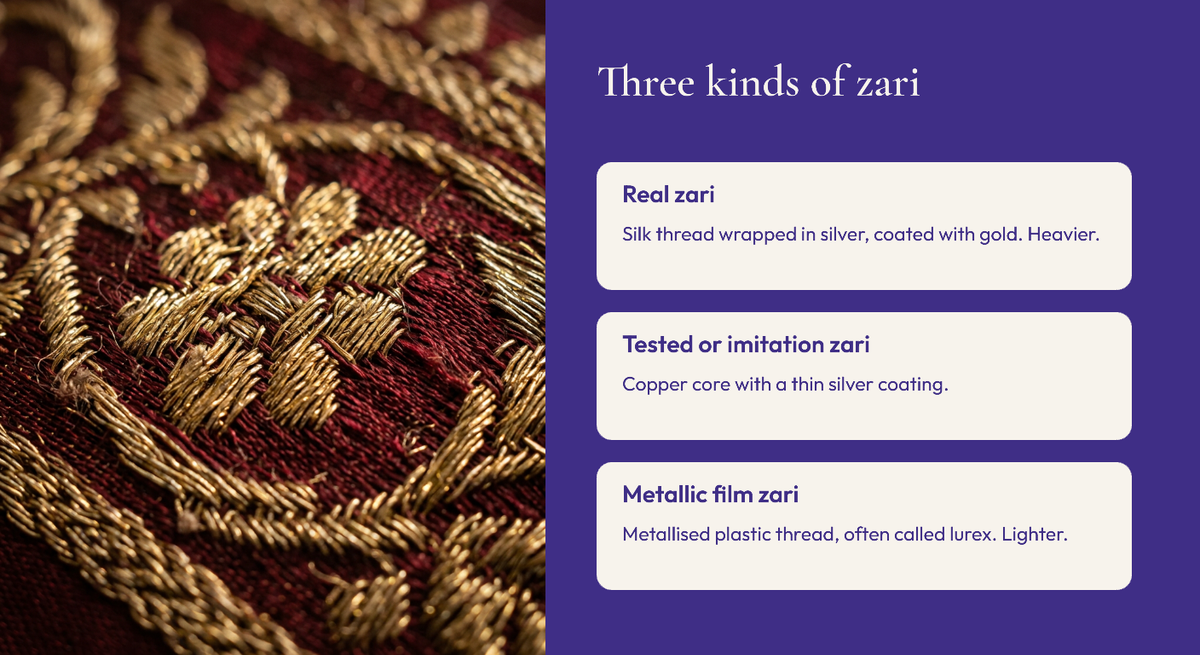
Zari is the metallic thread that gives Banarasi and Kanjivaram sarees their borders and buttis. Not all zari is the same, and knowing which you have helps you understand how it will age:
- Real (pure) zari: silk thread wrapped with silver and coated with gold, according to Aza Fashions. It is noticeably heavier and holds its colour when rubbed lightly.
- Imitation or tested zari: a copper core with a thin silver coating. It looks similar when new but can lose its shine faster.
- Metallic film zari: a metallised plastic thread, often called lurex. It is lighter and can stiffen the fabric over time.
All three share the same enemies: moisture, trapped gases, perfumes and harsh chemicals. Retailers including Aura Benaras note that plastic covers, naphthalene and perfume sprayed directly on the saree can tarnish or discolour zari. If your saree is an heirloom, assume it may be real zari and store it with extra care.

Want this styled from your own closet?
Elara builds the look from what you own, then lets you try it on.
How to fold and store silk sarees so they last
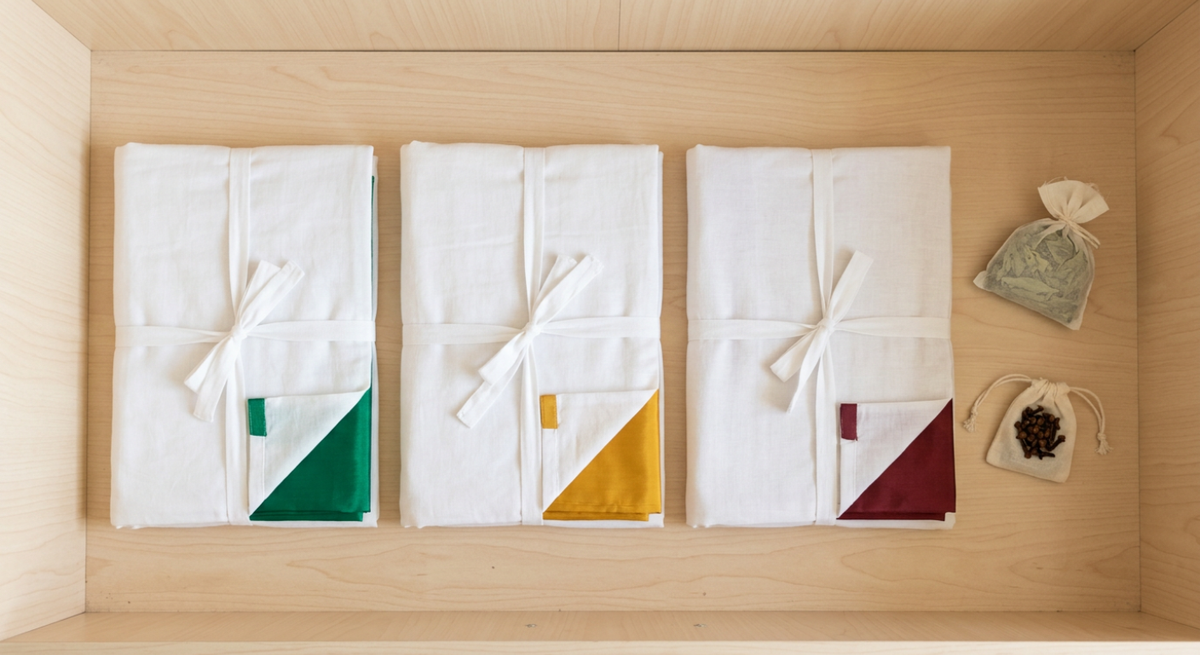
Wrap in muslin or soft cotton, never plastic
Every silk retailer we reviewed gives the same advice: plastic traps moisture, and trapped humidity weakens silk and speeds up zari tarnishing. Wrap each saree in a muslin cloth, an old soft cotton saree or a cotton saree bag.
Fold the zari inward
Fold so the zari border sits on the inside, protected from air and friction. For heavy silks, mysilklove recommends placing strips of acid-free tissue at each fold so creases do not bite into the weave and the zari does not rub against the silk.
Refold every three to four months
Silk has a memory. Pressure along the same fold lines for months can eventually crack the fibres. Every three to four months, take each saree out, air it in a shaded room for a few hours, and refold it along different lines. Kumaran Silks gives the same three-to-four-month window.
Do not hang heavy sarees long-term
A short airing on a hanger is fine. Long-term hanging is not, especially for zari-heavy sarees: the weight of the border pulls on the fabric and can stretch or distort it. Lighter silks can go on padded hangers for a few days, but fold and store flat for anything longer.
Use natural repellents, not mothballs
Naphthalene fumes are absorbed by silk, are hard to remove, and can tarnish zari. Use dried neem leaves, cloves in a cotton pouch, or cedar blocks placed near, not touching, the sarees, and replace them every few months. Silica gel packs help in humid cupboards.
Choose a cool, dry, dark shelf
Avoid the top shelf of a wardrobe that sits against an outside wall or bathroom, where heat and humidity build up. Monsoon months are the highest-risk time, so give your silks an extra airing in June to September.
How to iron silk and zari safely
- Iron on the reverse side so the zari never touches the iron directly. Direct heat can dull or blacken metal thread.
- Use low heat, the silk setting.
- Place a thin cotton or muslin cloth between the iron and the saree.
- Do not spray water directly on silk, which can leave water marks on some weaves. If creases are stubborn, ask your dry cleaner to steam press it.
A simple wedding-season care routine
If you plan to wear the same silks from Diwali through the wedding season, a little routine goes a long way:
- After each function: air for six to ten hours, check for stains, then fold loosely.
- Every two to three wears: professional dry clean, telling the cleaner about any spills.
- Before each new function: take the saree out a day early, air it, and steam or press if needed.
- At the end of the season: clean, refold along fresh lines, wrap in muslin and store with neem or cloves.
For lehengas, the same principles apply: store them folded flat with tissue at the folds and the heavily embellished side protected, rather than hanging them by the waistband for months.
FAQ
How do you store silk sarees at home?
Wrap each saree in muslin or soft cotton, never plastic, with zari borders folded inward. Keep them on a cool, dry, dark shelf with neem leaves or cloves nearby, and refold along new lines every three to four months.
Should I wash a silk saree after wearing it once?
Usually not. Air it for a few hours and spot-check for stains. Retailers commonly suggest professional dry cleaning every two to three wears, or sooner if there is a visible stain.
How do I remove an oil or ghee stain from a silk saree?
Blot it gently with a clean cloth, do not rub, avoid heat, and take it to a dry cleaner as soon as possible. Tell them it was oil or ghee, even if the mark is no longer visible.
Why does zari turn black?
Zari can tarnish when exposed to moisture, gases trapped in plastic covers, naphthalene, perfume or direct heat from an iron. Storing in muslin, keeping chemicals away and ironing on the reverse helps prevent it.
Can I hang silk sarees in my wardrobe?
Only briefly. Hanging for a few hours to air is fine, but heavy or zari-rich sarees should be folded and stored flat, because long-term hanging can stretch the fabric.
How often should I refold my silk sarees?
Every three to four months, refolding along different lines each time so the silk does not weaken along the same creases.
Plan your festive and wedding looks around what you own
A well-cared-for saree is one you can wear again and again. Elara is an AI personal stylist that works from your digital closet: save your sarees, lehengas and festive pieces, and plan which one to wear to each function with Elara's Calendar, so you rotate your silks instead of reaching for the same favourite every time. Try Elara and make the most of the wardrobe you already have.
Your stylist, in your pocket
Stop reading about outfits. Start wearing them.
Elara knows your closet, shops every store and gets you dressed for any occasion.