


Festival Season Capsule Wardrobe India 2026: 8 Pieces
Festival season capsule wardrobe India 2026 covers Navratri, Diwali, and every party with just 8 versatile pieces. Learn the 3-occasion rule and fabric logic for effortless festive styling.
 Mehul AgarwalFounder
Festival season capsule wardrobe: Navratri to Diwali
Table of Contents
- Introduction: Why Your Festival Wardrobe Needs a System, Not a Shopping List
- The Capsule Logic: Why 8 Pieces Is the Right Number for Festival Season
- The 8-Piece Festival Capsule: What Each Piece Does (and Why It Earns Its Place)
- Occasion-Stacking: Which Pieces Work When (The Planning Map)
- The Fabric & Color Logic: Why These Choices Work in Indian Festival Conditions
- How to Audit Your Existing Wardrobe Against the 8-Piece Framework (Before You Buy Anything)
- Frequently Asked Questions
- Festival Season Capsule Wardrobe India 2026: 8 Pieces That Cover Navratri, Diwali, and Every Party in Between — Quick Reference
- Conclusion: A Festival Season That Feels Intentional, Not Exhausting
Key Takeaways
- Eight versatile pieces cover the full Navratri-to-Diwali-to-New Year continuum — no panic-buying, no wardrobe paralysis.
- The 2026 strategic shift is toward light-luxury, breathable fabrics — chanderi, organza, cotton-silk — that hold up across a 12-hour festival day (Moneycontrol, 2026).
- Every piece must pass the 3-occasion rule: styleable across at least 3 festival contexts through accessory swaps alone.
- Elara's wardrobe audit maps what you already own against this framework before you spend anything.
Introduction: Why Your Festival Wardrobe Needs a System, Not a Shopping List
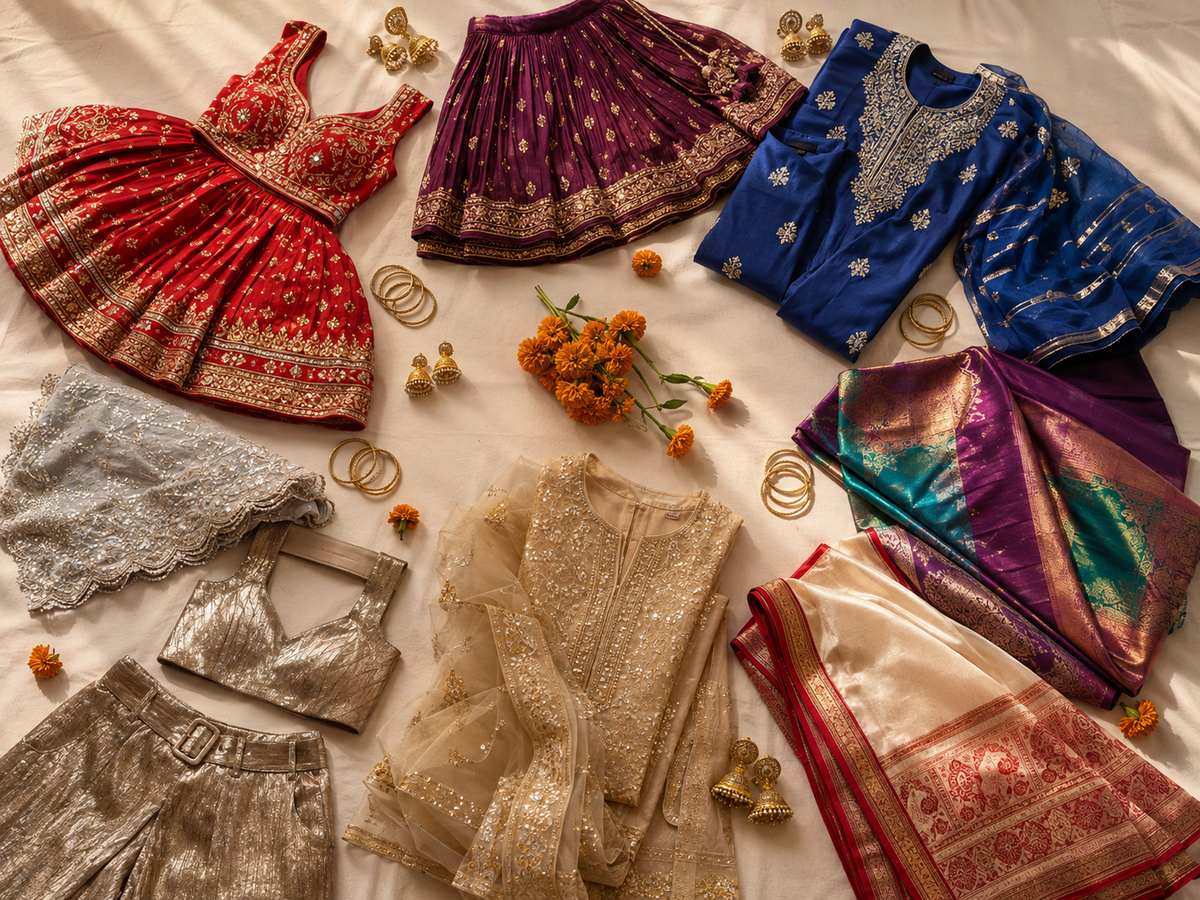
The festival calendar doesn't pause. Navratri runs straight into Diwali, which bleeds into wedding season, which ends — somehow — at a New Year's party you haven't thought about yet. Most people face this stretch with wardrobes that are technically full and practically useless: a chaniya choli worn exactly once, a saree that only works for one specific occasion, a kurta set that's too casual for everything and too formal for nothing.
The problem isn't volume. According to Cotton Culture, a well-built Indian ethnic capsule wardrobe runs 15–20 versatile pieces, each pairing with at least three others. For festival season, you can work with eight carefully chosen pieces that deliver the same coverage — if they're selected with occasion logic, not impulse.
That's the gap every existing festival guide misses. They hand you a shopping list: "10 outfits to buy for Diwali," "Navratri looks you need." What they don't give you is a system — a framework that maps pieces to specific occasion tiers, explains which fabrics hold up through a long garba night, and tells you what to do with the pieces already hanging in your wardrobe.
This article builds that system. Eight pieces, four occasion tiers, and a clear fabric and styling logic that makes each piece earn its place. Before you buy anything, Elara's AI wardrobe audit at joinelara.com can map your existing clothes against this framework — so you know exactly what you already own and what, if anything, is actually worth purchasing.
The Capsule Logic: Why 8 Pieces Is the Right Number for Festival Season
A capsule wardrobe isn't a minimalist aesthetic choice — it's a structural one. In the Indian festive context, that structure means organizing around modular separates rather than one-off occasion outfits. According to Cotton Culture and CBazaar, festive wardrobes in 2026 are increasingly built around 4–5 foundation categories and mix-and-match separates, not a different complete outfit for every event.
The competitor approach — "here are 10 pieces to buy for the season" — fails on three counts. It ignores remixing logic entirely, so each piece only does one job. It skips occasion mapping, leaving you to guess whether a particular lehenga works for a puja or a sangeet. And it never accounts for breathability, which matters enormously when you're wearing an outfit for 8 to 12 hours in October heat.
The 2026 macro trend driving capsule adoption makes the case clearly. According to Moneycontrol's 2026 festival fashion analysis, the dominant direction is light-luxury, breathable festive dressing — cotton-silk, chanderi, organza, and fusion-ready silhouettes that move comfortably between contexts without looking underdressed or overwrought. Heavy occasion-only outfits are losing ground precisely because they can't flex.
"Versatility now matters more than volume: a compact wardrobe should rely on pieces that can be restyled, breathe well in Indian weather, and move from puja to party with only accessory changes." — Cotton Culture
The test for whether any piece earns a slot in this capsule is the 3-occasion rule: it must be styleable across at least 3 of the 4 festival occasion tiers using accessory swaps alone, not outfit changes. If a piece can only serve one context, it's a one-off — and one-offs are exactly what this framework is designed to eliminate.
Those four occasion tiers are: (1) ritual/puja — Diwali morning, Navratri aarti; (2) daytime family gathering — lunch, mehendi, afternoon visits; (3) garba/celebration night — high-energy, movement-forward; and (4) cocktail/wedding-adjacent party — Diwali night, sangeet, New Year's. Eight pieces, mapped deliberately across these four tiers, provide full coverage without redundancy. The next section explains exactly which pieces make the cut and why each one earns its place.
The 8-Piece Festival Capsule: What Each Piece Does (and Why It Earns Its Place)
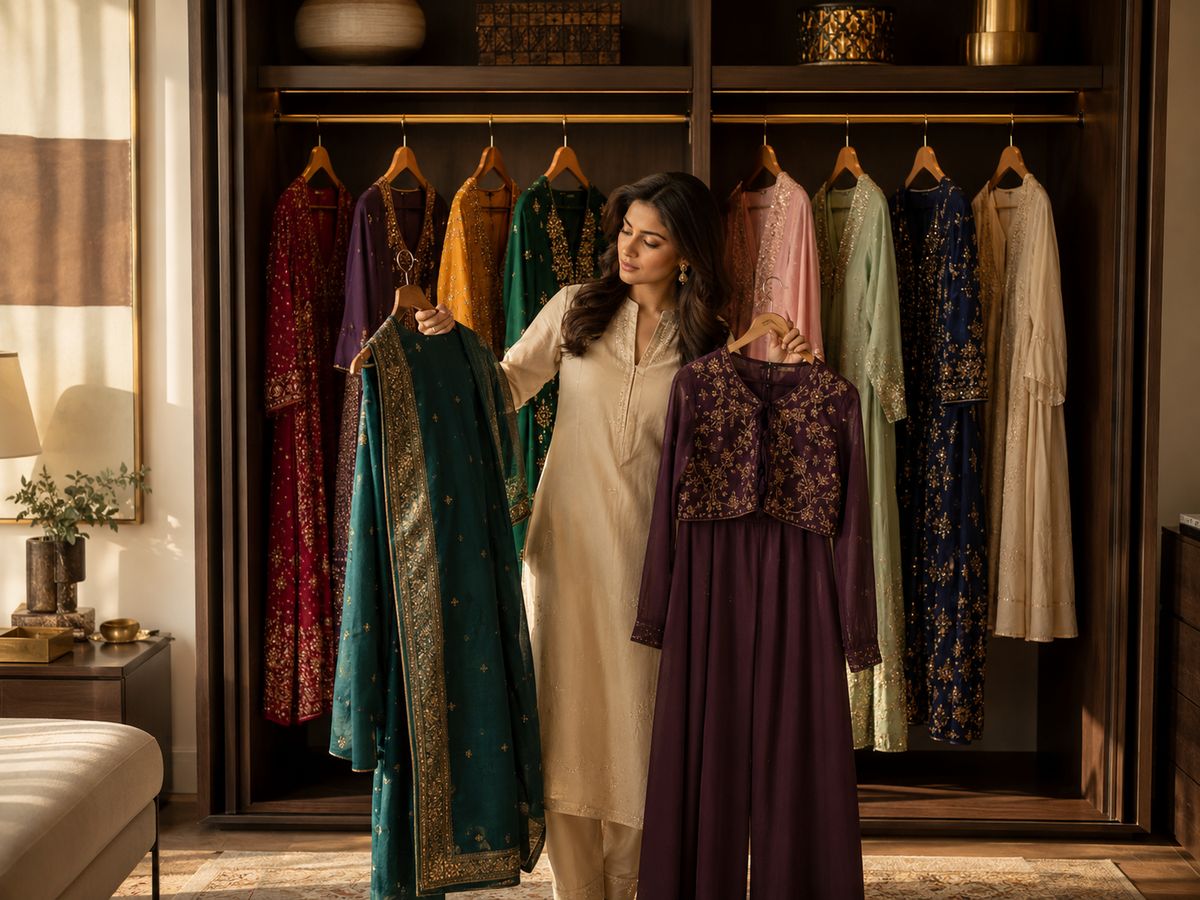
With four distinct occasion tiers to cover — ritual, daytime, garba night, and cocktail — every piece in this capsule has to carry real weight. Nothing here is decorative filler. Each of the eight earns its place by serving a specific occasion role, working in a specific fabric, and remixing with at least two other pieces to create new outfit reads without new purchases.
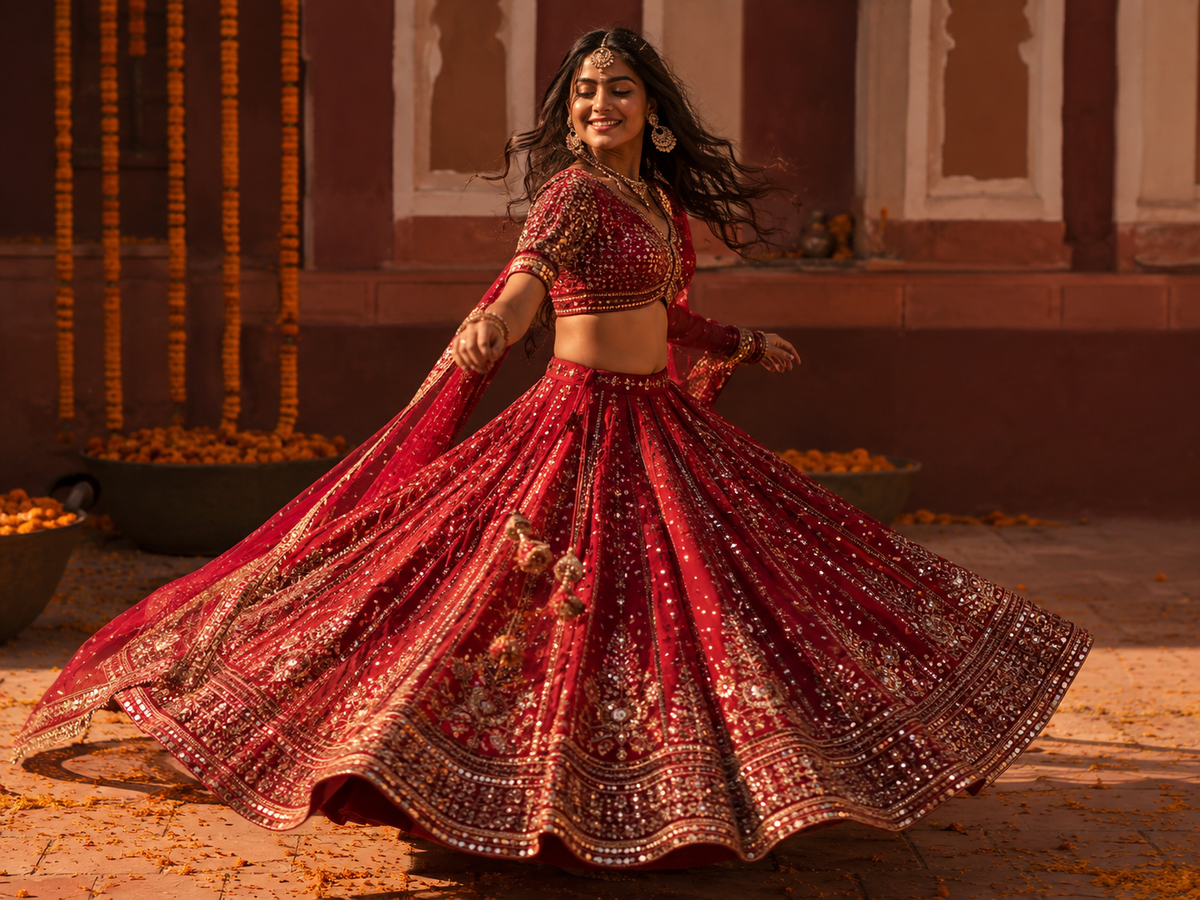
Piece 1 — Statement Chaniya Choli Occasion role: Navratri garba nights, high-energy celebration events. This is the one piece in the capsule that has no substitute. According to CBazaar's Navratri capsule framework, a statement chaniya choli is the anchor for garba — the movement demands a flared silhouette, and the cultural context demands the real thing, not a fusion workaround. Choose it in ruby red or emerald green from the 2026 palette. Remixes with: the solid lehenga skirt (Piece 2) for a coordinated garba look across two nights, and the embellished dupatta (Piece 8) to shift the energy from playful to dramatic.
Piece 2 — Versatile Solid Lehenga Skirt Occasion role: Secondary garba night, Diwali evening. The separates logic is what justifies this piece. A solid skirt in deep plum or champagne gold pairs with the chaniya choli blouse, a plain kurta, or an embellished top — tripling its occasion range without any additional investment. Remixes with: Piece 1's blouse for garba, Piece 8 as a standalone top for Diwali evening.
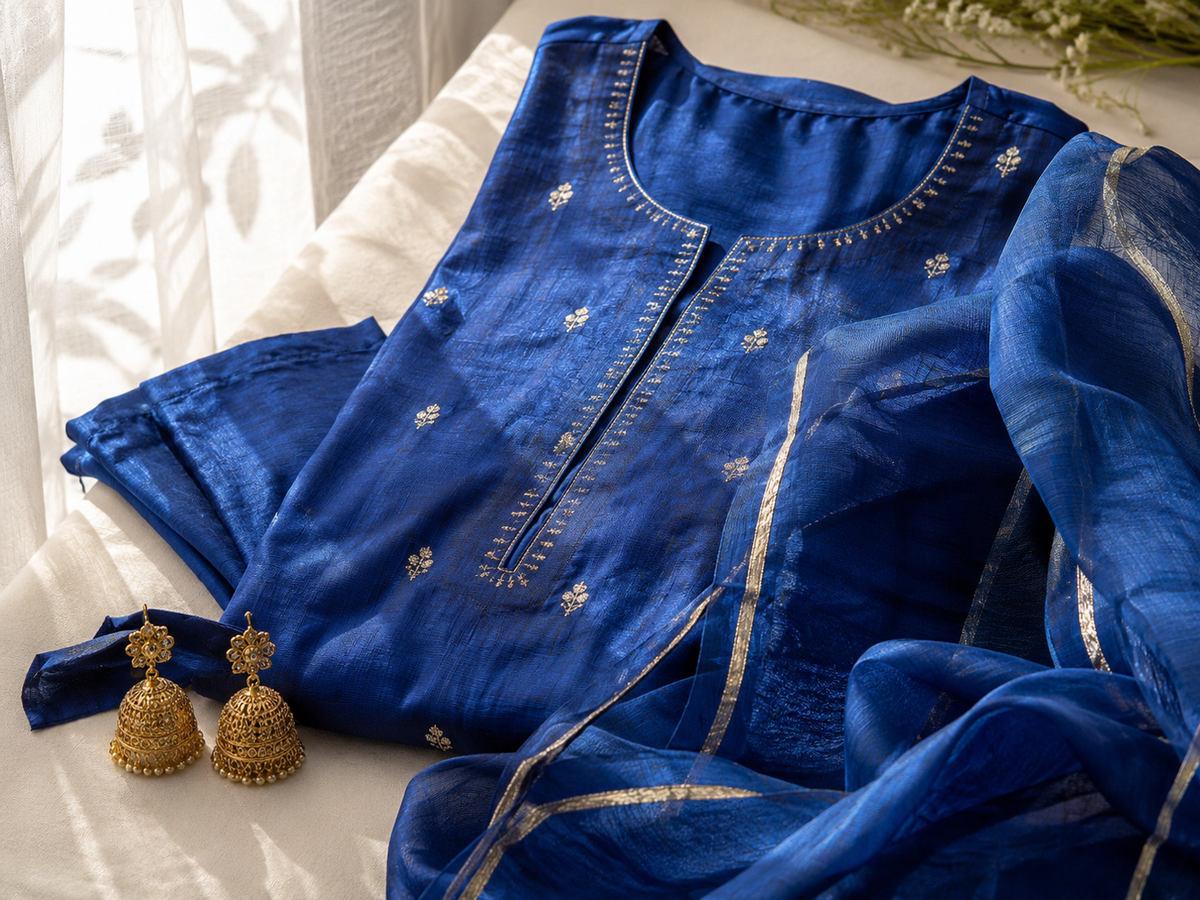
Piece 3 — Festive Chanderi Suit Set Occasion role: Diwali puja, family lunch, Navratri aarti. This is where fabric choice becomes a real argument, not just a preference. Chanderi wins over cotton-silk for long festival days because it's lightweight enough to wear across a six-hour Diwali morning without fatigue, drapes cleanly without stiffening in heat, and carries a subtle sheen that reads as dressed-up without the weight of pure silk. As Moneycontrol's expert curation notes, "light luxury" — looking elevated while remaining genuinely comfortable — is the defining standard for 2026 festive dressing. Pure silk is too hot for October afternoons; pure cotton reads too casual for a puja context. Chanderi sits precisely in between. Choose it in royal blue or deep plum. Remixes with: Piece 8 (add the embellished dupatta to move from puja to an afternoon family visit) and Piece 4's blouse if the suit has a separate kurta top.
Piece 4 — Red or Deep Jewel-Tone Saree Occasion role: Diwali evening, Karwa Chauth-adjacent gatherings. The 4-saree capsule model from Tryvastra AI places a red statement saree as the anchor for Diwali and high-occasion moments — and the 2026 color story backs this up, with ruby red and emerald green as the dominant heritage tones for traditional contexts. Remixes with: Piece 8 (the embellished shrug converts a draped saree into a contemporary layered look for an evening party).
Piece 5 — White-Red or Heritage-Toned Saree Occasion role: Durga Puja, Navratri traditional ceremonies. Where Piece 4 is about Diwali's warmth and richness, Piece 5 carries a different cultural register — the Bengali white-red palette or equivalent heritage tones signal specific festive traditions that a ruby red saree cannot substitute. These two sarees are not redundant; they serve distinct ceremonial contexts. Remixes with: Piece 3's dupatta (if the suit set includes one) as a layering element for cooler evenings.
Piece 6 — Pastel Organza or Shimmer Outfit Occasion role: Cocktail dinners, wedding sangeet, New Year's party. Organza and metallic tissue are the standout 2026 evening fabrics according to Life and Trendz's trend roundup — and a pastel organza set in champagne gold, ivory white, or rose pink covers both afternoon wedding events and evening parties with a single accessory change. Remixes with: Piece 8 to add edge for a late-night party, or worn alone with minimal jewelry for a daytime wedding.
Piece 7 — Fusion Co-ord or Contemporary Set Occasion role: Daytime family visits, casual Diwali plans, office-to-party transitions. This is the lowest-effort, highest-repeat piece in the capsule. Cotton Culture's ethnic-wear framework identifies printed co-ord sets as a foundation category precisely because they handle the in-between moments — the 11am family visit, the afternoon mehendi, the casual Diwali gathering — without requiring any styling effort. Choose it in a metallic silver or burnt orange print for 2026 relevance. Remixes with: Piece 8 (add the embellished shrug and it becomes an evening outfit) and Piece 2 (swap the co-ord bottom for the solid lehenga skirt to shift the formality register entirely).
Want this styled from your own closet?
Elara builds the look from what you own, then lets you try it on.
Piece 8 — Embellished Top or Statement Dupatta/Shrug Occasion role: The multiplier across the entire capsule. This piece does not have a single occasion — it has eight. One embellished layer refreshes Piece 2 (transforms the lehenga skirt into an evening look), Piece 3 (elevates the chanderi suit from puja to dinner), and Piece 7 (converts the co-ord from daytime casual to cocktail-ready) without requiring a new outfit purchase. An embellished layer works as this kind of multiplier across a range of base pieces — it refreshes looks and shifts the formality register. Choose an embellished dupatta in metallic silver or champagne gold — it works against every jewel tone and every pastel in the capsule.
Occasion-Stacking: Which Pieces Work When (The Planning Map)
The 8-piece capsule only functions as a system if you know which pieces to reach for on which days. Here is the explicit mapping, built around the four occasion tiers.
Ritual/Puja — Pieces 3, 4, 5 Diwali morning prayers and Navratri aarti call for traditional silhouettes and fabrics that signal respect for the occasion. Pieces 3, 4, and 5 — the chanderi suit, the jewel-tone saree, and the heritage saree — cover this tier completely. Fusion pieces do not belong here; the cultural register matters.
Daytime Family Gathering — Pieces 3, 7 For 4–6 hour daytime events in October and November, breathability is the deciding factor. According to Aachho's 2026 festival-fashion reporting, wardrobes are trending hard toward comfort and breathable fabrics — and this is exactly why Pieces 3 and 7 dominate the daytime slot. The chanderi suit handles the more formal family lunch; the fusion co-ord handles the casual afternoon visit. Both keep you comfortable across a long day in residual October heat.
Piece 7 also functions as the capsule's transition outfit. Worn to a daytime gathering with flat sandals and minimal jewelry, it reads as relaxed and appropriate. Add the embellished shrug (Piece 8) and swap flats for heels, and the same outfit crosses into early evening party territory — no change of clothes required.
Garba/Navratri Night — Pieces 1, 2 Movement is the brief here. Pieces 1 and 2 — the chaniya choli and the solid lehenga skirt — are the only pieces in the capsule built for the physical demands of garba. The flared silhouettes allow full range of motion; the occasion demands the traditional aesthetic. CBazaar's Navratri capsule framework confirms this as a non-negotiable anchor combination.
Cocktail/Evening Party — Pieces 4, 6, 8 Diwali night, a wedding sangeet, or a New Year's party all sit in this tier. The jewel-tone saree (Piece 4), the organza or shimmer outfit (Piece 6), and the embellished multiplier (Piece 8) cover every formality level within this category. Cotton Culture's expert consensus states directly: versatility now matters more than volume — pieces should move from puja to party with only accessory changes. Piece 8 is the mechanism that makes this possible across the entire capsule.
The Fabric & Color Logic: Why These Choices Work in Indian Festival Conditions
The fabric choices in this capsule are not aesthetic preferences — they are functional decisions driven by the specific conditions of Indian festival season.
The fabric hierarchy runs from breathable to elevated. For daytime occasions, chanderi, cotton-silk, and georgette are the right choices: they handle October heat without wilting, and they drape well enough to look intentional rather than casual. For evening occasions, organza, metallic tissue, and shimmer silk take over — they carry the visual weight that evening contexts demand without requiring the same comfort concessions, since evening events are shorter and typically air-conditioned. According to Moneycontrol's 2026 festive dressing analysis, this light-luxury spectrum — breathable fabrics that appear elevated — is the defining construction logic for the 2026 capsule wardrobe.
Chanderi deserves a specific case. It is lightweight enough to wear for six hours without fatigue, carries a subtle natural sheen that reads as dressed-up without effort, and does not crumple in heat the way heavier silks do. Pure silk fails the daytime test — it is too hot and too heavy for a morning puja that runs into an afternoon family lunch. Pure cotton fails the occasion test — it reads too relaxed for any festive context. Chanderi occupies exactly the right position between them, which is why it anchors Pieces 3 and 5 in this capsule.
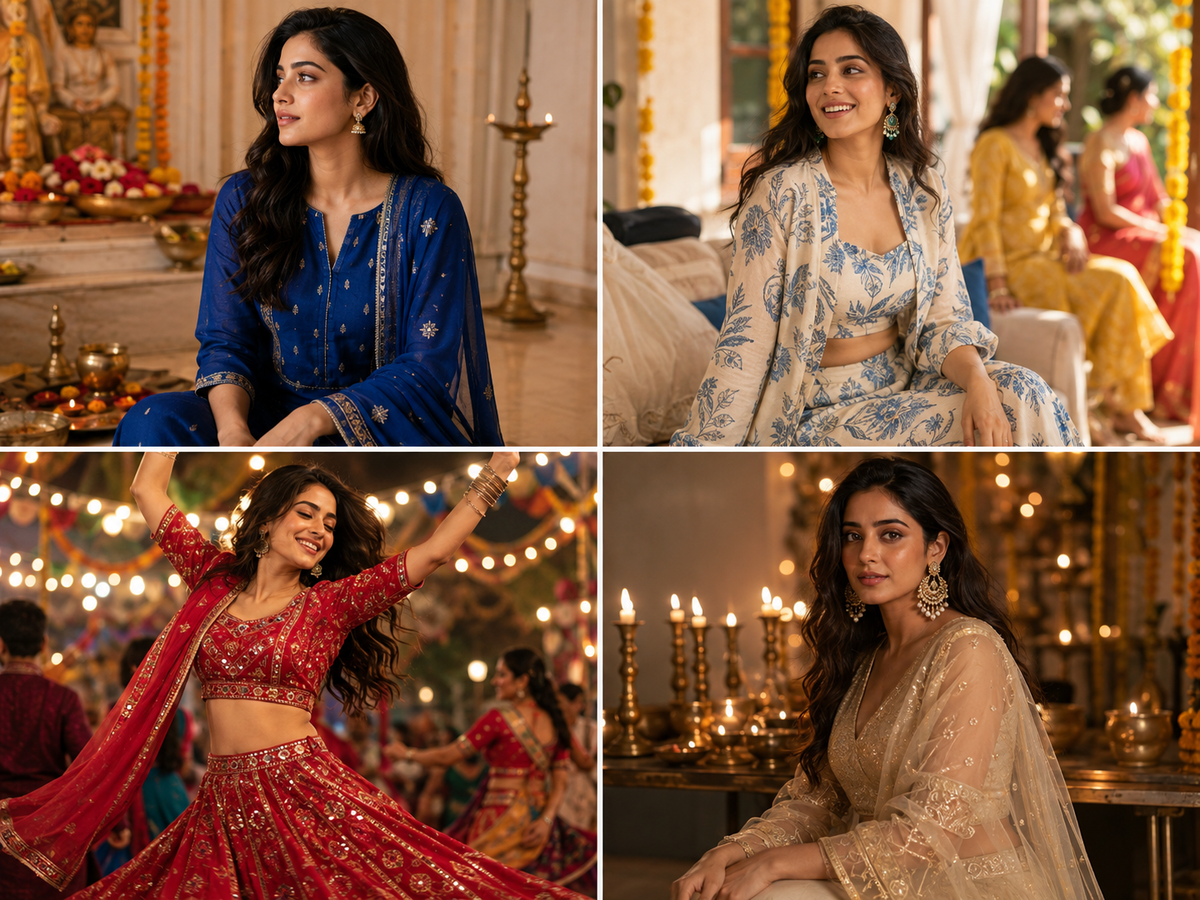
The 2026 color story splits cleanly across the occasion tiers. Life and Trendz's 2026 trend roundup identifies two distinct palettes: heritage jewel tones — ruby red, emerald green, royal blue, deep plum — for traditional and ritual occasions, and soft pastels with metallics — champagne gold, ivory white, rose pink, metallic silver — for cocktail and party contexts. This maps directly onto the capsule: Pieces 3, 4, and 5 draw from the jewel-tone palette; Pieces 6, 7, and 8 draw from the pastel-metallic palette.
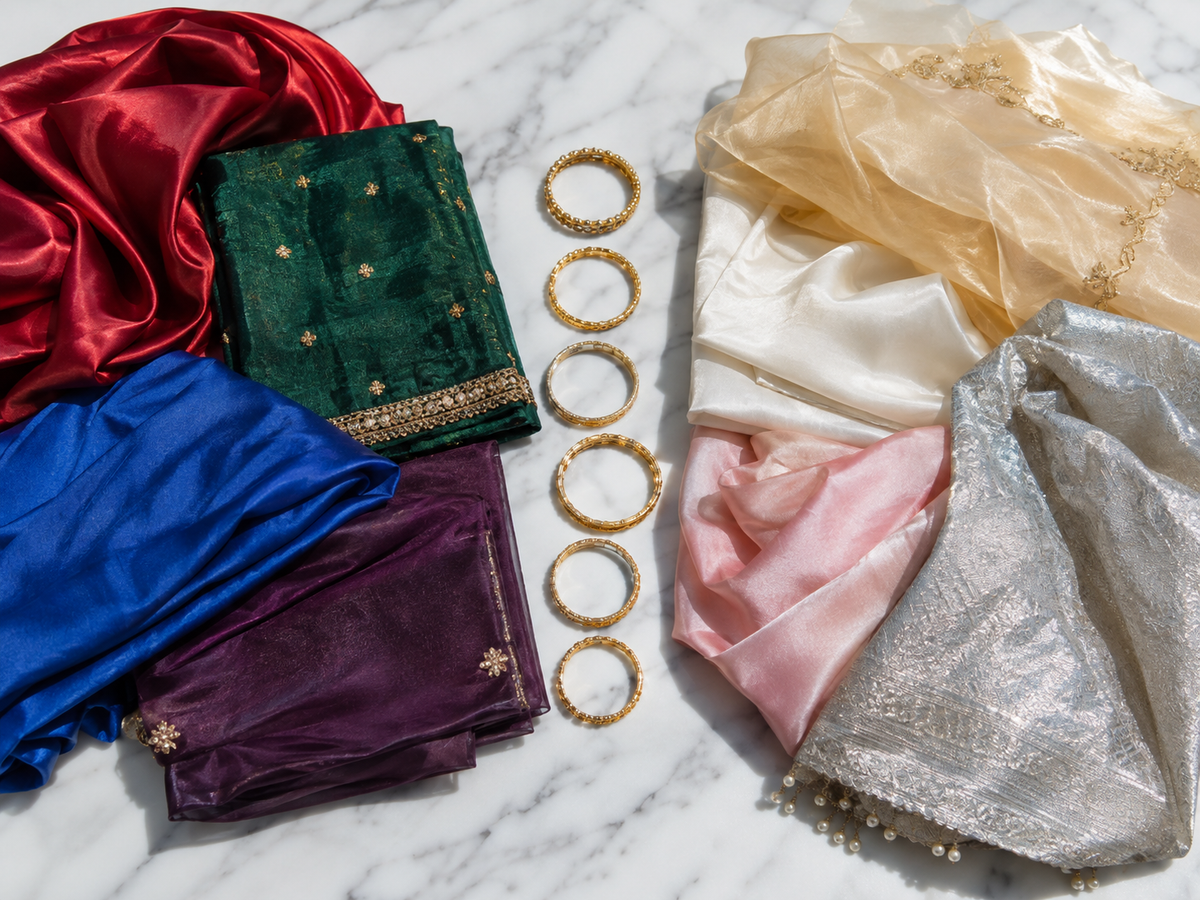
One 2026 development worth noting: white outfits and florals are emerging as legitimate festival-wear choices, according to Aachho's trend reporting. This is where Piece 6 or Piece 7 can absorb the trend — an ivory white organza set or a floral fusion co-ord fits the 2026 moment without disrupting the capsule's occasion logic.
How to Audit Your Existing Wardrobe Against the 8-Piece Framework (Before You Buy Anything)
With the color palette and fabric logic mapped, the natural next question isn't "what should I buy?" — it's "what do I already own?" That reframe is the most important shift this framework asks of you. The goal is not to build a new wardrobe from scratch. According to Cotton Culture, an Indian ethnic-wear capsule typically runs 15–20 versatile pieces, each pairing with at least three others — and for festival season, eight well-chosen pieces do the core work. Odds are strong that you already own six or seven of them.
The audit runs in three steps:
- Categorize by piece type. Pull out every ethnic wear item you own and sort it against the 8 categories: statement chaniya choli, solid lehenga skirt, chanderi or cotton-silk suit set, jewel-tone saree, heritage-toned saree, pastel or shimmer outfit, fusion co-ord, and embellished layer. Don't evaluate yet — just sort.
- Occasion-map each piece. For every item in each category, ask: does it cover at least 3 of the 4 occasion tiers (ritual/puja, daytime gathering, garba night, cocktail party)? If it covers only one, it's a one-off outfit — not a capsule piece.
- Gap-spot honestly. The expert consensus across Indian styling guides is clear: versatility matters more than volume, and a compact wardrobe should rely on pieces that restyle with accessory changes alone. If you find 1–2 genuine gaps after steps 1 and 2, those are worth buying. If you find six, the audit wasn't honest enough.
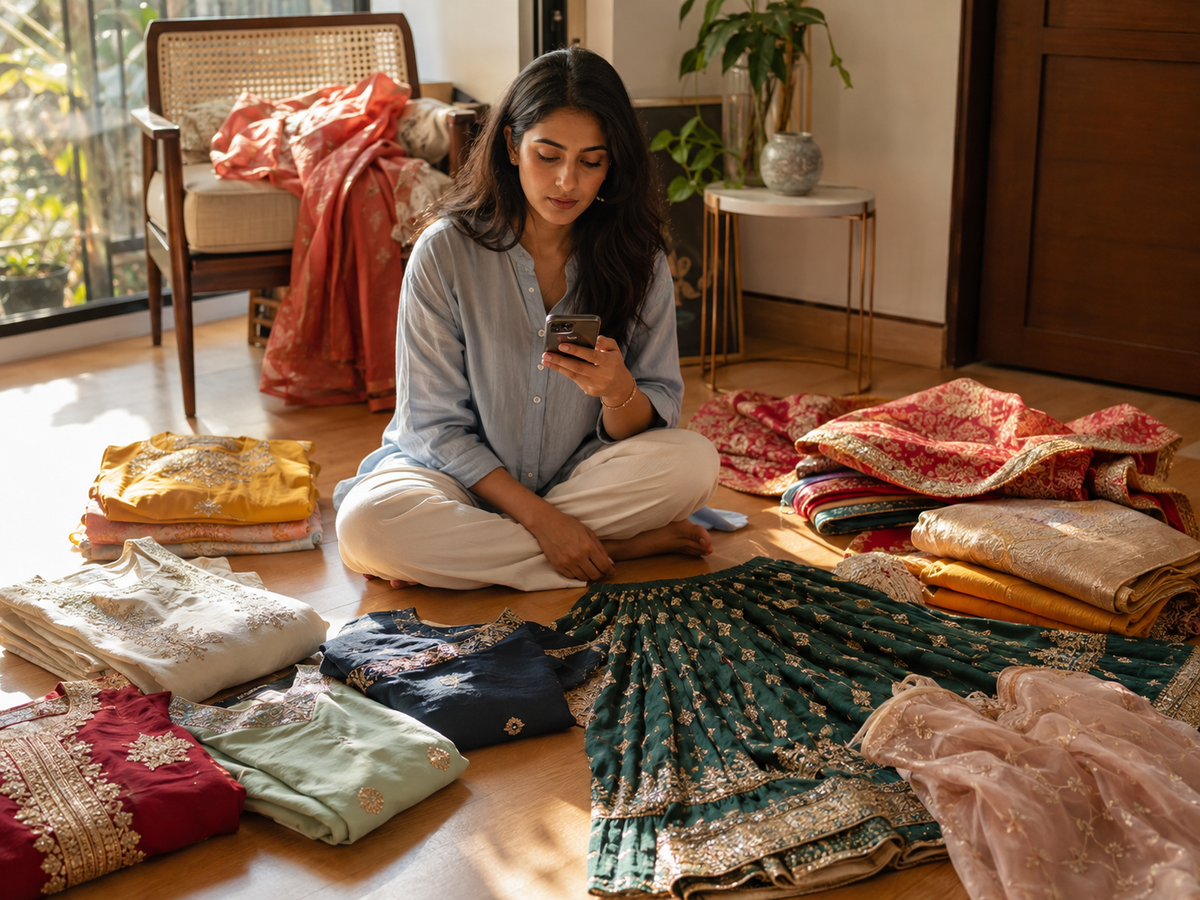
Elara's wardrobe digitization feature automates exactly this process — you upload what you own, and the AI surfaces real gaps before surfacing any shopping recommendations. Start the audit at joinelara.com.
Frequently Asked Questions
Q: Do I really need all 8 pieces if I already own some of them?
A: No. The 8-piece framework is a complete system, but it's built for flexibility. If you already own a statement chaniya choli, a jewel-tone saree, and a fusion co-ord, you're three pieces in. The framework tells you which pieces would fill the most gaps and which remixes are possible with what you have. Elara's wardrobe audit identifies exactly which pieces you own and which gaps are worth filling.
Q: Can I swap pieces if I don't like the suggested colors or styles?
A: Absolutely. The framework is about the role each piece plays, not the specific color or style. If you prefer a navy jewel-tone saree over ruby red, it still covers the same occasion tier. What matters is that the piece passes the 3-occasion rule — it works across at least 3 of the 4 festival contexts with only accessory changes. As long as your swaps meet that logic, the capsule still functions.
Q: What if I don't wear sarees or prefer fusion wear exclusively?
A: The framework adapts. The core logic — eight pieces mapped to four occasion tiers, each passing the 3-occasion rule — works regardless of silhouette. You could build a capsule around fusion wear, traditional silhouettes, or a mix. Pieces 7 and 8 are already fusion-forward. If that's your preference, you can swap Pieces 4 and 5 (the sarees) for fusion alternatives that cover the same occasion tiers. The system is about occasion logic and remixing, not specific garment types.
Q: How do I know if a piece I own actually passes the 3-occasion rule?
A: Ask yourself: can I wear this piece to at least three different festival events with only accessory changes — no outfit swap needed? If a saree only works for Diwali evening and nothing else, it doesn't pass. If a co-ord works for a casual Diwali gathering, a daytime mehendi, and an evening party (with just a shrug and heels added), it passes. The test is whether the piece flexes across contexts, not whether it's versatile in general.
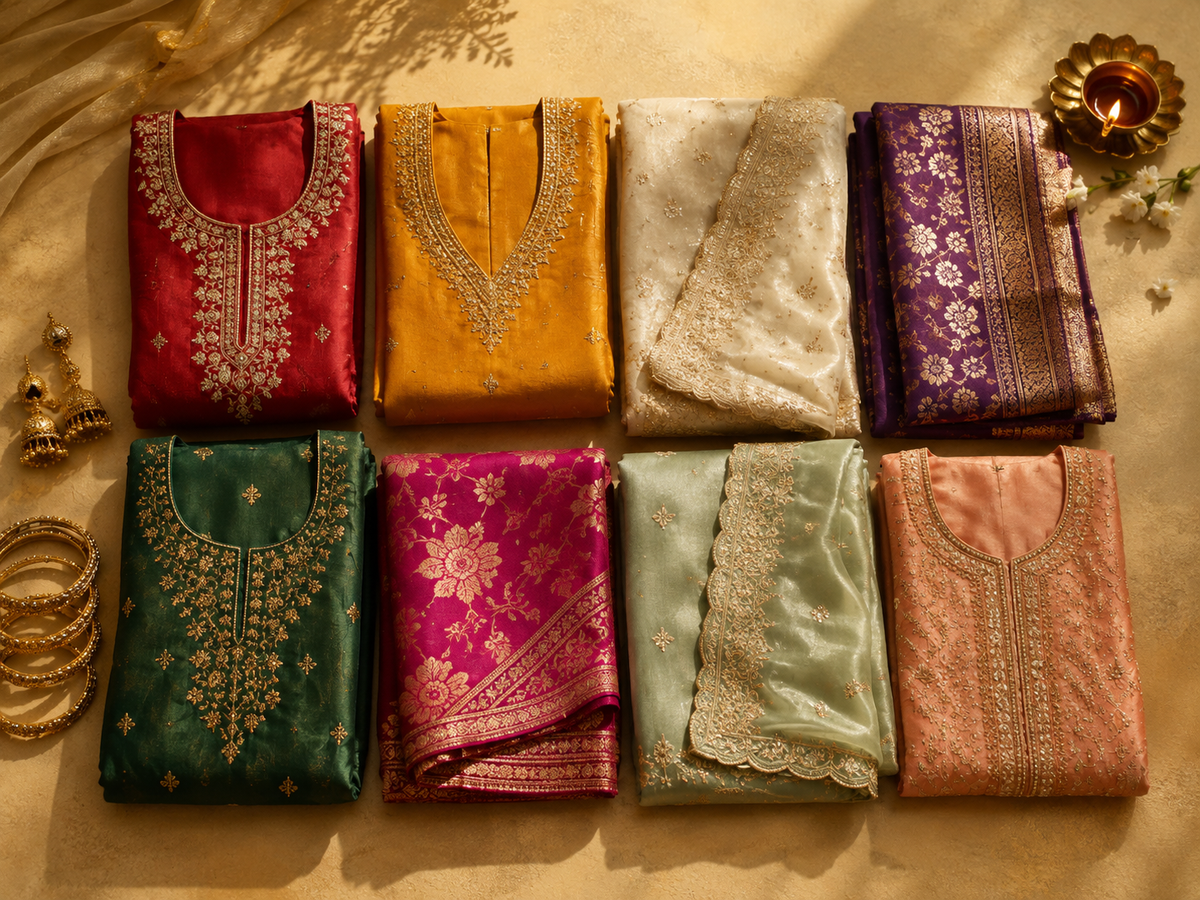
Festival Season Capsule Wardrobe India 2026: 8 Pieces That Cover Navratri, Diwali, and Every Party in Between — Quick Reference
The foundation of any Indian festive capsule starts with two anchor pieces that do the heaviest lifting across the season. A statement chaniya choli in a cotton-silk blend — in ruby red or emerald green — handles the high-energy Navratri garba nights and pairs naturally with the embellished multiplier pieces later in the list. Alongside it, a solid lehenga skirt in deep plum or champagne gold georgette extends the capsule's range: it works for secondary garba nights, Diwali evenings, and swaps blouses and dupattas with ease to read as an entirely different outfit each time.
For the daytime and ceremonial occasions that define the festive season — Diwali puja, family lunch, aarti — a chanderi suit set in royal blue or deep plum is the practical workhorse. Chanderi is light enough for long gatherings, formal enough for a puja setting, and its dupatta can be borrowed to layer over other pieces in the capsule when the occasion calls for more coverage. Two sarees round out the formal end of the wardrobe: a silk or silk-blend saree in ruby red or emerald green for Diwali evening and high-occasion moments, and a heritage-toned white-and-red silk saree for Durga Puja ceremonies and Navratri rituals where traditional color expectations are stronger.
The final three pieces handle everything the season throws beyond the core festivals. A pastel organza or metallic tissue outfit in champagne gold, ivory, or rose pink covers cocktail dinners, wedding sangeets, and New Year's celebrations — occasions where the festive wardrobe needs to pivot away from traditional ethnic and toward something more contemporary and party-ready. A fusion co-ord set in cotton-silk with a printed metallic silver or burnt orange colorway handles daytime visits, casual Diwali drops-in, and the office-to-party transition that makes October and November uniquely demanding. And tying everything together: an embellished top, dupatta, or shrug in metallic silver or champagne gold that works as a multiplier across the entire capsule. Layered over the lehenga skirt, it creates a new silhouette. Draped over the chanderi suit, it elevates it for evening. Worn over the fusion co-ord, it bridges the gap between casual and festive. Eight pieces, one cohesive wardrobe, the entire season covered.
Conclusion: A Festival Season That Feels Intentional, Not Exhausting
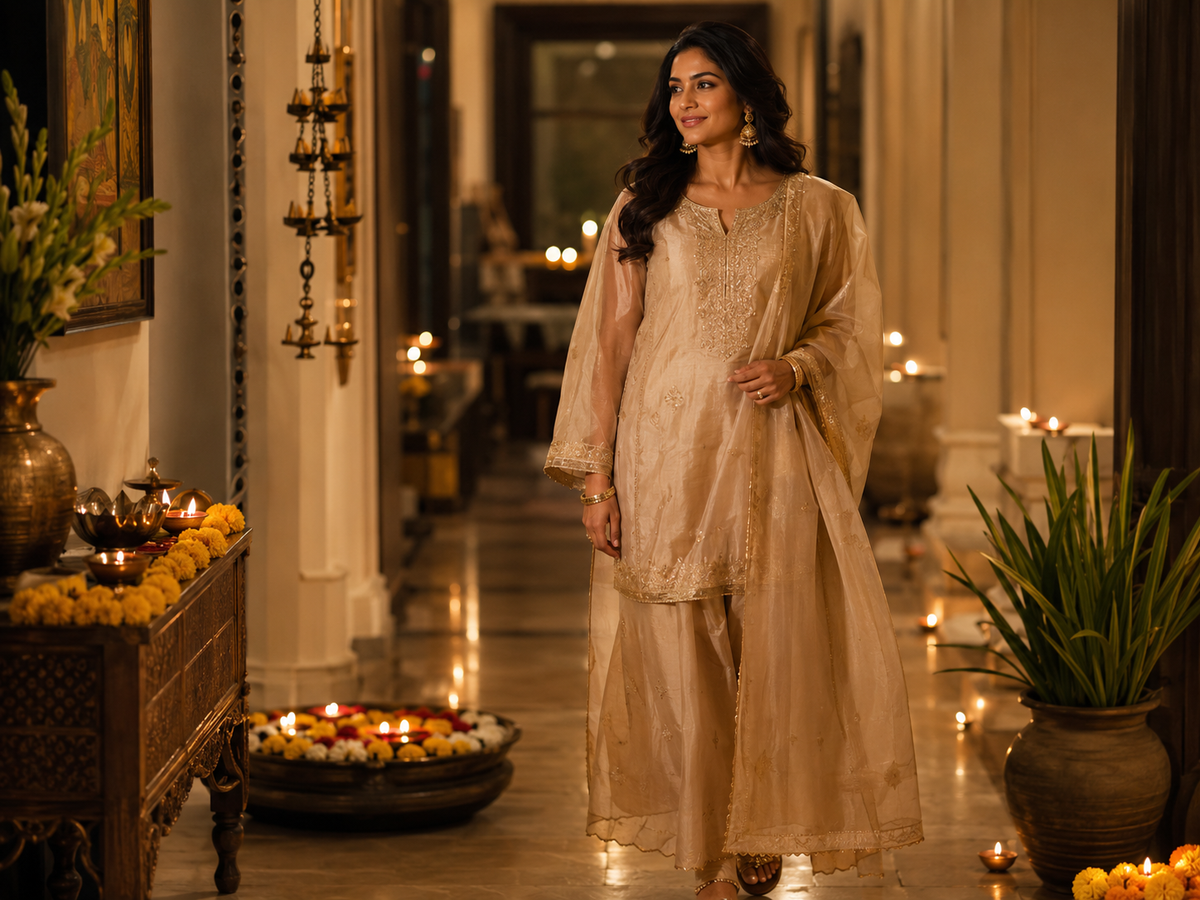
Eight pieces. Four occasion tiers. Breathable fabrics built for Indian weather. A dual color palette that carries you from Navratri aarti to Diwali night without repeating an outfit or panic-buying one. According to Tryvastra AI, Life and Trendz, and Cotton Culture, the 2026 festive wardrobe is defined by exactly this logic — capsule thinking, fusion-ready silhouettes, and a color story that balances heritage jewel tones with soft pastels and metallics. That's a system, not a shopping list.
The real win here is simpler than it sounds: no decision fatigue the morning of Diwali, no last-minute runs to the market, no outfits that work for exactly one event and nothing else. Just confidence that what's in your wardrobe is enough — because it actually is.
Elara is built to be the intelligence layer between you and that clarity. Whether you're starting from scratch or auditing a wardrobe that's been accumulating for years, the smartest move is understanding what you own as a system first.
Start your wardrobe audit at joinelara.com — tell Elara what you already own, and it'll tell you what, if anything, you actually need.
Your stylist, in your pocket
Stop reading about outfits. Start wearing them.
Elara knows your closet, shops every store and gets you dressed for any occasion.


