
Diwali 2026 Outfit Safety: What to Wear Around Diyas and Firecrackers
What to wear near diyas and firecrackers this Diwali: which fabrics melt or catch, five outfit risk zones, and what to do if clothing catches fire.
 Mehul AgarwalFounder & CEO
Last updated: October 2026
Quick answer: Around diyas and firecrackers this Diwali, wear snug or well-secured clothing in thick natural fibre (cotton, silk or wool), pin or tuck your dupatta and pallu, tie back long hair, and wear closed shoes. Save floaty synthetic layers for indoor moments away from flames. India's fireworks safety authority, PESO, puts it plainly: "Don't wear synthetic clothing; preferably wear thick cotton clothing" and "Don't wear loosely hanging clothes; secure all clothes properly."
Diwali falls on Sunday, 8 November 2026, with Dhanteras on 6 November and Bhai Dooj on 11 November in most calendars (some panchangs place Choti Diwali, Govardhan Puja and Bhai Dooj a day earlier, so check your local one). That is five evenings of lamps, candles, sparklers and crackers, often in the very outfits you have spent weeks planning.
This guide is not about giving up the outfit. It is about knowing which fabrics, cuts and details carry real risk near an open flame, and the small styling moves that make a festive look safer without making it look like a compromise. If you are still choosing what to wear, start with our Diwali 2026 outfit ideas for women and then use this as your safety check.
Why your festive outfit matters near a flame
Two things decide how a garment behaves near fire: what it is made of, and how it hangs.
Fit and drape. Loose, flowing fabric is closer to the flame and has air underneath it to feed a fire. The US Consumer Product Safety Commission explains that snug-fitting clothes don't ignite as easily "because there is little air under the garment to feed a fire," while loose-fitting cotton and cotton blends "can catch fire easily and burn rapidly." That is why every official Indian guideline says tight or thick cotton, not just cotton.
Fibre. Different fibres fail in different ways. Some ignite readily, some burn slowly and put themselves out, and some melt. Melting matters because molten fabric sticks to skin. The USDA Forest Service's fabric tests found that polyester, polypropylene and nylon "may melt and stick to the skin, aggravating burn injuries."
The World Health Organization notes that open flames "can ignite loose clothing," and that in India "over 1 million people are moderately or severely burnt every year." Most Diwali evenings pass without incident, but the risk is real enough that it is worth a two-minute outfit check before you light the first diya.
Fabric by fabric: what is safer around diyas
Use this as a guide to choosing, not a guarantee. No everyday fabric is fireproof.
Wool: the most flame-resistant natural fibre
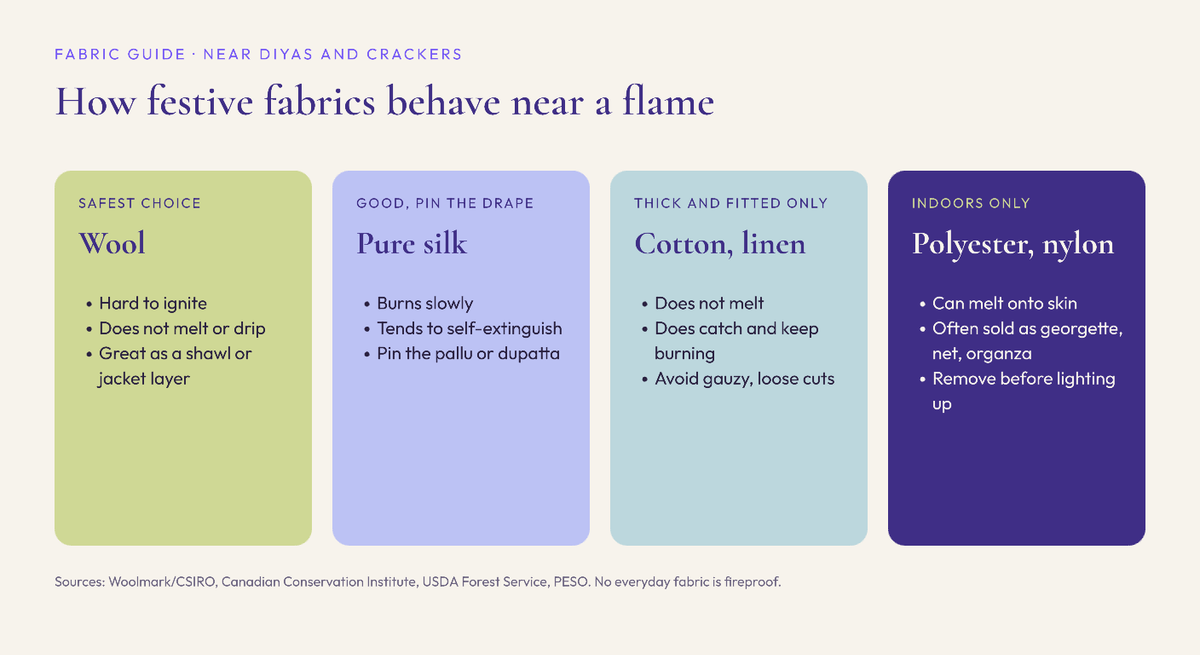
According to a CSIRO factsheet published by the Woolmark Company (the wool industry body, so read it as industry research), wool ignites at around 570 to 600°C compared with about 255°C for cotton, and "does not melt or drip and hence cannot stick to the skin." A fine wool shawl or a wool-blend Nehru jacket is a good outer layer for chilly Diwali nights in North India.
Silk: burns slowly, often self-extinguishes
The Canadian Conservation Institute's fibre identification guide groups silk with wool: both "shrivel away from flame," "burn slowly" and "self-extinguish." Pure silk sarees and kurtas are a reasonable choice near lamps, as long as the drape is secured. Be careful with "art silk" or "silk-look" fabric, which is usually viscose or polyester.
Cotton and linen: they do not melt, but they do catch
The same Canadian guide notes that cotton and linen "ignite immediately" and "continue to burn" after the flame is removed. Cotton is still the official recommendation because it does not melt onto skin, but only when it is thick and close-fitting. A heavy cotton kurta with fitted sleeves is a better choice than a gauzy cotton mul dupatta.
Polyester, nylon, georgette, net and organza: keep these away from flames
Many festive fabrics, including georgette, chiffon, net and organza, are often polyester or nylon. These melt. Synthetic net dupattas and layered lehenga skirts are also loose and full of air. Wear them indoors, at dinners or for photos, and switch to a secured, natural-fibre layer when you head out to light crackers. Check the fibre content label rather than the fabric name, since "georgette" describes a weave, not a fibre.
The five risk zones in a festive look
Most clothing accidents involve a part of the outfit that drifts toward the flame without you noticing. Work through these five zones before you step outside.
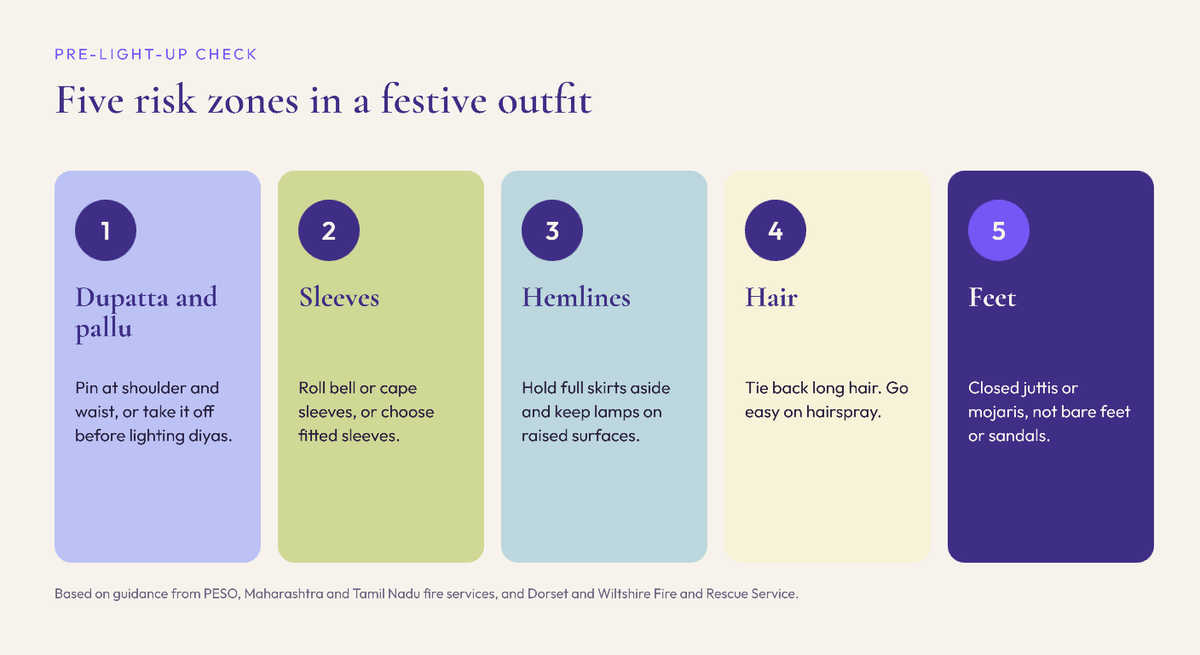
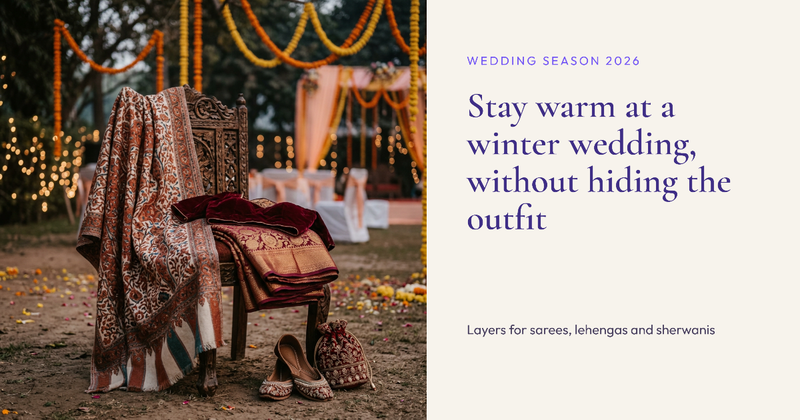
- Dupatta, pallu and chunri. Dorset and Wiltshire Fire and Rescue Service in the UK specifically warns that "long hair and clothing (especially saris, chunris, chunis and dupattas) are also very flammable." Pin the pallu at the shoulder and waist, wear the dupatta cross-body and pinned, or take it off and hand it to someone indoors while you light diyas.
- Sleeves. Bell sleeves, cape sleeves and flared kurta cuffs swing over a diya as you reach. Roll them, use a sleeve band, or choose fitted or three-quarter sleeves for the evening you plan to light lamps.
- Hemlines and flared skirts. A full anarkali or lehenga can brush ground diyas and rangoli lamps. Hold the skirt to one side when you pass a row of lamps, and keep lamps on raised surfaces where you can.
- Hair. Tie back long or open hair, and be careful with hairspray, which can be flammable. A low bun or braid is both festive and practical.
- Feet. Maharashtra Fire and Emergency Services and Tamil Nadu Fire and Rescue Services both advise closed shoes. Juttis or closed-toe mojaris are a better choice than bare feet or open sandals on a terrace where spent crackers land.
A safer Diwali night outfit, step by step
Here is a simple way to keep the look you love and add a safety layer for the outdoor part of the evening.
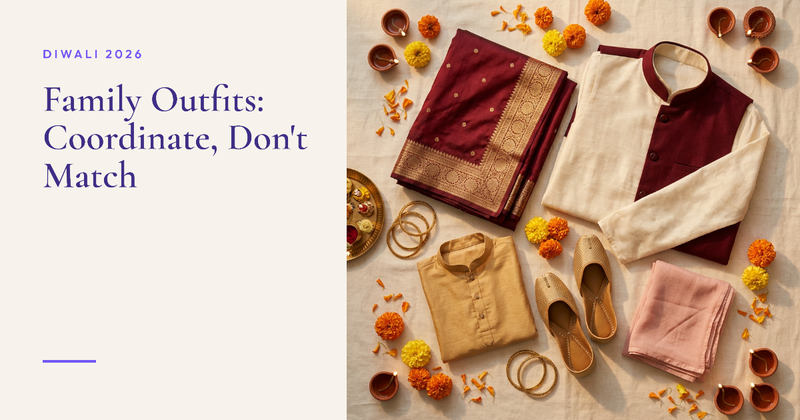
- Choose a base you can wear near flames. A silk or thick cotton saree with a fitted blouse, a cotton or silk kurta set with straight pants, or a fitted sherwani or bandhgala.
- Plan a "light-up layer." A wool shawl, a fitted wool-blend jacket, or a cotton overshirt you put on for diyas and crackers. It covers loose fabric underneath and gives you a quick layer to remove if a spark lands.
- Secure the drape. Safety pins at the shoulder and waist for a pallu, a brooch for a dupatta, a belt for a long kurta.
- Swap the shoes. Keep heels for indoors and switch to closed flats outside.

Want this styled from your own closet?
Elara builds the look from what you own, then lets you try it on.
- Keep heavy synthetic pieces for indoors. Net dupattas, organza capes and sequinned polyester layers look beautiful in photos. Take them off before you go out to the crackers.
- Light from a distance. Use a long incense stick or a long-handled lighter, light at arm's length, and step back.
If clothing catches fire: what official guidance says
Know this before the evening starts. It takes seconds to read and could matter.
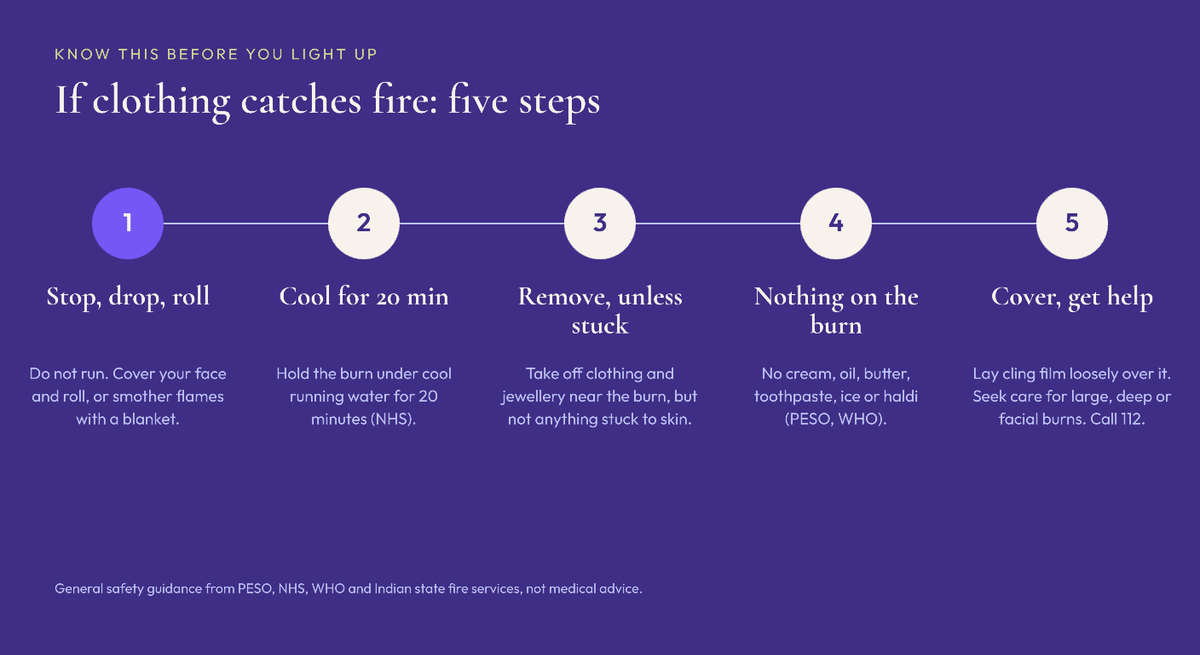
- Stop, drop and roll. Maharashtra Fire and Emergency Services and Tamil Nadu Fire and Rescue Services both say do not run, because running fans the flames. Cheshire Fire and Rescue Service describes it as stopping, dropping to the ground with your face covered by your hands, and rolling "over and over." The WHO also lists smothering flames with a blanket or water.
- Cool the burn with running water for 20 minutes. The NHS advises holding a burn "under cool running water for 20 minutes," and starting within three hours.
- Remove clothing near the burn, but not anything stuck to it. The NHS says remove clothing or jewellery near the area but "do not remove anything that is stuck." Tamil Nadu Fire and Rescue Services gives the same advice.
- Do not apply creams, oil, butter, toothpaste or haldi. PESO says "Don't apply any cream or ointment or oil on burnt area," and the WHO lists haldi, oil, paste, ice and raw cotton as things to avoid.
- Cover loosely. The NHS suggests laying cling film over a burn rather than wrapping it. PESO advises wrapping a person with major burns in a clean bedsheet.
- Get medical help for large, deep or facial burns, burns on children, or anything you are unsure about. For eye injuries, PESO advises washing the eye with tap water for 10 minutes and seeking care.
This is general safety guidance from the sources named, not medical advice. In an emergency in India, call 112.
A quick pre-Diwali checklist
Run through this when you lay out your outfits for the five days.
- Check fibre labels on every festive piece and note which ones are polyester, nylon or "art silk."
- Pick one natural-fibre outfit (or a light-up layer) for each evening you will light diyas or crackers.
- Pack safety pins and a brooch with your jewellery.
- Set out closed shoes by the door.
- Keep a bucket of water or sand nearby, as most fire services advise.
- Agree who will look after children's clothing, especially flowing lehengas and dupattas.
After the festival, give your silk and zari pieces proper care before wedding season. Our guide to cleaning and storing silk sarees after Diwali covers that step.
FAQ
Is cotton safe to wear while bursting crackers?
Cotton does not melt onto skin, which is why fire services recommend it, but it does catch fire. The official advice is thick, tight or well-secured cotton, not loose or gauzy cotton.
Can I wear a georgette or net saree on Diwali?
Yes, for indoor puja, dinners and photos. Georgette, net and organza are often polyester or nylon, which can melt, so change into a natural-fibre layer or remove loose drapes before lighting diyas or crackers.
Is a silk saree flammable?
Every fabric can burn, but pure silk burns slowly and tends to self-extinguish, according to the Canadian Conservation Institute. Pin the pallu securely when you are near lamps.
What should I do if my dupatta catches fire?
Do not run. Drop the dupatta if you can, otherwise stop, drop and roll, or smother the flames with a blanket. Then cool any burn under running water for 20 minutes and seek medical help for anything serious.
What shoes should I wear while lighting crackers?
Closed shoes, as Maharashtra and Tamil Nadu fire services advise. Closed juttis or mojaris work with ethnic wear.
What date is Diwali in 2026?
Lakshmi Puja is on Sunday, 8 November 2026. Dhanteras is on 6 November and Bhai Dooj is on 11 November in most calendars, though some panchangs list Govardhan Puja and Bhai Dooj a day earlier.
Plan five days of festive looks in one place. Elara is an AI personal stylist that knows your wardrobe. Add your festive pieces to your digital closet, tell Elara where you are going each evening, and it suggests complete outfits from what you own, including a flame-smart option for the nights you will be outside with diyas. Try Elara free.
Your stylist, in your pocket
Stop reading about outfits. Start wearing them.
Elara knows your closet, shops every store and gets you dressed for any occasion.