

Diwali 2026 Family Outfits: How to Coordinate Colours for Puja and Photos Without Matching
Diwali 2026 family outfit ideas: a simple palette method to coordinate parents, kids and grandparents for Lakshmi Puja and photos, from clothes you already own.
 Mehul AgarwalFounder & CEO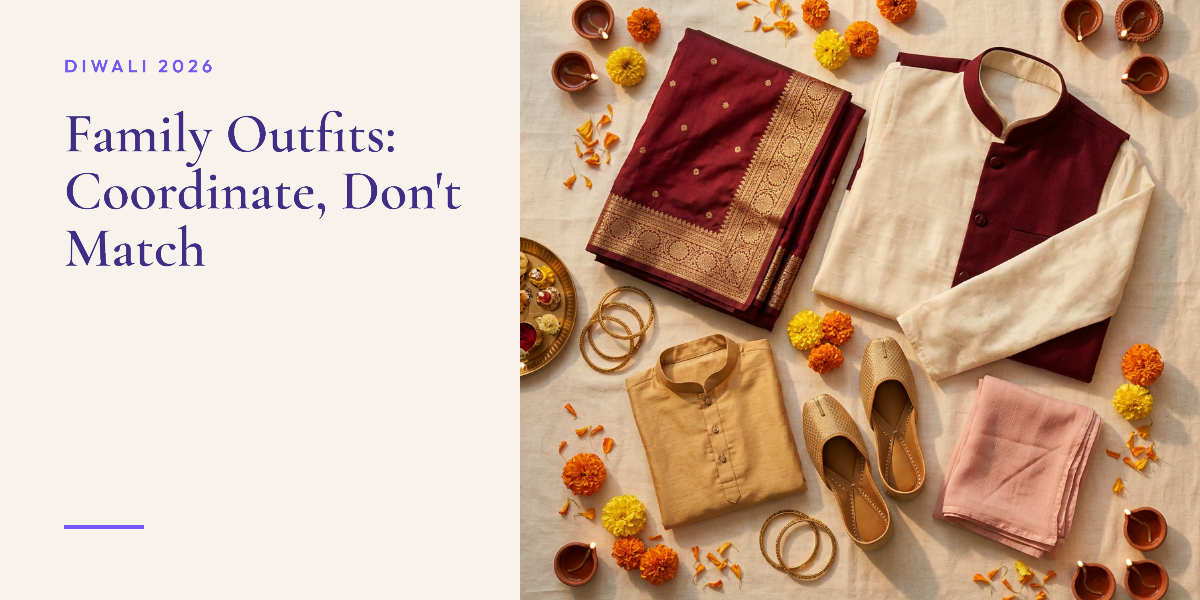
Last updated: October 2026
Quick answer: The easiest way to coordinate Diwali family outfits is to pick one shared palette of two or three colours, then let each person wear it differently: one in the main colour, one in the accent, one in a neutral like ivory or gold. Mix fabrics and silhouettes so it looks styled, not uniform. Diwali (Lakshmi Puja) falls on Sunday, November 8, 2026, so there is still time to plan around what everyone already owns.
Diwali is one of the few days in the year when the whole family dresses up at the same time, in the same rooms, in front of the same cameras. That is exactly why coordinated outfits work so well: the puja photo, the rangoli photo and the group selfie at the door all look better when the colours talk to each other.
But "coordinated" does not have to mean identical kurtas in matching prints. This guide shows how to build a family colour story that works for parents, kids and grandparents, for the puja and for the evening, mostly from clothes you already own. For individual looks, see our Diwali 2026 outfits for women and Diwali 2026 outfits for men.
When is Diwali 2026?
Diwali is a five-day festival. In 2026, Dhanteras is on Friday, November 6, and Lakshmi Puja, the main Diwali evening, is on Sunday, November 8. Govardhan Puja and Bhai Dooj follow over the next few days, with exact dates varying by panchang and by city, and falling a day earlier for many families in the US, UK and Canada. Lakshmi Puja muhurat times also shift by city, so check your local panchang for the evening puja.
Many families wear new or freshly kept traditional clothes for the puja, and colours such as red, yellow and gold are popular choices for the occasion. Customs vary a lot by region and by family, so treat everything below as styling ideas, not rules.
Coordinate, do not match: the palette method
Matching outfits can look great on a toddler and a parent, but across six or eight people they tend to flatten everyone into one block in photos. A palette gives you cohesion while letting each person look like themselves.
Here is the method:
- Choose an anchor colour. One strong colour the family shares, such as marigold, maroon, emerald or rani pink.
- Add one accent. A second colour that sits well with the anchor: gold with maroon, pink with emerald, ivory with marigold.
- Add one neutral. Ivory, cream, beige or soft gold, which works on anyone and calms the group down.
- Assign roles. Some people wear the anchor as the main piece, some wear it as a dupatta, stole, pocket square or bundi, and some wear the neutral with an anchor-coloured detail.
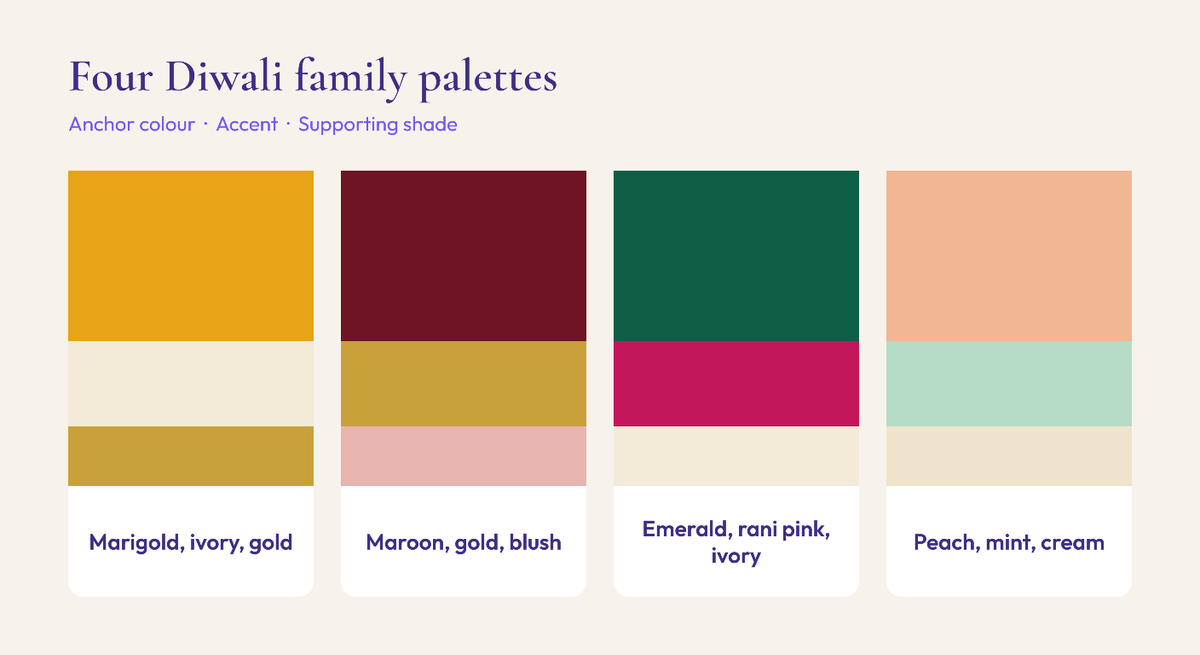
Four family palettes that photograph well under warm diya and fairy light:
Marigold, ivory and gold
Bright and festive. Works especially well for a daytime or early-evening puja. One person in a marigold kurta or saree, two in ivory with marigold dupattas, the kids in yellow or gold.
Maroon, gold and blush
Rich and classic. Maroon looks deep and warm in the evening. Pair a maroon silk saree or kurta with gold zari, an ivory-and-gold kurta for someone else, and a blush pink outfit for a softer contrast.
Emerald, rani pink and ivory
A jewel-tone combination that photographs beautifully at night. Use emerald as the anchor, rani pink for one or two people and ivory for grandparents or kids.
Peach, mint and cream
A softer, pastel story for families who prefer lighter colours or have a daytime gathering. Keep at least one deeper shade, like dusty rose or sage, so the photo does not wash out.
How to build each person's outfit from what you own
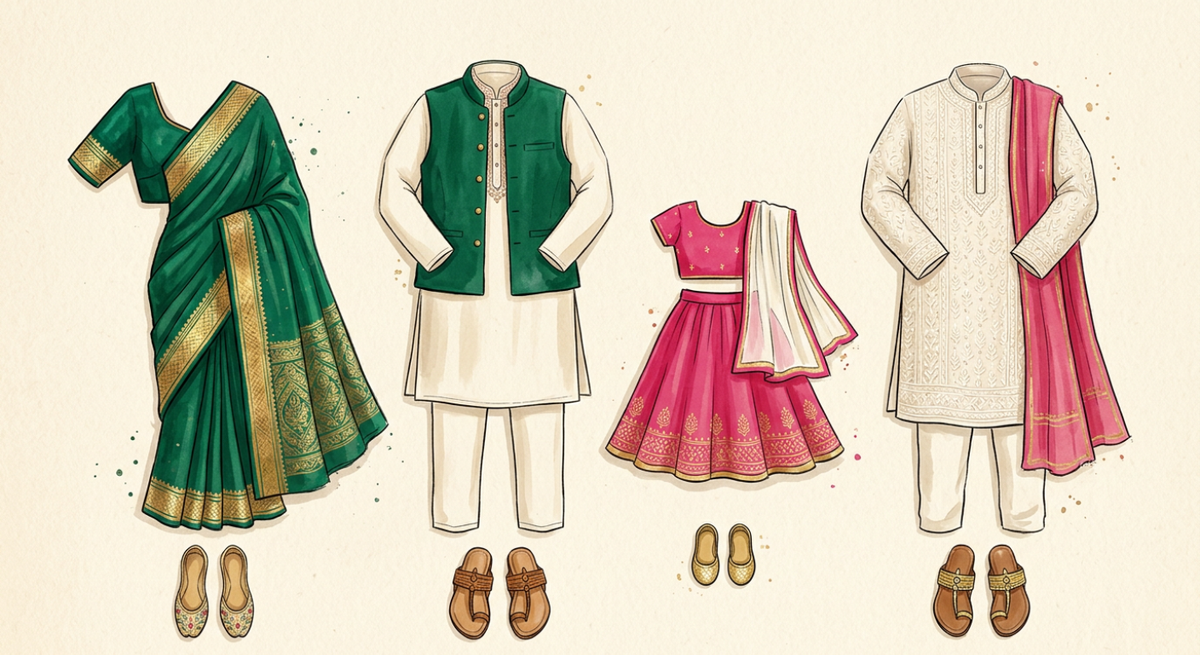
Start with the wardrobes, not the shopping list. Lay out (or scroll through) what everyone already has in the anchor colour, the accent and the neutral. You will usually find that one or two people need a single new piece, not a whole outfit.
Parents
Silk, chanderi or a cotton-silk blend works well for the puja. If one parent wears the anchor colour as a full saree, lehenga or kurta set, the other can wear a neutral kurta with a bundi or Nehru jacket in the anchor or accent colour. That jacket is also the easiest piece to re-wear across Diwali visits.
Kids
Comfort first. Soft cotton kurta-pyjamas, cotton lehengas or frocks with minimal scratchy embellishment, so they can sit through the puja and still play afterwards. Kids can wear the brightest version of the anchor colour; it makes them easy to spot in photos.
Want this styled from your own closet?
Elara builds the look from what you own, then lets you try it on.
Grandparents
Many grandparents have favourite festive pieces they want to wear. Rather than asking them to change, build the palette around them. If Dadi always wears her maroon Banarasi, maroon becomes the anchor.
Teenagers and young adults
Let them interpret the palette in their own style: an indo-western co-ord, a short kurta with straight trousers, or a saree with a contemporary blouse. As long as the colour is in the story, the photo still works.
Fabric and safety near diyas and candles
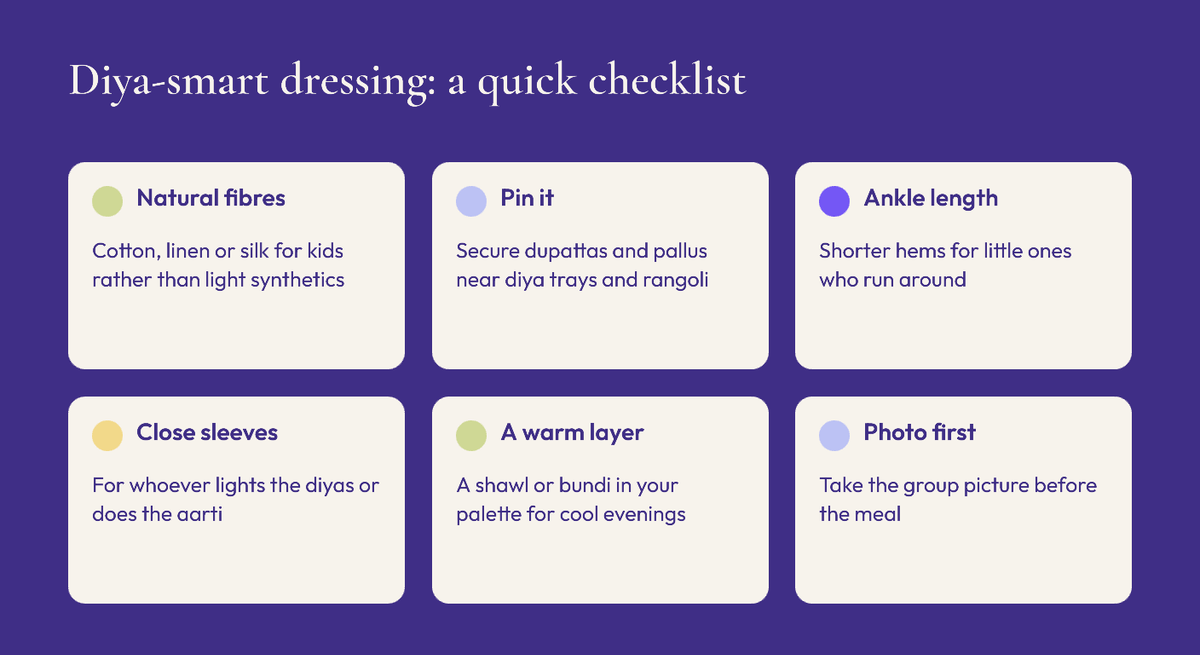
Diwali means open flames, sparklers for some families, and kids moving fast around both. A few practical choices help:
- Prefer natural fibres for kids. Cotton, linen and silk are generally a safer choice near flames than lightweight synthetics, which can melt.
- Pin or tie dupattas and pallus. Loose ends near diya trays and rangoli are the most common hazard.
- Avoid long trailing hems for little ones. Ankle length is easier to manage than floor length.
- Keep sleeves close-fitting for whoever is lighting diyas or doing the aarti.
- Bring a layer. In north India, early November evenings can get cool, so a shawl or bundi in the palette colour helps.
Photo tips for the family Diwali picture
A few small choices make the group photo work:
- Arrange by colour, not by height alone. Spread the anchor colour across the frame rather than putting everyone in it on one side.
- Avoid all-black or all-white blocks. Both can look harsh next to warm festive colours under artificial light.
- Limit loud prints to one or two people. A print on everyone tends to clash in photos.
- Shoot just after sunset. The light outside is soft, and the diyas and fairy lights start to glow.
- Do the photo before the meal. Dupattas and pleats look best before everyone sits down for hours.
If you are still choosing shades that suit everyone, our guide to the best colours for Indian skin tones is a useful starting point.
FAQ
How do I coordinate Diwali outfits for my family without matching?
Pick one shared palette of an anchor colour, an accent and a neutral. Have some people wear the anchor colour as the main outfit and others wear it as a dupatta, bundi, stole or pocket square, while mixing fabrics and silhouettes.
What is the date of Diwali 2026?
Lakshmi Puja, the main Diwali evening, is on Sunday, November 8, 2026. Dhanteras is on Friday, November 6. Govardhan Puja and Bhai Dooj follow, with dates that vary slightly by panchang and location.
Which colours are good for a Diwali family photo?
Marigold with ivory and gold, maroon with gold and blush, emerald with rani pink and ivory, or peach with mint and cream all photograph well under warm festive lighting.
What should kids wear for Diwali?
Soft cotton kurta-pyjamas, cotton lehengas or frocks without scratchy embellishment, ankle length rather than floor length, and natural fibres rather than lightweight synthetics near diyas.
Do we need new clothes for a coordinated Diwali look?
Usually not. Start with what everyone already owns in the chosen palette. Often one or two people need a single new piece, such as a bundi or dupatta, to complete the story.
Plan your family's Diwali looks with Elara
Coordinating four or five wardrobes is the hard part. Elara is an AI personal stylist that works from your digital closet: save your Diwali pieces, ask for a look in your family's palette, and get outfit suggestions built from clothes you already have, plus ideas for the one piece that would pull it together. Try Elara before the festive rush.
Your stylist, in your pocket
Stop reading about outfits. Start wearing them.
Elara knows your closet, shops every store and gets you dressed for any occasion.