Best Colours for Indian Skin Tones: A Festive and Wedding Colour Guide
Find the best colours for your Indian skin tone. Learn how to check your undertone, which shades suit warm, cool and neutral skin, and how to pick festive and wedding outfits.

Last updated: October 2026
Quick answer: The best colours for your Indian skin tone depend on your undertone (warm, cool or neutral) more than how light or deep your skin is. Warm undertones suit mustard, rust, coral, emerald and gold. Cool undertones suit royal blue, magenta, wine and silver. Neutral and olive undertones suit teal, deep green, dusty rose and burgundy. Test in daylight, compare two or three shades side by side, and trust how you feel in them.
Every festive season starts with the same shop-floor moment. You hold a saree against your face, the shopkeeper says it suits you, and you cannot tell if it does.
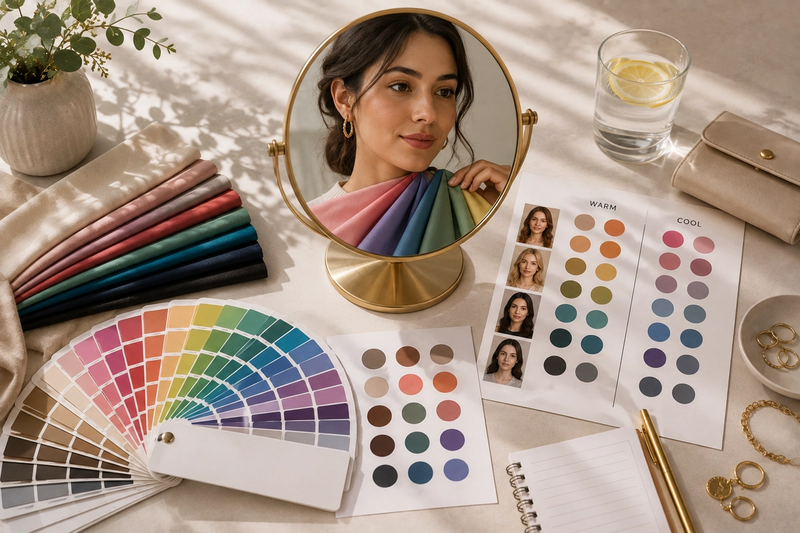
There is a simple way to settle it. This guide explains skin depth and undertone in plain language, gives you four tests you can do at home, and lists festive colours that work for each undertone, from Diwali kurtas to wedding lehengas.
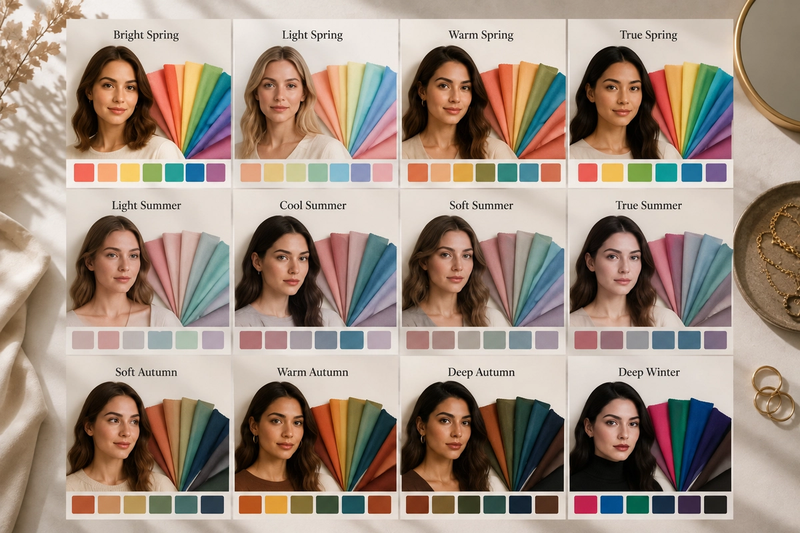
One honest note first: colour analysis is a guide, not a rulebook. Seasonal systems were popularised around Western skin tones, and Indian skin is more varied than most charts allow. That is why the approach below focuses on undertone and contrast instead of forcing you into a single label.
Skin tone vs undertone: what each means
- Depth (skin tone): how light or deep your skin is, from fair to medium to deep. It affects how bright or soft a colour can be.
- Undertone: the subtle hue under the surface, usually warm (golden, peachy), cool (pink, bluish) or neutral and olive (a mix, sometimes with a greenish cast).
- Contrast: how different your skin, hair and eyes are from each other. High contrast can carry bold colours. Low contrast often looks better in softer, blended tones.
How to find your undertone: 4 easy tests
- Vein test: look at the veins on your inner wrist in daylight. Greenish suggests warm, blue or purple suggests cool, and a mix suggests neutral.
- Jewellery test: hold gold and silver near your face. If gold looks richer, you likely lean warm. If silver looks cleaner, you likely lean cool. If both work, you may be neutral.
- Sun test: if you tan easily and golden, you may be warm. If you burn or turn pink first, you may be cool.
- Fabric test: hold a bright white and an off-white cloth near your face without makeup. The one that looks more natural hints at your undertone.
No single test is definitive. Use three or four and look for the pattern.
Best colours by undertone
- Warm undertone: skin tends to look golden, peachy or olive-gold, and tans easily. Colours that flatter: mustard, rust, terracotta, coral, olive, emerald, maroon. Metal: gold, kundan, antique gold. Festive ideas: a mustard silk saree, a rust kurta, an emerald lehenga.
- Cool undertone: skin tends to look pink or bluish and burns before tanning. Colours that flatter: royal blue, magenta, wine, plum, ruby, icy pastels. Metal: silver, platinum, oxidised silver. Festive ideas: a royal blue Banarasi, a wine anarkali, a magenta saree.
- Neutral or olive undertone: a mix of both, sometimes with a greenish cast. Colours that flatter: teal, deep green, dusty rose, burgundy, navy, soft gold. Metal: both gold and silver. Festive ideas: a teal lehenga, a burgundy sherwani, a rose pink saree.
Best colours by depth
- Fair to light: soft and medium-intensity shades flatter. Jewel tones like emerald, sapphire and ruby look striking. Very pale pastels can wash you out.
- Medium: you can carry both rich and bright colours. Mustard, coral, teal, maroon and deep blue are reliable.
- Deep: bold and saturated colours stand out beautifully. Try cobalt, fuchsia, emerald, canary yellow, ivory and crisp white. Colours too close to your skin tone can look flat unless contrasted with jewellery or a border.
Ready to upgrade your wardrobe?
Get the Elara app for AI-powered styling and virtual try-ons.
Festive colour picks
- Diwali: gold, maroon, emerald and mustard for the puja. Wine, navy and teal for evening events.
- Navratri and Durga Puja: follow the day's colours and choose the shade within each that flatters you.
- Karwa Chauth: red, maroon, pink and orange. Choose the red with a warm or cool tilt that matches your undertone.
- Weddings: deep jewel tones for ceremonies and metallics for sangeet and receptions.
- Bhai Dooj and daytime events: lighter versions of your best colours, like peach, sage, mint or powder blue.
Common mistakes
- Choosing a colour because it is trending, not because it suits you.
- Judging colour in shop lighting. Check in daylight when you can.
- Wearing a wrong-undertone colour near the face and fixing it with makeup instead of changing the colour.
- Ignoring contrast. Wearing a very dark outfit with very pale jewellery, or the other way around, can look disconnected.
A simple trick for any colour you love
If you love a colour that is not in your best palette, you can still wear it. Put a flattering colour near your face, such as a dupatta, scarf, earrings or jewellery set, and let the other colour sit lower on the body.
Find your palette with Elara
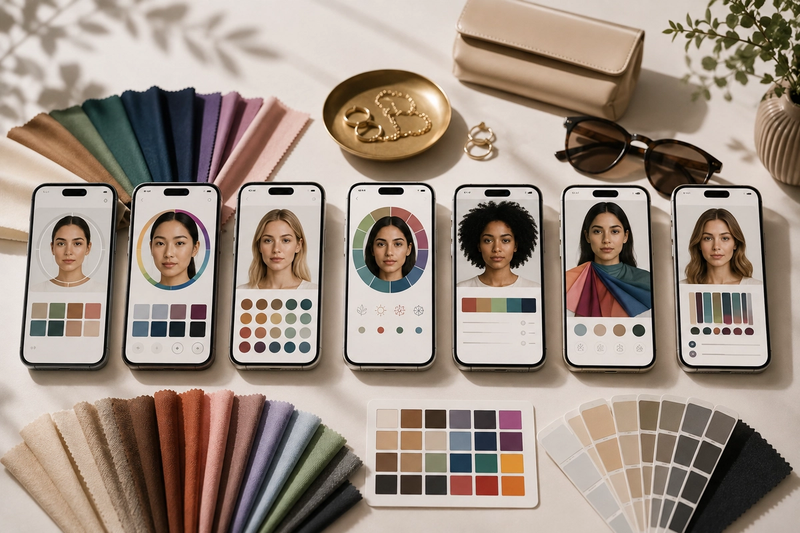
If you would rather not hold fabrics up to your face in a mirror, Elara can help. The app uses your selfie to suggest a colour palette that suits your undertone, then builds outfits around those colours from the clothes you already own. You can also try pieces virtually to see how a shade looks on you before you buy. Download Elara on iOS or Android.
Related reading
- Color Analysis: Find Your Perfect Palette & Wear It Well
- Seasonal Color Analysis: Find Your Palette in 3 Steps
- Color Analysis App: 80-95% Accuracy + Daily Styling
FAQ
What are the best colours for Indian skin tone?
It depends on your undertone. Warm suits mustard, rust, coral and emerald. Cool suits royal blue, magenta and wine. Neutral or olive suits teal, deep green and dusty rose.
Which colour suits dusky or deep skin?
Bold and saturated shades like cobalt, fuchsia, emerald, canary yellow and crisp white look striking. Avoid shades too close to your skin tone without contrast.
What colour saree suits medium skin tone?
Maroon, mustard, teal, emerald, coral and deep blue are reliable choices. Check the undertone to choose the exact shade.
How do I know if I have a warm or cool undertone?
Check your wrist veins in daylight, compare gold and silver jewellery near your face, notice how you react to the sun, and use two or three tests together.
Does seasonal colour analysis work for Indian skin?
It can be a starting point, but the common 12-season systems were built around Western colouring, so Indian skin may fall between categories. Undertone and contrast give a more practical guide.
Can I wear colours that are not in my palette?
Yes. Keep a flattering colour near your face and use the other colour lower on the body or as an accent.
Your AI Stylist is Here.
live on the App Store & Google Play
Available on iOS and Android for seamless access anytime, anywhere.