
Bhai Dooj 2026 Outfits: What to Wear for the Tilak on November 11
Bhai Dooj 2026 is on 11 November in India. Four outfits for sisters and brothers that sit well on the floor, stay clear of the diya and hide tilak marks.
 Mehul AgarwalFounder & CEO
Last updated: October 2026
Quick answer: Bhai Dooj 2026 falls on Wednesday, 11 November in India, according to Drik Panchang for New Delhi, with the afternoon (aparahna) window from 1:10 PM to 3:20 PM. Because the tilak usually happens with the brother seated low on a patta or mat, wear something you can sit cross-legged in, pin your dupatta or pallu away from the aarti lamp, and pick mid or deep colours that will not show a stray roli mark. In Delhi, IMD's 1991 to 2020 normals put November at about 28°C by day and 13°C at night, so keep a light layer for the evening meal.
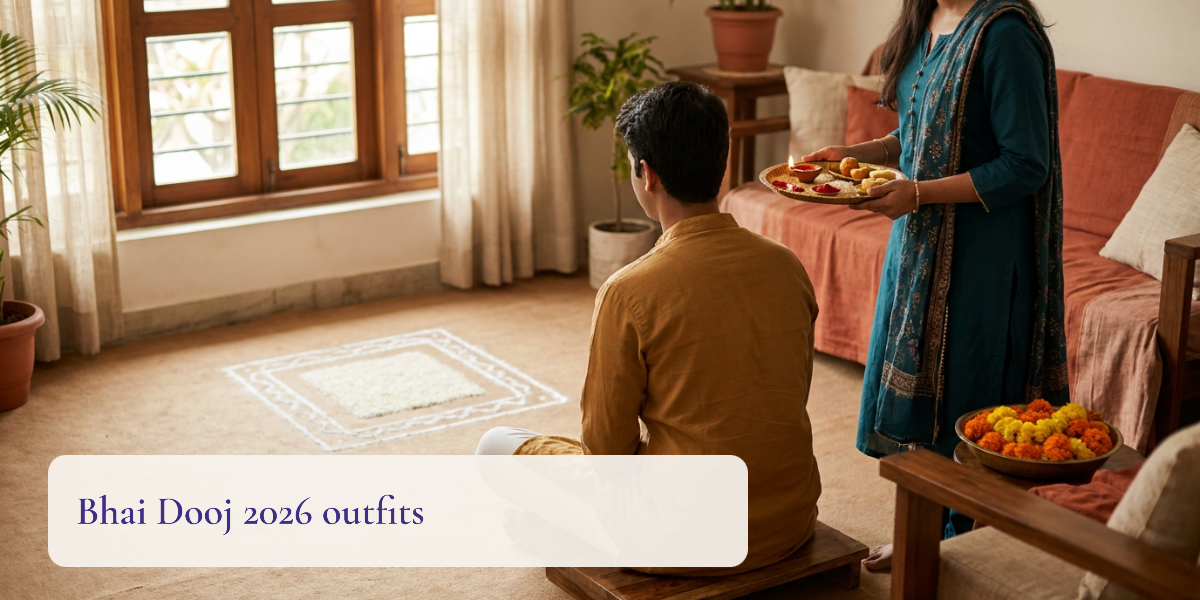
Bhai Dooj, which closes the Diwali festivities, is a small and homely occasion. There is no dress code and no prescribed colour, but the ritual itself decides a lot about what works: floor seating, a lit diya at face height, wet tilak paste, and a long family lunch. This guide explains what happens, then gives four outfits (two for sisters, two for brothers) built around those moments.
Every family and region does it a little differently, so treat this as a practical starting point and follow your elders where they differ.
What happens at the Bhai Dooj tilak, and why it shapes your outfit
The sister seats her brother, applies a tilak to his forehead, performs aarti with a lamp, feeds him sweets, and the brother gives a gift in return. That sequence means three things for clothes: you will sit or kneel on the floor, a flame will pass close to your sleeves and dupatta, and coloured paste will be near your collar.
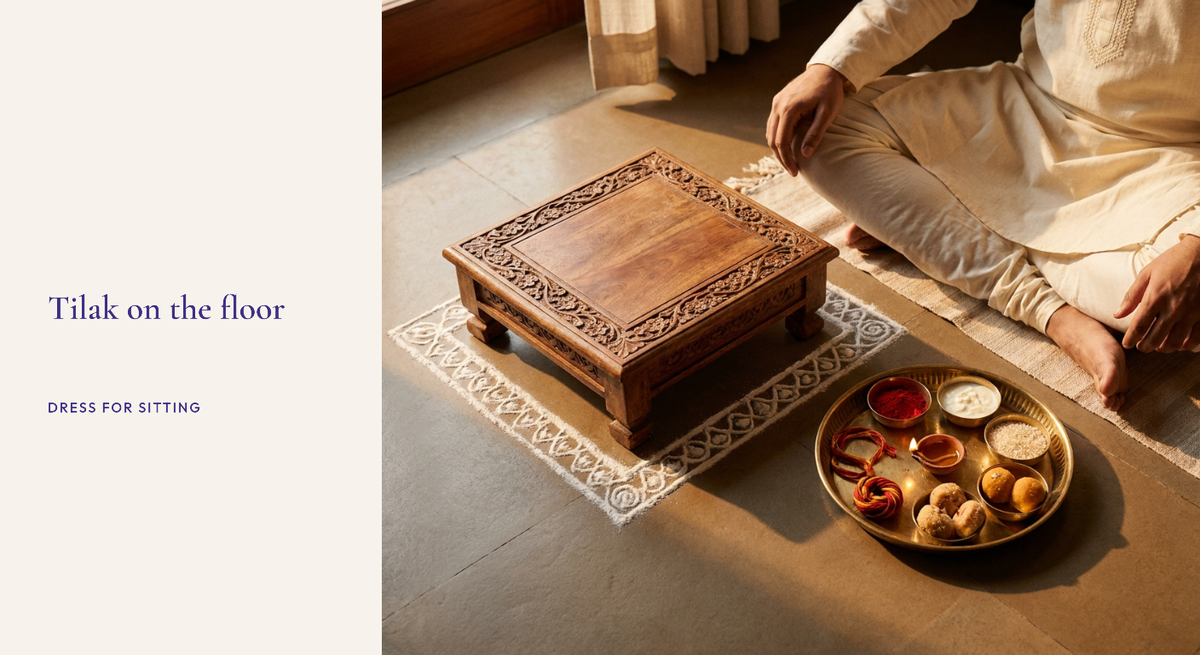
Drik Panchang describes the core rite: the sister prepares a decorated thali, applies the tilak, performs aarti and offers sweets and a meal, and many families also tie a sacred thread on the brother's wrist. The Dwitiya tithi runs from 2:00 PM on 10 November to 3:53 PM on 11 November (New Delhi time), and Drik Panchang lists the aparahna window, 1:10 PM to 3:20 PM on the 11th, as the time for the ceremony.
Regional versions change the details that matter for clothes:
- Maharashtra (Bhau Beej): the brother sits on a special rug or a wooden patta, and some families draw a rangoli square around him, according to Festivals of India. Loose churidar or straight pants beat a slim trouser here.
- West Bengal (Bhai Phonta): the phonta is a paste of sandalwood, kajal and curd, applied three times with the little finger of the left hand, with paddy and durba grass placed on the brother's head. Kajal is the one that stains, so avoid white or ivory near the face.
- Nepal (Bhai Tika): the brother receives a vertical seven-coloured tika and a garland of makhamali flowers, and the sister pours a protective circle of oil or water around where he sits. Keep hems and trailing dupattas clear of the floor.
Abroad, check your local calendar. Drik Panchang lists Bhai Dooj on Tuesday, 10 November for US locations, because the tithi falls on a different calendar day there.
Two outfits for sisters
Sisters do the most moving: carrying the thali, lighting the lamp, kneeling, serving. Choose for range of movement first, festive feel second.
1. A straight kurta set with a pinned dupatta
A straight or A-line kurta in cotton, chanderi or a cotton-silk blend, with straight pants or a palazzo, lets you kneel and stand repeatedly without fuss. The key detail is the dupatta: pin it at one shoulder (or both, crossed at the back) so it cannot slide forward over the diya while you circle the thali.
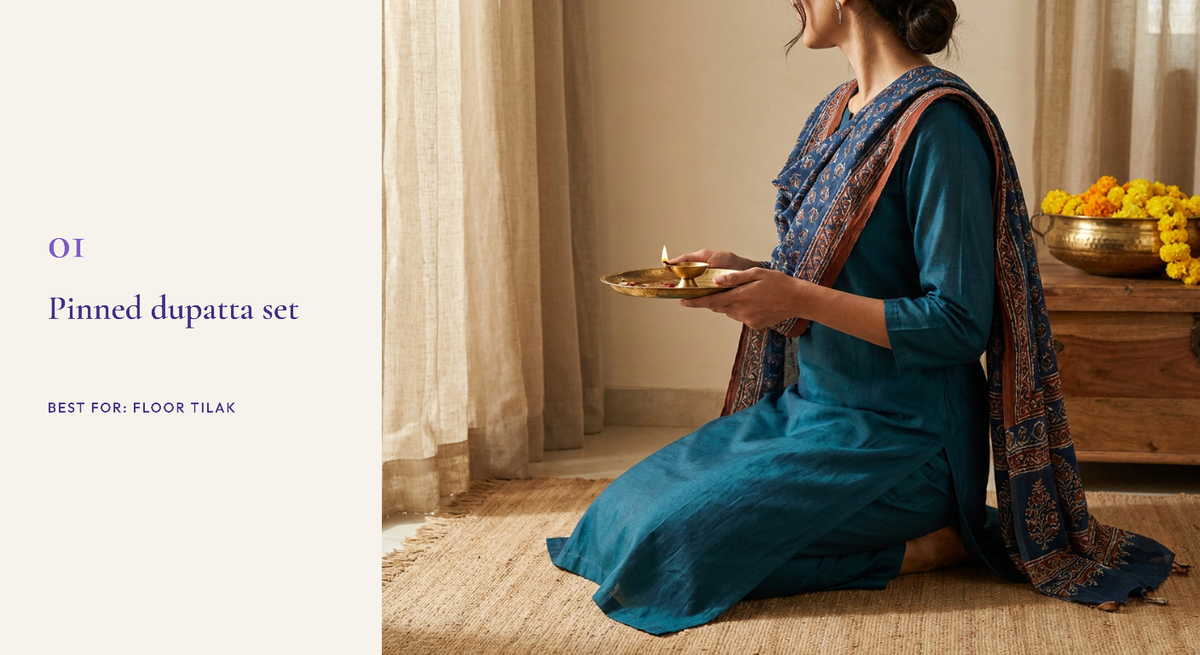
Why it works: chanderi and cotton breathe through a warm afternoon tilak, and straight pants do not ride up when you sit. Pick teal, bottle green, rust, deep pink or indigo rather than white, so a fleck of roli or kajal reads as nothing. If your dupatta is synthetic georgette or chiffon, keep it well away from the flame, since many synthetics melt rather than char.
2. A soft saree with the pallu pinned
If you want to wear a saree, choose one that sits well on the floor: soft cotton, cotton-silk, a light Banarasi or a handloom with some body. Heavy tissue or stiff organza crushes and slides when you kneel. Pleat the pallu and pin it at the shoulder, then tuck the end at the waist so both hands are free for the thali.
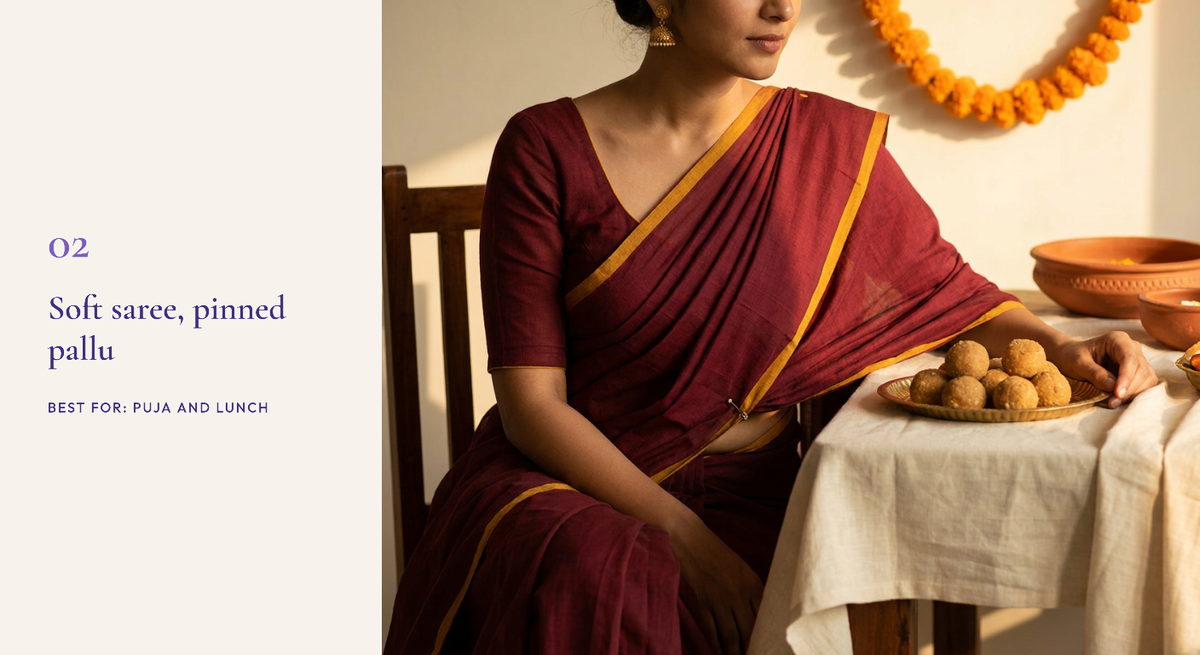
Why it works: a pinned, tucked pallu stays put through the aarti and the meal, and a deeper colour with a contrast border photographs warmly in afternoon light. If you are new to draping, our step-by-step Nivi drape guide shows where to pin so the pleats hold while you sit.
Two outfits for brothers
The brother spends most of the ritual seated, facing his sister, so the outfit has to sit well and look tidy from the front at face level, which is where the photos are taken.
3. Kurta, churidar and a Nehru jacket
A cotton or linen-blend kurta with a churidar or straight pyjama is the easiest thing to sit cross-legged in. Add a sleeveless Nehru jacket for the evening meal or visits to relatives: it smartens the look, adds a layer as the temperature drops, and covers any tilak drips on the kurta front.

Want this styled from your own closet?
Elara builds the look from what you own, then lets you try it on.
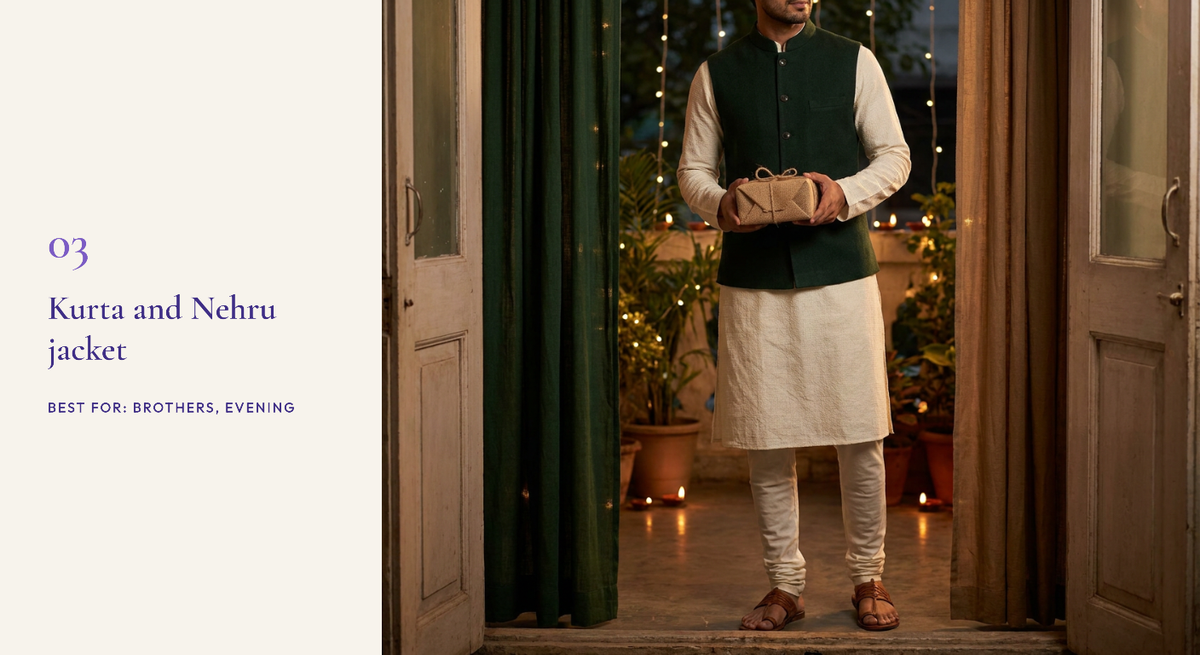
Why it works: the jacket can come off for the tilak and go back on afterwards. Ivory or cream kurtas look festive but show roli easily, so if you choose one, pair it with a darker jacket and keep a napkin handy. Kolhapuris or mojaris slip off easily, which helps if your family removes footwear for the ritual.
4. A short kurta over dark denim
For families who keep it casual, a hip-length kurta in rust, mustard, olive or navy over dark straight jeans works well. It feels festive in photos but sits comfortably on a floor cushion, and dark denim hides marks.
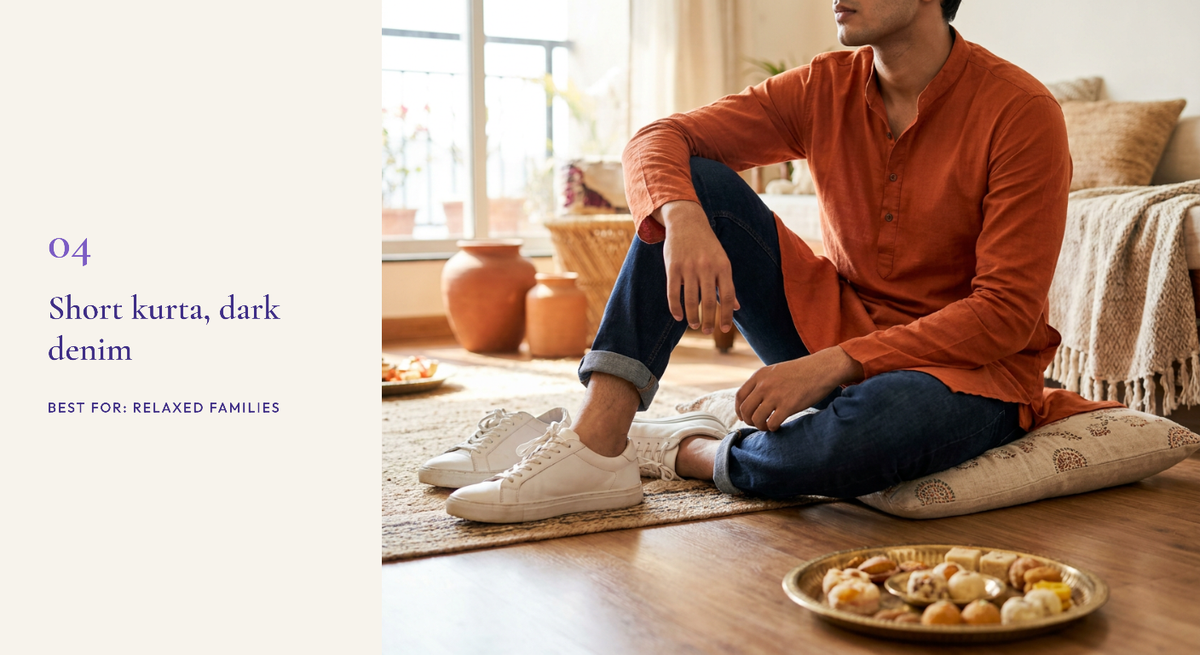
Why it works: a short kurta does not bunch under you on the floor the way a long one can, and straight-leg jeans have more room at the knee than skinny ones. Avoid very stiff raw denim if you will sit cross-legged for long.
Fabrics and colours that survive tilak and aarti
For this one day, the safest choices are breathable natural fibres in mid to deep shades, with nothing loose near the flame.
- Colour: none is prescribed for Bhai Dooj in the ritual descriptions above, so choose any festive tone you like. Deeper shades hide roli, kumkum, sandalwood and kajal far better than white or pastel.
- Fabric: cotton, linen blends, chanderi and silk handle a warm afternoon and sitting on the floor better than heavy velvet or stiff tissue.
- Near the lamp: pin dupattas and pallus, roll back very wide sleeves, and keep sheer synthetic layers away from the diya. Our Diwali outfit safety guide explains which fabrics are riskier near open flames and why.
- If paste lands on fabric: lift it off with a blunt edge rather than rubbing it in, then treat the mark promptly. The Diwali stain removal guide covers ghee, haldi and coloured powders step by step.
Dressing for November weather
In north India, November afternoons are pleasant but evenings turn cool. IMD's climatological normals for Safdarjung, Delhi (1991 to 2020) show a mean daily maximum of 28.4°C and a mean minimum of 13.0°C in November. That gap is why a jacket, shawl or light stole matters if the celebration runs into dinner.
Sisters can carry a pashmina-style shawl or a cotton-wool stole that matches the outfit. Brothers can rely on the Nehru jacket or a light bandhgala. If you are celebrating in the UK, Canada or the US, a fine thermal layer under a kurta keeps you warm without bulk; our thermal base layers guide explains which weights sit flat under clothes.
Siblings apart: dressing for a video-call tilak
If you are doing the tilak over a video call, with the sister doing her side of the aarti on screen, dress for the camera. Solid, saturated colours read best on a phone camera, while very fine stripes and tiny prints can shimmer on screen. Sit facing a window rather than with it behind you, so your face and outfit are lit.
If you are sending a gift instead of being there, our guide to buying clothes for Bhai Dooj without asking your sibling's size walks through finding the right fit.
FAQ
When is Bhai Dooj in 2026?
Drik Panchang lists Bhai Dooj on Wednesday, 11 November 2026 for New Delhi, with the aparahna window from 1:10 PM to 3:20 PM. US locations get Tuesday, 10 November because the Dwitiya tithi falls on a different calendar day there. Follow your family's panchang if it differs.
What colour should I wear on Bhai Dooj?
There is no colour prescribed for Bhai Dooj in the ritual descriptions we checked, so wear any festive shade. Practically, mid and deep colours such as teal, rust, maroon, mustard and indigo hide roli, kajal and sandalwood marks better than white.
What should a brother wear for Bhai Dooj?
A cotton kurta with churidar or straight pyjama is the easiest to sit cross-legged in, with a Nehru jacket for the evening. For a casual family, a short kurta over dark straight jeans works. Choose footwear you can slip off easily.
Can I wear western clothes on Bhai Dooj?
Yes. Nothing in the ritual requires Indian wear. Just choose clothes you can sit on the floor in, avoid loose sleeves near the aarti lamp, and pick darker colours if tilak paste will be near your collar.
How do I get a tilak or roli mark out of my kurta?
Lift off any paste with a blunt edge, blot rather than rub, and treat it before it dries. Our Diwali stain removal guide covers coloured powders, ghee and haldi in detail, and silk or zari pieces are safest with a dry cleaner.
Planning outfits for every function between Diwali and the wedding season? Elara, your AI personal stylist, builds looks from clothes you already own and plans them on your calendar, so Bhai Dooj, a sangeet and a reception each get something that works. Try Elara free for 14 days.
Your stylist, in your pocket
Stop reading about outfits. Start wearing them.
Elara knows your closet, shops every store and gets you dressed for any occasion.