
What to Wear in Varanasi in November: Ghats, Temples, Dev Deepawali
Varanasi in November runs about 30°C by day and 14°C at dawn. Wear breathable cotton, cover arms and legs for temples, and bring a shawl for Dev Deepawali.
 Mehul AgarwalFounder & CEO
Last updated: November 2026
Quick answer: Varanasi in November averages about 30°C (86°F) by day and 14°C (57°F) at night with almost no rain, according to Weather2Travel's climate data. Wear breathable cotton or linen with long sleeves and full-length bottoms for the ghats and temples, shoes you can slip off in seconds, and a wool shawl or light jacket for dawn boat rides and Dev Deepawali night on Tuesday 24 November 2026.
November is the month most visitors pick for Varanasi: the monsoon is long gone, the river is calm, and the city builds to Dev Deepawali, when the riverfront is lit with lamps on Kartik Purnima. The catch is a wide daily swing. Afternoons on the stone steps feel warm, while a 6 am boat on open water or a long wait for the evening aarti can feel properly cold. Add temple rules about covering up and leaving shoes and phones outside, and packing gets tricky. This guide splits a Varanasi day into four situations, with one outfit for each and the reasoning behind every piece.
Varanasi weather in November: what the numbers mean for clothes
Expect warm afternoons, cool evenings and chilly early mornings, with the temperature falling as the month goes on. Weather2Travel lists a November average of 30°C maximum and 14°C minimum, about 8 hours of sunshine a day and zero typical rainy days; December drops to 25°C and 10°C. That 16 degree gap between afternoon and dawn is the whole packing problem.
In practice that means three layers rather than one heavy outfit:
- A breathable base: cotton, linen or a cotton-silk blend that copes with sun on the ghats and stays comfortable through long walks.
- A warm middle layer you can carry: a fine merino sweater, a quilted vest or a Nehru jacket that folds into a day bag.
- A wrap for the river: a wool or pashmina shawl, or a stole thick enough to block wind on a boat. A shawl doubles as a head or shoulder cover at temples.
Late November nights can sit close to the monthly low, so if you are visiting for Dev Deepawali, pack for the cooler end of the range.
Outfit 1: the ghats by day
For daytime walks between ghats, wear a long-sleeved cotton kurta or a loose shirt with straight trousers or a long skirt, closed walking shoes with grip, and a light stole. Long sleeves and a stole protect you from sun and work for any shrine you pass.
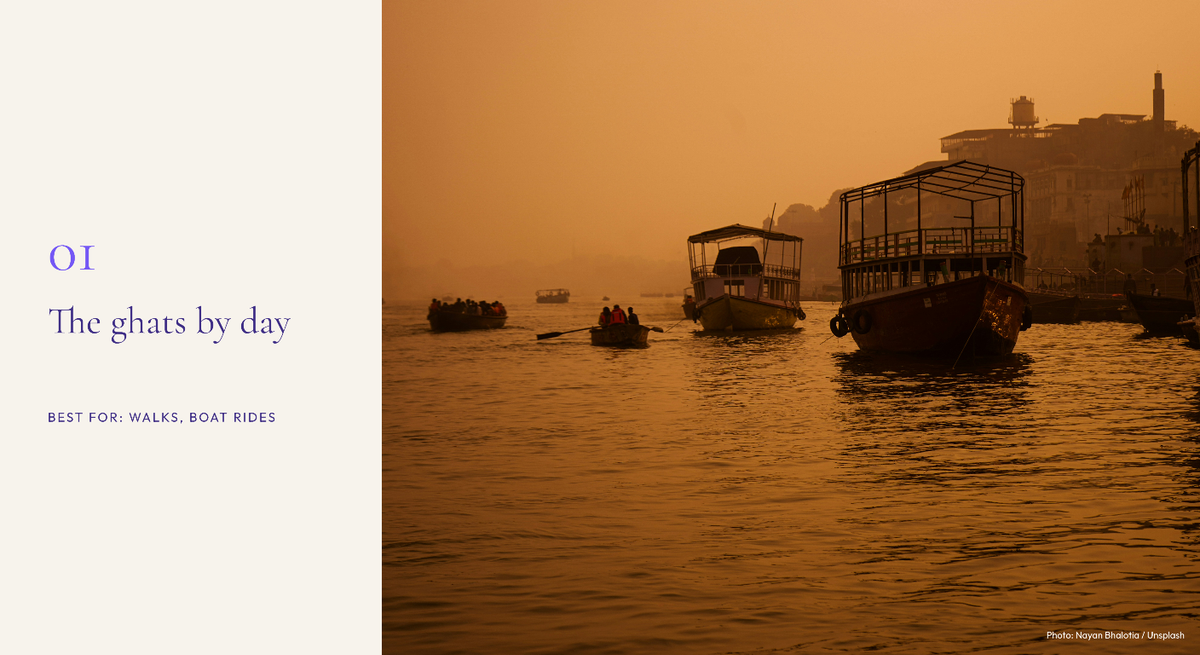
The ghats are linked by stone steps that can be steep, uneven and wet near the water, and the lanes behind them are narrow and busy. That is why footwear matters more than anything else here:
- Shoes: sneakers or walking sandals with a back strap and a grippy sole. Avoid smooth leather soles and heels on the steps.
- Bottoms: full-length and loose. Wide trousers, a palazzo or a long cotton skirt are cooler than jeans in the afternoon and modest for temples.
- Colours: mid tones such as indigo, rust, olive and block prints hide dust and splashes better than white.
- Bag: a crossbody bag worn at the front keeps your hands free on the steps and in crowds.
Outfit 2: temple visits, including Kashi Vishwanath
Cover your shoulders, arms and legs, wear shoes you can slip off quickly, and leave your phone, belt and bag behind or in a locker. Indian or Western clothing are both fine as long as they are not revealing.
At Shri Kashi Vishwanath Temple, Skyscanner's visitor guide says visitors must cover arms and legs, that mobile phones and shoes are not allowed inside, that belts with metal buckles are not allowed, and that lockers can be hired. Shubh Panchang's temple page adds that phones and cameras are deposited at a locker counter before entry, photography is not allowed anywhere on the premises, and security checks are thorough. Rules change on festival days, so confirm at the entry gate.
What that means for your outfit:
- A kurta set, salwar suit or long dress with sleeves is the easiest choice for women. Men are comfortable in a kurta with pyjama or trousers, or a shirt with full-length trousers.
- A dupatta or stole in your bag lets you cover your head at shrines where locals do.
- Slip-on footwear saves time at the shoe counter, and a pair of thin cotton socks keeps your feet off cold stone floors in the early morning.
- No belt, no leather-heavy accessories. A drawstring or elasticated waist avoids the belt question entirely.
- A small cloth pouch for cash and your locker token, since your phone and bag will not be with you.
Outfit 3: Dev Deepawali night on November 24
For Dev Deepawali, wear something festive but practical: a cotton-silk saree, a kurta set or a dressy shirt with trousers, flat shoes, and a warm shawl you can wrap fully around your shoulders. You will stand or sit on stone for hours after sunset.
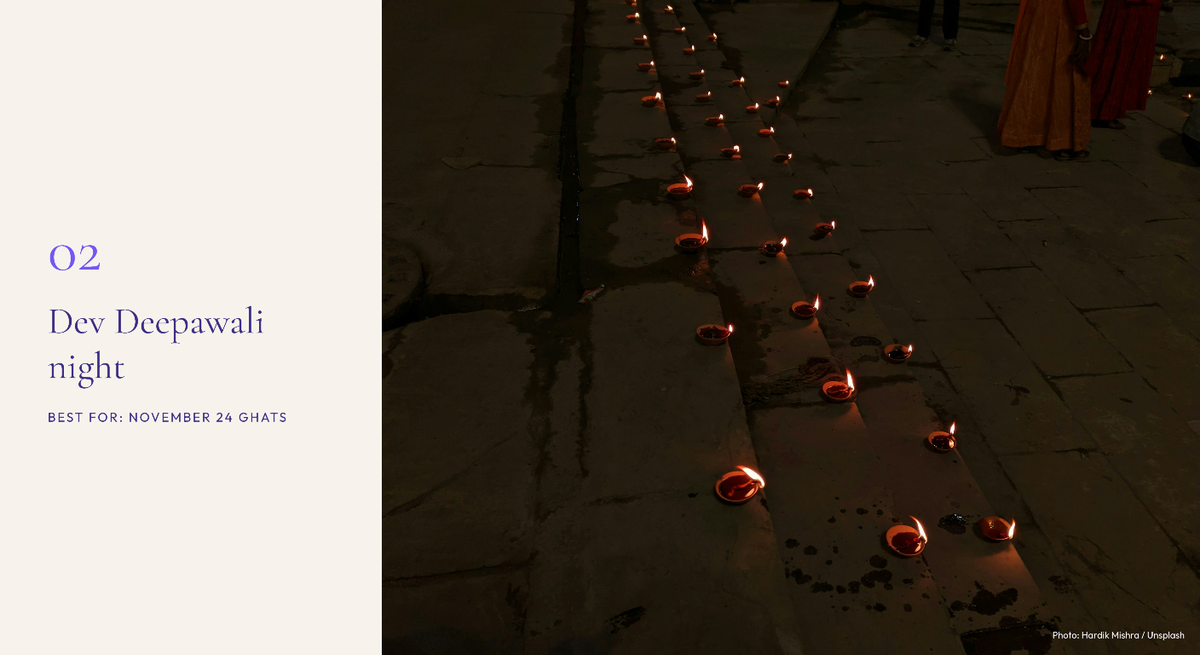
Dev Deepawali, the "Diwali of the gods", falls on Kartik Purnima, about fifteen days after Diwali, when the ghats from Ravidas Ghat to Rajghat are lit with earthen lamps and a large Ganga aarti is performed, as Wikipedia's Dev Deepavali entry describes. Panchang sources such as Hindutone list it for Tuesday 24 November 2026. Zingbus's planning guide notes that some sources list it a day later because the date follows the lunar tithi, so check the Varanasi district administration's announcement before you book. The same day is also Guru Nanak Jayanti, so expect larger crowds than a usual Tuesday.
How the crowd shapes your outfit:

Want this styled from your own closet?
Elara builds the look from what you own, then lets you try it on.
- Arrive early, dress for the wait. Zingbus advises reaching the ghats two to three hours before sunset and expecting vehicle access to stop a kilometre or more away. Comfortable flats beat festive heels by a mile.
- Keep fabrics away from flames. You will be surrounded by open diyas at ankle height. Tuck in a long dupatta or pallu, skip floaty synthetic layers, and choose cotton or silk over nylon or polyester, which can melt. Our Diwali outfit safety guide explains why.
- Bring the shawl, even if the afternoon was warm. Once the sun drops, a stone step by the river loses heat fast, and a boat on the water adds wind.
- Pockets or a crossbody bag. Mobile networks can struggle in dense crowds, so keep a printed hotel address and agree a meeting point, as Zingbus suggests.
- Rich colours photograph well under lamplight. Maroon, mustard, emerald and deep teal glow next to diyas, while pale pastels can wash out at night.
Outfit 4: the dawn boat ride
For a sunrise boat on the Ganga, dress as if it were 10 to 14°C with wind: a warm sweater or fleece over your daytime layer, a shawl or scarf, socks and closed shoes, and a cap or beanie. You can peel layers off by 9 am.
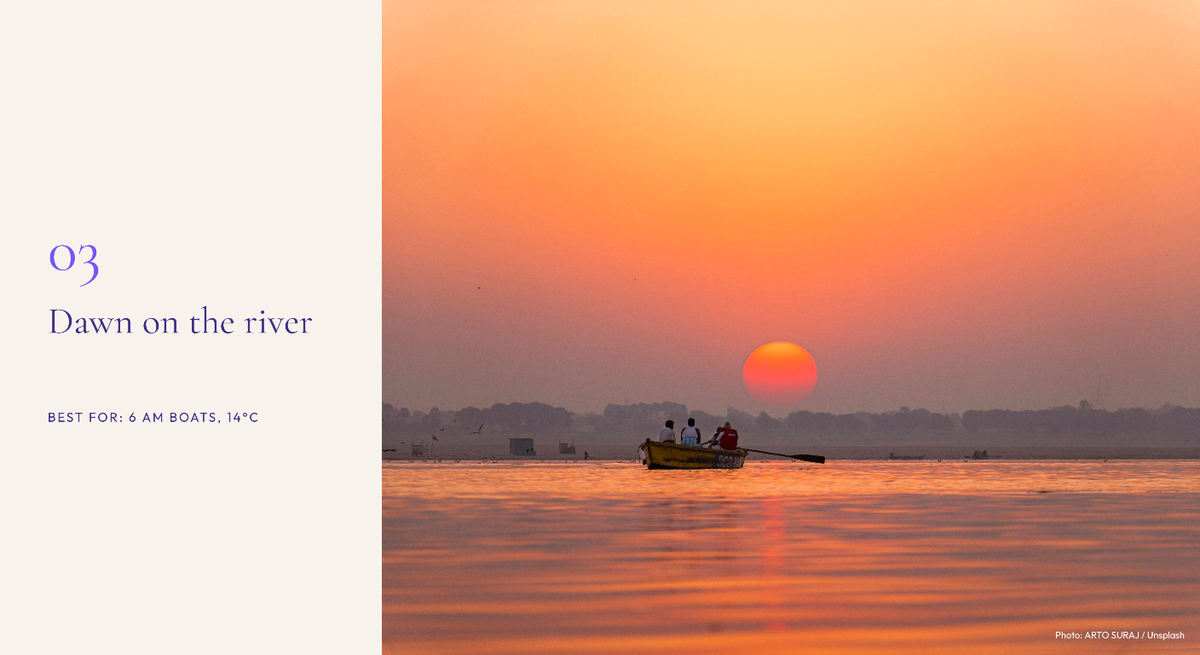
Early mornings are the coolest part of the day, and open water feels colder than the air temperature suggests. Boats are low, the seats are wooden and the bank-side steps can be damp, so:
- Layer thin rather than bulky: a merino sweater plus a quilted vest is warmer and easier to carry later than one thick coat.
- Wear trousers, not a skirt or saree, if you want to step in and out of a rowing boat easily.
- Pick a dark or patterned bottom. Boat seats and steps leave marks.
- Keep your hands free. A small crossbody bag or a jacket with zipped pockets is safer than a tote near the water.
What to pack for 4 days in Varanasi in November
A short list covers all four situations if every piece works twice:
- 2 long-sleeved cotton kurtas or shirts in mid tones
- 2 pairs of loose full-length bottoms, or 1 pair plus a long skirt
- 1 festive outfit for Dev Deepawali (a cotton-silk saree, kurta set or dressy shirt)
- 1 fine merino sweater or fleece, and 1 quilted vest or Nehru jacket
- 1 wool shawl or thick stole, plus 1 light dupatta or scarf
- 1 pair of grippy sneakers or strapped sandals, and 1 pair of slip-ons for temples
- Thin cotton socks, a cap or beanie, a cloth pouch and a crossbody bag
If you are also passing through Delhi, our guide to what to wear in Delhi in November covers colder, smoggier days. Visiting a gurdwara for Guru Nanak Jayanti on the same date? See what to wear to a gurdwara for Gurpurab.
FAQ
Is it cold in Varanasi in November?
Not by day. Afternoons average about 30°C, but nights fall to about 14°C, and early mornings on the river feel colder with wind. Pack a sweater and a shawl for dawn and late evenings.
What is the dress code for Kashi Vishwanath Temple?
Visitors are expected to cover arms and legs. Indian and Western clothes are both accepted if they are not revealing. Phones, cameras, bags and belts with metal buckles stay outside, and lockers are available near the gates.
When is Dev Deepawali 2026 in Varanasi?
Most panchang sources list Dev Deepawali for Tuesday 24 November 2026, on Kartik Purnima. Because the date follows the lunar tithi, some sources list a day later, so confirm with the Varanasi district administration before you travel.
Can I wear jeans in Varanasi?
Yes, jeans are fine for walking the ghats and the city. Loose cotton trousers are cooler in the afternoon sun, and either works at temples as long as your legs are covered.
What shoes should I wear on the Varanasi ghats?
Closed sneakers or strapped sandals with a grippy sole. The steps are uneven and can be wet near the water, and you will take shoes off at every temple, so pair them with an easy slip-on option for temple days.
Plan your Varanasi outfits before you pack
The easiest way to pack light for a trip that swings from sunny ghats to a cold dawn boat is to plan each day from clothes you already own. In Elara, add your clothes to your digital closet, put your Varanasi days in the Calendar, and let Daily Outfits suggest a look for each one, with Style DNA keeping the suggestions true to your taste. Try Elara free and arrive with an outfit ready for every part of the trip.
Your stylist, in your pocket
Stop reading about outfits. Start wearing them.
Elara knows your closet, shops every store and gets you dressed for any occasion.