
What to Wear to a Turkey Trot: Outfits by Temperature
Dress 10 to 20°F warmer than the forecast for a turkey trot. Outfits by temperature, the layering formula, costumes you can run in and what to pack for after.
 Mehul AgarwalFounder & CEO
Last updated: October 2026
Quick answer: For a Thanksgiving turkey trot on Thursday, November 26, 2026, dress as if it is 10 to 20°F warmer than the forecast, the rule running retailer Fleet Feet gives for cold-weather runs. At 30 to 40°F that means full-length tights, a wicking base layer and one more layer on top, light gloves and an ear band. Skip cotton next to your skin (Mayo Clinic notes it stays wet and cold) and bring an old layer to wear at the start line.
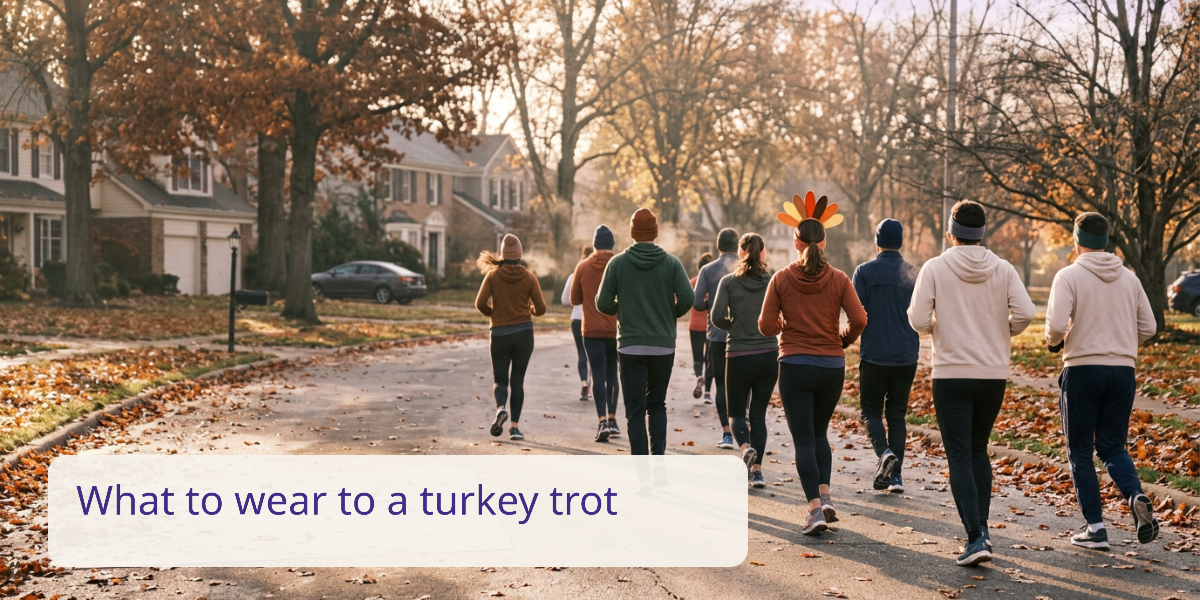
Thanksgiving morning is one of the biggest days on the running calendar in the US. RunSignup, one of the main race registration platforms, counted 920,761 registered participants across 833 Thanksgiving Day races on its platform alone in 2023, a record at the time. Most of those people are not racing for a time. They are walking or jogging 5K with family, often in a costume, then heading straight to a long lunch. That mix of cold start, warm middle and dinner afterwards is what makes dressing for it tricky.
Here is what to wear for each temperature, how to layer, how to survive the wait at the start, and how to get from the finish line to the table.
What to wear to a turkey trot by temperature
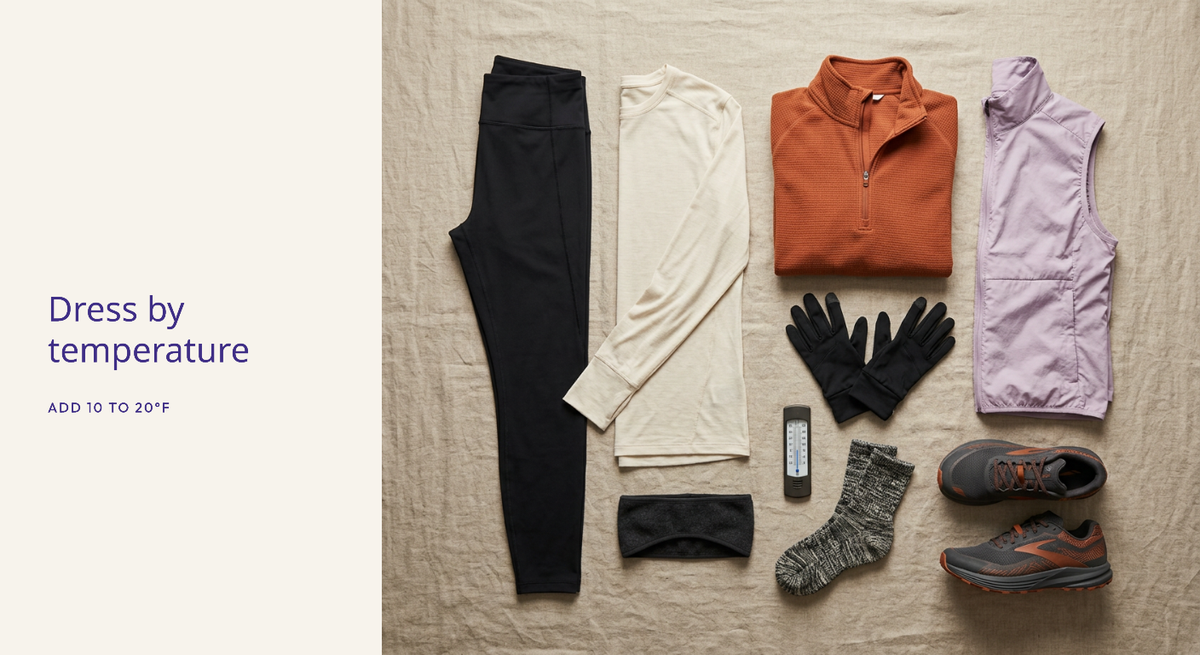
Use the feels-like temperature at your start time, then dress for 10 to 20°F warmer: you heat up within the first mile. Fleet Feet's cold-weather guide breaks it down roughly like this (we have kept their bands and added the turkey trot context):
- 40 to 50°F: shorts or capri tights and a long-sleeve wicking top, or a short-sleeve top with arm sleeves. Fleet Feet suggests covering your ears once it is under 50°F. Walkers should add a light jacket, because walking produces far less heat.
- 30 to 40°F: full-length tights or running pants, a base layer, and either a mid layer or a light wind jacket, usually not both. Light gloves and a hat or ear band.
- 20 to 30°F: add a third layer on top and choose insulating fabrics. Gloves and a hat are no longer optional.
- 10 to 20°F: your warmest tights, a base, mid and outer layer, a hat, gloves, and a neck gaiter you can pull over your mouth and nose. Fleet Feet recommends switching to mittens once it drops into the teens.
- Below 10°F: everything above plus long wool socks over your tights. Mayo Clinic notes that frostbite risk rises significantly when the air is below 5°F, and that strong wind chill can make outdoor exercise unsafe even in the right clothes. If your race goes ahead in that, consider walking it in full winter gear or sitting it out.
The turkey trot layering formula
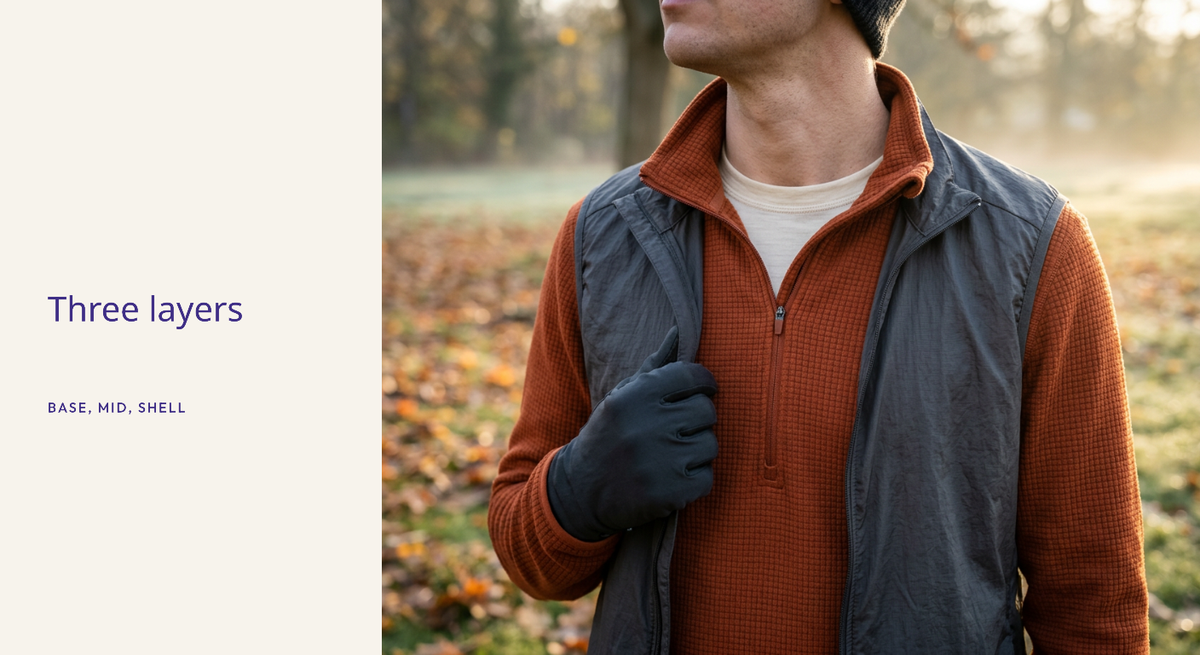
Three layers, each with a job. Getting the job right matters more than the brand.
- Base layer: a thin, soft, moisture-wicking top in polyester or merino. Mayo Clinic advises against cotton against the skin because it stays wet and cold once you sweat. This is the layer that decides whether you are clammy at mile two.
- Mid layer: warmth. A light fleece or grid-fleece quarter-zip for most trots, a synthetic insulated layer only on very cold mornings. Fleet Feet says this is the layer that does most of the insulating.
- Outer layer: a light, breathable wind shell or a running vest. It blocks wind and drizzle; a vest keeps your core warm without overheating your arms.
- Hands, head and feet: gloves from about 40°F down, mittens in the teens, an ear band or beanie, and wool-blend running socks, which Fleet Feet notes insulate even when wet. Your hands and ears get cold long before your legs do.
A useful test: if you feel comfortable standing outside in your running kit before the start, you are overdressed. You should feel slightly cold for the first five minutes.
For a deeper explainer on base-layer fabrics, see our guide to thermal base layers, merino vs synthetic.
Waiting at the start line: the throwaway layer
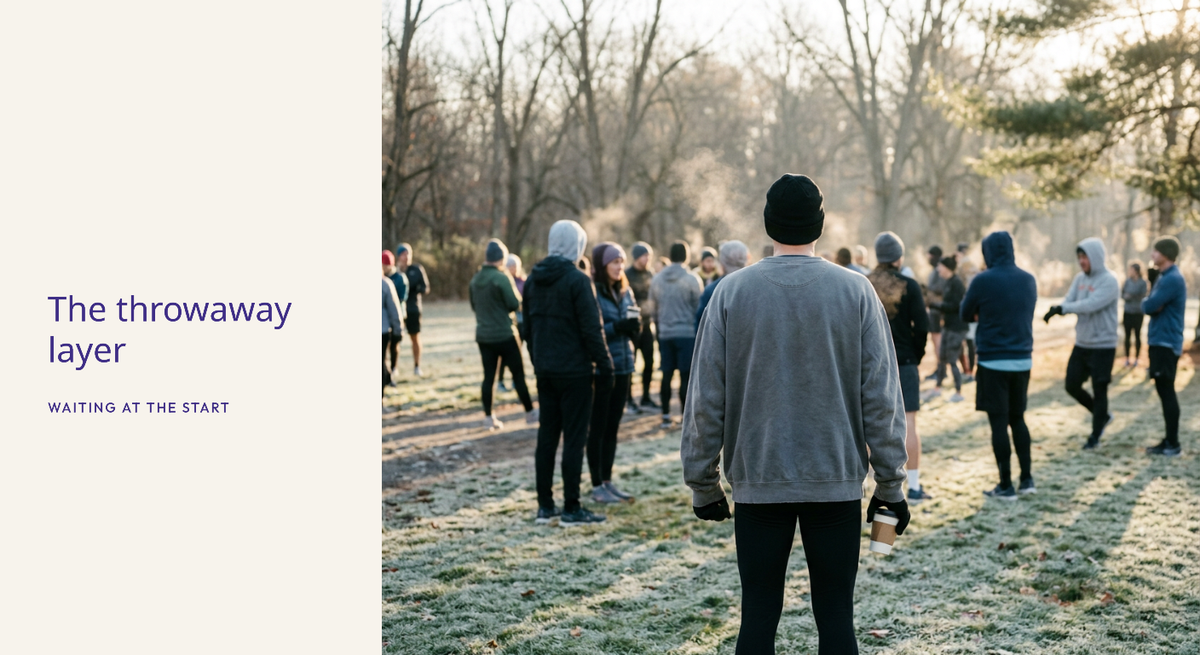
The coldest part of a turkey trot is often the 20 to 40 minutes before the gun, standing still in a crowd. Runners solve this with a throwaway layer: an old sweatshirt, a thrifted fleece or even a big bin bag with holes cut for your head and arms.
- Wear it over your running kit until the last minute, then take it off just before you start.
Want this styled from your own closet?
Elara builds the look from what you own, then lets you try it on.
- Check your race's FAQ before you drop clothes at the start: some events collect discarded layers and donate them, others ask you to use bag check instead.
- Old wool socks with the toes cut off make free arm warmers you can push down as you warm up.
- If you are bringing children, pack a spare dry hat and gloves for them; small hands get cold first.
Turkey trot costumes you can actually run in
Costumes are half the fun, and the best ones work with your layers rather than against them.
- Wear it on top, not underneath. A turkey hat, a pie-slice headband or a printed tutu goes over your running kit, so your base layer still wicks.
- Test it on a short run first. Anything that flaps, chafes or restricts your arm swing will annoy you by mile one.
- Keep your race bib visible. Pin it to the front of your outermost layer, or use a race belt so you can take a jacket off without unpinning it.
- Inflatable or full-body costumes are best for walkers. They trap heat, which is pleasant at 30°F and miserable at 55°F.
- Coordinate as a family with one shared colour (all orange beanies, for example) rather than full matching outfits. It is easier to find each other at the finish, too.
After the race: from the finish line to the table
Your body cools quickly once you stop, and sweaty base layers make it worse. Pack a small bag with a dry top, a warm jumper, dry socks and a hat, and change as soon as you can, even in the car.
If you are going straight to Thanksgiving lunch, make that dry outfit the one you will eat in: a soft knit, comfortable trousers with a little stretch, and a layer you can remove in a warm kitchen. Our Thanksgiving outfit ideas cover what to wear from the airport to the dinner table, and if gravy finds you later, there is always our Thanksgiving stain rescue guide.
FAQ
What should I wear to a turkey trot if it is 40 degrees?
Dress as if it is 50 to 60°F: full-length tights or running pants, a long-sleeve wicking top, a light wind jacket or vest, light gloves and an ear band. Add a throwaway layer for waiting at the start.
Is it OK to wear jeans or a cotton hoodie to a turkey trot?
For a walk, it is fine. For running, avoid cotton next to your skin: Mayo Clinic notes cotton stays wet and cold once you sweat, which leaves you chilled after the finish.
How do I keep my hands warm at a turkey trot?
Wear light running gloves from about 40°F down and switch to mittens in the teens, as Fleet Feet recommends. Mittens keep your fingers together and warmer.
When is the turkey trot in 2026?
Most turkey trots run on Thanksgiving morning, Thursday, November 26, 2026. Some towns hold theirs on the weekend before, so check your local race page.
Can I run a turkey trot in a costume?
Yes, costumes are part of the tradition. Wear them over your running layers, test them on a short run, and keep your bib visible on the front.
Plan your Thanksgiving week outfits with Elara
A race in the morning, lunch with family, and maybe Black Friday shopping on the way home: that is a lot of outfits for one long weekend. Elara, the AI personal stylist app, can plan looks from the clothes you already own for every event on your calendar, including what to change into after the finish line. Try Elara free for 14 days.
Sources
- Running USA, 2023 turkey trots shatter participation records on RunSignup (November 2023)
- Fleet Feet, Winter running and layering tips
- Mayo Clinic News Network, Exercise safety in cold weather (March 2023)
Your stylist, in your pocket
Stop reading about outfits. Start wearing them.
Elara knows your closet, shops every store and gets you dressed for any occasion.