
What to Wear to Pushkar Fair 2026: Outfits for Day, Dawn and Temples
Pushkar Fair 2026 runs 17 to 24 November. Wear loose cotton by day, cover shoulders for the Brahma Temple, and pack a shawl for 12°C dawns and evenings.
 Mehul AgarwalFounder & CEO
Last updated: November 2026
Quick answer: Pushkar Fair 2026 is listed for 17 to 24 November, with the religious mela running from Kartik Ekadashi on Friday 20 November to Kartik Purnima on Tuesday 24 November. Nearby Ajmer averages about 29°C (84°F) by day and 12°C (54°F) at night in November, with almost no rain. Wear loose cotton or linen in the day, closed shoes for sand and dust, a stole that covers your shoulders for the Brahma Temple and the ghats, and a fleece or wool shawl for dawn and after dark.
Pushkar Fair is two events in one: a huge camel and livestock fair on the sand dunes west of town, and a Hindu pilgrimage to Pushkar Lake that peaks with the dawn bath on Kartik Purnima. That mix is why packing goes wrong. You need clothes that cope with midday sun and fine sand, that are respectful at a temple and a holy lake, and that keep you warm at 5:30 in the morning when the balloons go up. This guide breaks the week into four situations, with one outfit for each, plus the fabric, shoe and etiquette details that make the difference.
Pushkar Fair 2026 dates: what happens when
The fair runs for about a week, and the religious days sit at the end. The Tourism of India festival calendar lists Pushkar Fair for 17 to 24 November 2026, while Bhakti Bharat dates the mela from Kartik Shukla Ekadashi (Friday 20 November) to Kartik Purnima (Tuesday 24 November), the five days known as Bhishma Panchak. Some travel guides give 25 November as the closing day, so treat the exact programme as provisional until Rajasthan Tourism publishes the official schedule, and check it before you book.
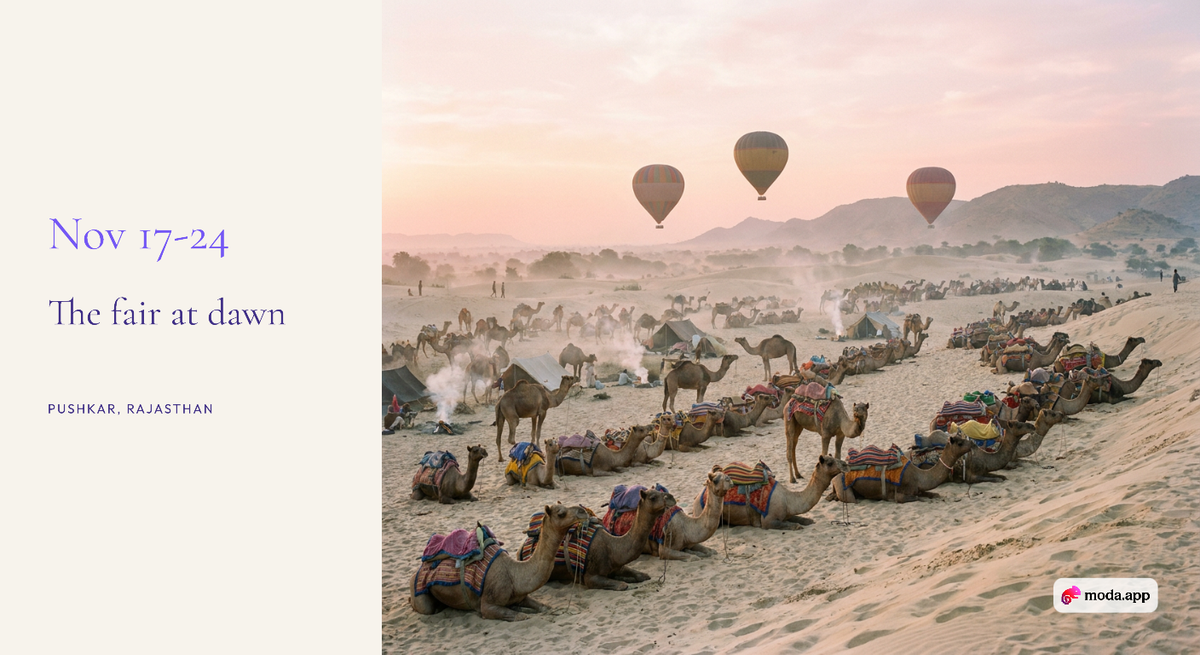
According to Happyfares' 2026 fair guide, the week usually follows this pattern:
- First days: livestock arrives and camel trading starts on the dunes. This is the dustiest, most outdoor part of the week.
- Middle days: cultural contests such as turban tying and moustache competitions, then camel races, folk dance and the busiest hot air balloon mornings.
- Final days: Ekadashi rituals, the matka phod (pot breaking) and tug of war finals, and the Kartik Purnima bath at dawn, when the ghats are packed by 6 AM.
What this means for your suitcase: plan for sand and sun early in the week, and for temple visits, crowds and very early starts at the end.
Pushkar weather in November: dress for a 17 degree swing
The single most useful fact for packing is the gap between afternoon and dawn. Weather2Travel's November averages for Ajmer, about 11 km from Pushkar, show a 29°C high, a 12°C low, around 5 mm of rain for the whole month and a high UV index of 6. In practice that means you will be warm by late morning, cold at a 5:30 AM balloon launch, and chilly again once the sun drops behind the hills.
So build every day from three layers you can carry: a breathable base (cotton, linen or a cotton blend), a light mid layer (a fleece, a wool cardigan or a quilted jacket) and a shawl or stole that does triple duty as sun cover, dust shield and temple cover. A shawl is the most useful single item you can pack for Pushkar. If you are unsure how to wear one over ethnic wear, our guide to draping a shawl over a saree or lehenga shows several secure ways.
What to wear to Pushkar Fair: 4 outfits for the week
1. Fairground days: sun, sand and camels
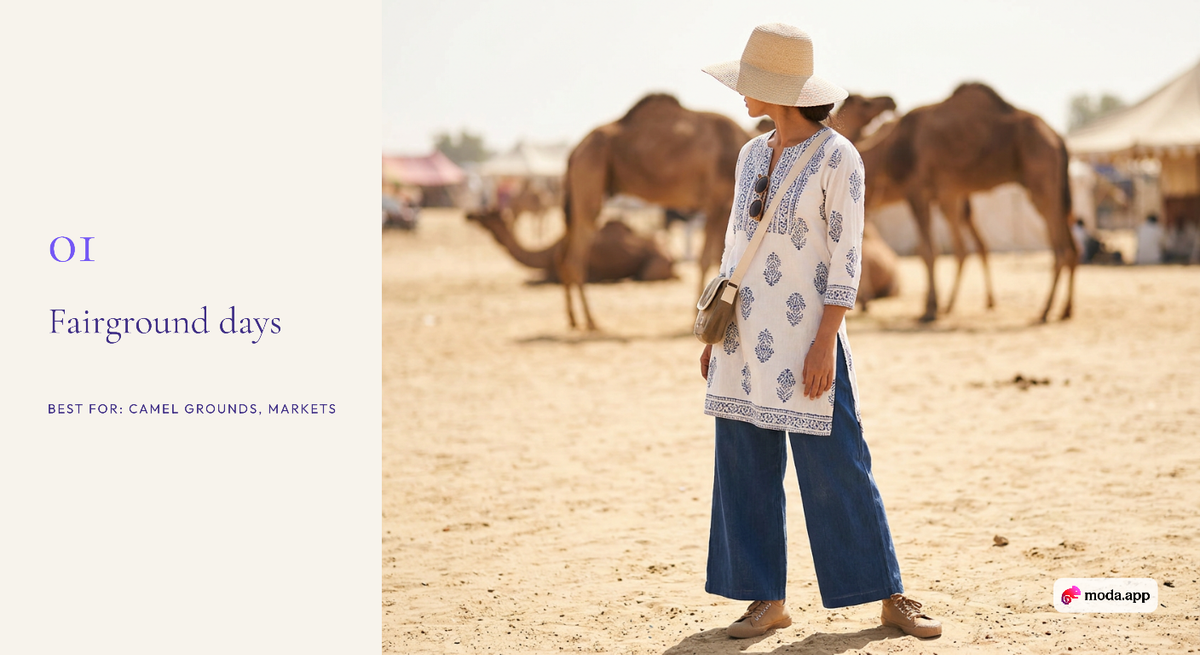
A loose, long-sleeved cotton kurta or linen shirt, wide-leg cotton trousers and closed canvas sneakers. Long sleeves sound wrong for 29°C, but on open dunes under a high UV index they keep the sun off your arms without constant sunscreen top-ups, and loose cotton lets air move. Wide-leg trousers keep sand off your ankles. Add a wide-brim hat, sunglasses and a crossbody bag that zips, since the fairground is crowded.
Why closed shoes: the fairground is soft sand shared with thousands of animals. Open sandals fill with grit within minutes. Choose canvas or mesh sneakers you do not mind getting dusty, and skip white if you want them to look clean in photos.
Colour tip: mid tones like indigo, rust, olive and block-print patterns hide dust far better than white or black, and they photograph well against sand.
2. The ghats and the Brahma Temple: covered, easy to remove
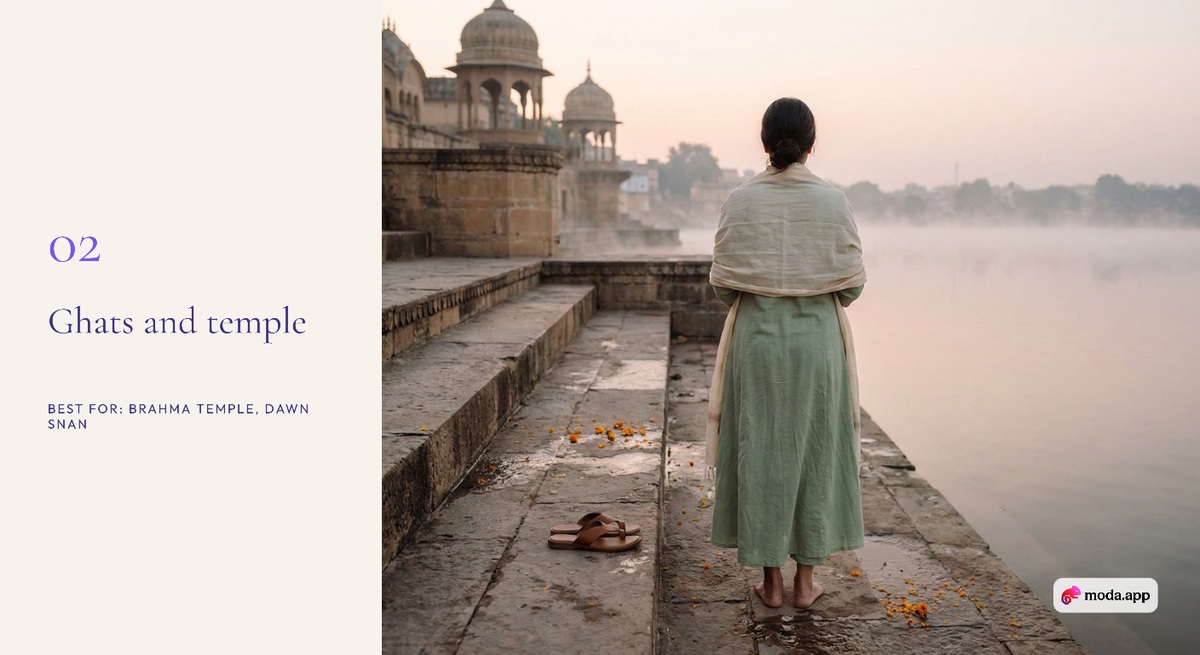
An ankle-length kurta or a long, loose dress with sleeves, a stole that covers both shoulders, and slip-on sandals. Happyfares reports that the Brahma Temple asks visitors to cover shoulders and knees, that shoes are removed at the gate, and that photography is not allowed in the inner sanctum. On the ghats, shoes come off well before the water at designated stands.
Why slip-ons: you will take your shoes off and on many times in a morning. Laces slow you down and hold up the queue. Bring a small cloth bag for your sandals if you prefer to carry them.
Respect points: ask before photographing anyone's puja, keep your shoulders covered on the ghats even if the temple is not on your plan, and remember that Pushkar is a sacred town where, according to Happyfares, alcohol, meat and eggs are not sold.
3. Dawn balloon flight: dress for 12°C
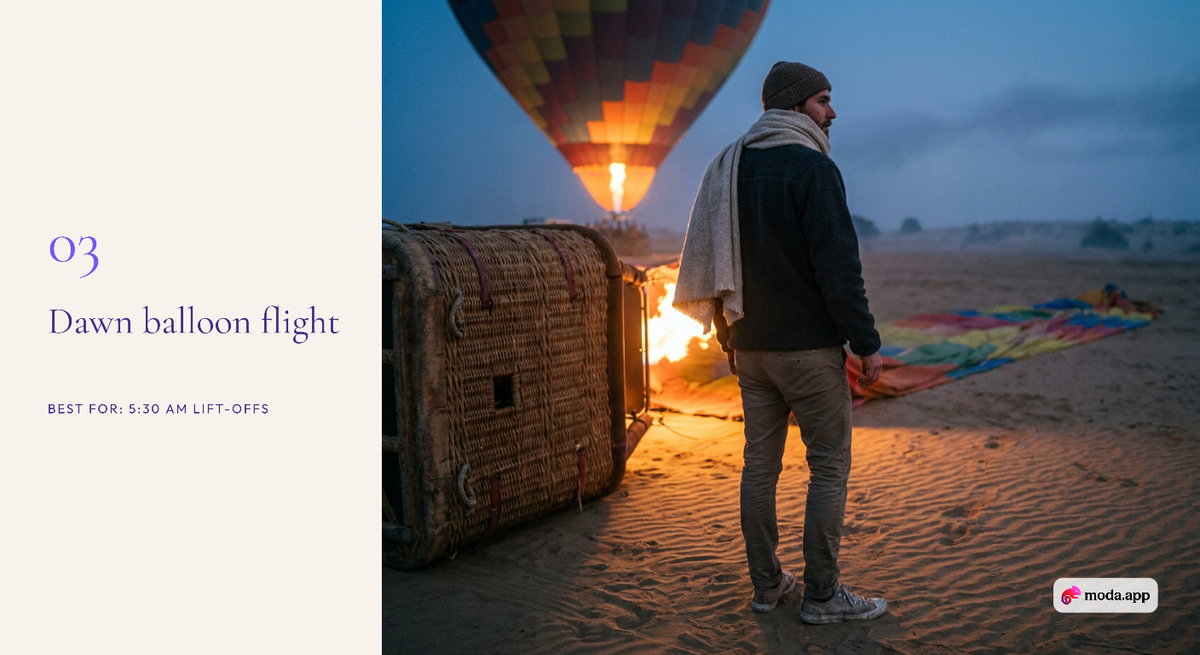
A fleece or light down jacket over a long-sleeve tee, a thick wool shawl, a beanie, full-length trousers and laced sneakers. Happyfares lists balloon flights from about 21 to 24 November, weather permitting, with lift-off around 5:30 AM, when the desert is at its coldest. Once the sun is up you will strip back to the base layer, so choose a jacket that packs small.
Practical detail: avoid loose, trailing scarves near the basket and burner. Tie the shawl around your shoulders or tuck it into your jacket, and wear shoes that grip, because you climb in and out of a basket on sand.
4. Evenings at the mela: warm and a little dressed up
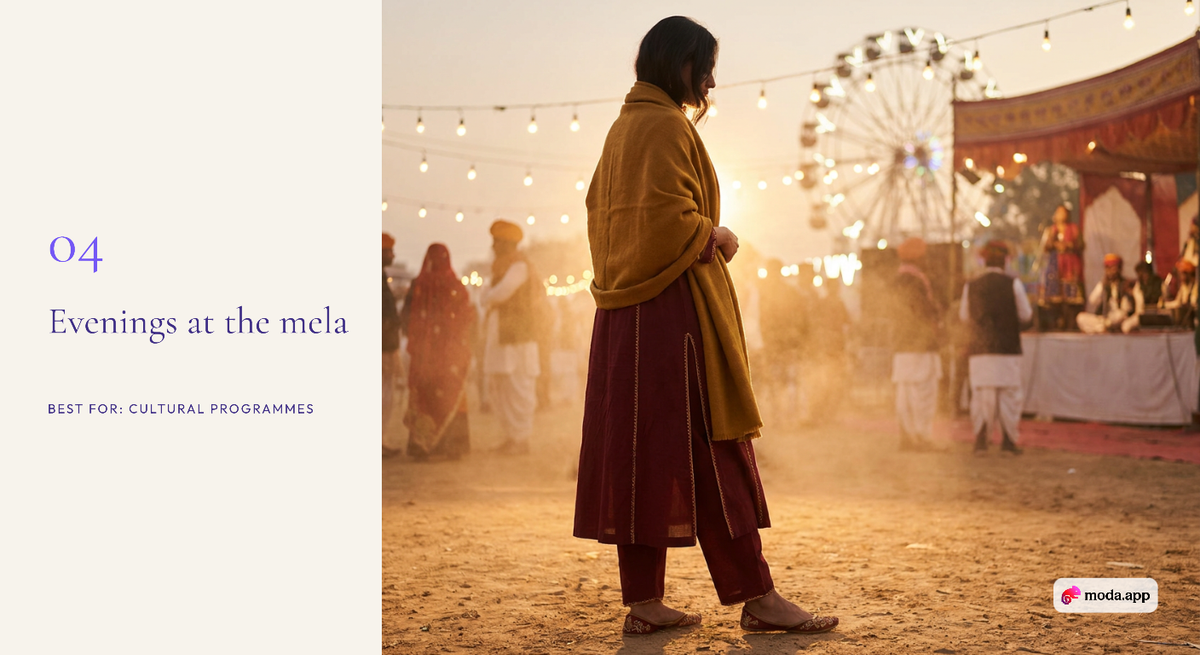
A deeper-coloured kurta set in cotton silk or a cotton shirt with straight trousers, closed flat juttis or loafers, and a wool shawl in a warm colour. Evenings are the time for cultural programmes and the fair's lights, and Tourism of India notes that village women dress in their best clothes for the mela, so you will not feel overdressed in colour or embroidery. Keep shoes closed; the ground is still sand.
Fabrics and shoes that cope with Pushkar's dust
Dust is easy to underestimate. A few choices make a real difference:

Want this styled from your own closet?
Elara builds the look from what you own, then lets you try it on.
- Cotton and linen over synthetics. They breathe in the midday heat and do not cling when sand blows. Synthetic leggings and polyester tops trap heat.
- Wide over skinny. Wide trousers and long kurtas move air and stop sand from collecting at the ankle.
- Washable over precious. Leave silk and delicate embroidery for the evening. Anything you wear on the dunes will need a wash.
- Two pairs of shoes. Closed sneakers for the fairground and balloon mornings, slip-ons for the temple and ghats.
- A cotton stole in your bag at all times. It covers your shoulders at the temple, your nose and mouth when the wind picks up, and your neck in the sun.
Pushkar Fair packing list
- 3 to 4 breathable long-sleeve tops or kurtas in mid tones
- 2 pairs of wide-leg cotton or linen trousers
- 1 ankle-length kurta or long dress for the ghats and temple
- 1 evening kurta set or smarter shirt
- 1 fleece or packable jacket, plus 1 wool shawl
- 1 or 2 cotton stoles
- Closed sneakers, slip-on sandals and closed juttis or loafers
- Wide-brim hat, sunglasses and a beanie for dawn
- A zip crossbody bag, a cloth shoe bag and sealed water for the fairground
Heading on to Jaipur after Pushkar? The climate is similar, and our Jaipur in December guide covers forts, bazaars and wedding evenings.
FAQ
When is Pushkar Fair 2026?
The Tourism of India festival calendar lists Pushkar Fair for 17 to 24 November 2026. The religious mela runs from Kartik Ekadashi on Friday 20 November to Kartik Purnima on Tuesday 24 November. Some travel guides give 25 November as the last day, so check the official Rajasthan Tourism programme before you book.
What should I wear to Pushkar Fair?
Loose, long-sleeved cotton or linen in the day, wide trousers, closed sneakers and a hat for the fairground. Add a stole that covers your shoulders for the Brahma Temple and ghats, and a fleece or wool shawl for dawn and evenings, when it drops to around 12°C.
Is there a dress code for the Brahma Temple in Pushkar?
Visitors are asked to cover shoulders and knees, remove shoes at the gate and not take photos in the inner sanctum, according to Happyfares' 2026 guide. A long kurta or dress with a stole and slip-on sandals is the easiest combination.
How cold is Pushkar in November?
Nearby Ajmer averages a 12°C (54°F) low and a 29°C (84°F) high in November, according to Weather2Travel. Dawn on the open dunes feels colder, so pack a real warm layer for balloon flights and the Kartik Purnima bath.
Can I wear shorts at Pushkar Fair?
You can on parts of the fairground, but long trousers or a long skirt are more practical for sun and sand, and shorts are reportedly refused at the Brahma Temple. Covering up also fits the pilgrimage side of the fair.
Plan your Pushkar outfits before you pack
The easiest way to pack light for a week that swings from sand to temple to cold desert dawn is to plan each day from clothes you already own. In Elara, add your clothes to your digital closet, put the fair days in the Calendar, and let Daily Outfits suggest a look for each one, with Style DNA keeping the suggestions true to your taste. Try Elara free and arrive with an outfit ready for every part of the fair.
Your stylist, in your pocket
Stop reading about outfits. Start wearing them.
Elara knows your closet, shops every store and gets you dressed for any occasion.