
What to Wear in 15 Degrees Celsius: One Layer, 4 Outfits
15°C (59°F) calls for long sleeves and one light layer you can take off. How wind, sun and rain change that, plus 4 outfits for work, weekends, dinner and rain.
 Mehul AgarwalFounder & CEO
Last updated: November 2026
Quick answer: At 15°C (59°F), wear long sleeves or a light knit with full-length trousers, a skirt with tights, or jeans, plus one light layer you can take off, such as a denim jacket, trench coat or overshirt, and closed shoes. If it is windy or you will be standing still outdoors, add a windproof layer, because the Met Office notes that wind can make a mild day feel several degrees colder than the thermometer says. In full sun with no wind, the layer can come off.
15 degrees is the classic in-between temperature: cool in the shade and the evening, pleasant in the sun, and the reason so many people leave home underdressed or overheat on the bus. This guide explains why 15°C feels different from day to day, gives a simple formula, and shows four outfits for the situations people search for most. If you think in Fahrenheit, our 60 degree weather guide covers almost the same temperature.
How cold does 15 degrees feel?
15°C feels mild if you are moving in sunshine and cool if you are still, in shade or in wind. Three things decide which, plus your own activity level.
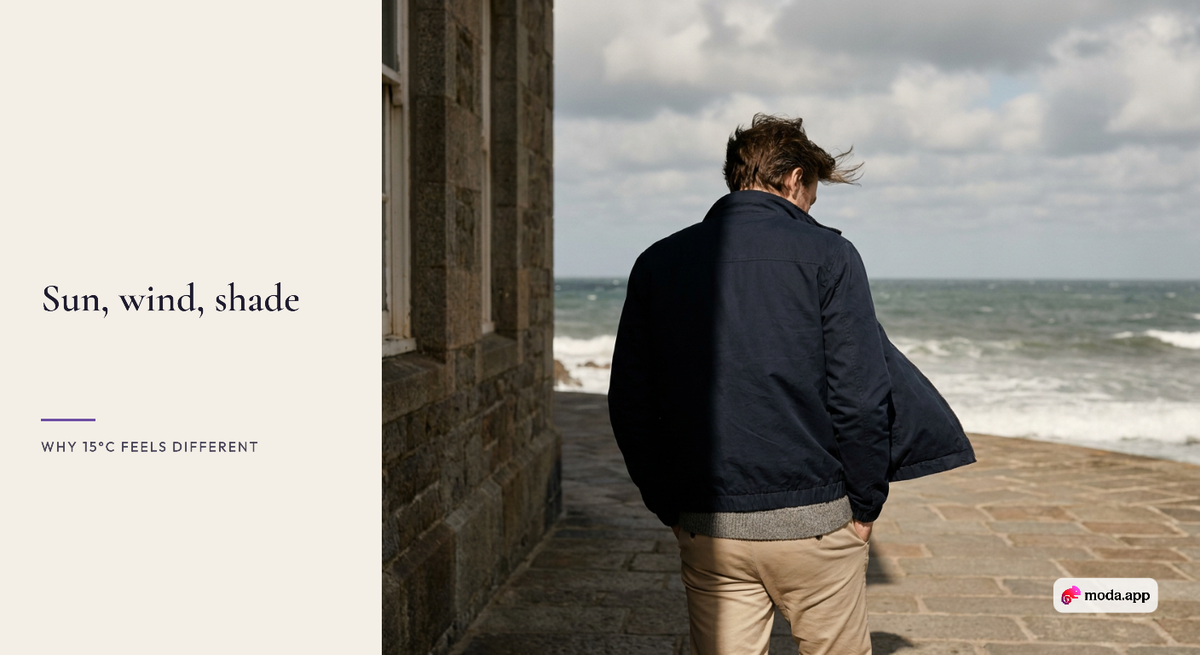
- Wind: the Met Office explains that moving air carries heat away from the body faster than still air, which is why its "feels like" figure uses wind chill at lower temperatures. Exposed coasts, bridges and open parks are where a 15°C day feels coldest.
- Sun: in spring and autumn, strong sunshine warms you while the air stays cool, so the same 15°C can feel warm on a sunny bench and chilly the moment cloud covers the sun or you step into shade.
- Humidity and rain: damp air and wet clothes pull heat from the body. A drizzly 15°C feels colder than a dry one, and cotton that gets wet stays cold.
- Activity: walking briskly or cycling produces heat, while standing at a bus stop or sitting at an outdoor table does not.
A useful benchmark comes from thermal comfort science. ASHRAE's standard defines 1 clo of clothing insulation as roughly what a resting person needs to stay comfortable at about 21°C indoors, and lists trousers, a long-sleeved shirt, a T-shirt and a long-sleeved sweater together at about 1.0 clo. At 15°C outdoors you are six degrees below that reference, so the same outfit is comfortable while you move but needs one more light layer (a thin suit jacket alone adds about 0.36 clo, per the same tables) once you stop. That is why the one-removable-layer rule works.
The 15°C formula: base, light layer, optional shell
Build every 15-degree outfit from three parts, and decide on the third only after checking the forecast for wind and rain.
- Base: a long-sleeve tee, shirt, fine knit or light jumper, with trousers, jeans, a midi skirt with tights, or a dress with tights. REI's layering advice is that the layer against your skin should move sweat away, which makes merino or a cotton blend better than heavy cotton if you will be walking a lot.
- Light layer: a denim jacket, cotton trench, unlined blazer, quilted gilet, overshirt or cardigan. It should be easy to carry when you take it off, so skip anything bulky.
- Shell, only if needed: on a windy or showery day, swap the light layer for a water-resistant mac or windbreaker. REI notes that once wind and water get through to the inner layers you get chilled, and a light shell stops both without adding warmth you don't need.
- Shoes: closed shoes such as loafers, trainers or ankle boots. Sandals and bare ankles usually feel cold at 15°C once you are out of the sun.
Four outfits for 15 degree weather
These four looks cover a working day, a casual weekend, an evening out and the wet, grey version of 15°C that is common in the UK and northern Europe.
1. Office or commute at 15°C
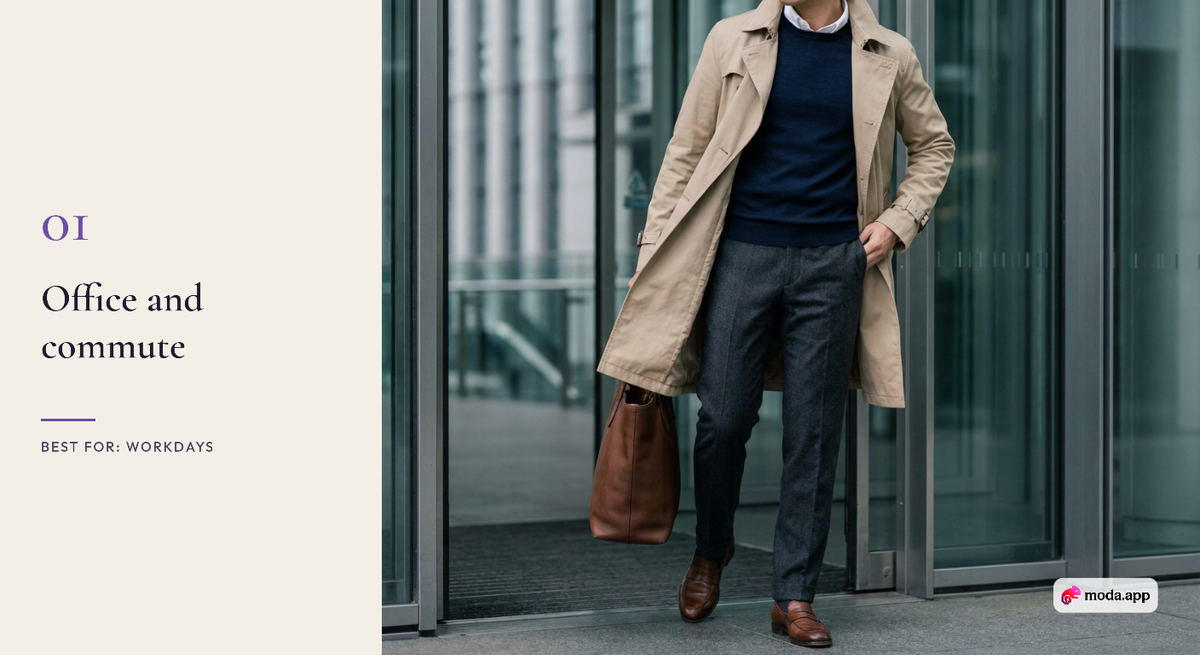
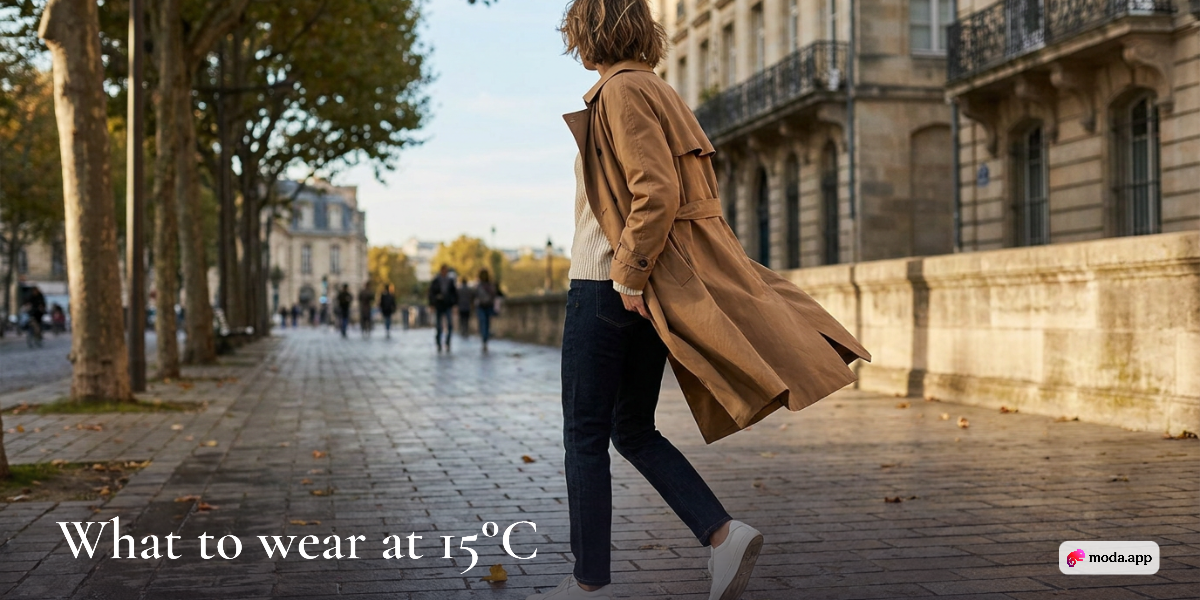
The look: a fine merino or cotton crew-neck knit over a collared shirt, or a lightweight roll-neck, with wool-blend trousers and loafers, plus a classic cotton trench coat.
Why it works: indoors you will be at room temperature, so you need an outfit that works with the coat off. The trench handles a cool morning and a breeze, and folds over an arm at lunch. A knit plus shirt is close to the 1 clo office benchmark on its own.
2. Weekend errands, brunch or a city walk

The look: a long-sleeve striped tee or a light sweatshirt with straight jeans and trainers, plus an overshirt or denim jacket.
Why it works: walking keeps you warm, so you need less insulation than you think, but stopping for coffee outdoors will cool you quickly. An overshirt or denim jacket blocks a light breeze and is easy to tie around your waist when the sun comes out.
3. Dinner or drinks on a 15°C evening
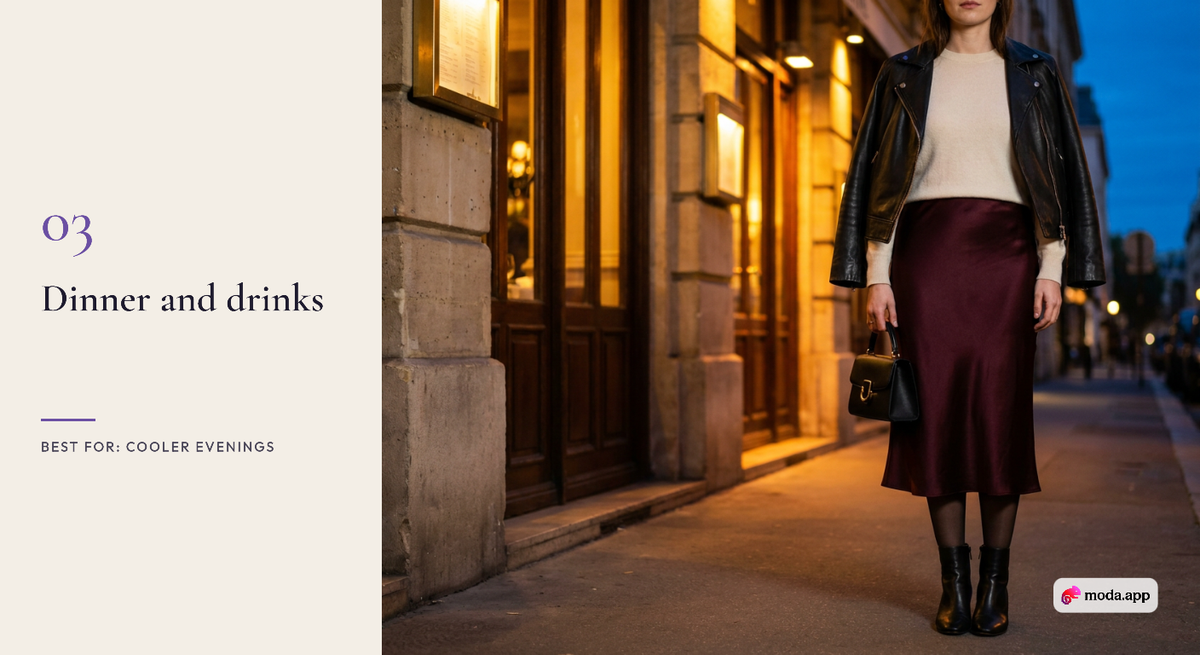
The look: a midi dress or slip skirt with a fine knit, sheer tights and ankle boots, or dark trousers with a silk or knit polo, with a leather or suede jacket.
Why it works: a 15°C afternoon often becomes a cooler evening once the sun goes, and you may sit outside or walk between places. A leather or suede jacket cuts wind better than a knit cardigan, and tights or boots stop cold ankles from making the whole outfit feel underdressed.
4. Rainy or windy 15 degrees
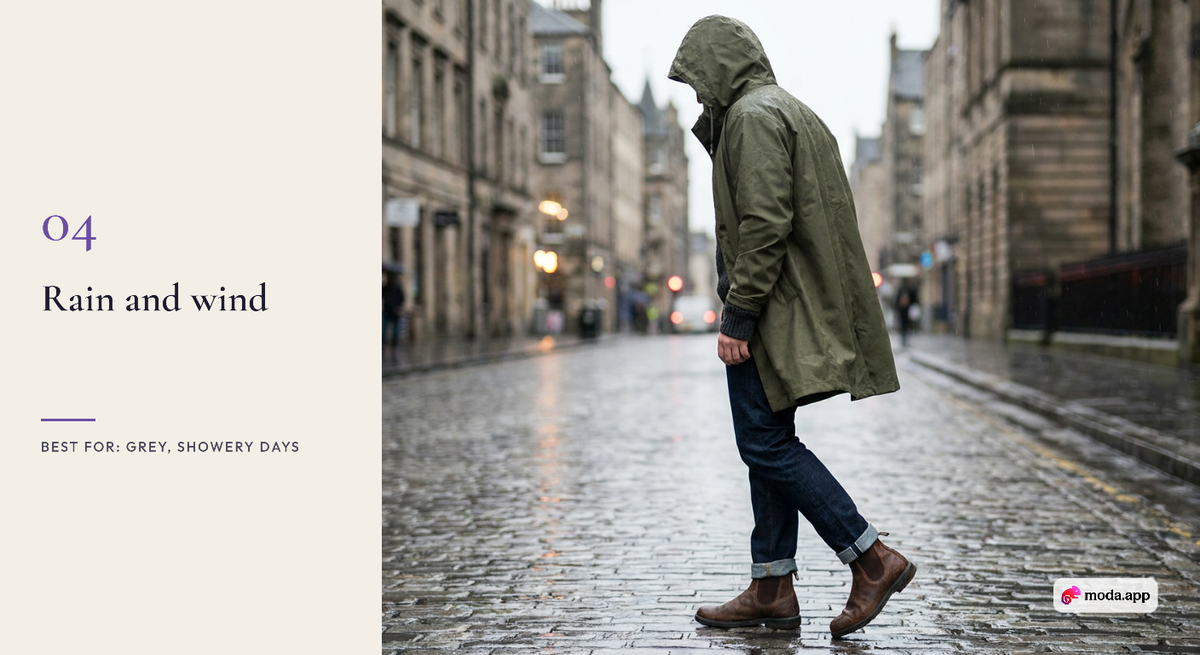
The look: a lightweight jumper over a long-sleeve tee, dark jeans or trousers that won't show splashes, water-resistant ankle boots or leather trainers, and a hooded water-resistant mac.
Why it works: wind and wet clothes are what turn a mild day cold. A mac with a hood keeps rain off the knit, and a synthetic or wool layer under it holds warmth even if it gets damp, unlike cotton, which REI describes as soaking up water and chilling you.
Fabrics that work at 15°C
Mid-weight, breathable fabrics are the sweet spot: warm enough for shade, not so heavy you overheat on the move.
- Merino and fine wool: regulate temperature well and stay warm when slightly damp, which suits days that swing between sun and shade.
- Cotton denim, twill and canvas: good for light jackets and trousers on dry days because they block a breeze, though they are slow to dry in rain.
- Leather and suede: excellent windproof jackets for evenings. Suede needs protecting from rain; see our guide to cleaning suede shoes and boots if you get caught out.
- Leave for colder days: chunky wool coats, puffers and thermal base layers. At 15°C they make you sweat as soon as you walk, and then you feel cold when you stop.
Common mistakes at 15 degrees
Most 15-degree discomfort comes from dressing for the morning, the forecast number or the sunny window, rather than the whole day.
- Dressing for the number, not the wind. Check the "feels like" temperature as well as the air temperature. On a windy day, choose a shell over a cardigan.
- One warm layer instead of two thin ones. A single heavy jumper leaves nothing to remove. A tee plus a light jacket gives you two settings.
- Forgetting the evening drop. If you will be out after sunset, carry the layer even if the afternoon feels warm.
- Sandals with no layer for your ankles. Cold feet and ankles make 15°C feel much colder than it is. Closed shoes fix it.
FAQ
Is 15 degrees Celsius cold?
Not really. 15°C (59°F) is mild to cool. Most people are comfortable in long sleeves and a light jacket, but it can feel cold in wind, rain, shade or once you stop moving.
Do I need a jacket at 15 degrees?
Usually a light one. A denim jacket, trench, overshirt or blazer is enough on a dry day. Choose a water-resistant mac if it is windy or showery, and carry the layer if you will be out in the evening.
Can I wear shorts in 15 degree weather?
You can if you are active and in the sun, for example on a brisk walk or a hike, but most people find bare legs cold at 15°C when standing still or in shade. Full-length trousers or a skirt with tights are the safer choice for a whole day out.
What should I wear at night when it is 15 degrees?
Add a wind-blocking layer such as a leather, suede or denim jacket and closed shoes or boots. Evenings feel cooler than the same temperature in daytime sun, especially if you sit outside.
What is 15 degrees Celsius in Fahrenheit?
15°C is 59°F. Our 60 degree weather guide covers outfits for almost the same temperature, and the 50 degree guide covers 10°C.
Let your closet answer the weather
Elara is an AI personal stylist that knows what is in your wardrobe. Add your clothes to your digital closet, ask the styling chat what to wear for a 15-degree day with wind or rain, and get outfits built from pieces you already own. Try Elara free.
Your stylist, in your pocket
Stop reading about outfits. Start wearing them.
Elara knows your closet, shops every store and gets you dressed for any occasion.