What to Wear in 60 Degree Weather: Layering Guide
Learn what to wear in 60 degree weather with a proven three-layer formula that adapts throughout the day. Expert outfit ideas for women, men, and every activity.

What to Wear in 50, 60 and 70 Degree Weather
Table of Contents
- Introduction: Why 60°F Is the Hardest Temperature to Dress For
- The 60°F Layering Formula (And Why It Works)
- What to Wear in 60°F Weather: Women's Outfit Ideas
- What to Wear in 60°F Weather: Men's Outfit Ideas
- Dressing for 60°F by Activity: Casual, Work, Running, and More
- 60°F vs. 65°F vs. 50°F: How to Adjust Your Outfit Across the Range
- How to Build Your 60°F Wardrobe From What You Already Own
- 2026 Trends That Make 60°F Dressing More Stylish (Not Just Practical)
- FAQ: Common Questions About 60°F Dressing
- Conclusion: Your Personal 60°F System
Key Takeaways
- 60°F can feel 10–15°F cooler in wind, shade, or early morning — always build in one removable layer (looqs.me)
- The universal formula: breathable base + lightweight mid-layer + removable outer (denim jacket, trench, or blazer)
- 2026 trends favor tailored outerwear and elevated textures — think trenches, bombers, and satin-knit pairings over basic cardigans (InStyle, 2026)
- Audit your existing closet first — most people already own the right pieces for 60°F dressing
Introduction: Why 60°F Is the Hardest Temperature to Dress For
60°F is the temperature that tricks everyone. It looks mild on a weather app, but step outside at 7 a.m. and it feels closer to 45°F. By early afternoon, the sun is out and a coat feels absurd. That 10–15°F swing between morning and afternoon in transitional weather — documented in general 60-degree outfit guidance compiled by looqs.me — is the core reason 60°F dressing is genuinely difficult, not a personal style failure.
The problem compounds fast. According to the same guidance, sun, shade, and wind each shift perceived temperature dramatically: 60°F in direct sun can feel almost warm, while 60°F in wind can feel closer to 50°F. A single fixed outfit can't handle that range. A system can.
This guide builds a flexible framework that adapts across the day, across activities, and across personal comfort patterns. The right approach to 60°F dressing almost never requires buying something new. It requires knowing what you already own and how to combine it.
The 60°F Layering Formula (And Why It Works)
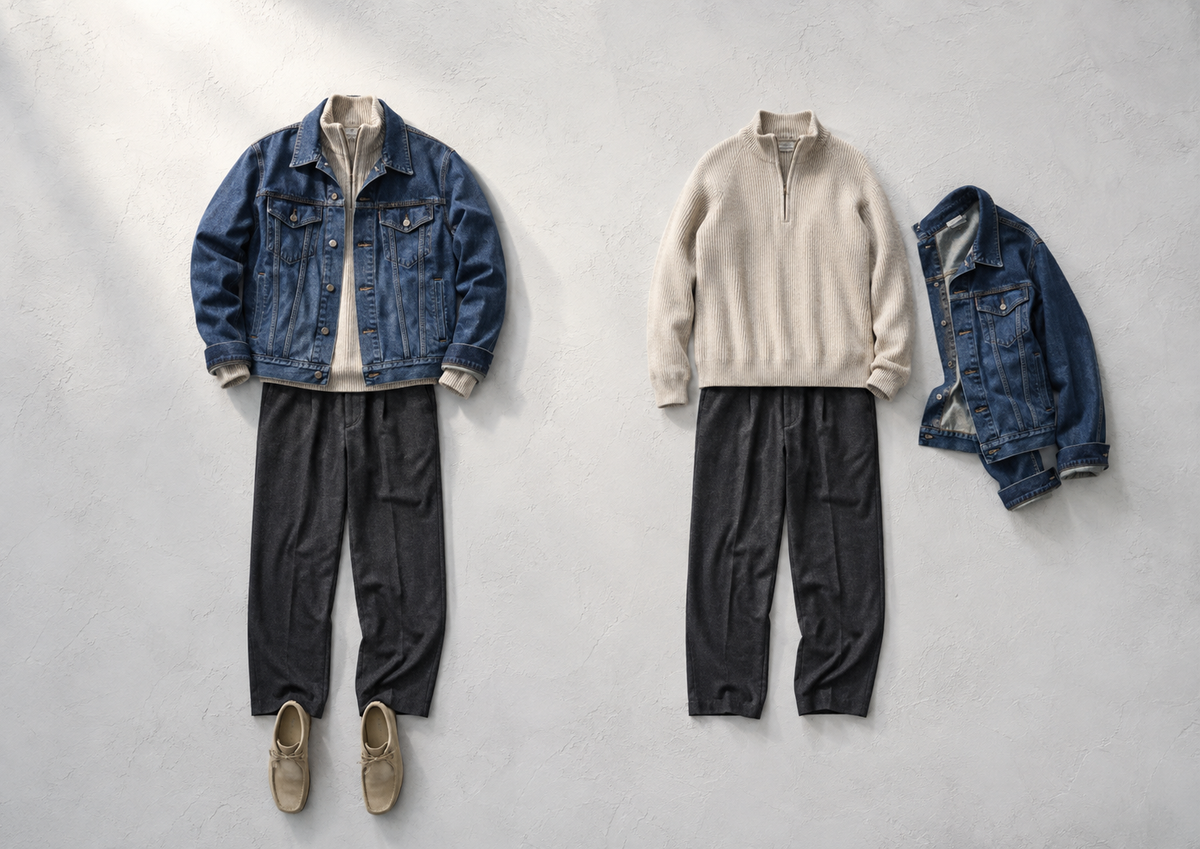
The most reliable approach to 60°F dressing follows a three-layer logic: a breathable base, a lightweight mid-layer, and a removable outer piece you can shed by noon. According to InStyle's stylist guidance, that outer layer is ideally a denim jacket, blazer, or lightweight trench — structured enough to block wind, light enough not to overheat.
"One light layer plus one medium layer is the sweet spot." — General 60-Degree Weather Outfit Guidance
Patricia Arroyo, product manager at Alohas, puts the philosophy more precisely: the focus should be on thoughtful materials, well-designed silhouettes, and soulful accessories — textures and subtle layering rather than heavy bulk (InStyle). That distinction matters. Piling on a thick sweater under a heavy coat solves the cold but creates a different problem the moment you walk into a heated café or catch an hour of afternoon sun.
Nike's activewear guidance reinforces the same principle from a performance angle: choose light layers that can be adjusted throughout the day. The reasoning holds whether you're running errands or running trails — body heat, exertion level, and sun exposure all shift faster than the thermometer does.
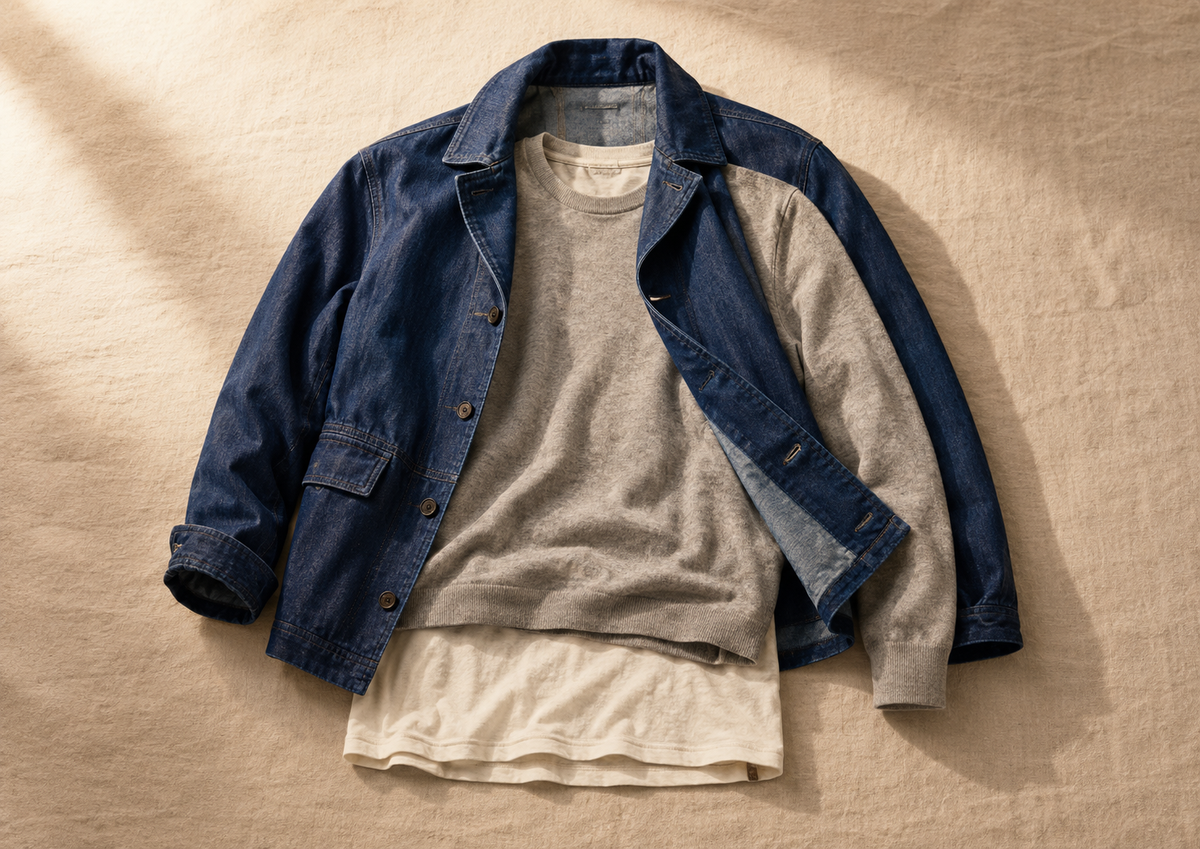
The best fabrics for this formula are cotton, lightweight merino wool, denim, jersey, and linen blends. Each breathes well enough for afternoon warmth and insulates adequately for morning chill. Avoid heavy wool, fleece, or down unless conditions are specifically windy or wet — those fabrics solve a problem that 60°F, on its own, rarely presents. For outerwear, the most versatile options are a denim jacket, light blazer, trench coat, cardigan, bomber, or shacket — all removable, all packable enough to carry when you don't need them.
The formula works precisely because 60°F is a boundary temperature. Sun, shade, and wind variability means any fixed outfit will fail at some point in the day. A removable layer doesn't.
What to Wear in 60°F Weather: Women's Outfit Ideas
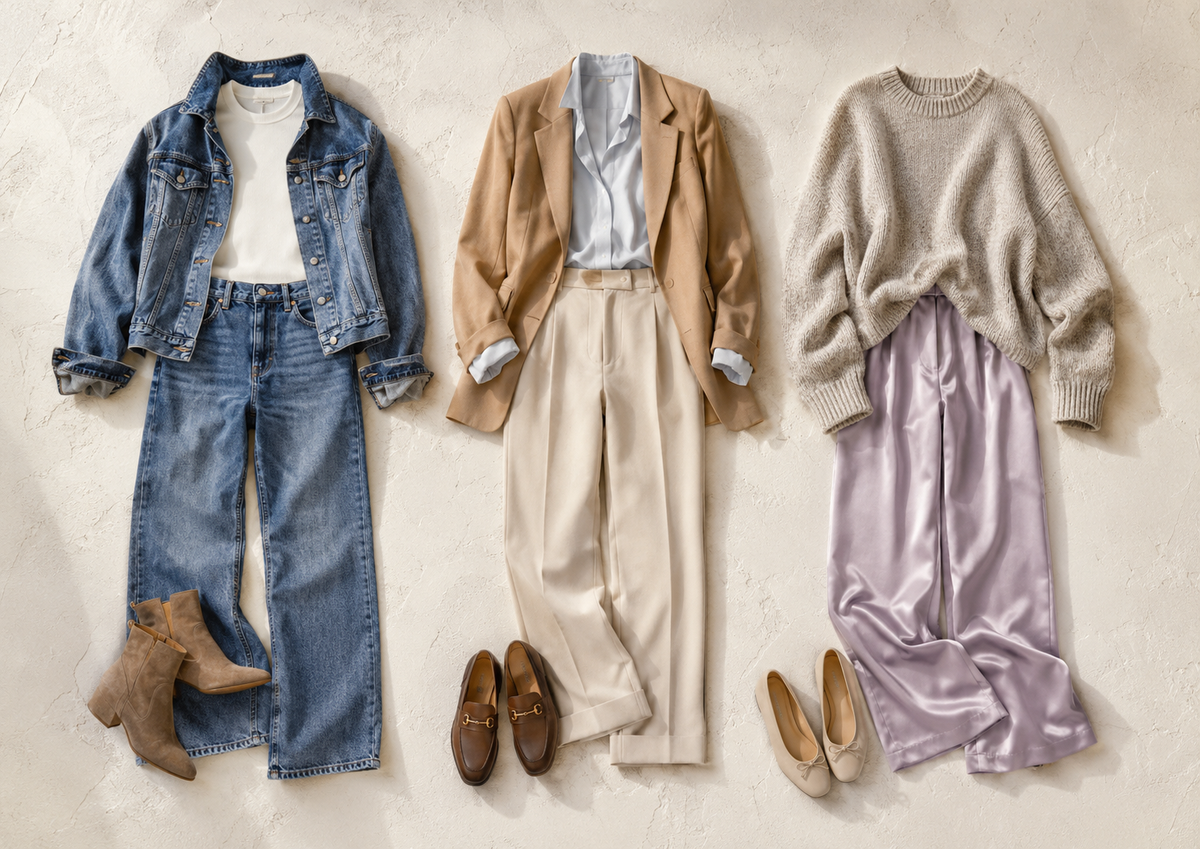
That removable-layer principle translates directly into the outfit builds that work best for women at 60°F — and in 2026, those builds have gotten considerably more interesting than a cardigan over jeans.
Three outfits cover the main scenarios most women face. For casual days, a fitted tee or lightweight knit layered under a denim jacket, paired with straight-leg jeans and ankle boots or clean sneakers, handles the morning chill and the afternoon warmth with equal ease. For polished casual — office-adjacent but not boardroom — swap the denim jacket for a light blazer over a blouse, add tailored trousers and loafers, and the outfit reads put-together without requiring a coat. The trend-forward option for 2026, highlighted by InStyle's spring-summer coverage, pairs satin or silk-like pants with oversized knitwear and ballet flats: a combination that photographs as elevated but functions as practical layering at 60°F.
According to Heuritech's 2026 trend data, gingham grew 31% among women — making it one of the stronger print choices for transitional-weather pieces like shirts, skirts, and shackets.
On color, Marie Claire and Who What Wear's 2026 coverage points to butter yellow, lavender haze, seafoam green, and warm white as the palette that dominates this temperature range. These lighter tones work precisely because 60°F calls for lighter fabrics — and according to Marie Claire's 2026 summer trend reporting, natural materials like cotton, linen, and Tencel are replacing synthetics as the default choice, driven by both comfort and sustainability. Relaxed trousers, lightweight co-ord sets, and midi dresses with a denim jacket or trench round out the dominant women's direction for the season, per coverage from Marie Claire and styleunion.in.
What to Wear in 60°F Weather: Men's Outfit Ideas
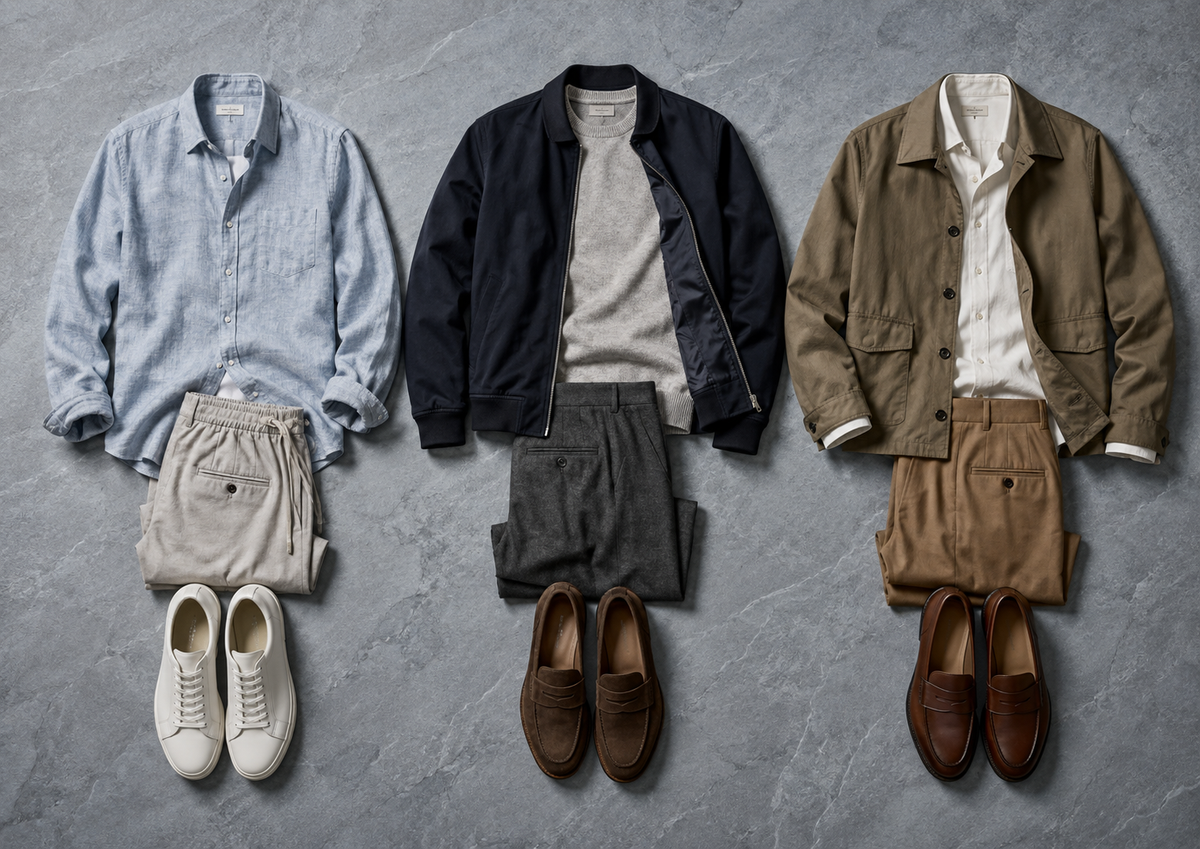
Men's 60°F dressing in 2026 follows a parallel logic — breathable base, versatile mid-layer, tailored outer — but the specific direction has shifted noticeably toward relaxed structure rather than either athletic or formal extremes.
Three outfit builds cover the range. The casual starting point, identified by styleunion.in and Marie Claire's 2026 gender-specific coverage, is a cotton-linen shirt with chinos or smart joggers and minimal sneakers — lightweight, breathable, and easy to adjust when the afternoon warms up. For smart casual, step up to lightweight formal trousers with a fitted knit or button-down, then add a blazer or bomber jacket as the removable outer. The trend-forward build for 2026, emphasized across InStyle and beautyandblog.com's tailored outerwear coverage, is tailored trousers paired with a short unlined jacket and loafers — a combination that reads modern without requiring a heavy coat.
InStyle and 2026 style trend coverage consistently flag trench coats, blazers, bombers, and short unlined jackets as the dominant outerwear direction for men this year — tailored shapes over bulk.
According to styleunion.in and Marie Claire's 2026 reporting, the broader men's direction favors relaxed tailoring, neutral sun-washed colors, and fabrics like cotton, linen blends, Tencel, and lightweight stretch materials. One practical adjustment that makes the whole system work: keep a packable jacket in your bag. Morning-to-afternoon temperature swings of 10–15°F are common in transitional weather, and a jacket that compresses to nothing solves that swing without adding visible bulk to any of the three outfit builds above.
Dressing for 60°F by Activity: Casual, Work, Running, and More
The outfit formula that works for an office worker at 60°F will make a runner miserable within the first quarter mile — and vice versa. Activity level changes the equation entirely because your body generates its own heat, and that internal heat production determines whether you need one outer layer or two, or none at all.
Ready to upgrade your wardrobe?
Get the Elara app for AI-powered styling and virtual try-ons.
A runner at 60°F who wears a denim jacket will overheat by minute eight. An office worker in a t-shirt will be cold by minute three of their commute. The fix isn't a different temperature reading — it's accounting for how much heat you're generating.
Here's how the formula applies across five common scenarios:
- Casual errands: A tee or lightweight knit, jeans, a denim jacket or shacket, and sneakers. The denim jacket comes off if you're in sun; it stays on in shade or wind.
- Office/work: Tailored trousers or a midi skirt, a light blazer or trench, and a fitted knit or blouse underneath. The blazer handles both the cool commute and the air-conditioned interior.
- Running or exercise: A moisture-wicking base layer plus a light zip-up or quarter-zip fleece is the right combination. Nike's layering guidance emphasizes choosing light layers that can be adjusted throughout the activity. Your body warms up within the first few minutes of sustained effort, which makes a heavy jacket counterproductive from the start. Arm warmers are a smarter removable option — they pack into a pocket, not a hand.
- Outdoor activity or hiking: Moisture-wicking base, fleece or flannel mid-layer, packable shell on top. The shell handles wind and any unexpected precipitation without adding thermal bulk.
- Date night or dinner: A knit, satin, or silk top with trousers or a skirt, finished with a trench, blazer, or short unlined jacket. According to InStyle's 2026 outerwear coverage, the short unlined jacket is specifically positioned as an elevated 60°F outer layer — structured enough for evening, light enough not to overheat indoors.
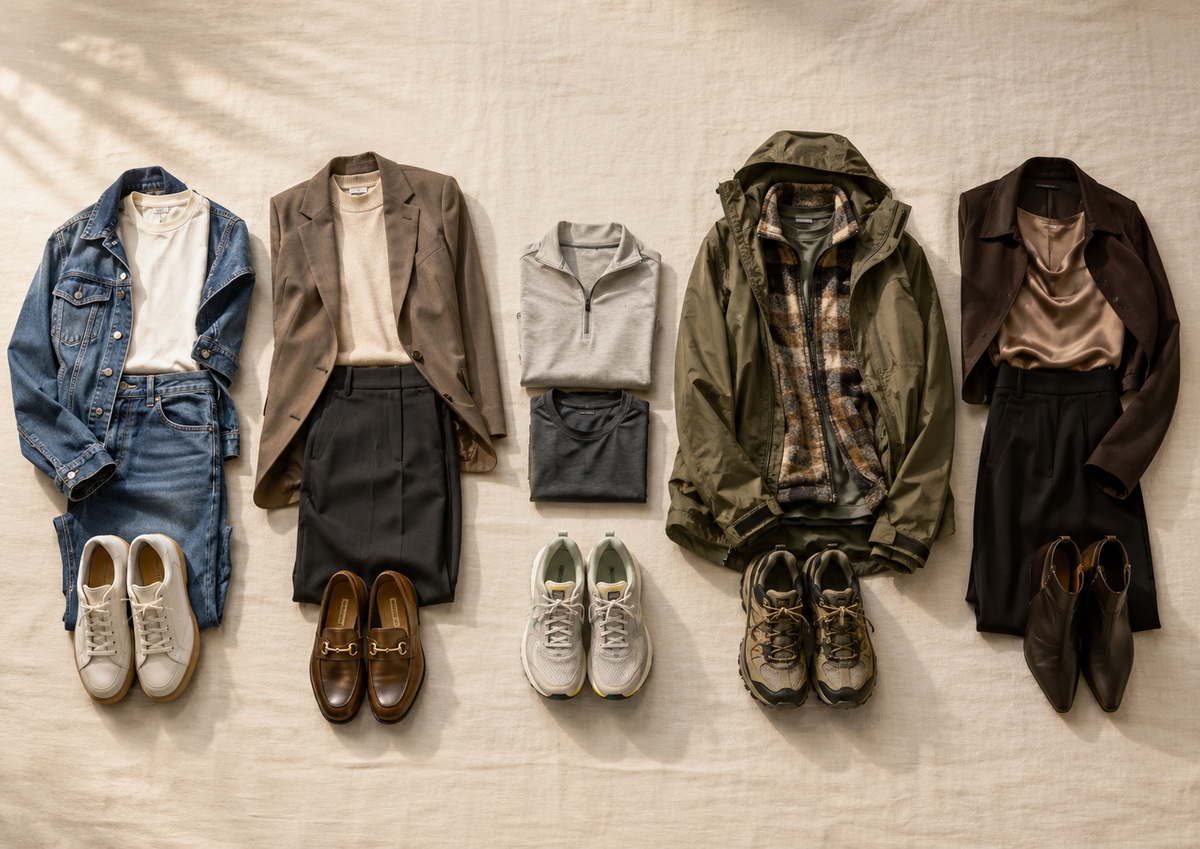
The practical frame is simple: estimate how much body heat your activity generates, then subtract one outer layer for every significant step up in intensity. Sedentary to light activity needs two layers. Moderate to vigorous activity needs one, or none after warm-up.
60°F vs. 65°F vs. 50°F: How to Adjust Your Outfit Across the Range
That activity-based framework — fewer layers as intensity rises — scales directly across the broader temperature range. The same three-layer principle applies whether you're dressing for 50°F or 70°F; what changes is the weight and number of layers you actually use.
60°F is the most decision-intensive point in the spectrum. According to general 60°F weather guidance compiled by looqs.me, it's a common transitional temperature across U.S. spring months (March through May), and the margin for error is smallest here — one wrong call and you're either sweating through a wool coat or shivering in a linen shirt.
Here's how to adjust across the range:
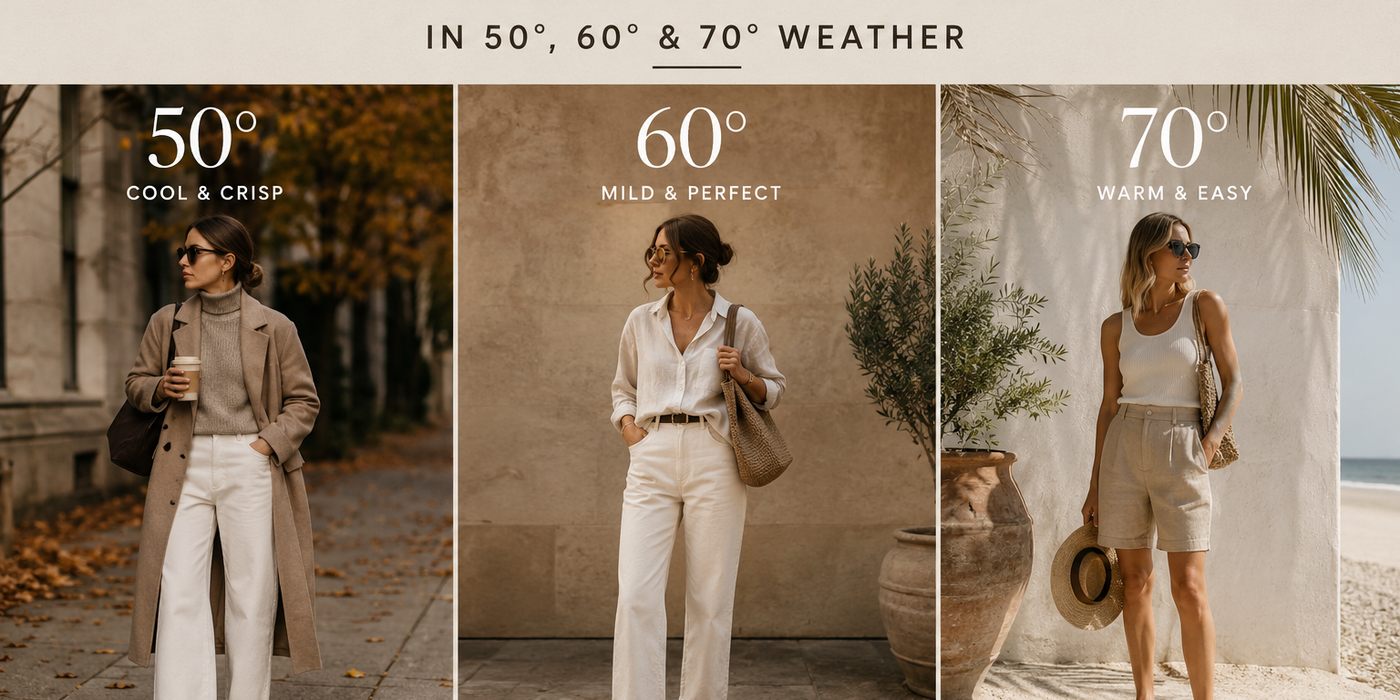
- 50°F: Add a true mid-layer — a heavier knit, fleece, or thermal — under your outer layer, not instead of it. Close-toed shoes are non-negotiable. Thicker denim or a thermal base layer keeps legs warm.
- 60°F: The core formula holds — breathable base plus one removable outer. As the expert guidance puts it, "one light layer plus one medium layer is the sweet spot."
- 65°F: A lighter execution of the same system. A cardigan or denim jacket often replaces a full trench; lighter footwear becomes viable; the 2026 spring palette of butter yellow, seafoam green, and lavender haze can come forward more confidently.
- 70°F: The outer layer becomes situational — wind or evening only. Fabrics get lighter, silhouettes open up.
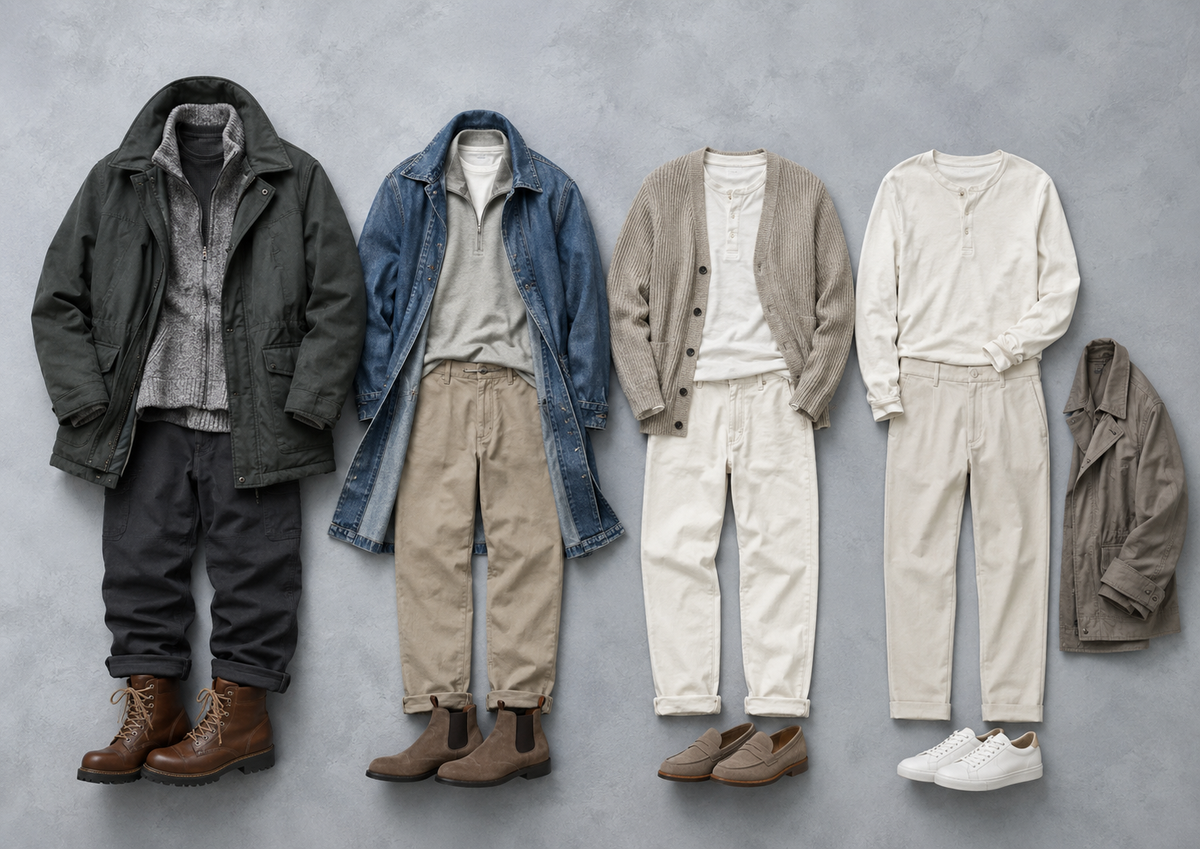
How to Build Your 60°F Wardrobe From What You Already Own
Most people already own the pieces for effective 60°F dressing. The gap isn't the wardrobe — it's the system for identifying and combining what's already there. A quick four-step closet audit takes less than 20 minutes and usually surfaces more options than expected.
- Pull every lightweight layer — cardigans, denim jackets, blazers, shackets, light trenches. These are your outer-layer candidates.
- Identify breathable base layers — tees, light knits, blouses in cotton, jersey, or linen blends. These form the foundation of every 60°F outfit.
- Check temperature-bridging bottoms — jeans, chinos, midi skirts, tailored trousers. Avoid anything season-specific at the extremes.
- Assess footwear — sneakers, loafers, and ankle boots all cross temperature lines; sandals and heavy boots don't.
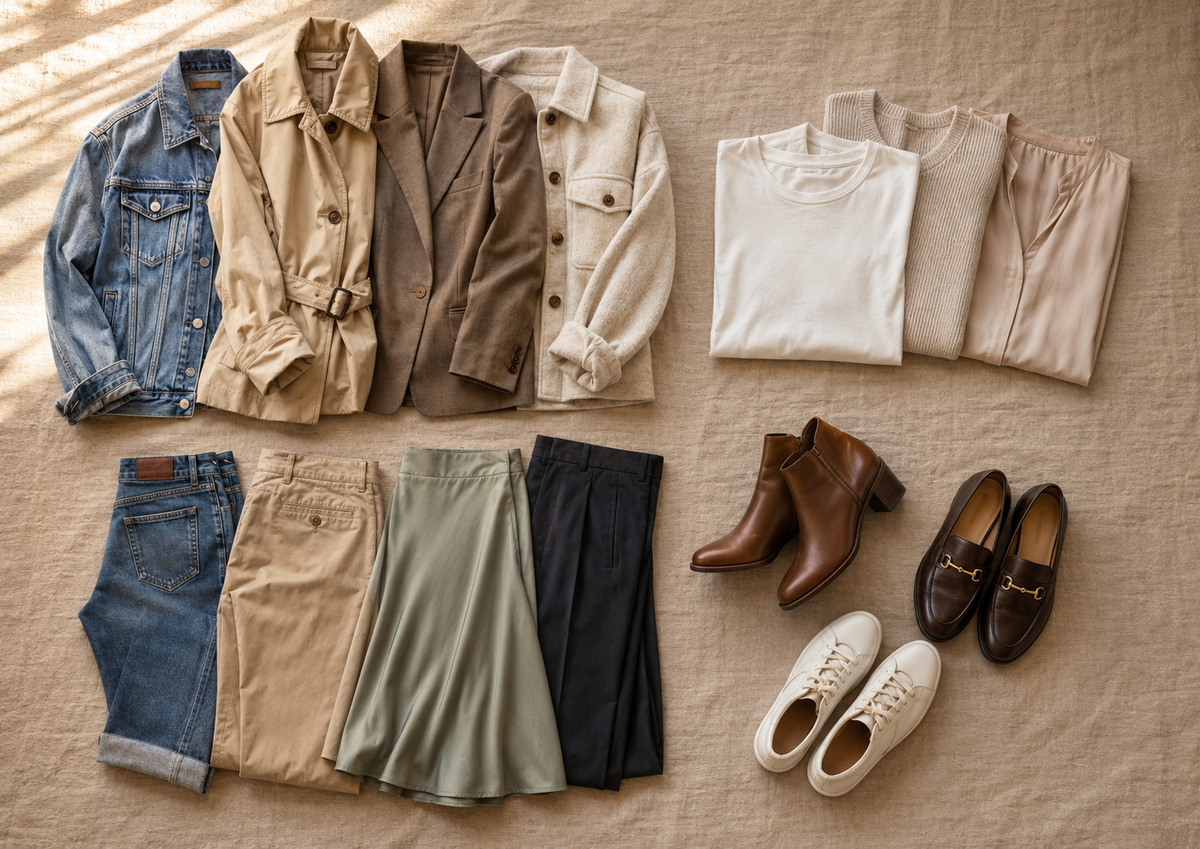
From 6–8 pieces identified through this audit, most wardrobes can generate 15 or more distinct outfits. The most common gaps that limit 60°F outfit building: a missing versatile outer layer, breathable mid-layers that aren't heavy knits, and footwear that only works in one seasonal extreme.
According to looqs.me's 60°F guidance, the perceived temperature can drop 10–15°F in wind, shade, or early morning — which means the audit should prioritize removable layers above all else. The goal is to surface your existing wardrobe combinations first, before considering any new purchases.
2026 Trends That Make 60°F Dressing More Stylish (Not Just Practical)
The wardrobe audit solves the practical problem. The 2026 trend landscape solves the style one — and several of this year's biggest directions map almost perfectly onto transitional temperature dressing.
Tailored outerwear is the dominant 2026 transitional signal. According to InStyle and beautyandblog.com's 2026 style trend coverage, trench coats, blazers, bombers, and short unlined jackets are all strongly emphasized this season. These aren't heavy winter pieces — they're structured enough to look intentional, light enough to carry indoors. A tailored trench at 60°F does more work than a puffer ever could.
Texture is the other major lever. InStyle's 2026 spring-summer trend coverage highlights suede, crocodile-embossed finishes, ostrich leather accents, and elevated animal prints as the year's defining surface details. At a temperature where adding bulk is counterproductive, texture adds visual interest without adding weight — a suede bomber reads as a considered outfit choice rather than a practical compromise.
Satin or silk-like pants paired with oversized knitwear and ballet flats is one of 2026's most-cited transitional looks, per InStyle's spring-summer trend coverage — and it works precisely because the contrast between relaxed knit and fluid satin handles both warmth and elegance at once.
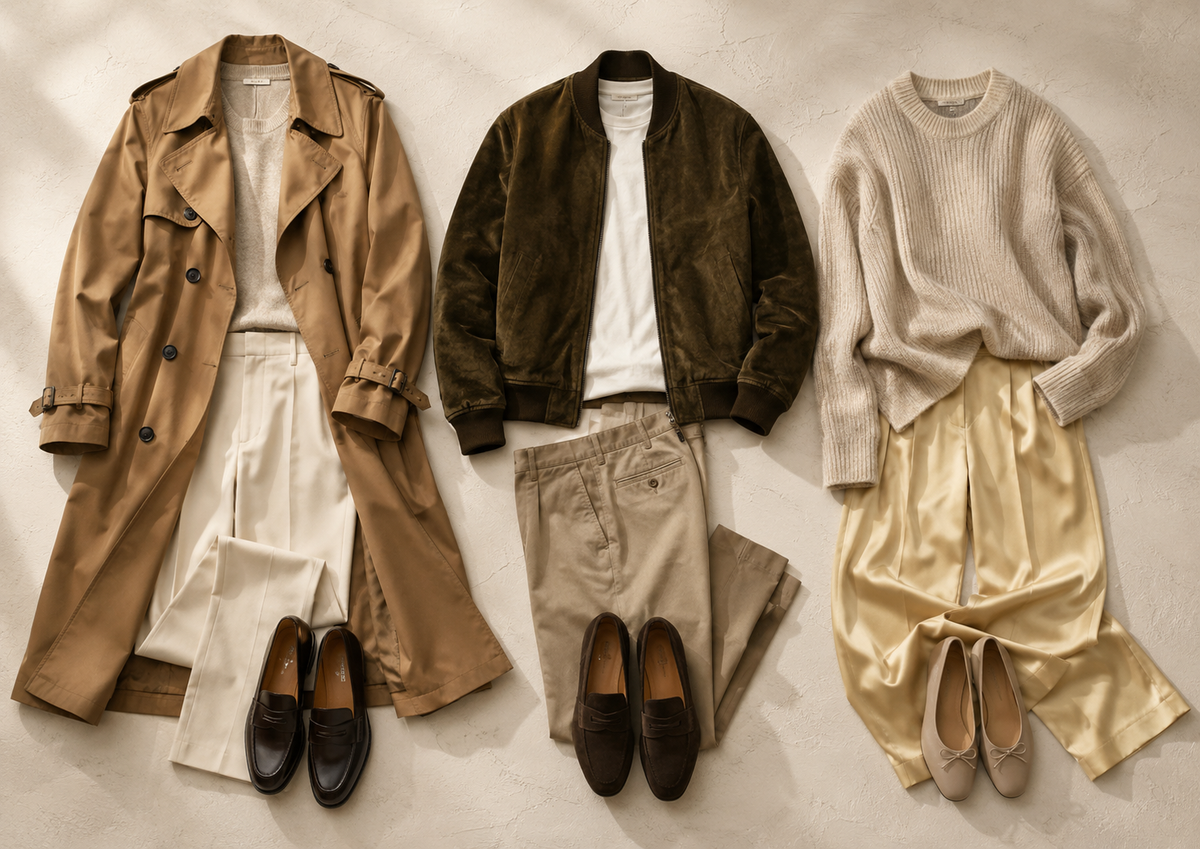
The practical takeaway from all three trends is the same: 2026 rewards upgrading one key piece rather than rebuilding an entire wardrobe. Swap a basic cardigan for a tailored trench. Replace a plain knit with a suede bomber. Add satin trousers to an existing oversized sweater. The formula stays the same — only the quality of its components changes.
FAQ: Common Questions About 60°F Dressing
Q: Can I wear short sleeves at 60°F? Yes — if you layer them under a removable outer piece. A short-sleeved tee under a denim jacket or blazer works perfectly for 60°F. The key is having that outer layer ready to shed once the afternoon sun comes out or to keep on if you're in shade or wind.
Q: What's the best shoe for 60°F weather? Ankle boots, loafers, and clean sneakers all work at 60°F. Avoid open-toed sandals (too cold in morning shade) and heavy winter boots (too hot in afternoon sun). Look for closed-toe options in breathable materials like leather or canvas that transition across the temperature swing.
Q: Do I need to buy new clothes for 60°F, or can I use what I already own? Most people already own the right pieces. A closet audit — pulling lightweight layers, breathable base pieces, and versatile bottoms — usually surfaces 15+ outfit combinations without a single new purchase. Start there before shopping.
Conclusion: Your Personal 60°F System
The system behind effective 60°F dressing rests on three pillars: a reliable layering formula (breathable base, lightweight mid-layer, removable outer), context-aware adjustments for your activity and the time of day, and a closet audit before any shopping trip.
That last point matters because 60°F is genuinely difficult. According to looqs.me's compiled guidance, morning-to-afternoon temperature swings of 10–15°F are typical in transitional weather — which means no single static outfit will carry you through a full day. Flexibility beats perfection here, every time. If you've struggled to get this right, that's not a style failure; it's an honest reflection of how variable this temperature actually is.
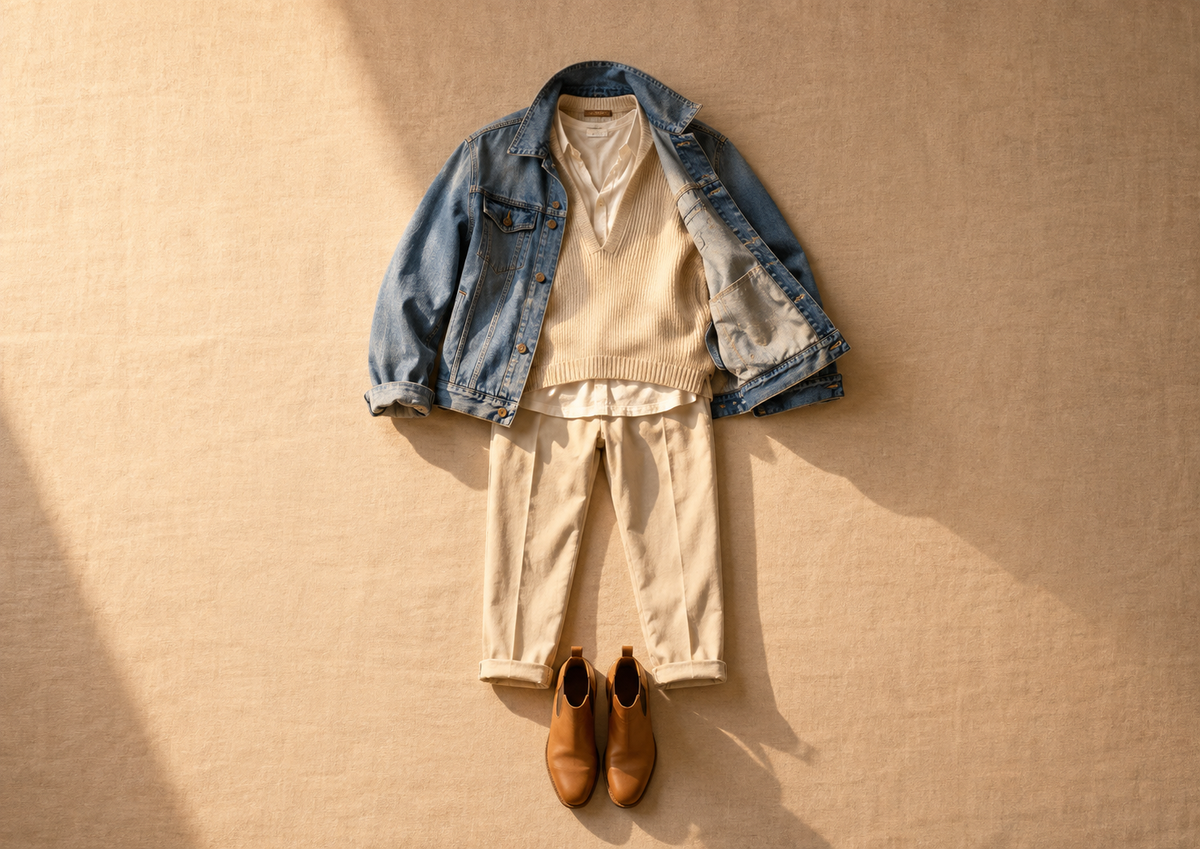
If you want help mapping what you already own against these principles, Elara is built for exactly that — no new wardrobe required to start. Explore joinelara.com to see your existing closet in a new light.

Your AI Stylist is Here.
live on the App Store & Google Play
Available on iOS and Android for seamless access anytime, anywhere.