

Virtual Try-On App for Clothes: Shop Smarter
Virtual try-on app for clothes uses AR and AI to show how garments fit your body before buying. Learn why VTO users convert 50% more and return 25-48% less.
 Mehul AgarwalFounder
Virtual Try-On App for Clothes: What to Check Before You Buy
Table of Contents
- Introduction: Why Virtual Try-On Is the Biggest Unmet Need in Fashion Right Now
- What Is a Virtual Try-On App for Clothes (And Why Most People Haven't Used One Yet)?
- The Real Reason VTO Changes How You Shop (It's Not Just About Seeing the Fit)
- What to Actually Check Before Choosing a Virtual Try-On App
- AI-Powered Fit Personalization: The Feature That Separates Good Apps from Great Ones
- Virtual Try-On and Sustainable Shopping: The Connection Nobody Talks About
- FAQ
- Conclusion
Key Takeaways
- 71% of consumers want AR try-on, but only ~1% of e-commerce stores offer it — a gap that leaves most shoppers without access to technology they're actively seeking (DressX, 2026)
- Virtual try-on users convert 50% more often and add items to cart 3× more frequently than non-VTO shoppers (Morphed)
- The best virtual try-on apps use AI personalization and wardrobe context — not just AR overlays — to deliver genuinely useful fit guidance
- VTO reduces return rates by 25–48%, making it a smarter, lower-hassle way to shop (DressX, 2026)
- Wardrobe-first AI approaches represent the next evolution: connecting try-on to what you already own before recommending anything new
Introduction: Why Virtual Try-On Is the Biggest Unmet Need in Fashion Right Now
Seventy-one percent of consumers want AR try-on when shopping for clothes. Only around 1% of e-commerce stores actually offer it. That gap — documented in DressX's VTO Report — isn't a retailer strategy problem. It's a shopper problem. Millions of people are making purchase decisions based on flat product photography and size charts written for hypothetical bodies, when the technology to do better already exists.
The scale of what's being built around this unmet demand is significant. The global virtual try-on market is valued at $15.29 billion in 2026 and growing at a 26.5% annual rate. This isn't a niche experiment — it's a mainstream behavioral shift accelerating in real time.
Most writing about virtual try-on is aimed at retailers: adoption rates, implementation costs, conversion lift for merchants. This article is written for shoppers. Specifically, for anyone who has ever bought something online that looked nothing like they expected, returned it, and wondered why buying clothes still feels like guesswork in 2026.
The pages ahead cover what virtual try-on actually is, why it changes shopping behavior at a psychological level, what to check before trusting any app with your wardrobe decisions, and how AI personalization and wardrobe context are turning a useful feature into something genuinely transformative.
What Is a Virtual Try-On App for Clothes (And Why Most People Haven't Used One Yet)?
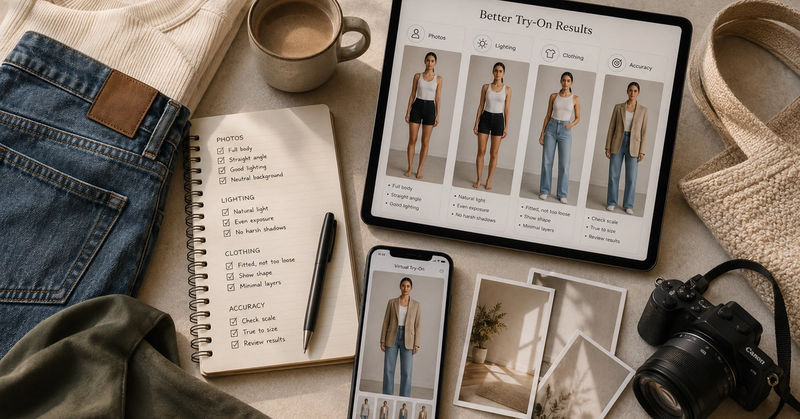
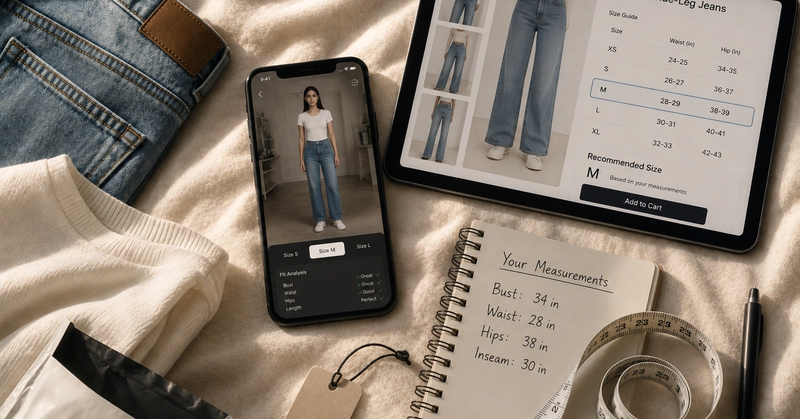
A virtual try-on app for clothes uses augmented reality (AR) or artificial intelligence to show how a garment would look on your body — either through a live camera feed or by processing a photo you upload. The result is a visual representation of the item on you, rather than on a stock model whose proportions may share nothing with yours.
Two distinct formats dominate the space. Live AR overlays use your device's camera in real time, mapping clothing onto your moving image as you stand in front of the screen. Photo-upload AI rendering takes a static image of you and applies the garment digitally, generating a composite that reflects your body shape and coloring. Live AR feels more immediate. Photo-based rendering often produces more accurate, detailed results because the AI has more processing time.
Fashion and apparel represents 33–42% of the entire virtual try-on market — the largest single segment. If you've dismissed VTO before, the category has moved substantially.
So why haven't most people used it? The demand is clearly there: 71% of consumers want AR try-on experiences. The barrier is supply. Implementing a virtual try-on app for clothes at scale requires significant technical investment — accurate body mapping, realistic fabric rendering, and integration with live product inventory — costs that most retailers haven't yet absorbed. The result is a technology that consumers want and can rarely find.
If your previous experience with virtual try-on felt unconvincing — garments that floated oddly, textures that looked painted on, silhouettes that ignored your actual shape — that skepticism is fair. It also reflects an earlier generation of the technology. The question this article helps you answer is which apps have actually closed that gap, and what to look for when evaluating them.
The Real Reason VTO Changes How You Shop (It's Not Just About Seeing the Fit)
Closing that gap between unconvincing early-generation overlays and genuinely useful try-on technology turns out to be as much a psychology story as a technology one. VTO users convert 50% more often than non-VTO shoppers and add items to cart three times more frequently. Those numbers are striking — but the more interesting question is why.
The mechanism isn't simply that shoppers can see a garment. It's that VTO eliminates the mental effort of imagining fit. Every online purchase normally requires a small act of creative visualization — picturing how a cut will fall, whether a color will work, how a length will hit. Multiply that across a full browsing session and the cognitive load compounds into decision fatigue. VTO short-circuits that process entirely, replacing speculation with a visual proof point. Purchase confidence follows naturally.
Outfit visualization takes this a step further. Pilots show 52% more cart additions among try-on users — and the driver isn't just seeing a single item more clearly. It's seeing how that item fits into a complete look. Shoppers add more to cart when they can visualize a finished outfit, not when they're evaluating pieces in isolation.
The return rate data reinforces the same logic. VTO users experience 25–48% lower return rates. That's typically framed as a retailer win, but it's equally a shopper win: fewer returns mean fewer repackaging hassles, fewer "what do I do with this now?" moments, and fewer purchases that quietly erode confidence in your own taste.
A concrete scenario makes this tangible: you love a dress online, but you're not sure it'll work with the boots already in your closet. A virtual try-on app for clothes that integrates wardrobe context answers that question before checkout — which is exactly the direction the best apps are moving.
What to Actually Check Before Choosing a Virtual Try-On App
Not all virtual try-on apps are built to the same standard, and the differences matter more than most shoppers realize. Here's a practical framework for evaluating whether an app will genuinely improve your shopping decisions or just add a visual layer to the same guesswork.
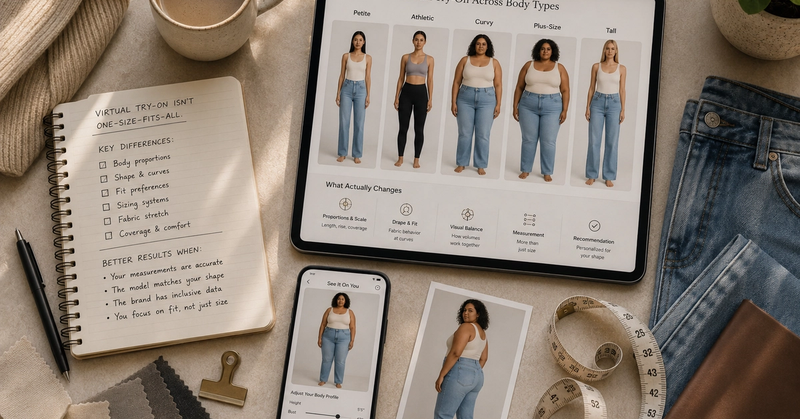
1. Fit accuracy and body-type matching
Does the app account for your actual measurements and proportions, or does it drape a generic silhouette and call it personalization? Demand is shifting toward ultra-specific, body-type intent-matched experiences — driven by long-tail searches like "petite curvy 40-year-old wedding guest dress." A virtual try-on app for clothes that can't handle that level of specificity isn't really solving the fit problem.

Want this styled from your own closet?
Elara builds the look from what you own, then lets you try it on.
2. AI personalization depth
Does the app learn your style preferences across sessions, or does every visit start from zero? A genuinely useful VTO tool should get sharper with use — surfacing items that match not just your size but your aesthetic history and stated preferences.
3. Wardrobe context integration
Can you try a new piece against items you already own? This is the clearest line between a novelty feature and a genuinely useful tool. Apps built around wardrobe integration let you visualize a new purchase alongside your digitized closet before committing.
4. Multi-garment outfit visualization
Single-item try-on is useful; outfit-level visualization is transformative. Multi-garment visualization is one of the major emerging trends in the category. If an app only shows individual pieces, you're still doing the mental assembly work yourself.
5. Retailer breadth and shopping integration
Can you actually purchase what you try on, or is the try-on experience disconnected from real inventory? The best apps connect directly to shoppable catalogs so the path from "this works" to "bought" is frictionless.
6. Rendering realism
Does fabric drape, move, and texture in a way that looks credible? Low-quality rendering actively undermines confidence — it makes shoppers less certain, not more. If the simulation looks painted on, it's not doing its job.
Elara meets the wardrobe context and AI personalization criteria by design: its try-on experience is built on top of a digitized wardrobe, so every new item is evaluated in the context of what you already own.
AI-Powered Fit Personalization: The Feature That Separates Good Apps from Great Ones
A basic AR overlay answers one question: what does this garment look like? AI-powered fit personalization answers a different, harder question: what does this garment look like on you, for your life, with what you already own? The distinction sounds subtle. In practice, it's the difference between a mirror and a stylist.
True AI-powered VTO interprets body shape, style history, and shopping behavior — it doesn't just map a texture onto an avatar. The output is a recommendation that feels curated rather than algorithmic, because it's drawing on accumulated context rather than responding to a single session in isolation.
The demand for this kind of specificity is already visible in how people search. Long-tail queries like "petite curvy 40-year-old wedding guest dress" are increasingly common — signals that shoppers expect a virtual try-on app for clothes to meet them at their actual situation, not at a generalized size category. Apps that can't handle that level of nuance are falling behind where consumer expectations already sit.
The contrast with generic AR is worth making explicit. Generic AR shows you what a garment looks like. AI-powered VTO shows you what it looks like styled with your cream blazer, whether it fills a genuine gap in your wardrobe, and whether it matches the aesthetic you've been gravitating toward over the past six months. This approach works through a conversational AI model: instead of navigating filters, you describe what you need — "something for a garden party that works with my cream blazer" — and the AI handles the matching against both your wardrobe and available inventory.
VTO is identified as a top technology investment area for reducing returns and boosting conversion. The direction of that investment is increasingly toward AI personalization — because the retailers and apps that have moved beyond generic overlays are the ones delivering results that actually change shopping behavior.
Virtual Try-On and Sustainable Shopping: The Connection Nobody Talks About
That shift toward AI personalization isn't just changing conversion rates — it's quietly reshaping how people think about buying clothes in the first place.
When you can see exactly how a garment fits your body and whether it works with the blazer already hanging in your closet, something changes in the decision-making process. Impulse purchases lose their grip. You stop buying the same silhouette you already own in a slightly different color. You start asking whether a new piece actually fills a gap — or just fills a cart.
This is where virtual try-on intersects with sustainable shopping, and it's a connection the fashion industry rarely makes explicit. VTO users experience 25–48% lower return rates. Fewer returns means fewer carbon-heavy shipments traveling back through logistics networks, less packaging waste, and critically, less clothing ending up in landfill after failed returns that can't be resold.
VTO users experience 25–48% lower return rates — and every avoided return is a package not shipped, a garment not discarded. (DressX, 2026)
The sustainable shopping loop has two steps: first, know what you own; second, validate that anything new genuinely complements it. This is what wardrobe intelligence looks like in practice — not minimalism as an aesthetic, but intentionality as a habit.
A wardrobe-first philosophy is built around exactly this principle. The starting point is always your existing wardrobe — what you have, what works, what's missing. Virtual try-on enters as a validation tool, not a shopping trigger. That distinction matters for shoppers who want their values and their wardrobe to actually align.
FAQ
Q: How accurate are virtual try-on apps, really?
A: Accuracy depends on the app. The best ones use AI to account for your actual body shape, proportions, and coloring — not just draping a generic silhouette. If an app can't handle specific body types or fabric rendering looks flat, it's not doing the job. Look for apps that learn from your feedback and improve over time.
Q: Will virtual try-on actually reduce my return rate?
A: The data suggests yes. VTO users experience 25–48% lower return rates because they can validate fit and styling before checkout. The key is using an app that shows how items work with your existing wardrobe, not just how they look in isolation.
Q: Can I use a virtual try-on app for clothes if I haven't digitized my closet yet?
A: Yes, but you'll get more value if you have. Apps that integrate wardrobe context let you see a new piece styled with items you already own — which is the real confidence builder. Some apps make closet digitization quick and simple; others require more upfront work.
Q: What's the difference between AR try-on and AI try-on?
A: AR try-on uses your camera to overlay a garment in real time. AI try-on processes a photo and generates a composite image. AR feels more immediate; AI often produces more realistic, detailed results because it has more processing time. The best apps combine both approaches.
Conclusion
Virtual try-on for clothes has moved well past novelty. The evidence — in conversion rates, return reductions, and the scale of consumer demand that retailers have barely begun to meet — points to a fundamental shift in shopping confidence and decision-making quality.
The apps worth your time are the ones that combine fit accuracy and body-type matching with genuine AI personalization, wardrobe context, and multi-garment outfit visualization. Those four criteria separate tools that build real purchase confidence from overlays that just look impressive in a demo.
For shoppers who want that full picture — try-on connected to your actual wardrobe, recommendations shaped by your real style, and an AI that learns rather than resets — explore joinelara.com to understand how a wardrobe-first approach works in practice.
Your stylist, in your pocket
Stop reading about outfits. Start wearing them.
Elara knows your closet, shops every store and gets you dressed for any occasion.