

Virtual Clothes Try-On: AI Try-On Guide & Tools
 Mehul AgarwalFounder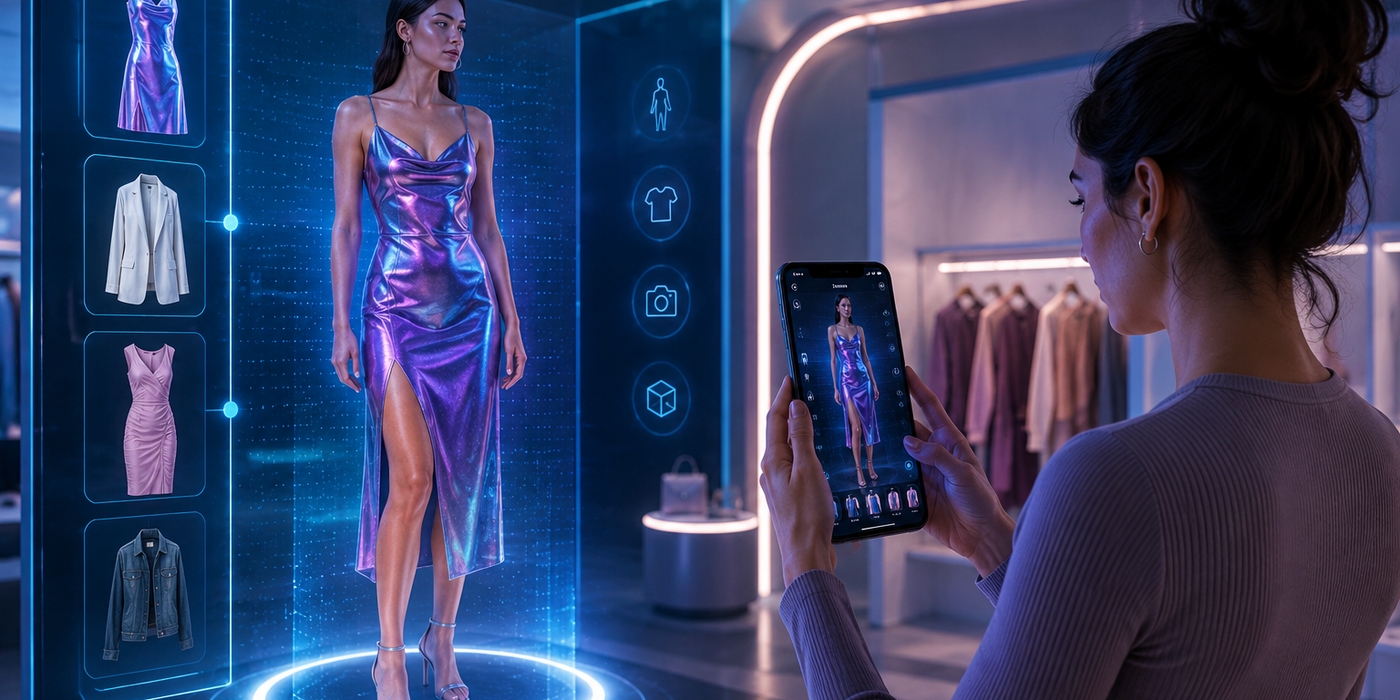
Virtual try-on explained: how it works and whether it’s worth using
Table of Contents
- Introduction: Why Seeing Yourself in the Clothes Changes Everything
- What Is Virtual Clothes Try-On and How Does It Actually Work?
- Where You Can Try It: Google, Amazon, Apps, and Free AI Tools
- The Real Business Case: Why Retailers Are Investing in Virtual Try-On
- The Missing Piece: Try-On Without Wardrobe Context Is Only Half the Answer
- Is Virtual Try-On Worth It for Shoppers? An Honest Assessment
- FAQ
- Conclusion: The Future of Getting Dressed Starts with Knowing What You Have
Key Takeaways
- Virtual try-on reduces return rates by up to 36% and lifts add-to-cart conversion by 35% among shoppers who generate a try-on image (eCommerce Boardroom).
- 59% of shoppers are dissatisfied when products look different on them than expected (Google), making visual confidence the core problem this technology solves.
- Free AI-powered try-on tools are now widely accessible—not just enterprise retail features.
- Try-on works best when connected to your existing wardrobe, not just a single item in isolation.
Introduction: Why Seeing Yourself in the Clothes Changes Everything
According to Google research, 59% of online shoppers are dissatisfied when products look different on them than expected. That number captures something every online shopper has felt: the deflating moment a package arrives and the garment bears no resemblance to how it looked on the model. The problem runs deeper than a bad photo. Google's own data also found that 42% of online shoppers don't feel represented by standard model images—meaning the gap between "how it looks on the website" and "how it looks on me" is both a representation failure and a confidence failure.
This isn't purely a logistics problem, though the logistics are real: returns cost retailers billions annually. It's also an emotional one. Decision fatigue sets in when shoppers can't visualize themselves in a garment, leading to either paralysis or regret-driven purchases. Virtual clothes try-on addresses both dimensions at once.
This article covers what virtual try-on actually is, how the technology works, where you can access it today, what the business data says about its effectiveness, and—critically—why try-on in isolation still leaves a meaningful gap that wardrobe context alone can close.
What Is Virtual Clothes Try-On and How Does It Actually Work?
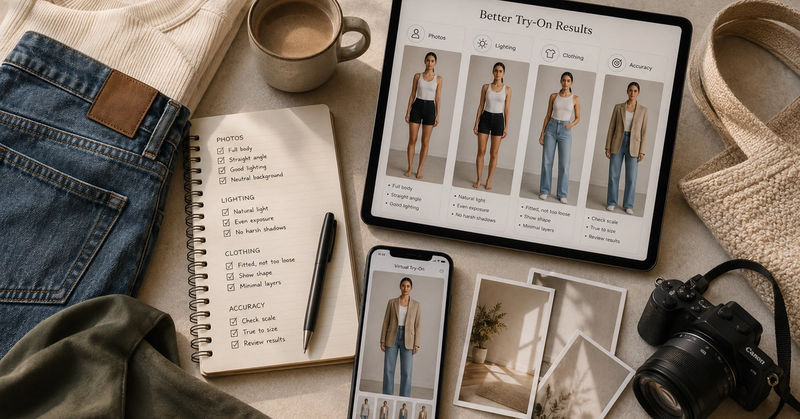
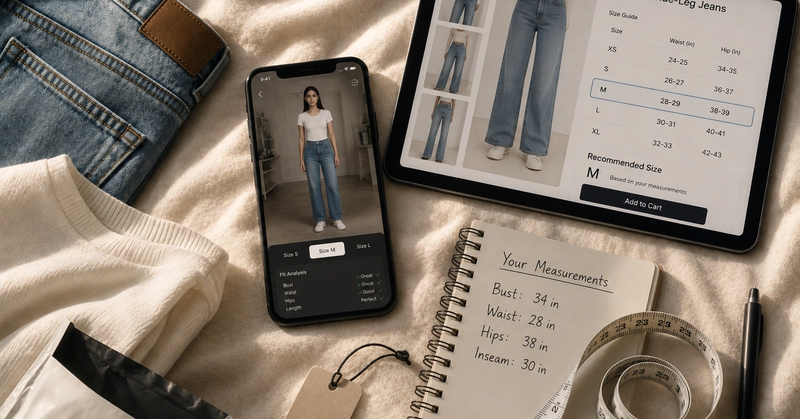
Virtual clothes try-on is a technology that digitally places garments onto a user's image—either a static photo or a live camera feed—so shoppers can see how clothing looks on their own body before purchasing. The experience varies by implementation, but the core promise is consistent: replace guesswork with visual confirmation.
There are two primary technical approaches. Image-based AI try-on processes a static photograph of the user and computationally drapes the selected garment onto it. The system analyzes body pose, proportions, and lighting to generate a realistic composite image. Real-time AR try-on uses a live camera feed—typically a smartphone camera—to overlay clothing onto the user in motion, adjusting as they move. Image-based tools are more common for apparel because accurately simulating how fabric drapes, stretches, and folds across a moving body remains technically demanding.
The realism of both approaches depends heavily on generative AI and machine learning. Modern models are trained on vast datasets of garment images and body types, learning how different fabrics—jersey knit versus structured wool, for instance—behave under different conditions. These models predict how a garment's texture and silhouette will interact with a specific body shape, producing outputs that go well beyond simple image compositing.
Delivery has shifted decisively toward software. According to Future Market Insights, cloud-based delivery accounts for 69.3% of virtual try-on platform revenue in 2025, which means this is no longer a hardware-dependent technology requiring specialized in-store equipment. It runs in browsers and apps. That said, in-store smart mirrors and kiosks remain a meaningful channel—Mordor Intelligence data shows software solutions held 61.43% of virtual try-on market share by technology, while smart mirrors and kiosks held 43.86%, reflecting that physical retail deployments are still substantial. For most shoppers, though, access happens on a smartphone or laptop, with no specialized hardware required.
Where You Can Try It: Google, Amazon, Apps, and Free AI Tools
That software-first reality means most shoppers already have access to virtual try-on through platforms they use daily—no app download or account creation required in many cases.
Google Shopping integrates virtual try-on directly into search results. When you search for a garment, select product listings display AI-generated model images across a range of body types, skin tones, and sizes. This feature directly addresses a documented gap: according to Google's own research, 42% of online shoppers don't feel represented by standard model photography. The result is a try-on experience built into the discovery phase, before a shopper even visits a retailer's site.
Amazon's implementation takes a different approach. Through the Amazon mobile app, shoppers can use their phone's camera to overlay clothing items onto a live or captured image of themselves using AR—most prominently available for shoes and, increasingly, apparel.
For shoppers seeking free AI-powered options, several tools have emerged outside the major platforms. Kolors Virtual Try-On, developed by Kuaishou Technology, is a notable open-access model that generates realistic garment overlays from a single photo. Other freemium tools offer browser-based virtual clothes try-on with no account required, making accessible try-on a genuine reality rather than a marketing promise.

Want this styled from your own closet?
Elara builds the look from what you own, then lets you try it on.
The market data validates why so many tools are competing here. According to Mordor Intelligence, apparel held 47.64% of virtual try-on market share in 2024, making it the dominant category by a wide margin. Software solutions account for 61.43% of that market by technology type—confirming that the tools shoppers access through browsers and apps represent the industry's center of gravity, not its edge.
The Real Business Case: Why Retailers Are Investing in Virtual Try-On
The conversion numbers attached to virtual try-on are striking enough that retailers have moved from pilot programs to platform-level investments. Shoppers who actively generated a virtual try-on image showed 35% higher add-to-cart conversion compared to those who didn't, according to data reported by eCommerce Boardroom. In a fashion marketplace test documented by The Interline, try-on users showed 52% higher add-to-cart rates and 35% higher conversion. Shoppers who completed a full try-on converted at twice the rate of standard shoppers.
The mechanism behind these numbers is straightforward. When a shopper can see a garment on a body that resembles their own, purchase confidence rises and the mental simulation required to commit to buying becomes far easier. Decision paralysis—the hesitation that kills conversions on product pages—shrinks when uncertainty about fit and appearance shrinks with it.
Returns tell the same story from the other direction. Virtual try-on reduces return rates by up to 35–36%, according to data from eCommerce Boardroom and Dataintelo. The causal logic is straightforward: returns spike when post-purchase reality doesn't match pre-purchase expectation. Try-on sets accurate expectations before the transaction, not after.
Average order value compounds the case further. When retailers incorporate outfit-coordination features—showing how a garment pairs with complementary pieces rather than displaying it in isolation—AOV lifts of up to 40% have been reported (Style3D, Dataintelo). Single-item try-on is useful; outfit-level try-on is commercially transformative.
Grand View Research estimates the virtual try-on market grew from $9.17 billion in 2023 and is projected to reach $46.42 billion by 2030, at a 26.4% CAGR—with the AI and ML segment growing fastest at 30.1% CAGR from 2024 to 2030.
That trajectory reflects institutional confidence. Retailers aren't investing in virtual try-on because it's novel—they're investing because the unit economics of reduced returns, higher conversion, and larger baskets make the ROI case without requiring generous assumptions.
The Missing Piece: Try-On Without Wardrobe Context Is Only Half the Answer
Virtual try-on solves one problem well: it shows you how a garment fits your body. What it doesn't show you is whether that garment fits your life—specifically, whether it works with the clothes you already own.
Consider the practical scenario. A shopper sees a blouse on Google Shopping, generates a try-on image, and confirms it flatters their frame. What the tool cannot tell them is whether that blouse pairs with the blazer hanging in their closet, or whether they already own three near-identical tops that would make this purchase redundant. The fit question gets answered. The wardrobe-compatibility question doesn't.
This is where dissatisfaction persists even after try-on. According to Google, 59% of online shoppers are dissatisfied when products look different on them than expected—but fit is only one dimension of that disappointment. Shoppers also return items that fit perfectly but don't integrate into how they actually dress. A piece that works on a model, and even works on the shopper's body, can still feel wrong once it's home and surrounded by the rest of their wardrobe.
The next evolution of this technology is contextual try-on: tools that know not just your body shape, but your existing closet. Instead of evaluating a single item in isolation, wardrobe-integrated try-on lets you ask the more useful question—does this work with what I already have?
Elara is built around this idea. Rather than functioning as a standalone try-on tool, Elara operates as an AI stylist connected to a user's actual digital wardrobe. When a shopper considers a new piece, Elara can show not only how it fits, but how it combines with items they already own—turning a single-item decision into a whole-outfit answer. That shift from cosmetic to contextual is what closes the confidence gap that virtual try-on alone leaves open.
Is Virtual Try-On Worth It for Shoppers? An Honest Assessment
Contextual try-on tools like Elara represent a meaningful leap forward, but the broader category of virtual try-on still has real limitations worth naming honestly before you build your shopping workflow around it.
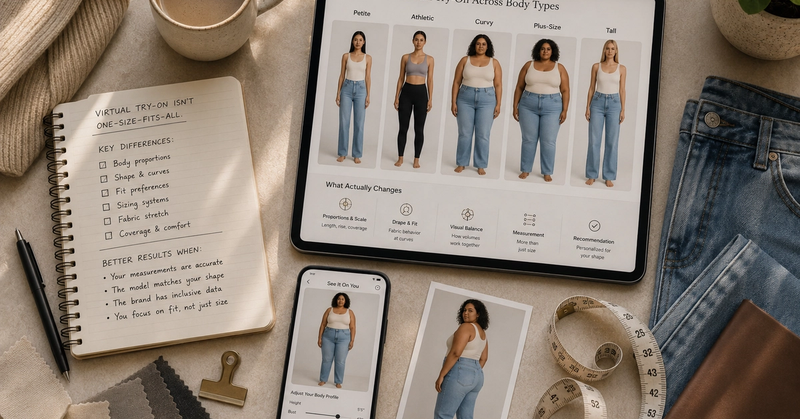
Realism varies significantly across tools. Simple, draped fabrics—jersey tees, lightweight dresses—render convincingly in most AI-powered try-on systems. Structured garments are a different story. Heavy knits, tailored blazers, and stiff denim involve complex physical draping that current models still struggle to simulate accurately. Body diversity coverage is improving but uneven; some platforms perform well across a wide range of body types, others don't. Treat any try-on result for fit-critical, structured pieces as a useful signal rather than a definitive answer.
That said, the genuine benefits are measurable. According to Google, 59% of online shoppers are dissatisfied when products look different on them than expected—and virtual try-on directly attacks that gap by letting shoppers test before committing. The emotional payoff is real: faster comparison across multiple items, reduced decision fatigue, and the confidence to click "buy" without second-guessing. These aren't minor conveniences. For high-consideration purchases—a formal jacket from a brand you've never ordered from, a dress for an event where fit genuinely matters—virtual clothes try-on meaningfully shifts the odds in your favor.
Adoption reflects this growing trust. According to The Interline, roughly half of U.S. online shoppers currently express interest in virtual try-on—a majority signal, not a niche one. The technology works best when the stakes are high and the item is fit-critical. It works least reliably on heavily textured or structured fabrics where physics matter more than pattern. As AI models continue improving, that second category is shrinking fast.
FAQ
Q: Does virtual try-on work for all clothing types?
A: No. Virtual try-on works best for simple, draped fabrics like cotton tees and lightweight dresses. Structured pieces—tailored blazers, heavy knits, stiff denim—are harder to simulate accurately because the fabric physics are more complex. For fit-critical structured items, use try-on as one signal among others, not as a definitive answer.
Q: Can I use virtual try-on on my phone?
A: Yes. Most virtual try-on tools run through browsers or mobile apps. Google Shopping integrates try-on directly into search results. Amazon offers AR try-on through its mobile app. Free tools like Kolors Virtual Try-On work in browsers on any device. You don't need specialized hardware.
Q: How much does virtual try-on actually reduce returns?
A: Studies show virtual try-on reduces return rates by 35–36% because it sets accurate expectations before purchase. When shoppers can see how a garment looks on them before buying, they're less likely to be disappointed when it arrives. The effect is strongest for fit-critical items.
Q: What's the difference between virtual try-on and outfit try-on?
A: Virtual try-on shows you how a single garment looks on your body. Outfit try-on shows you how that piece works with multiple items from your existing wardrobe. Outfit-level try-on drives higher conversion and AOV because it answers the question "does this work with what I already have?"—not just "does this fit me?"
Conclusion: The Future of Getting Dressed Starts with Knowing What You Have
Virtual try-on has moved from novelty to necessity, backed by measurable business outcomes—lower returns, higher conversion, stronger purchase confidence—and genuine consumer demand. According to Mordor Intelligence, the market is estimated at $15.18 billion in 2025 and projected to reach $48.10 billion by 2030, a trajectory that reflects serious, sustained investment in the technology.
The next frontier isn't just better rendering. It's context. Try-on that knows your wardrobe, not just your body shape, is where the real confidence gap gets closed.
Elara is built for exactly that—connecting virtual styling to your actual closet so every new piece is evaluated against what you already own. If you're ready to shop smarter, explore how Elara makes that possible at joinelara.com. The future of getting dressed looks like AI that truly understands your style, your wardrobe, and what you actually need next.
Your stylist, in your pocket
Stop reading about outfits. Start wearing them.
Elara knows your closet, shops every store and gets you dressed for any occasion.