Closet Organizer Ideas: Design & Smart Systems
Closet organizer systems maximize outfit utility with smart design and technology. Learn warm minimalism zoning, RFID tracking, and how to choose between IKEA, Amazon, and custom solutions.

Closet Organizer Ideas: Maximize Outfit Options
Table of Contents
- Key Takeaways
- Introduction: Your Closet Is a Decision Engine — Is It Working for You?
- The State of Closet Organization in 2026: From Storage to Sanctuary
- Closet Organizer Types: Matching the System to Your Space
- Closet Organizer Design Ideas: Warm Minimalism, Zoning & the Boutique Effect
- Smart Closet Technology: Motion Sensors, RFID, and AI Outfit Planning
- Where to Shop: IKEA, Amazon & Beyond
- FAQ
- Conclusion: An Organized Closet Is Just the Beginning
Edited Article
Key Takeaways
- The global closet organizer market is projected to reach $5.12 billion in 2026, signaling that consumers now treat storage as a serious lifestyle investment (Business Research Insights)
- 65% of U.S. homeowners invested in organized storage solutions in 2025, proving this is behavioral change, not a passing trend (Freddy's Closets)
- This article covers three pillars: choosing the right physical system, designing for outfit access, and integrating smart/AI technology
- The real opportunity lies in connecting your organized closet to a digital wardrobe layer — that's what turns storage into outfit maximization
Introduction: Your Closet Is a Decision Engine — Is It Working for You?
The global closet organizer market is on track to reach $5.12 billion in 2026, according to Business Research Insights — and that number isn't being driven by people buying more clothes. It's being driven by people finally investing in how they manage the clothes they already have.
Ever stood in front of a full closet and felt like you had nothing to wear? That feeling isn't a shopping problem. It's a wardrobe intelligence problem — a failure to know what you own, how to combine it, and what's actually missing. Most closet content treats this as either a design challenge ("buy better shelving") or a retail challenge ("shop smarter"). Neither gets to the root of it.
This article takes a different approach. You'll learn how to match the right closet organizer system to your space, design your closet for maximum outfit utility, integrate smart technology that reduces daily decision fatigue, and connect your physical organization to a digital wardrobe layer that makes everything you own work harder for you.
The State of Closet Organization in 2026: From Storage to Sanctuary
Closet organization has crossed a threshold. According to Freddy's Closets, approximately 65% of U.S. homeowners invested in organized storage solutions in 2025 — a figure that reflects a genuine behavioral shift, not a temporary home improvement trend. When nearly two-thirds of homeowners are prioritizing how they store and access their belongings, the closet has officially moved from afterthought to architectural priority.
The market data confirms the momentum. Business Research Insights projects the global closet organizer market will reach $5.12 billion in 2026, expanding to $9.45 billion by 2035 at a CAGR of 6.7%. That sustained growth rate isn't driven by novelty — it reflects a durable shift in how consumers think about their homes and their wardrobes. The cultural forces behind it are well-documented: remote work made the home the center of daily life, social media made personal style more visible and intentional, and the broader "home as sanctuary" movement elevated every room, including the closet, to a space worth designing thoughtfully.
Inspired Closets put it plainly: "Quality, sustainability, and durability are no longer niche — they're expected. The closet has become just as important and design-driven as a kitchen remodel." That framing matters, because it signals what consumers are now willing to invest — both financially and creatively — in a space that was once purely functional. As Inspired Closets also noted, "the custom closet is evolving from pure utility to a space that reflects lifestyle, not just wardrobe... What was once considered a luxury for a select few has now become an expectation for nearly every homeowner."
This distinction separates 2026 closet thinking from the organizational advice of five years ago: the goal has shifted from tidiness to wardrobe maximization. A well-organized closet isn't just easier to navigate — it actively increases the number of outfits you can build from what you already own. That concept — treating your closet as a decision engine rather than a storage unit — shapes everything that follows.
Closet Organizer Types: Matching the System to Your Space
Treating your closet as a decision engine starts with choosing the right physical components — and the five core organizer types each solve a distinct problem within that system.
1. Closet organizer shelves Open shelving works best for folded items, bags, and shoes. Positioning shelves at eye level — rather than stacking everything floor to ceiling — dramatically increases outfit visibility and reduces the "nothing to wear" feeling that hits even the most well-stocked wardrobe. Aesthetically, natural wood shelving in warm oak or walnut tones anchors the warm minimalism that defines 2026 closet design.
2. Closet organizer with drawers Drawers built into the closet eliminate the need for a separate dresser entirely. They're ideal for accessories, folded knitwear, and undergarments — items that wrinkle or tangle when stacked on open shelves. Matte-finish drawer fronts in warm beige or greige keep the look cohesive without visual clutter.
3. Hanging organizers Double-hang rods, cascading velvet hangers, and hanging fabric organizers make the most of vertical space for tops, dresses, and jackets. The pro tip: group by garment length so the space beneath shorter items can hold a shoe rack or small drawer unit.
4. Closet organizer bins Clear acrylic or natural woven bins pair with open shelving to contain small items — scarves, belts, seasonal accessories — without hiding them completely. Visibility is the operative word: if you can't see it, you won't wear it.
5. Storage and utility systems Freestanding towers, over-door panels, and modular units extend organization beyond the bedroom to pantries, linen closets, and entryways. Modular systems — widely available through both IKEA and Amazon — let you start with one unit and expand as your needs evolve.
The layout principle that ties all five types together is purposeful zoning: grouping items by category (hanging, folded, shoes, accessories) rather than by color or occasion. Zoning creates visual logic that makes outfit assembly faster, not just tidier.
Closet Organizer Design Ideas: Warm Minimalism, Zoning & the Boutique Effect
Design choices in a closet aren't purely aesthetic — they directly determine how many outfits you'll actually build from what you own. As Inspired Closets notes, "the custom closet is evolving from pure utility to a space that reflects lifestyle, not just wardrobe." That evolution has a concrete visual language in 2026.
Ready to upgrade your wardrobe?
Get the Elara app for AI-powered styling and virtual try-ons.
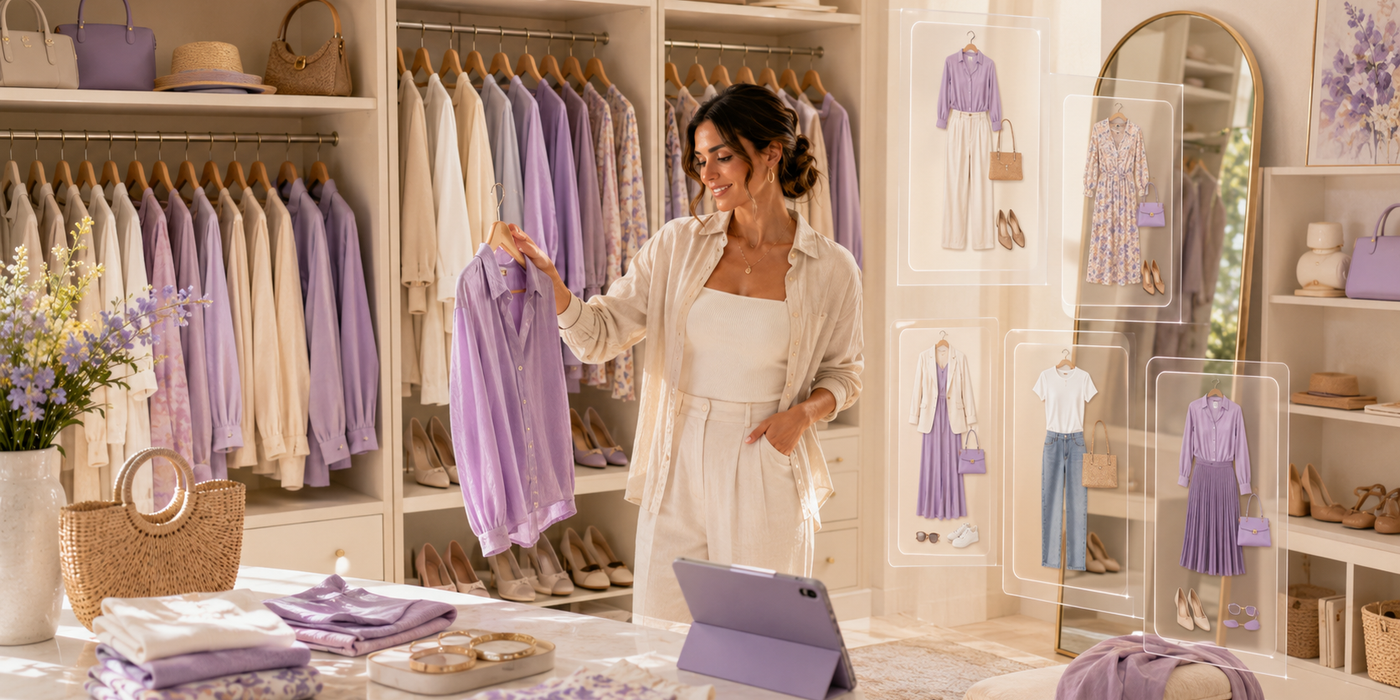
Warm minimalism defines the dominant aesthetic: elevated neutrals — warm taupes, creamy beiges, off-whites — paired with natural wood tones and matte metal hardware. The practical effect is a reduction in visual noise. When every surface reads as calm and cohesive, individual garments stand out rather than competing with a busy backdrop, which speeds up outfit decisions considerably.
Two-tone palettes take this further by turning color into a functional zoning tool. Pairing a soft neutral base with a bold accent — deep navy for the hanging zone, forest green for the shelving section — lets your eye navigate to the right category instantly, without reading labels or reorganizing mentally each morning.
The most impactful shift is the boutique-inspired layout. Retail stores display merchandise to maximize visibility because visible items sell. The same psychology applies to your wardrobe: open shelving for accessories, display-style angled shoe storage, and island drawers with glass or open tops all ensure that items you own stay in your mental rotation. According to Inspired Closets, quality and design-intentionality in closets are "no longer niche — they're expected," which is precisely why this retail-display logic has migrated from commercial spaces into residential design.
Three concrete starting points by space size:
- Small reach-in closet: One double-hang rod section, two open shelves above for folded items, and a slim over-door bin panel for accessories — zones established by height rather than width.
- Medium reach-in closet: Divide the rod into short-hang (tops, jackets) and long-hang (dresses, trousers) sections; add a three-drawer unit beneath the short-hang zone and a shoe shelf at eye level on the opposite wall.
- Walk-in closet: Dedicate each wall to a category — hanging on one side, shelving and drawers on another, shoes and accessories displayed on the third — with a central island or ottoman for staging outfits.
Great design sets the stage — but the next frontier is making your closet actively work for you through smart technology.
Smart Closet Technology: Motion Sensors, RFID, and AI Outfit Planning
A well-designed closet reduces friction. Smart technology eliminates it. The integration of digital tools into physical closet systems represents the most significant gap between how most people organize today and what's already available — and it maps directly onto the core problem that drives closet frustration: decision fatigue.
Research consistently estimates that the average person makes tens of thousands of micro-decisions daily. Getting dressed shouldn't compete with the genuinely hard ones. Smart closet technology addresses this in three tiers.
Entry-level: ambient intelligence Motion-sensor LED lighting — ideally with a high Color Rendering Index (CRI 90+) for accurate color matching — activates the moment you open the closet door, eliminating the flat overhead lighting that makes navy look black and olive look khaki. USB charging drawers keep accessories and devices organized in one place.
Mid-level: RFID clothing tracking RFID (Radio Frequency Identification) tags are small, washable chips attached to individual garments that sync with a companion app. The app tracks wear frequency, flags items that haven't been worn in 90 days, and builds a live inventory of everything you own. The practical outcome: you stop buying duplicates and start seeing what's actually underutilized. This technology pairs naturally with the physical investment most homeowners have already made in their storage systems.
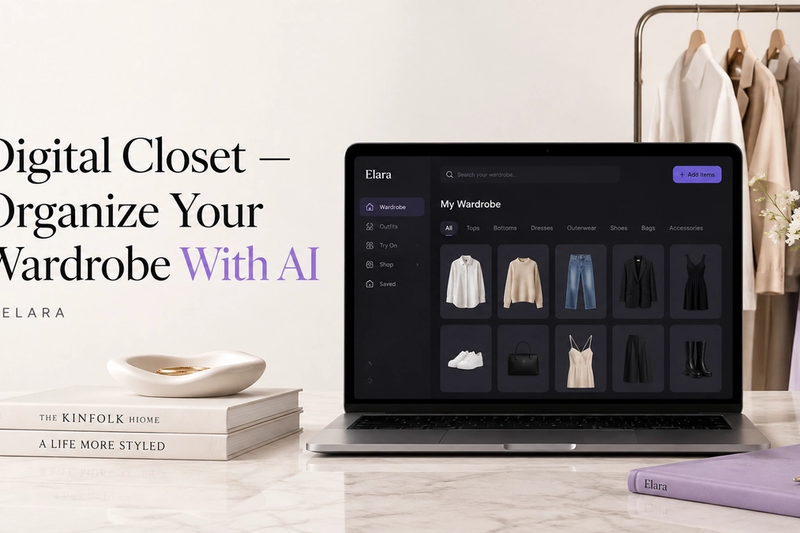
Advanced: AI outfit planning AI outfit tools connect your physical closet to a digital wardrobe layer, suggesting combinations based on what you own, the weather, your calendar, or a saved aesthetic. Once your closet is organized, tools like Elara's AI stylist can digitize your wardrobe and suggest outfits from what you already own — turning your organized closet into an active outfit engine, not just tidy storage.
There's a sustainability dimension here worth naming directly. RFID and AI tools make existing wardrobe contents visible and actionable, which reduces the impulse purchases and duplicate buys that accumulate when people can't see what they already own. Intentional consumption starts with knowing what you have — and these tools make that knowledge automatic.
Where to Shop: IKEA, Amazon & Beyond
Knowing what you own and how to find it solves half the problem — the other half is choosing the right physical system to house it all. That decision comes down to three main retail paths, each suited to a different budget, living situation, and level of commitment.
IKEA's PAX system is the strongest value play for homeowners who want modular, customizable storage without commissioning a full custom build. PAX frames combine with interchangeable shelves, drawers, and hanging rails to create configurations that rival built-ins at a fraction of the cost. The tradeoff is upfront planning: measuring carefully and mapping your layout before ordering saves significant frustration at assembly. When done right, the result carries the same intentionality as a kitchen remodel — which is exactly what Inspired Closets means when they note that "the closet has become just as important and design-driven as a kitchen remodel."
Amazon is the right starting point for renters, quick upgrades, or anyone testing a layout before committing to something permanent. Hanging fabric organizers, clear bins, double-hang rods, and freestanding towers ship fast, cost little, and require no drilling. They're also genuinely useful for validating how you actually use your space — a six-month experiment with a $40 hanging organizer can tell you exactly what a $2,000 built-in should include.
Custom and specialty retailers serve a different need entirely: the full walk-in redesign where every inch is tailored to your wardrobe and lifestyle. The investment is higher, but so is the outcome.
A simple framework for deciding:
- Renting or testing a layout → Amazon
- Homeowner ready to invest → IKEA or modular systems
- Closet as a true sanctuary → custom specialist
Regardless of which path you choose, pairing any physical system with a digital wardrobe tool multiplies the return on that investment — because an organized closet you can't fully see or navigate still leaves outfit potential on the table.
FAQ
Q: How do I know if my closet is actually organized? A: Your closet is organized when you can find any item in under 30 seconds and you know exactly what you own without opening every drawer. The real test: can you build three complete outfits without trying things on? If yes, the system is working. If no, you likely have visibility or zoning issues.
Q: What's the difference between RFID tags and a digital wardrobe app? A: RFID tags track individual garments — what you own, how often you wear them, and what's been neglected. A digital wardrobe app like Elara goes further by suggesting outfit combinations based on your style, the weather, and what you already have. RFID gives you inventory; AI gives you styling intelligence. Both are useful, but they solve different problems.
Q: Should I invest in a custom closet or start with IKEA? A: Start with IKEA or Amazon if you're renting, still figuring out your style, or unsure how you actually use your space. Custom systems make sense once you've lived with a basic setup for 6-12 months and know exactly what you need. A test run costs $200-500 and teaches you more than any designer consultation can.
Conclusion: An Organized Closet Is Just the Beginning
This article has moved from the macro — a global closet organizer market projected to reach USD 5.12 billion in 2026, according to Business Research Insights — through system types, design strategy, smart technology, and finally, where to shop. Each layer builds on the last. But the throughline is simple: the goal was never a prettier closet. It's a wardrobe that works harder for you every single day.
Physical organization is the foundation. The real multiplier is connecting that foundation to a digital layer that makes every item visible, every outfit discoverable, and every shopping decision smarter.
Want to see what an AI stylist could do with your newly organized wardrobe? Explore how Elara helps you get more outfits from the clothes you already own.
Your closet isn't just storage. It's the starting point for showing up as the best version of yourself — every single day.

Your AI Stylist is Here.
live on the App Store & Google Play
Available on iOS and Android for seamless access anytime, anywhere.