Best AI Wardrobe Apps in India: 2026 Guide
Best AI wardrobe apps in India compared across ethnic wear support, privacy, and pricing. Find the right app for outfit planning, closet organization, and sustainability.

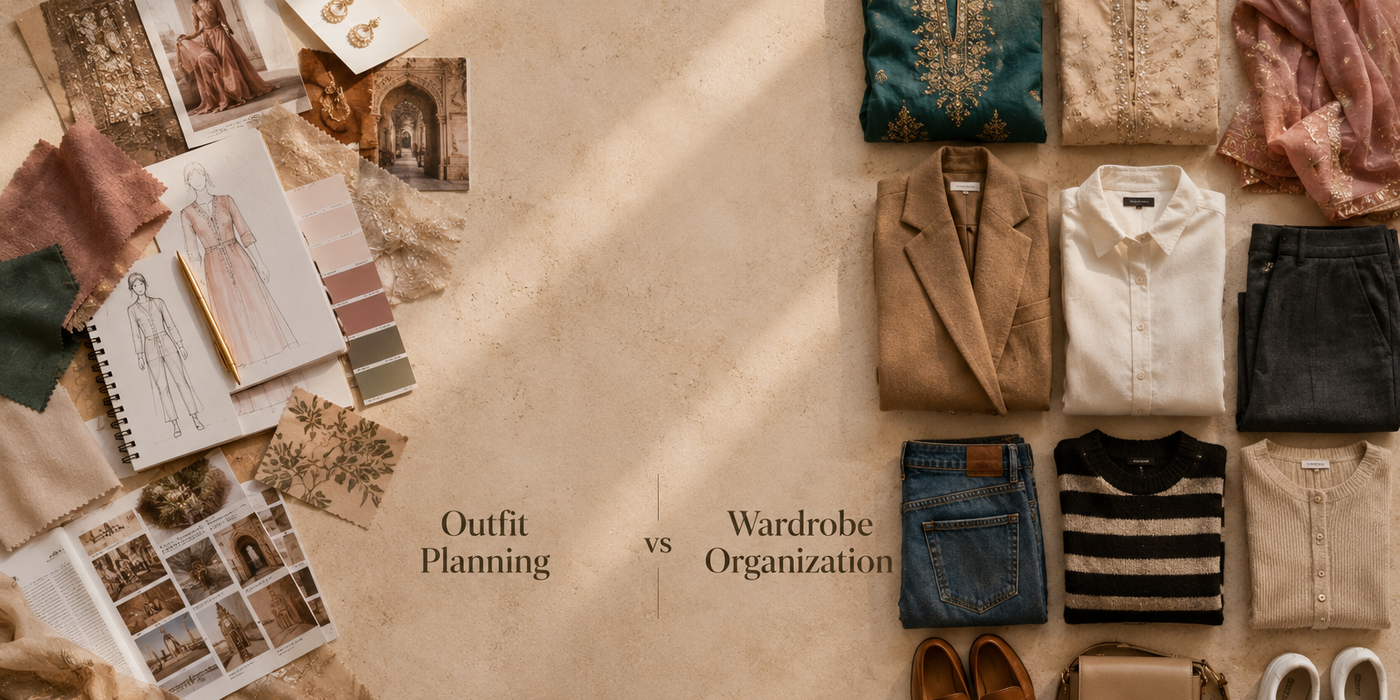
Best AI wardrobe apps in India: Outfit Planning vs Organization
Table of Contents
- Key Takeaways
- Introduction: Why Most AI Wardrobe Apps Weren't Built for India
- What to Look for in an AI Wardrobe App (India-Specific Criteria)
- Wardrobe-First Apps: FitWardrobe and Acloset Compared
- Organization-First Apps: Indyx and Whering
- Styling-First Apps: Virtual Try-On and AI Outfit Generation
- How Elara Bridges the Gap: Wardrobe Intelligence Meets Conversational AI
- Which App Is Right for You? A Decision Framework
- Frequently Asked Questions
- Conclusion: Your Wardrobe, Your AI
Edited Article
Key Takeaways
- The right AI wardrobe app depends on your goal—outfit planning, closet organization, sustainability, or virtual try-on (Future Reference Blog, 2026)
- FitWardrobe is the strongest India-specific pick, with ethnic wear support and on-device privacy via local storage
- Elara combines wardrobe organization with styling intelligence through conversational AI
- Neither category alone—wardrobe-first or styling-first—serves every Indian user's needs
Introduction: Why Most AI Wardrobe Apps Weren't Built for India
The AI wardrobe app market in 2026 has split into two distinct camps: wardrobe-first apps that focus on digitizing and organizing your existing closet, and styling-first apps that lead with AI outfit generation, virtual try-on, and color analysis. According to a 2026 analysis by Klodsy Blog, this split defines how Indian users must now navigate their choices—and most global rankings make that navigation harder, not easier.
The problem is structural. Most "best AI wardrobe apps" lists are built around Western wardrobe realities: predominantly Western clothing categories, Western sizing norms, and users who treat fashion primarily as a shopping exercise. As FitWardrobe Blog noted in 2026, Indian users have three distinct needs that global rankings consistently ignore: ethnic wear recognition (sarees, kurtas, lehengas, sherwanis), genuinely affordable access, and practical wardrobe management that works with what they already own—not just a feed of new purchase suggestions.
This article covers six apps across both categories—FitWardrobe, Acloset, Indyx, Whering, Klodsy/Alta, and Elara—and evaluates each on five India-specific criteria: upload speed, auto-tagging accuracy, ethnic wear support, freemium pricing, and offline or on-device functionality. Reviewers at DLOOK Blog argue that the best apps combine fast upload, accurate item recognition, and genuinely useful suggestions rather than generic styling feeds—and that benchmark shapes every comparison here.
The goal isn't a ranked list. It's a segmented guide so you can identify the right tool for your specific wardrobe goal, not the app with the most features.
What to Look for in an AI Wardrobe App (India-Specific Criteria)
Global evaluation frameworks for AI wardrobe apps consistently prioritize UI polish, feature breadth, and social sharing capabilities. For Indian users, those criteria are largely irrelevant. What matters is whether the app can handle a wardrobe that includes a mix of ethnic and Western clothing, whether it's accessible on an Android device without a premium subscription, and whether it stores your wardrobe data in a way you can trust. FitWardrobe Blog's 2026 analysis makes this gap explicit: Indian users want apps that handle local wardrobe realities—ethnic wear support, inexpensive access, and practical management—rather than Western-fashion styling engines.
Five criteria cut through the noise when you're evaluating any AI wardrobe app for best AI wardrobe apps in India:
- Ethnic wear support — Does the app recognize and accurately tag sarees, kurtas, lehengas, dupattas, and sherwanis? An app that can only categorize "dress" or "top" will misclassify half a typical Indian wardrobe, making outfit suggestions unreliable.
- Upload speed and auto-tagging accuracy — How quickly can you digitize a 50-item closet, and how often does the AI correctly identify fabric, color, and occasion? According to DLOOK Blog's 2026 reviewer consensus, fast upload paired with accurate item recognition separates genuinely useful apps from frustrating ones.
- Outfit suggestion quality — Does the app help you use what you already own, or does it primarily push new purchases? Outfitmaker AI Blog distinguishes between apps that treat your closet as the starting point and those that treat it as a lead-generation tool for affiliated brands.
- Freemium pricing and affordability — What features are gated behind a subscription, and is the paid tier priced for Indian purchasing power? A $10/month subscription is a different proposition in Mumbai than in Manhattan.
- Privacy and on-device functionality — Does the app process and store your wardrobe data locally, or does it require cloud upload? On-device storage is an increasingly decisive factor for Indian users who are cautious about uploading personal photo libraries to remote servers.
These five criteria form the evaluation lens for every app comparison that follows. An app that scores well on UI but fails on ethnic wear support isn't a strong recommendation for the majority of Indian users—regardless of where it ranks in a global roundup.
Wardrobe-First Apps: FitWardrobe and Acloset Compared
With those five criteria established, two apps stand out as the strongest wardrobe-first options for Indian users in 2026—but they serve meaningfully different user profiles.
FitWardrobe is the most India-relevant app in this comparison by a clear margin. According to the FitWardrobe Blog, it is the only app here that simultaneously supports ethnic wear categories (sarees, kurtas, lehengas, and similar garments), runs on Android and web, and stores data on-device using Gemini-based AI. That combination addresses the three most common friction points Indian users report. No other app in this roundup replicates it.
Ready to upgrade your wardrobe?
Get the Elara app for AI-powered styling and virtual try-ons.
Acloset is the strongest general-purpose freemium option. Its AI auto-tagging is fast and reasonably accurate, and its outfit suggestion engine works well for Western-wardrobe-heavy users. The freemium tier is genuinely usable, not artificially limited. The critical limitation, flagged explicitly in FitWardrobe Blog's India-focused comparison, is its weak ethnic wear support—a dealbreaker for anyone whose wardrobe includes a significant proportion of Indian clothing.
The choice is straightforward: pick FitWardrobe if your wardrobe is predominantly or significantly ethnic wear, or if on-device privacy matters to you. Pick Acloset if your wardrobe skews Western and budget is a primary constraint.
Organization-First Apps: Indyx and Whering
Not every user needs outfit suggestions—some want a clean, searchable digital inventory of everything they own. That's the core value proposition of organization-first apps, and two names dominate this category in 2026.
Indyx is the category leader in wardrobe digitization and closet cataloging. According to the Indyx Blog, it is consistently positioned as the go-to tool for users who want a detailed, searchable digital inventory before making any new purchase decisions. Its strength is depth of cataloging—item attributes, outfit history, wardrobe analytics. Styling intelligence is secondary to that core function, and users expecting active outfit planning will find it limited on that front.
Whering leads the category on sustainability tracking. It tracks cost-per-wear and wardrobe utilization rates, making it the strongest choice for eco-conscious users motivated by reducing fashion waste and shopping more deliberately. Like Indyx, its outfit suggestion capability exists but is not its primary value driver.
Both apps deliver real value for their intended use cases. The honest limitation for Indian users is significant: neither Indyx nor Whering supports ethnic wear categories or India-specific pricing tiers. As FitWardrobe Blog's 2026 India trend analysis notes, Indian users increasingly want apps built around local wardrobe realities—ethnic wear recognition, affordability, and practical wardrobe management rather than Western-fashion-centric styling. Both apps fall short on that measure.
The practical guidance: if your wardrobe is predominantly Western and your goal is inventory management rather than daily outfit planning, either app delivers real value. For mixed or ethnic-wear-heavy wardrobes, the India gap is too significant to overlook.
Styling-First Apps: Virtual Try-On and AI Outfit Generation
A different category of apps leads with visual AI—virtual try-on, AI-generated outfit visuals, and color analysis—rather than wardrobe organization. Klodsy, Alta, and Beauty AI/DLOOK consistently appear near the top of 2026 global roundups for virtual try-on and AI outfit generation, according to the Klodsy Blog.
The important qualifier is that these are global rankings, not India-specific market assessments. Virtual try-on features are trained predominantly on Western fashion items and tend to perform less accurately on ethnic silhouettes, drapes, and layering styles. There is also a structural tension with how these apps generate value: as Outfitmaker AI Blog notes, the strongest wardrobe apps help users work with what they already own rather than pushing new purchases—and styling-first apps are typically built around a shopping-adjacent model, surfacing new items alongside outfit visuals.
Where styling-first apps do add genuine value is for active shoppers who want to preview outfits before buying, or users specifically seeking color analysis tools. For users whose primary goal is pre-purchase visualization, Klodsy and Alta are credible options.
For most Indian users evaluating wardrobe management in 2026, these apps are worth knowing about rather than prioritizing. The India-specific gaps—ethnic wear compatibility, wardrobe-first philosophy, local pricing—make them supporting players in this comparison rather than lead recommendations.
How Elara Bridges the Gap: Wardrobe Intelligence Meets Conversational AI
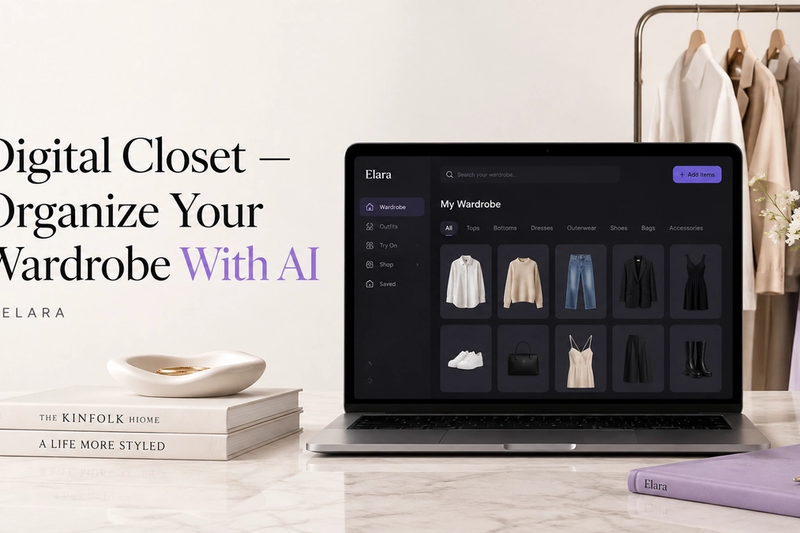
Those India-specific gaps—ethnic wear compatibility, wardrobe-first philosophy, local pricing—are precisely what Elara is built to address. Where every other app in this comparison excels at one dimension (organization or styling or sustainability), Elara operates as a conversational layer that connects all three.
The core differentiation is how Elara learns. The platform uses conversational AI that works across your preferences—ethnic wear occasions, festival dressing, office requirements, budget limits—rather than generating static outfit combinations from a fixed wardrobe snapshot. You tell Elara what you need, it remembers, and its suggestions sharpen with every conversation.
That distinction matters when you stack Elara against each competitor directly:
- vs. FitWardrobe: FitWardrobe handles ethnic wear recognition and on-device privacy well. Elara adds the conversational styling intelligence that turns a cataloged wardrobe into an active styling resource.
- vs. Acloset: Acloset digitizes and auto-tags efficiently. Elara goes further—contextual recommendations based on weather, occasion, and how your style preferences evolve.
- vs. Indyx: Indyx builds a meticulous wardrobe inventory. Elara pairs that cataloging function with AI styling that adapts rather than sits static.
- vs. Whering: Both prioritize using what you already own over buying new. Elara adds personalized styling and smart shopping guidance on top of wardrobe optimization.
Critically, Elara's wardrobe-first philosophy—prioritizing your existing clothes before recommending purchases—directly aligns with the 2026 evaluation benchmark that Outfitmaker AI identified: the best apps help users use what they already own, not just suggest what to buy next.
If that sounds like the missing layer in your wardrobe toolkit, joinelara.com offers a free trial worth exploring before committing to any paid tier.
Which App Is Right for You? A Decision Framework
The best AI wardrobe app is always goal-dependent, not app-dependent. The choice depends on what you're trying to achieve, not on feature count.
Use this framework to cut straight to the right choice:
One benchmark worth keeping in mind as you decide: DLOOK Blog's 2026 reviewers argue that the strongest apps combine fast upload, accurate item recognition, and genuinely useful suggestions—not the longest feature list. An app that does three things exceptionally well will serve you better than one that does ten things adequately.
Frequently Asked Questions
What's the difference between wardrobe-first and styling-first apps? Wardrobe-first apps prioritize organizing and cataloging what you already own. Styling-first apps lead with outfit generation, virtual try-on, and color analysis. Most users benefit from a wardrobe-first approach because it helps you use what you have before buying new clothes.
Do I need to upload photos of every item in my closet? Most apps require photo uploads to build a digital wardrobe, but upload speed varies significantly. FitWardrobe and Acloset are both fast. Some apps like Indyx offer more detailed cataloging but require more time upfront. Start with an app that supports batch uploads if you have a large closet.
Which app is best for ethnic wear? FitWardrobe is the only app in this comparison with strong ethnic wear support for sarees, kurtas, lehengas, and sherwanis. If ethnic wear is a significant part of your wardrobe, FitWardrobe is the clear choice. Elara's conversational AI can also adapt to ethnic wear occasions and styling preferences as you use it.
Is it worth paying for a subscription? That depends on your goal. If you want basic closet organization, free or freemium tiers (like Acloset's) may be enough. If you want personalized styling advice and smart shopping recommendations, paid tiers typically unlock more value. Elara's free trial lets you test the conversational AI before deciding.
Can these apps work offline? FitWardrobe offers on-device functionality, which means it works without constant cloud upload. Most other apps are cloud-dependent, so they require an internet connection to access your wardrobe and get suggestions.
Conclusion: Your Wardrobe, Your AI
The clearest insight from this comparison is also the most practical one: Indian users need the app that fits their wardrobe reality, not the most feature-rich global option. A 2026 FitWardrobe Blog analysis confirms that local priorities—ethnic wear support, affordable access, practical wardrobe management—remain underserved by the apps that dominate Western rankings.
The wardrobe-first versus styling-first split, identified as the defining 2026 trend by Klodsy Blog, is a real fork in the road. Most apps ask you to choose a side. Elara's conversational AI model works across both—learning your wardrobe, your occasions, and your preferences without forcing a trade-off between organization and style.
AI wardrobe technology is moving fast, and the apps built specifically for Indian users' needs are catching up. The right time to find your fit is now. Start with joinelara.com to try Elara free, or revisit the decision framework above if you're still weighing options.
Your AI Stylist is Here.
live on the App Store & Google Play
Available on iOS and Android for seamless access anytime, anywhere.