Digitize Wardrobe: AI Outfit Suggestions Now 90% Accurate
Digitize wardrobe to unlock AI personalization, sustainability tracking, and smarter shopping. Learn how wardrobe digitization drives $4.7B market growth and 90%+ outfit accuracy.


Digitize Wardrobe: Beyond Closet Photos
Table of Contents
- Introduction: Your Closet Is a Data Problem
- What 'Digitize Wardrobe' Actually Means in 2026
- The AI Personalization Shift: From Suggestions to Styling Intelligence
- Sustainability and the Circular Wardrobe: Why Data Enables Action
- The Retention Gap: Why Most Wardrobe Apps Fail After 30 Days
- The Market Case: Why Wardrobe Digitization Is a Necessity, Not a Novelty
- How to Start Digitizing Your Wardrobe (Without the Overwhelm)
- Frequently Asked Questions
- Conclusion: The Intelligent Layer Between You and Your Wardrobe
Key Takeaways
- The digital wardrobe platform market sat at $1.2B (2025) and is projected to reach $4.7B by 2034 — a 290% growth driven by AI capability and sustainability demand.
- AI outfit suggestion accuracy now exceeds 90%, making wardrobe AI reliable enough for daily decision-making, not just experimentation.
- 68% of users want apps that calculate carbon footprints, connecting wardrobe digitization directly to circular fashion participation.
- 30-day retention averages just 42% among new users — long-term engagement, not feature adoption, is the industry's defining challenge.
Introduction: Your Closet Is a Data Problem
The digital wardrobe platform market sat at $1.2 billion in 2025 and is projected to reach $4.7 billion by 2034 — a 290% expansion that reflects something more fundamental than a technology trend. It reflects a problem most people already feel but rarely name.
You open your closet. It's full. You still feel like you have nothing to wear. That tension — between abundance and decision fatigue — is a data problem. The clothes exist; the intelligence to use them doesn't.
Most people think digitizing a wardrobe means photographing their clothes. That's the starting point, not the value. The real opportunity is what happens after: an intelligence layer that connects inventory awareness to AI personalization, sustainability tracking, and smarter purchasing decisions. That's what separates a digital catalog from a tool that actually changes how you dress and shop.
This article examines three key areas: how AI personalization is maturing from novelty to necessity, why digitizing your wardrobe is the foundation for circular fashion participation, and why engagement — not adoption — is the challenge the industry hasn't solved.
What 'Digitize Wardrobe' Actually Means in 2026
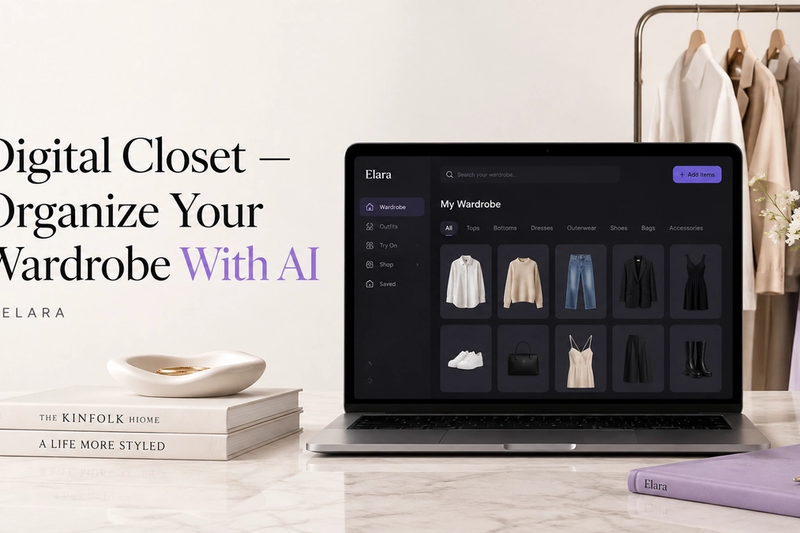
To digitize your wardrobe is not to photograph your clothes — it's to create a structured, queryable dataset of your personal inventory that an AI can reason about. The distinction matters, because the photo is just the entry point. The value lives in the layers built on top of it.
A truly digitized wardrobe operates across three layers:
- Inventory layer — item images, metadata (color, category, fabric, brand), and wear history. This is the foundation: organized, searchable, and complete enough to be useful.
- Intelligence layer — AI pattern recognition that maps outfit logic, occasion suitability, and personal style signals from your actual clothing. This is where organization becomes insight.
- Action layer — shopping recommendations grounded in what you already own, resale readiness assessments, sustainability scoring, and gap analysis before you buy. This is where insight becomes behavior change.
Basic closet apps — photo catalogs, outfit mood boards, manual tagging tools — operate almost entirely at the inventory layer. They're useful for organizing. Intelligent wardrobe platforms connect all three layers. They translate what you own into decisions about what to wear, what to buy, and what to let go.
Most users start with the intention to organize. That's reasonable. But the lasting value isn't the organized closet — it's the AI that learns from it over time.
When you digitize your wardrobe with a platform that includes intelligence, the system becomes more useful the longer you use it. This is the key difference between a photo storage tool and a wardrobe intelligence tool.
Wardrobe app downloads exceeded 4.2 million globally by mid-2026 — a clear signal that mainstream adoption is already underway. This is no longer a niche tool for fashion enthusiasts.
The shift from catalog to intelligence is what separates apps people use once from infrastructure people rely on daily.
The AI Personalization Shift: From Suggestions to Styling Intelligence
That shift — from catalog to intelligence — only becomes meaningful when the AI has real data to work with. And the consumer appetite for exactly that is no longer a leading indicator; it's a baseline expectation.
According to Gelato's 2026 Apparel Trends Report, 60% of consumers are more likely to buy from brands using AI-driven personalization tools. That figure doesn't describe a preference — it describes a threshold. Brands and apps that can't deliver personalized experiences aren't offering less; they're offering something consumers have already decided to leave behind.
The accuracy question has largely been answered. Intel Market Research data shows AI-driven outfit suggestions have crossed the 90% accuracy threshold, which changes the practical calculus entirely. At that level, the system isn't a suggestion engine you occasionally consult — it's reliable enough to replace the daily decision of what to wear, not just supplement it. That's a qualitative shift in how these tools function in a person's life.
What separates wardrobe-first AI from generic styling tools is the training data. A recommendation engine built on trend feeds and population averages is essentially telling you what people like you tend to wear. A wardrobe-grounded AI is trained on your actual inventory — the specific colors in your closet, the silhouettes you reach for repeatedly, the occasions you dress for, the items that haven't moved in six months. That distinction matters structurally. The system isn't approximating your taste from demographic signals; it's learning it from behavioral evidence.
This is where skepticism about AI styling tools often misses the point. The question isn't whether AI can understand nuanced personal style in the abstract — it's whether the AI has access to the right data. When you digitize your wardrobe, you provide that data. Without it, even a sophisticated model is working from generalizations. With it, personalization becomes genuinely personal.
Ready to upgrade your wardrobe?
Get the Elara app for AI-powered styling and virtual try-ons.
Sustainability and the Circular Wardrobe: Why Data Enables Action
Sustainability in fashion has spent years as a marketing layer — a badge brands apply to signal values without changing workflows. When you digitize your wardrobe, it changes that, because it makes circular fashion participation mechanically possible rather than aspirationally vague.
The consumer signal is clear: according to Intel Market Research, 68% of users prefer apps that calculate carbon footprints. That's not a niche green demographic — that's a majority of users treating environmental data as a functional feature they expect from the tools they use. The demand exists. The question is whether apps deliver the infrastructure to act on it.
The structural prerequisite is simple: you cannot reduce, resell, or responsibly replace what you haven't inventoried. When you digitize your wardrobe, it becomes the foundation for circular action, not just a nice-to-have companion to it. Without knowing what you own, sustainability intentions stay intentions.
Three specific workflows become possible once a wardrobe is digitized:
- Cost-per-wear analysis — dividing an item's purchase price by the number of times it's been worn surfaces underutilized pieces that look expensive on a hanger but cost almost nothing per use, and vice versa. This reframes value in a way that changes purchasing behavior.
- Gap analysis before shopping — knowing exactly what you own prevents the most common form of wardrobe waste: buying a third navy blazer because the first two weren't visible at the moment of purchase. When you digitize your wardrobe, redundancy becomes visible before it happens.
- Resale readiness assessment — identifying which items meet secondhand market standards (condition, brand, category demand) and at what price point, turning the decision to resell from a vague intention into a specific action with a realistic outcome.
Most competitor content mentions sustainability as a feature checkbox. None of it explains the mechanical dependency: circular fashion participation requires inventory awareness, and inventory awareness requires digitizing your wardrobe. These aren't parallel benefits — they're sequential prerequisites.
The Retention Gap: Why Most Wardrobe Apps Fail After 30 Days
The most important number in the wardrobe app industry isn't market size or download volume. It's 42% — the average 30-day retention rate among new wardrobe app users. More than half of people who download a wardrobe app have stopped using it within a month. That's the industry's most consequential unsolved problem, and it receives almost no attention in competitor content that focuses almost exclusively on feature adoption.
The abandonment pattern has four structural causes:
- High upfront effort with delayed value: photographing an entire wardrobe before receiving a single useful suggestion is a significant activation cost that most users won't sustain.
- Suggestions that stagnate: initial outfit recommendations feel novel, but if the system doesn't learn from what a user actually wears, the suggestions stop feeling personal and start feeling generic.
- No continuous feedback loop: most apps treat wardrobe data as static rather than behavioral — they don't get smarter as users engage.
- Apps that require deliberate sessions: tools that demand a user open the app, navigate to a feature, and consciously interact with it are fighting against the grain of how people actually move through their days.
The concept worth introducing here is wardrobe-as-infrastructure — the idea that the most durable tools become invisible over time. A GPS app doesn't require you to think about navigation; it just works in the background of your drive. The wardrobe tools with the best long-term retention are those that integrate into daily routines rather than sitting as separate apps requiring intentional engagement.
Elara's conversational AI design addresses this directly: rather than requiring users to open a structured interface and navigate feature menus, it meets users in natural conversation — lowering the activation energy for daily use to the point where checking in feels less like using an app and more like a quick exchange. That design philosophy is a direct response to the retention data, not an incidental feature.
The Market Case: Why Wardrobe Digitization Is a Necessity, Not a Novelty
That design philosophy reflects something larger happening across the industry. The numbers tell a structural story, not a trend spike. The digital wardrobe platform market sits at USD 1.2 billion in 2025 and is projected to reach USD 4.7 billion by 2034 — a compound annual growth rate of 14.8%. The app-specific segment adds further confirmation: Intel Market Research projects wardrobe apps growing from USD 273 million in 2026 to USD 557 million by 2034 at a 9.3% CAGR. Two independent growth curves, both pointing the same direction, over a nine-year horizon. That is infrastructure adoption, not novelty.
Three structural forces are driving this expansion simultaneously:
- AI maturation has pushed outfit suggestion accuracy above 90% — making personalization reliable enough to replace daily decision-making rather than merely supplement it.
- Sustainability pressure has shifted from niche concern to mainstream expectation, with 68% of users now preferring apps that calculate carbon footprints.
- Economic rationality is doing quiet, unglamorous work: in an era of rising household costs, knowing what you already own before you buy is a financial discipline, not a lifestyle choice.
The "luxury or novelty" framing that still appears in competitor coverage misreads the moment. Budgeting apps were once dismissed as enthusiast tools for spreadsheet obsessives — they are now mainstream financial infrastructure. When you digitize your wardrobe, you're following the same trajectory toward necessity. The platforms that will define this market are not those offering the most features, but those that connect inventory data, AI personalization, sustainability tracking, and shopping intelligence into a single coherent layer — one that gets smarter the longer you use it.
How to Start Digitizing Your Wardrobe (Without the Overwhelm)
The most common reason people abandon wardrobe digitization before it delivers value is a false prerequisite: the belief that the entire closet must be cataloged before anything useful happens. That is not how wardrobe intelligence works.
Start with the 20% of items you wear 80% of the time. High-frequency pieces — your reliable workwear, your weekend rotation, the five pairs of shoes that actually get worn — are where AI personalization delivers immediate, tangible value. A partial dataset of your most-worn items generates better daily suggestions than a complete catalog of clothes you haven't touched in two years.
The second principle is metadata over photography. A photo tells an AI what an item looks like. Occasion tags, color family, last-worn date, and fabric type tell it how the item functions in your life. That functional layer is what separates a digital photo album from a wardrobe intelligence system. An AI that knows you wore that blazer to three client meetings last quarter can suggest it differently than one that only knows it is navy and structured.
Value compounds progressively. Partial data yields partial intelligence — and partial intelligence is still useful on day one. Each item you add, each outfit you log, each occasion you tag makes the system's recommendations more accurate and more personal. The goal is not a complete wardrobe before you start. The goal is a better wardrobe decision today than you made yesterday.
If you want a platform built around this approach, Elara is designed as a wardrobe-first AI — one that learns from your actual clothes rather than pushing generic trend content. Worth exploring as a natural next step.
Frequently Asked Questions
How long does it take to digitize my wardrobe? You don't need to do it all at once. Start with your most-worn pieces — the items you reach for regularly. Most people see value after digitizing just 20-30 essential pieces. You can add more over time as you naturally rotate through your closet.
Will the AI actually understand my personal style, or will suggestions feel generic? The AI learns from your actual wardrobe data and your behavior over time. The more you use the system, the more it understands what you actually wear versus what sits unworn. That's why wardrobe-first AI — trained on your specific inventory — is fundamentally different from trend-based recommendation engines. It's learning your style from evidence, not guessing from demographics.
Is digitizing my wardrobe worth the effort if I'm not planning to buy more clothes? Yes. Even if you never buy another item, digitizing your wardrobe helps you get more use from what you already own. Most people have pieces they've forgotten about or don't know how to style. A digitized wardrobe with AI suggestions surfaces those items and shows you new outfit combinations you wouldn't have discovered on your own. That alone justifies the effort for many users.
What if I'm skeptical about AI styling recommendations? That skepticism is healthy. The question to ask is whether the AI has access to real data about your wardrobe and your actual wearing patterns. Generic AI trained on trend feeds will feel generic. AI trained on your specific clothes, colors, and occasions feels personal because it is. Start with a platform that prioritizes your wardrobe data over trend content.
Conclusion: The Intelligent Layer Between You and Your Wardrobe
The case for wardrobe digitization rests on three converging realities. AI personalization has crossed the reliability threshold — 90%+ outfit accuracy and a 60% consumer preference for AI-driven personalization signal that the technology is no longer experimental. Sustainability intelligence is now a mainstream expectation, with 68% of users wanting carbon-footprint tracking built into the tools they use daily. And the market momentum — $1.2 billion growing to $4.7 billion by 2034 — reflects durable behavioral change, not a feature cycle.
The more important question, though, is not "how do I photograph my wardrobe?" It is: "how do I build a layer between myself and my purchasing decisions that gets smarter over time?" That reframe changes what you are looking for in a platform entirely.
Elara exists to be that layer — not another fashion app, but the intelligent connection between people, their wardrobe, and every fashion decision they make. Learn more at joinelara.com.

Your AI Stylist is Here.
live on the App Store & Google Play
Available on iOS and Android for seamless access anytime, anywhere.