How to Organize a Small Closet: 4-Step System
Learn how to organize a small closet with a behavior-first system that saves 17+ hours per year. Maximize space with DIY strategies, double-hang rods, and modular bins under $100.

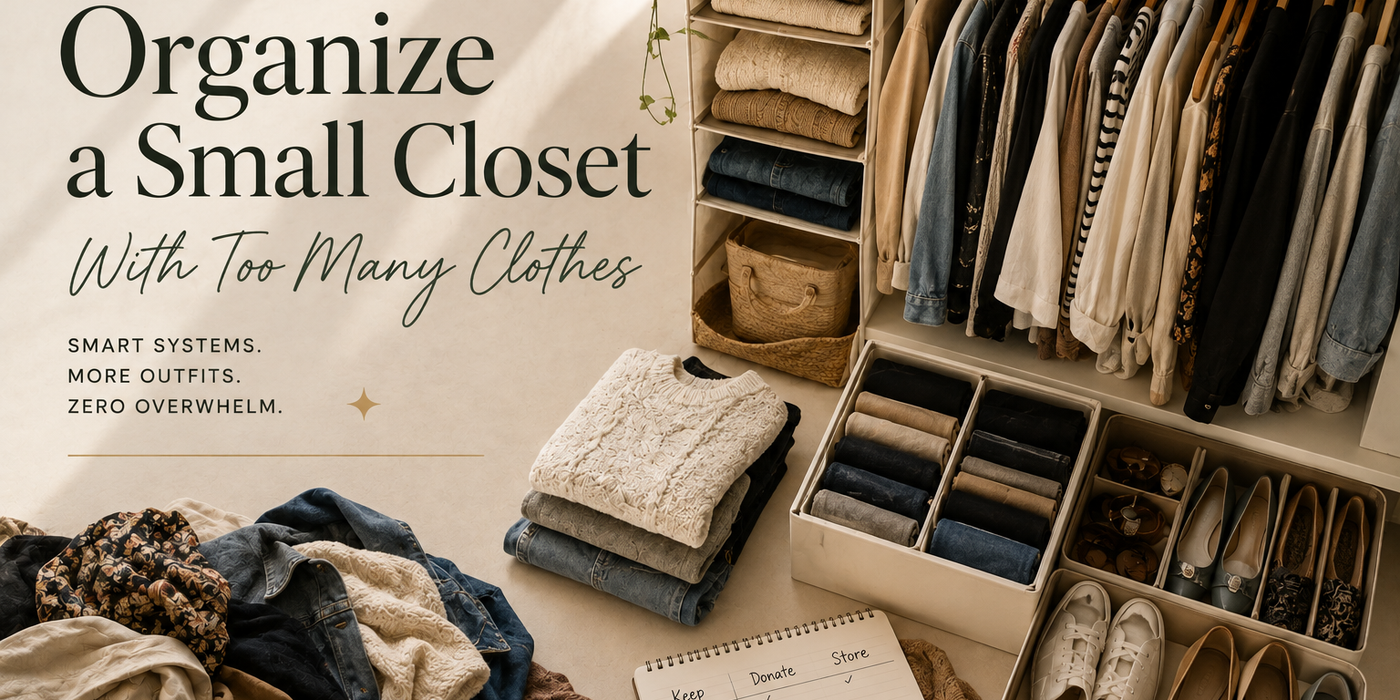
How to Organize a Small Closet With Too Many Clothes
Table of Contents
- Introduction: Your Small Closet Isn't the Problem — Your System Is
- Why Small Closets Feel Impossible (And Why It's Not About Space)
- Step 1 — Edit Before You Organize (The Behavior-First Audit)
- Step 2 — Maximize Every Inch: Layout Strategies That Actually Work
- Step 3 — Build a DIY Modular System for Under $100
- The Visibility Advantage: How an Organized Closet Unlocks More Outfits
- Seasonal Rotation: The Maintenance System That Keeps It Working
- Frequently Asked Questions
- A Small Closet That Works Like a Personal Stylist
Key Takeaways
- People lose roughly 17 hours per year searching for misplaced items — a well-organized closet pays that time back immediately
- Organize by frequency of wear, not by category: what you reach for most belongs front and center
- DIY modular systems beat expensive built-ins for renters — 56% of home storage installs are DIY, and 67% of millennials prefer them to avoid service fees
- Visibility is the real goal: seeing every piece unlocks more outfit combinations from fewer clothes
- Refresh your closet every 3–6 months with a seasonal rotation to prevent drift back to chaos
Introduction: Your Small Closet Isn't the Problem — Your System Is
The average person loses roughly 17 hours per year searching for misplaced items — and according to industry research, 40% of U.S. adults live in cluttered environments. That combination isn't just frustrating; it's a measurable daily drain on your time and mental energy.
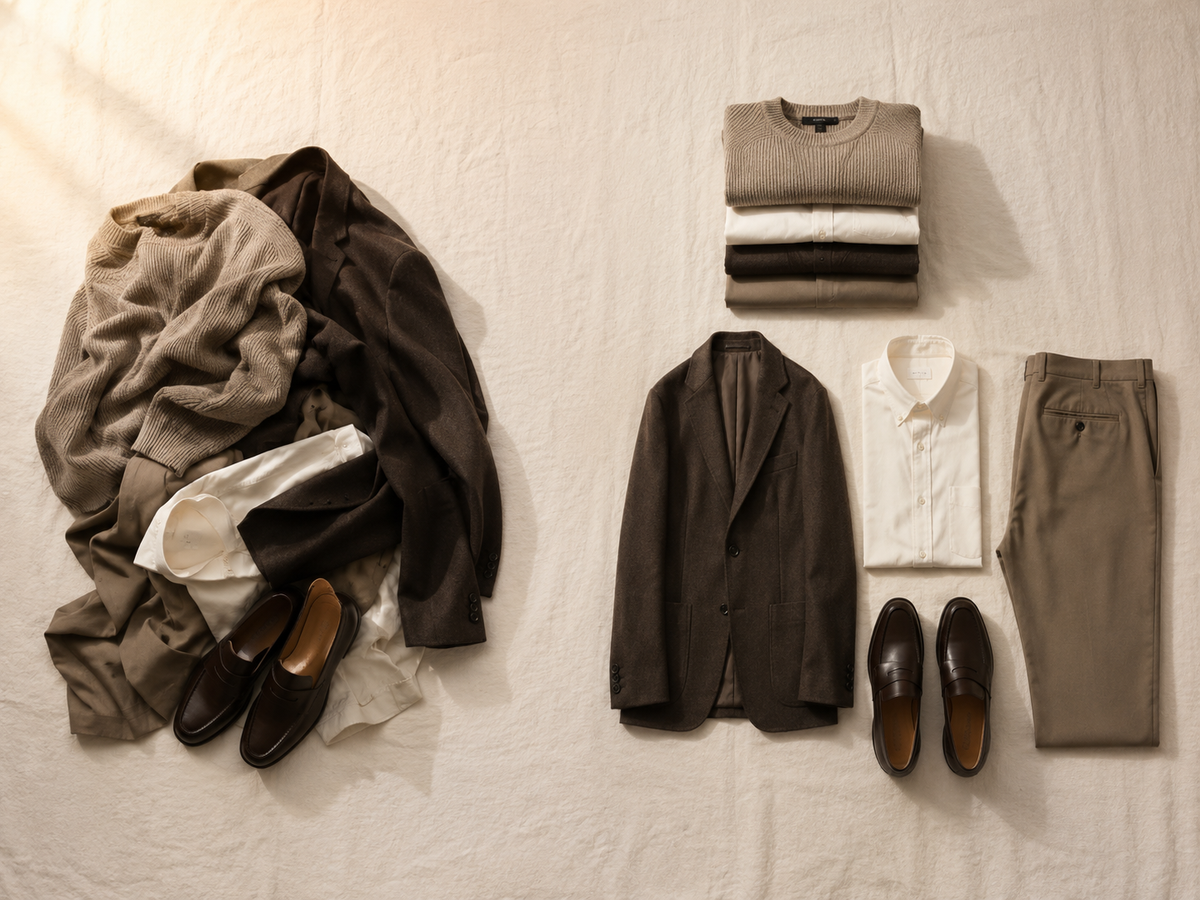
The instinct is to blame square footage. But a small closet with too many clothes is almost never a space problem. It's a visibility and accessibility problem. When items are buried behind other items, or stacked in ways that require unpacking to find anything, they stop existing in your wardrobe. You dress from the 20% you can actually see.
This article takes a behavior-first approach to fixing that. Rather than prescribing a ruthless declutter or a capsule wardrobe overhaul, the focus here is on building a system around what you actually wear — then organizing everything else around it. We cover: a practical audit to identify your real wardrobe, layout strategies that multiply usable space, a DIY modular system for under $100, and how better organization directly unlocks more outfit options from the clothes you already own.
For readers who want to extend that last idea further, tools like Elara — an AI stylist — can help surface outfit combinations from pieces you already own but might not be seeing. That's a natural next step once your physical closet is working.
Why Small Closets Feel Impossible (And Why It's Not About Space)
The 17 hours per year people lose to searching for misplaced items doesn't disappear when you have a larger closet — it compounds when a small one has no system at all. Add the fact that 40% of U.S. adults live in cluttered environments, and it becomes clear that the problem is structural, not personal. Most people aren't disorganized by nature; they're working with a setup that was never designed around how they actually behave.
The "too many clothes, nothing to wear" paradox is real, and it has a simple cause: inaccessible items don't function as part of your wardrobe. A blouse buried under three sweaters on a shelf might as well not exist on a Tuesday morning when you have eight minutes to get dressed. It doesn't register as an option.
Decision fatigue makes this worse. A disorganized closet forces your brain to process dozens of half-visible options simultaneously — hangers crammed together, shelves stacked in layers, shoes piled on the floor. The mental load is high enough that most people short-circuit the process entirely and default to the same five outfits on rotation. The problem isn't that they don't have enough clothes. It's that their system punishes them for trying to use what they have.
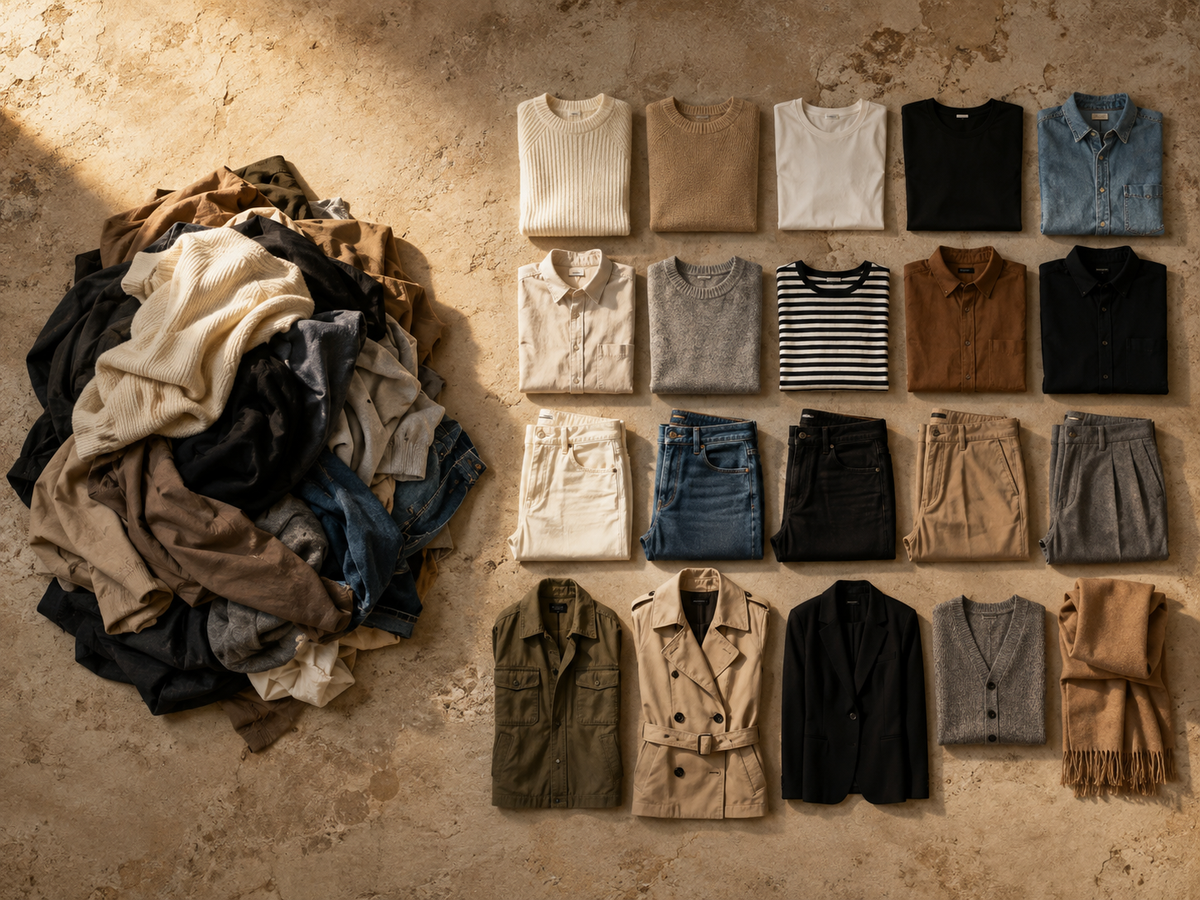
The standard advice — "declutter everything first, then organize" — puts the cart before the horse. It asks you to make permanent decisions about items you may not be able to evaluate clearly until you can actually see them. The behavior-first approach flips this: start by identifying what you genuinely reach for, then build the system around those items. Everything else gets assigned a place based on how often it's actually needed. According to 2026 design and organization research, the biggest shift in how homeowners approach storage is that they want "function first" — a system that works for real daily behavior, not an idealized version of it. That's the frame this article is built around.
Step 1 — Edit Before You Organize (The Behavior-First Audit)
Putting this principle into practice starts not with buying bins or installing rods, but with a structured audit of what you actually wear — and that distinction matters. The goal here is intentional placement, not minimalism. A small closet can hold a lot of clothing; it just can't hold a lot of randomly placed clothing.
The audit has three parts:
- The "worn in 90 days" test. Pull forward everything you've worn in the last three months. These items form your primary zone — the most accessible hanging and shelf space belongs to them. Everything else gets evaluated in the next two steps.
- The "occasion mismatch" check. Look for pieces you own but never reach for because they don't pair with anything else you have. A blazer that matches nothing, a dress that needs shoes you don't own — these create visual clutter without adding outfit options. Flag them for the "Decide Later" bin rather than forcing a guilt-driven decision now.
- The "seasonal hold" category. Winter coats in July and swimwear in January aren't clutter — they're just in the wrong place. Move them to upper shelves, under-bed storage, or a secondary closet. They stay in your wardrobe; they just stop competing for prime real estate.
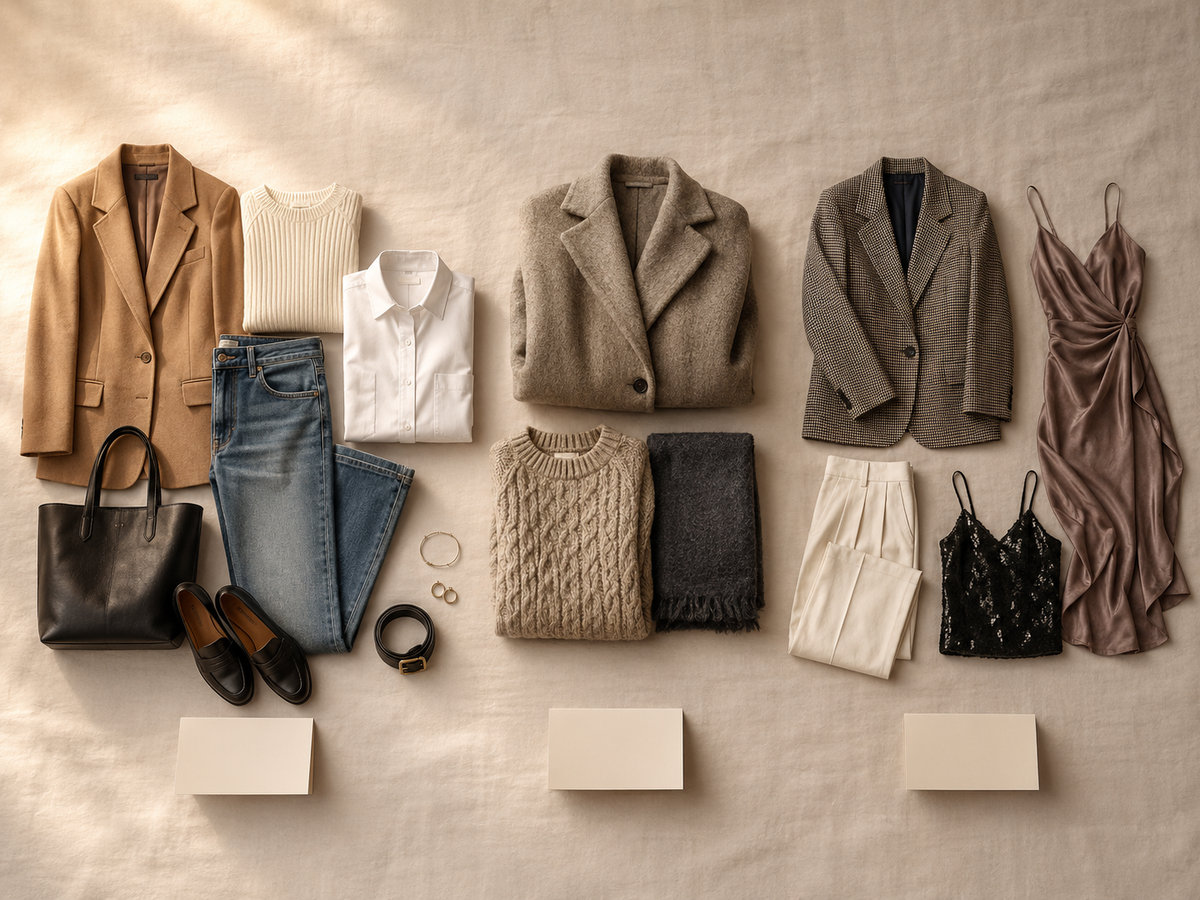
To make this tactile and less emotionally overwhelming, use three labeled physical bins: Daily, Seasonal, and Decide Later. Physically moving items into a bin is psychologically easier than deciding their fate on the spot.
Ready to upgrade your wardrobe?
Get the Elara app for AI-powered styling and virtual try-ons.
Running this kind of audit every 3–6 months keeps a small closet functional over time.
That refresh cycle prevents the slow drift back to chaos — which is how most well-organized closets eventually stop working.
Step 2 — Maximize Every Inch: Layout Strategies That Actually Work
Once you know what belongs in your closet and how often you need it, the layout work begins. Five specific moves deliver the highest return on a small closet, and most can be executed over a single weekend without tools.
- Double-hang rods. A second rod installed below the first — typically 40 inches from the floor — doubles your hanging capacity for shorter items: jackets, folded pants, shirts. No additional square footage required.
- Floor-to-ceiling shelving. Most closets waste the top 18–24 inches of vertical space entirely. Upper shelves are ideal for seasonal bins and items from the "Seasonal" audit category; lower shelves handle daily-use folded items and shoes.
- Door-mounted organizers. The back of a closet door is among the most consistently underused surfaces in any home. Shoe pockets, hook strips, and accessory panels turn dead space into functional storage without touching the interior layout.
- Slim velvet hangers. Switching from standard plastic hangers to slim velvet ones reclaims 30–40% of rod space — a meaningful gain in a closet where every inch counts.
- Pull-out bins and drawer inserts. Socks, underwear, and accessories create visual noise on open shelves. Containing them in clear, stackable bins or drawer inserts eliminates that chaos instantly.
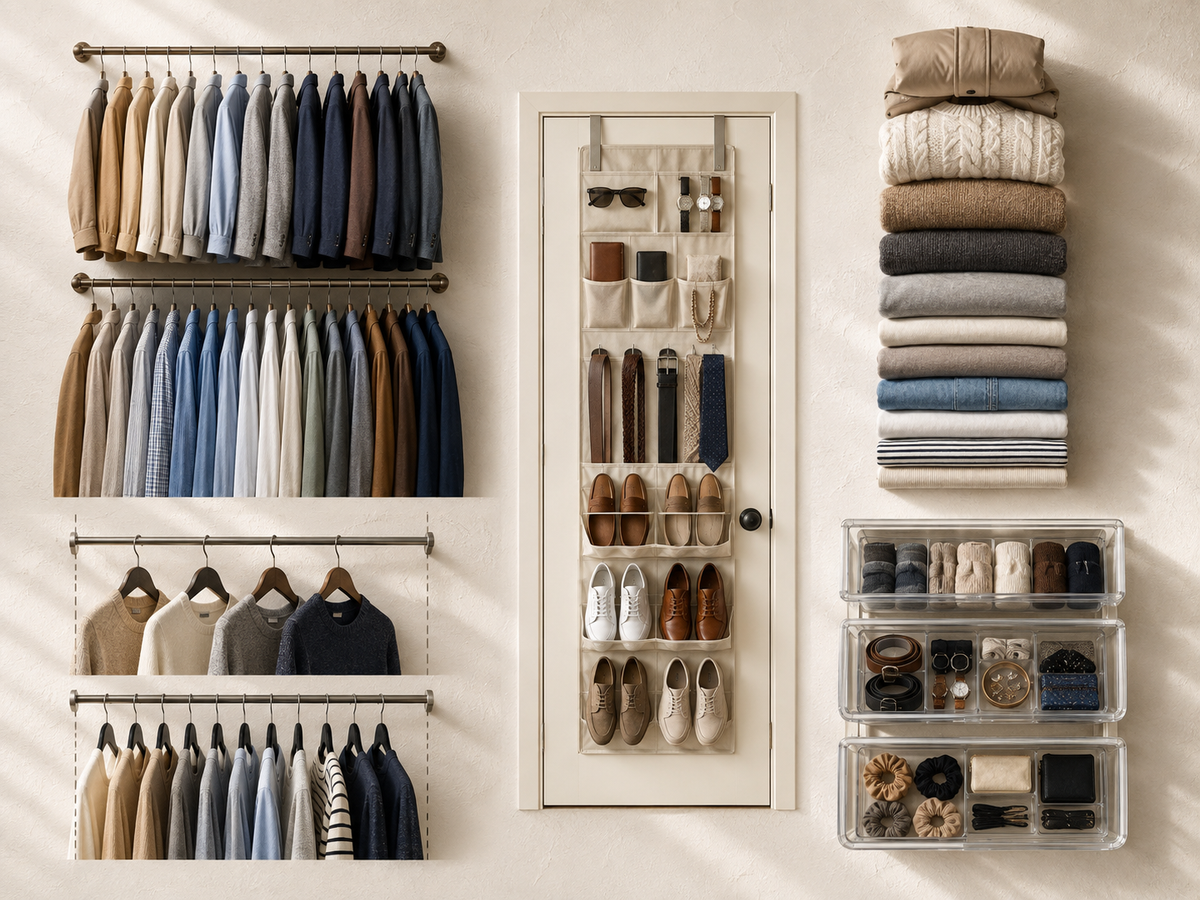
Current design trends validate this approach: modular designs, stackable bins, vertical storage, and multi-functional organizers rank as the leading strategies in home storage. Buyers consistently prioritize adjustable shelves and modular configuration — exactly what these five tactics deliver without a renovation budget.
For sliding door closets specifically: the door configuration limits how much of the interior you can see at once, so use the full depth of every shelf and add LED strip lighting along the top rail. Visibility is the real constraint here, and lighting solves it directly.
A thoughtfully laid out closet isn't an aesthetic indulgence. It's a system that saves time every single morning.
Step 3 — Build a DIY Modular System for Under $100
The most effective small closet system doesn't require a contractor or a custom built-in. DIY is the mainstream approach: 56% of home storage and organization installations are DIY, driven by affordability and ease of assembly. Among millennials specifically, 67% prefer DIY shelves and organizers to avoid service fees, and 41% of consumers expect home organization products to cost under $20 per item. This isn't a budget compromise — it's how most people actually organize their homes.
Here's a sample modular kit that covers all five layout strategies from Step 2, priced under $100 at most mass retailers:
The critical advantage of this kit over custom built-ins is modularity. Every component can be rearranged as your wardrobe changes, added to incrementally, or packed up and moved when you relocate — none of which is true of fixed cabinetry. Over 45% of urban households now invest in modular closet systems, reflecting a broad shift toward reconfigurable storage that adapts to real life.
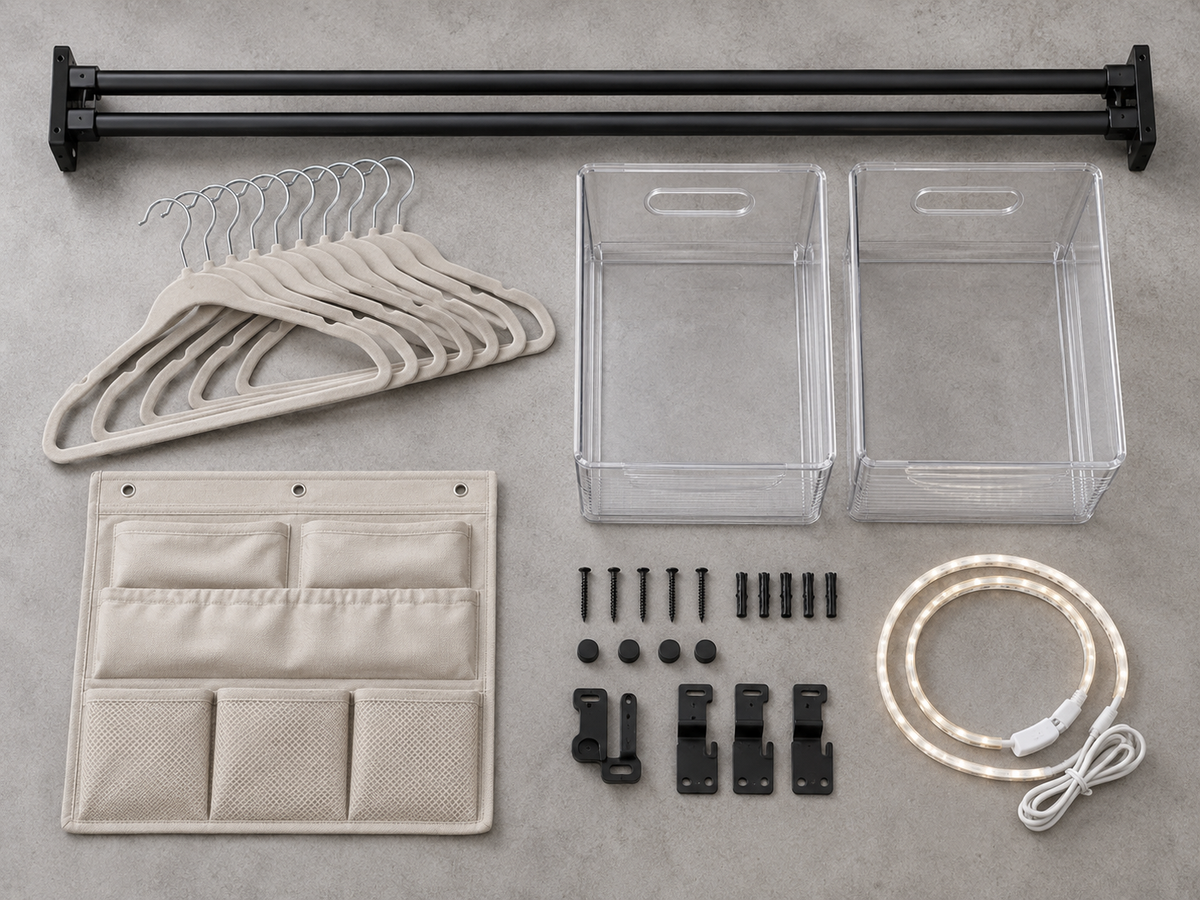
Timing matters too. Closet organizer interest peaks in February, when retailers are fully stocked following January's decluttering wave — making it a practical window to buy if you're planning ahead. That said, these components are available year-round and require no special installation skills. The system works because each piece solves a specific problem identified in the audit and layout steps, not because it looks impressive in a catalog.
The Visibility Advantage: How an Organized Closet Unlocks More Outfits
The right hardware solves the storage problem. What it doesn't automatically solve is the wardrobe accessibility problem — and that distinction matters more than most organization advice acknowledges.
When every item in your closet is visible and within reach, you effectively own more clothes. Buried pieces don't exist in your daily wardrobe. Research consistently shows people default to the same small rotation not because they lack options, but because most of what they own is visually hidden or physically blocked. The math here is counterintuitive but real: a closet with 30 visible, accessible items generates far more outfit combinations than one with 60 items where only 15 are reachable on any given morning.
This is why organizing by outfit zone — grouping work, casual, and occasion pieces together — outperforms the standard category method of all pants together, all tops together. Zone organizing lets you build a complete look in seconds rather than scanning across three separate sections of the closet. It also makes underused pieces visible in context, which is when you actually remember to wear them.
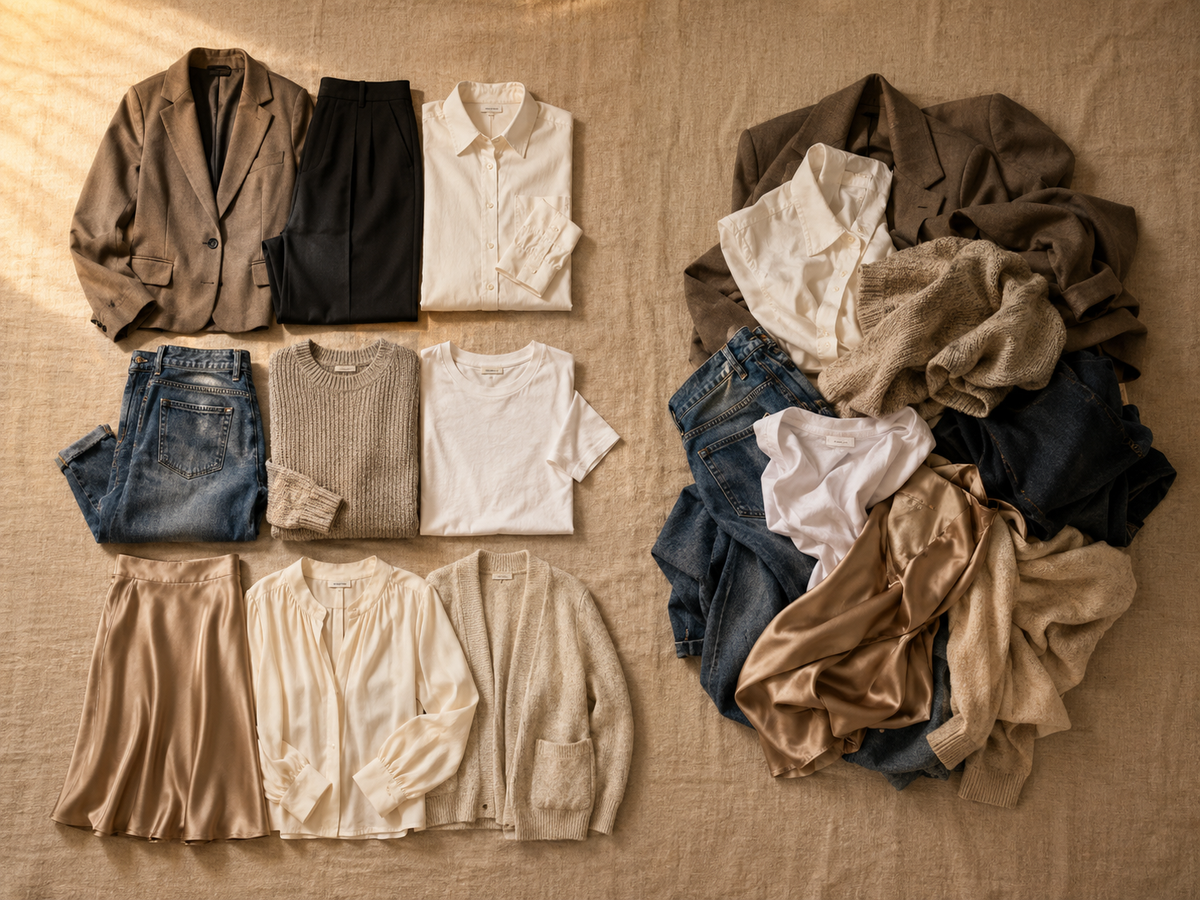
How to organize a small closet effectively starts with this principle: visibility creates usability. Current design research emphasizes that compact spaces should be "both efficient and polished rather than purely utilitarian," with homeowners prioritizing "function first." A well-organized small closet isn't an aesthetic project — it's a daily decision-making tool.
Once the physical closet is organized, an AI stylist like Elara can extend this logic digitally — digitizing your wardrobe, surfacing underutilized pieces, and suggesting combinations you haven't tried. The physical visibility you've created becomes the foundation Elara builds on. Visit joinelara.com to see how it works.
Seasonal Rotation: The Maintenance System That Keeps It Working
Every well-organized closet eventually drifts back toward chaos without a maintenance system. The fix isn't a second major overhaul — it's a bi-annual rotation and a weekly micro-habit.
The rotation framework runs on two windows: March–April for the Spring/Summer swap (heavy knits, coats, and wool pieces move to upper shelves or under-bed storage in vacuum compression bags) and September–October for the Fall/Winter reverse. Refreshing small closets every three to six months is expert-validated best practice, and seasonal transitions are the natural trigger for that cadence. Vacuum bags are particularly effective for bulky items — they can reduce storage volume by up to 50%, freeing shelf space for the incoming season.
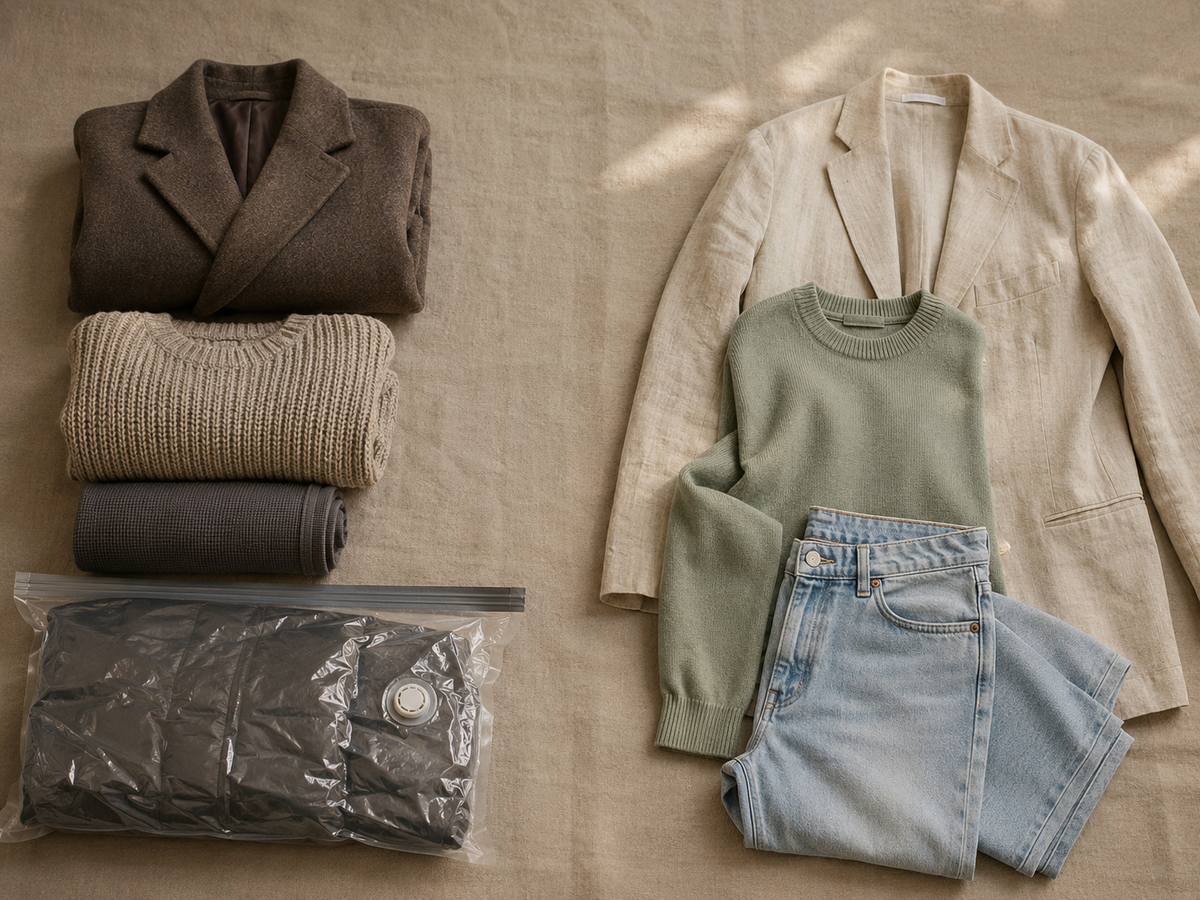
The second habit is smaller but equally important: a 10-minute Sunday micro-reset. Rehang anything draped over the door or chair, return items to their designated zones, and remove non-clothing items that have migrated in during the week. This prevents the gradual drift that makes closets feel unmanageable — it's the difference between a 10-minute weekly habit and a two-hour quarterly rescue operation.
Seasonal rotation also serves a second purpose: it's the natural moment to re-run the behavior-first audit from Step 1. Which pieces didn't get worn this season? Which items are you genuinely excited to pull back out? The rotation and the audit together form a self-reinforcing cycle that keeps the system honest over time.
Frequently Asked Questions
How long does it take to organize a small closet using this system? The initial audit and layout work typically takes 4–6 hours spread across a weekend. Installing hardware (double rods, shelving, organizers) adds another 2–3 hours if you're doing it yourself. Once set up, the weekly micro-reset takes just 10 minutes, and seasonal rotations take 1–2 hours every few months.
What if I rent and can't install permanent fixtures? Tension rods, adhesive hooks, and freestanding shelving units work without drilling or damaging walls. Most rental-friendly organizers are also portable, so you can take the system with you when you move. Over-door organizers and stackable bins require zero installation.
How do I know if I'm organizing a small closet correctly? You'll know it's working when you can see every item without moving other items, when getting dressed takes under 10 minutes, and when you're actually wearing 80% of what you own instead of rotating the same 5 outfits. If you're still defaulting to the same clothes after a month, the layout needs adjustment.
Should I buy expensive custom closet systems, or is the DIY approach really enough? The DIY modular approach works just as well as custom systems for small closets — and it costs a fraction of the price. Custom systems make sense if you have an unusually shaped closet or very specific needs. For most people, the $63–97 kit described in Step 3 solves the problem completely.
A Small Closet That Works Like a Personal Stylist
The system this article describes has three layers: audit by behavior to identify what you actually wear, maximize the layout to make those items visible and accessible, and maintain the system with seasonal rotation and weekly resets. Each layer reinforces the others.
The central reframe is worth repeating: the goal was never to fit more stuff into a small space. It was to make the right things visible and accessible so that getting dressed stops being a daily friction point and starts being effortless. A small closet, organized well, outperforms a large one organized poorly — every time.
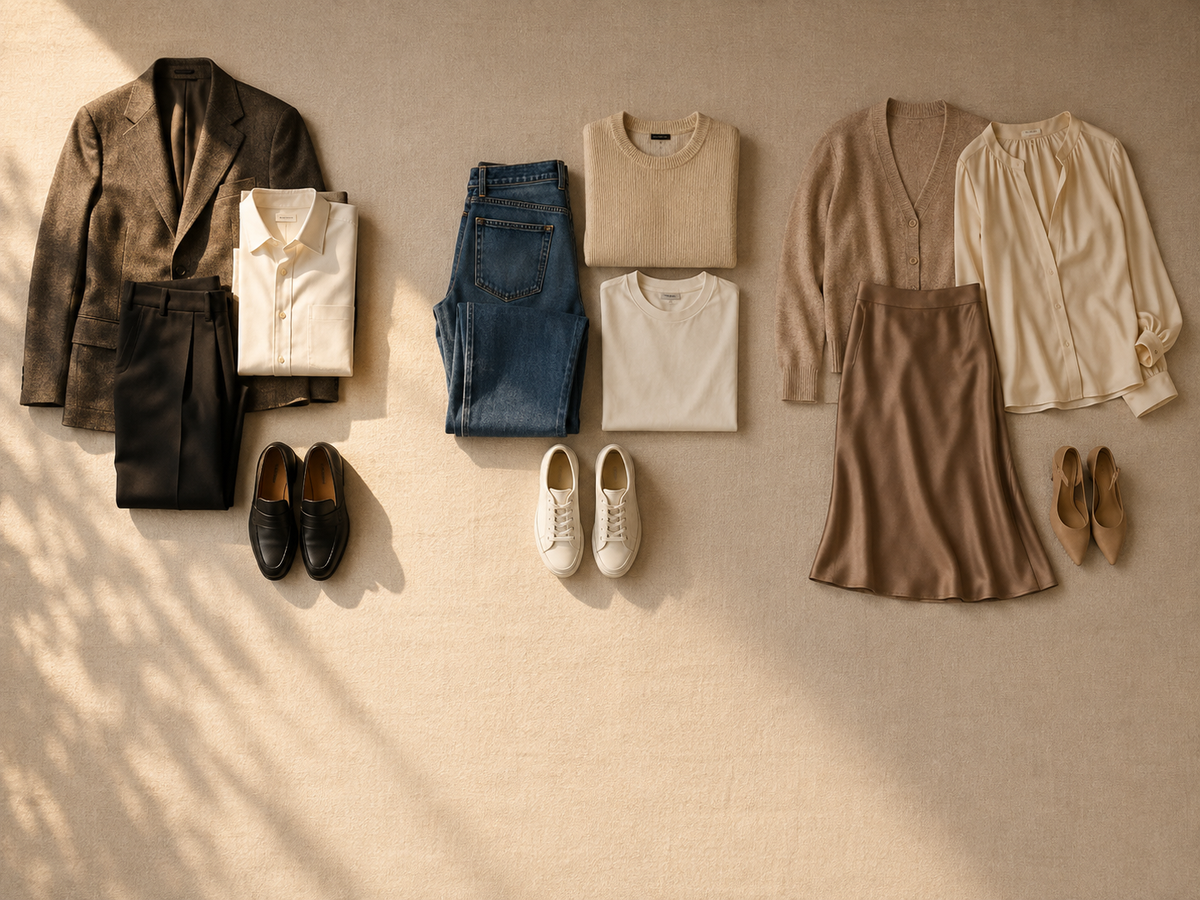
Once the physical work is done, Elara can take the next step with you. Elara digitizes your wardrobe, surfaces the combinations you haven't tried, and helps identify real gaps before your next shopping trip — so you stop buying things you already own in different colors.
Explore how Elara helps you get more outfits from the clothes you already own at joinelara.com.

Your AI Stylist is Here.
live on the App Store & Google Play
Available on iOS and Android for seamless access anytime, anywhere.