
What to Wear in -10 Degrees Celsius: Layers and 4 Outfits for 14°F
At -10°C (14°F), wear a thermal base, a fleece or down mid layer and a windproof parka, plus mittens and grippy boots. How wind chill changes it, and 4 outfits.
 Mehul AgarwalFounder & CEO
Last updated: November 2026
Quick answer: At -10°C (14°F), wear three layers plus full cover for your extremities: a merino or synthetic thermal base, a fleece, wool or down mid layer, and a windproof insulated coat that covers your hips, with a hat over your ears, mittens, a scarf or neck gaiter and insulated, grippy boots. Wind changes everything: Environment and Climate Change Canada's chart puts -10°C with a 20 km/h wind at a wind chill of -18, which falls in its moderate-risk band for frostbite with long exposure.
Minus ten is the temperature where a good wool coat stops being enough on its own. It is a familiar winter reading in cities like Montreal and Chicago, and a common one for travellers heading to Kashmir, the Alps or a northern-lights trip. The good news: you do not need expedition gear. You need the right fabric next to your skin, one serious insulating layer and a windproof shell, and you need to cover the small parts of you that lose heat fastest. This guide gives you the formula, the reasons behind it, four outfits for real days and the mistakes that make -10°C feel like -20.
How cold does -10°C feel?
Colder than the number, most of the time. Environment and Climate Change Canada's wind chill chart shows -10°C feeling like -18 in a 20 km/h wind and -20 in a 30 km/h wind. Its risk scale puts wind chills from -10 to -27 in the moderate band, with a risk of frostbite and hypothermia during long periods outdoors, and from -28 exposed skin can freeze in 10 to 30 minutes.
So dress for the wind chill, not the thermometer. If the forecast shows -10°C and breezy, plan for something closer to -20 and cover every patch of skin you can.
The -10°C layer formula
Three layers, each with one job, plus extremities. This is the system outdoor retailer REI teaches in its layering basics guide, and it works as well for a city commute as for a hike.
- Base layer: move sweat off your skin. Merino wool or a synthetic like polyester, in midweight for -10°C. REI calls cotton a poor choice in cold weather because it holds water and chills you, and UF Health makes the same point: cotton absorbs moisture and keeps it next to your skin. Add thermal leggings under trousers.
- Mid layer: trap heat. A fleece, a thick wool or cashmere sweater, or a light down or synthetic puffer. REI notes that fleece stays warm when damp but lets wind through, and that down gives the most warmth for its weight but loses efficiency when damp.
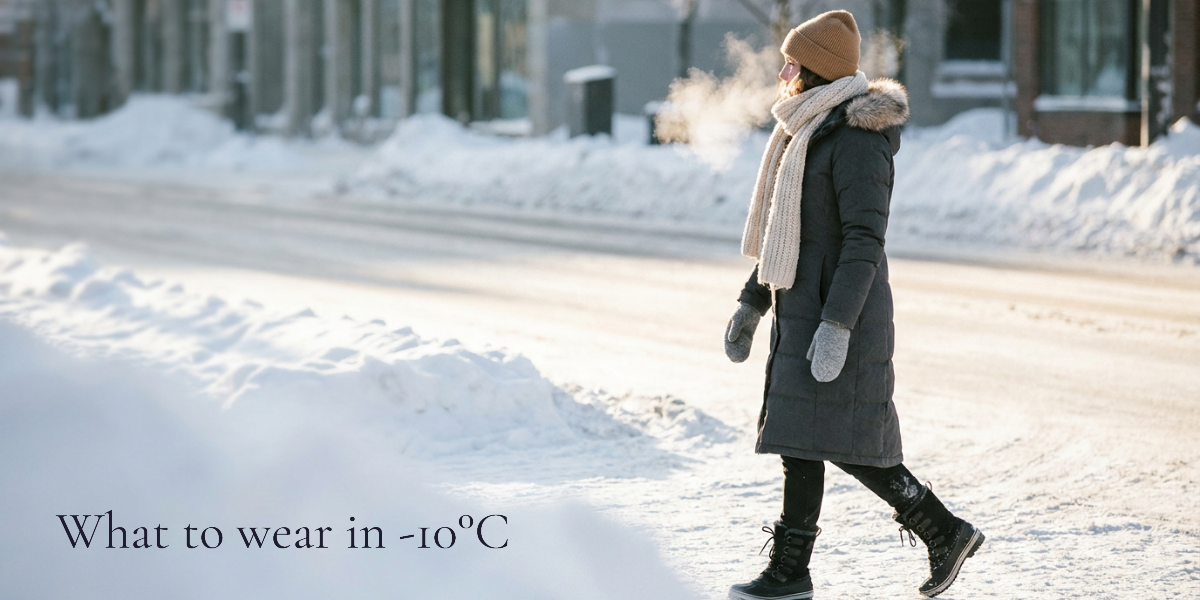
- Outer layer: stop wind and snow. A windproof, water-resistant insulated coat that reaches at least your hips. A long parka beats a short jacket at -10°C because your thighs and seat lose a lot of heat sitting on cold benches or standing at bus stops.
- Extremities: cover all of them. UF Health lists a warm hat, a face mask or scarf, mittens or gloves (mittens tend to be warmer) and warm, waterproof boots. At -10°C, those are not accessories; they are the outfit.
Our thermal base layers guide explains merino vs synthetic and which weight to buy, and the 0°C guide covers the step down when temperatures rise.
If your puffer came out of storage flat, wash and dry it properly first: a down jacket only insulates when the down can loft. Our guide on how to wash a down jacket covers machine washing, hand washing and drying.
What to wear in -10 degrees Celsius: 4 outfits
1. Commute and office
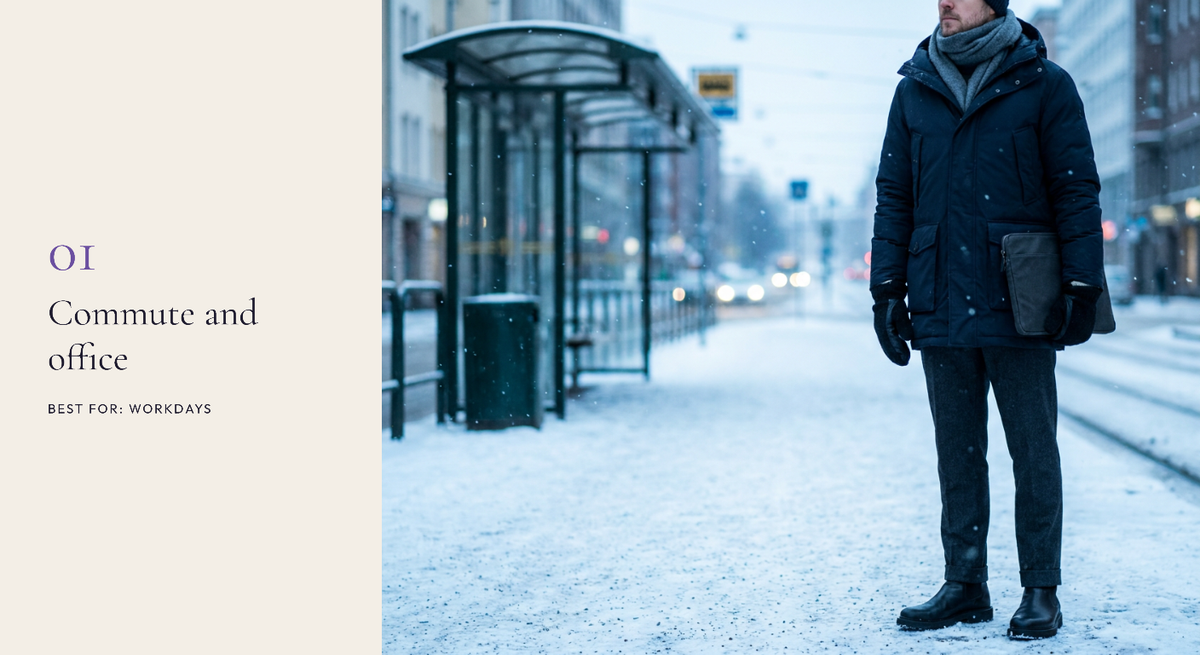
Midweight merino base top under a shirt or fine-knit sweater, thermal leggings under wool trousers, and a knee-length insulated parka or a down coat with a hood. Finish with a wool beanie, a long scarf wrapped twice, touchscreen glove liners under mittens, and waterproof insulated boots you can swap for office shoes at your desk. The base layer is thin enough that you will not overheat indoors once the coat comes off.
2. Weekend walk, sightseeing or a market
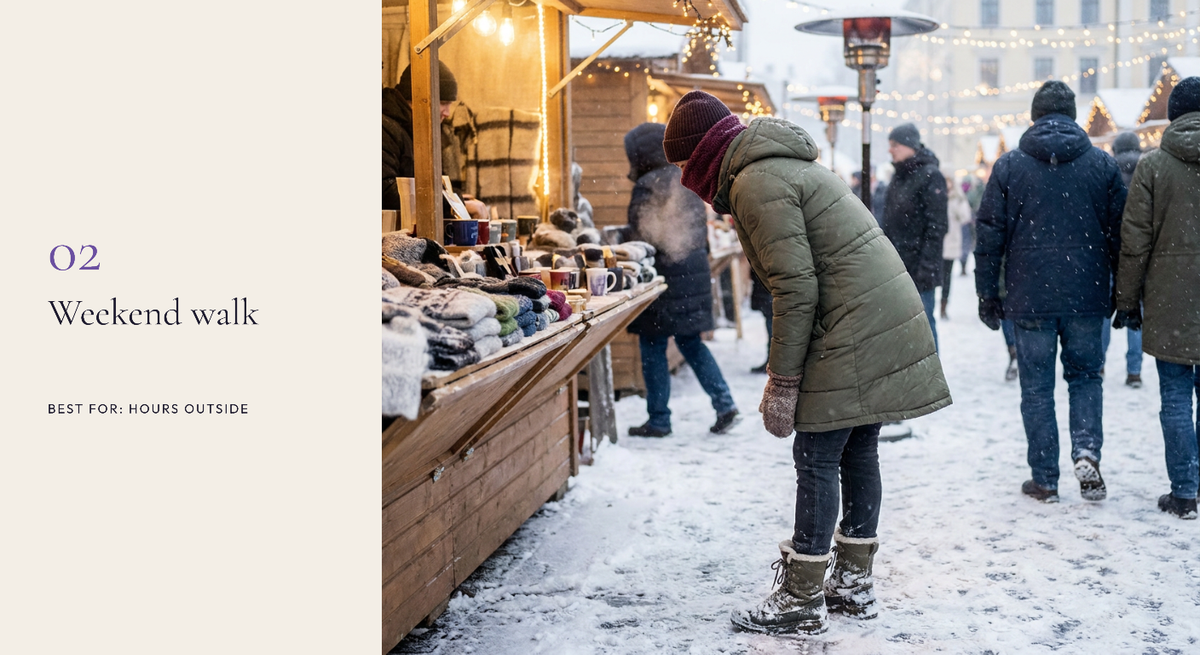
This is where you are outside for hours and moving slowly, so go warmer. Thermal base, fleece mid layer, insulated parka, and either fleece-lined jeans or trekking trousers over leggings. Add wool hiking socks, insulated boots with a deep-lug sole for ice, a neck gaiter you can pull over your nose, and mittens. Hand warmers in your pockets help on long stops. If you are heading somewhere this cold for a trip, the northern lights guide covers standing still in even colder air.

Want this styled from your own closet?
Elara builds the look from what you own, then lets you try it on.
3. Evening out

You can still look dressed up at -10°C if the warmth is hidden. Wear a thin thermal turtleneck under a dress or shirt, opaque fleece-lined tights or thermal leggings under trousers, and a long wool-cashmere coat over a slim down vest or liner jacket. Swap trainers for heeled or flat leather ankle boots with a rubber sole, and keep a cashmere scarf and leather gloves with a liner. Keep the walk short: a dress coat is warm enough for the dash to a taxi, not for a 30-minute walk.
4. Snow day or skiing-town errands
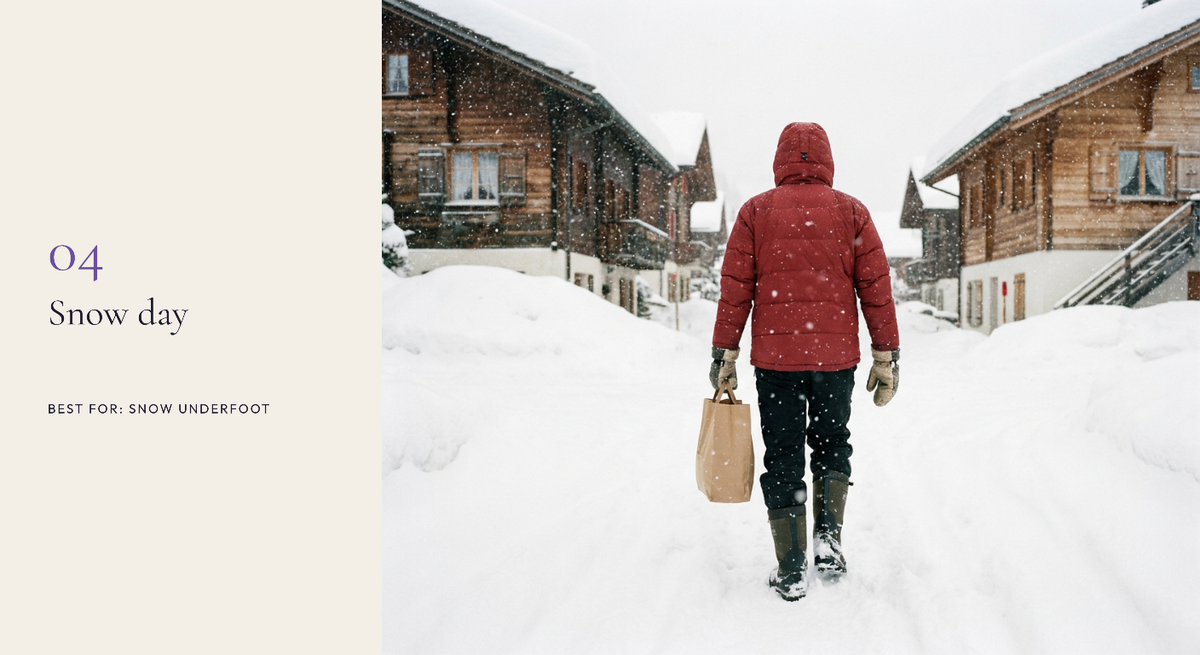
When snow is falling or underfoot, waterproofing matters as much as warmth. Wear snow trousers or water-resistant ski pants over thermals, a waterproof insulated jacket with a hood, waterproof mittens and snow boots rated for cold with a waterproof membrane. Our winter boots buying guide explains insulation grams and lug depth, and the first-time skiing guide covers the mountain itself.
Common -10°C mistakes to avoid
- A thick cotton hoodie as the mid layer. It soaks up sweat on the walk and stays damp. Use fleece or wool.
- Short jackets. A waist-length jacket leaves your hips and thighs in the wind.
- Gloves alone. At -10°C, mittens, or thin liners under mittens, are the warmer choice for long stretches outside.
- Tight boots. Boots that squeeze your feet, or two pairs of thick socks crammed into one boot, restrict circulation and make toes colder. One good wool sock in a boot with wiggle room is warmer.
- Ignoring wind. Check the wind chill, not just the temperature, and cover your face when it is breezy.
- Overdressing for the office. Pick layers you can remove; sweating indoors makes the walk home colder.
FAQ
What should I wear in -10 degrees Celsius?
A midweight thermal base layer, a fleece, wool or down mid layer and a windproof insulated coat that covers your hips, plus a hat over your ears, mittens, a scarf or neck gaiter, wool socks and insulated, waterproof boots with grip.
Is -10°C very cold?
For most people, yes. It is 14°F, well below freezing, and with a 20 km/h wind Environment and Climate Change Canada's chart gives a wind chill of -18, which carries a risk of frostbite with long outdoor exposure.
How many layers should I wear at -10°C?
Three main layers on your top half (base, mid, outer) and two on your legs (thermal leggings plus trousers or snow pants), plus a hat, mittens, a scarf and insulated boots.
Is a wool coat warm enough for -10°C?
Only for short trips, such as from a door to a taxi. For time outside, wear it over a thermal base and a warm mid layer, or switch to a windproof insulated parka.
Are mittens warmer than gloves?
Generally, yes: UF Health notes that mittens tend to be warmer than gloves. Thin touchscreen liners under mittens let you use your phone without exposing bare skin.
What is -10 degrees Celsius in Fahrenheit?
-10°C is 14°F.
Build your -10°C outfits from your own closet
Most people already own half of this formula: the sweater, the boots, a warm coat. The trick is knowing which pieces combine into a real -10°C outfit. Add your clothes to Elara's digital closet and ask the styling chat what to wear for minus ten today; it builds the look from what you have, so you can spot any layer you are still missing before you shop. Try Elara free.
Your stylist, in your pocket
Stop reading about outfits. Start wearing them.
Elara knows your closet, shops every store and gets you dressed for any occasion.