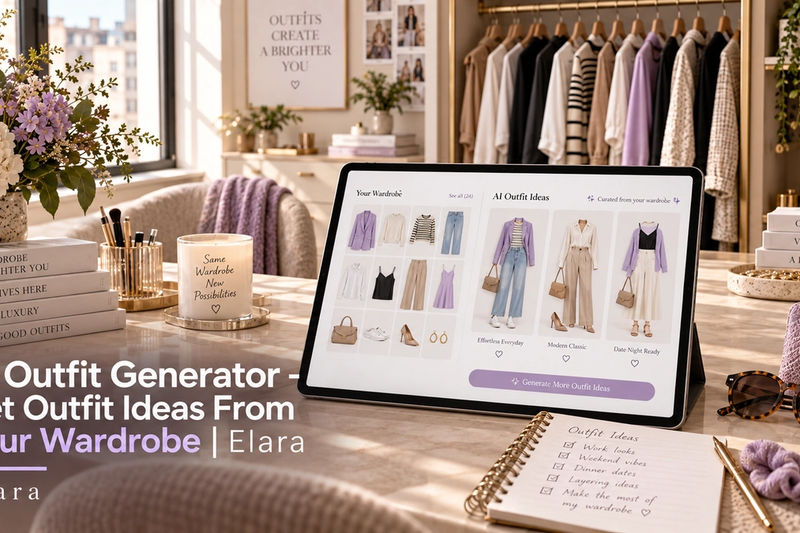
Weekly Outfit Planning: Save 2 Hours Every Morning

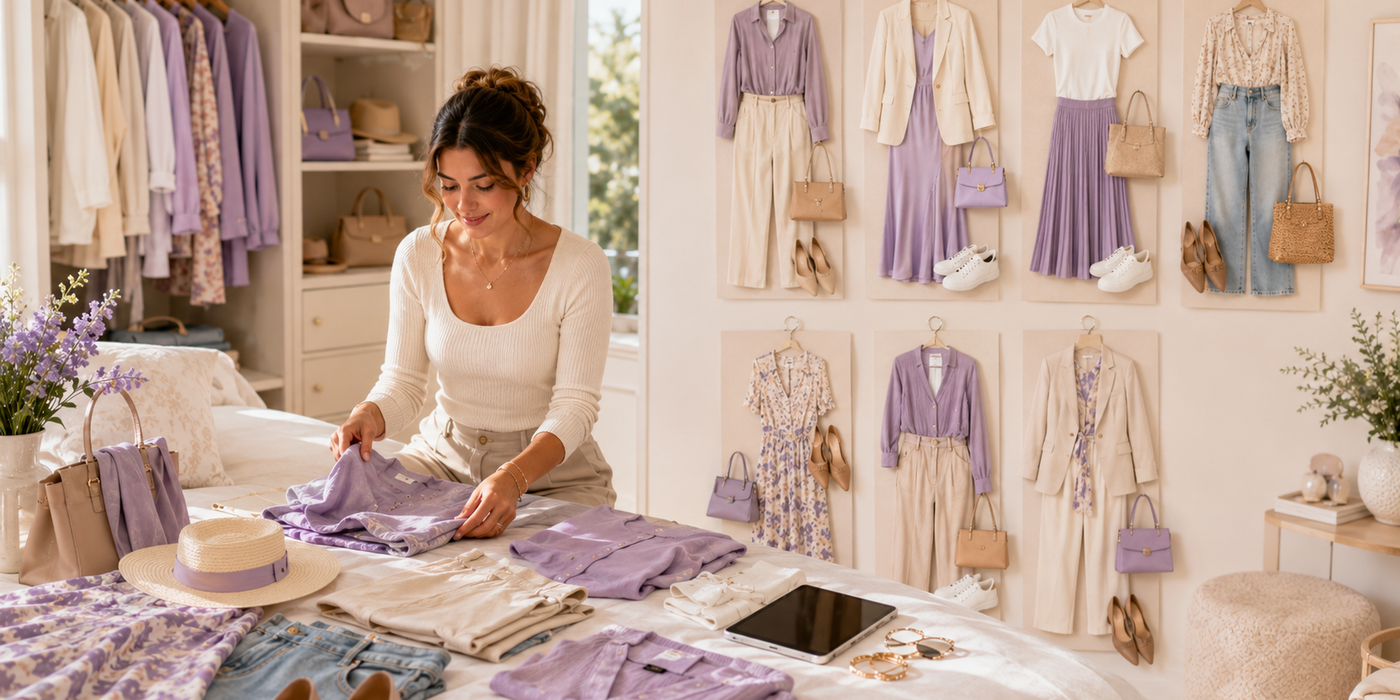
How to plan outfits for a week (without spending 20 minutes every morning)
Table of Contents
- Key Takeaways
- Introduction: The Real Cost of 'I Have Nothing to Wear'
- Why Weekly Outfit Planning Actually Works (The Science Behind It)
- Step 1 — Audit Your Closet Before You Plan Anything
- Step 2 — Build Your Weekly Outfit Framework
- Step 3 — Use the Right Tools (From Templates to AI)
- Bonus: How Weekly Planning Translates to Travel Packing
- FAQ
- Conclusion: Stop Deciding Every Morning — Start Planning Once a Week
Edited Article
Key Takeaways
- Weekly outfit planning moves all seven morning decisions into one dedicated session, eliminating daily decision fatigue.
- A Heriot-Watt University study of nearly 6,000 wardrobe app users found that proactive planning reduces overconsumption and increases wear of existing clothes.
- Just 10–15 pieces, built around 2–3 base colors, can generate a full week of distinct outfits.
- AI-powered apps like Clueless and Whering now auto-generate 7-day plans directly from your existing wardrobe.
Introduction: The Real Cost of 'I Have Nothing to Wear'
You own dozens of pieces. Your closet is full. And yet, most mornings, you stand there for 20 minutes and walk out feeling like you settled. That's not a style problem — it's a decision fatigue problem. Every morning outfit choice draws from the same finite pool of cognitive energy you need for everything else that day.
This guide offers one fix: replace seven daily decisions with a single weekly planning session. Fifteen to twenty minutes on Sunday evening eliminates the paralysis every morning that follows.
The approach here is wardrobe-first. That means building your weekly plan from what you already own, not from a shopping list of what you think you're missing. It's a meaningful distinction — one that saves money, reduces waste, and actually gets more use out of the clothes hanging in your closet right now.
Tools designed for 7-day planning and calendar-integrated weekly scheduling — like Clueless and Whering — make this easier than ever. This article covers both the timeless principles and the modern tools that put them into practice.
Why Weekly Outfit Planning Actually Works (The Science Behind It)
Decision fatigue is the documented decline in decision quality that follows a high volume of choices. The mechanism is straightforward: every decision — trivial or significant — draws from the same cognitive reservoir. Batch those decisions into one session, and you preserve mental clarity for the rest of the week. That's the practical case for weekly outfit planning. The research case is equally compelling.
A Heriot-Watt University study analyzing nearly 6,000 user reviews of wardrobe apps found that proactive planning changes behavior in two measurable ways: users buy less and wear the clothes they already own more often. The implication is significant. Weekly planning isn't just a productivity habit — it functions as a sustainability tool, reducing the impulse purchasing that fills closets with unworn pieces in the first place.
A Heriot-Watt University study of nearly 6,000 wardrobe app users found that planning ahead directly reduces overconsumption, with users buying less and wearing existing clothes more.
That dual payoff — better mornings and more mindful consumption — is what separates weekly outfit planning from generic style advice. It delivers returns beyond how you look.
The tools supporting this practice have matured accordingly. Leading platforms like Clueless, Whering, and Stylebook are now positioned as decision-support systems: they learn from your wardrobe, track wear frequency, and surface combinations you wouldn't have considered manually. That's a different category of tool than a color-coded spreadsheet. The shift reflects a broader recognition that the planning itself — not just the outfit — is where the value is created.
Step 1 — Audit Your Closet Before You Plan Anything
That shift — from spreadsheet to decision-support system — only works if the data going in reflects your real wardrobe. That means starting with a closet audit, not a blank template.
The process is straightforward: pull everything out and sort it into two piles. The first contains pieces you reach for automatically — the jeans that fit perfectly, the blazer that works with everything. The second contains items you own but avoid, often without knowing exactly why. That second pile is where planning time gets wasted. Remove it from the equation entirely, donate or store it, and work only with what you actually wear.
Once you've cleared the noise, identify your base colors. Choosing two or three anchor colors — say, gray, camel, and navy — means every piece in your wardrobe can connect to every other piece. That connectivity is what makes a small wardrobe feel abundant rather than limiting.
A curated set of just 10–15 versatile pieces can generate multiple distinct outfits — a principle that applies equally to a regular week and a travel itinerary.
The outfit multiplication principle flips the conventional logic. More pieces don't create more options; more connectable pieces do. Ten items that all share a color anchor produce far more combinations than thirty items that don't relate to each other.
One practical step that makes weekly planning dramatically faster: photograph your key pieces. Digitizing your wardrobe means you can build outfits visually — on a phone, during a commute — without physically handling clothes each time. Elara's wardrobe digitization feature handles this step with minimal friction, creating a visual inventory you can plan from instantly.
Step 2 — Build Your Weekly Outfit Framework
With a clear, photographed wardrobe in hand, the next step is mapping outfits to your actual week — not an idealized version of it.
The calendar-first method starts by listing each day's primary demand before selecting any specific pieces. A Tuesday with back-to-back client meetings calls for different outfit energy than a Thursday that's entirely remote. A Saturday with a dinner reservation is a different category from a Sunday morning run. Naming the demand first prevents the common mistake of planning outfits in the abstract, then realizing on Wednesday morning that nothing you planned actually fits the day.
Ready to upgrade your wardrobe?
Get the Elara app for AI-powered styling and virtual try-ons.
Current trend data gives useful shorthand for this kind of energy-matching. Pinterest data shows searches for '80s luxury' have surged 225%, driving a maximalist aesthetic — bold fuchsia, lime, and purple, heavy on structured silhouettes and statement accessories — that designers have labeled 'Glamoratti.' At the same time, 'poet-core' searches have jumped 175%, favoring oversized turtlenecks, vintage blazers, and deliberately undone layering. These aren't competing trends so much as two different registers. Glamoratti maps naturally to high-visibility days: presentations, events, occasions where you want presence. Poet-core maps to creative work days, casual weekends, or any day where ease takes priority over impact.
Once you know each day's register, apply a repeatable formula:
2–3 base colors + 1–2 statement pieces + adaptable layers = a complete week of outfits
The base colors provide continuity. The statement pieces — a bold print, a structured coat, one trend-forward item — provide variety. The layers (a cardigan, a denim jacket, a lightweight scarf) handle weather and venue changes without requiring a separate outfit.
The final step is what separates planners from aspirational planners: lock one outfit per day. Pre-deciding removes the option to second-guess on Monday morning. The decision is already made. The morning becomes execution — get dressed, leave — rather than a fresh round of deliberation. That single habit is where most of the time savings actually come from.
Step 3 — Use the Right Tools (From Templates to AI)
Most outfit planning guides recommend a color-coded spreadsheet and stop there. That's a reasonable starting point, but it's also where most people stall — because manually filling in a grid every Sunday evening is friction, and friction kills habits.
The tool spectrum now runs considerably further than Excel. At the entry level, an outfit planner template — whether in Excel, Google Sheets, or a printed weekly organizer — gives beginners a visual structure for mapping outfits to days. It works. It's also entirely manual, meaning you're doing all the connective thinking yourself.
Dedicated wardrobe apps sit in the middle of the spectrum and solve specific problems. The leading platforms have distinct strengths:
- Clueless is built around automated 7-day outfit generation
- Whering focuses on calendar-based weekly planning with wear tracking
- Stylebook specializes in detailed wardrobe statistics, including cost-per-wear data
Knowing which tool solves which problem prevents the common experience of downloading an app, finding it doesn't do what you expected, and abandoning the habit entirely.
AI-powered systems extend what apps can do. Where a template requires you to remember that it's going to rain on Thursday, an AI tool surfaces that automatically and adjusts suggestions accordingly. Where a static app shows you combinations, a conversational AI learns which ones you actually wore and refines future recommendations based on that feedback. These tools are explicitly designed to generate coordinated outfits for an entire week — not just individual looks.
Elara's approach removes the template entirely. Instead of filling in fields, you describe your week in plain language — the meetings, the plans, the weather you're expecting — and the AI builds a plan from your actual digitized wardrobe. No grid to populate, no manual cross-referencing. The planning happens through conversation, and the output is a week of outfits drawn from clothes you already own.
Bonus: How Weekly Planning Translates to Travel Packing
That same conversational planning system doesn't stop at your front door. The weekly outfit framework maps almost perfectly onto travel packing — and most capsule wardrobe guides miss this connection entirely.
The numbers align directly. Travel capsule examples consistently use around 10–15 pieces to generate multiple outfits, prioritizing outfit multiplication over sheer item count. That's the same formula driving your weekly framework: 2–3 base colors, 1–2 statement pieces, and adaptable layers. If those combinations carry you from Monday through Sunday at home, they carry you through a trip of equivalent length.
The practical bridge is straightforward: treat your weekly outfit plan as the first draft of your packing list. Cross-reference what you planned to wear Monday through Sunday, remove anything that only works in one specific context, and you have a travel capsule built on combinations you've already verified work together.
Current travel outfit priorities reinforce the system rather than complicate it. Wrinkle-resistant fabrics, comfort-first silhouettes, and one-piece dressing — co-ords and jumpsuits in particular — reduce in-room decisions the same way a pre-planned week reduces morning ones. Fewer choices, better outcomes.
Calendar-based, weather-aware planning tools extend naturally here too. Whering's calendar-based planning feature integrates your destination's climate and daily itinerary, so the same planning habit that organizes your workweek can map outfits to a museum day in Copenhagen or a beach evening in Lisbon.
FAQ
How long does it actually take to plan a week of outfits?
Most people spend 15–20 minutes on their first weekly planning session. Once you establish a routine and know your base colors and go-to pieces, it typically drops to 10 minutes. The time investment pays off immediately in the mornings you save — multiply 20 minutes of planning by seven mornings of decision-free getting dressed, and you're ahead by more than two hours per week.
What if I don't have a large wardrobe to work with?
You don't need one. The study cited by Real Simple and Who What Wear shows that 10–15 well-chosen, color-coordinated pieces generate a full week of distinct outfits. The key is intentional selection: pieces that share base colors and work together. A small, connected wardrobe generates more options than a large, disconnected one.
Can I use AI outfit planning if I haven't digitized my entire closet yet?
Yes. Elara and similar conversational AI tools don't require a complete wardrobe upload upfront. You can describe your week and your general style preferences, and the AI works with what you tell it. As you add pieces to your digital wardrobe over time, recommendations become more precise. The system works at any stage.
How do I know if weekly planning is actually saving me money?
The Heriot-Watt University study found that people who plan ahead buy less overall. Track your purchases for two months before you start planning, then compare your spending to the two months after. Most people notice a reduction in impulse buys — items that seemed necessary in the moment but didn't work with what they already owned. That's where the savings appear.
Conclusion: Stop Deciding Every Morning — Start Planning Once a Week
The system comes down to three steps: audit your closet to identify your real wardrobe, build a weekly framework that maps outfits to your actual schedule, then use tools that do the cross-referencing for you. Done once a week, this replaces seven separate morning decisions with a single focused session.
The benefits run deeper than style. A Heriot-Watt University study analyzing nearly 6,000 wardrobe app user reviews found that planning ahead directly reduces overconsumption — people buy less and wear existing clothes more. Weekly planning is simultaneously a style upgrade and a more intentional relationship with what you already own.
If you want to experience this without filling out a single template, Elara generates your first weekly outfit plan through a plain-language conversation about your week — no wardrobe upload required upfront, no grid to populate. Just describe your schedule, and the plan comes from your actual clothes.
Because the best stylist isn't one who knows what's trending — it's one who knows your wardrobe.

Your AI Stylist is Here.
live on the App Store & Google Play
Available on iOS and Android for seamless access anytime, anywhere.