How to Dress for Your Body Type: Fit Over Rules
How to dress for your body type without following outdated rules. Learn fit, proportion, and tailoring principles that work for every shape, size, and age.

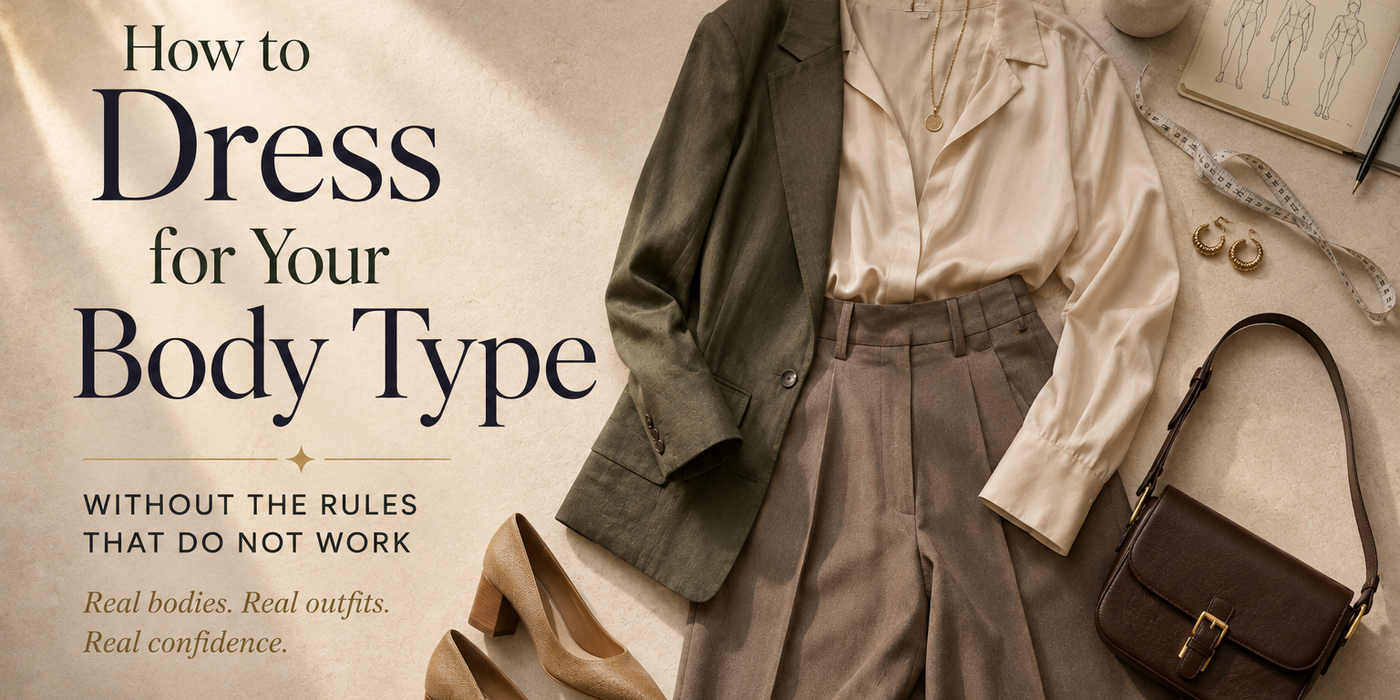
How to Dress for Your Body Type Without the Rules That Do Not Work
Table of Contents
- Introduction: Why Most Body-Type Advice Sets You Up to Fail
- Why the Old Body-Type Rules Don't Work (and What Does)
- Know Your Shape: A Practical, Judgment-Free Starting Point
- Universal Styling Principles That Work for Every Body Type
- Shape-by-Shape Styling Guide (Women and Men)
- How to Apply This to the Wardrobe You Already Have
- Body Type Dressing Across Age and Life Stage
- Frequently Asked Questions
- Conclusion: Dress for Your Proportions, Not the Rules
Key Takeaways
- The rectangle is the most common body shape at roughly 46%, yet most styling guides center the hourglass — which accounts for only about 8% of women (Discover Fashions)
- According to Vogue Business, 97.0% of Fall/Winter 2026 runway looks were straight-size (US 0–4) — treat editorial advice as inspiration, not instruction
- Fit, proportion, and tailoring outperform any rigid body-type rule, for every shape and size
- The 2026 goal is balance, not concealment: dress to frame your proportions, not hide your body
Introduction: Why Most Body-Type Advice Sets You Up to Fail
According to Vogue Business, 97.0% of the 7,817 ensembles shown on Fall/Winter 2026 runways were straight-size — US 0–4 — with plus-size looks accounting for just 0.3%. That single number exposes the foundation most styling advice is built on: a body that represents almost no one shopping in the real world.
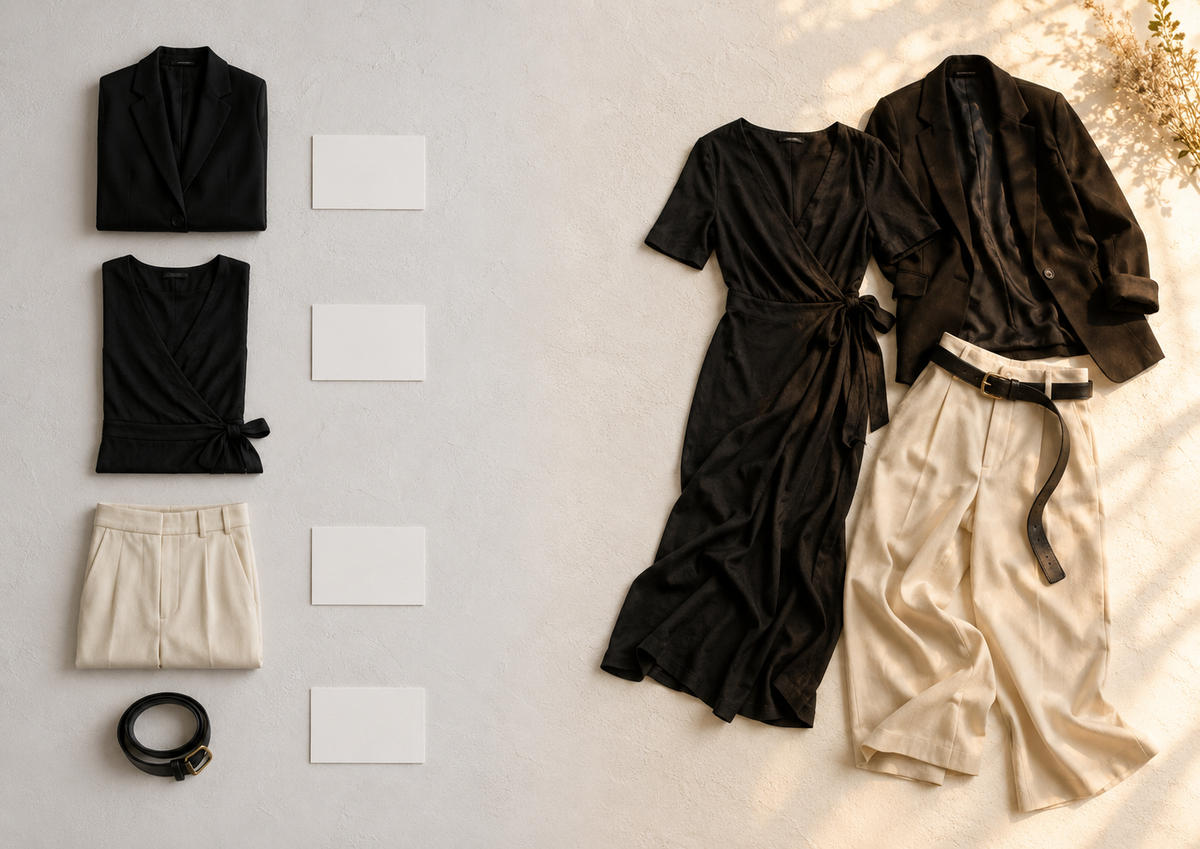
If you've followed the rules — pear shapes wear A-line skirts, apples avoid fitted waists, rectangles need ruffles for "curves" — and still walked away from your mirror feeling worse than when you started, you weren't doing it wrong. The rules were wrong for you. They were calibrated to a runway ideal that, by the industry's own data, fits a narrow slice of the population.
This guide works differently. The focus here is proportion, fit, and the clothes you already own — not a body ideal you're supposed to approximate. You'll find a practical framework for identifying your shape, three principles that work across every body type, and shape-specific guidance written without the language of concealment. The goal is a wardrobe that fits your actual body, not an edited version of it.
Why the Old Body-Type Rules Don't Work (and What Does)
The core problem with traditional body-type advice isn't that it's wrong in every detail — it's that it was built on a reference body that excludes the vast majority of people receiving it. Vogue Business reported that 97.0% of Fall/Winter 2026 runway looks were straight-size (US 0–4), and a parallel Spring/Summer 2026 analysis confirmed the figure at 97.1%. When editorial stylists write rules about what "works," they're working from a sample that represents a tiny fraction of real shoppers.
The real-world size picture looks nothing like that sample. According to a La Mode Française industry survey, under 20% of women wear a size 38 or smaller — the size range that runway advice is effectively calibrated to. About half wear sizes 40–44, and one in three wear a size 46 or above. For the majority of readers, mainstream styling rules aren't just imperfect — they're instructions written for someone else's body.
The focus has also shifted. Fashion and consumer trend data from Style Analytics identifies 2026 as a turning point: search interest in "sculpted" apparel is rising, and designers are increasingly emphasizing garments that frame the body rather than hide it. The directive has shifted from "dress to minimize your flaws" to "dress to balance your proportions and wear your body with confidence."
Three principles replace the old rulebook: fit, proportion, and tailoring. A garment that fits your actual measurements, balances your visual silhouette, and has been adjusted where necessary will outperform any "correct" style in the wrong size. When you understand your proportions, you can make almost any trend work — because you're no longer following rules built for a body that isn't yours.
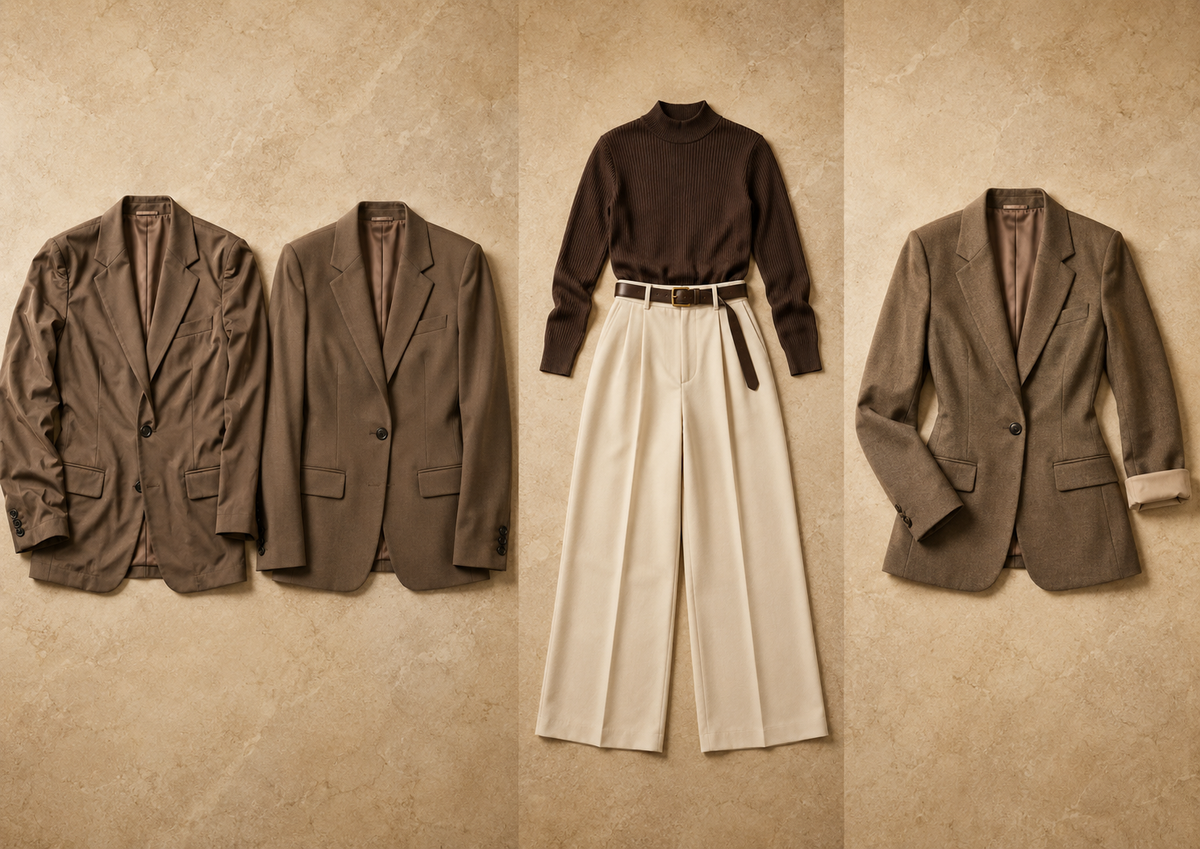
Know Your Shape: A Practical, Judgment-Free Starting Point
Starting from that foundation — fit, proportion, tailoring — the logical next step is knowing which proportions you're actually working with. That means taking three measurements: your shoulders (across the back, from point to point), your natural waist, and your hips (at the fullest point). Those numbers, compared against each other, place you into one of five shape categories.
According to Discover Fashions, the rectangle shape is the most common at approximately 46% of women, followed by pear at 20%, apple at 14%, inverted triangle at 12%, and hourglass at just 8%. That last figure matters: most styling guides are built around hourglass proportions, yet hourglass is the rarest shape in the distribution. If the advice has never quite fit, that's likely why.
Here's how each shape reads in measurement terms:
- Rectangle: Shoulders, waist, and hips measure within roughly 5% of each other, with minimal waist definition. The silhouette is relatively straight from shoulder to hip.
- Pear: Hips measure noticeably wider than shoulders — often by 2 inches or more — with a defined waist and narrower upper body.
- Apple: Weight and volume concentrate around the midsection, with shoulders and hips closer in width and the waist measuring near or wider than the hips.
- Inverted triangle: Shoulders are broader than hips, with a relatively straight or tapered lower half.
- Hourglass: Shoulders and hips are roughly equal in width, with a waist that measures significantly narrower — typically 10 inches or more of difference.
Ready to upgrade your wardrobe?
Get the Elara app for AI-powered styling and virtual try-ons.
If you're unsure which category fits, a simple three-measurement check — shoulders, waist, hips — can point you in the right direction. Many people find they sit between two shapes, which is entirely normal; the categories are starting points, not fixed identities.
Universal Styling Principles That Work for Every Body Type
Knowing your shape is the map. These principles are how you navigate it — and they apply regardless of which category you fall into.
Fit comes first. A well-fitting garment in any silhouette outperforms a proportionally "correct" silhouette in the wrong size. Fabric pulling across the back, gaping at the chest, or bunching at the waist all disrupt the visual line of an outfit before proportion logic even enters the picture.
Waist definition is the single most repeated recommendation across 2026 style guides. The reason is structural: the waist functions as a visual anchor point. When it's defined — whether through a wrap style, a belt, or a cinched seam — it divides the body into two proportional halves and gives the eye a reference point that makes the overall silhouette read as balanced. Without that anchor, volume above or below can overwhelm the figure.
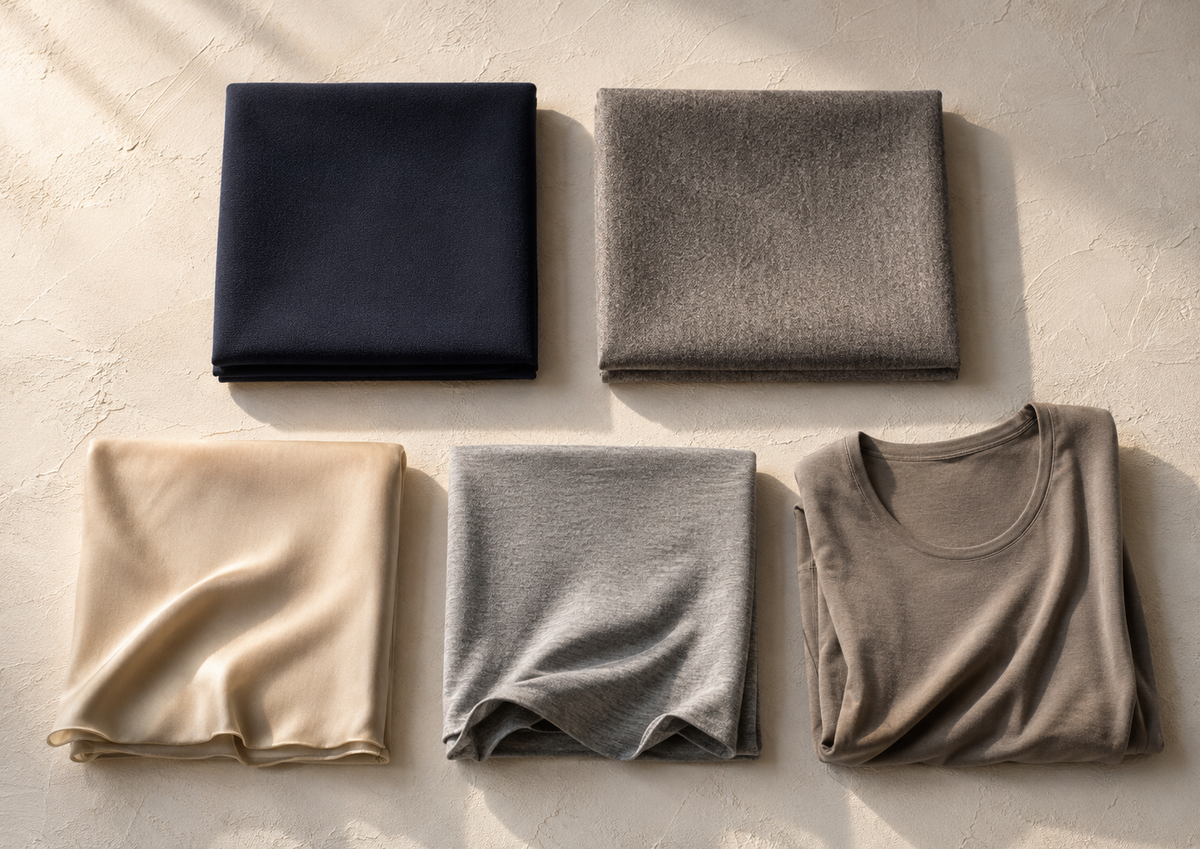
Fabric choice determines whether a garment defines or softens. Structured fabrics — crepe, ponte, lightweight wool — hold their shape against the body and create clean lines. Drapey fabrics — viscose, Tencel, jersey — move with the body and soften edges. Neither is universally better. Structured fabrics work well when you want a silhouette to be precise; drapey fabrics work when you want ease or to skim rather than cling. Comfort-first structured silhouettes are the dominant direction — the sweet spot between tailored and relaxed.
Tonal and vertical dressing extend the visual line. Monochrome outfits — wearing one color head to toe — eliminate horizontal breaks that interrupt height perception. Vertical elements (pinstripes, long open cardigans, column silhouettes) reinforce that elongation. Color blocking does the inverse: it draws attention to specific zones, which can be used strategically to balance proportions. Body-framing silhouettes are a dominant direction in 2026 — validating that these proportion principles are aligned with where fashion is heading.
Shape-by-Shape Styling Guide (Women and Men)
Proportion principles become most useful when applied to specific silhouettes. Here's how they translate, shape by shape.
Women's Shapes
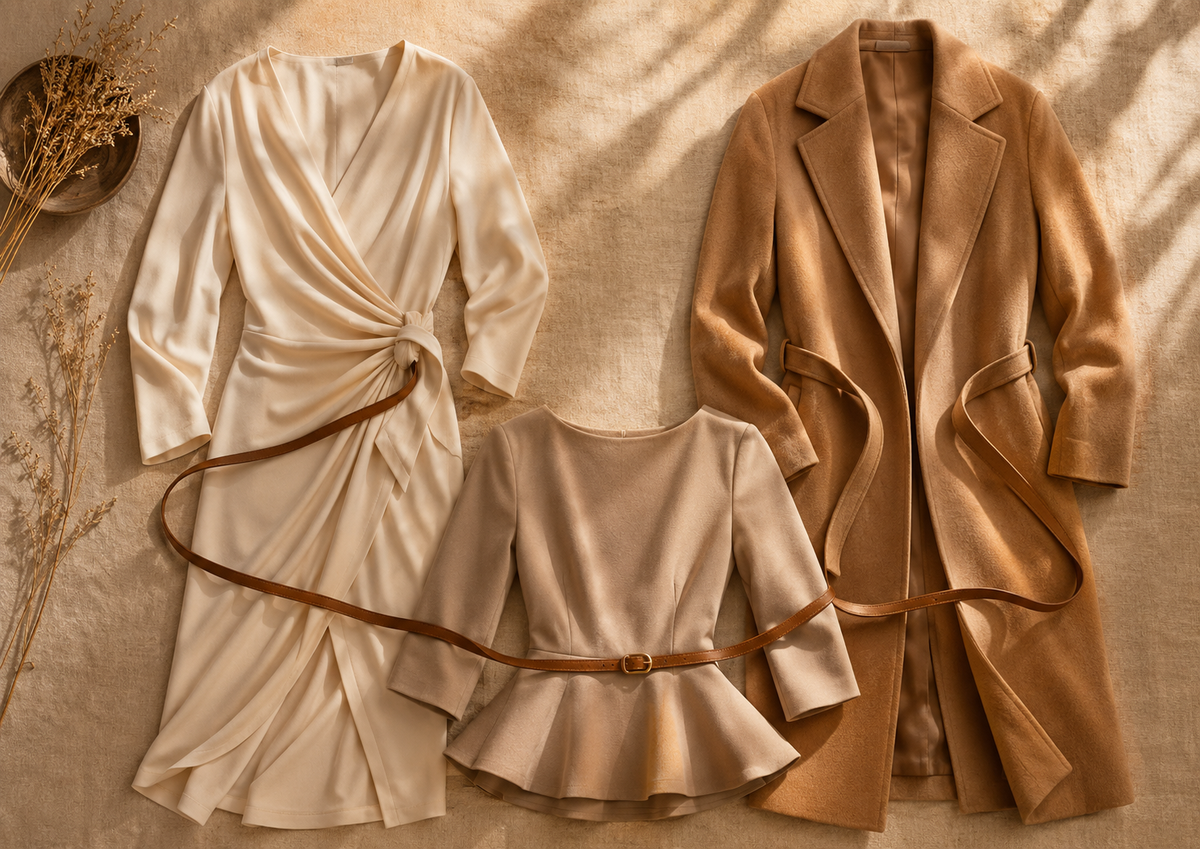
Rectangle (the most common shape at ~46%): The goal is to create the visual impression of a waist. Wrap dresses, belted coats, and peplum tops all introduce definition at the midsection. A-line skirts add volume at the hip, which reads as contrast against a straighter torso. Structured fabrics like ponte or crepe work particularly well because they hold the shape of the garment rather than falling straight. Experiment with asymmetric hemlines or tonal color blocking at the waist — both create visual interest without requiring a dramatically different silhouette.
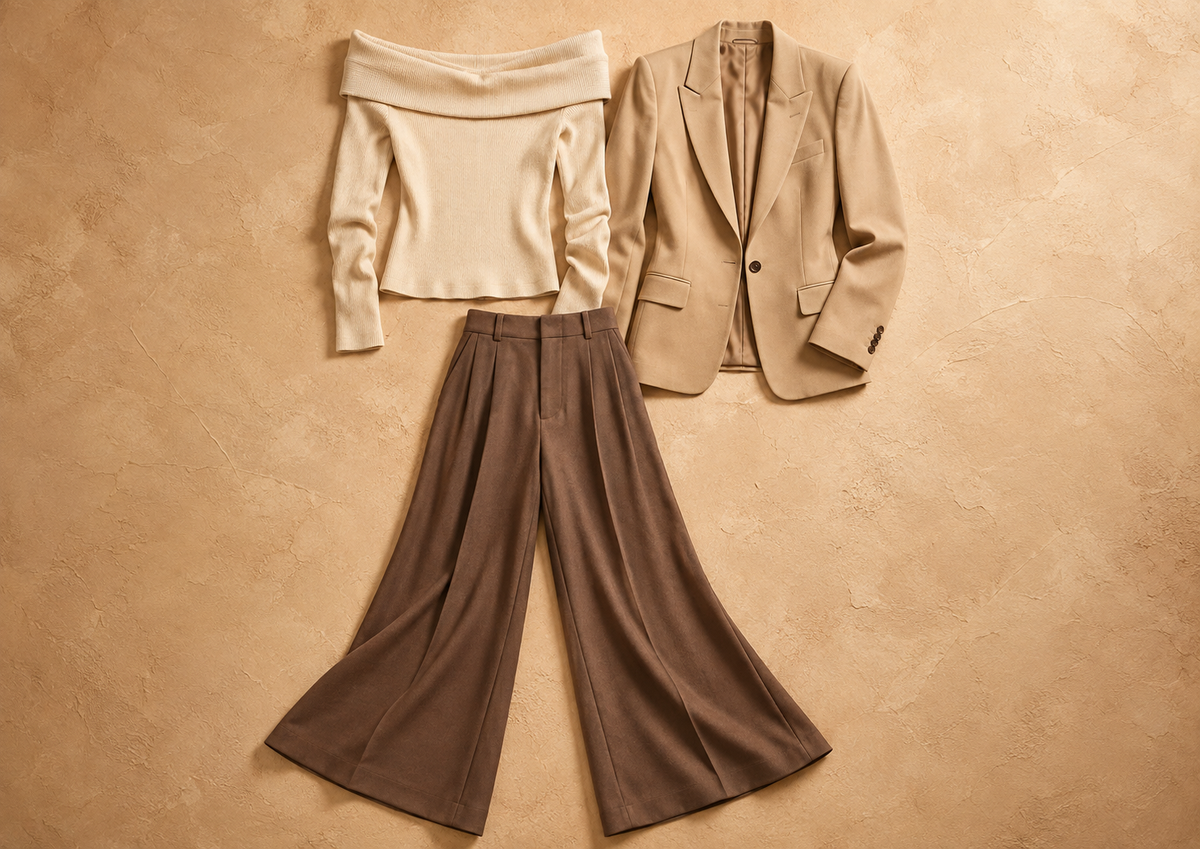
Pear: The balancing logic here runs upward — drawing visual weight to the shoulders and upper body to create equilibrium with fuller hips. Off-shoulder necklines, puff sleeves, and detailed or printed tops all accomplish this. Wide-leg and A-line trousers balance the lower half without constricting it. A structured blazer with shoulder definition is a reliable anchor piece. Experiment with bold necklines; the proportion shift is often more dramatic than expected.
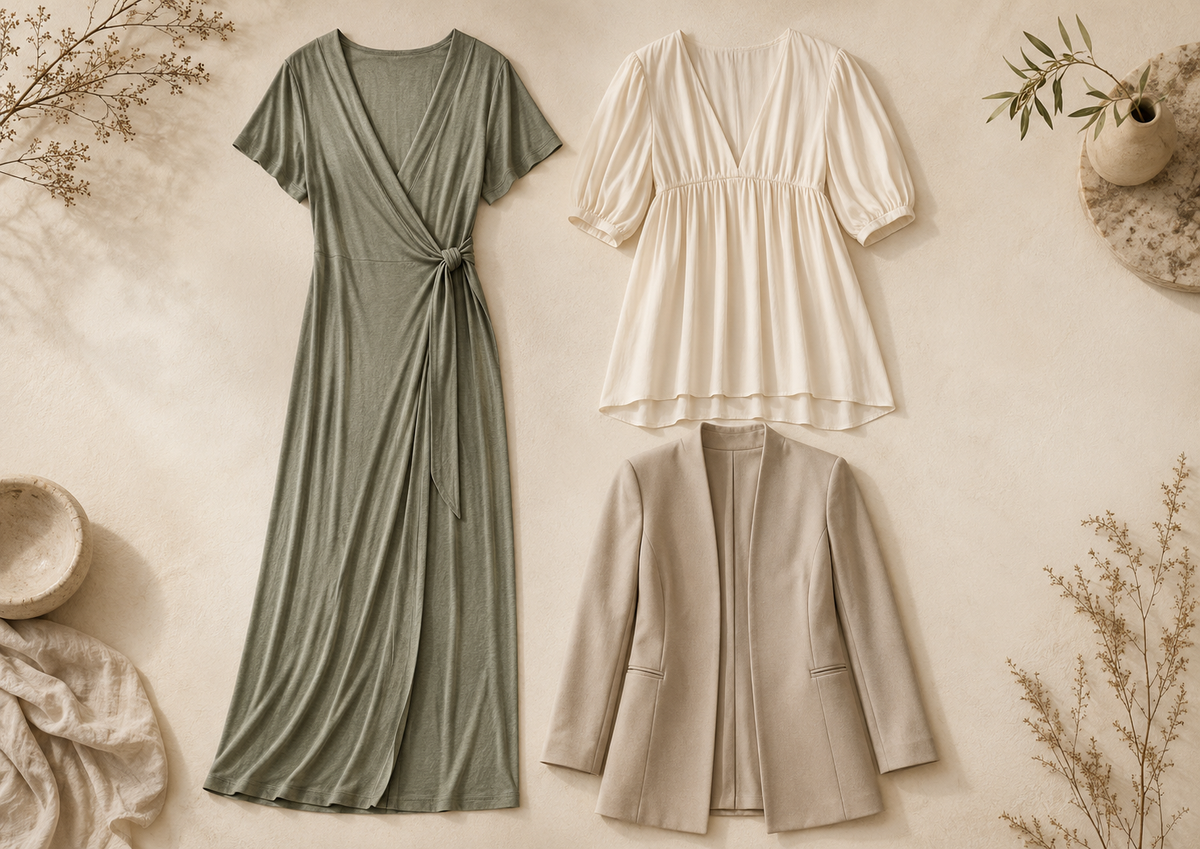
Apple: V-necks and empire waists create a long vertical line through the torso and define the silhouette above the fullest point of the midsection. Straight-leg trousers elongate the lower half. Structured jackets that skim — rather than cling to — the midsection keep the line clean. Experiment with wrap styles in drapey fabrics; they tend to fall flatteringly without adding bulk.
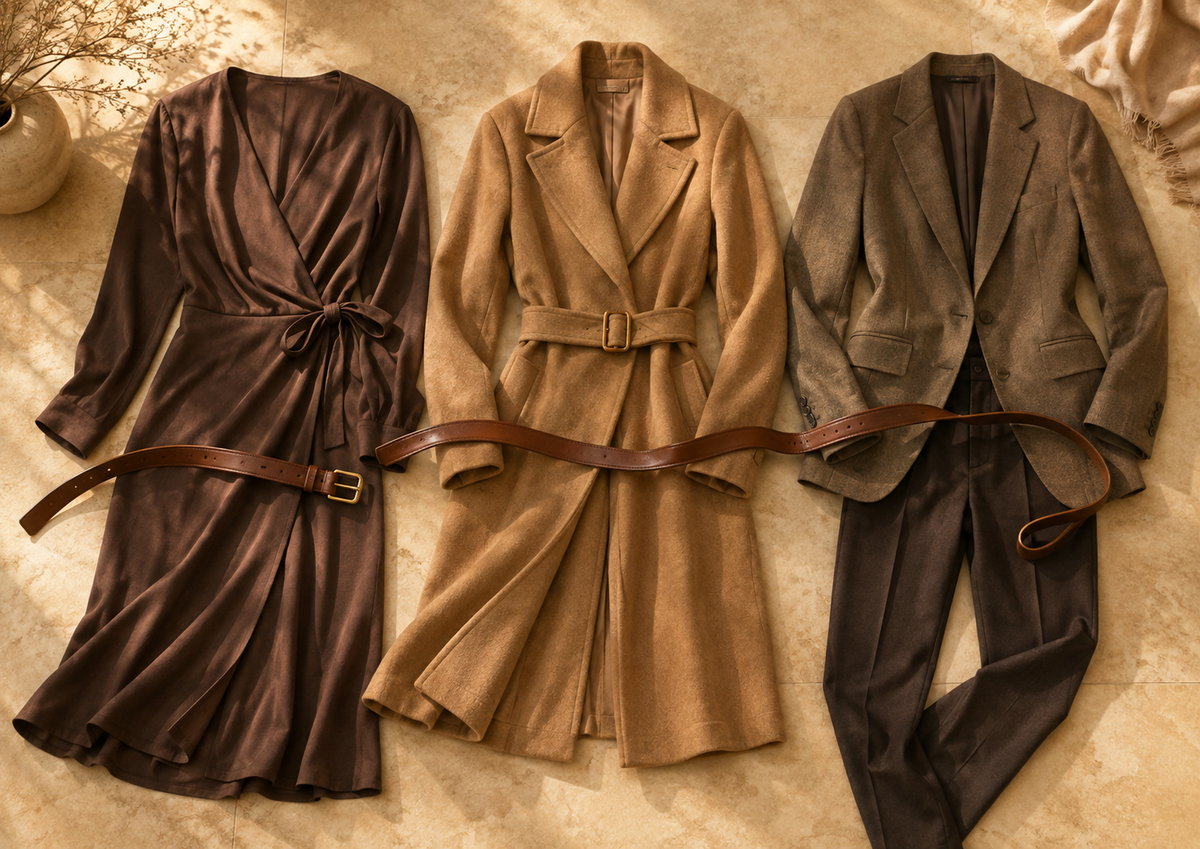
Hourglass: The proportions are already balanced; the priority is keeping them visible. Wrap dresses and belted looks maintain waist definition without over-tightening. Fitted-but-not-clingy silhouettes in medium-weight fabrics (not too stiff, not too drapey) work best. Experiment with tailored wide-leg trousers — the volume at the hip reads as intentional rather than overwhelming when the waist is clearly defined.
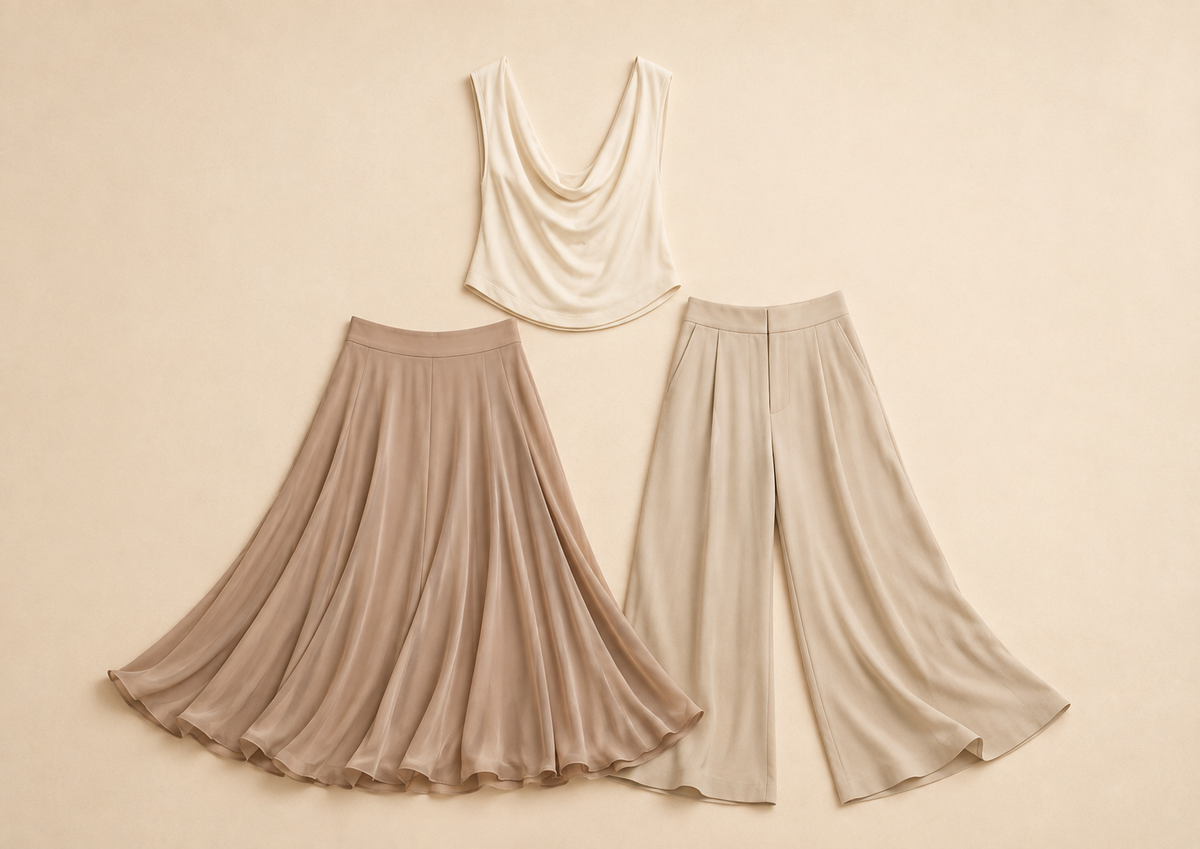
Inverted triangle: Volume shifts downward. Fuller skirts, wide-leg trousers, and softer necklines (scoop, cowl, round) reduce the visual emphasis on broader shoulders. Avoid heavy shoulder details — structured epaulettes or strong horizontal seams at the shoulder line amplify width that's already present. Experiment with midi-length full skirts, which add significant lower-body presence.
Men's Shapes
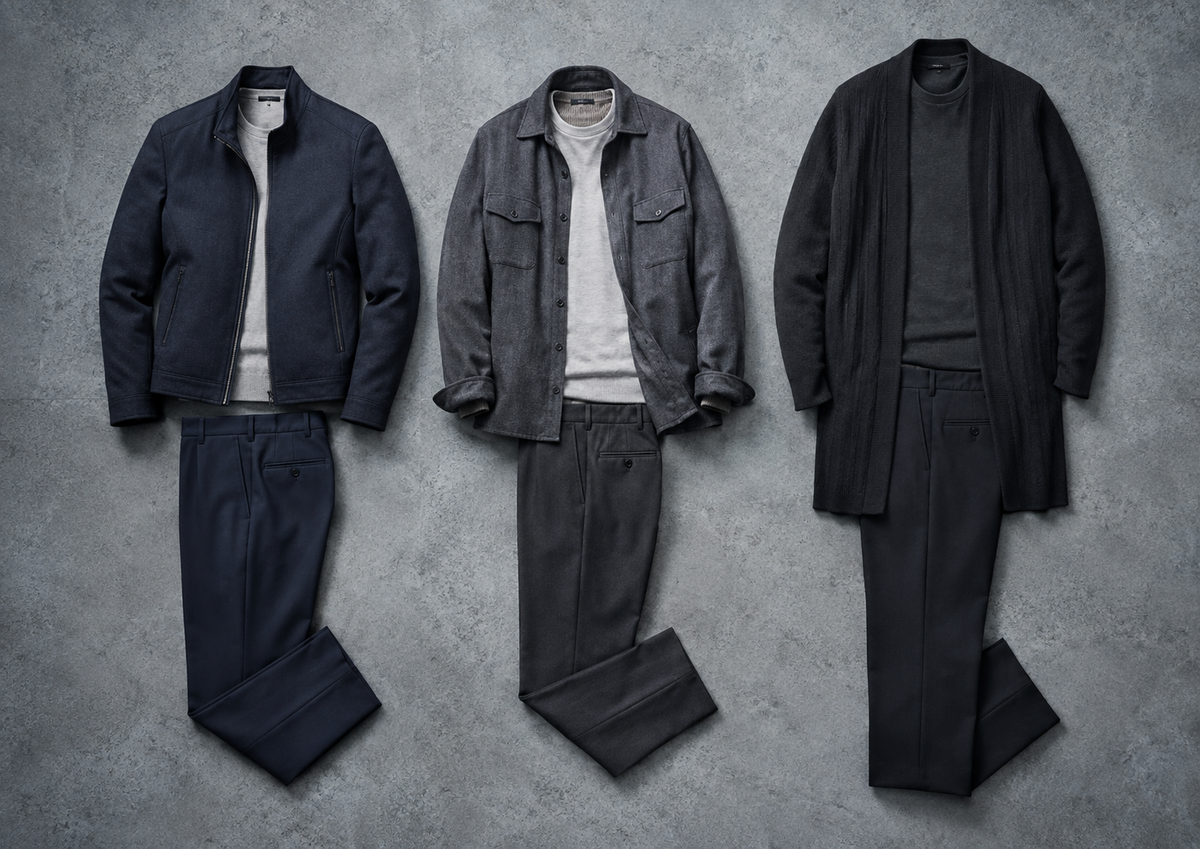
The same proportion logic applies across gender categories — styling centers on lines, proportion, and balance rather than gendered rules.
Athletic builds (broader shoulders, defined waist): Structured but not skin-tight fits preserve the silhouette without restricting movement. Tapered or straight-leg trousers balance the upper body. Avoid oversized tops, which add bulk where it isn't needed.
Slim builds: Layering creates visual volume — an open overshirt or structured jacket adds weight without bulk. Straight-leg or slightly relaxed trousers read as more substantial than skinny cuts. Textured fabrics (tweed, ribbed knits) add visual mass.
Broader-shoulder, fuller builds: The vertical line principle applies directly — monochrome outfits, long open layers, and vertical stripe details all elongate. Well-fitted trousers with a clean break at the ankle keep the lower half proportional.
A Note on Extended Sizes and How to Dress for Your Body Type
According to La Mode Française, roughly one in three women wears a size 46 or larger, yet off-the-rack sizing is calibrated to a narrow range. The proportion principles above apply equally at extended sizes — but fit and tailoring carry even more weight because the gap between standard sizing and individual measurements tends to be wider. A single alteration (taking in a waist seam, adjusting a shoulder) can transform how a garment reads on the body. Treating tailoring as a routine cost rather than a luxury is especially practical for anyone shopping outside the straight-size range.
How to Apply This to the Wardrobe You Already Have
Most people already own pieces that work for their shape — they just haven't been styled with proportion in mind. The problem is rarely a wardrobe gap; it's a styling gap.
A three-step audit closes it quickly:
- Identify your anchor pieces — the items you reach for instinctively because they fit well and make you feel good. These are your data points.
- Reverse-engineer why they work — is it the waist definition? The fabric weight? The shoulder fit? Map each piece back to the fit/proportion/fabric framework from the previous section.
- Use those principles to restyle underused pieces — a blazer that works because it skims without clinging can apply the same logic to a wrap dress you've worn twice.
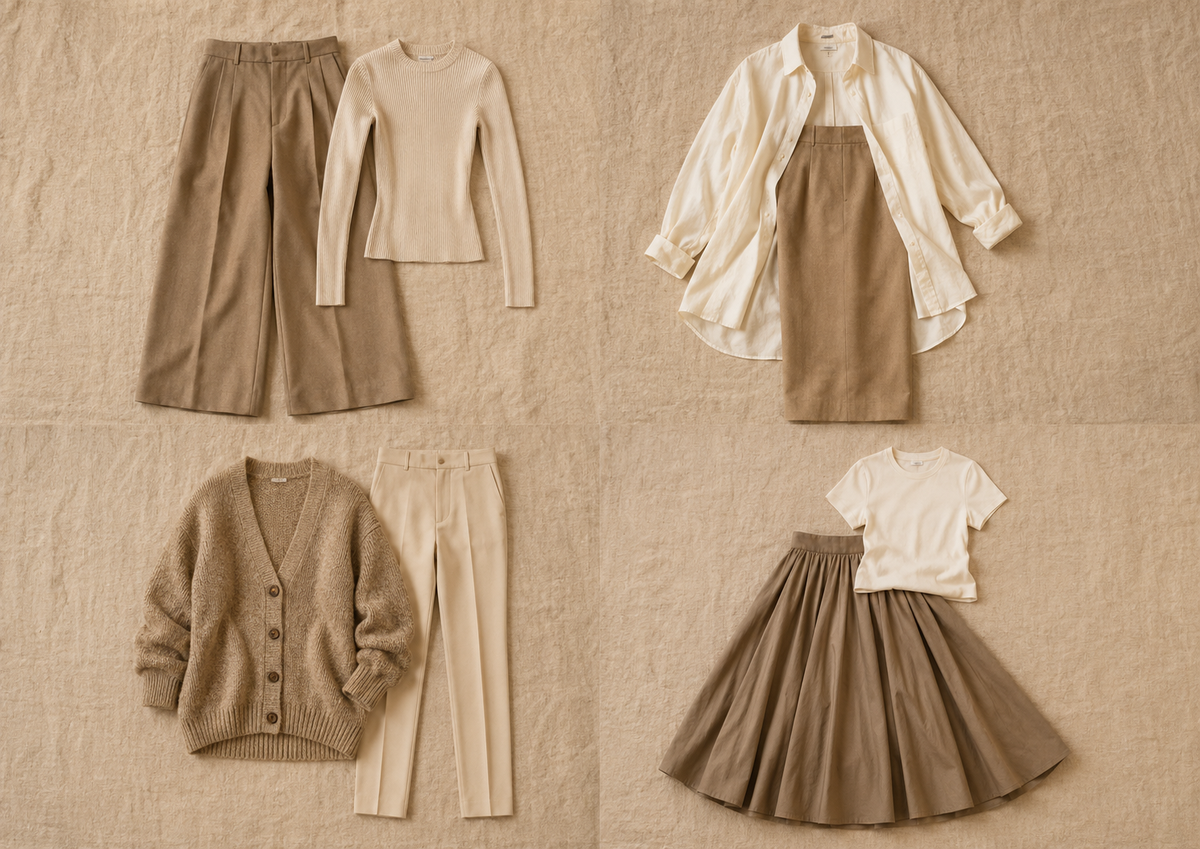
The practical tool here is proportion pairing: for every volume-heavy piece in your wardrobe, there's almost certainly a streamlined counterpart already there. Wide-leg trousers pair with a fitted knit. An oversized shirt tucks into a straight-cut skirt. Wide-leg or straight-leg trousers and belted waist styles are the most universally recommended pairings — which means most wardrobes already contain the raw material.
This is where Elara becomes genuinely useful. Rather than requiring a shopping trip, Elara digitizes your existing wardrobe, identifies underused pieces, and suggests new combinations based on your body type and proportions — turning styling intelligence into something you can act on today.
Body Type Dressing Across Age and Life Stage
Bodies change — through pregnancy, aging, weight fluctuation, and hormonal shifts — and rigid body-type rules become even less useful when proportions shift over time. The proportion logic, however, doesn't change. Only the anchor points move.
If the waist becomes less defined with age, empire lines and wrap styles still create visual waist definition without requiring a particular body measurement to pull them off. If the bust or hips shift, the same principle of visual balance applies: add structure where you want definition, drape where you want softness. Fit, waist definition, and balanced proportions remain the dominant recommendations regardless of size or age — the framework is durable precisely because it's based on geometry, not a fixed body ideal.
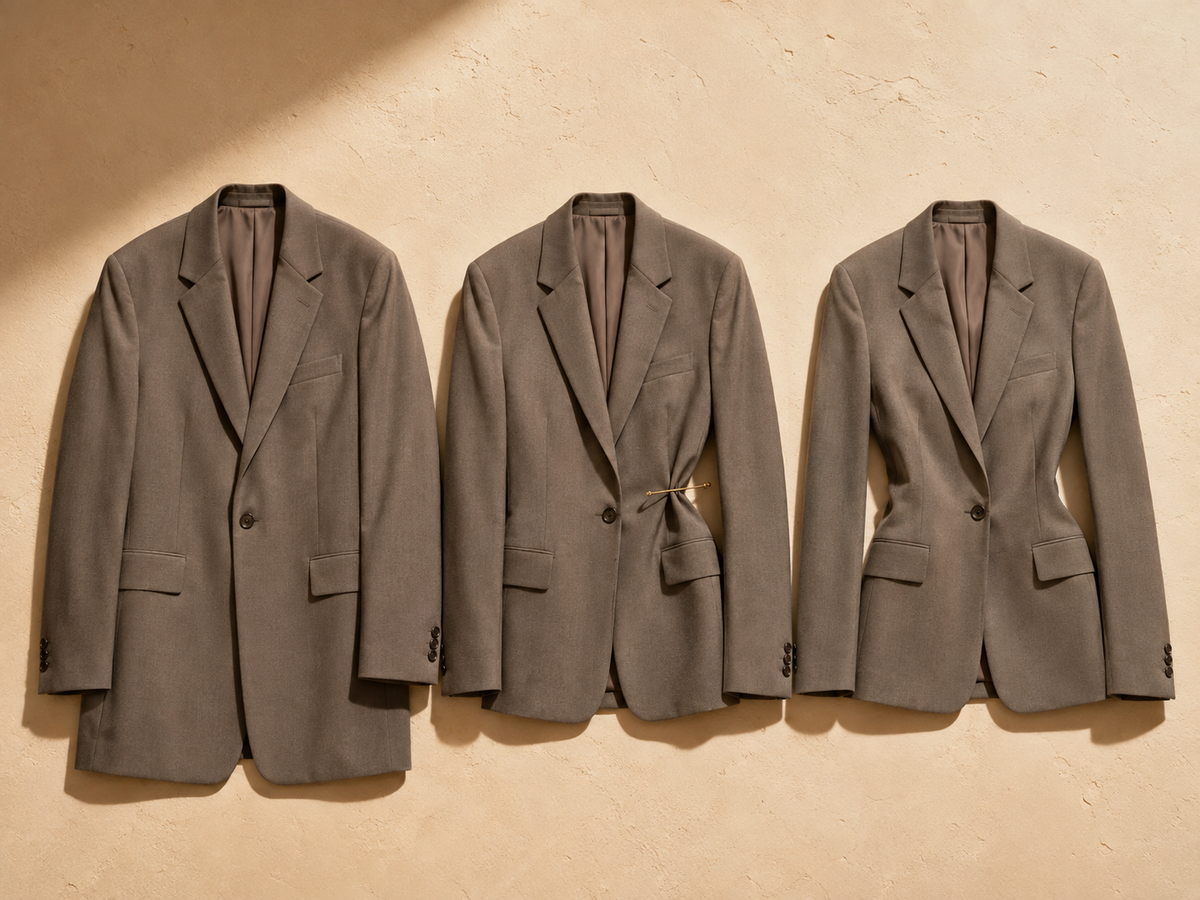
Tailoring becomes more valuable as bodies change, not less. Off-the-rack sizing is calibrated to a narrow range that rarely accounts for how proportions evolve over decades. A single alteration — raising a hem, letting out a seam — can make a garment feel current and personal again.
Frequently Asked Questions
Q: How do I know my exact body shape if I'm between two categories? A: Most people sit between two shapes, and that's completely normal. Use your three measurements (shoulders, waist, hips) as a guide, then notice which recommendations resonate with what already works in your closet. Your anchor pieces are often more honest than a category label.
Q: Does this advice apply to men's styling too? A: Yes. The principles of fit, proportion, and balance apply across all genders. The shape categories shift slightly (athletic, slim, broader builds rather than pear or apple), but the core logic — visual balance through waist definition, vertical lines, and appropriate fabric weight — works universally.
Q: I've gained or lost weight. Do I need to re-identify my body shape? A: Your proportions may shift, but the principle stays the same: understand your current measurements and apply the fit/proportion/fabric framework. You don't need a new identity — just an updated anchor point for how clothes should sit on your body right now.
Q: Is tailoring really worth the cost? A: For most people, yes. A single alteration — hemming trousers, taking in a waist seam, or adjusting shoulder width — can make a garment feel custom-made. For extended sizes especially, tailoring closes the gap between standard sizing and your actual measurements in a way that transforms how pieces fit and feel.
Conclusion: Dress for Your Proportions, Not the Rules
The goal was never to fit a body-type template — it was always to understand your proportions and use clothing to create the silhouette you want. Three pillars make that practical: know your shape, apply universal fit principles, and work with what you already own.
Fashion is moving toward framing the body, not hiding it. Dressing well is about proportion and intentionality, not conformity to a narrowly defined ideal.
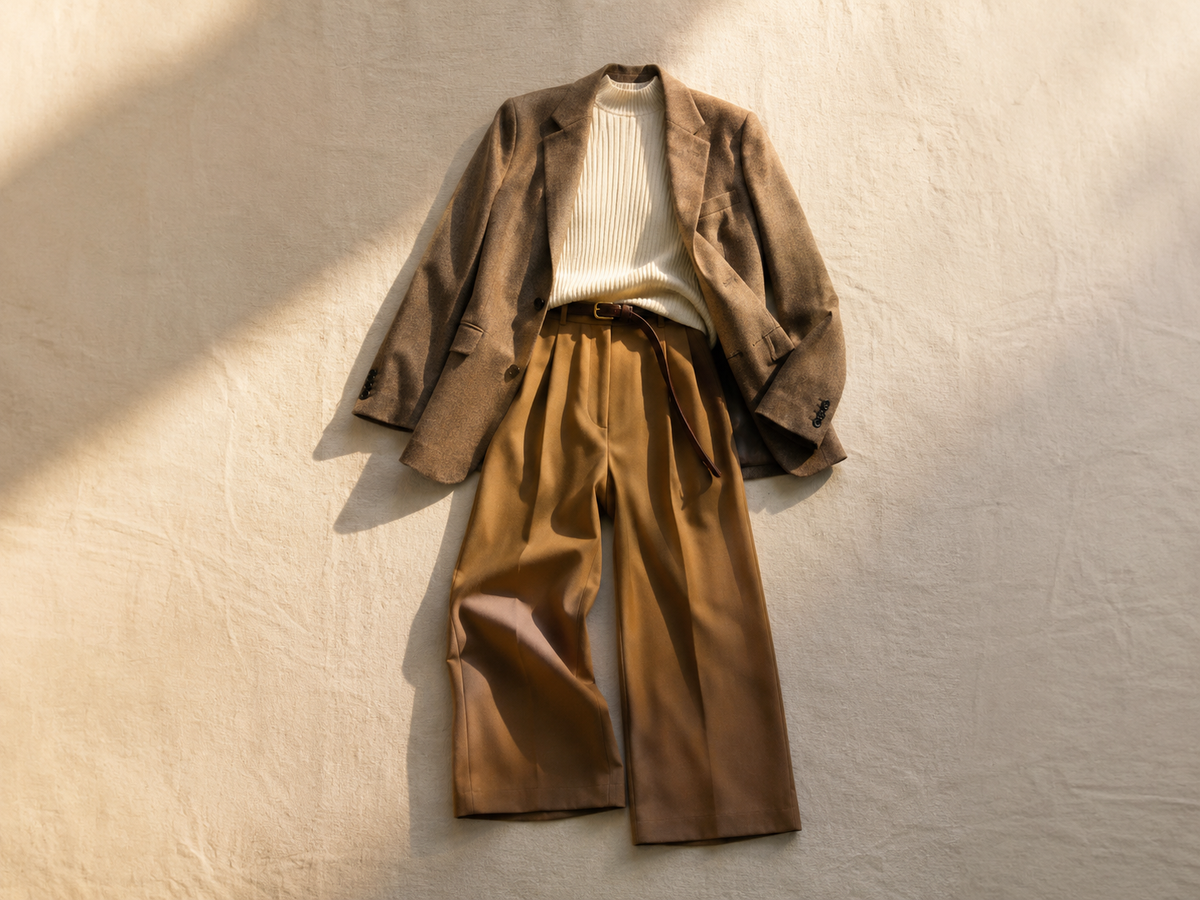
If you want to put these principles into practice without starting from scratch, Elara is built for exactly this — a conversational wardrobe tool that analyzes your existing pieces, maps them to your proportions, and surfaces combinations you haven't tried yet. Or, if you're still working out your shape, start with a body type quiz to identify your anchor proportions and build from there.

Your AI Stylist is Here.
live on the App Store & Google Play
Available on iOS and Android for seamless access anytime, anywhere.