Virtual Try-On Clothes Before Buying Online - Complete Guide 2026
Virtual try-on lets you see exactly how clothes look on your body before buying. Here's how it works, the best apps to try on clothes virtually, and how AI virtual fitting rooms are changing online fashion shopping.

Online fashion shopping has a fundamental problem: you cannot try things on before you buy them.
The result is a $400 billion annual returns problem. 30-40% of online fashion purchases are sent back — most of them not because the product was defective, but because it looked different in practice than it did in a photo, or because it didn't work with what the buyer already owned, or because the occasion it was purchased for required a different styling decision than the shopper made alone.
Virtual try-on technology was built to close this gap. In 2026, it has matured enough to meaningfully change how people shop for clothes online — when it is implemented well.
What is virtual try-on?
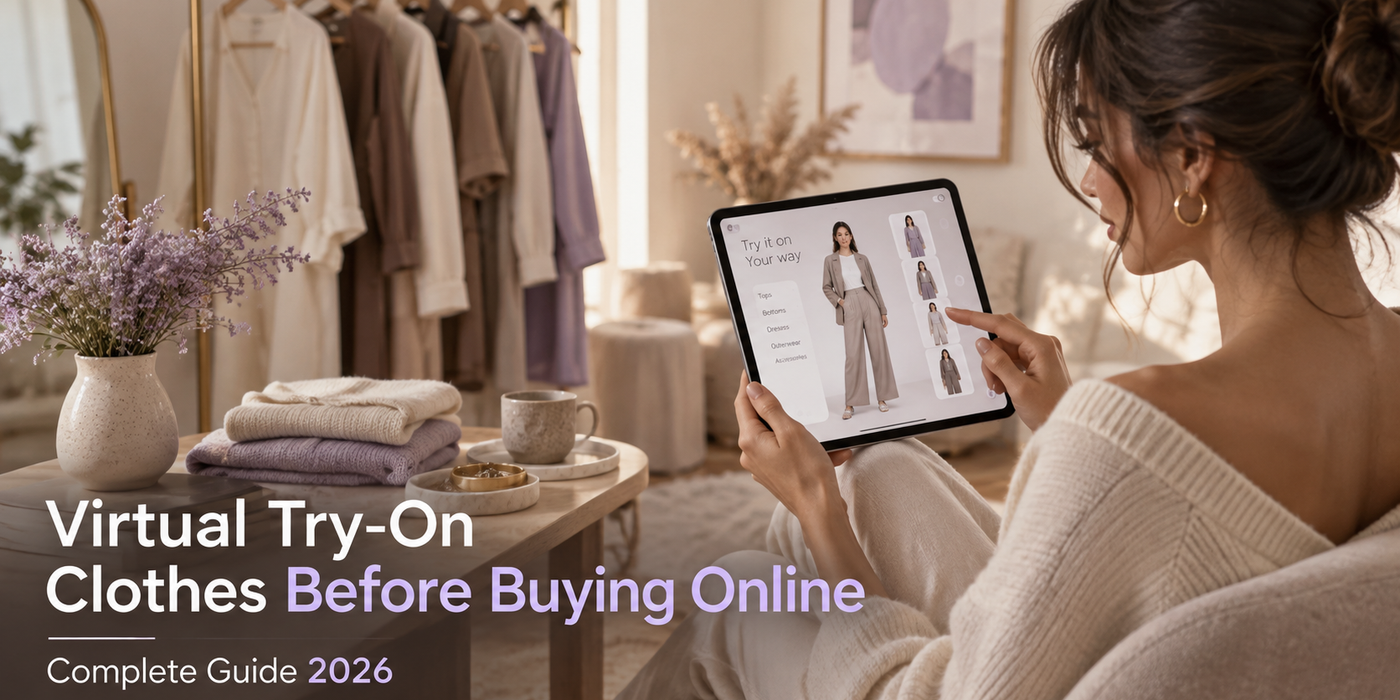
Virtual try-on is technology that lets you see how a garment looks on your own body before purchasing or wearing it. Using a photo of yourself and an image of the clothing item, AI applies the garment to your photo — showing the fit, drape, and styling on your actual proportions rather than on a model or mannequin.
The output is an image showing you wearing the piece, which gives you significantly more information than a product photo on someone else's body. You can see whether the length works for your height, whether the silhouette suits your proportions, whether the color works against your skin tone, and whether the overall look matches what you were trying to achieve.
This is meaningful because the primary question every fashion shopper has is not "what does this look like?" but "what does this look like on me?"
How to try clothes virtually before buying
There are two main ways to try clothes on virtually before buying:
In-app virtual try-on (AI stylist apps): Apps like Elara allow you to upload a photo of yourself and try on clothing items within the app — either from your own wardrobe or from recommended shopping results. The AI applies the garment to your photo. This approach works across any brand or retailer because the garment image is the input, not a specific retailer's product catalog.
On-site virtual try-on (brand websites): A growing number of online fashion retailers have embedded virtual try-on directly into their product pages. You upload a photo on the product page and see the specific item from that retailer on your body. This is more convenient for shopping a specific brand but only works within that brand's store.
For general shopping across multiple retailers, an AI stylist app with virtual try-on provides more flexibility. For shopping within a specific store, the brand's own virtual try-on is faster.
Best apps for virtual try-on clothes online
Elara — Best for wardrobe-integrated virtual try-on
Elara combines virtual try-on with a full AI personal stylist and digital wardrobe. The key distinction: Elara's VTO is embedded inside a styling conversation rather than being a standalone product viewer.
The flow: you describe an occasion, Elara builds a complete outfit from your wardrobe and shopping recommendations, and you try on the full look on your photo before deciding. You're not trying on a single product in isolation — you're seeing the entire outfit on your body.
This matters because the decision you're making is usually about an outfit, not an individual item. A dress can look perfect on a generic model and wrong for your specific occasion or with your specific styling. Seeing the complete look on yourself, assembled for your occasion, gives you the information you need to actually decide.
Available free on iOS. Download Elara
Klodsy — Best standalone virtual try-on
Klodsy's virtual try-on technology is well-regarded for its accuracy on individual garments. You upload a photo and a garment image and see a realistic render. The wardrobe organization features are also strong. Where it is weaker than Elara is the integration with outfit building and occasion-based styling — the try-on is more of a standalone viewer than a step in a complete styling decision.
TryDrobe — Best for trying on across any brand
TryDrobe accepts any garment image regardless of brand or retailer, making it useful for trying on items you find anywhere online — screenshots from Instagram, items from brands that don't have their own VTO. The digital closet and outfit planner are functional but lighter than Elara's.
Dressly — Best for wardrobe planning combined with VTO
Dressly combines virtual try-on with outfit planning and weather-aware suggestions. The UI is clean and the try-on accuracy is generally strong. Less focused on conversational styling than Elara, more focused on visual organization and planning.
Best apps to try on dresses before buying online
Dresses are the garment category where virtual try-on provides the most value. The silhouette, hem length, neckline, and drape vary enormously by body proportion — what reads as a flattering midi on one person reads completely differently on another. Photography on a model gives almost no useful information about how a dress will look on you specifically.
For trying on dresses virtually before buying:
Elara is best when you want to see a dress in the context of a complete outfit for a specific occasion. A dress for a wedding guest, a dress for a work event, a dress for a date — the occasion shapes whether the dress is right. Elara builds the occasion context before the try-on, so you're seeing whether the right dress for your occasion looks right on you.
Klodsy is best when you want to isolate the dress itself — evaluate the silhouette and proportion without occasion framing.
TryDrobe is best when you want to try on a dress you found on Instagram or a brand that doesn't have its own VTO.
AI virtual fitting rooms: how the technology works
Virtual try-on for clothing uses computer vision and AI image processing to apply a garment to a person's photo. The key technical steps:
Body segmentation: The AI identifies the person's body outline and posture in the photo, separating them from the background.
Garment analysis: The AI analyzes the garment image, identifying its shape, fabric texture, and how it would realistically drape and fold.
Warped clothing overlay: The garment is digitally "warped" to fit the person's body proportions — adjusted for their height, shoulder width, and body shape — and overlaid on the photo with realistic shading and shadow.
Texture rendering: Fabric textures (the way silk flows differently from denim, the way a knit sits differently from a woven) are rendered to appear realistic under the lighting conditions in the original photo.
Ready to upgrade your wardrobe?
Get the Elara app for AI-powered styling and virtual try-ons.
The quality of the output depends significantly on: the quality and resolution of the input photo, the quality and resolution of the garment image, and the sophistication of the AI model doing the rendering.
In 2026, the best virtual try-on tools produce results that are accurate enough to give genuine confidence in a purchase decision for most garment types. Structured garments (blazers, tailored trousers, structured dresses) render most accurately. Heavily draped or complex knitwear is harder to render precisely — good VTO tools note this and supplement with model photography for these garment types.
Virtual try-on vs. traditional online shopping
The comparison that matters is not "virtual try-on vs. physical shopping" — VTO will not fully replicate the physical fitting room experience anytime soon. The comparison is "virtual try-on vs. buying from a photo and hoping."
Without virtual try-on: You evaluate a garment from 2-4 photographs on a model whose body is different from yours, in a context that may not match your occasion, with no information about how the piece works with what you own. You make a purchase decision on incomplete information and discover whether it was right when the package arrives.
With virtual try-on embedded in an outfit recommendation: You see the garment on your body, in the context of the complete outfit it was recommended for, for your specific occasion. You're making a decision with significantly more information about how the piece will actually work in your life.
The return rate data reflects this. Fashion return rates on VTO-assisted purchases run measurably lower than on standard photography-based purchases — not because the garments are better, but because the purchase decisions are better informed.
How virtual try-on works for shopping (step by step)
Using Elara as the example:
- Describe your occasion. Open Elara's AI styling chat. Tell it what you're shopping for and why: "I need a dress for a semi-formal birthday dinner next Saturday."
- Receive outfit recommendations. Elara builds a complete outfit recommendation from your wardrobe and relevant shopping results — not just a dress, but the full look for the occasion.
- Tap try-on. From the outfit card, tap to try on the look on your photo.
- See yourself in the outfit. Elara applies the complete look to your uploaded photo. You see the dress (and the rest of the outfit) on your body, sized to your proportions.
- Decide. If it works, add to cart or save to your wardrobe. If something is off, ask Elara to adjust — a different length, a different silhouette, a different color.
The whole sequence takes a few minutes. The decision you're making at the end is meaningfully more informed than one made from looking at product photos.
Virtual try-on for your existing wardrobe
Virtual try-on is not only useful for shopping. It is also useful for understanding what you already own.
The most common wardrobe problem is not "I don't have enough clothes." It is "I have clothes I don't know how to use." Pieces that were purchased for a specific occasion and never worn again. Combinations that seemed like they should work but have never been tried. Favorite items that have no second piece to match them.
Elara's virtual try-on lets you experiment with combinations from your own wardrobe before you commit to wearing them. A top you bought two years ago might work perfectly with trousers you bought last month — try the combination in the app before you leave the house in it.
This is the wardrobe utility that virtual try-on makes possible that no amount of physical shopping can replicate: seeing new combinations of things you already own, without trying everything on physically.
How Elara's virtual try-on connects to the rest of the styling experience
Elara is built around a principle: virtual try-on is most useful when it is the last step in a well-reasoned outfit decision, not the first step in a browsing session.
The sequence that works:
Occasion → Elara understands what you need and why
Taste → Style Graph filters to what actually fits how you dress
Wardrobe → Outfit built from what you own
Shopping gap → New item introduced only where genuinely needed
Virtual try-on → You see the complete look on your body before deciding
When you try on an outfit that was assembled for your specific occasion and taste, from pieces that work together, the try-on validates a decision that was already well-made. This is why the confidence from Elara's VTO converts into actual outfit wearing and actual purchases — rather than the slight uncertainty that comes from trying on a single item in isolation.
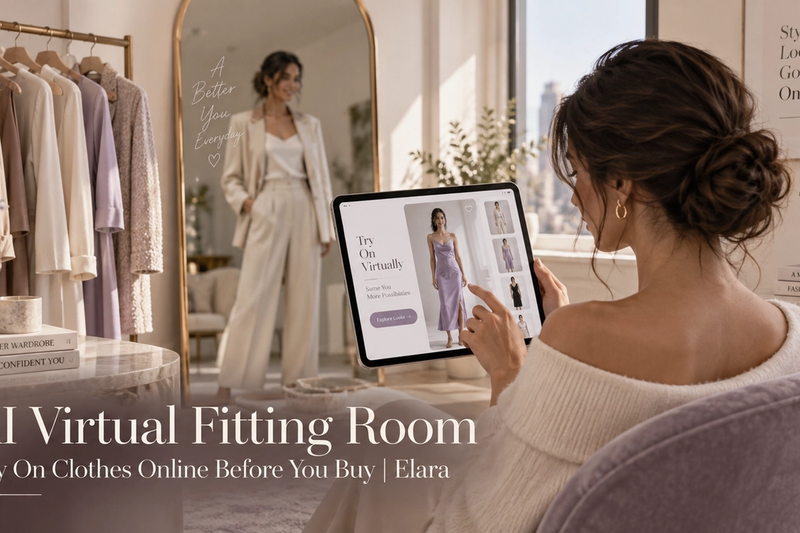
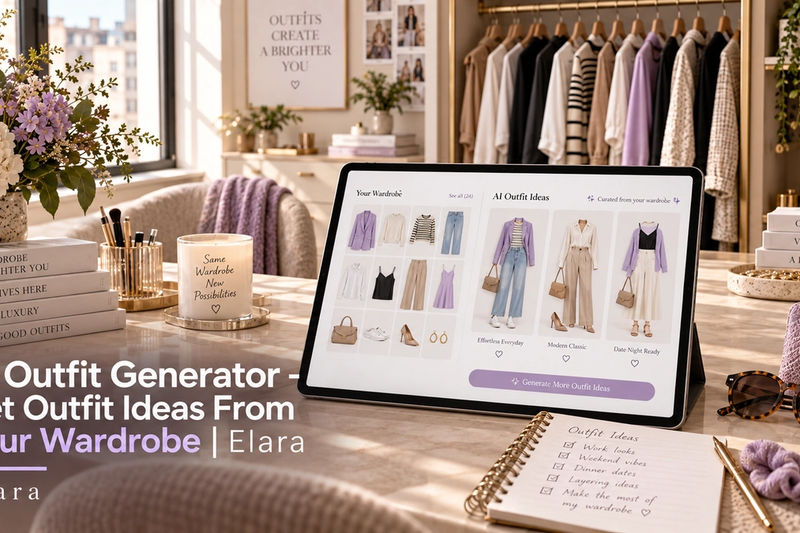
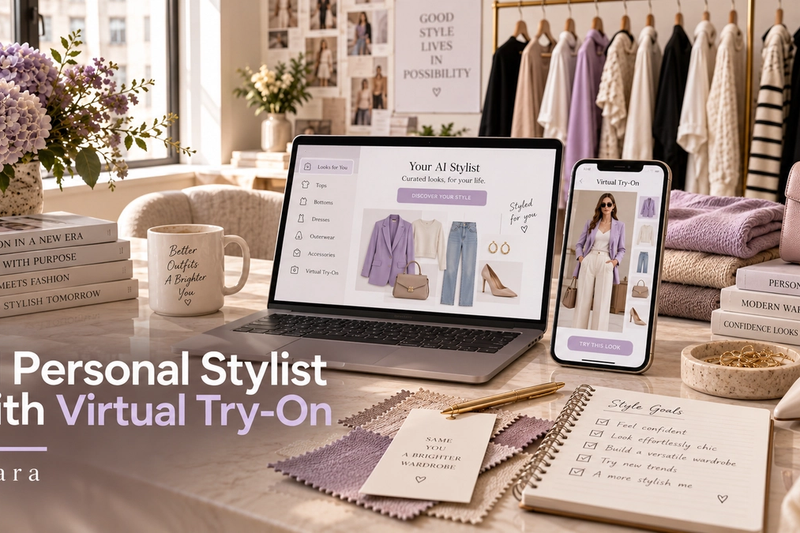
Learn more about Elara's AI stylist and virtual try-on | Try the AI outfit generator | See the virtual fitting room
iOS App: https://apps.apple.com/us/app/elara-ai/id6759782185
Android App: https://play.google.com/store/apps/details?id=com.joinelara.app&pcampaignid=web_share

Your AI Stylist is Here.
live on the App Store
Available on iOS for seamless access anytime, anywhere.