

AI Outfit Planner: Wear More, Shop Less
AI outfit planner tools digitize your wardrobe and generate occasion-aware looks from what you own. Learn how to save 100+ hours yearly and reduce impulse purchases by 40%.
 Mehul AgarwalFounder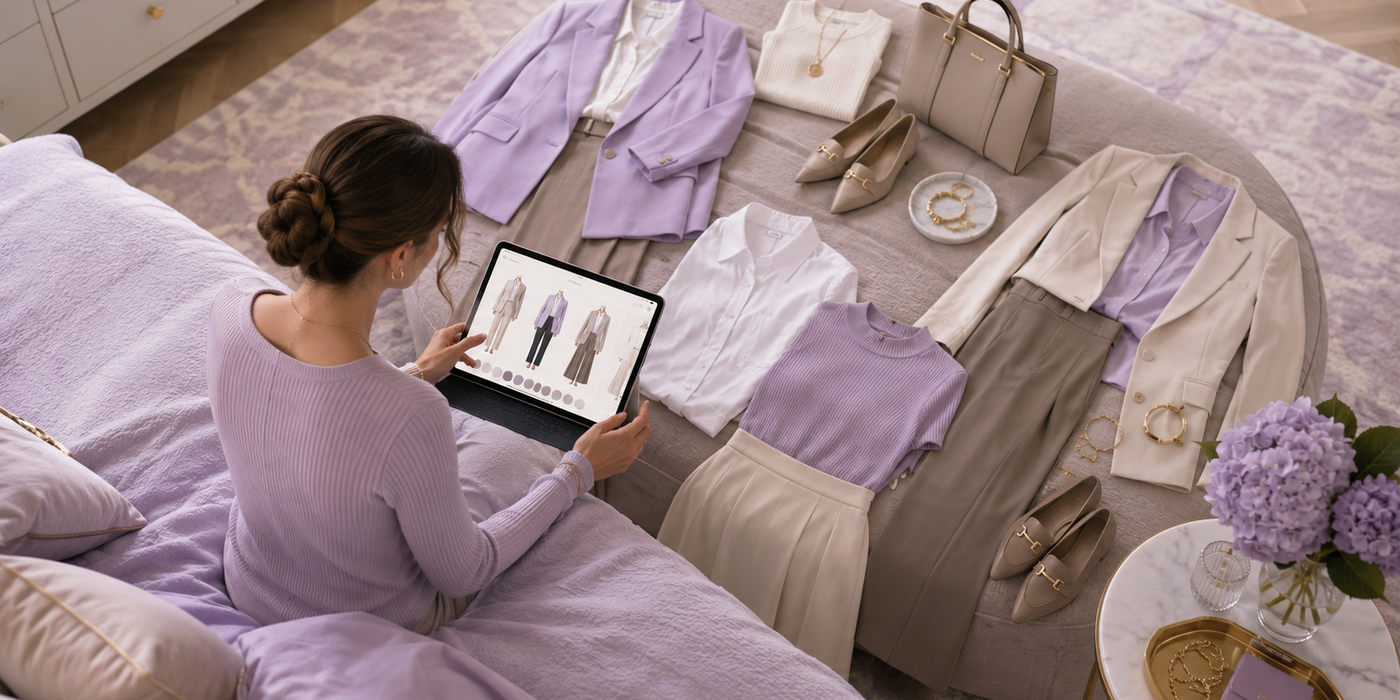
AI Outfit Planner for Work: Build Office Looks From Clothes You Own
Table of Contents
- Key Takeaways
- Introduction: The 'Nothing to Wear' Problem Has a Smarter Fix
- Why AI Outfit Planners Are Now a Mainstream Tool (Not a Gimmick)
- What a Good AI Outfit Planner Actually Does for Work Dressing
- Free vs. Paid AI Outfit Planners: How to Evaluate the Trade-Offs
- The Sustainability Case: Dress Better Without Buying More
- How to Get Started: Building Your First AI-Planned Work Wardrobe
- Conclusion: Your Wardrobe Is Smarter Than You Think
Key Takeaways
- AI adoption in fashion companies doubled from 20% to 44% in just the first half of 2026 — these tools are now mainstream infrastructure, not experimental tech.
- The best AI outfit planners learn your actual wardrobe, occasion requirements, and style preferences — they're fundamentally different from generic trend recommendation bots.
- Users save 10–15 minutes daily (100+ hours per year) and reduce impulse purchases by 20–40%, making the ROI concrete and measurable.
- The core decision: free tools handle wardrobe organization; conversational AI platforms like Elara deliver the occasion-aware, learning-based recombination that solves real workwear problems.
Introduction: The 'Nothing to Wear' Problem Has a Smarter Fix
Standing in front of a full closet at 7:45 a.m., with a client meeting at 9, is a specific kind of frustration — one that has nothing to do with not owning enough clothes. Work dressing is uniquely demanding: every look has to clear four bars simultaneously. It needs to be polished enough for the dress code, comfortable enough to survive nine hours, appropriate for the weather and the commute, and repeatable across the week without telegraphing that you've run out of ideas. Four constraints, every single morning, on a time budget of minutes.
AI adoption in fashion and apparel companies doubled from 20% to 44% in just the first half of 2026, according to data cited by clueless.clothing — a signal that AI outfit planning has crossed from novelty into infrastructure. An AI outfit planner in the work context does three things: it digitizes your existing wardrobe, understands your professional context (dress code, calendar, weather), and generates complete, wearable looks from what you already own. No shopping required.
By the end of this guide, you'll know how to evaluate AI outfit tools, understand the free-versus-paid trade-offs, and — most practically — get a week of distinct office looks out of the closet you already have. Elara, a conversational AI stylist built around wardrobe recombination rather than shopping pushes, appears throughout as a working example of what this category looks like at its most capable.
Why AI Outfit Planners Are Now a Mainstream Tool (Not a Gimmick)
The user numbers alone make the case. By the end of 2026, AI-powered fashion app users are projected to exceed 85 million globally — nearly double the 47 million recorded in 2025, according to LinkedIn Pulse and Verified Market Reports. That kind of growth doesn't happen with niche technology; it happens when a tool solves a problem people encounter every day.
The market investment reflects the same trajectory. According to Congruence Market Insights, the global AI-Powered Fashion Styling and Personalization Apps market was valued at USD 1.6 billion in 2025 and is projected to reach USD 10.49 billion by 2033, expanding at a 26.5% CAGR. For context, that's the kind of growth curve that attracts serious engineering talent and sustained R&D — which means the tools available to consumers are improving faster than most people realize.
Capability improvements are already measurable. Over 58% of fashion apps have now integrated generative AI to create personalized outfit suggestions, and Congruence Market Insights data shows this integration improves styling accuracy by 40% and increases user engagement by 35%. These aren't marginal gains — a 40% accuracy improvement is the difference between a suggestion you'd actually wear and one that ignores half your wardrobe.
"92% of fashion organizations plan to increase investments in generative AI, though only 1% currently describe their AI rollouts as 'mature.'" — Stytrix, 2025
That maturity gap is the most interesting data point for anyone evaluating these tools right now. The technology is advancing rapidly, but most implementations are still early-stage. Early adopters — people who learn to use these systems well before they become ubiquitous — build a genuine advantage: better wardrobe utilization, less decision fatigue, and styling habits that compound over time.
Over 60% of Gen Z consumers already prefer AI-based styling recommendations, according to Congruence Market Insights, which signals where mainstream consumer behavior is heading regardless of age group. The relevant question isn't whether AI outfit planners are worth taking seriously — the market has answered that. The question is whether a specific tool can actually solve the four-requirement problem that makes work dressing hard every morning.
What a Good AI Outfit Planner Actually Does for Work Dressing
Solving the four-requirement workwear problem requires more than a digital closet — it requires an AI that understands context, learns from behavior, and systematically generates combinations you'd never find on your own. Four core capabilities separate a genuinely useful AI outfit planner from a basic wardrobe app.
Want this styled from your own closet?
Elara builds the look from what you own, then lets you try it on.
Wardrobe digitization is the foundation. Without accurate cataloging, every recommendation is built on guesswork. According to joinelara.com, leading AI planners achieve 97% garment accuracy — meaning the system works from real data about what you actually own, not generic style templates.
Occasion-aware generation maps to the polish requirement: the AI distinguishes between a boardroom presentation, a casual Friday, and a client dinner, generating looks that hit the right formality register without manual filtering. Context layering adds weather, calendar events, and commute conditions — so a suggestion is wearable today, not just theoretically stylish. Shopping gap analysis closes the loop, helping users identify genuine wardrobe gaps rather than impulse-buying duplicates; this capability alone reduces impulse purchases by 20–40%, according to joinelara.com.
As yenra.com notes, "The most durable systems combine trend forecasting, product tagging, visual search, recommender systems, social listening, and virtual try-on into one operating loop." That distinction matters in practice. A basic outfit planner offers static drag-and-drop combinations — useful for organization, inert for decision-making. A conversational AI stylist, by contrast, learns which fits you actually reach for, which shoes survive your commute, and which combinations you've rejected before. As thedroidsonroids.com puts it, algorithms "learn your preferences, analyze existing wardrobe data, and even adjust to color palettes or fashion trends."
The practical difference is concrete: a user uploads their hybrid-schedule work wardrobe, tells the AI they need looks for two in-office days a week, and the system generates five distinct office outfits from existing pieces — including two combinations the user had never considered. No new purchases required.
Free vs. Paid AI Outfit Planners: How to Evaluate the Trade-Offs
The free-vs-paid question comes down to three evaluation axes: AI learning depth, wardrobe integration completeness, and personalization depth versus generic recommendations. Most free tools deliver on the first two to varying degrees. Almost none deliver meaningfully on the third.
The free landscape is more honest than it appears. Whering stands out as genuinely free — according to joinelara.com, it has "no premium tier gating the core wardrobe and styling features," which is a real differentiator. Its strength is wardrobe tracking; its limit is that AI learning remains relatively shallow. Pureple is completely free but has no AI layer at all — it's a digital closet, not a stylist. Nouva introduces AI generation with color harmony scoring but caps free users at 30 wardrobe items, which is insufficient for most working wardrobes.
What paid and premium tiers unlock is where the ROI case gets concrete. According to joinelara.com, AI outfit planners increase wardrobe utilization by 200–300% — that's the recombination effect in a single number. Users who actively engage with AI styling recommendations save 10–15 minutes daily, which compounds to over 100 hours per year, according to selionai.app and joinelara.com. A tool that returns 100 hours annually has a straightforward value case regardless of subscription cost.
The capability gap between free and paid maps directly to the four workwear requirements. Free tools handle cataloging — the input side. Occasion awareness, comfort learning, weather context, and true recombination intelligence are where AI depth matters. A drag-and-drop tool cannot tell you which of your blazers works for tomorrow's client dinner in the rain.
Elara is built around a different architecture than most tools in this space. Its wardrobe-first philosophy means the conversational AI prioritizes combinations from what you already own before surfacing any shopping recommendations — the opposite of shopping-push architecture. The learning layer adapts to real preferences over time, not just initial style quiz answers.
Free tools are sufficient for basic wardrobe organization. For genuine outfit intelligence — occasion-aware, context-layered, and recombination-driven — a conversational AI platform is the meaningful upgrade.
The Sustainability Case: Dress Better Without Buying More
A Heriot-Watt University study analyzing nearly 6,000 user reviews found that wardrobe apps measurably reduce overconsumption: users who engage with these tools buy less and wear their existing clothes more. That finding is the clearest independent validation of what AI outfit planners actually do at scale — they shift behavior, not just aesthetics.
The financial impact is quantifiable. AI analytics features reduce unnecessary purchases by up to 25%, according to thedroidsonroids.com, and impulse purchase reduction ranges from 20–40%, according to selionai.app and joinelara.com. For work wardrobes specifically, those numbers matter because professional dressing generates a distinct category of impulse buying: panic purchases before important meetings, new roles, or return-to-office mandates. The pattern is familiar — a high-stakes Monday approaches, nothing feels right, and a new blazer gets ordered on Saturday. An AI outfit planner breaks that cycle by surfacing a look you already own before you reach for checkout.
This isn't a niche concern. According to Congruence Market Insights, over 60% of Gen Z consumers already prefer AI-based styling recommendations. As this cohort moves into the workforce in larger numbers, sustainable consumption is becoming a professional identity signal — something colleagues and employers notice — not just a personal value held privately. The "shop your closet first" philosophy that defines the best AI outfit planners aligns directly with where workplace culture is heading.
The practical implication: before buying anything new for work, run your current wardrobe through an AI outfit planner. Most users discover three to five wearable combinations they had never considered — combinations that were already hanging in their closet.
How to Get Started: Building Your First AI-Planned Work Wardrobe
Discovering three to five unused outfit combinations in your existing wardrobe is one thing — actually building a repeatable weekly rotation is another. Here's how to move from insight to a functional system using an AI outfit planner like Elara.
Step 1: Digitize your wardrobe — even partially. You don't need a complete catalog to start. Upload your tops, bottoms, and shoes first; that's enough for the AI to generate meaningful combinations. Elara's conversational interface means you can describe a piece in plain language ("navy slim-fit trousers, mid-weight") rather than hunting for a perfect photo.
Step 2: Set your work context. Tell the AI your dress code (business casual, smart casual, formal), your weekly schedule, and your recurring occasions — client meetings, video calls, in-office days. This context is what separates a generic suggestion from a genuinely useful one.
Step 3: Generate outfits and give feedback. Rate suggestions as the AI surfaces them. The more feedback you provide, the more the system narrows toward your actual preferences — comfort thresholds, fits you reach for, pieces you avoid. According to joinelara.com, AI planners achieve 97% garment accuracy, and that precision compounds with user input over time.
Step 4: Identify real wardrobe gaps. Not trend-driven ones — functional ones. Missing a versatile layer for video calls? No commute-proof shoes? The AI flags specific gaps, not general "you should own this" advice. Users who engage with gap analysis reduce unnecessary purchases by 20–40%, according to selionai.app.
Step 5: Build a five-look weekly rotation. A defined rotation eliminates morning decision fatigue entirely. With 68% of AI styling engagement happening on mobile (Congruence Market Insights), building and reviewing your rotation from your phone — the night before or during your commute — is exactly how the tool is designed to be used.
Conclusion: Your Wardrobe Is Smarter Than You Think
The "nothing to wear" problem is not a volume problem. It's an intelligence problem — and AI outfit planners solve it by activating what you already own rather than pushing you toward what's new.
When evaluating any tool, apply three criteria: wardrobe-first personalization, AI learning depth, and genuine occasion context. Feature lists are secondary. What matters is whether the system gets smarter the more you use it.
The compound return is real: a 200–300% increase in wardrobe utilization (joinelara.com), over 100 hours saved per year (selionai.app), and a 25% reduction in unnecessary purchases (thedroidsonroids.com). That's a meaningful outcome from clothes already hanging in your closet — with the AI-powered fashion styling market projected to reach USD 10.49 billion by 2033 (Congruence Market Insights), the tools will only get sharper.
Start styling with Elara — free, no full wardrobe upload needed. Wardrobe-first, conversational, and built to find looks you already own. joinelara.com
Your stylist, in your pocket
Stop reading about outfits. Start wearing them.
Elara knows your closet, shops every store and gets you dressed for any occasion.