5 Signs Your Style Has Changed: Update Your Wardrobe Smart
Personal style evolves naturally—and your wardrobe can evolve with it. Discover 5 concrete signs your style has shifted and how to update strategically without starting over.
 Mehul AgarwalFounder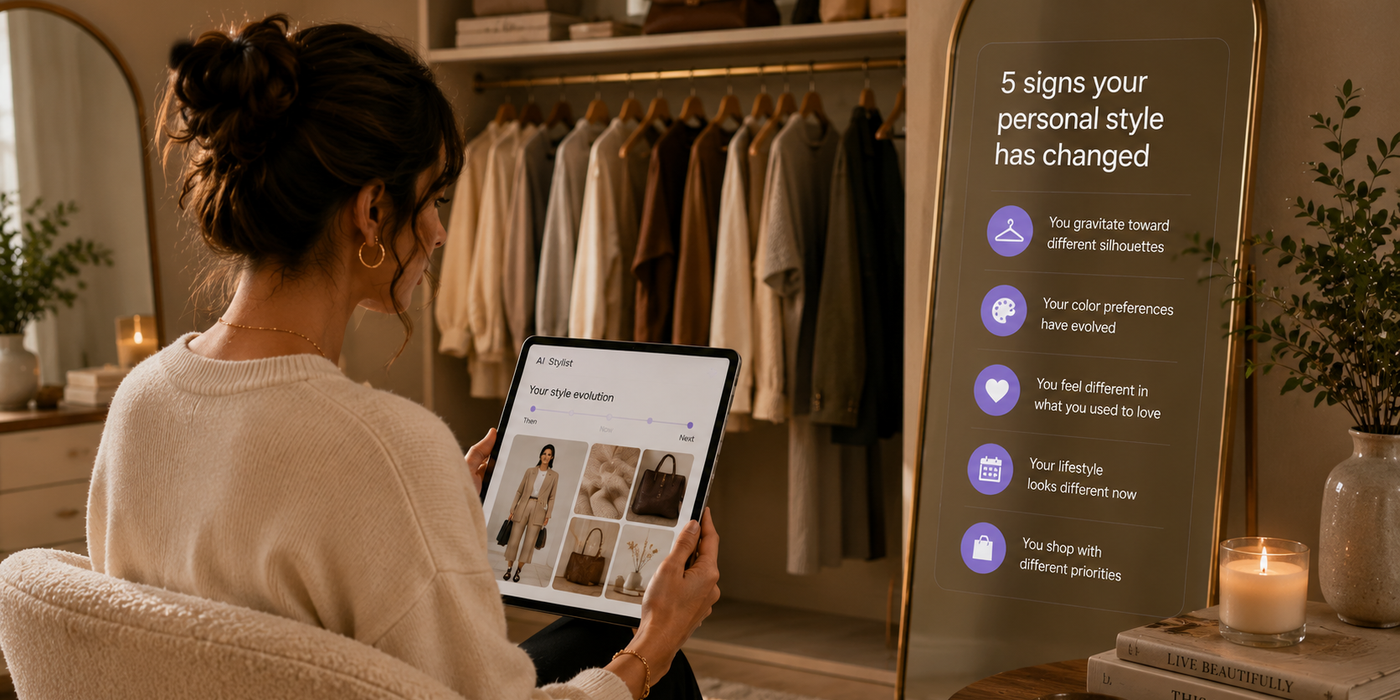
5 signs your personal style has changed
Table of Contents
- Introduction: That 'Nothing to Wear' Feeling Has a Name
- Why Personal Style Changes (And Why That's Completely Normal)
- Sign 1: You Avoid Reaching for Most of What You Own
- Sign 2: Your Color Palette Has Quietly Shifted
- Sign 3: Your Life Has New Occasions Your Wardrobe Can't Cover
- Sign 4: Your Impulse Buys Keep Missing the Mark
- Sign 5: You Feel Like a Different Person in Old Photos
- How to Update Your Wardrobe Without Starting Over
- Frequently Asked Questions
- TL;DR
- Conclusion: Your Style Evolved. Let Your Wardrobe Catch Up.
Key Takeaways
- Style evolution is normal — feeling disconnected from your wardrobe signals growth, not failure.
- Five signs point to a shift: outfit avoidance, color palette drift, occasion-coverage gaps, impulse buys that don't integrate, and identity mismatch with older photos.
- Incremental, wardrobe-first updates outperform full overhauls every time.
- Diagnosing why your style changed is the step most wardrobe advice skips.
- Elara's AI stylist helps you understand your evolution and build forward from what you already own.

Introduction: That 'Nothing to Wear' Feeling Has a Name
You're standing in front of a closet packed with clothes, and nothing feels right. Not just today — most mornings. Many people find themselves cycling through the same small subset of their wardrobe while the rest sits unworn, yet the "nothing to wear" feeling persists. That statistic isn't about having too little. It's about misalignment.
Here's the reframe that most style content misses: that frustrated, stuck feeling isn't a shopping deficit or a failure of discipline. It's a diagnostic signal. Your personal style has quietly evolved, and your wardrobe hasn't caught up yet.
The psychological friction that comes with this moment is real and rarely named — the guilt of clothes you spent money on but never reach for, the paralysis of not knowing what to keep versus what to release, the fear that any meaningful change means starting from scratch. None of that is necessary.
This article does three things: it names five concrete signs your style has genuinely shifted, explains why that shift happens (and why it's healthy), and walks you through how to update incrementally — without blowing up what's already working.
Why Personal Style Changes (And Why That's Completely Normal)
Personal style is not a fixed destination. It's a living expression of identity, and identity shifts constantly in response to career changes, relationship transitions, body changes, aging, and broader cultural moments. Clothing choices are one of the most immediate ways people signal and reinforce their self-concept — which means when the self-concept changes, wardrobe misalignment follows almost automatically.
The post-pandemic period accelerated this dynamic for millions of people. Many professionals shifted to hybrid or remote work and found that wardrobes built around five days a week in a corporate office became functionally irrelevant to how they actually live now. A woman who spent years building a wardrobe around formal office wear, for example, may now work from home several days a week — and find that 60% or more of her closet has become impractical for her actual routine. The clothes didn't change. Her life did.
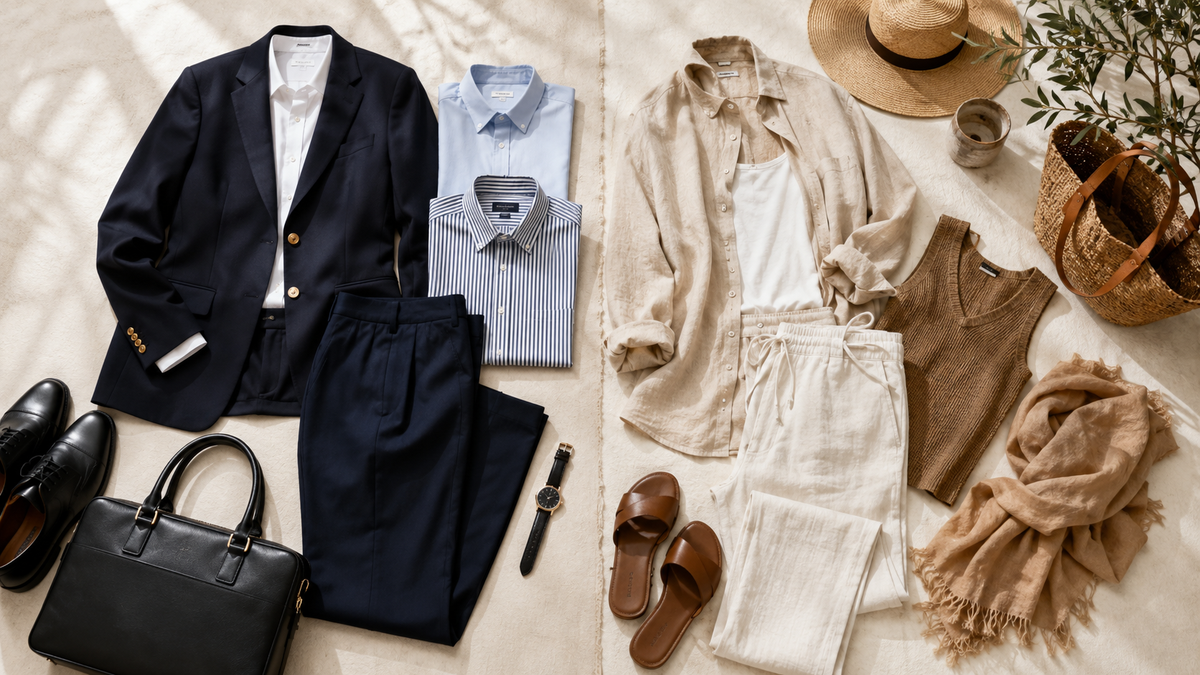
Most wardrobe and style content skips directly to solutions — capsule wardrobes, seasonal edits, shopping guides — without pausing at the confusion stage most people actually occupy. They assume you already know you want change. This article serves the moment before that: when something feels off, but you can't quite name it yet.
Once you can name it, the path forward becomes specific rather than overwhelming. Here are the five signs that your style has shifted — and what each one is actually telling you.
Sign 1: You Avoid Reaching for Most of What You Own
The first sign is also the most measurable: if you're cycling through the same 5–8 items while the rest of your wardrobe sits untouched week after week, that's not a habit or a preference — it's avoidance, and it's telling you something specific.
Avoidance is your instincts working correctly. When clothes no longer match your current self-image, lifestyle, or sense of comfort, you stop reaching for them — even if they still fit physically. The wardrobe hasn't changed; you have. Many people wear a small fraction of their closet regularly, which means most items are effectively decorative.
The ratio of worn-to-owned items is actually a useful metric called outfit frequency analysis — and it gives you an objective, emotion-free way to confirm style drift rather than just suspect it. A high unworn ratio isn't evidence of poor shopping decisions; it's evidence that your style has moved on.
The simplest audit tool costs nothing: the hanger flip. Turn every hanger in your closet backward today. For the next 30 days, return each item normally after wearing it. At the end of the month, anything still facing backward hasn't earned its space — and deserves an honest look.
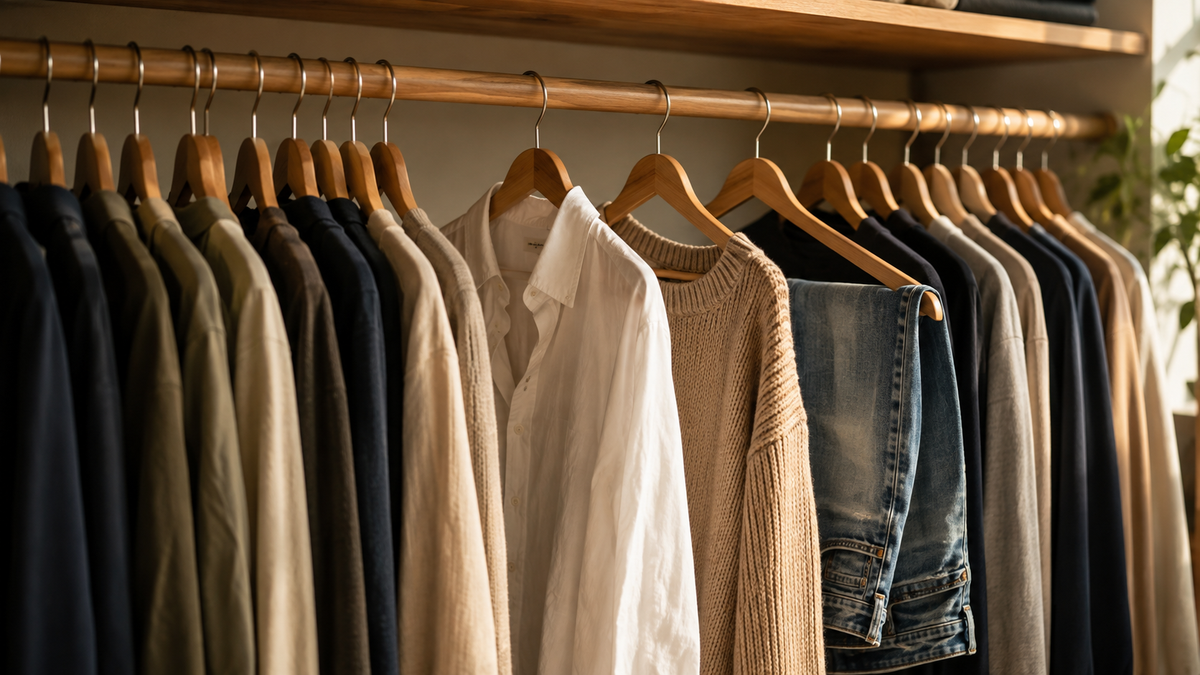
Elara's wardrobe digitization surfaces this pattern automatically. Instead of running the hanger flip manually, users get an immediate worn-versus-unworn breakdown the moment their closet is catalogued — turning a month-long exercise into an instant diagnostic.
Sign 2: Your Color Palette Has Quietly Shifted
Color is one of the first things to change when personal style evolves — and it almost always changes before you consciously notice it. Color palette drift describes the measurable gap between the colors that dominate your existing wardrobe and the colors you're instinctively gravitating toward when you shop or get dressed now.
Color preference is deeply tied to emotional state and identity. When your life changes — through new environments, changing social roles, or significant personal milestones — your color instincts update first, and your closet catches up last.
Want this styled from your own closet?
Elara builds the look from what you own, then lets you try it on.
This makes color a leading indicator of broader aesthetic shift, not a lagging one. By the time you're consciously unhappy with your wardrobe, your color preferences have usually been drifting for months.
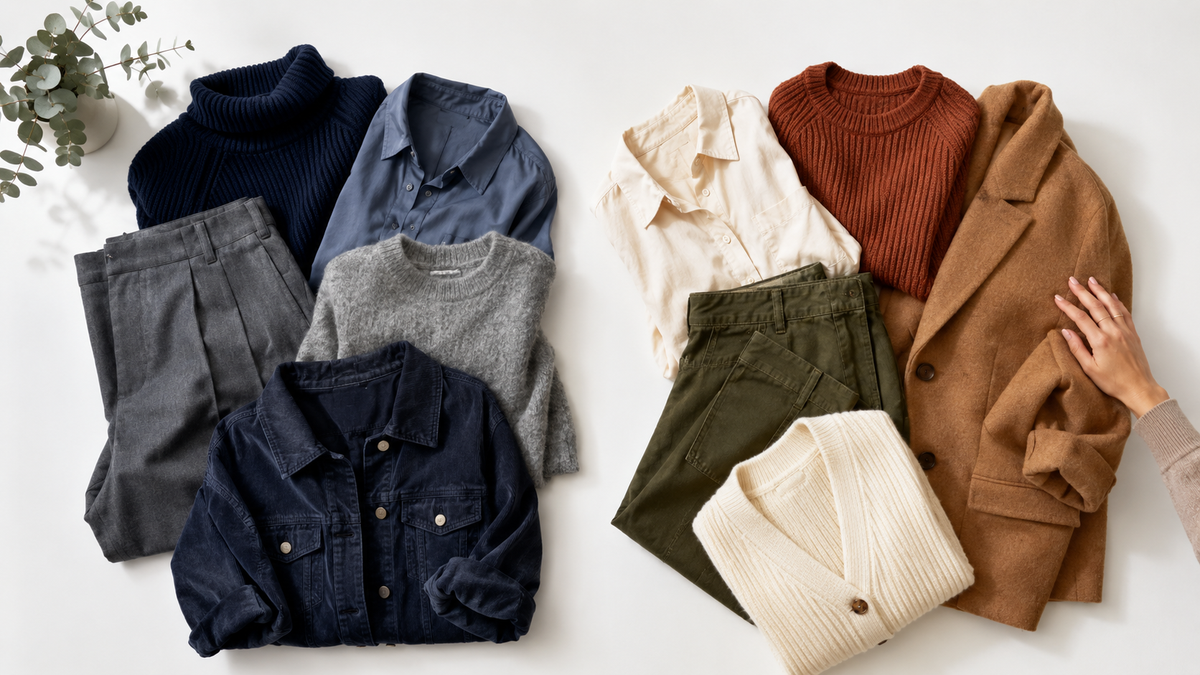
The self-audit is straightforward: lay your last five purchases next to your five most-worn pieces. Do the colors align? If your recent buys are trending toward warm neutrals and earthy tones while your closet is full of cool grays and navy, you've just made the invisible visible.
The guilt many people feel about owning "wrong-colored" clothes is worth reframing. Those pieces aren't wasted money — they're diagnostic data, showing you exactly where the drift began and how far it's traveled. That information is genuinely useful for deciding what to keep, restyle, or release.
Sign 3: Your Life Has New Occasions Your Wardrobe Can't Cover
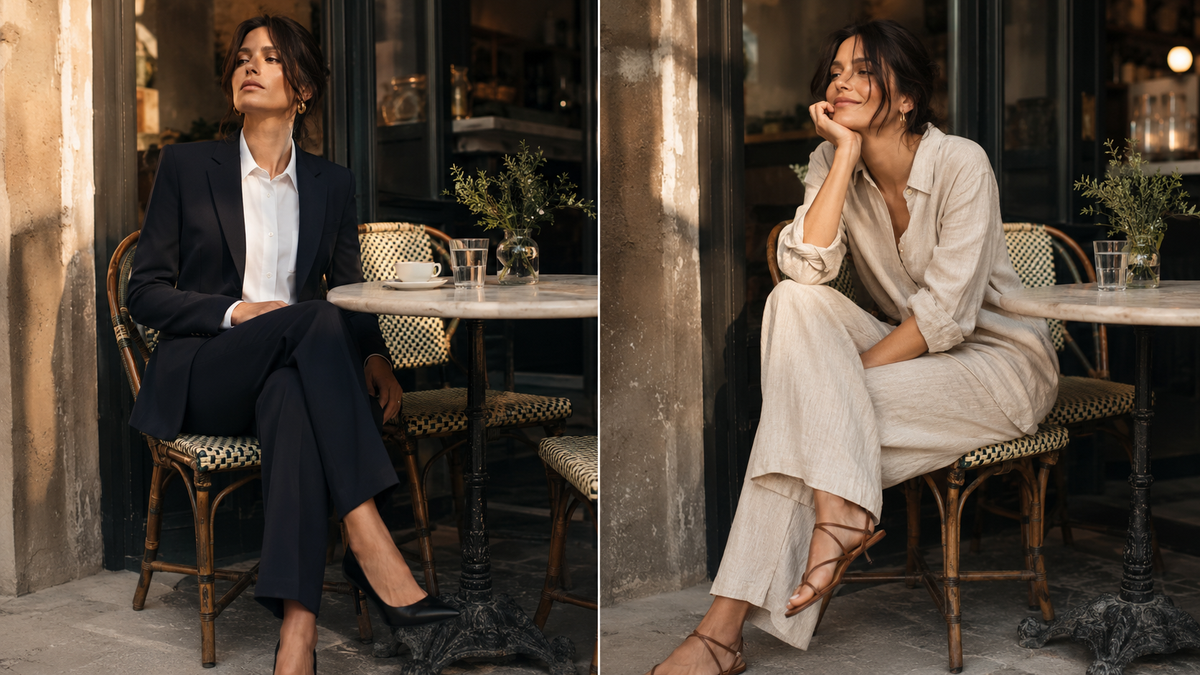
Of all five signs, occasion-coverage gaps are the most immediately actionable — because they translate vague wardrobe dissatisfaction into a specific, spendable insight. When you have a recurring context your wardrobe genuinely can't serve, you don't have a style problem; you have an inventory problem with a clear solution.
The triggers are usually concrete: a new job with a different dress code, a social circle that goes to different kinds of places, a fitness habit that requires functional clothing, a relationship that involves more formal dinners, or a travel schedule that demands versatile packing. Career transitions and new social environments are among the most common reasons people feel their wardrobes no longer serve them.
Occasion coverage analysis gives this a structure. Map your top five recurring weekly life contexts — work meetings, casual social, active/fitness, formal events, weekend errands — against what your wardrobe can actually produce for each. The gaps you find aren't abstract; they're your real shopping list.
The critical distinction here is between an occasion gap and a full wardrobe failure. Most people don't need an overhaul — they need 2–3 strategic pieces that unlock an entirely new occasion category.
A single well-chosen blazer can bridge smart-casual and business-casual. One versatile dress can cover both a dinner date and a work presentation. The goal is targeted addition, not wholesale replacement.
The practical micro-action: write down your five most frequent weekly occasions right now, then open your closet and rate your coverage for each on a simple scale. Every low-coverage occasion on that list is a genuine, justified reason to shop — not a whim. Elara's occasion-based outfit recommendations make this analysis automatic, surfacing coverage gaps before you ever open a browser tab.
Sign 4: Your Impulse Buys Keep Missing the Mark
Coverage gaps reveal where your wardrobe falls short. Impulse buys reveal something subtler: a disconnect between what you're drawn to and what actually works in your life.
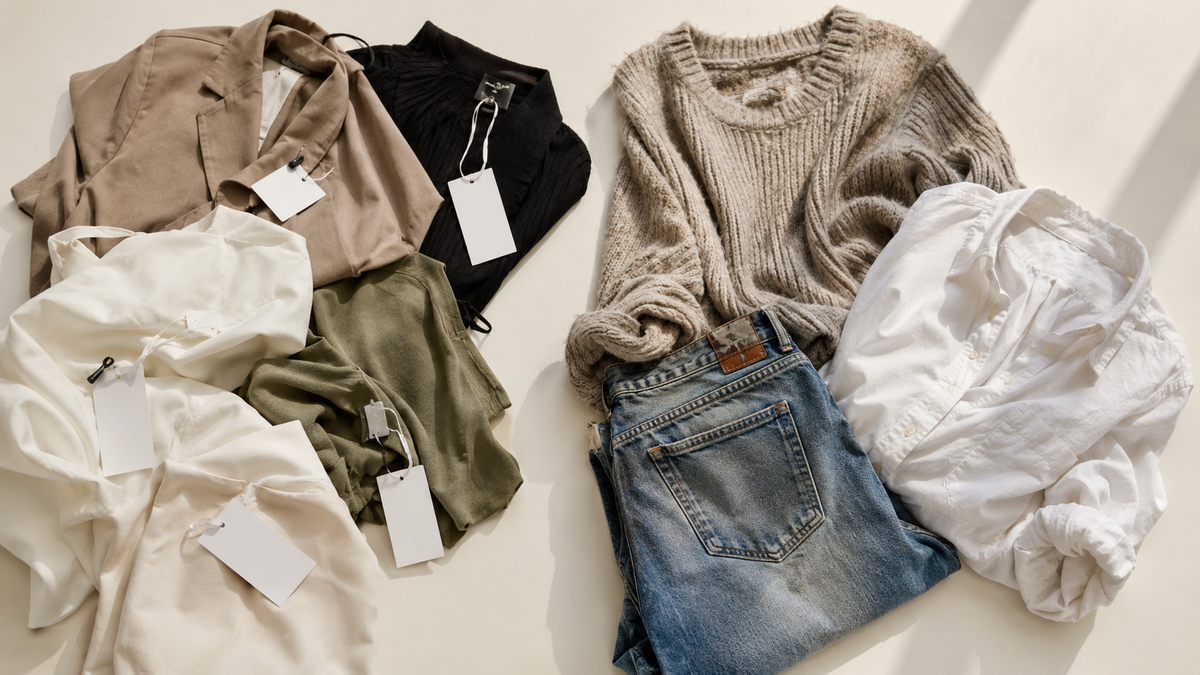
The sign looks like this — items that genuinely excited you in the store or in a late-night scroll session, now sitting with tags still attached. Many people accumulate unworn pieces that seemed perfect at purchase but never integrated into actual outfits. That pile of unworn pieces isn't evidence of poor judgment. It's a diagnostic signal.
The underlying cause is what stylists call the aspirational-vs.-functional style gap. Your aspirational style is who you want to dress like; your functional style is what actually integrates into your daily outfits and occasions. Both are legitimate expressions of who you are — the problem is when they operate as two separate wardrobes instead of one coherent one.
The fix is a simple pre-purchase filter: the 3-outfit rule. Before buying anything new, ask yourself whether it creates at least three distinct outfit combinations with pieces you already own. If you can't name three immediately, the item fills a fantasy, not a wardrobe gap.
Elara applies this logic automatically. Every shopping recommendation it surfaces is pre-vetted against your actual wardrobe, so the suggestions that reach you have already passed the integration test — eliminating the "great in the store, useless at home" failure mode before it costs you anything.
Sign 5: You Feel Like a Different Person in Old Photos
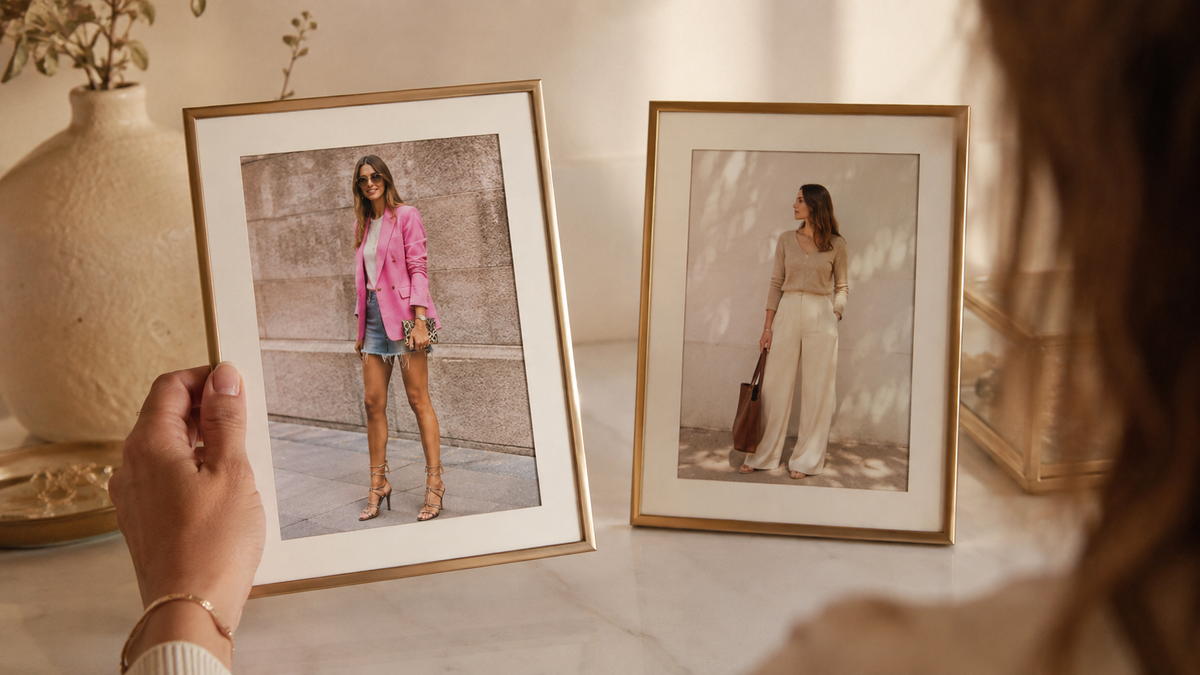
The previous four signs are practical and wardrobe-specific. This one runs deeper. Scroll back to photos from two or three years ago and notice your reaction — not "I dressed differently then," but something closer to "that doesn't feel like me anymore." That distinction matters enormously.
Feeling like a different person in old photos is the clearest signal of identity-level style evolution. Your self-concept has genuinely shifted — through a new relationship, a career pivot, a health change, or simply the accumulation of lived experience — and your wardrobe hasn't followed. It's not trend fatigue. It's growth.
The emotional weight of this sign is real, and it's worth naming directly: recognizing you've changed can feel disorienting, even like a small loss. But distinguishing between nostalgia and evolution makes the path forward much clearer. Nostalgia sounds like "I miss that era." Evolution sounds like "I wouldn't wear that now." Only the second one signals that your wardrobe needs to move with you.
The old photo audit: Pull up a photo from two to three years ago and ask, for each item you're wearing, "Would I wear this today?" For every "no," follow up with "why not?" — too formal, wrong color, different lifestyle, doesn't reflect how I see myself now. The pattern in your answers will map your evolved aesthetic more precisely than any style quiz.
Elara's AI builds a dynamic style profile through ongoing conversation and feedback, meaning it reflects who you are now — not a static snapshot from your first session. As you evolve, the profile evolves with you.
How to Update Your Wardrobe Without Starting Over
Most wardrobe advice skips straight to the overhaul: clear everything out, start fresh, rebuild from scratch. It's dramatic, it makes for satisfying before-and-after content, and it almost never works. A full closet purge without a clear understanding of what you actually need tends to produce a new closet full of the same misalignments — just newer ones.
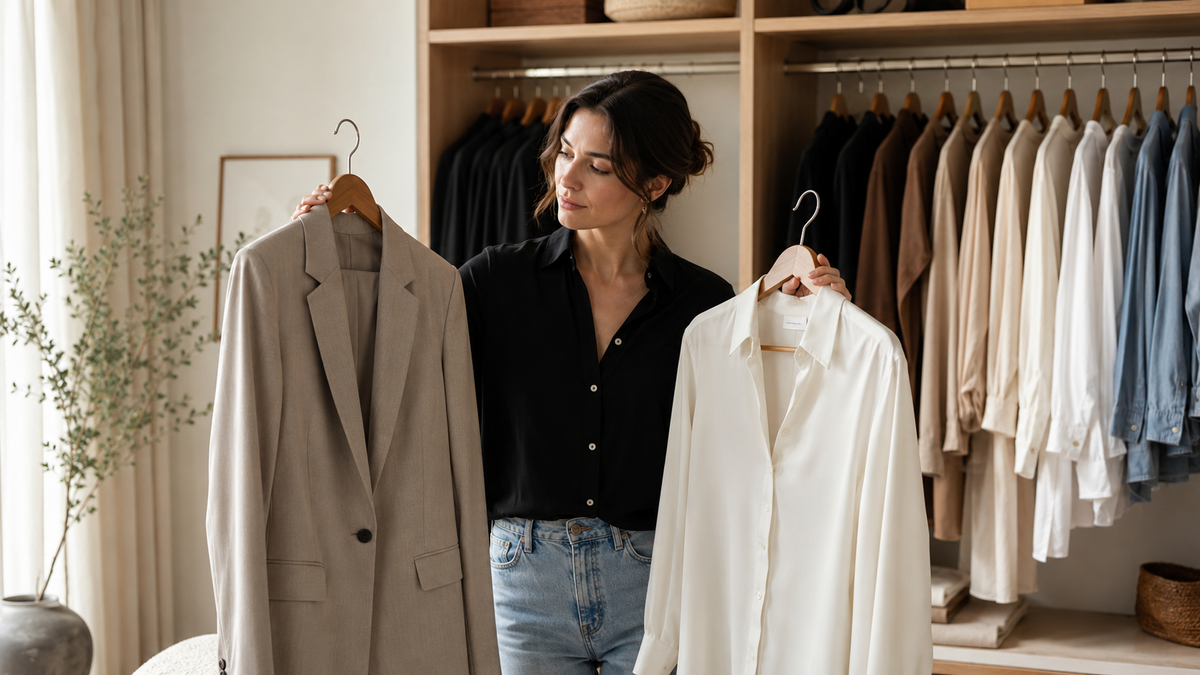
The smarter alternative is a wardrobe-first philosophy: understand what you have before deciding what to add. The five signs above give you the diagnostic framework to do exactly that. Here's how to apply them in three steps:
- Audit — identify your specific problem. Use the five signs to pinpoint which issue you're actually solving. Outfit avoidance, palette drift, occasion gaps, shopping misalignment, and identity disconnect each require different responses. Treating them all as "I need new clothes" is how wardrobes stay broken.
- Anchor — find your 10–15 foundation pieces. These are the items you genuinely love, reach for consistently, and feel like yourself in. Every new purchase should connect back to at least two or three of these anchors. If it doesn't, it's not filling a gap — it's creating a new one.
- Add strategically — apply the 3-outfit rule to every purchase. Fill only the gaps your audit revealed. If a new item can't generate at least three outfit combinations with your existing anchors, it doesn't earn a place in the wardrobe.
Thoughtful wardrobe planning directly reduces waste. Fewer impulse buys, fewer regret purchases, and a higher cost-per-wear value on everything you do add. Every piece earns its place before it enters your closet.
The incremental approach works because it respects what you already have. You're not discarding; you're building on a foundation that works.
Elara operationalizes all three steps in one place — digitize your wardrobe, let the AI surface your anchors and coverage gaps, and receive shopping recommendations that have already passed the 3-outfit test. Start your style audit with Elara at joinelara.com.
Frequently Asked Questions
How do I know if my style has actually changed, or if I'm just bored? Boredom is temporary and usually surfaces as "I want something new." A genuine style shift surfaces as "this doesn't feel like me anymore" — a mismatch between your self-concept and what you're wearing. The five signs above help distinguish between the two. If you're avoiding 70% of your closet or feeling like a different person in photos from two years ago, that's evolution, not boredom. Boredom can be solved by styling existing pieces differently; style evolution requires wardrobe realignment.
Do I really need to get rid of clothes to update my style? No. Most people don't need to purge anything. Instead, they need to understand what they have and stop reaching for pieces that no longer fit their life. The hanger flip exercise or Elara's worn-versus-unworn analysis will show you exactly which items you've naturally moved away from. You can keep pieces for sentimental reasons, seasonal rotation, or future use — the goal is simply to stop feeling guilty about them and to build forward from the pieces you actually wear.
How many new pieces do I actually need to feel like my wardrobe has changed? This depends entirely on your specific gaps. If your issue is occasion coverage (Sign 3), you might need just 2–3 strategic pieces. If your issue is color palette drift (Sign 2), you might need to restyle existing pieces or add 4–5 pieces in new colors. If your issue is outfit avoidance (Sign 1), you probably need to understand your anchors before adding anything. The 3-outfit rule ensures that whatever you add actually integrates. Quality over quantity always wins.
What's the difference between Elara and just using a Pinterest board or style influencer? Influencers and Pinterest show you aspirational style — what looks good on someone else. Elara shows you what works for your specific wardrobe, body, lifestyle, and occasions. It's the difference between inspiration and integration. Elara learns your preferences through conversation, sees your actual clothes, and recommends outfits and purchases that slot into your real life. That personalization is what turns "that looks nice" into "I can actually wear that tomorrow."
TL;DR
Your wardrobe feels off because your style has evolved and your closet hasn't caught up. Five signs reveal exactly where the mismatch is: outfit avoidance, color palette drift, occasion-coverage gaps, impulse buys that don't integrate, and feeling like a different person in old photos. Instead of starting over, audit what you have, anchor to your 10–15 favorite pieces, and add strategically using the 3-outfit rule. This wardrobe-first approach reduces waste, eliminates decision fatigue, and builds a closet that actually reflects who you are now. Elara surfaces these gaps automatically and recommends additions that have already been vetted to work with your existing wardrobe.

Conclusion: Your Style Evolved. Let Your Wardrobe Catch Up.
Feeling disconnected from your closet isn't a failure of discipline or taste — it's evidence that you've grown. The five signs covered here (outfit avoidance, color palette drift, occasion-coverage gaps, impulse buys that miss the mark, and identity mismatch with older photos) aren't problems to be embarrassed about. They're a diagnostic vocabulary for understanding exactly where you are.
The path forward doesn't require burning it all down. Clarity about what you already own, combined with an incremental strategy — audit, anchor, add — consistently outperforms the full overhaul. Every piece should earn its place; everything else is just noise.
Ready to understand where your style stands today? Start a conversation with Elara at joinelara.com.
Your stylist, in your pocket
Stop reading about outfits. Start wearing them.
Elara knows your closet, shops every store and gets you dressed for any occasion.