How to Drape a Dupatta for Diwali and Wedding Season 2026: 7 Drapes Matched to Puja, Dancing, Photos and Receptions
How to drape a dupatta for Diwali 2026 and wedding season: 7 step-by-step drapes matched to puja, dancing or photos, plus a pinning kit that keeps it in place.
 Mehul AgarwalFounder & CEO

Last updated: October 2026
Quick answer: Choose your dupatta drape by what you will be doing, not just by the outfit. For a Diwali puja near diyas, use a belt-tuck or a one-shoulder drape with the loose end tucked in. For sangeet dancing, use a belt-tuck or a wrist loop and skip the head drape. For photos where you want the embroidery seen, pin it flat across both shoulders. For a long reception, anchor it at the shoulder with a hook and eye or a small safety pin on the inside, and let the rest fall.
Diwali falls on Sunday 8 November 2026 this year (Aza Fashions lists Lakshmi Puja on that date; check your local panchang for muhurat timings), and the wedding season runs straight on from it. That means weeks of outfits where the dupatta does a lot of work: it frames the face in photos, shows off the zari or gota border, and, if it is badly secured, slides off your shoulder every time you reach for a plate.
Most dupatta guides list a dozen drapes and stop there. This one is organised the other way round: start with your plans for the evening, pick the drape that survives them, then pin it so it stays put. It draws on draping guidance from Aza Fashions, Weaver Story, Rana Saree and Lashkaraa.
First, know what you are working with
According to Aza Fashions, a dupatta is typically 2 to 2.5 metres long. The name is usually explained as du (two) and patta (strip of cloth). That length is what makes saree-style and cape drapes possible, and it is also why a dupatta that is not anchored has so much fabric to slip with.
Before you choose a drape, look at three things:
- The decorated end or border. Heavy pallu work or a wide gota border should face forward in the drape you pick, so you are not hiding the best part behind your back.
- The weight. Lift it by one corner. A dupatta that drops straight down (silk, heavy georgette, velvet) holds pleats and stays on a shoulder. One that floats (chiffon, light net, organza) needs more anchoring.
- The outfit underneath. A lehenga with a heavily worked blouse often looks better with a drape that leaves the blouse visible. A plain kurta or anarkali can take a fuller, more covered drape.
How dupatta fabric changes the drape

Fabric decides which drapes will behave. The guides agree on the broad pattern:
- Silk and Banarasi brocade: heavy and structured. Weaver Story describes silk as ideal for weddings and formal events because it holds pleats. Good for saree-style and head drapes.
- Georgette: Aza Fashions describes it as slightly heavier and more opaque than chiffon, with a graceful fall. Rana Saree recommends it for double-shoulder and cape drapes because it has enough weight to fall evenly.
- Chiffon: sheer and light, so it drapes softly but slides. Good for belt-tucks and loose, flowing styles where the fabric is anchored at the waist.
- Net: light and often heavily embellished. Weaver Story suggests it for dance-friendly events like mehendi; Rana Saree recommends net or organza for front-pinned and butterfly drapes because they fan out without bunching.
- Organza: crisp, with a subtle sheen. Aza Fashions notes that it holds its shape, which suits structured drapes that show off embroidery.
- Cotton and cotton silk: breathable and easy to pin, a sensible choice for a long daytime puja.
If you have a floaty fabric and want a structured look, you will need more anchor points. If you have a heavy brocade, fewer pins are needed but the shoulder anchor has to be strong, because the weight pulls.
Match the drape to your plans
Here is the decision guide. Pick the row that matches the main thing you will be doing.
- Lakshmi puja at home, with diyas and a havan: belt-tuck, or a one-shoulder drape with the loose end tucked into the waistband. The goal is no free-hanging fabric near a flame. Our Diwali 2026 outfit safety guide covers what else to watch around diyas and sparklers.
- Diwali card party or family dinner: classic one-shoulder drape. It is quick, it leaves your hands free, and it is easy to readjust when you stand up.
- Sangeet or garba-style dancing: belt-tuck or wrist loop. Rana Saree specifically advises avoiding the over-the-head style for dancing because it will not stay in place.
- Photos where the embroidery matters: pinned flat across both shoulders (sometimes called the front U or butterfly drape). Lashkaraa suggests pinning on both sides so it lies flat across the chest, which suits beadwork or zari.
- Wedding ceremony or a visit where you want your head covered: head drape, pinned at the back of the head. Lashkaraa notes that pinning at the back rather than the top leaves room for movement and keeps you cooler.
- Cocktail or reception: cape drape secured at the front with a brooch, or a saree-style drape with pleats tucked at the waist if you are wearing a lehenga.
Want this styled from your own closet?
Elara builds the look from what you own, then lets you try it on.
Seven drapes, step by step
1. Classic one-shoulder

Make 4 to 5 narrow pleats at one end, pin them on the inside of your left shoulder, and let the rest fall across your back and over the right arm, or straight down the left side. Aza Fashions describes this as the classic shoulder drape. Best with anarkalis and straight kurtas.
2. Pinned flat across both shoulders

Lay the dupatta behind your neck with the decorated border facing out, bring both sides forward, and pin each one at the shoulder seam so the fabric lies flat in a U across the chest. Best for embroidered net or organza in photos.
3. Saree-style pallu

Tuck one end into the waistband at the right hip, make even pleats with the middle section, tuck those pleats at the centre front, then bring the rest across your body and over the left shoulder, pinning it there. Rana Saree recommends silk or cotton silk for this. It works especially well with a lehenga when you want a saree silhouette without wearing a saree; our step-by-step Nivi saree drape uses the same pleating technique.
4. Belt-tuck

Tuck one end into the front waistband, wrap the dupatta once around your waist, bring it over one shoulder and pin it. Or drape it any way you like and cinch it with a kamarbandh or a fabric belt, as Aza Fashions describes. Chiffon and georgette are light enough to tuck. This is the most secure drape for dancing and for anything near a flame.
5. Cape
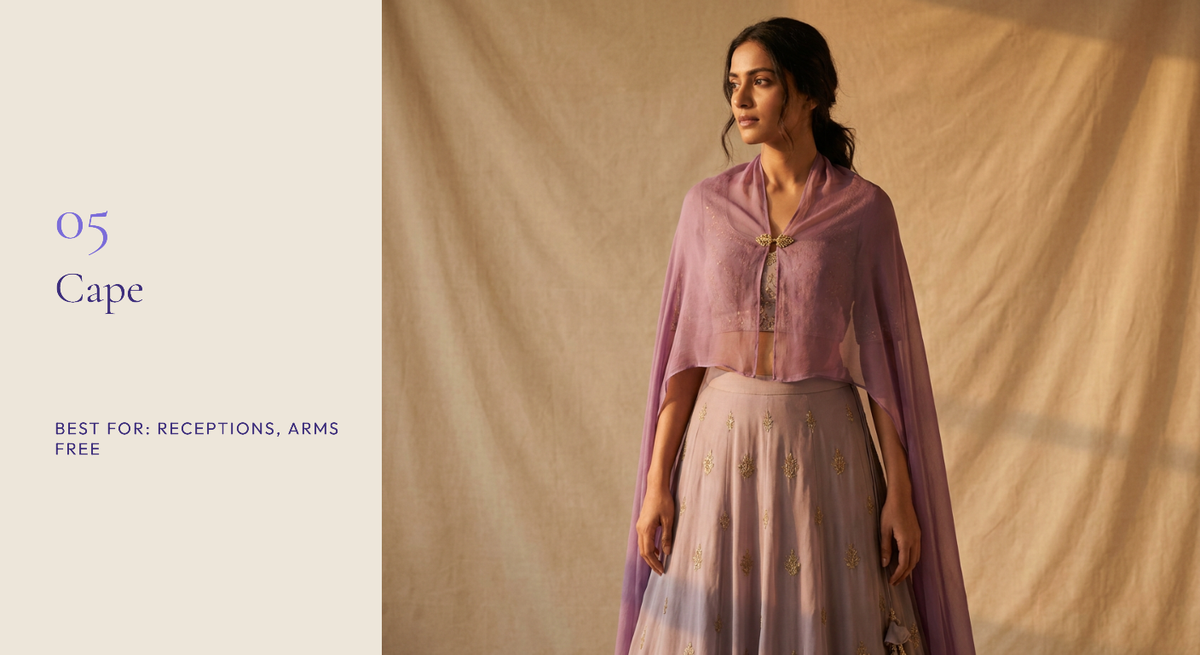
Drape the dupatta over both shoulders so it falls down your back, then secure the two front edges with a brooch at the centre front, as Rana Saree suggests. Light georgette works best because it drapes without bulk. Good for receptions where you want your arms free and a clean line at the front.
6. Head drape

Place the dupatta over your head with the border framing your face, pin it to your hair at the back of the head (at the bun if you have one), then pin one end at the opposite shoulder so the weight is taken by the shoulder, not the hair. Heavy silk or a bordered net holds shape best over the head, according to Rana Saree.
7. Wrist or elbow loop

Drape the dupatta over one shoulder and loop the other end once around your wrist, or tuck it at the elbow. Weaver Story suggests this for dancing and mehendi. It keeps the fabric off the floor and lets you gather it out of the way in a crowd.
The pinning kit that keeps it in place

The single most useful tip in these guides comes from Rana Saree: sew a small hook and eye at the blouse shoulder seam and a matching loop on the dupatta. That gives you a fixed anchor without any pins through the dupatta itself. Safety pins at a few points are the next best option.
Pack this in your clutch:
- 4 to 6 small safety pins. Weaver Story advises small pins and warns that over-pinning restricts movement and can damage delicate threads. Pin from the inside, through the border or embroidered section where the fabric is denser, not the sheerest part of a net.
- Bobby pins or U-pins for a head drape, in a colour close to your hair.
- Double-sided fashion tape for edges that keep flipping. Rana Saree notes that tape alone does not stop the whole dupatta slipping, so use it with a shoulder anchor, not instead of one.
- A brooch if you are wearing a cape drape or want a decorative anchor at the shoulder.
Two habits help. First, do a sit, stand and reach test before you leave: sit down, stand up, and reach for something on a shelf. If the drape shifts, add one anchor at the point that moved. Second, take pins out slowly at the end of the night, especially on net and organza, so you do not pull threads.
Mistakes that ruin a good drape
- Hiding the border. If the best embroidery is on one end, check in the mirror that it falls at the front or over the shoulder, not down your back.
- Choosing the drape for the photo, not the evening. A head drape that looks beautiful at the start of a sangeet will not survive the dance floor.
- Relying on tape or a single pin under heavy fabric. Brocade and velvet are heavy; anchor at the shoulder seam and at the waist.
- Folding embellished dupattas for storage. Rana Saree advises rolling them loosely, and rolling embellished ones around a tube lined with acid-free tissue, to avoid permanent crease lines and stop the embellishment pressing into the fabric.
FAQ
How long is a standard dupatta?
Aza Fashions puts the typical length at 2 to 2.5 metres. Longer dupattas are easier to drape saree-style or as a cape; shorter ones suit one-shoulder and belt-tuck drapes.
Which dupatta drape is best for dancing at a sangeet?
A belt-tuck or a wrist loop. Both keep the fabric anchored at your waist or hand. Rana Saree advises against the over-the-head drape for dancing because it will not stay in place.
How do I stop my dupatta slipping off my shoulder?
Anchor it at the blouse shoulder seam, ideally with a small hook and eye sewn into the seam, or with a small safety pin on the inside. Add a second anchor at the waist for heavy fabrics. Fashion tape helps with edges but is not enough on its own.
How do I wear a dupatta with a lehenga for Diwali?
For a puja, use a belt-tuck or saree-style drape so no loose fabric hangs near diyas. For a party or photos, pin it flat across both shoulders to show the blouse and embroidery, or use a cape drape for an evening look.
Will safety pins damage a net or organza dupatta?
They can if you use large pins, too many, or pin through the sheerest part. Use small pins, pin through the denser border or embroidery, and remove them slowly. A sewn hook and eye avoids the problem entirely.
How should I store a heavily embroidered dupatta after Diwali?
Roll it rather than fold it. Rana Saree suggests rolling embellished dupattas around a cardboard tube lined with acid-free tissue to stop creases and protect the embellishment.
Plan the whole look, not just the drape
The right drape depends on the outfit, the fabric and the evening ahead. If you are juggling several functions between Diwali and the end of wedding season, Elara can help: add your lehengas, suits and dupattas to your digital closet, tell the AI stylist the occasion, and it will suggest complete looks from what you already own, including which pieces work together for each event. Try Elara free and plan your festive outfits in one place.
Your stylist, in your pocket
Stop reading about outfits. Start wearing them.
Elara knows your closet, shops every store and gets you dressed for any occasion.