Fall Capsule Wardrobe: 30-Piece Checklist for 80+ Outfits
A fall capsule wardrobe of 30 pieces generates 80+ outfit combinations using earth-tone neutrals and layering basics. Build yours with this 2026 checklist designed for travel, work, and real budgets.

Fall Capsule Wardrobe 2026: The 30-Piece Checklist
Table of Contents
- Introduction: Why a Fall Capsule Wardrobe Is the Smartest Thing You Can Build Right Now
- What Makes a Fall Capsule Wardrobe Different in 2026
- The 30-Piece Fall Capsule Wardrobe Checklist (2026 Edition)
- How Many Outfits Can You Actually Build? The Math Behind the Capsule
- Fall Capsule Wardrobe by Demographic: Gen Z, Women Over 50, and Everyone In Between
- The 2-Week Fall Travel Capsule: Pack Smarter, Not More
- How to Digitize and Manage Your Fall Capsule (The Step Most People Skip)
- FAQ: Common Questions About Building a Fall Capsule Wardrobe
- Conclusion: Your Fall Capsule Wardrobe Starts With One Decision
Key Takeaways
- A fall capsule wardrobe of 20–25 pieces generates 80+ outfit combinations when built around earth-tone neutrals and layering basics (capsulewardrobe.ai, 2026).
- Capsule wardrobe adoption has more than doubled since 2022—from 7% to 18%—with financial savings cited as the #1 driver by 54% of practitioners (fashion-a-holic.com, 2026).
- 62% of new capsule adopters use a digital tool or app to plan and manage their wardrobe (fashion-a-holic.com, 2026).
- Gen Z adoption is up 85% since 2024; men now represent 31% of all practitioners (fashion-a-holic.com, 2026).
- For fall travel, 8–12 pieces plus 2–3 shoe pairs cover a 7–10 day trip (travelinstyles.com, 2026).
Introduction: Why a Fall Capsule Wardrobe Is the Smartest Thing You Can Build Right Now
Capsule wardrobe adoption in North America and Western Europe has more than doubled since 2022—from 7% to 18%—according to fashion-a-holic.com's 2026 consumer data. The single biggest reason people make the switch: money. Financial savings drives 54% of new adopters, which means this is less a style trend than a rational response to the cost of getting dressed.
Fall makes the problem acute. Transitional weather demands pieces that work at 55°F in the morning and 72°F by afternoon, across occasions that shift from office to weekend to dinner without warning. Most wardrobes aren't built for that—they're built by impulse, which is why the average closet is full of clothes and still produces the "nothing to wear" feeling every October.
This article is a data-informed, 30-piece checklist built around 2026 aesthetic trends, real budgets, and the demographics actually driving capsule adoption—Gen Z, men, travelers, and budget-conscious households. The math justifies the effort: according to capsulewardrobe.ai, 22 carefully chosen pieces produce 80+ outfit combinations. That's the ROI framing this guide operates from. Every piece earns its place by multiplying your options, not adding to your clutter.
What Makes a Fall Capsule Wardrobe Different in 2026
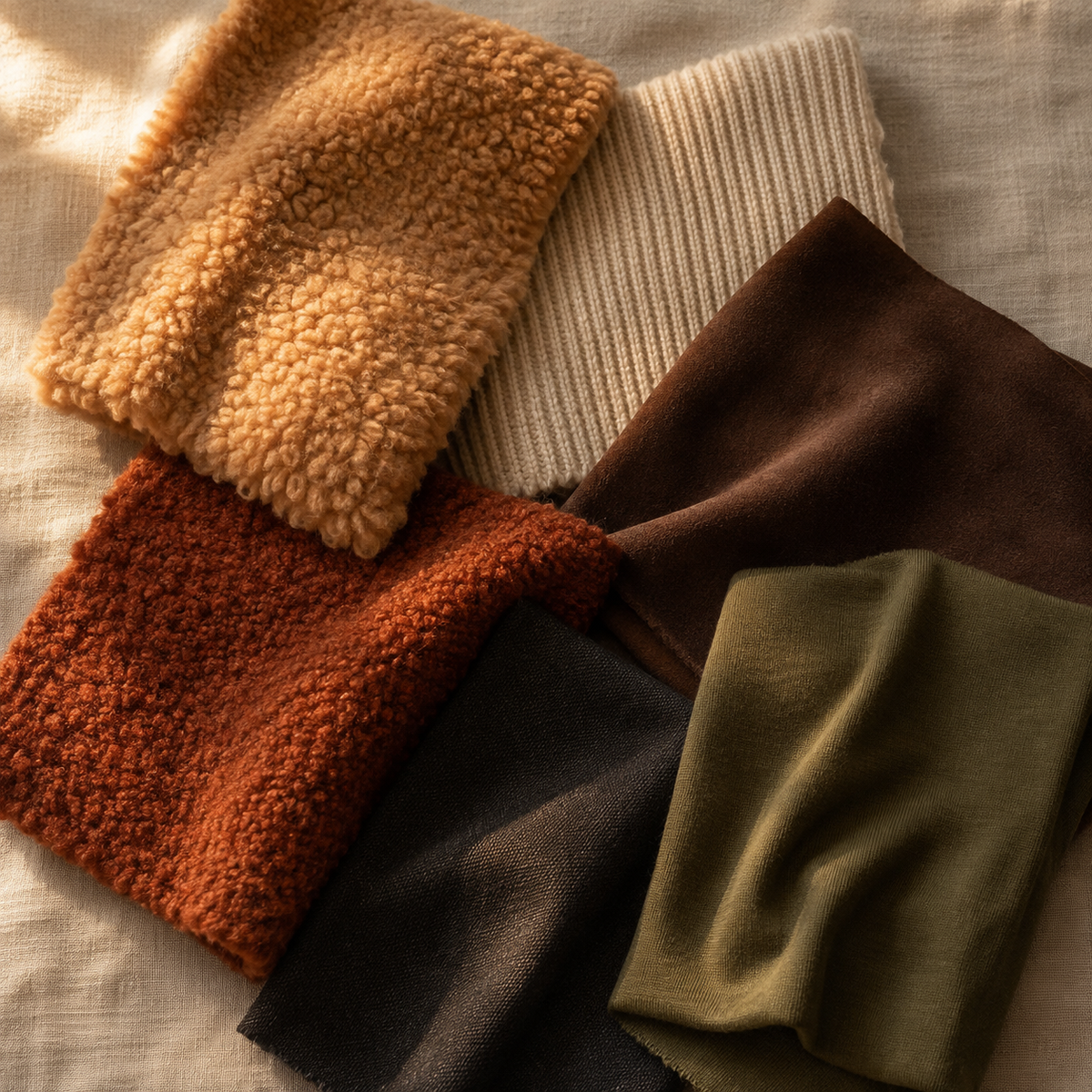
The dominant aesthetic signal for fall 2026 is what stylists are calling warm-blooded minimalism—a sensibility that's refined but not austere, layered but not bulky. The palette has shifted decisively toward earth tones: camel, charcoal, olive, rust, espresso, and oatmeal are doing the heavy lifting across nearly every 2026 fall guide. Textured fabrics—shearling, ribbed knit, suede, wool bouclé—add visual depth without requiring additional color. Silhouettes have narrowed and straightened; tailored and straight-leg cuts are the structural default.
This represents a real departure from 2024–2025 fall dressing. The oversized and boxy silhouettes that dominated those seasons have receded. Stark black-and-white contrast palettes are less central. The mood has moved from maximalist-minimalism—big shapes, clean colors—toward muted warmth and layered texture. The result is a wardrobe that photographs well in October light and actually functions across a full day of weather changes.
The structural principle underlying 2026 fall capsules is what practitioners call module logic: a neutral foundation of 15–18 pieces, supplemented by one or two accent colors, arranged into rotatable units. A practical example: 3 tops, 2 bottoms, and 1 outerwear piece create multiple combinations from 6 items before you add shoes or accessories. Scale that logic across a full capsule and the outfit options compound quickly.
Multiple 2026 fall guides converge on the same size target. According to styleyouroccasion.com, the ideal seasonal capsule sits at 20–25 pieces, with layering pieces and earth-tone basics doing most of the work. Capsulewardrobe.ai's 2026 modeling confirms the same range, using a 22-piece example to demonstrate 80+ outfit outputs. Thirty pieces—the scope of this checklist—represents the full-featured version of that framework, accounting for travel, occasion variety, and demographic flexibility without tipping into wardrobe bloat.
The 30-Piece Fall Capsule Wardrobe Checklist (2026 Edition)
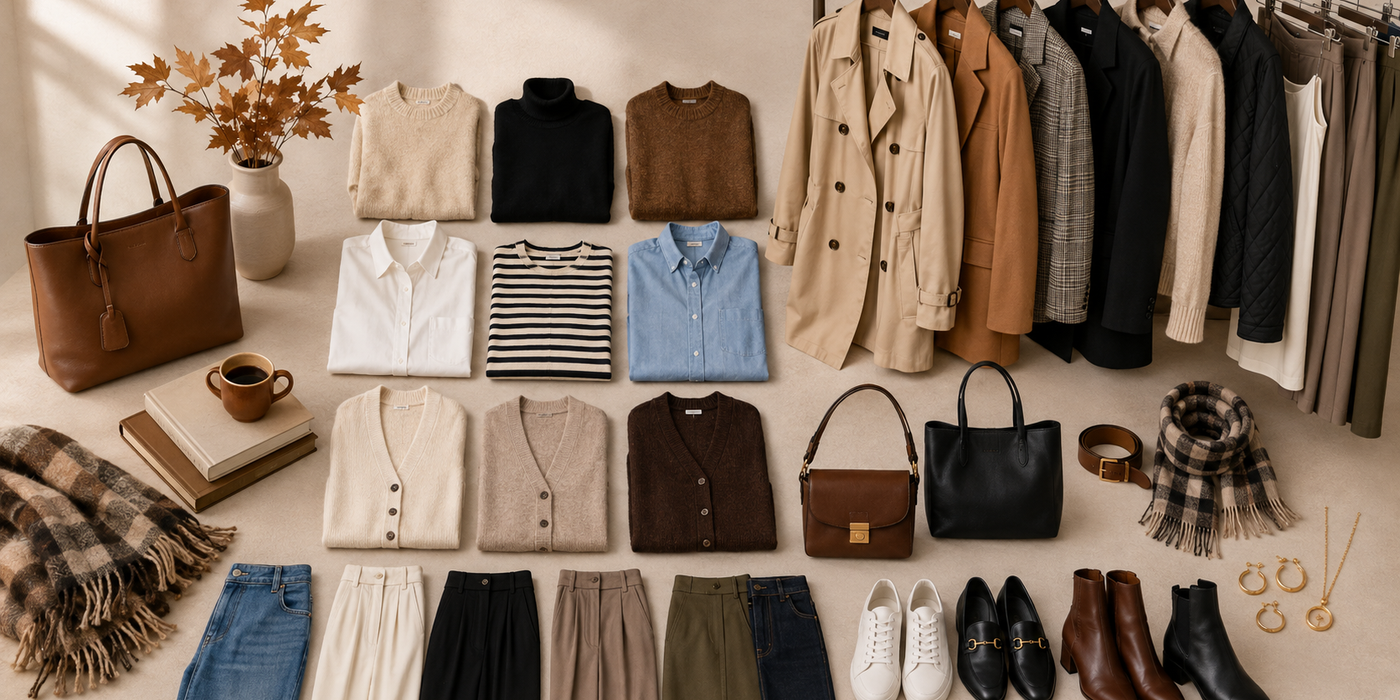
Thirty pieces is the full-featured build of that 20–25 piece framework—designed to cover travel days, elevated occasions, and real-weather variability without crossing into wardrobe bloat. Each category below functions as an outfit multiplier: pieces within a category are interchangeable, and pieces across categories compound. The entire list anchors to a fall 2026 earth-tone palette of camel, charcoal, olive, rust, espresso, and oatmeal, so every item connects to every other.
Tops & Base Layers — 8 Pieces
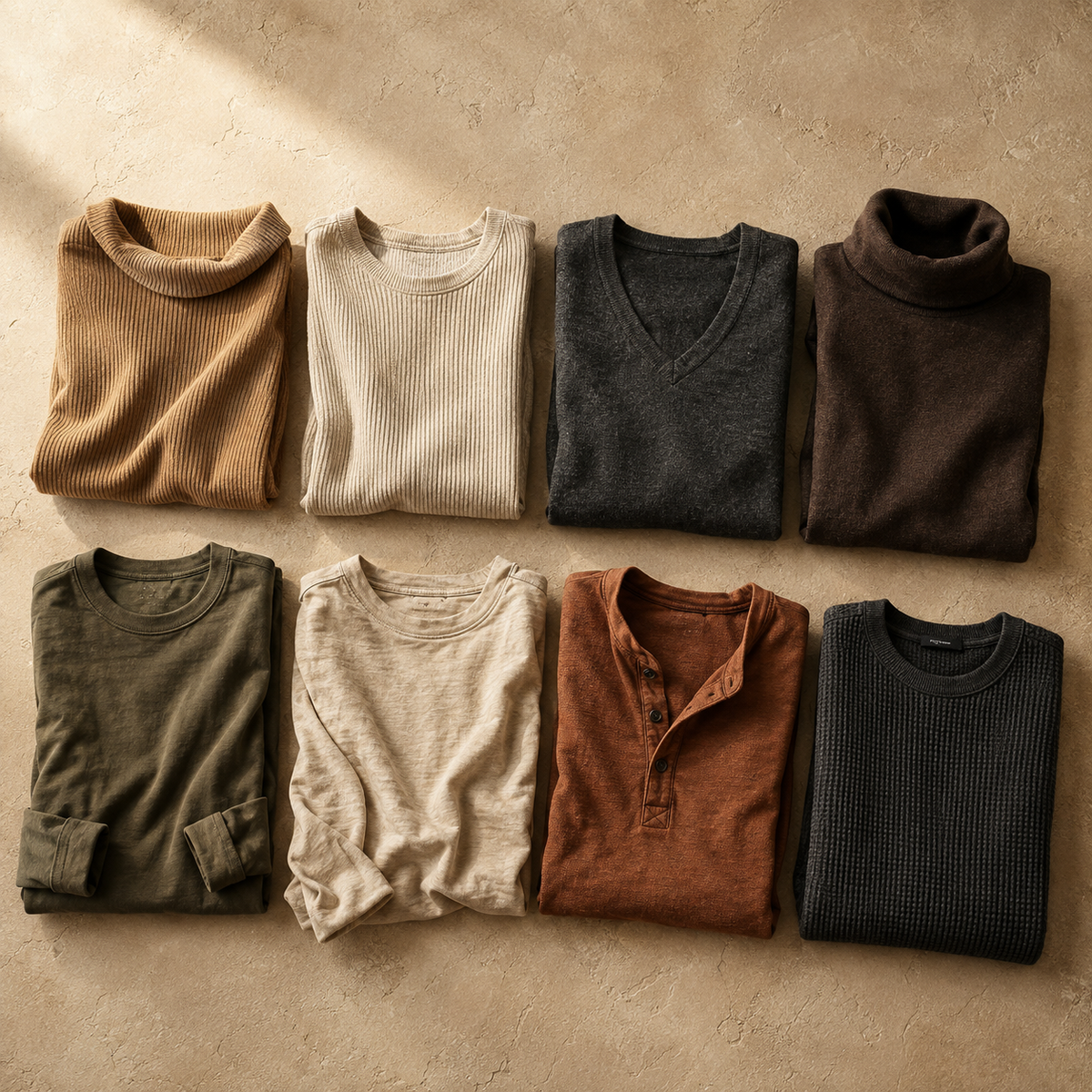
The foundation of your daily rotation. These pieces work under blazers, beneath coats, and on their own.
- Ribbed knit top (camel) — layers under every jacket and coat in this list
- Ribbed knit top (oatmeal) — same silhouette, different neutral for outfit variation
- Fine-knit V-neck (charcoal) — the polished base for tailored bottoms
- Turtleneck (espresso) — adds warmth without bulk; replaces a layering piece in mild weather
- Long-sleeve fitted crewneck (olive) — the one accent-color top that ties the palette together
- Relaxed long-sleeve basic (oatmeal) — casual pairing for denim and chinos
- Lightweight knit polo or Henley (rust) — the second accent color; keeps the palette warm
- Fitted thermal or waffle-knit base layer (charcoal) — extends every outfit into cold-weather territory
Bottoms — 5 Pieces
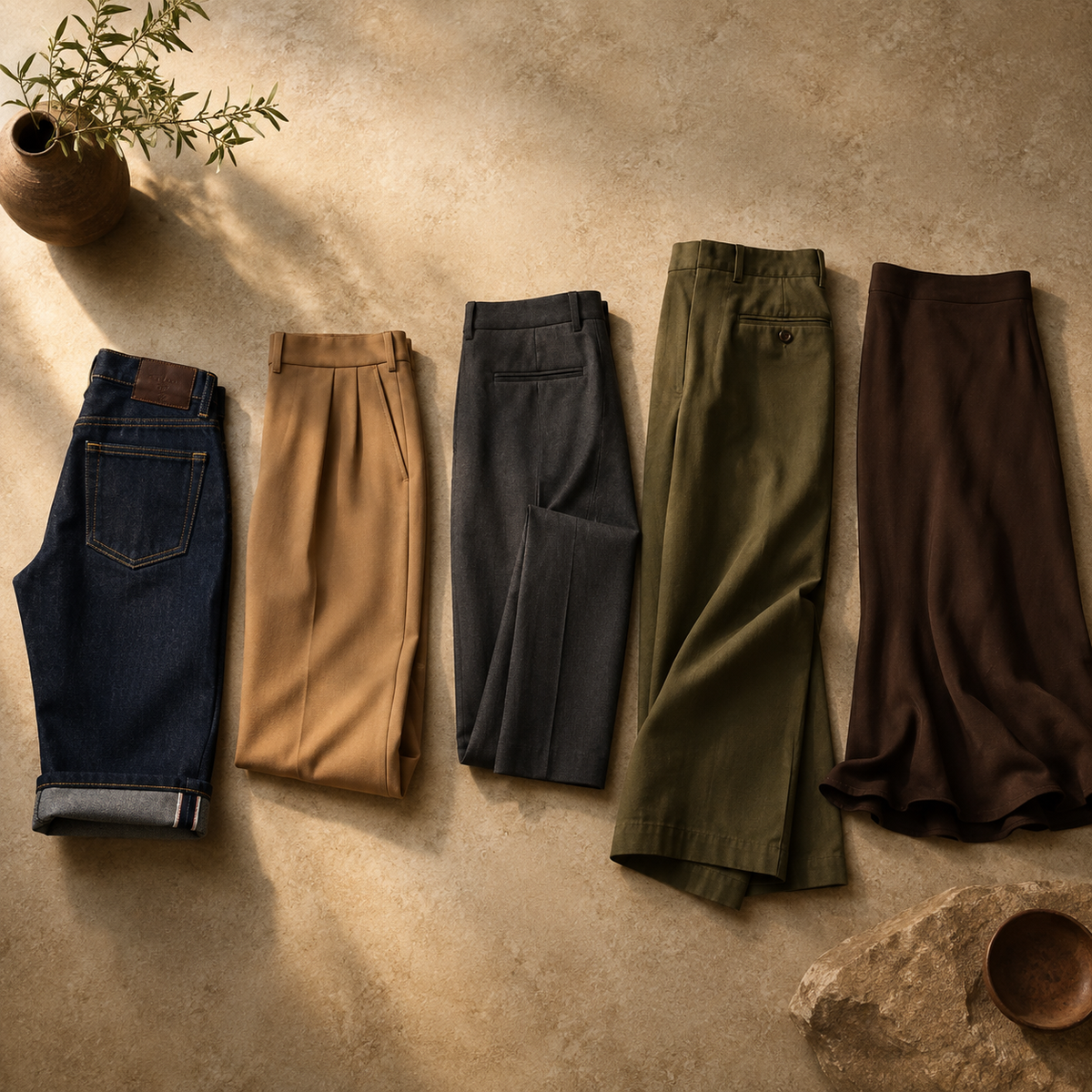
Five bottoms that cover every occasion from weekend errand runs to client meetings.
- Straight-leg denim (mid-wash or dark indigo) — the most versatile bottom in the list
- Tailored trousers (camel or oatmeal) — elevates any top instantly
- Darted trousers (charcoal) — the polished alternative for workwear or evenings
- Wide-leg or barrel-leg trousers (olive) — the 2026 silhouette update; pairs with fitted tops
- Midi skirt (espresso or rust, optional swap for a second trouser) — adds occasion range for dresses-averse dressers
Layering & Outerwear — 6 Pieces
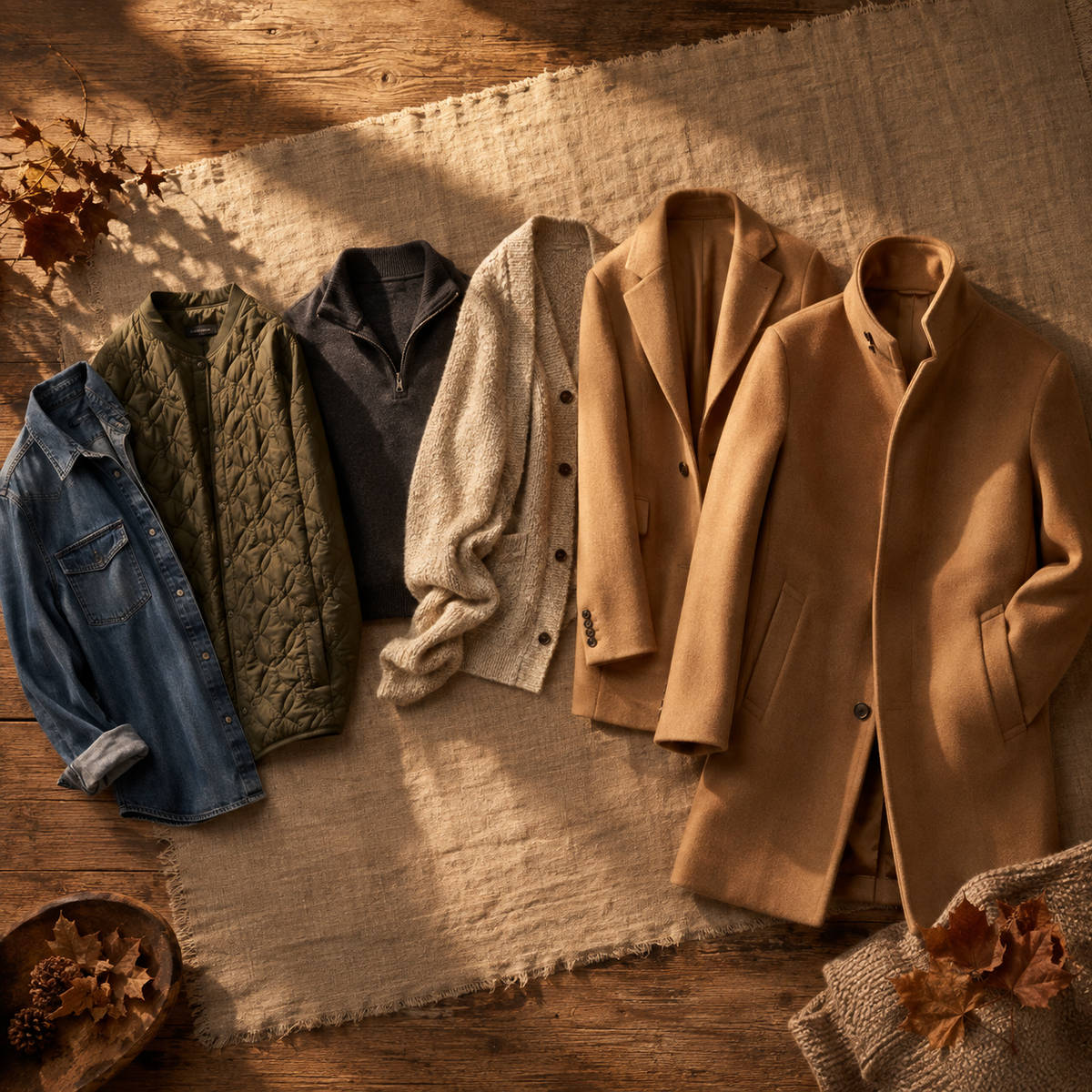
Layering is where fall capsules earn their value. Each piece here extends the wearable range of every top.
- Structured blazer (camel or charcoal) — transforms basics into polished looks
- Funnel-neck or wrap coat (camel) — layers over every top in this list; the capsule's hero piece
- Wool or bouclé cardigan (oatmeal or rust) — relaxed layering for indoor-to-outdoor transitions
- Quarter-zip pullover (charcoal) — the casual layer that works over base knits and under coats
- Lightweight quilted or waxed jacket (olive) — the transitional-weather workhorse
Ready to upgrade your wardrobe?
Get the Elara app for AI-powered styling and virtual try-ons.
- Denim or overshirt jacket (mid-wash) — the lightest layer for early-fall warmth
Dresses & Jumpsuits — 2 Pieces
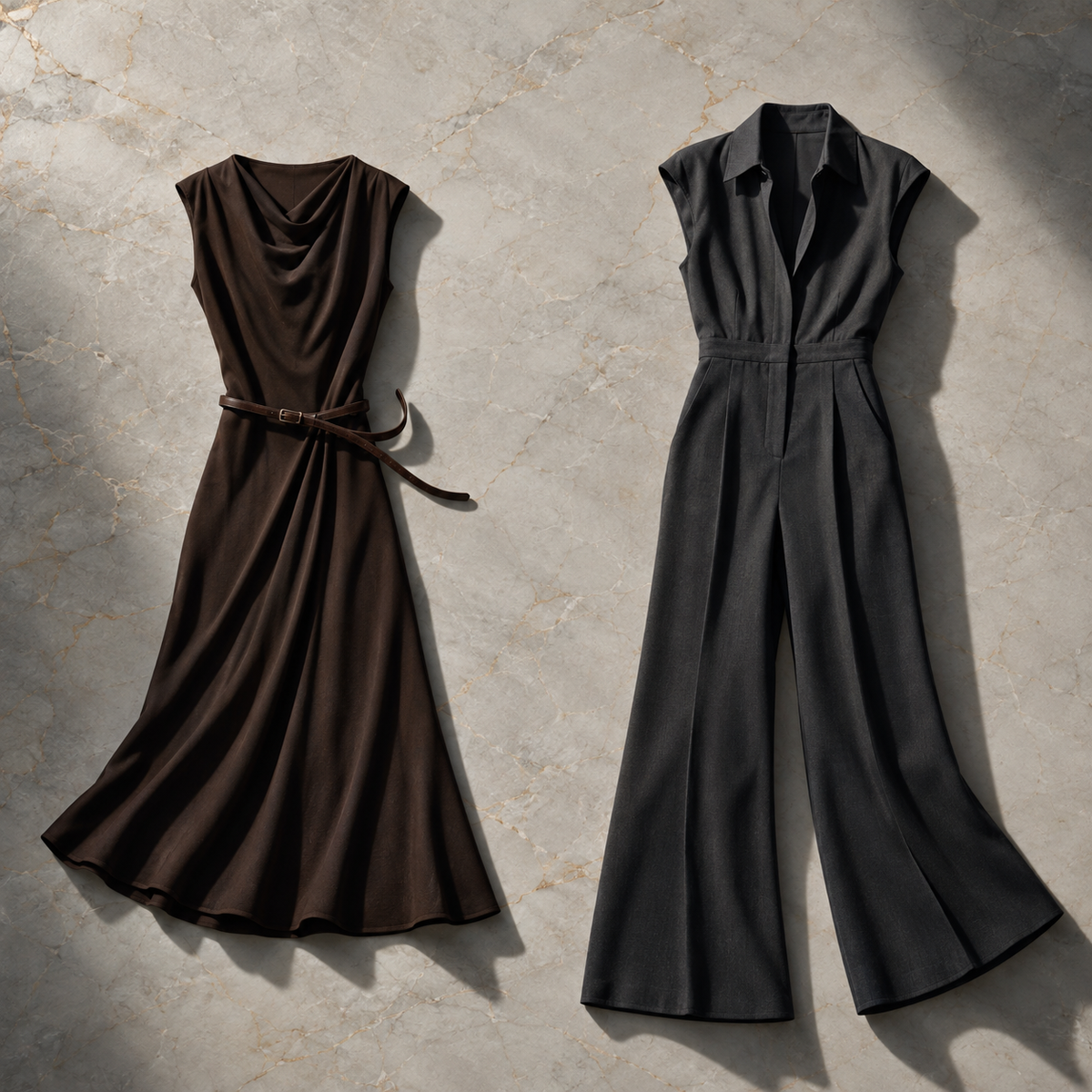
Two pieces that do the work of five when styled with the layering category above.
- Transitional midi dress (espresso or oatmeal) — belted, layered under blazer, or worn alone
- Elevated jumpsuit or wide-leg trouser set (charcoal) — the single-piece outfit that still reads polished
Footwear — 4 Pieces
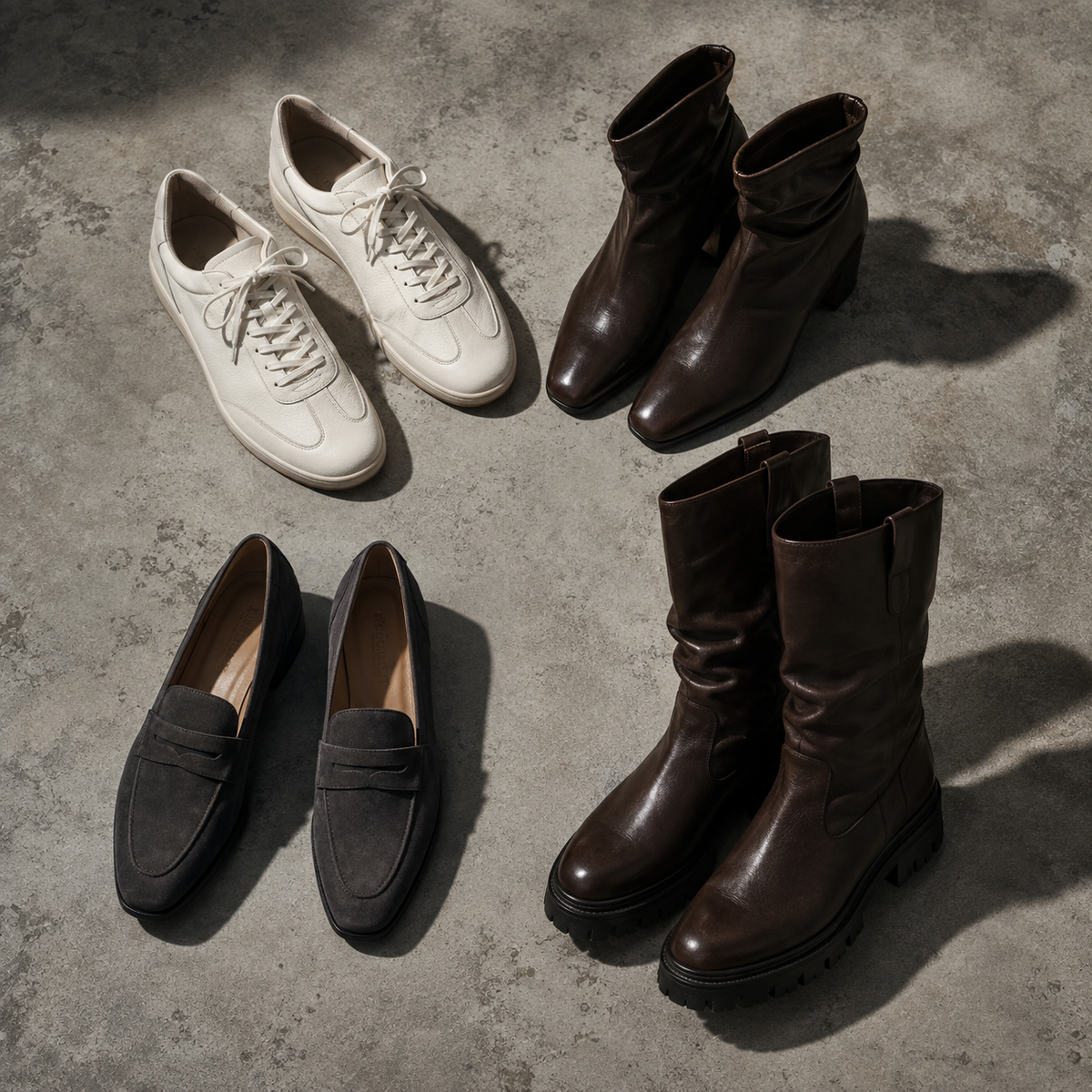
Four pairs that cover every occasion and most weather conditions.
- Low-profile leather or leather-look trainers (white or oatmeal) — the casual daily driver
- Ankle or kitten-heel boots (espresso or camel) — elevates any bottom instantly
- Loafers (charcoal or black) — the workwear-to-weekend bridge
- Weather-appropriate tall or lug-sole boot (dark brown or black) — the cold-weather and wet-day solution
Bags & Accessories — 5 Pieces
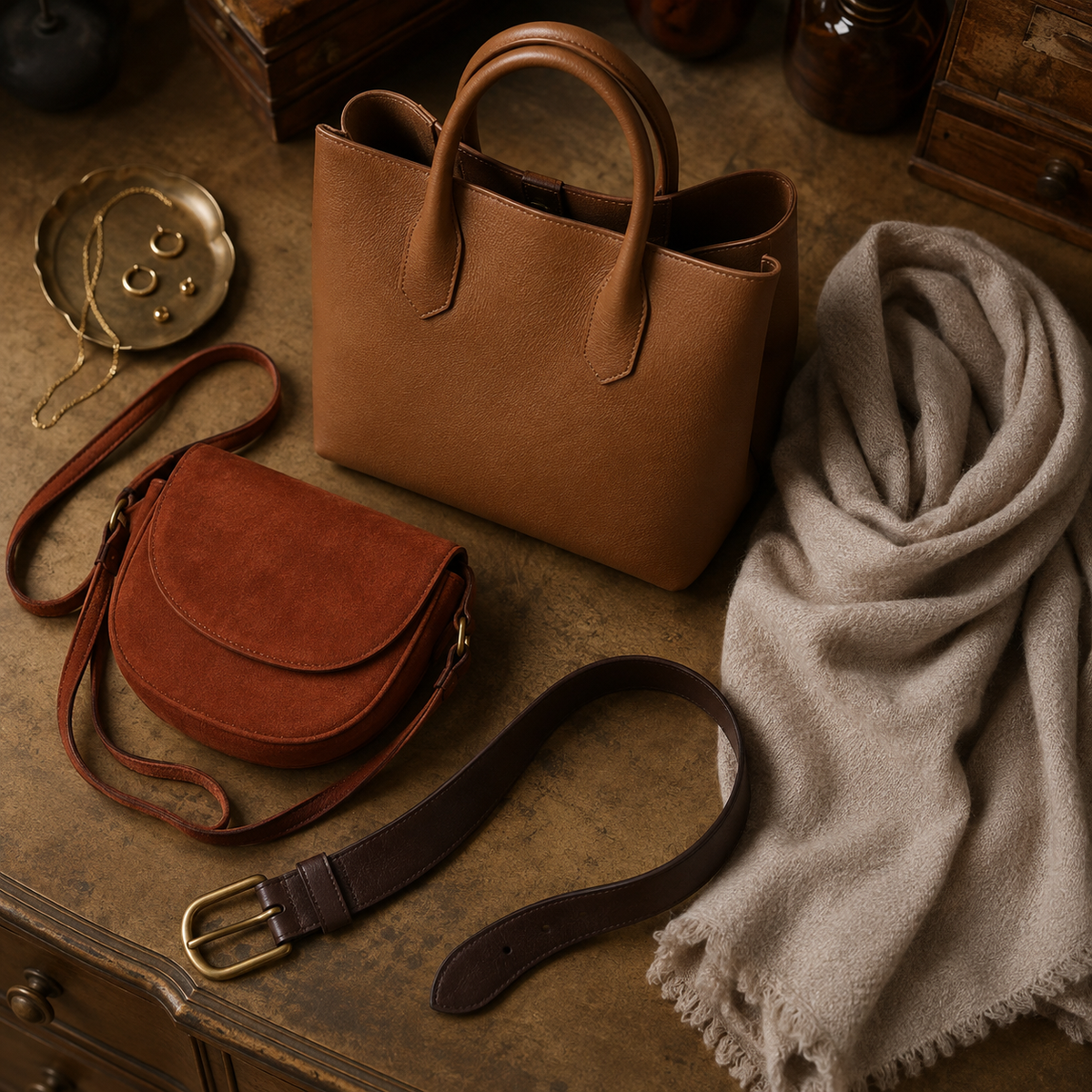
Accessories are the palette reinforcement layer—they pull the earth-tone story together without adding bulk.
- Structured tote (camel or espresso) — carries everything; works for work and weekend
- Crossbody or shoulder bag (charcoal or rust) — the evening and errand alternative
- Leather or woven belt (espresso) — defines silhouette on dresses, trousers, and coats
- Oversized scarf or wrap (oatmeal or rust) — adds warmth and color without a new garment
- Minimal jewelry set (gold or warm-toned) — consistent metal tone completes the palette
Minimalists can trim this to 20–22 pieces by removing the second trouser option, the denim jacket, and the jumpsuit—still enough to generate substantial outfit variety. According to styleyouroccasion.com, that 20–25 piece range is exactly where the math works best: enough variety to avoid repetition, few enough pieces that every item gets worn.
How Many Outfits Can You Actually Build? The Math Behind the Capsule
According to fashion-a-holic.com, 54% of capsule wardrobe adopters cite financial savings as their primary motivation—not aesthetics, not sustainability. That makes the combination math the most important argument for building one.
The logic is straightforward. Different tops, bottoms, and outerwear options create multiple distinct combinations from just a handful of pieces. Scale that to a 22-piece capsule and the math compounds quickly: capsulewardrobe.ai's 2026 modeling confirms 80+ workable outfits from that count, once footwear and accessory swaps are factored in. The 30-piece version of this checklist pushes that number higher still.
The cost model is equally concrete. Most practitioners find they spend between $1,200 and $2,000 for a seasonal capsule of 20–25 pieces, depending on brand choices and quality standards. This one-time seasonal investment replaces the ongoing stream of impulse purchases that rarely get worn. The financial case becomes clearest for the fastest-growing adopter segment: households earning $40,000–$70,000, whose capsule adoption rate climbed from 5% to 16% between 2022 and 2026, according to fashion-a-holic.com. This is a budget-conscious audience that benefits most from a disciplined, cost-per-wear approach.
The time savings argument is harder to quantify but equally real. Decision fatigue from a disorganized wardrobe drains mental energy every morning. A capsule built around a consistent palette eliminates the "nothing to wear" spiral entirely—because every piece already works with every other piece.
Fall Capsule Wardrobe by Demographic: Gen Z, Women Over 50, and Everyone In Between
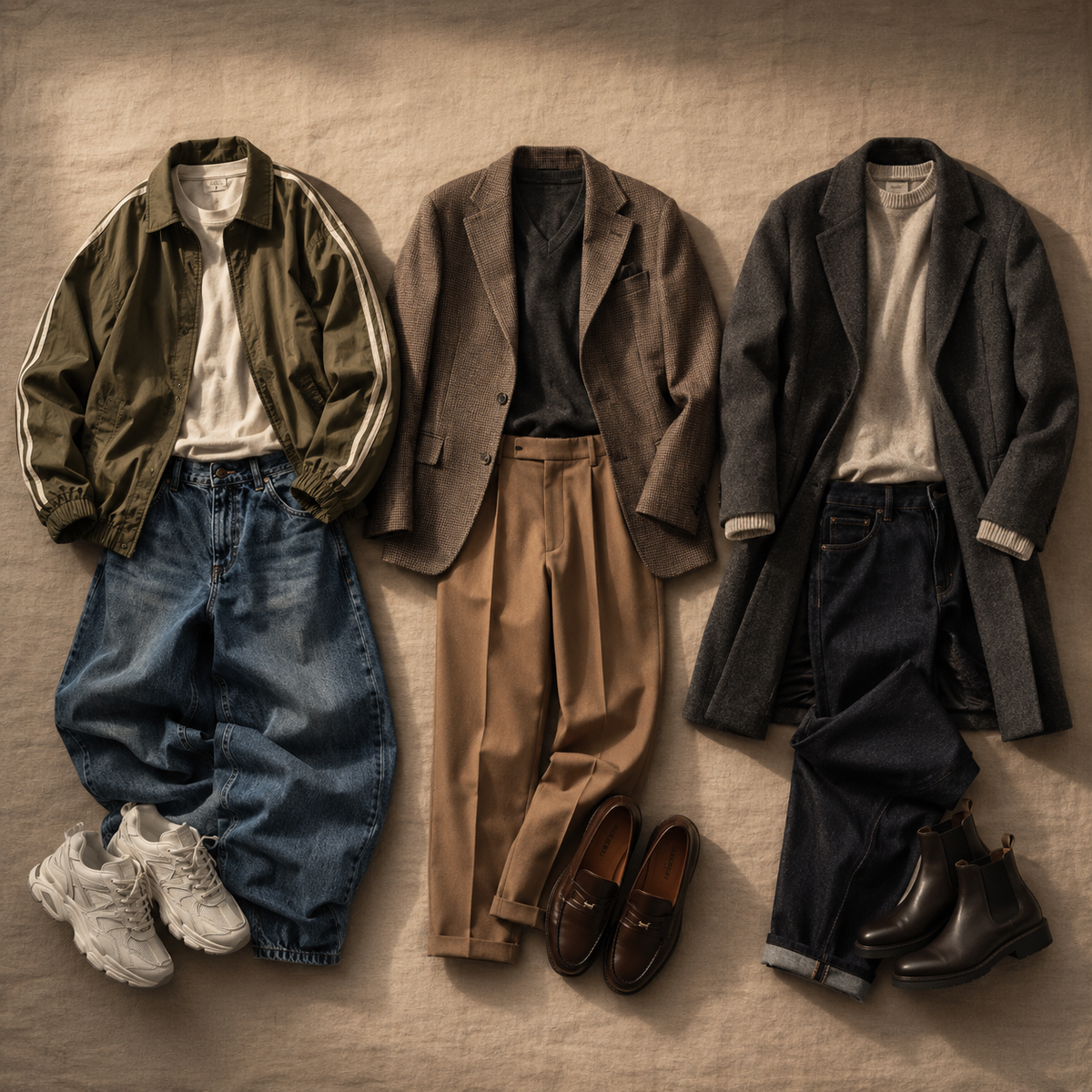
Capsule wardrobe adoption has moved well past its early-adopter phase. According to fashion-a-holic.com, 18% of consumers in North America and Western Europe now self-identify as capsule wardrobe practitioners—up from 7% in 2022—and the demographic spread has widened significantly.
Gen Z is the fastest-moving cohort: adoption is up 85% from 2024 to 2026, per fashion-a-holic.com. Gen Z capsule dressing skews toward elevated sportswear, 1990s and 2000s nostalgia silhouettes (baggy denim, track-influenced outerwear), and sharper tailoring on neutral staples. The framing matters here: Gen Z doesn't experience a capsule as a restriction—it's a creative constraint that produces a more intentional, recognizable personal aesthetic.
Women over 50 are represented in the baby boomer cohort, currently 8% of practitioners according to fashion-a-holic.com, but growing as retirement and fixed-income budgeting make the quality-over-quantity philosophy more urgent. For this group, the fall capsule leans toward classic silhouettes—tailored trousers, structured coats, midi-length dresses—and prioritizes natural fabrics and longevity over trend cycles. The investment framing resonates most: fewer, better pieces that last multiple seasons.
Men now account for 31% of capsule wardrobe practitioners, up from 18% in 2022, according to fashion-a-holic.com. A male-skewed fall capsule centers on quality denim, neutral crewnecks, chinos in camel or olive, a wool overcoat, and Chelsea or Derby boots—the same earth-tone palette logic, applied to a slightly different silhouette vocabulary.
Millennials remain the largest cohort at 42% and are the demographic this checklist is most directly built for: practical, repeatable, occasion-flexible dressing that holds up across work, social, and travel contexts.
The 2-Week Fall Travel Capsule: Pack Smarter, Not More
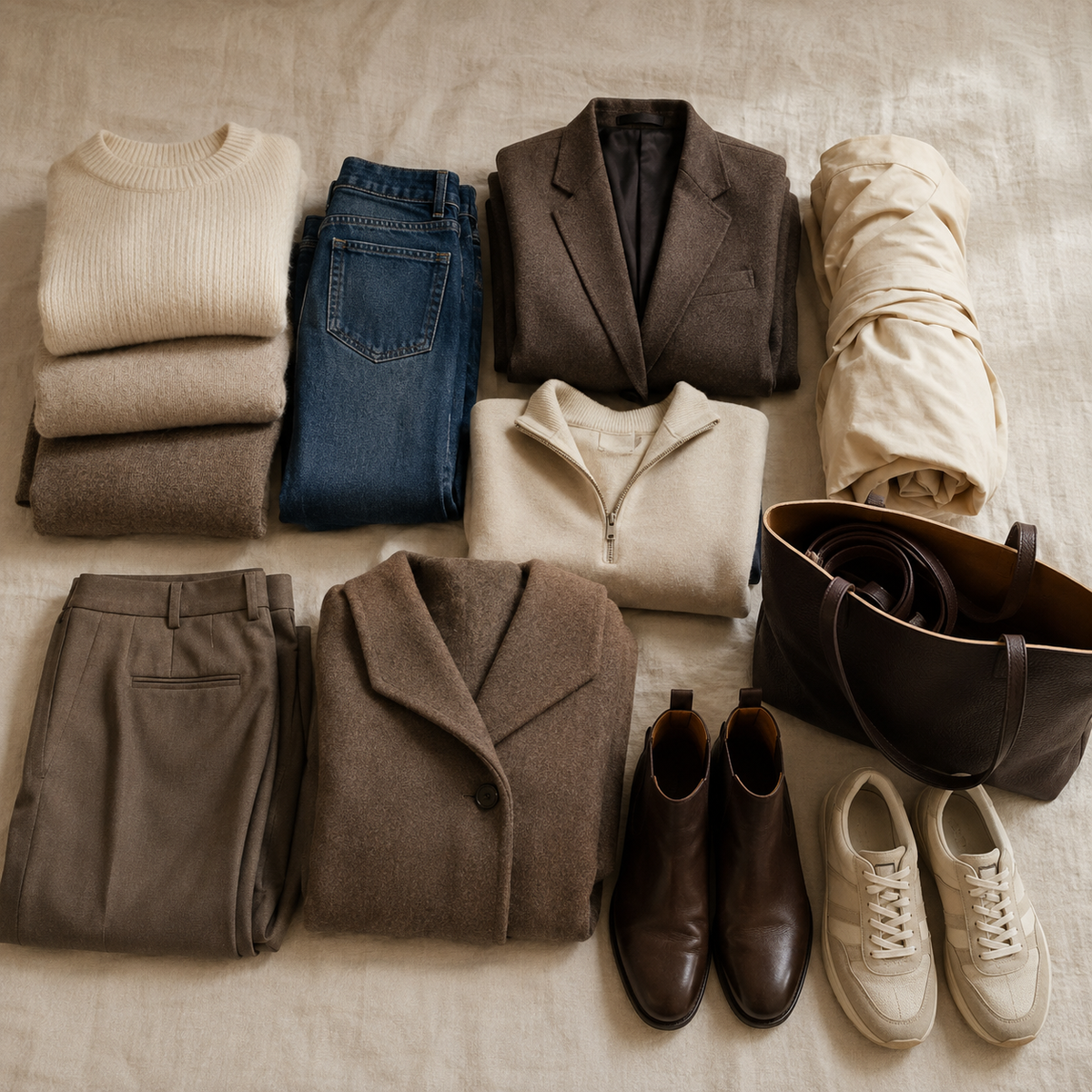
That same occasion-flexible logic that makes a fall capsule work for millennials and Gen Z at home becomes even more valuable when you're moving between cities, climates, and contexts. A travel capsule is simply the master checklist distilled to its most versatile core—and according to travelinstyles.com, the 2026 benchmark for a 7–10 day trip is 8–12 clothing pieces plus 2–3 pairs of shoes.
A practical 12-piece fall travel capsule drawn from the 30-piece master list looks like this:
- 3 tops: one ribbed knit, one fine-gauge V-neck, one long-sleeve base layer—all in your neutral palette, all layerable
- 2 bottoms: straight-leg denim (day-to-evening) and tailored trousers (meetings, dinners, flights)
- 1 blazer: the single piece that shifts every outfit from casual to polished
- 1 coat: packable wool or a structured funnel-neck—your weather anchor
- 1 knit layer: a quarter-zip or cardigan for temperature swaps
- 1 transitional dress: chosen over a second dress because it reads differently styled with trainers versus ankle boots
- 2 shoe pairs: ankle boots for versatility, low-profile trainers for walking days
- 1 structured bag: a tote large enough to serve as a carry-on personal item
The 2026 travel-capsule principle isn't purely minimalist—it's what the industry is calling intentional, polished modular dressing. Wrinkle-resistant fabrics (ponte, merino, ponte-blend trousers) and a neutral base with one accent color (rust or camel against charcoal) mean every combination looks considered, not compressed.
How to Digitize and Manage Your Fall Capsule (The Step Most People Skip)
Building the capsule is step one. Actually using every piece in it is where most people fall short—and digitizing is the fix. According to fashion-a-holic.com, 62% of new capsule adopters in 2025–2026 use an app or digital tool to plan and maintain their wardrobe. That makes digitizing the norm, not a niche behavior reserved for hyper-organized fashion enthusiasts.
The process breaks into four steps:
- Photograph each piece — flat lay or on a hanger, consistent background, natural light. One photo per item.
- Tag by color, occasion, and season — a camel blazer gets tagged "neutral / work / social / fall-winter." This is what makes searching and combining fast later.
- Map outfit combinations — work through your tops against your bottoms, then add outerwear. A 12-piece travel capsule can yield 30+ distinct combinations when you do this systematically.
- Review monthly — retire pieces worn fewer than three times, flag genuine gaps before buying anything new.
The payoff is concrete: you can visualize combinations before getting dressed, track cost-per-wear (a $120 blazer worn 40 times costs $3 per wear), and stop buying duplicates of pieces you already own but can't see.
This is where Elara comes in. Elara digitizes your closet through conversation—learning your style, surfacing outfit combinations you hadn't considered, and recommending only what's genuinely missing from your capsule. Instead of a static spreadsheet, you get a system that actively works with your wardrobe. The gap between owning a capsule and fully using one closes fast when the tool does the cognitive work for you.
FAQ: Common Questions About Building a Fall Capsule Wardrobe
Q: How long does it take to build a capsule wardrobe from scratch? A: Most people don't build from scratch. Start by auditing what you already own and identify genuine gaps. That audit takes 2–4 hours. Then fill gaps gradually over 4–6 weeks rather than shopping all at once. This approach lets you test pieces in real life before committing to more.
Q: What if I don't like earth tones? A: The earth-tone palette works because it's versatile and photographs well, but the principle is what matters: choose 2–3 neutrals (charcoal, navy, black, gray, white) and 1–2 accent colors that you actually wear. The math stays the same. Pick colors that make you feel confident.
Q: Can I build a capsule on a $500 budget? A: Yes. Prioritize the foundational pieces first: 2 neutral tops, 1 pair of denim, 1 pair of trousers, 1 blazer, 1 coat, and 1 pair of versatile shoes. That's 7 pieces for roughly $400–$500 and covers most daily situations. Add pieces gradually as budget allows.
Q: How often should I update my capsule? A: Seasonal updates work best. Swap out summer pieces for fall and winter pieces in September; refresh again in March for spring. Within a season, add only what fills a genuine gap—not what trends suggest.
Conclusion: Your Fall Capsule Wardrobe Starts With One Decision
A 30-piece fall capsule isn't a constraint—it's a permission structure. When every piece in your wardrobe earns its place, the "nothing to wear" feeling disappears because it was never really about quantity.
The financial case holds up under scrutiny. According to fashion-a-holic.com, 54% of capsule adopters cite savings as their primary motivation, and the fastest-growing adopter group—households earning $40,000–$70,000—saw adoption jump from 5% to 16% between 2022 and 2026. This approach works on real budgets, not aspirational ones.
The immediate next step is an audit, not a shopping trip. Pull your existing wardrobe against the 30-piece checklist and identify what you already own before spending a dollar. Genuine gaps will become obvious. Impulse purchases will become unnecessary.
For your next step, explore the full fall capsule wardrobe checklist or the guide to building a capsule wardrobe for autumn coloring—both map directly onto the framework covered here. And if you're ready to digitize what you already own, Elara can walk you through it in a single conversation.

Your AI Stylist is Here.
live on the App Store
Available on iOS for seamless access anytime, anywhere.