Clothing Size Guide 2026: How to Find Your Size Across Brands
What size are you really? Learn how to find your perfect fit across brands with a five-signal framework: measurements, size charts, fabric, silhouette, and reviews.

What Size Am I? A 2026 Guide to Sizing Across Brands
Table of Contents
- Introduction: Why 'What Size Am I?' Has No Simple Answer in 2026
- Step 1: Measure Your Body — The Right Way, Right Now
- Step 2: Why Brand Sizing Is Inconsistent — And What's Driving It in 2026
- Step 3: How to Read a Brand Size Chart (And When to Size Up or Down)
- Step 4: Using Fabric and Silhouette to Your Advantage
- Step 5: Using Reviews as Fit Intelligence
- The Plus-Size Shopper's Reality: Navigating a Shrinking Inventory
- Building Your Personal Sizing System: A Decision Framework
- FAQ: Common Sizing Questions Answered
- TL;DR: Your Sizing Checklist
- Conclusion: Fit Is a Skill — And You Can Learn It
Key Takeaways
- Size labels are not a universal standard — fit varies dramatically by brand, fabric, and silhouette.
- Take four measurements before shopping: bust, waist, high hip, and full hip.
- According to a Vogue Business survey of nearly 700 readers, poor fit and inconsistent sizing rank among the top purchase deterrents in 2026.
- Use a five-signal framework: measurements + brand size chart + fabric composition + silhouette + customer reviews.
Introduction: Why 'What Size Am I?' Has No Simple Answer in 2026
You know your size. You've known it for years. And yet you walk out of fitting rooms empty-handed, return online orders that looked perfect on the model, and find yourself wearing anything from an XS to an XL depending on the brand. That experience is not a you problem — it's a structural flaw in how the fashion industry assigns and communicates size.
A Vogue Business survey of nearly 700 readers confirmed what most shoppers already suspect: poor fit and inconsistent sizing are among the most significant reasons people don't buy in 2026. The frustration is universal, and it's not getting simpler as brands multiply and global sizing standards continue to diverge.
The good news is that sizing is a learnable skill, not a fixed answer. This article walks through a five-signal framework — body measurements, brand-specific charts, fabric composition, silhouette awareness, and review intelligence — that turns an opaque guessing game into a repeatable, confident process. The goal isn't to find your "real" size. It's to find what fits, every time.
Step 1: Measure Your Body — The Right Way, Right Now
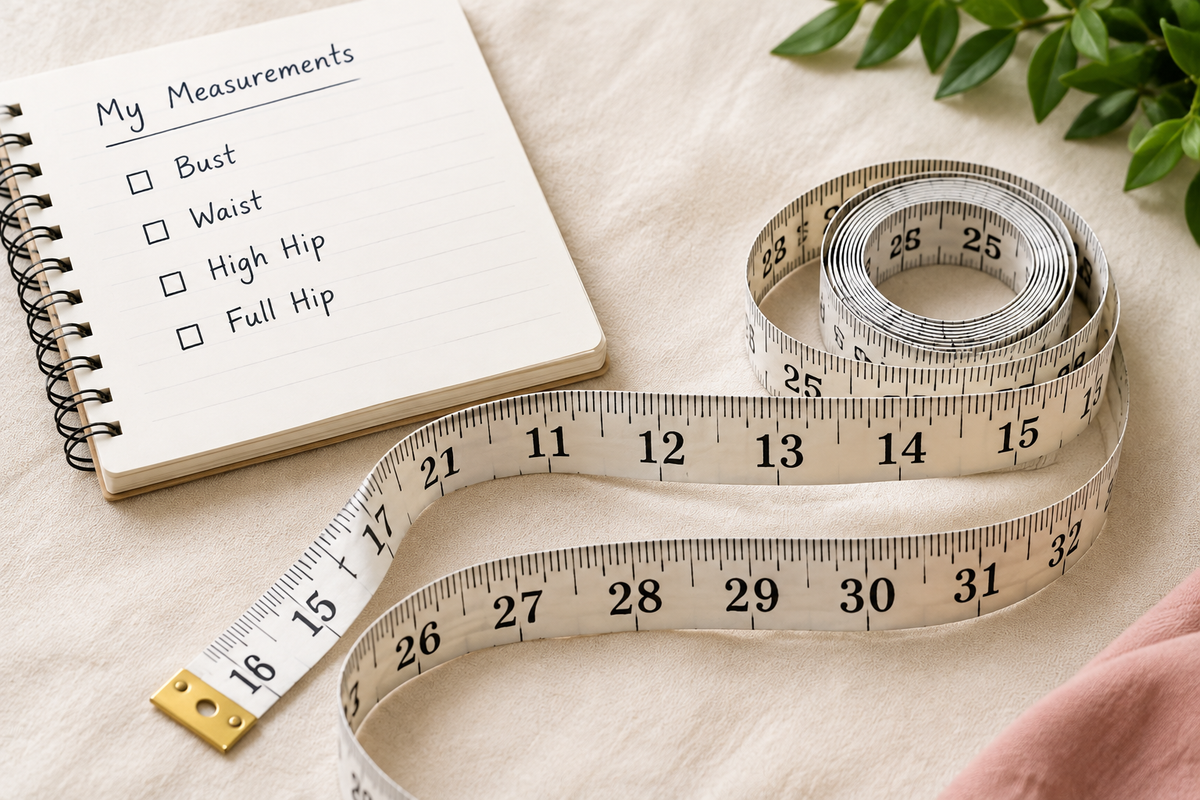
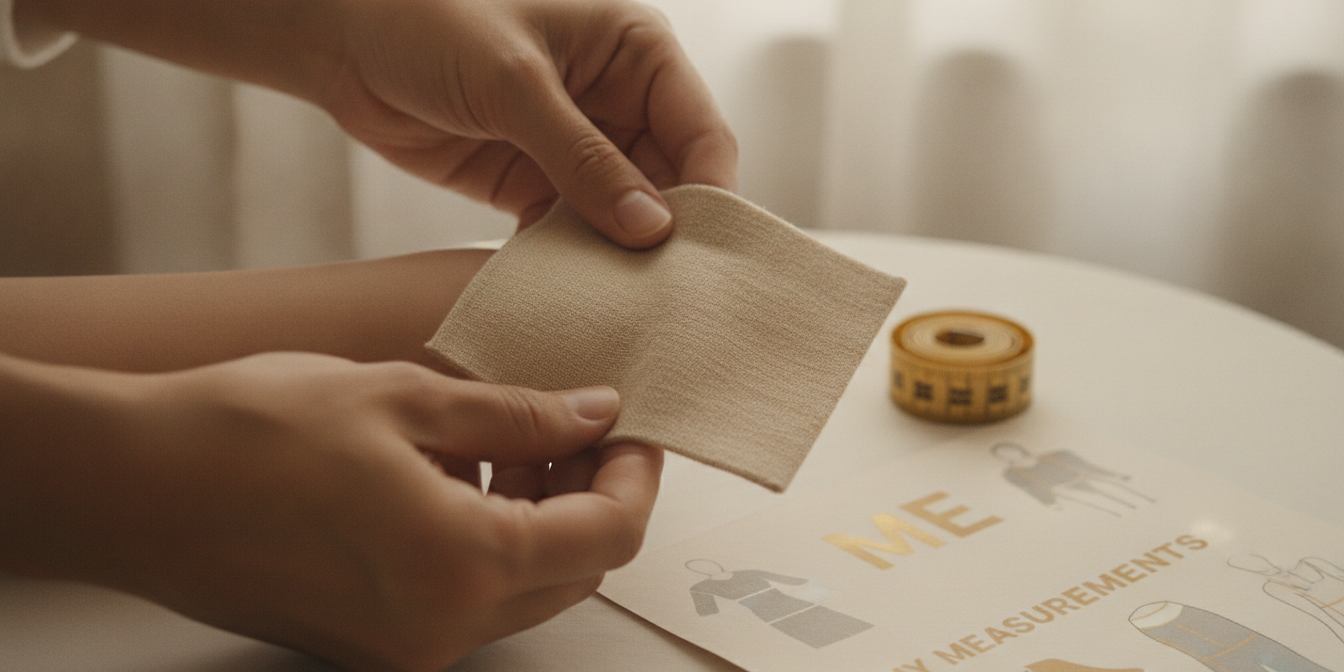
Before you open a brand's size chart, you need four numbers. Not last year's numbers. Not the measurements from the last time you ordered online. Your measurements, taken today — because bodies change, and a number that was accurate eighteen months ago may send you into the wrong size range entirely.
Here are the four measurements every shopper needs, and how to take each one correctly:
- Bust: Wrap a soft measuring tape around the fullest part of your chest, keeping it parallel to the floor and snug but not compressing. Wear your usual bra.
- Waist: Measure around your natural waist — the narrowest point of your torso, typically an inch or two above your navel. Don't hold your breath or pull the tape tight.
- High hip: Measure 7–9 inches below your natural waist. This captures the upper curve of the hip and is especially relevant for trousers and skirts with a higher rise.
- Full hip: Measure around the widest point of your hips and seat, keeping the tape parallel to the floor.
One thing that trips up a lot of shoppers: size charts reference body measurements, not garment measurements. A dress labeled "waist: 28 inches" means it's designed for a body with a 28-inch waist — the actual garment will be cut larger to allow for movement. Comparing your body measurement to the chart is the correct approach; comparing it to a garment you already own is not.
Save your four numbers in your phone's notes app. When you're shopping online and a brand's size chart appears, you'll have everything you need in seconds.
Step 2: Why Brand Sizing Is Inconsistent — And What's Driving It in 2026
Those four measurements you've saved are your anchor — but they only work if you understand why they need to be checked against every brand individually. Sizing inconsistency isn't a quirk or an accident. It's a structural feature of how the fashion industry operates.
Start with the design pipeline itself. According to Vogue Business, 97.6% of 7,817 runway looks for Fall/Winter 2026 were straight-size, with plus-size representing just 0.3%. When an industry builds its aesthetic standards, fit blocks, and grading systems around such a narrow body range, the downstream effect is retail sizing that reflects those same assumptions — inconsistently applied across hundreds of competing brands.
Two additional forces compound the problem. Vanity sizing — the decades-long practice of labeling larger garments with smaller numbers to flatter shoppers — means a size 10 from one brand may be cut identically to a size 14 from another. Brand-specific grading means that even when two brands start from the same size 8 block, the way they grade up or down to sizes 6 and 10 diverges based on their target customer's proportions.
2026's dominant silhouettes — oversized tailoring, wide-leg trousers, relaxed suiting — are more forgiving in theory, but inconsistent cuts can still create proportion problems even in "relaxed" styles.
The practical rule: treat each brand as its own sizing system. Your measurements stay constant. The brand's interpretation of those measurements does not.
Step 3: How to Read a Brand Size Chart (And When to Size Up or Down)
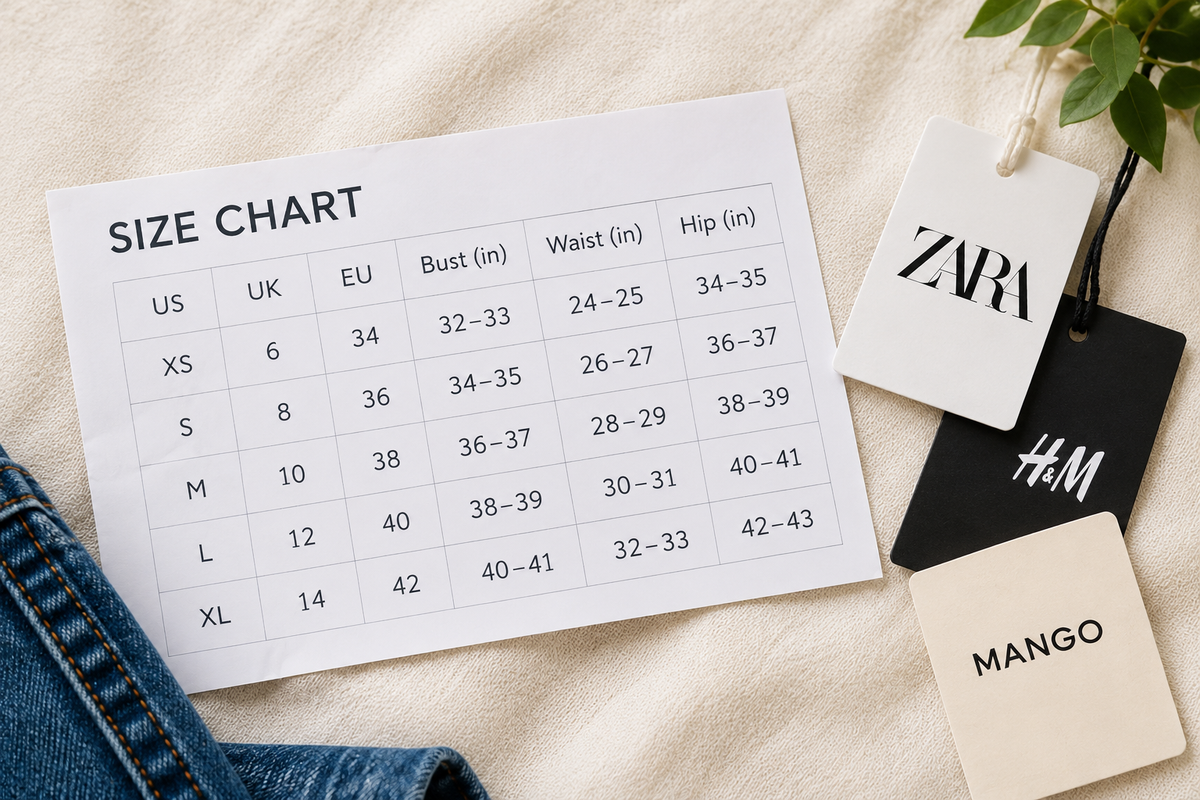
Brand size charts are more useful than most shoppers realize — but only if you know how to extract the right information from them. The process is straightforward once you've run through it a few times.
Pull up the brand's size chart and locate your four measurements against their grid. The critical concept here is the limiting factor: the single measurement that drives your size decision. If your bust fits a Medium but your waist fits a Small, size to the larger measurement — the Medium — and consider whether tailoring or a different silhouette could address the waist gap. Choosing the smaller size to "fix" one measurement means the garment won't close or will pull across the larger area.
Size up when:
- The garment is structured (blazers, tailored trousers, fitted dresses)
- The fabric is non-stretch (woven cotton, linen, denim without elastane)
- The silhouette is fitted or body-conscious
- The brand is known to run small (often flagged in reviews)
Size down when:
- The silhouette is explicitly oversized or boxy
- The fabric has significant stretch recovery
- The brand is known to run large
Fit notes — the brief guidance brands include alongside product photos, such as "model is 5'8" and wears a size M" or "fits true to size, we recommend sizing up for a relaxed look" — function as a secondary calibration signal. If the model's height and proportions differ significantly from yours, adjust accordingly. When you're caught between two sizes in a non-stretch fabric, size up: taking in a seam is far easier than letting one out.
Step 4: Using Fabric and Silhouette to Your Advantage
Size charts tell you what the brand intends. Fabric and silhouette tell you what will actually happen when the garment meets your body.
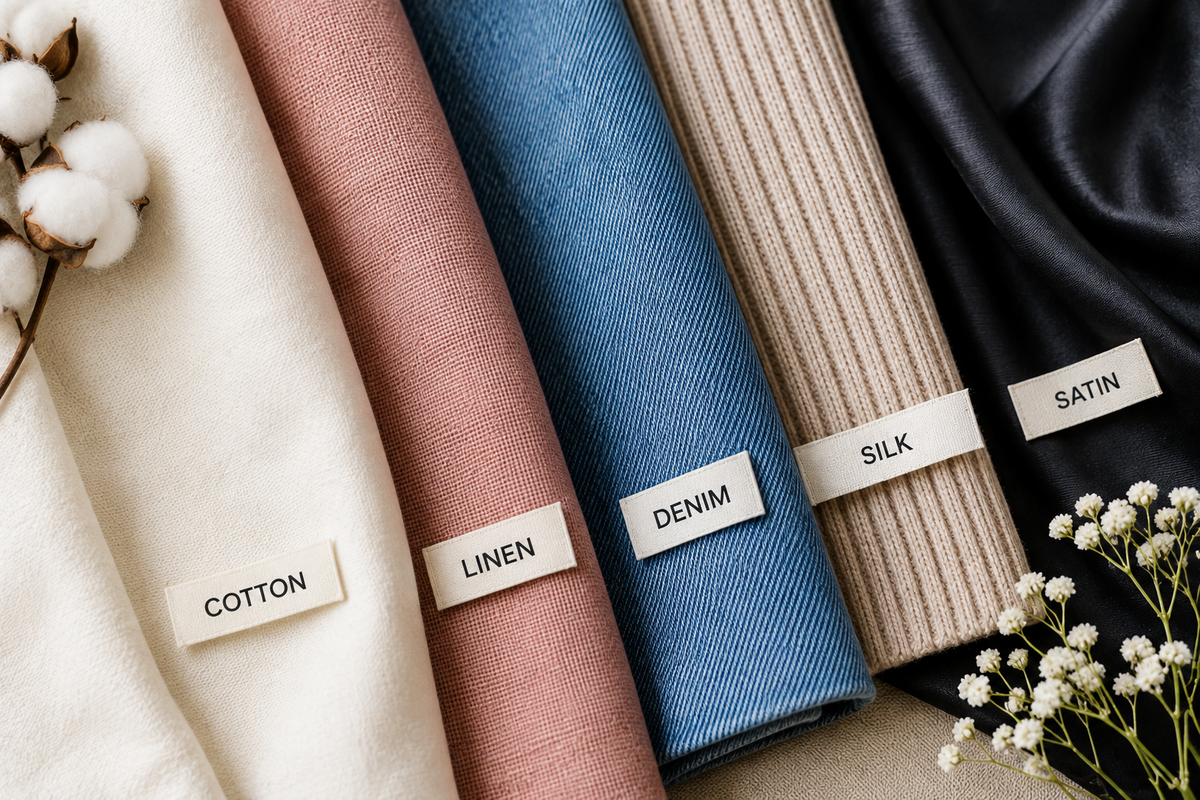
Fabric composition is the single most underused variable in online sizing decisions. A garment listed as 97% cotton / 3% elastane behaves entirely differently from one that's 100% cotton — the elastane fraction gives the fabric recovery, allowing it to stretch across a hip curve and return to shape. High-recovery knits and elastane blends forgive measurement mismatches of an inch or two. Woven non-stretch fabrics — linen, structured cotton, most suiting fabric — do not. A half-inch discrepancy at the shoulder seam in a non-stretch blazer creates visible pulling; the same discrepancy in a stretch-knit top disappears entirely.
Ready to upgrade your wardrobe?
Get the Elara app for AI-powered styling and virtual try-ons.
Check the fabric composition listed on every product page before purchasing. It's usually buried beneath the product description, but it's worth finding.
Silhouette works as a second layer of fit insurance. Wide-leg and barrel trousers, dominant in 2026, offer natural waist-to-hip flexibility — the relaxed cut accommodates a wider range of proportions than slim or straight legs. Wrap silhouettes self-adjust by design, tying to your actual waist rather than a fixed measurement. Oversized tailoring absorbs size variance across the shoulders and torso. Fitted bodycon cuts, by contrast, require precise measurement matching and leave no margin for error.
Newer technical fabrics — drapey, shape-holding materials engineered to move with the body — reduce fit risk even in more structured styles. When you see these described in product copy, they genuinely do perform differently from conventional wovens, and they're worth factoring into your size decision.
Step 5: Using Reviews as Fit Intelligence
Fabric composition tells you how a garment should behave. Reviews tell you how it actually behaves — on real bodies, after real washes, in real life. That distinction matters.
When reading reviews, skip past the star rating and go straight to the text. The signals worth extracting are specific: does the reviewer mention that the garment runs small in the shoulders, gaps at the bust, or pulls across the hips? Do they note whether the fabric stretched out after washing or held its shape? Better still, do they include their own measurements? A reviewer who writes "I'm 5'6", 38" bust, 32" waist, and sized up to a Large" gives you far more usable information than one who simply says "fits great."
Filter reviews strategically. The same size label can cover a wide range of proportions, so a reviewer who shares your measurements — not just your size — is your most reliable signal. Most retail platforms allow filtering by size purchased; use that feature, then read for body proportion details within those results.
The limitation is real: newer products and niche sizes often have sparse review coverage. When that's the case, weight your decision toward fabric composition (more forgiving materials reduce risk) and a strong return policy. According to a Vogue Business survey of nearly 700 readers, poor fit is one of the top reasons people don't buy — which means investing five minutes in review research before buying is one of the most effective ways to reduce returns and avoid post-purchase regret.
The Plus-Size Shopper's Reality: Navigating a Shrinking Inventory
The sizing challenges covered in this article affect every shopper, but they land hardest on plus-size shoppers — and the data makes clear why. For Fall/Winter 2026, 97.6% of 7,817 runway looks were straight-size, with just 0.3% plus-size, according to Vogue Business. The Spring/Summer 2026 numbers are nearly identical: 97.1% straight-size, 0.9% plus-size, per industry tracking by Accio. The fashion industry's entire design and fit infrastructure — its patterns, its grading, its runway validation — is built around a narrow body range. Everything else is an afterthought.
This isn't abstract. It shows up in inventory. The Guardian reported that Mango reduced new dresses available in sizes 16–20 from 6.6% of its offering to just 0.5% year over year, a contraction linked to shifts in plus-size retail strategy tied to GLP-1 medication trends. One brand, one product category, a 92% reduction in available options. That's the concrete reality behind the systemic failure the runway numbers describe.
For plus-size shoppers navigating this environment, a few strategies make a meaningful difference:
- Prioritize brands that design for plus-size from the start, not those that simply scale up straight-size patterns. Pattern scale-ups frequently distort proportions at larger sizes; purpose-built plus-size design does not.
- Check size availability before engaging emotionally with a product. Discovering a garment stops at size 14 after you've already imagined wearing it is a specific, exhausting frustration — and it's avoidable.
- Filter reviews to your size range specifically, not just your size label. Fit behavior at a 1X or 18 can differ substantially from what a size 12 reviewer experienced.
- Verify return policies before purchasing. When inventory is limited and sizing is unpredictable, a free return window is essential protection.
The frustration of loving a garment that doesn't come in your size is real, it's systemic, and it's worsening. That is not a reflection of your body — it's a reflection of an industry that has not caught up to the full range of people who wear clothes.
Building Your Personal Sizing System: A Decision Framework
The five signals covered in this article — body measurements, brand size charts, limiting measurements, fabric and silhouette, and review intelligence — work best as a sequence, not a checklist you consult randomly. Applied in order, they form a decision framework that gets faster and more intuitive every time you use it.
The seven-step framework:
- Measure your current body — bust, waist, high hip, full hip.
- Pull the brand's specific size chart — not a generic one.
- Identify your limiting measurement — the one that determines which size you need.
- Check silhouette and fabric composition — assess how forgiving the cut and material are.
- Read reviews for fit signals — prioritize reviewers with similar measurements, not just the same size label.
- Confirm the return policy — know your options before you buy.
- Buy with confidence, or wait — if steps 1–6 give you enough signal, proceed. If key information is missing, hold.
Sizing is a skill. The first few times you run through this sequence, it takes ten minutes. After a few dozen purchases, it takes two. Pattern recognition builds: you learn which brands run narrow in the shoulders, which fabrics stretch reliably, which silhouettes work for your proportions.
This is exactly the reasoning that Elara automates. Rather than rebuilding this analysis from scratch each time you shop, Elara learns your measurements, your preferred brands, and your fit history — then flags items that are likely to fit well and tracks fit notes by brand so that knowledge compounds over time. If you'd rather spend your energy choosing what you love instead of decoding size charts, joinelara.com is where that starts.
FAQ: Common Sizing Questions Answered
Q: If I'm between two sizes on a brand's size chart, which should I choose?
A: Size to your larger measurement — the limiting factor. If your bust fits a Medium but your waist fits a Small, choose the Medium. A garment that's too tight across the bust or hips won't fit no matter what. A garment that's slightly loose at the waist can be tailored, layered, or adjusted with styling. The only exception is if the brand is explicitly known to run large; in that case, check reviews before deciding.
Q: Does "true to size" mean the same thing across all brands?
A: No. "True to size" is brand-specific language. It means the garment fits the brand's own size chart as intended — nothing more. One brand's "true to size" Medium may align with another brand's "runs large" Medium. Always cross-reference the specific brand's size chart and review feedback. Don't assume consistency.
Q: How much does fabric stretch actually matter for fit?
A: Significantly. A garment with 5% elastane in the fabric can forgive a half-inch measurement discrepancy; 100% non-stretch fabric cannot. If you're between sizes and the garment is non-stretch woven fabric (cotton, linen, most suiting), size up. If it's a knit with elastane, you have more flexibility. Check the fiber content before making your final decision.
Q: Should I trust reviews from people who don't share their measurements?
A: Use them as secondary signals only. A review that says "runs small" is useful, but a review that says "I'm 5'4", 34" bust, and sized up to a Medium because it runs small" is far more actionable. Prioritize reviewers who share their height, measurements, or proportions — not just their size. You're looking for people whose bodies are similar to yours, not just people who bought the same size label.
Q: What if a brand doesn't provide a detailed size chart?
A: That's a red flag. Brands that don't offer detailed measurements are making fit your problem, not theirs. Before purchasing, check customer reviews for fit feedback, verify the return policy is free and easy, or consider shopping elsewhere. If you do buy, size up slightly and know you may need to return it.
TL;DR: Your Sizing Checklist
- Measure yourself today: bust, waist, high hip, full hip. Save these numbers.
- Check the brand's size chart: not a generic one — their specific chart.
- Find your limiting measurement: the one that determines your size.
- Read the fabric label: elastane = more forgiving; 100% non-stretch = size up.
- Check reviews from people with similar measurements to yours, not just the same size label.
- Confirm the return policy before you buy.
- Size up when in doubt with non-stretch fabrics.
Sizing is learnable. The more you practice this framework, the faster it becomes. And if you want Elara to learn your measurements and fit preferences so you don't have to decode size charts every time, joinelara.com is where to start.
Conclusion: Fit Is a Skill — And You Can Learn It
That framework — measurements, size charts, fabric composition, review intelligence — is the entire game. Size labels are industry shorthand, nothing more. They say nothing about your body's worth, and given that 97.6% of Fall/Winter 2026 runway looks were straight-size according to Vogue Business, the system was never designed with most shoppers in mind. Knowing that doesn't fix the industry, but it does mean you can stop taking its failures personally.
The knowledge compounds. The first time you work through this process, it takes effort. By the tenth brand, it's instinct. You don't have to do it alone. Elara is an AI stylist built to learn your measurements, your preferred brands, and your fit history — so that every recommendation it surfaces already accounts for how a given brand tends to fit your body. No starting from scratch. No guesswork. Visit joinelara.com to get started.
Your AI Stylist is Here.
live on the App Store
Available on iOS for seamless access anytime, anywhere.