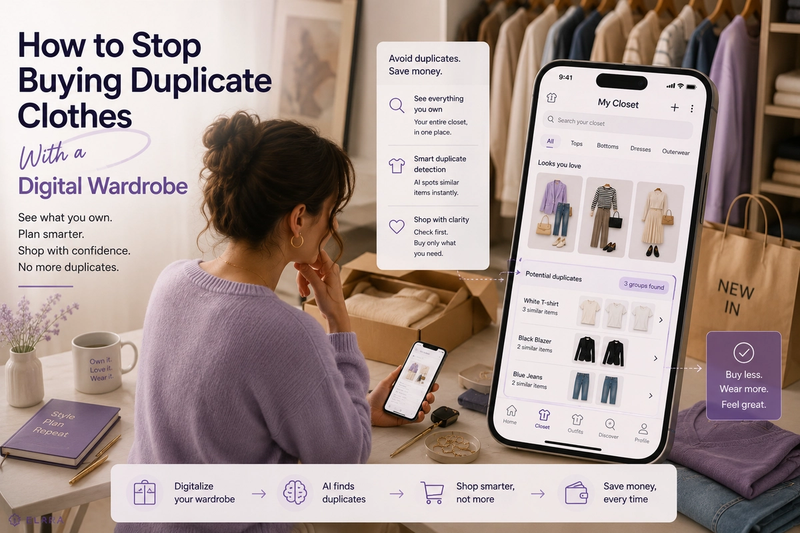
Black Friday Clothing 2026: Strategic Buy List
Build your Black Friday clothing buy list before sales drop in 2026. Real discounts average 24%—learn which categories deliver value and how to prioritize strategically.

Black Friday Clothing: Plan Your Buys Now
Table of Contents
- Introduction: Why Most Black Friday Clothing Guides Fall Short
- What the Data Actually Says About Black Friday Clothing Discounts
- The 2026 Black Friday Clothing Categories Worth Your Budget
- How to Build Your Personal Black Friday Buy List Before Sales Drop
- The Timing Advantage: Why Planning in Mid-2026 Gives You the Edge
- How Elara Turns Black Friday Chaos Into Confidence
- Frequently Asked Questions
- TL;DR
- Conclusion: Shop Black Friday 2026 Like a Strategist, Not a Scroller
Key Takeaways
- Apparel generated $45.6 billion in Black Friday sales, yet real discounts average just 24% — not the 50%+ retailers advertise (Mastercard SpendingPulse; Dotdigital)
- Strategic pre-planning around wardrobe gaps consistently outperforms impulse buying
- Top categories to target: tops/pants, activewear, basics, and footwear (Dotdigital, 2025)
- Elara identifies your specific wardrobe gaps before sales drop, so every purchase earns its place
Introduction: Why Most Black Friday Clothing Guides Fall Short
Apparel drove $45.6 billion in Black Friday sales, up 9.9% year over year, according to Mastercard SpendingPulse — making clothing one of the single largest spending categories in the entire retail event. That number is significant. But here's what most guides won't tell you: high participation doesn't guarantee smart shopping outcomes.
Mintel's analysis of Black Friday 2025 found that despite record turnout, sales growth lagged 2024 — a direct reflection of economic pressure and shoppers being more selective about where they spend. People showed up. They just didn't leave with purchases they felt good about. The reason is straightforward: they walked in without a strategy.
Most Black Friday clothing content follows the same pattern. It lists hot categories — activewear, tops, footwear — and assumes you'll figure out whether any of them fit your wardrobe. That's not guidance. That's a category list. The result: a cart full of discounted items that don't work with anything you already own, and a closet that's fuller but no more functional.
The only Black Friday clothing strategy that works is built around your specific wardrobe gaps — identified before the sales start, not discovered mid-scroll at midnight. That's what this article delivers. And it's where Elara comes in: not as another shopping app, but as the planning layer that connects what you already own to what you actually need.
What the Data Actually Says About Black Friday Clothing Discounts
The average apparel discount on Black Friday is 24% — consistent across 2025 actuals and 2026 planning data, according to Dotdigital. That's the real number. It's meaningful and worth planning around. What it is not is the 50%, 60%, or 70% off that brands splash across their email subject lines in early November.
"Apparel averages 24% off during Black Friday — real savings worth planning for, but not deep enough to justify buying the wrong thing."
For broader context, the global average Black Friday discount rate across all categories sits at 26%, according to Queue-it — so apparel tracks closely with the market-wide norm rather than representing an exceptional outlier. The deals are genuine. The hype around their magnitude is not.
The encouraging news for 2026 specifically: Experian identifies apparel as one of the categories expected to see the deepest Black Friday discounts, alongside home goods and toys. Retailers in these categories compete aggressively on price because volume is high and inventory cycles demand it. That competitive pressure is what makes the 24% figure reliable rather than aspirational.
Translate that percentage into actual dollars and the math becomes clarifying. A $120 jacket at 24% off could save you around $29. A $60 pair of activewear leggings could save you roughly $14.40. These are real savings — enough to justify deliberate purchasing, not enough to justify buying something you don't need just because it's discounted. A $29 savings on a jacket you wear twice is worse value than paying full price for one you wear 80 times.
That's the core tension Black Friday clothing shoppers face: the discount is real, but it only pays off if the item was already on your list. Knowing that discounts are modest-but-genuine makes prioritization essential, not optional. The question shifts from "what's on sale?" to "what do I actually need — and does it happen to be on sale?"
The 2026 Black Friday Clothing Categories Worth Your Budget
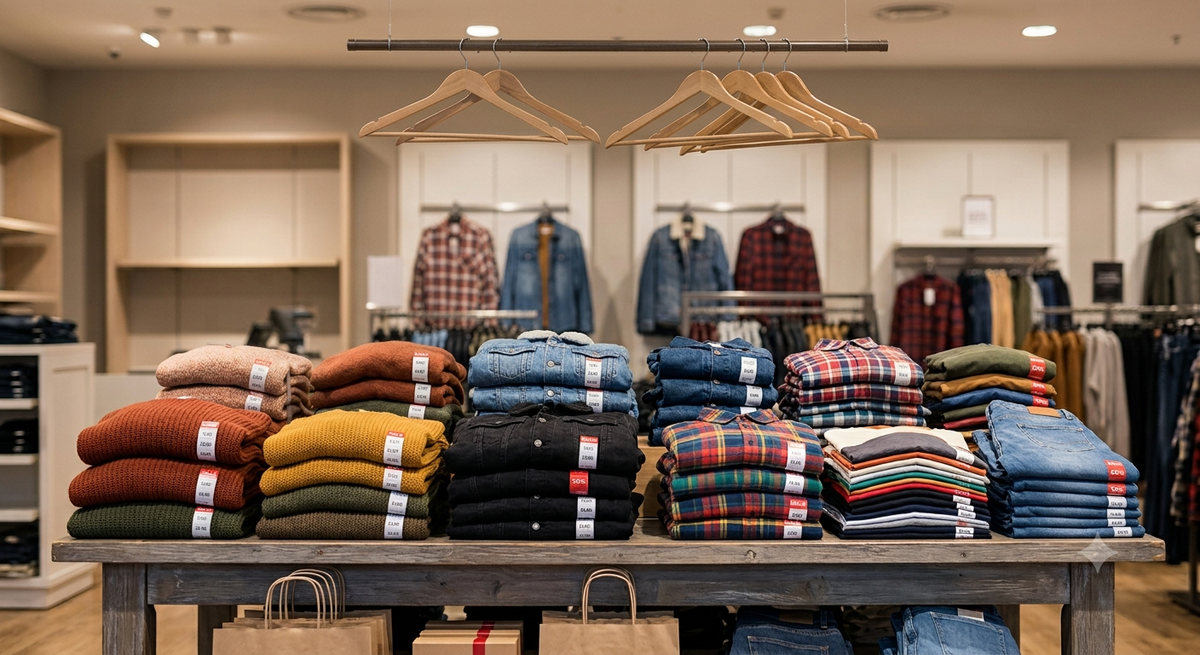
Answering "what should I buy?" only makes sense after you've answered "what do I actually need?" — but once you've done that audit, knowing which categories deliver the best Black Friday value helps you allocate your budget with confidence.
According to Dotdigital's 2025 Black Friday data, clothing tops and pants and activewear ranked among the hottest shopping categories of the entire event, alongside cosmetics and fitness products. That's not a coincidence — these are high-frequency, high-replenishment categories where shoppers already know their size, already know they need more, and can act decisively when a discount appears.
The full recommended buy list extends beyond those two anchors:
- Wardrobe basics (tees, tanks, leggings, jeans, socks, underwear): These earn Black Friday priority because they're worn constantly, they wear out predictably, and they see consistent promotional depth from mass-market and mid-tier retailers every year.
- Activewear: High-promo intensity from brands like Nike, Adidas, and Lululemon makes this one of the most reliably discounted categories.
- Footwear: Broad size availability during sale windows and strong year-over-year demand make this a strong target — but move early, because popular sizes sell out fast.
- Outerwear and cold-weather layers: Jackets and coats are expensive at full price; Black Friday timing aligns perfectly with the start of winter dressing.
Ready to upgrade your wardrobe?
Get the Elara app for AI-powered styling and virtual try-ons.
The scale of opportunity here is real. According to Mastercard SpendingPulse data cited by Queue-it, apparel drove $45.6 billion in sales, up 9.9% year over year — proof that both retailer investment and consumer demand in this category are substantial, which translates directly to deal availability.
Experian notes that apparel is among the categories expected to see the deepest Black Friday discounts in 2026, reinforcing its place at the top of any buy list.
What not to prioritize: premium and luxury fashion items. Designer pieces rarely see meaningful cuts — the 24% average apparel discount reflects mid-tier and mass-market realities, not luxury pricing. Chasing a "deal" on a $400 item that drops to $380 is not a Black Friday win.
How to Build Your Personal Black Friday Buy List Before Sales Drop
The category list above is a starting point, not a shopping cart. The difference between a confident Black Friday buyer and an impulse regret is a single step most shoppers skip entirely: knowing what your wardrobe actually needs before the sale starts.
Here's a practical three-step framework to build your personal buy list now:
Step 1: Audit your wardrobe gaps. Walk through your closet category by category. Where do you reach for something and come up short? Which pieces are worn out, faded, or falling apart? What's missing that limits the outfits you can build? This isn't about what you want — it's about what your existing wardrobe is missing to function better.
Step 2: Prioritize by cost-per-wear potential. A $40 pack of quality tees worn four days a week for two years costs roughly $0.10 per wear. A $60 trend piece worn twice costs $30 per wear. Basics and activewear almost always win this calculation, which is exactly why they top the Black Friday buy list.
Step 3: Set a budget ceiling per category. With apparel averaging 24% off during Black Friday, according to Dotdigital's 2025 and 2026 planning data, you can calculate your actual savings before the sale drops. If you need a $150 winter jacket, plan for roughly $114. That math keeps you anchored to value, not excitement.
Step 1 — the wardrobe audit — is precisely what Elara does automatically. Rather than asking you to mentally inventory a full closet, Elara digitizes your wardrobe and surfaces the real gaps: the specific categories you're under-stocked on, the pieces that would unlock the most new outfit combinations, and the purchases that would actually earn their place in your rotation.
That's a fundamentally different approach from generic shopping apps, which push new purchases regardless of what you already own. Elara starts with what's in your closet, not what's in a brand's catalog.
According to Bain's 2026 holiday forecast, nonstore sales are expected to grow 9% this season — which means online competition for deals, sizes, and stock will be more intense than ever. Having a pre-built buy list isn't just efficient; it's a competitive advantage.
Start your wardrobe audit with Elara before Black Friday sales drop at joinelara.com.
The Timing Advantage: Why Planning in Mid-2026 Gives You the Edge
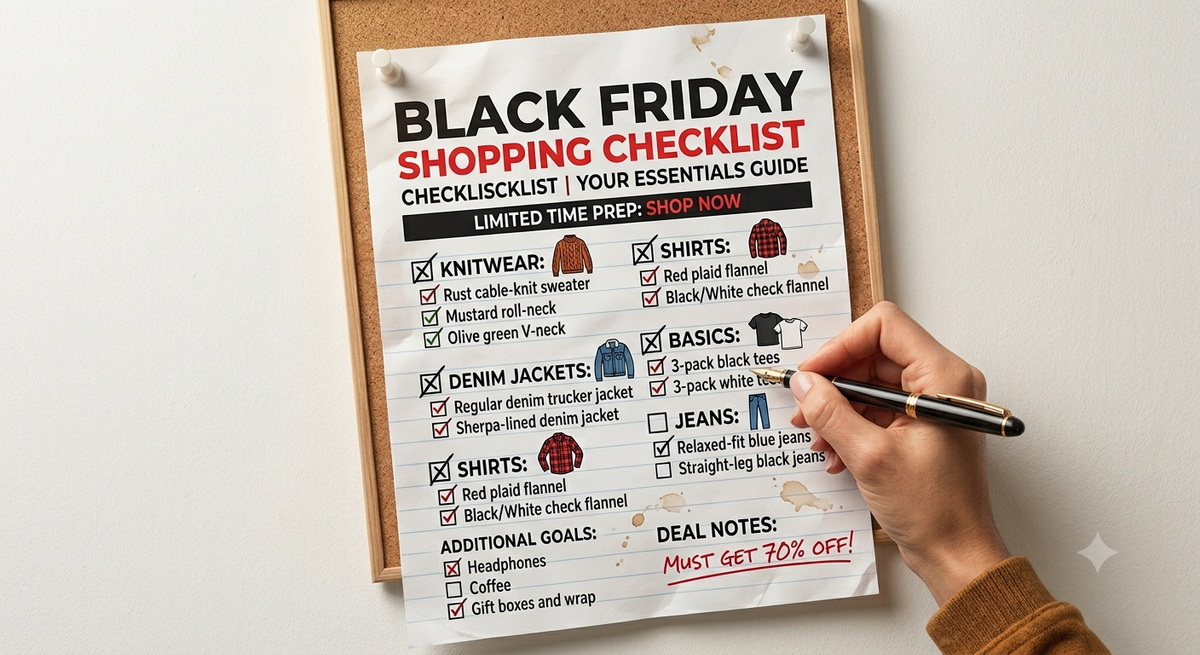
Most Black Friday clothing guides publish in October or November — close enough to the event to feel timely, but far too late for strategic planning. By that point, you're reacting to what's on sale rather than shopping from a list you built around what you need. Decision fatigue sets in, budget discipline erodes, and the "deals" start to feel like pressure.
Planning in mid-2026 eliminates that entirely. You arrive at sale day with a locked buy list, a budget already allocated per category, and zero ambiguity about what earns a purchase. That's not a small advantage.
The competitive stakes online are rising sharply. Bain forecasts that nonstore (online) sales will grow 9% in the 2026 holiday season — meaning more shoppers competing for the same deals, the same sizes, and the same stock windows. Black Friday online spend already reached $11.8 billion in 2025, up 9.1% year over year according to Dotdigital. At that volume, popular items in popular sizes don't stay available for long. Early planners who know exactly what they're targeting move faster and lose less to out-of-stock frustration.
The practical recommendation: use this article's category framework alongside Elara's gap analysis to finalize your Black Friday buy list by September 2026. That gives you two months before the early-November sale windows open to confirm your priorities, set your budget ceilings, and let Elara identify any wardrobe gaps you may have missed.
Elara works now — not just on sale day. The AI maps your existing wardrobe, surfaces what's genuinely missing, and gives you a personalized buy list grounded in what you actually own and wear.
Let Elara map your wardrobe gaps today — so you shop with a list, not a mood. Start at joinelara.com.
How Elara Turns Black Friday Chaos Into Confidence
That wardrobe-first philosophy is exactly what separates Elara from every other tool competing for your attention before Black Friday drops.
Most shopping apps and trend feeds operate on a simple premise: show you more things to buy. They don't know whether you already own three white button-downs or whether your activewear drawer is genuinely empty. Elara starts from the opposite direction — your existing wardrobe is the foundation, and every recommendation builds on it.
Here's what that looks like in practice. When you digitize your closet with Elara, you get a clear picture of what you actually own before you open a single sale tab. No more buying a fourth pair of black trousers because you forgot you had them buried at the back of the rail. From there, Elara's gap identification surfaces the specific pieces that would unlock the most new outfit combinations — not what's trending, not what a brand is pushing, but what your wardrobe is actually missing. Ask "what do I actually need for Black Friday this year?" and Elara responds with a personalized buy list grounded in what you own and wear.
This matters because Mintel found that Black Friday 2025 shoppers were cautious with spending even as they showed up in record numbers. Elara is built for that mindset. It's guidance on essentials, not pressure to buy more.
Join Elara at joinelara.com and start your Black Friday buy list today.
Frequently Asked Questions
Q: When should I start planning my Black Friday buy list? A: Mid-2026 is ideal. That gives you two months before sales begin to audit your wardrobe, identify gaps, and set your budget. Early planning means you arrive on sale day with a locked list, not impulse decisions made under pressure.
Q: How much can I actually save with a 24% discount? A: It depends on what you're buying. A $150 winter jacket saves roughly $36. A $60 pair of activewear leggings saves roughly $14.40. These are real savings — but only if the item was already on your list. The discount doesn't justify buying something you don't need.
Q: Which clothing categories have the best Black Friday deals? A: Tops, pants, activewear, basics (tees, socks, underwear), footwear, and outerwear see the deepest discounts. These are high-replenishment categories where retailers compete aggressively on price. Luxury and designer pieces rarely see meaningful cuts.
Q: How does Elara help with Black Friday shopping? A: Elara digitizes your closet and identifies your specific wardrobe gaps before sales start. Instead of browsing endlessly, you shop from a personalized buy list grounded in what you actually own and wear — not what's trending or what a brand is pushing.
Q: Can I use this guide without Elara? A: Yes. The three-step framework (audit gaps, prioritize by cost-per-wear, set budget ceilings) works on its own. Elara automates the audit step and surfaces gaps you might miss, but the strategy is sound either way.
TL;DR
Black Friday apparel discounts average 24% — real savings, but only if you buy strategically. Plan your buy list now by auditing your wardrobe gaps, prioritizing by cost-per-wear, and setting budget ceilings per category. Target basics, activewear, footwear, and outerwear. Elara automates the gap audit and gives you a personalized list before sales drop, so you shop with confidence instead of impulse. Start at joinelara.com.
Conclusion: Shop Black Friday 2026 Like a Strategist, Not a Scroller
The gap between what's on sale and what actually works for your wardrobe is precisely where money gets wasted every November. Discounts disappear into impulse buys that never get worn, and the cycle repeats.
The discounts are real. According to Dotdigital, apparel averages 24% off during Black Friday — consistent across both 2025 actuals and 2026 planning data. On a $150 winter coat, that's roughly $36 back in your pocket. On a full basics refresh, the savings compound quickly. But those numbers only work in your favor when you know exactly what you need before the sale clock starts.
Readers who build their buy list now — in mid-2026, not the night before — will shop with clarity while everyone else scrolls in circles. Elara is the planning layer between you and the Black Friday noise: it knows your wardrobe, identifies your real gaps, and gives you a list you can trust.
Your wardrobe audit is free. Start at joinelara.com.

Your AI Stylist is Here.
live on the App Store
Available on iOS for seamless access anytime, anywhere.